
USLI Critical Design Review Harding University Flying Bison

USLI Critical Design Review Harding University Flying Bison 2010 USLI Rocket Team
Harding Flying Bison Team made up of 16 members with diverse educational backgrounds: Greg Hunter Josh Chi Meredith Ed Libby Matt G. Lisa Patrick Cortney Elizabeth April Darah Matt I. Shailer
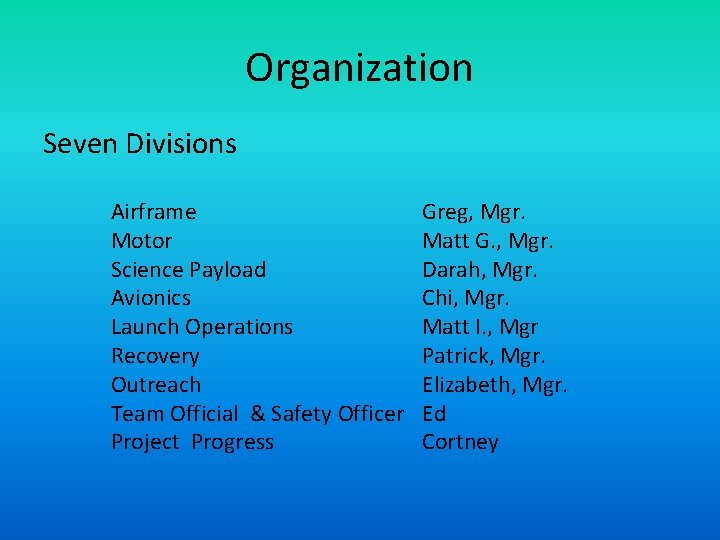
Organization Seven Divisions Airframe Motor Science Payload Avionics Launch Operations Recovery Outreach Team Official & Safety Officer Project Progress Greg, Mgr. Matt G. , Mgr. Darah, Mgr. Chi, Mgr. Matt I. , Mgr Patrick, Mgr. Elizabeth, Mgr. Ed Cortney
Mission Statement • • Design, build, test and fly a hybrid rocket Achieve an altitude of exactly 1. 00 mile Measure gamma radiation as a function of altitude Measure temperature and pressure Measure x-, y-, z- acceleration during flight Done safely with no injuries, no damage to property Rocket recovered without damage
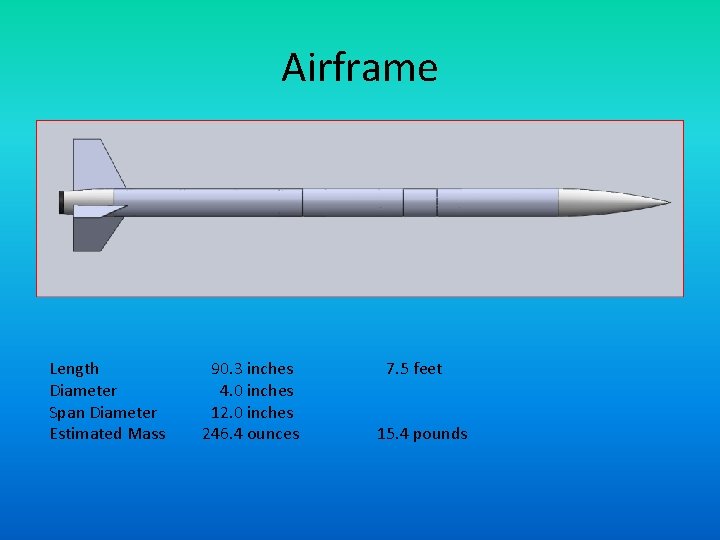
Airframe Length Diameter Span Diameter Estimated Mass 90. 3 inches 4. 0 inches 12. 0 inches 246. 4 ounces 7. 5 feet 15. 4 pounds
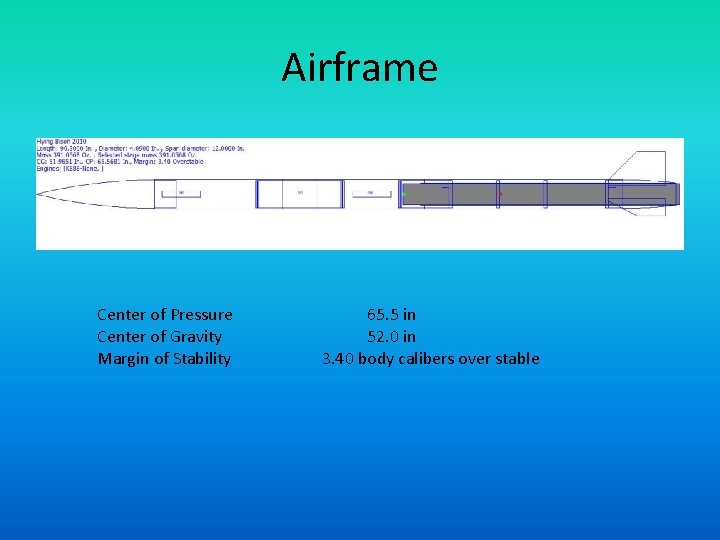
Airframe Center of Pressure Center of Gravity Margin of Stability 65. 5 in 52. 0 in 3. 40 body calibers over stable
Airframe Scale Model Test • Test planned for middle of February
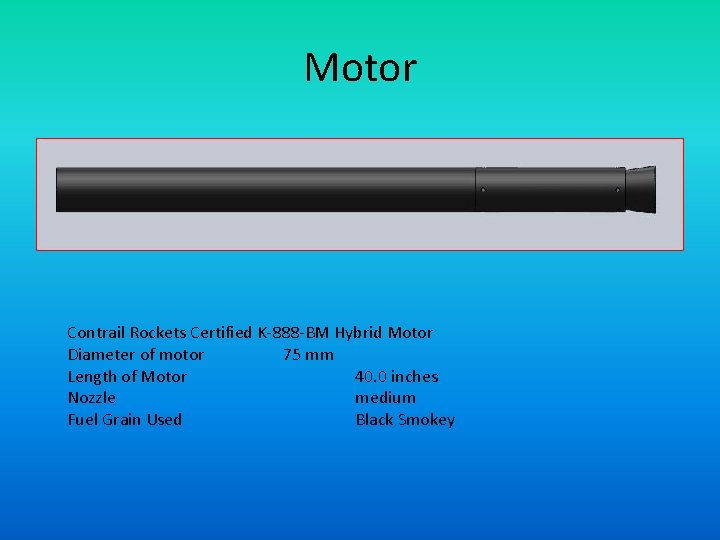
Motor Contrail Rockets Certified K-888 -BM Hybrid Motor Diameter of motor 75 mm Length of Motor 40. 0 inches Nozzle medium Fuel Grain Used Black Smokey
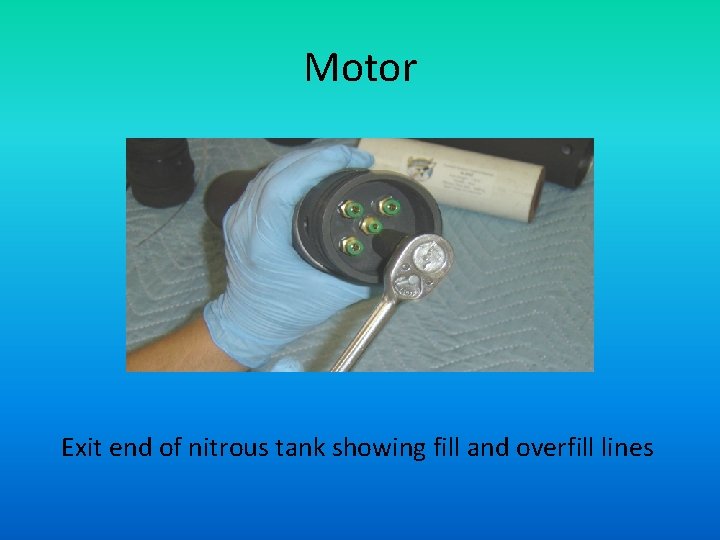
Motor Exit end of nitrous tank showing fill and overfill lines
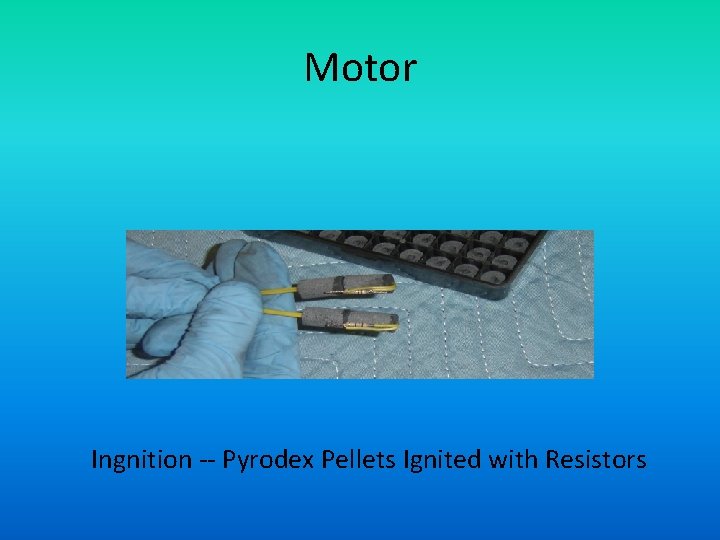
Motor Ingnition -- Pyrodex Pellets Ignited with Resistors
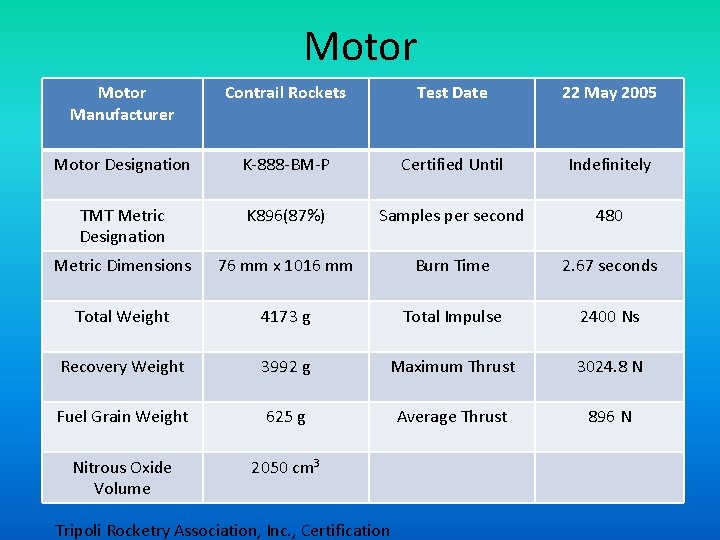
Motor Manufacturer Contrail Rockets Test Date 22 May 2005 Motor Designation K-888 -BM-P Certified Until Indefinitely TMT Metric Designation K 896(87%) Samples per second 480 Metric Dimensions 76 mm x 1016 mm Burn Time 2. 67 seconds Total Weight 4173 g Total Impulse 2400 Ns Recovery Weight 3992 g Maximum Thrust 3024. 8 N Fuel Grain Weight 625 g Average Thrust 896 N Nitrous Oxide Volume 2050 cm 3 Tripoli Rocketry Association, Inc. , Certification
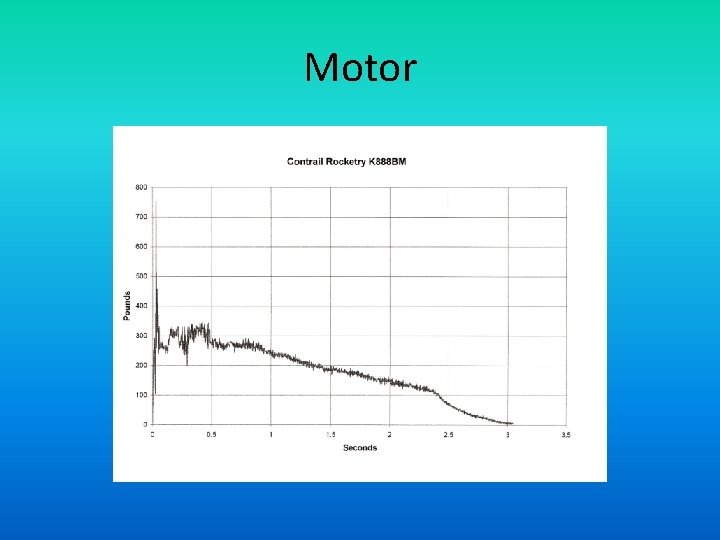
Motor
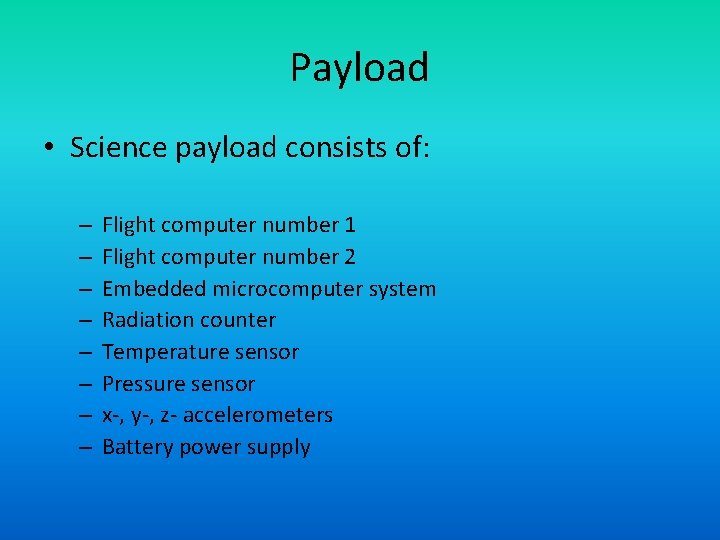
Payload • Science payload consists of: – – – – Flight computer number 1 Flight computer number 2 Embedded microcomputer system Radiation counter Temperature sensor Pressure sensor x-, y-, z- accelerometers Battery power supply
Payload • Science instruments, flight computers, recovery transmitter and batteries fit inside 3. 78 in diameter by 12. 0 inch long phenolic coupler tube • Switches , status LEDs, computer connectors mounted on ring in the middle of the coupler
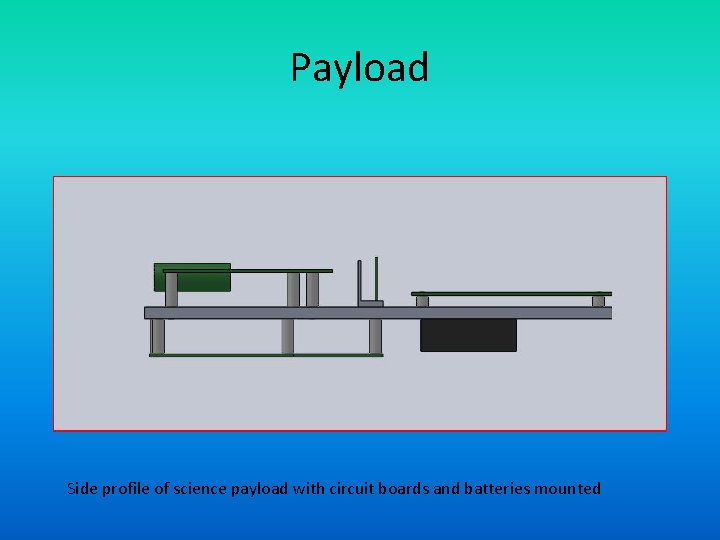
Payload Side profile of science payload with circuit boards and batteries mounted
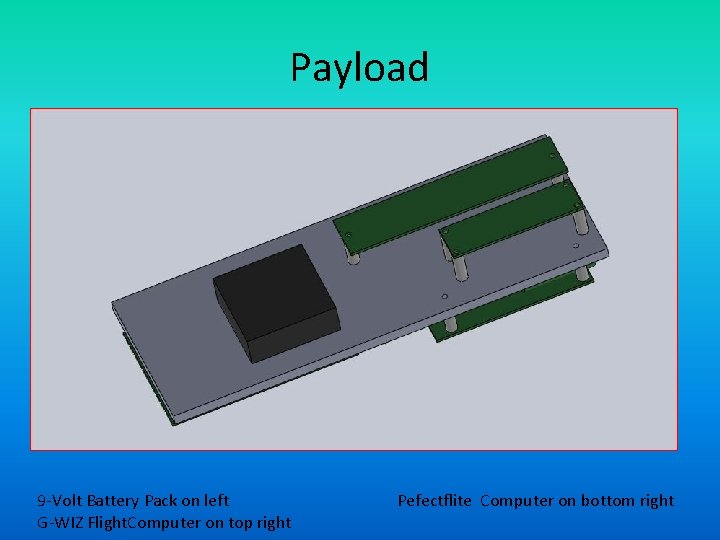
Payload 9 -Volt Battery Pack on left G-WIZ Flight. Computer on top right Pefectflite Computer on bottom right
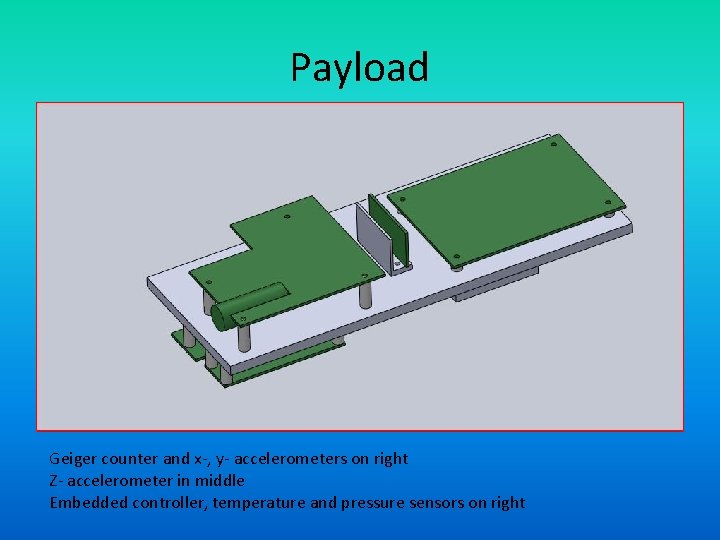
Payload Geiger counter and x-, y- accelerometers on right Z- accelerometer in middle Embedded controller, temperature and pressure sensors on right
Payload • Science Payload Objectives. • Test and calibrate a Geiger-Mueller radiation counter • Interface Geiger counter to embedded controller to operate the instrument and collect and store the data. • Test the complete instrument mounted in the airframe using laboratory alpha, beta and gamma radiation sources. • Test and calibrate pressure sensor • Test and calibrate a temperature sensor • Test and calibrate a low sensitivity and a high sensitivity 3 axis accelerometer
Payload • State the payload success criteria Payload success will be achieved if all the sensors perform satisfactorily and data from each is collected and stored in the on-board computer memory.
Avionics The recovery subsystem is composed of the following components: • Perfect. Flite Mini. Alt/WD to measure and store altitude and deploy drogue and main parachutes. • DT 2 x Data Transfer Kit for connecting Mini. Alt/WD to computer • G-Wiz MC-2. 0 Flight Computer to provide redundant backup of the Perfect. Flite • Nine pin female to female cable with subminiature D connectors to connect G-Wiz MC-2. 0 to computer
Avionics • Software to download data from G-Wiz • Ejection charges with electric matches to deploy parachutes • Sky. Angle Main Parachute with 57 square feet • Sky. Angle Drogue Parachute with 6. 3 square feet • Shock cord – to be determined • Walston Retrieval System with Rocket Transmitter, 3 -Channel Receiver, and 3 -element Antenna
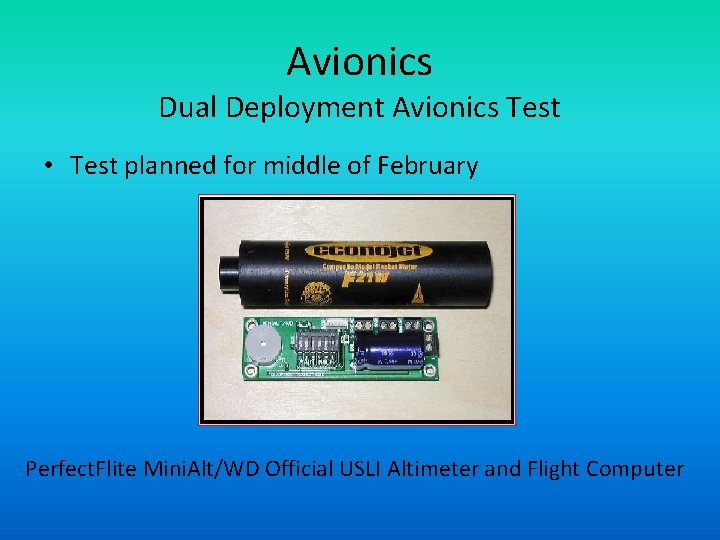
Avionics Dual Deployment Avionics Test • Test planned for middle of February Perfect. Flite Mini. Alt/WD Official USLI Altimeter and Flight Computer
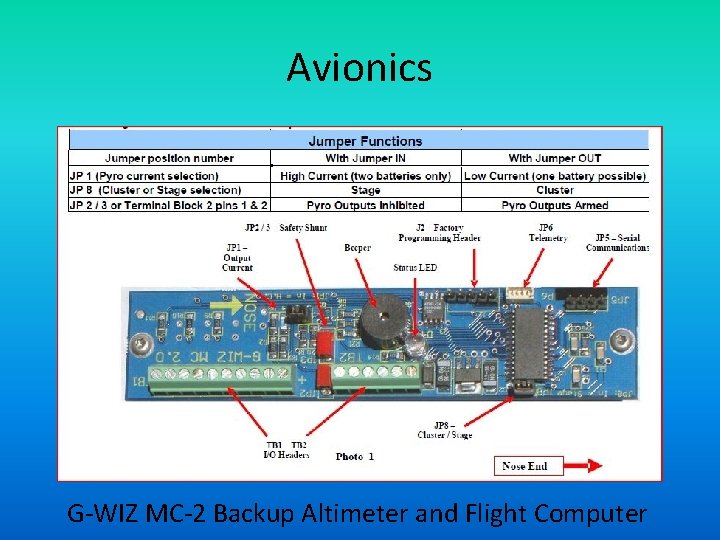
Avionics G-WIZ MC-2 Backup Altimeter and Flight Computer
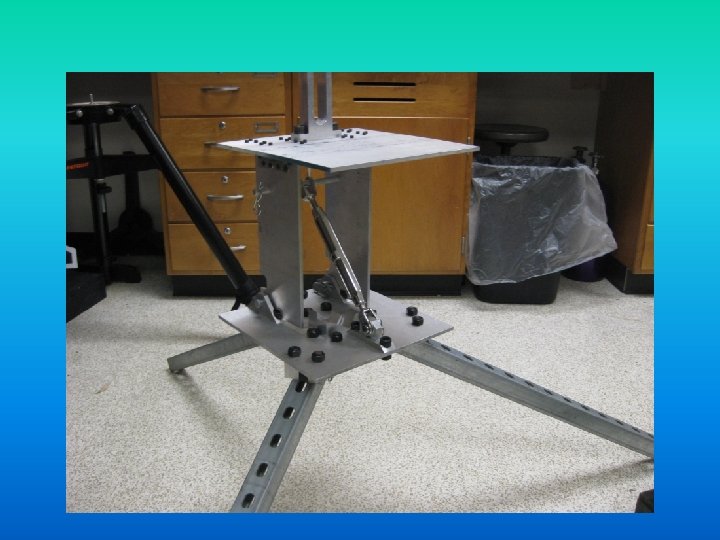
Launch Operations • We plan to assemble the motor ahead of time, so that all we have to do is load the nitrous • Draft Launch Plan in Appendix A in CDR, Page 29
Recovery Ejection Charge Amount Test • • Test planned for middle of February Walston Retrieval System for Rocket Locating Sky. Angle 24 in for Drogue Sky. Angle Large Cert-3 for Main
Outreach The timeline with major milestones is on page 5 • The milestones accomplished are grayed out in • • the table We are behind in launching scale model rocket We are slightly behind in the construction of the airframe We are behind in writing procedures needed We are behind in outreach with the Girl and Boy Scout Programs.

Outreach We are excited about a rocket display in the Harding University Library in late February We have applied to be introduced with a program in Harding University Chapel that could potentially reach more than 5000 students We will be giving talks and posters on the USLI Program at Arkansas Undergraduate Research Conference and Sigma Xi Poster
Outreach Funds have been obtained to do an excellent job on this project. We acknowledge the Arkansas Space Grant Consortium for funding all 4 years of participation
- Slides: 29