
Using Wind Reduction Factors and Gust Factors for


- Slides: 24
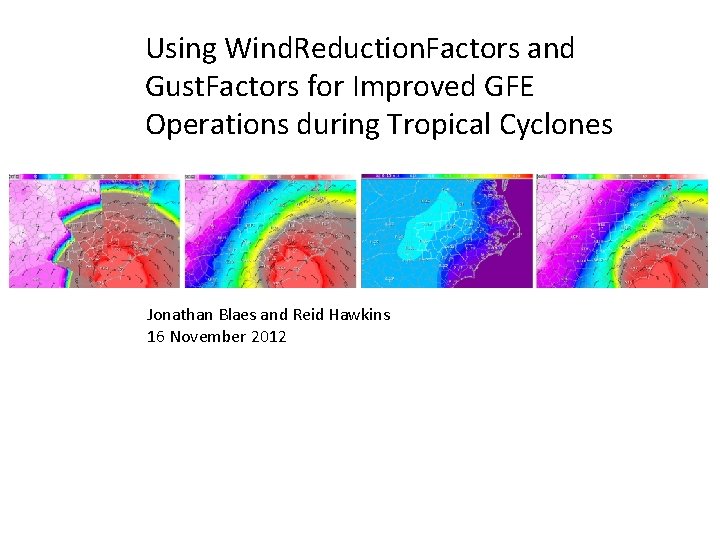
Using Wind. Reduction. Factors and Gust. Factors for Improved GFE Operations during Tropical Cyclones Jonathan Blaes and Reid Hawkins 16 November 2012
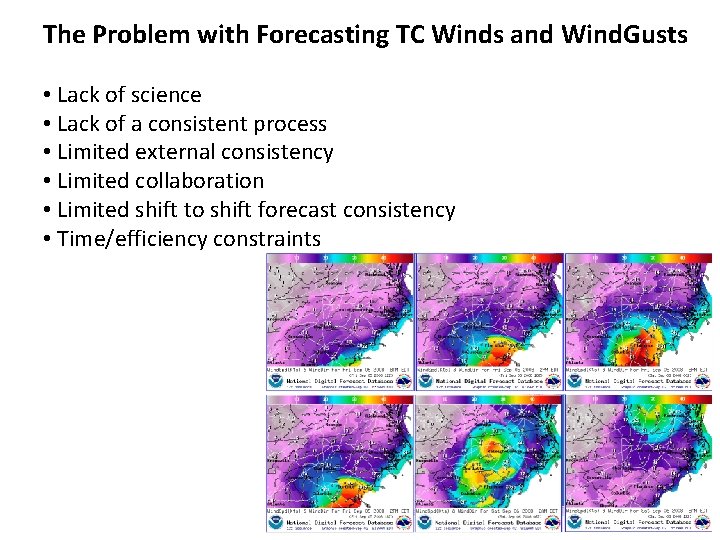
The Problem with Forecasting TC Winds and Wind. Gusts • Lack of science • Lack of a consistent process • Limited external consistency • Limited collaboration • Limited shift to shift forecast consistency • Time/efficiency constraints
Development of Several GFE Tools • The NC State CSTAR project has inspired the development of several GFE tools that are comprised of 4 types • Quality Assurance tools § Ensure that the grids are consistent with the forecaster’s intent • Existing Methodology tools § Provide specific values based on studies to derive the Wind and Wind. Gust from gust factors or wind reductions • Improved Methodology grids and tools (this talk) § Using Wind. Reduction. Factor and Gust. Factor grids • Longer range, more sophisticated tools § Improved vortex in TCMWind. Tool, comprehensive dynamic tool • These tools are still be developed and refined • More significant testing is expected during the 2013 TC season
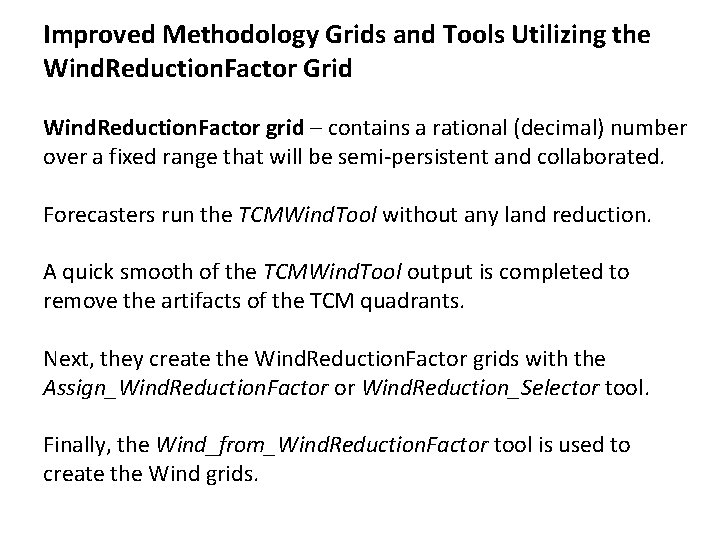
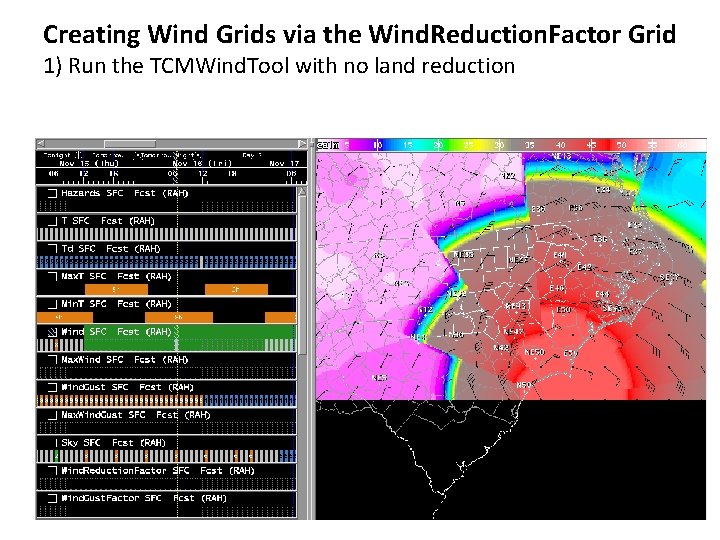
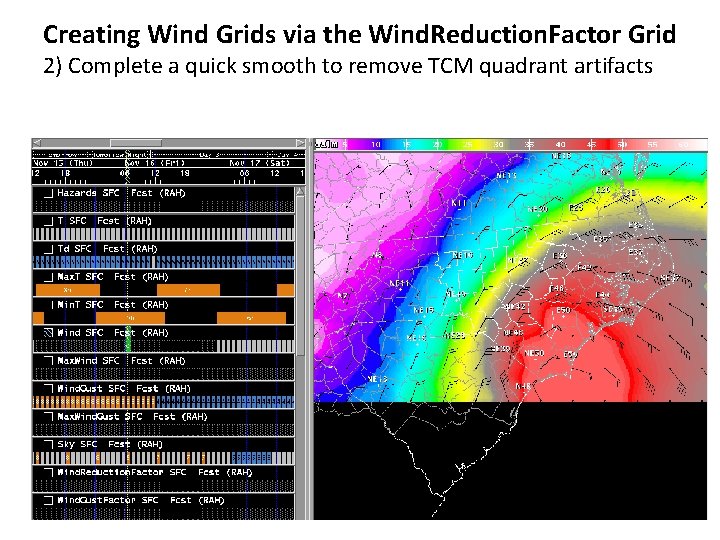
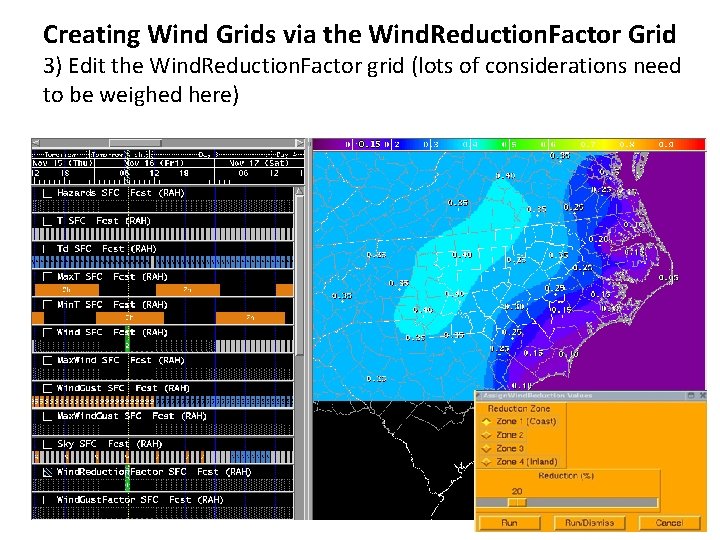
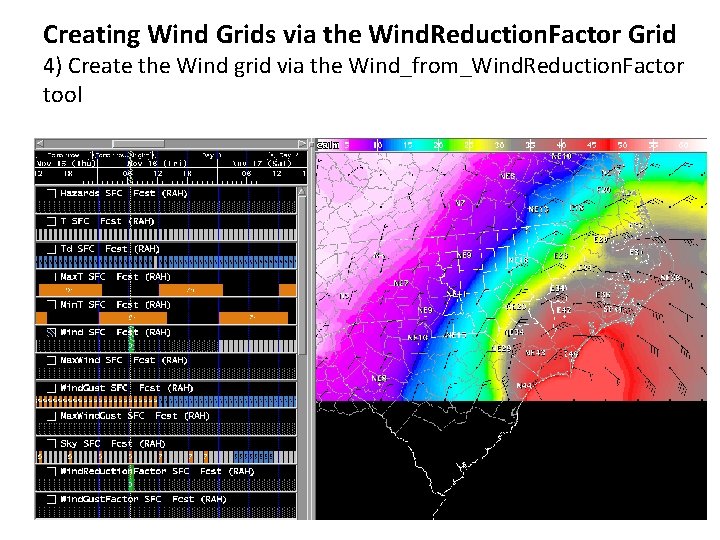
Improved Methodology Grids and Tools Utilizing the Wind. Reduction. Factor Grid Wind. Reduction. Factor grid – contains a rational (decimal) number over a fixed range that will be semi-persistent and collaborated. Forecasters run the TCMWind. Tool without any land reduction. A quick smooth of the TCMWind. Tool output is completed to remove the artifacts of the TCM quadrants. Next, they create the Wind. Reduction. Factor grids with the Assign_Wind. Reduction. Factor or Wind. Reduction_Selector tool. Finally, the Wind_from_Wind. Reduction. Factor tool is used to create the Wind grids.
Creating Wind Grids via the Wind. Reduction. Factor Grid 1) Run the TCMWind. Tool with no land reduction
Creating Wind Grids via the Wind. Reduction. Factor Grid 2) Complete a quick smooth to remove TCM quadrant artifacts
Creating Wind Grids via the Wind. Reduction. Factor Grid 3) Edit the Wind. Reduction. Factor grid (lots of considerations need to be weighed here)
Creating Wind Grids via the Wind. Reduction. Factor Grid 4) Create the Wind grid via the Wind_from_Wind. Reduction. Factor tool
Wind. Reduction. Factor Grid Advantages • • Fairly Simple Adds some science to the process Forecasters can create the Reduction. Factor grids ahead of time Allows forecasters to externally collaborate visually Results in improved shift to shift forecast continuity Should decrease workload Could utilize a climatological information Result in a much more appropriate Wind grid
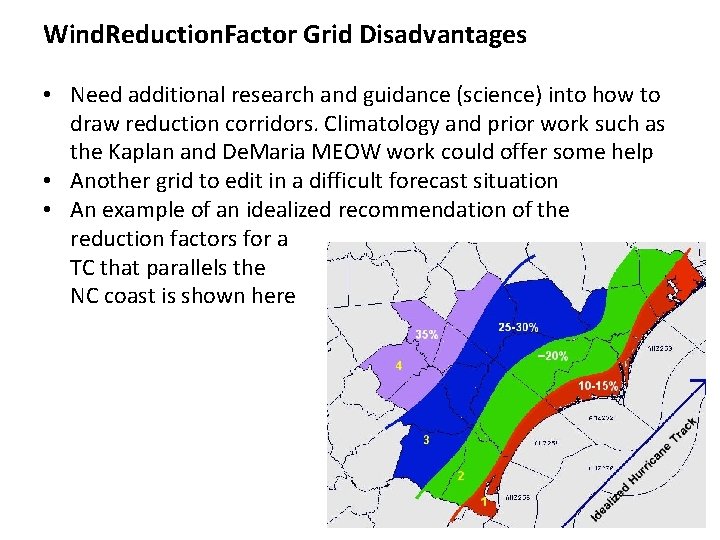
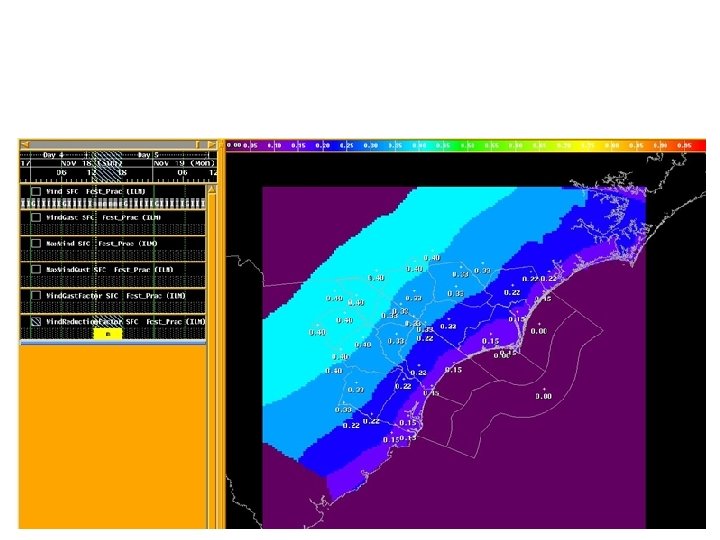
Wind. Reduction. Factor Grid Disadvantages • Need additional research and guidance (science) into how to draw reduction corridors. Climatology and prior work such as the Kaplan and De. Maria MEOW work could offer some help • Another grid to edit in a difficult forecast situation • An example of an idealized recommendation of the reduction factors for a TC that parallels the NC coast is shown here
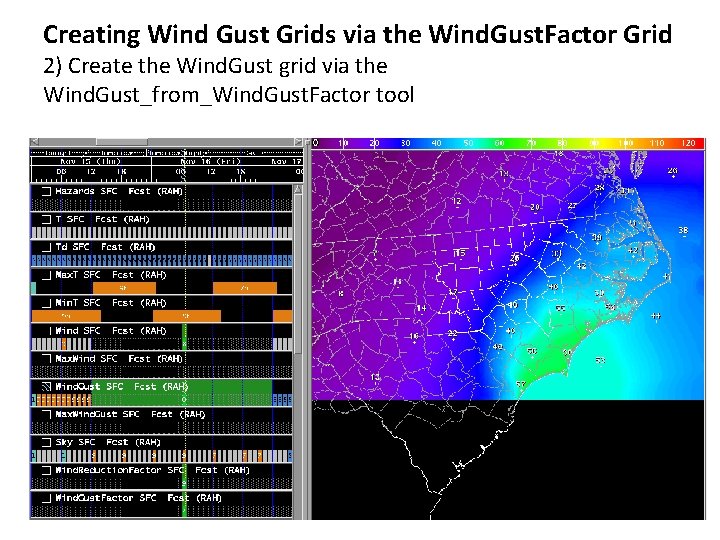
Improved Methodology Grids and Tools Utilizing the Wind. Gust. Factor Grid Wind. Gust. Factor grid – contains a rational (decimal) number over a fixed range that will be semi-persistent and collaborated. First, forecasters create the Wind grids. Next, they create the Wind. Gust. Factor grids with the Wind. Gust. Factor_Selector tool Finally, the Wind. Gust_from_Wind. Gust. Factor tool is used to create the Wind. Gust grids.
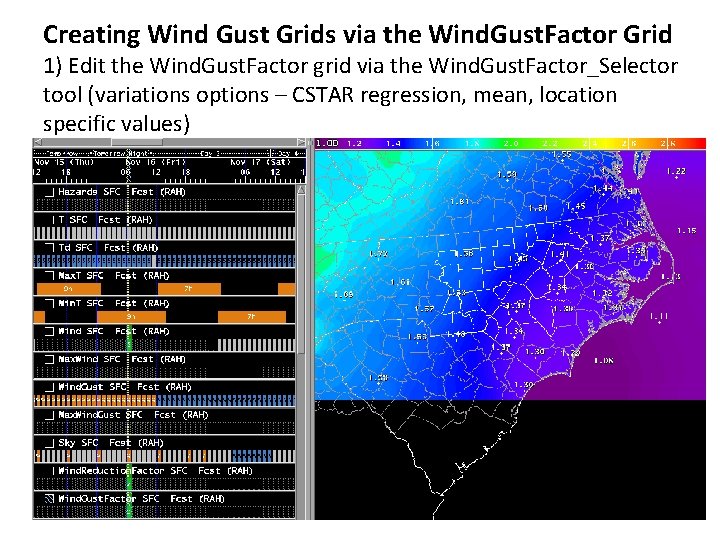
Creating Wind Gust Grids via the Wind. Gust. Factor Grid 1) Edit the Wind. Gust. Factor grid via the Wind. Gust. Factor_Selector tool (variations options – CSTAR regression, mean, location specific values)
Creating Wind Gust Grids via the Wind. Gust. Factor Grid 2) Create the Wind. Gust grid via the Wind. Gust_from_Wind. Gust. Factor tool
Wind. Gust. Factor Grid Advantages • Simple • Introduces additional science and general constraints to the process • Forecasters struggle with Wind. Gusts. This methodology provides them some confidence that the gust have some objective reasoning. • Forecasters can create the Gust. Factor grids ahead of time • Allows forecasters to externally collaborate visually • Results in improved shift to shift forecast continuity • Should decrease workload • Result in a much more appropriate Wind grid
Wind. Gust. Factor Grid Disadvantages • Forecasters will still need to evaluate the mesoscale and boundary layer environment to account for circumstances such as CAD, enhanced mixing with drier air wrap around, boundary interaction, etc. • Other GFE tools have shown promise using momentum transfer with NWP guidance to create wind gust grids, our methodology does not include this information • Another grid to edit in a difficult forecast situation
Wind. Reduction. Factor and Wind. Gust. Factor Limitations • Research dataset is limited • Storms are from the Southeast only • Most observations were on the left side of the TC • No very strong Hurricanes • Mesoscale variations will still be a struggle • CAD, enhanced mixing with drier air wrap around, boundary interaction, etc. • Background field issues • Winds and Wind. Gusts matching WWA products • TCM product has lots of limitations
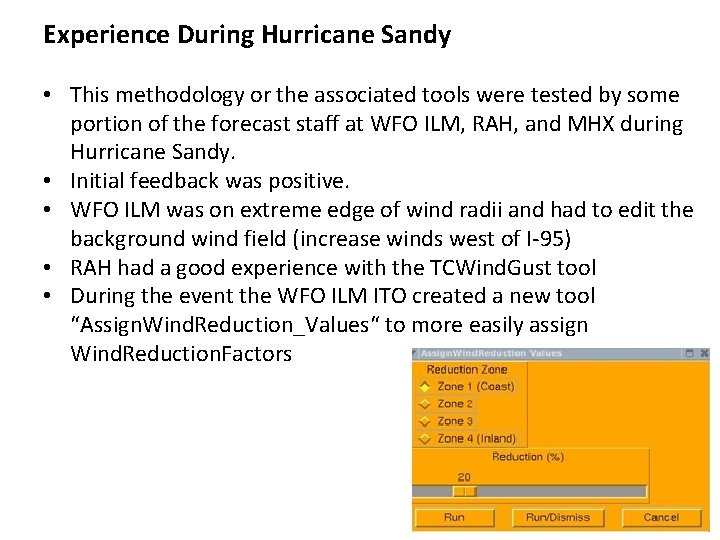
Experience During Hurricane Sandy • This methodology or the associated tools were tested by some portion of the forecast staff at WFO ILM, RAH, and MHX during Hurricane Sandy. • Initial feedback was positive. • WFO ILM was on extreme edge of wind radii and had to edit the background wind field (increase winds west of I-95) • RAH had a good experience with the TCWind. Gust tool • During the event the WFO ILM ITO created a new tool “Assign. Wind. Reduction_Values“ to more easily assign Wind. Reduction. Factors
Next Steps • Continue refinements to the tools • Examine over water GF and incorporate into tools. Examine GF associated with Sandy in NJ/NY • Develop training materials • Explore some sort of verification • Test the methodology at WFOs ILM, RAH, MHX, and MFL during the 2013 TC season
Acknowledgements • Thanks to student volunteer Dan Brown for examining most of the gust factors and generating most of the charts as well. • NC State student volunteers Rebecca Duell and Lindsey Anderson helped develop the overall methodology and completed the analysis of Hurricane Irene. • Bryce Tyner and Dr Aiyyer • Collaborative Investigator Reid Hawkins • CSTAR TC Winds team • GFE help from Carl Morgan (ILM) and Harry Gerapetritis (GSP)
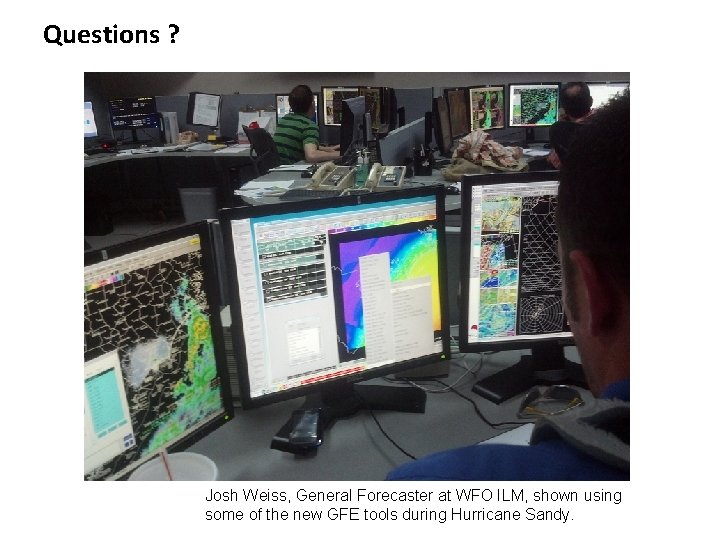
Questions ? Josh Weiss, General Forecaster at WFO ILM, shown using some of the new GFE tools during Hurricane Sandy.
Extra Slides
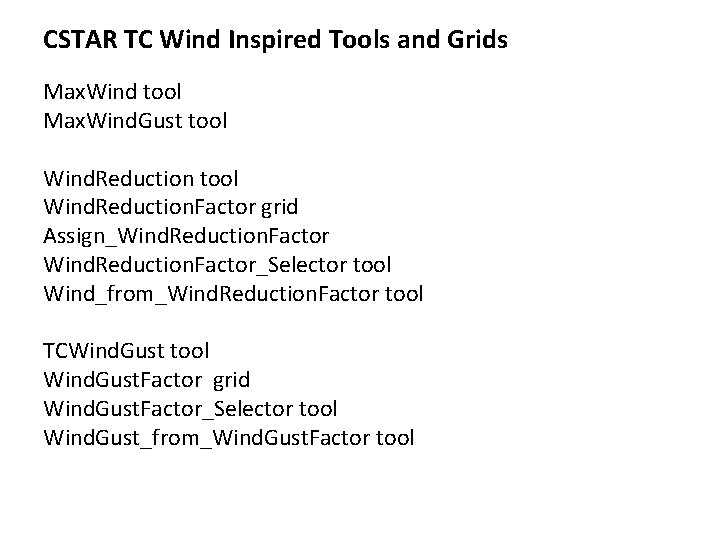
CSTAR TC Wind Inspired Tools and Grids Max. Wind tool Max. Wind. Gust tool Wind. Reduction. Factor grid Assign_Wind. Reduction. Factor_Selector tool Wind_from_Wind. Reduction. Factor tool TCWind. Gust tool Wind. Gust. Factor grid Wind. Gust. Factor_Selector tool Wind. Gust_from_Wind. Gust. Factor tool
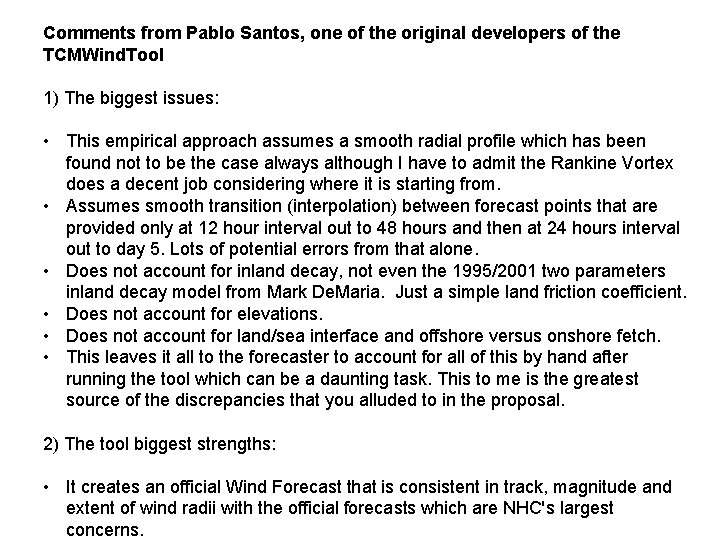
Comments from Pablo Santos, one of the original developers of the TCMWind. Tool 1) The biggest issues: • This empirical approach assumes a smooth radial profile which has been found not to be the case always although I have to admit the Rankine Vortex does a decent job considering where it is starting from. • Assumes smooth transition (interpolation) between forecast points that are provided only at 12 hour interval out to 48 hours and then at 24 hours interval out to day 5. Lots of potential errors from that alone. • Does not account for inland decay, not even the 1995/2001 two parameters inland decay model from Mark De. Maria. Just a simple land friction coefficient. • Does not account for elevations. • Does not account for land/sea interface and offshore versus onshore fetch. • This leaves it all to the forecaster to account for all of this by hand after running the tool which can be a daunting task. This to me is the greatest source of the discrepancies that you alluded to in the proposal. 2) The tool biggest strengths: • It creates an official Wind Forecast that is consistent in track, magnitude and extent of wind radii with the official forecasts which are NHC's largest concerns.