
USING VIRTUAL WORLDS IN LANGUAGE LEARNING Heidi Rontu
- Slides: 18
USING VIRTUAL WORLDS IN LANGUAGE LEARNING Heidi Rontu, D. Phil. , Director Taija Swanström, Coordinator in Swedish Language Aalto University, Finland
What is a Virtual World? - Second Life as an example • 3 D world where you move around with an avatar • Games, customer service, shops, culture, education etc. • Owned by Linden Lab, USA • Communication through chat or voice
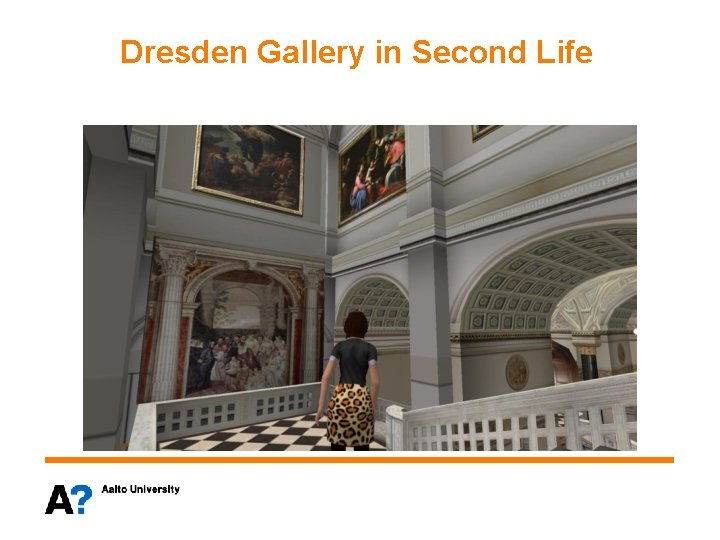
Dresden Gallery in Second Life
The Use Virtual Worlds in the Teaching of Languages • Provides an authentic environment • Lowers the mental threshold for using the language – The use of an avatar provides the students a safe playground for using the language • Adds playfulness to the learning process
National Language Context in Finland • Finland’s official bilingualism - 2 national languages Finnish and Swedish – Swedish population 5, 8% – Swedish population mostly bilingual (cf. Finnish monolingual) – Swedish population in the Western and Southern parts of Finland
National Language Context in Finland • In higher education – Mandatory for all Finnish students to show proficiency in the second national language at level B 1 (minimum) • Level B 1 – Proficiency as an independent language user – Elementary proficiency within own area of expertice
Challenges in the Teaching of Swedish • • • Low proficiency level Low motivation, attitudinal problems The on-going political debate in society Contact to authentic language environments scarse Use of Swedish often limited to the classroom environment
Second Life at Aalto University • Initiated by a pilot of teaching Swedish for international students in cooperation with other universities • Challenges – Low level of technical proficiency among international students – Access to proper teaching facilities in Second Life insufficient – No systematic acces to technical support for teachers
Second Life at Aalto University • Next step: development of the use of Second Life in the teaching of Swedish for Finnish students – Aalto University provides proper infrastructure for Second Life (Aalto archipelago including Lab. Life) – Technical support and pedagogical team work with another department at the university doing research on the use of Second Life – Language support from Swedish speaking students in translating materials to Swedish
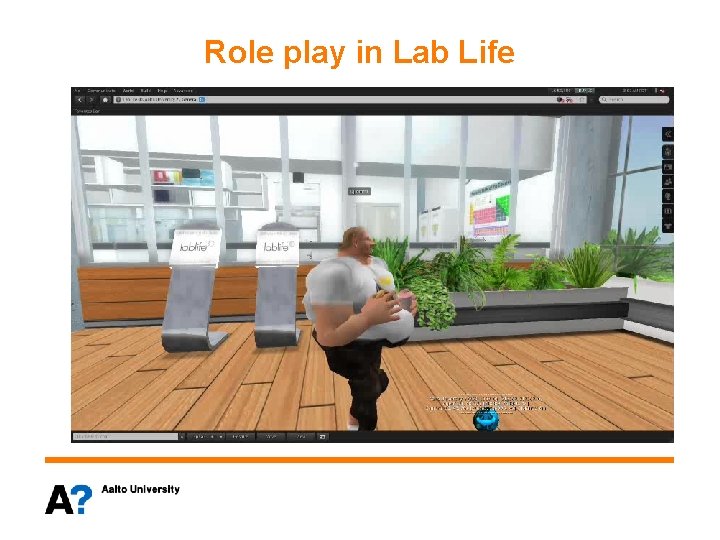
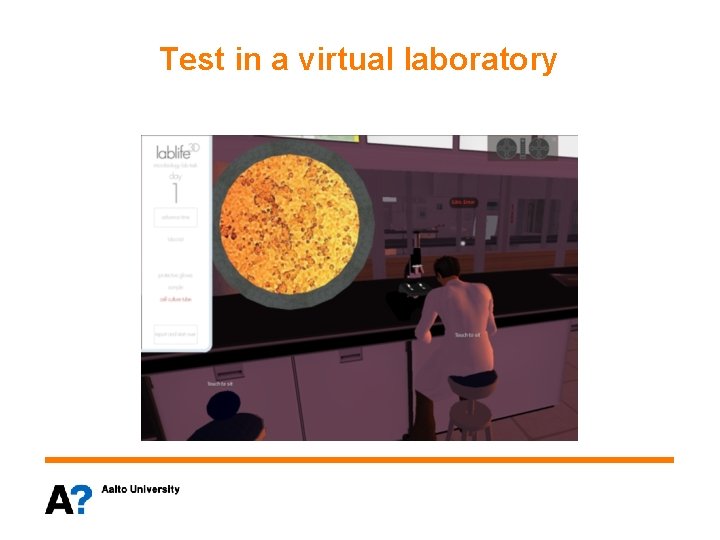
Second Life in practice • Different environments used: – Travelling in Second Life using chat – Role play in Aalto Lab. Life using voice – Test in a laboratory • The use of both speaking and writing • Simulation of real-life conversations
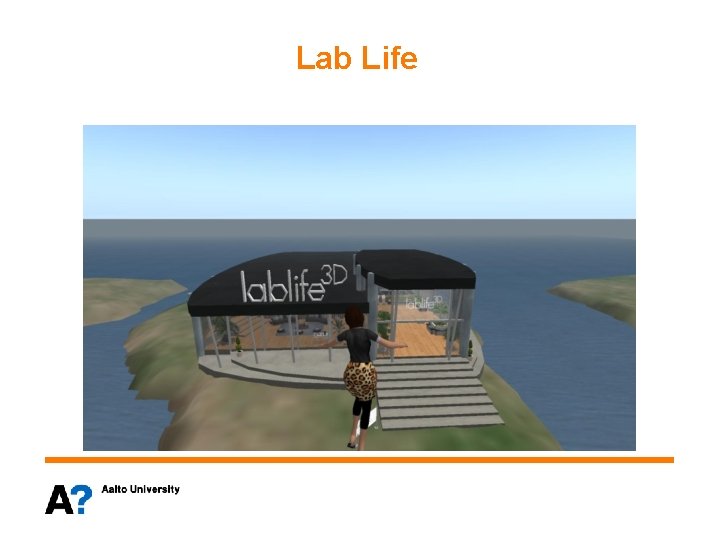
Lab Life
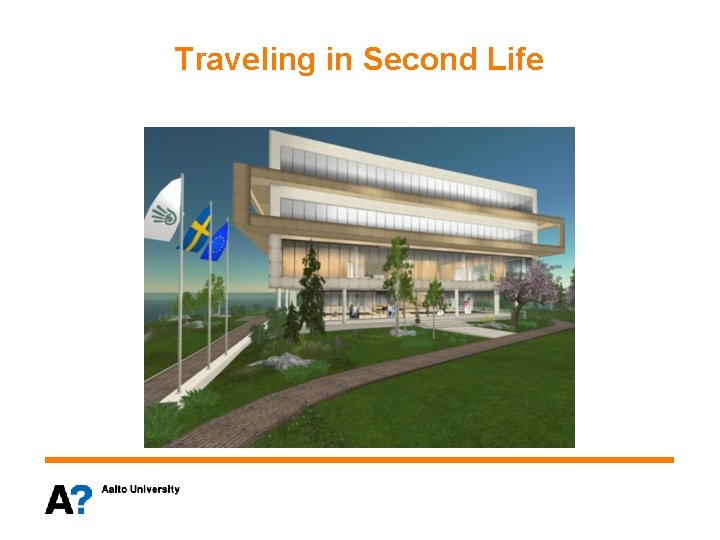
Traveling in Second Life
Role play in Lab Life
Test in a virtual laboratory
Research in the teaching project Research group at the department of industrial production (Palomäki & Nordbäck 2011) • Research questions: – Students experiences in using Second Life – The development of language proficiency • Methods: – Student questionaire – Vocabulary test with a control group (not using Second Life)
Research in the teaching project The results • Student experience overall positive – Learning experience more relaxed, interactive and activating – Students motivated to use foreign language more freely and openly – Students’ own reflection on their improvement in discussion skills positive – Use of Second Life a positive experience; high level of willingness to use it again • Proficiency level slightly better than in the control group
Teacher experiences • Technical support faced problems – Centrally managed IT environment – Access to continuous technical support when using Second Life with the students • Pedagogical support needs development – The planning of the use of multimodality in teaching – The implimentation of multimodality, e. g. virtaul learning environments – Time allocation for the planning and implementation phases
In Conclusion • When succesful the use of virtual learning environments is both fun and a great learning experience for the student and the teacher • A good tool for motivating the students and lowering attitudinal obstacles