
Using Video Motion Analysis to Quantify Technical Performance
- Slides: 17
Using Video Motion Analysis to Quantify Technical Performance Carly E. Glarner, MD, * Yue-Yung Hu, MD, * Chia-Hsiung Chen, MS, Robert G. Radwin, Ph. D, Qianqian Zhao, MS, Mark Craven, Ph. D, Carla Pugh, MD, Ph. D, Matthew Carty, MD, Caprice C. Greenberg MD, MPH, FACS (*Co-first authors)
Disclosures • No relevant conflict of interests
Motion Analysis • Tracks detailed metrics – Objective and reproducible – More specific and precise feedback – Relies on sensors on surgeon’s hand or instrument • Technological Advances – Increased availability of recording devices – Marker-less video based motion analysis • Developed within Industrial Engineering
Aim • To determine if motion analysis using markerless video-based review could be adapted for the analysis of technical skill performance in the OR
Methods: Case and Patient Selection • Index Case: – Reduction mammoplasty • Attending and resident operate simultaneously • Benign breast tissue symmetrical • Patients: – Women undergoing bilateral reduction mammoplasty – Both surgeon and patient consent obtained
Methods: Data Collection • 44 Potential cases between 2/29/12 -6/22/12 – Permission obtained from 6 surgeons – 19 Patients consented – 11 Cases recorded – 9 Cases had in-light camera view – 6 Cases yielded usable video for analysis
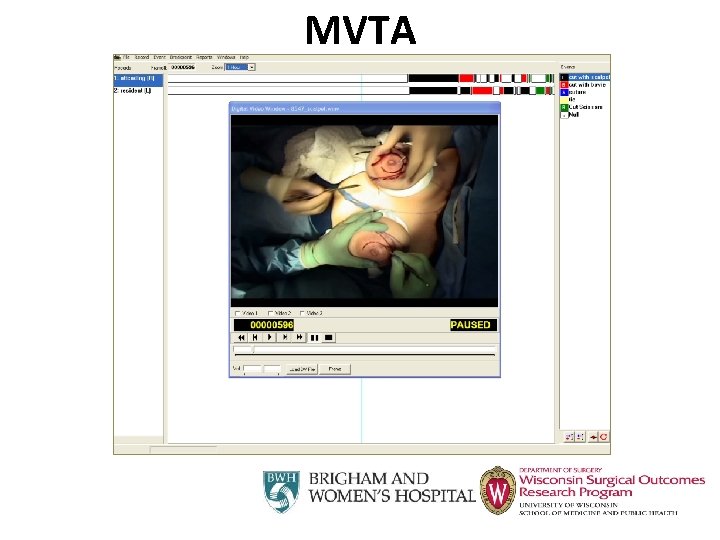
Methods: Coding • Multimedia Video Task Analysis (MVTA) • Representative surgical tasks – Cutting with electro-cautery (bovie) – Cutting with scalpel – Suturing – Instrument tying
MVTA
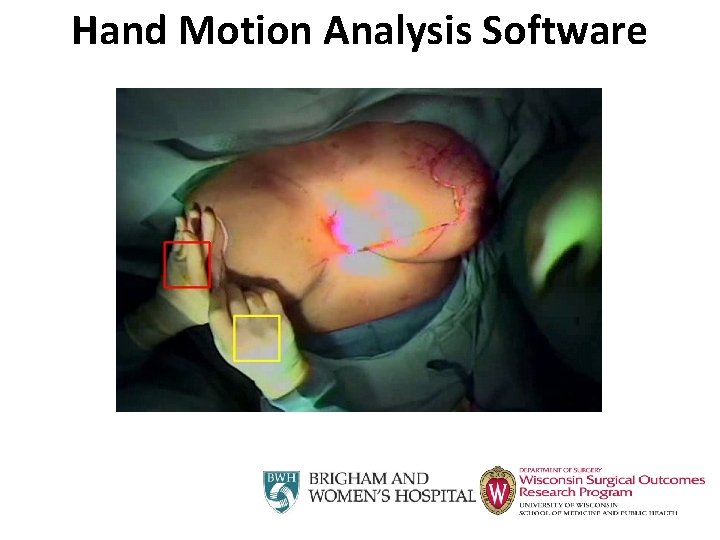
Methods: Motion Analysis • Spatio-temporal characteristics of the hand movements were extracted • Analyzed using an automated, video-based program – Marker-less – Similar results to traditional sensor-based motion analyses performed in the laboratory setting
Hand Motion Analysis Software
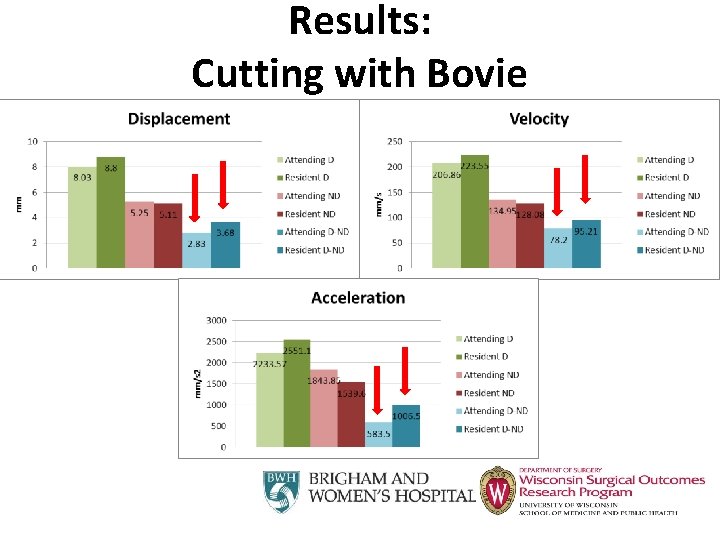
Methods: Statistical Analysis • Analysis of displacement, velocity, and acceleration by: – Task – Surgeon level • Descriptive statistics were generated for: – Dominant hand – Non-dominant hand – Difference between hands
Results: Cutting with Bovie
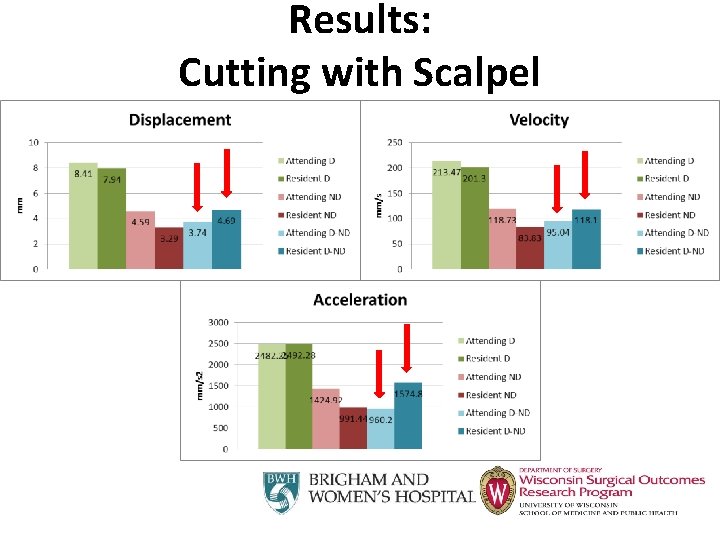
Results: Cutting with Scalpel
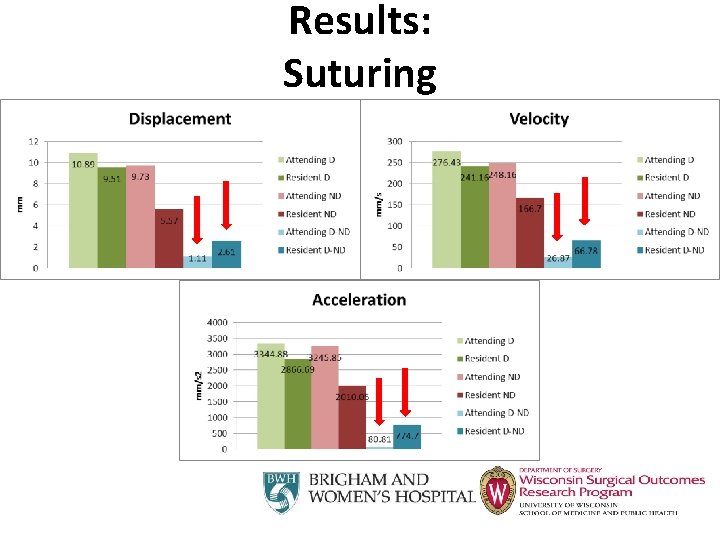
Results: Suturing
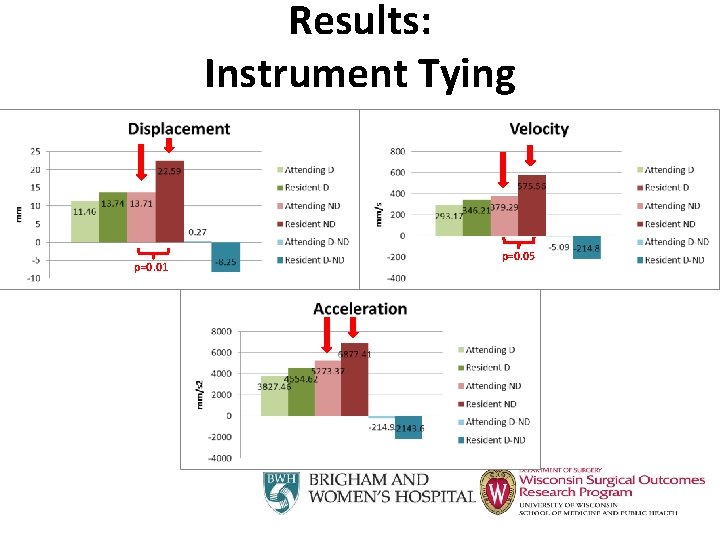
Results: Instrument Tying p=0. 01 p=0. 05
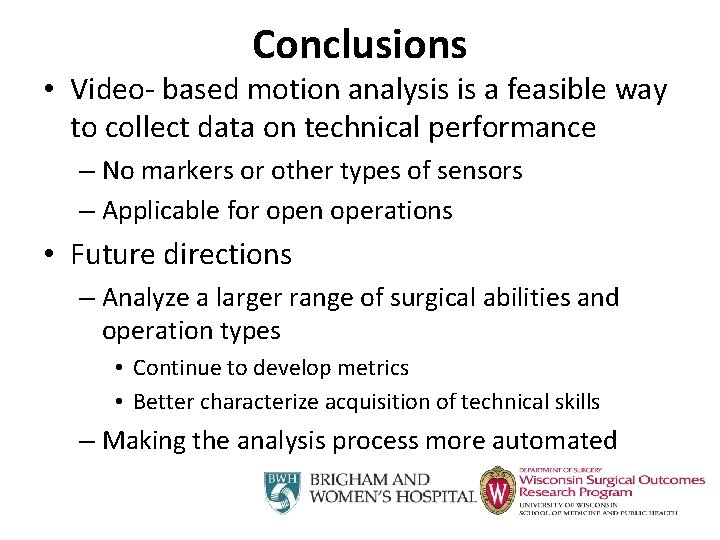
Conclusions • Video- based motion analysis is a feasible way to collect data on technical performance – No markers or other types of sensors – Applicable for open operations • Future directions – Analyze a larger range of surgical abilities and operation types • Continue to develop metrics • Better characterize acquisition of technical skills – Making the analysis process more automated
• Participants Thank you – BWH Plastic Surgeons and Residents – BWH Patients • Research Team – – – – Yue-Yung Hu Chia-Hsiung Chen Robert Radwin Qianqian Zhao Mark Craven Carla Pugh Matthew Carty Caprice Greenberg • Funding – T 32 Surgical Oncology Grant – David M. Mahvi Research Fellowship Award – SUS-KSEA Resident Scholarship