
Using verb choices and tense to intensify the
Using verb choices and tense to intensify the action in narrative
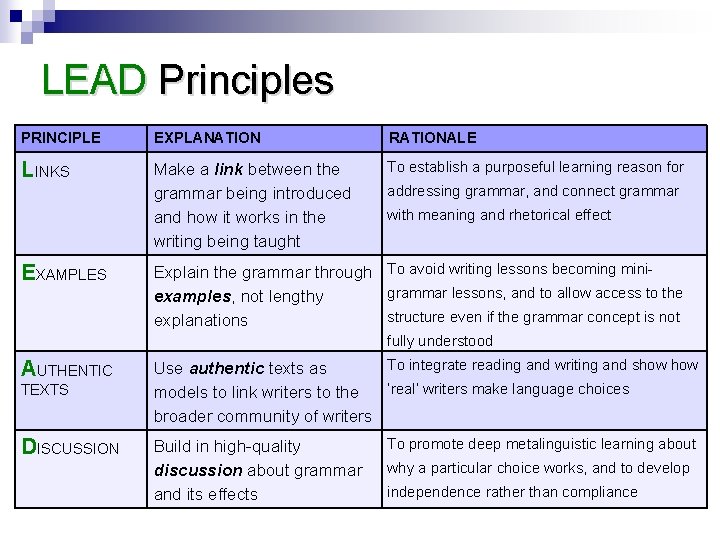
LEAD Principles PRINCIPLE EXPLANATION RATIONALE LINKS Make a link between the grammar being introduced and how it works in the writing being taught To establish a purposeful learning reason for EXAMPLES addressing grammar, and connect grammar with meaning and rhetorical effect Explain the grammar through To avoid writing lessons becoming minigrammar lessons, and to allow access to the examples, not lengthy structure even if the grammar concept is not explanations fully understood AUTHENTIC TEXTS DISCUSSION To integrate reading and writing and show Use authentic texts as ‘real’ writers make language choices models to link writers to the broader community of writers Build in high-quality discussion about grammar and its effects To promote deep metalinguistic learning about why a particular choice works, and to develop independence rather than compliance
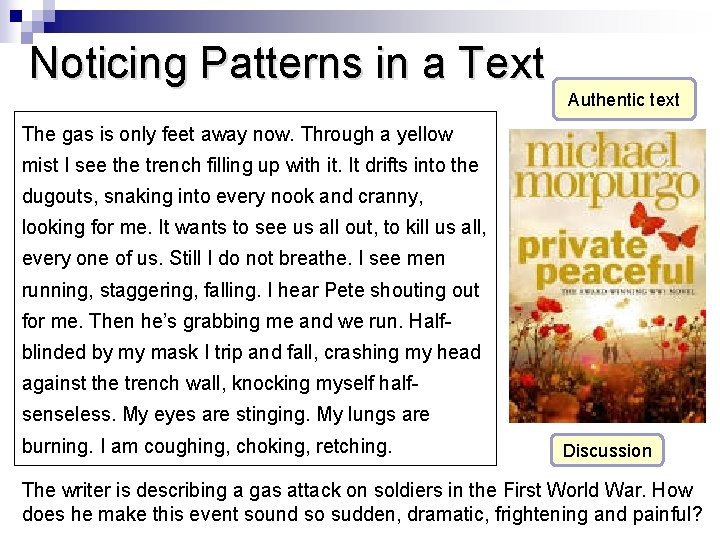
Noticing Patterns in a Text Authentic text The gas is only feet away now. Through a yellow mist I see the trench filling up with it. It drifts into the dugouts, snaking into every nook and cranny, looking for me. It wants to see us all out, to kill us all, every one of us. Still I do not breathe. I see men running, staggering, falling. I hear Pete shouting out for me. Then he’s grabbing me and we run. Halfblinded by my mask I trip and fall, crashing my head against the trench wall, knocking myself halfsenseless. My eyes are stinging. My lungs are burning. I am coughing, choking, retching. Discussion The writer is describing a gas attack on soldiers in the First World War. How does he make this event sound so sudden, dramatic, frightening and painful?
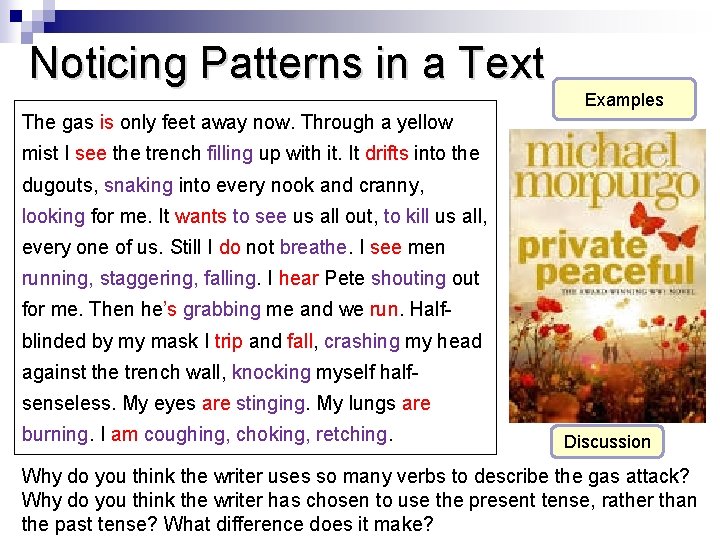
Noticing Patterns in a Text Examples The gas is only feet away now. Through a yellow mist I see the trench filling up with it. It drifts into the dugouts, snaking into every nook and cranny, looking for me. It wants to see us all out, to kill us all, every one of us. Still I do not breathe. I see men running, staggering, falling. I hear Pete shouting out for me. Then he’s grabbing me and we run. Halfblinded by my mask I trip and fall, crashing my head against the trench wall, knocking myself halfsenseless. My eyes are stinging. My lungs are burning. I am coughing, choking, retching. Discussion Why do you think the writer uses so many verbs to describe the gas attack? Why do you think the writer has chosen to use the present tense, rather than the past tense? What difference does it make?

Noticing Patterns in a Text Examples The gas is only feet away now. Through a yellow mist I see the trench filling up with it. It drifts into the dugouts, snaking into every nook and cranny, looking for me. It wants to see us all out, to kill us all, every one of us. Still I do not breathe. I see men running, staggering, falling. I hear Pete shouting out for me. Then he’s grabbing me and we run. Halfblinded by my mask I trip and fall, crashing my head against the trench wall, knocking myself halfsenseless. My eyes are stinging. My lungs are burning. I am coughing, choking, retching. Discussion Why do you think the writer uses so many present tense verbs that end in –ing? Do these affect how you ‘see’ or ‘hear’ the scene being described?

Verbalising the Grammar-Writing Link A crucial element of the LEAD principles is helping writers to think explicitly (metalinguistically) about the choices they make. As a teacher, you need to support this by being crystal clear yourself about how you verbalise the link between a grammar choice and its effect in a particular text/context. Then express this in student-friendly language, as below. Verbalisation to share with students: When you are writing narrative, you can think about how to emphasise the drama and pace of key action scenes. Choosing descriptive (lexical) verbs carefully and experimenting with verb tenses can help you do this.
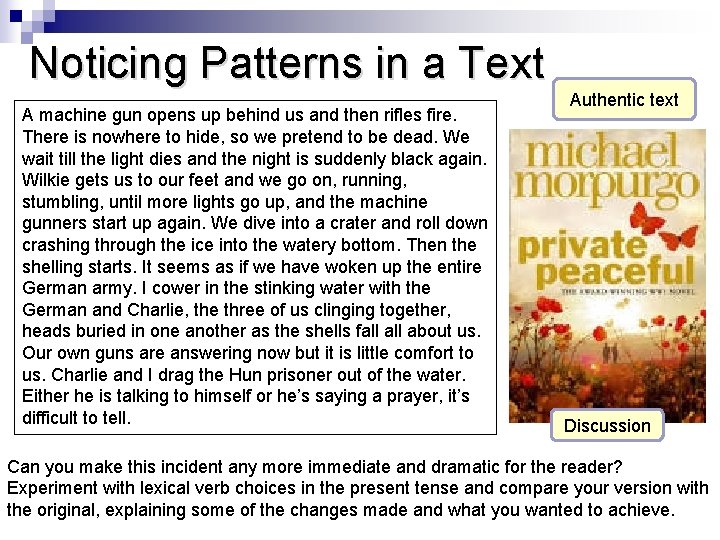
Noticing Patterns in a Text A machine gun opens up behind us and then rifles fire. There is nowhere to hide, so we pretend to be dead. We wait till the light dies and the night is suddenly black again. Wilkie gets us to our feet and we go on, running, stumbling, until more lights go up, and the machine gunners start up again. We dive into a crater and roll down crashing through the ice into the watery bottom. Then the shelling starts. It seems as if we have woken up the entire German army. I cower in the stinking water with the German and Charlie, the three of us clinging together, heads buried in one another as the shells fall about us. Our own guns are answering now but it is little comfort to us. Charlie and I drag the Hun prisoner out of the water. Either he is talking to himself or he’s saying a prayer, it’s difficult to tell. Authentic text Discussion Can you make this incident any more immediate and dramatic for the reader? Experiment with lexical verb choices in the present tense and compare your version with the original, explaining some of the changes made and what you wanted to achieve.
- Slides: 7