
Using Universal Screening to Identify Students in Need



- Slides: 57
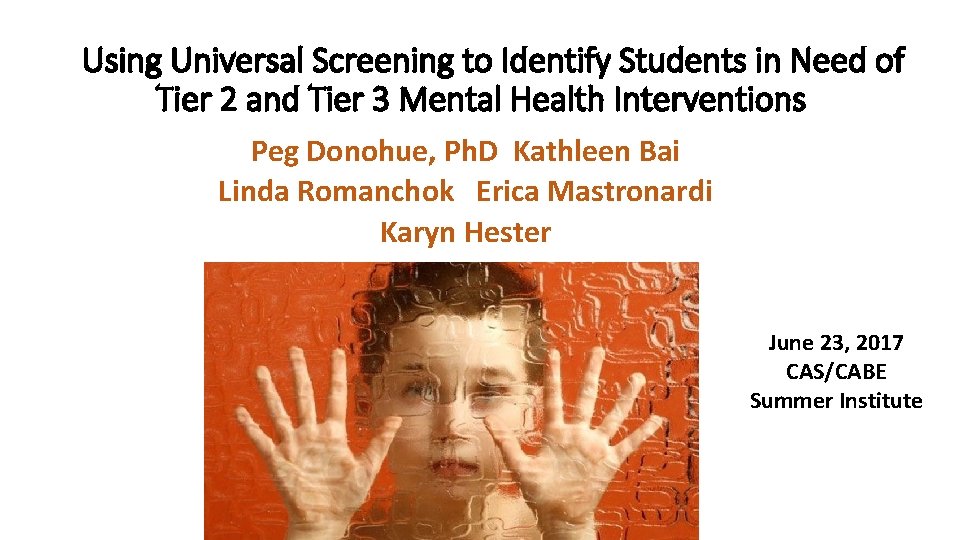
Using Universal Screening to Identify Students in Need of Tier 2 and Tier 3 Mental Health Interventions Peg Donohue, Ph. D Kathleen Bai Linda Romanchok Erica Mastronardi Karyn Hester June 23, 2017 CAS/CABE Summer Institute
Please answer: This would be a great workshop if….
1. What is universal screening (US)? 2. Why is it encouraged in schools? 3. What is involved? 4. What would a US pilot look like? 5. How does a team select an instrument? 6. What does the data tell us? 7. How do districts use the data over time?
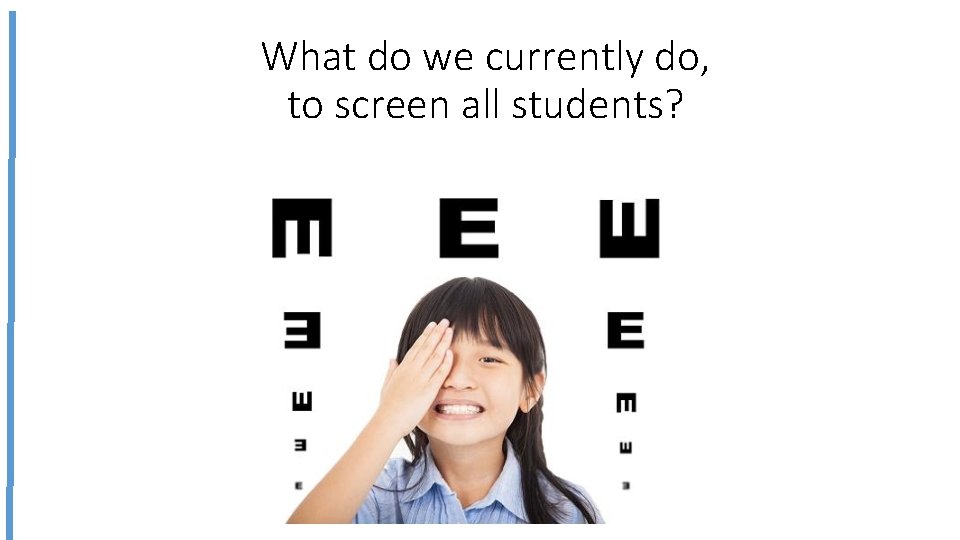
What do we currently do, to screen all students?
What about…
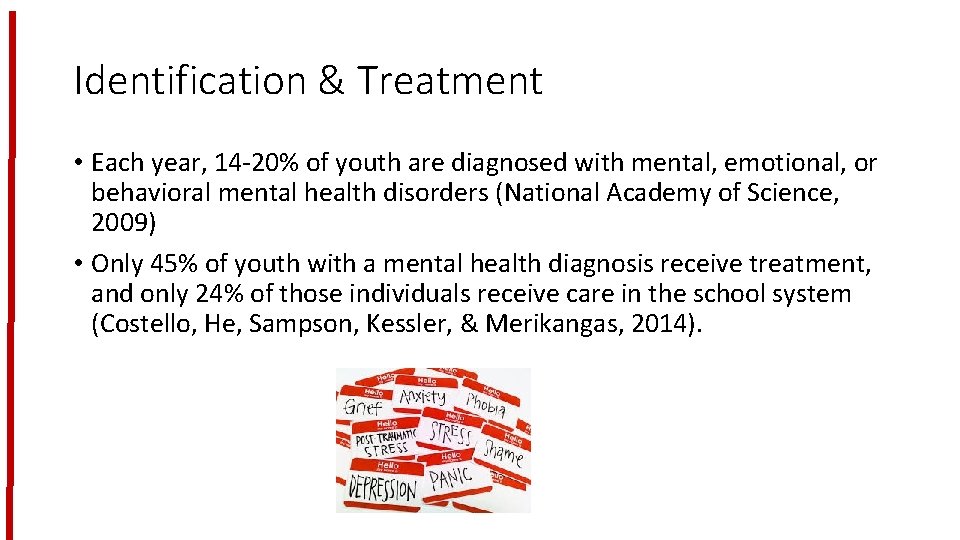
Identification & Treatment • Each year, 14 -20% of youth are diagnosed with mental, emotional, or behavioral mental health disorders (National Academy of Science, 2009) • Only 45% of youth with a mental health diagnosis receive treatment, and only 24% of those individuals receive care in the school system (Costello, He, Sampson, Kessler, & Merikangas, 2014).
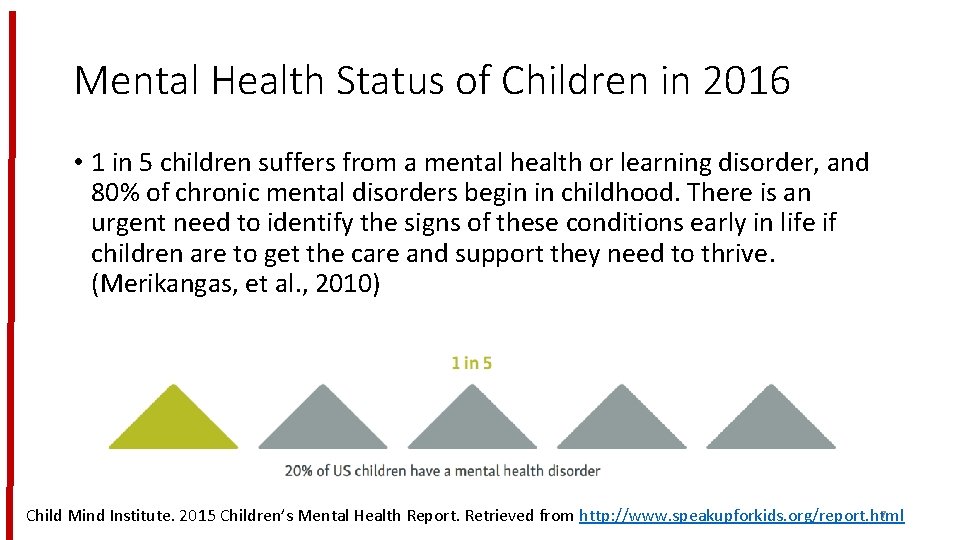
Mental Health Status of Children in 2016 • 1 in 5 children suffers from a mental health or learning disorder, and 80% of chronic mental disorders begin in childhood. There is an urgent need to identify the signs of these conditions early in life if children are to get the care and support they need to thrive. (Merikangas, et al. , 2010) 7 Child Mind Institute. 2015 Children’s Mental Health Report. Retrieved from http: //www. speakupforkids. org/report. html
Stress in Childhood • Approximately 1/3 of children display symptoms of stress • More than half of all college students report “overwhelming anxiety” • “Stress is the top health problem facing kids today. ” Sandra Hassink, Former President American Pediatrics Association 8
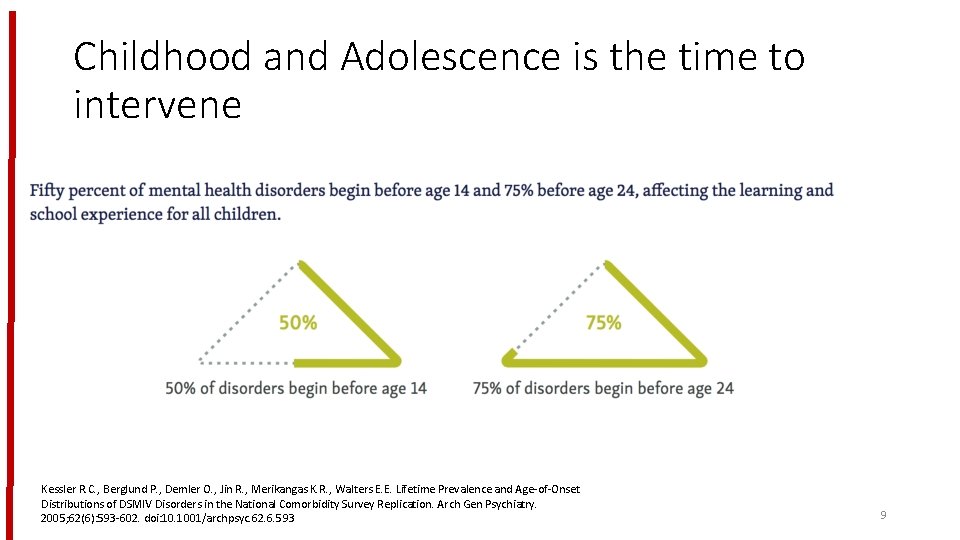
Childhood and Adolescence is the time to intervene Kessler R. C. , Berglund P. , Demler O. , Jin R. , Merikangas K. R. , Walters E. E. Lifetime Prevalence and Age-of-Onset Distributions of DSMIV Disorders in the National Comorbidity Survey Replication. Arch Gen Psychiatry. 2005; 62(6): 593 -602. doi: 10. 1001/archpsyc. 62. 6. 593 9
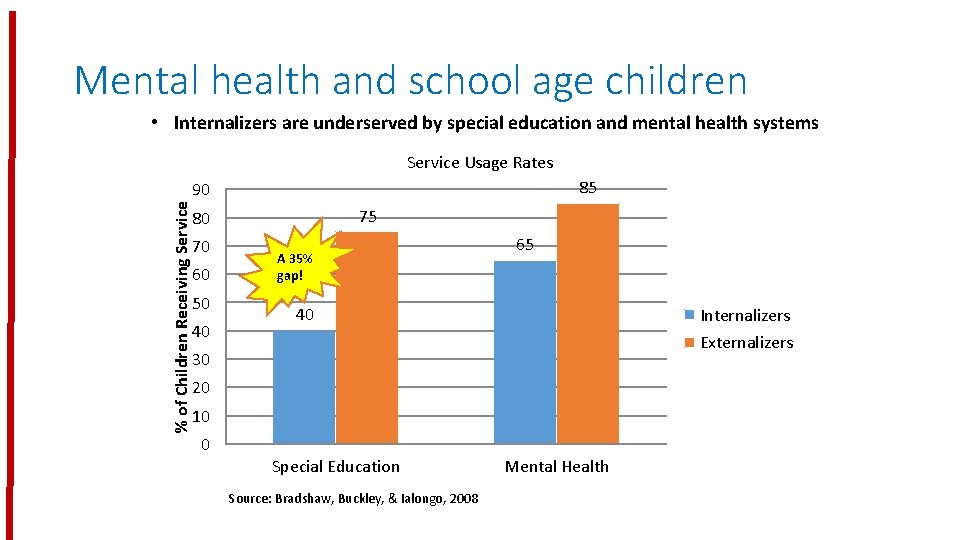
Mental health and school age children • Internalizers are underserved by special education and mental health systems Service Usage Rates 85 % of Children Receiving Service 90 75 80 70 60 50 40 A 35% gap! 65 40 Internalizers Externalizers 30 20 10 0 Special Education Source: Bradshaw, Buckley, & Ialongo, 2008 Mental Health
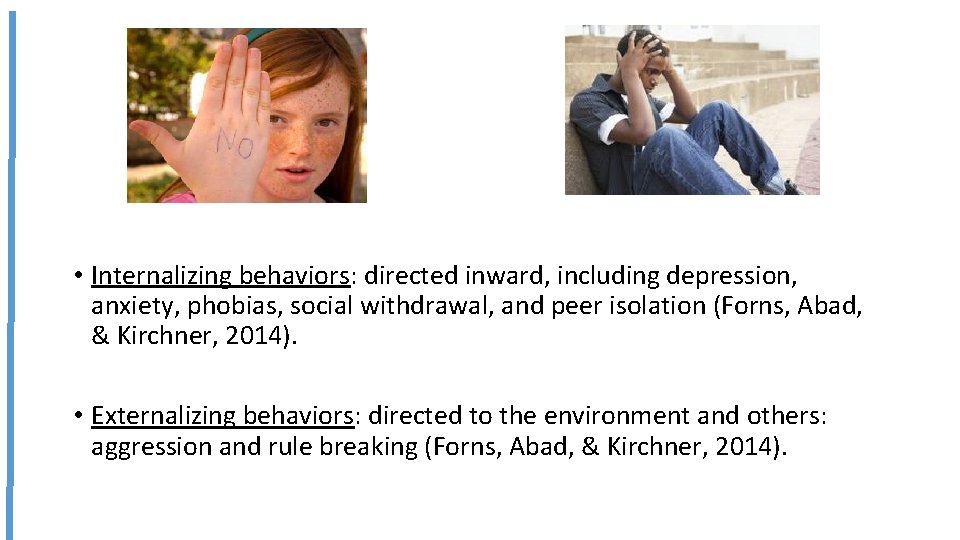
• Internalizing behaviors: directed inward, including depression, anxiety, phobias, social withdrawal, and peer isolation (Forns, Abad, & Kirchner, 2014). • Externalizing behaviors: directed to the environment and others: aggression and rule breaking (Forns, Abad, & Kirchner, 2014).
Turn and talk • What trends are you seeing in your district? • What are kids presenting with? • How do you know? • Do you know how many mental health crisis calls (211) your district made this past year?
Universal Screening is defined as: “The systematic assessment of ALL children within a given class, grade, school building, or school district on academic and/or social-emotional indicators that the school personnel and community have agreed are important. ” (Ikeda, Neessen & Witt, 2008, p. 113)
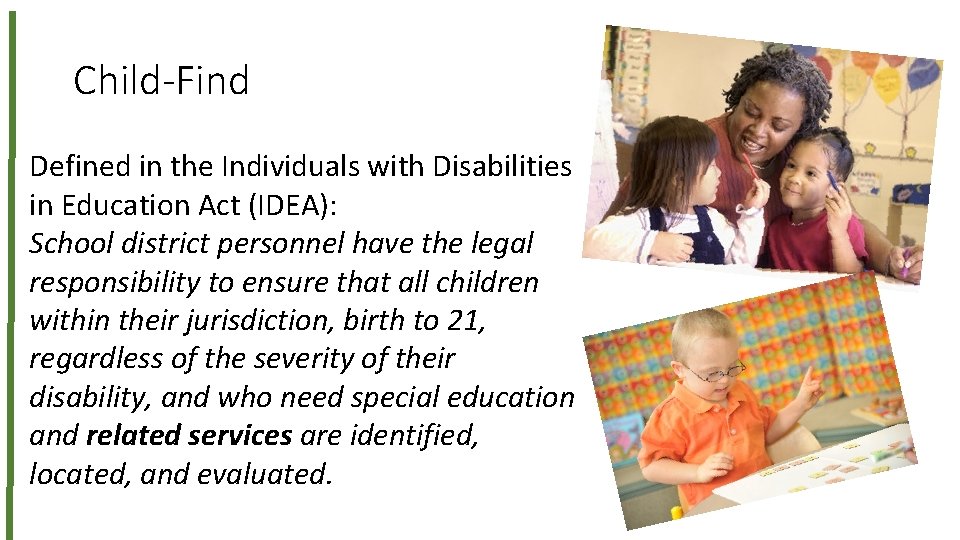
Child-Find Defined in the Individuals with Disabilities in Education Act (IDEA): School district personnel have the legal responsibility to ensure that all children within their jurisdiction, birth to 21, regardless of the severity of their disability, and who need special education and related services are identified, located, and evaluated.
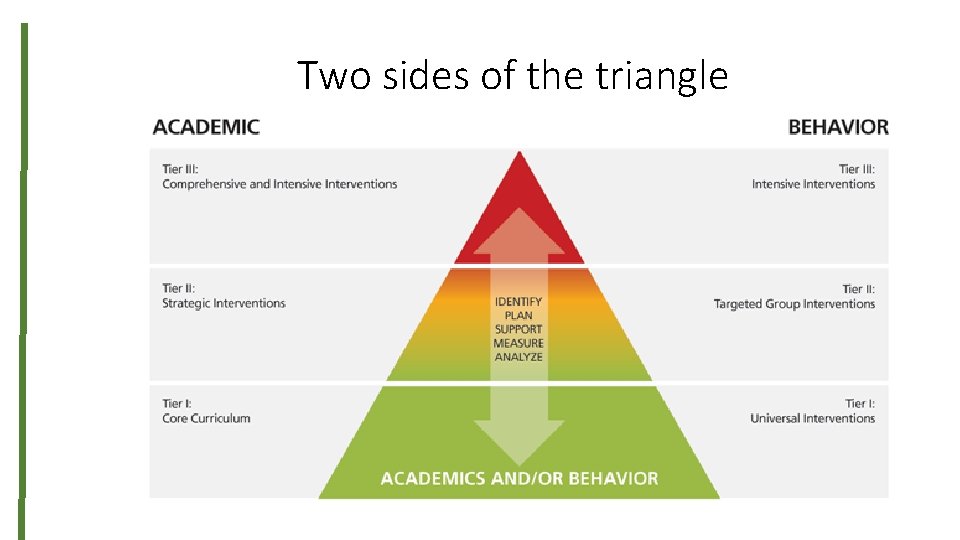
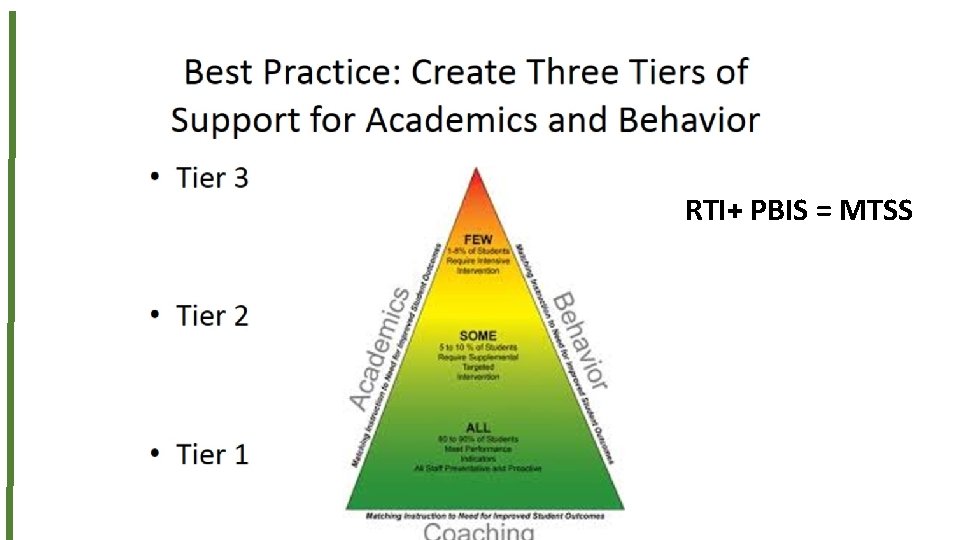
Two sides of the triangle
RTI+ PBIS = MTSS
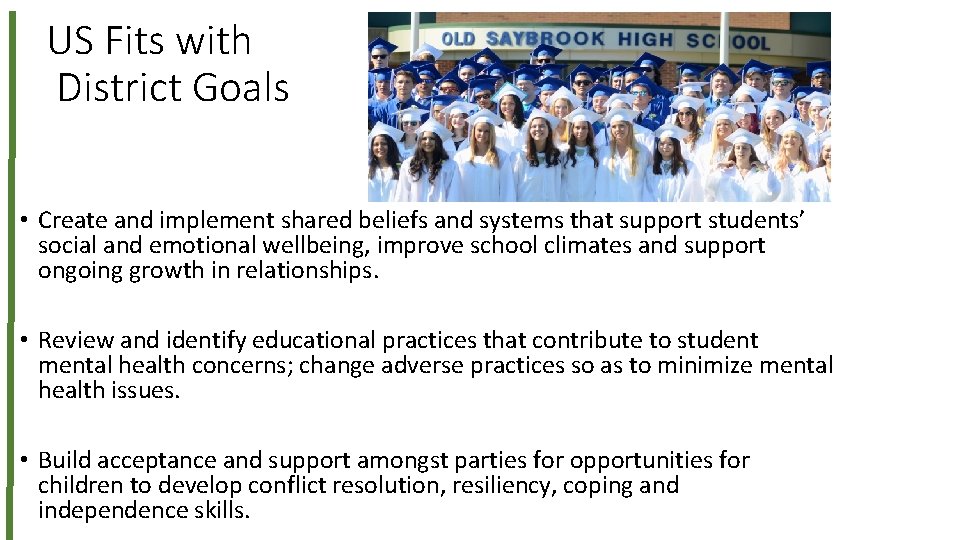
US Fits with District Goals • Create and implement shared beliefs and systems that support students’ social and emotional wellbeing, improve school climates and support ongoing growth in relationships. • Review and identify educational practices that contribute to student mental health concerns; change adverse practices so as to minimize mental health issues. • Build acceptance and support amongst parties for opportunities for children to develop conflict resolution, resiliency, coping and independence skills.
Benefits of early intervention • Early intervention leads to better outcomes • Students confront increasing academic demands • We have to address mental health concerns so students are available for learning • Hard wire kids with coping skills early in their lives
How do we serve all the kids we identify? • Created of Collaborative Services Team in 2009 • Strong partnership with Youth and Family Services Agency • Joined previously existing counseling groups • Interns supporting Tier 2 from YFS and OSMS • Parent provided counseling
Piloting Universal Screening
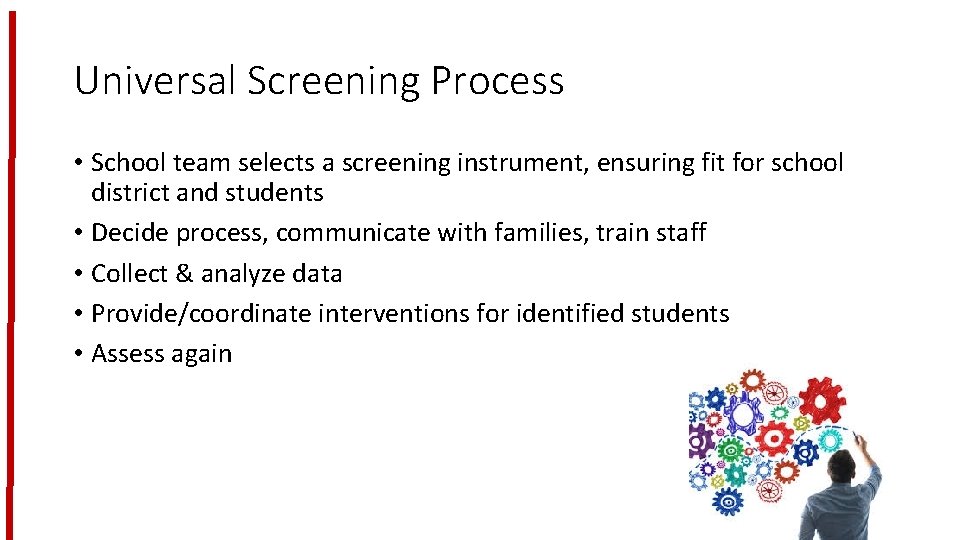
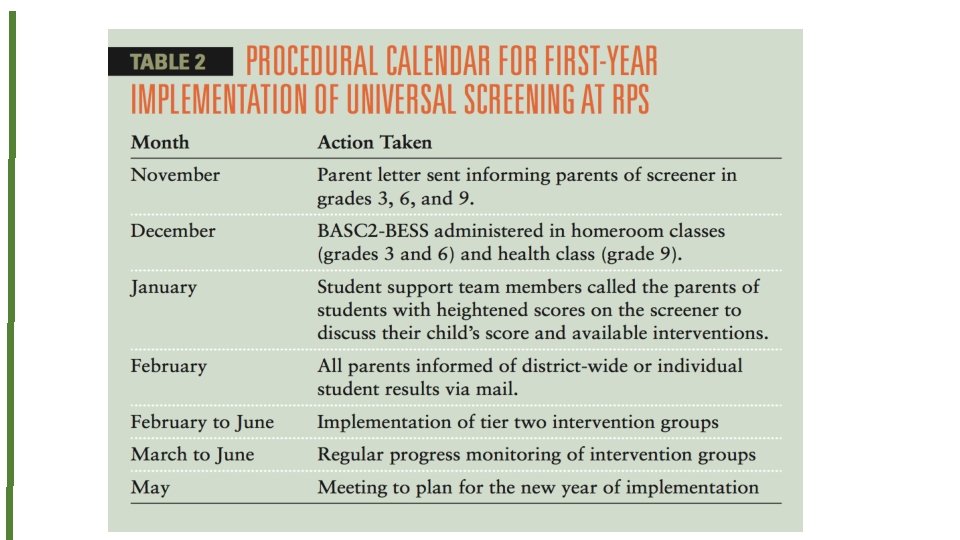
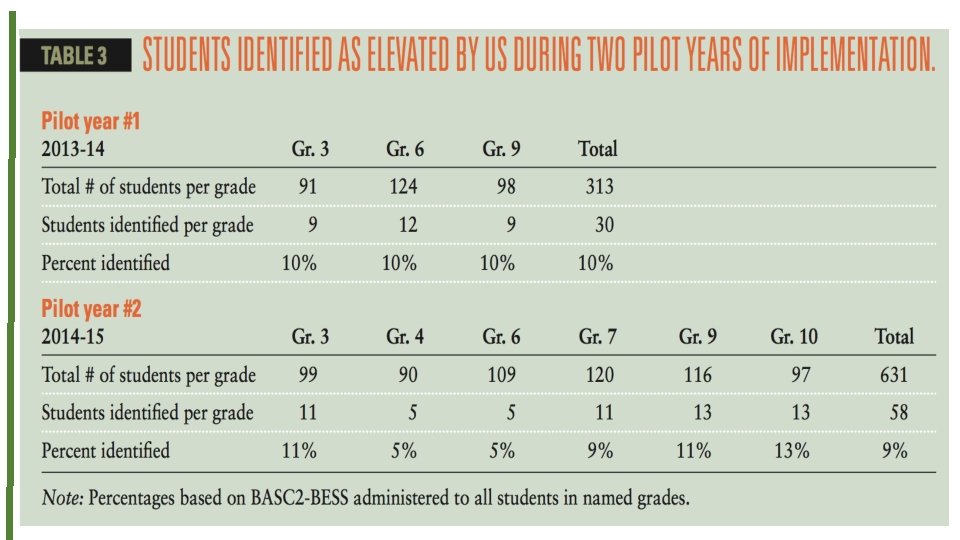
Universal Screening Process • School team selects a screening instrument, ensuring fit for school district and students • Decide process, communicate with families, train staff • Collect & analyze data • Provide/coordinate interventions for identified students • Assess again
Universal Screening recommended by: • 2002 The United States President’s Commission on Excellence in Special Education (U. S. Department of Education OSERS) • 2009 National Association of School Psychologists (NASP) • 2009 National Research Council • 2009 Institute of Medicine • 2013 A Framework for Safe and Successful Schools • 2014 Connecticut Office of Child Advocate (2014) • 2016 CSCORE research brief 11. 1: Humphrey, N. & Wigelsworth, M. Making the case for universal school-based mental health screening. • 2017 Ohio PBIS Network
Why add universal screening to our practices? “Schools must play a critical role in the identification and referral of students with social, emotional, and behavioral health problems. This identification and referral is critical to ensure that students are then connected with the appropriate supports both in the school and in the home… The goal of interconnection between separate systems within the mental health arena can only be successfully achieved through the integration of schools and their active participation concerning the mental health and wellness of their students. ” (Office of the Child Advocate, 2014, p. 92)
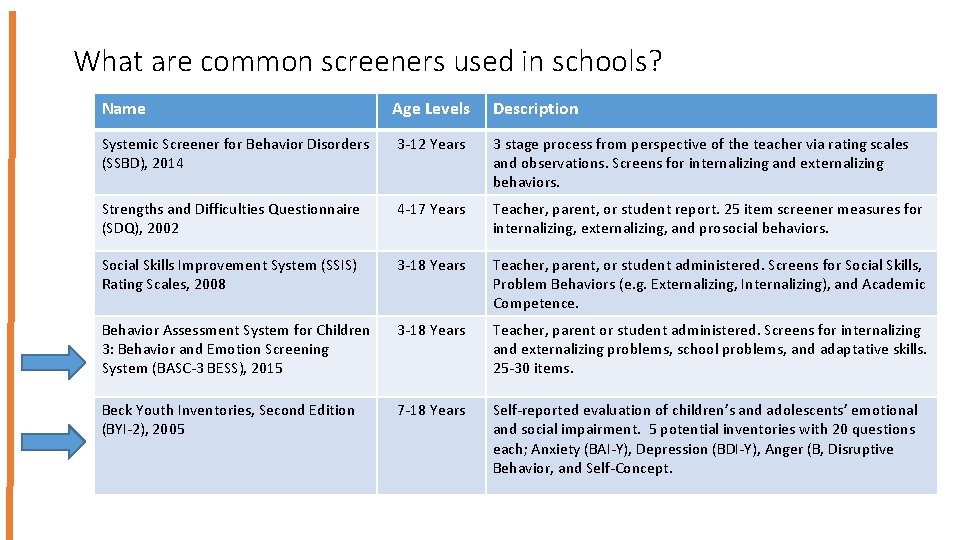
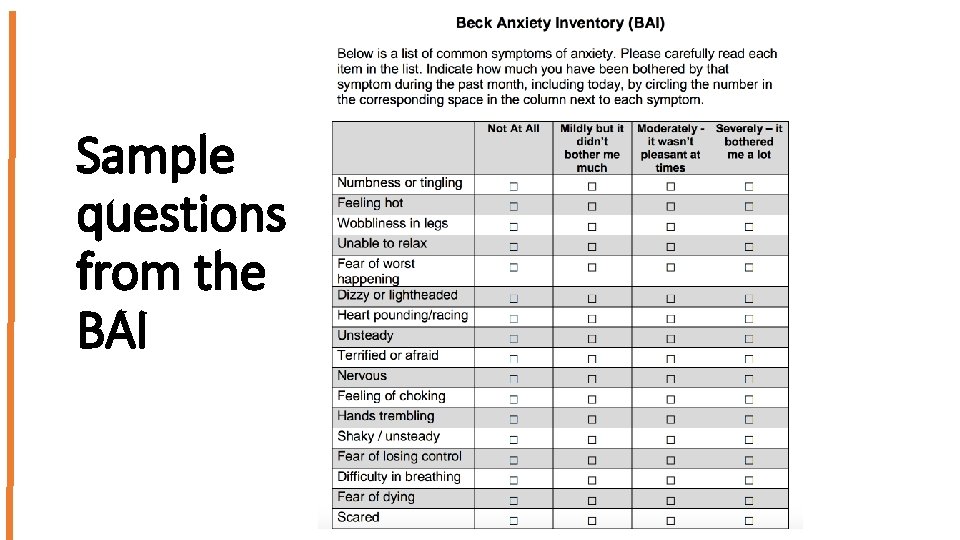
What are common screeners used in schools? Name Age Levels Description Systemic Screener for Behavior Disorders (SSBD), 2014 3 -12 Years 3 stage process from perspective of the teacher via rating scales and observations. Screens for internalizing and externalizing behaviors. Strengths and Difficulties Questionnaire (SDQ), 2002 4 -17 Years Teacher, parent, or student report. 25 item screener measures for internalizing, externalizing, and prosocial behaviors. Social Skills Improvement System (SSIS) Rating Scales, 2008 3 -18 Years Teacher, parent, or student administered. Screens for Social Skills, Problem Behaviors (e. g. Externalizing, Internalizing), and Academic Competence. Behavior Assessment System for Children 3: Behavior and Emotion Screening System (BASC-3 BESS), 2015 3 -18 Years Teacher, parent or student administered. Screens for internalizing and externalizing problems, school problems, and adaptative skills. 25 -30 items. Beck Youth Inventories, Second Edition (BYI-2), 2005 7 -18 Years Self-reported evaluation of children’s and adolescents’ emotional and social impairment. 5 potential inventories with 20 questions each; Anxiety (BAI-Y), Depression (BDI-Y), Anger (B, Disruptive Behavior, and Self-Concept.
Sample questions from the BAI
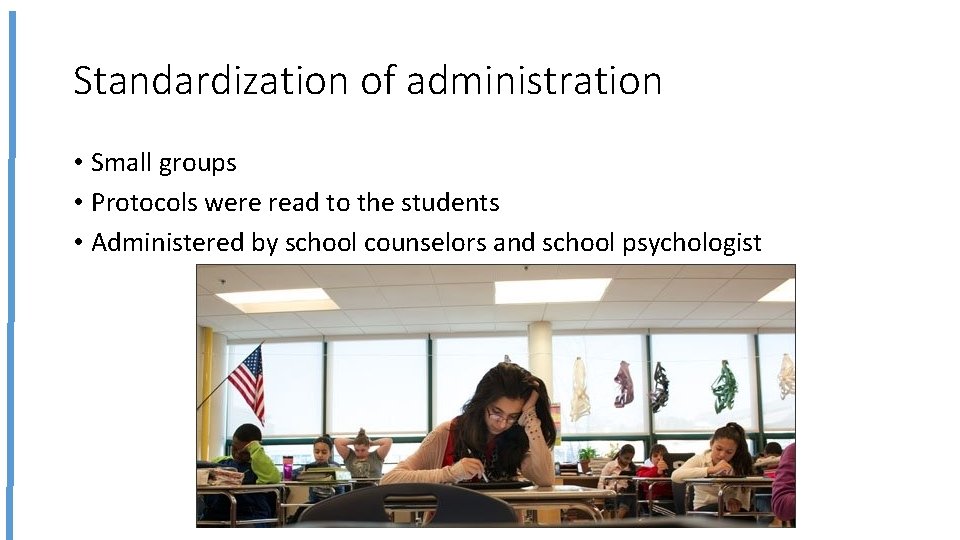
Standardization of administration • Small groups • Protocols were read to the students • Administered by school counselors and school psychologist
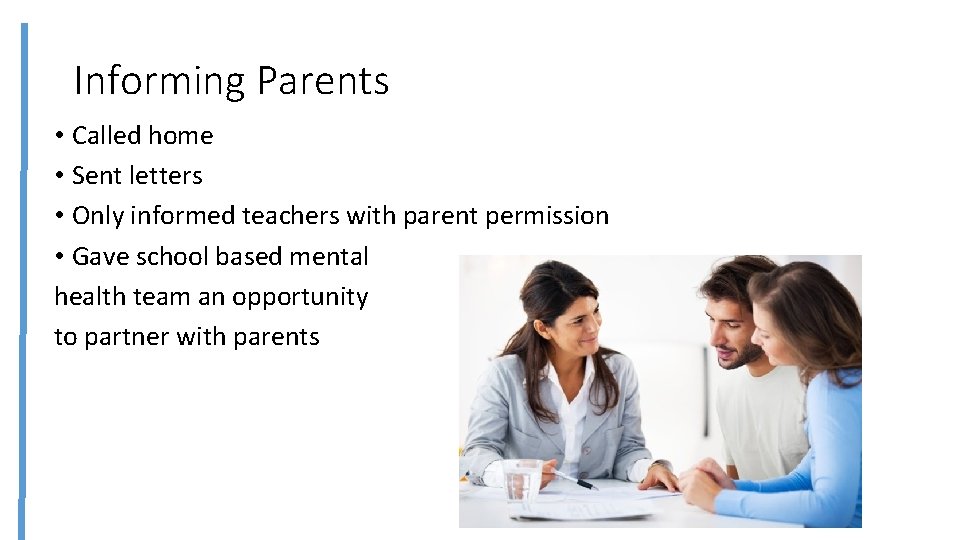
Informing Parents • Called home • Sent letters • Only informed teachers with parent permission • Gave school based mental health team an opportunity to partner with parents
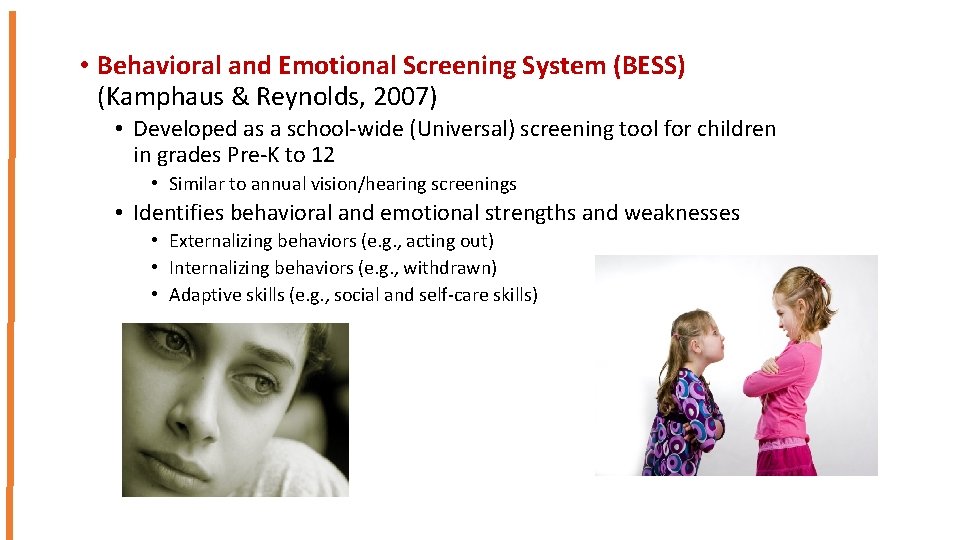
• Behavioral and Emotional Screening System (BESS) (Kamphaus & Reynolds, 2007) • Developed as a school-wide (Universal) screening tool for children in grades Pre-K to 12 • Similar to annual vision/hearing screenings • Identifies behavioral and emotional strengths and weaknesses • Externalizing behaviors (e. g. , acting out) • Internalizing behaviors (e. g. , withdrawn) • Adaptive skills (e. g. , social and self-care skills)
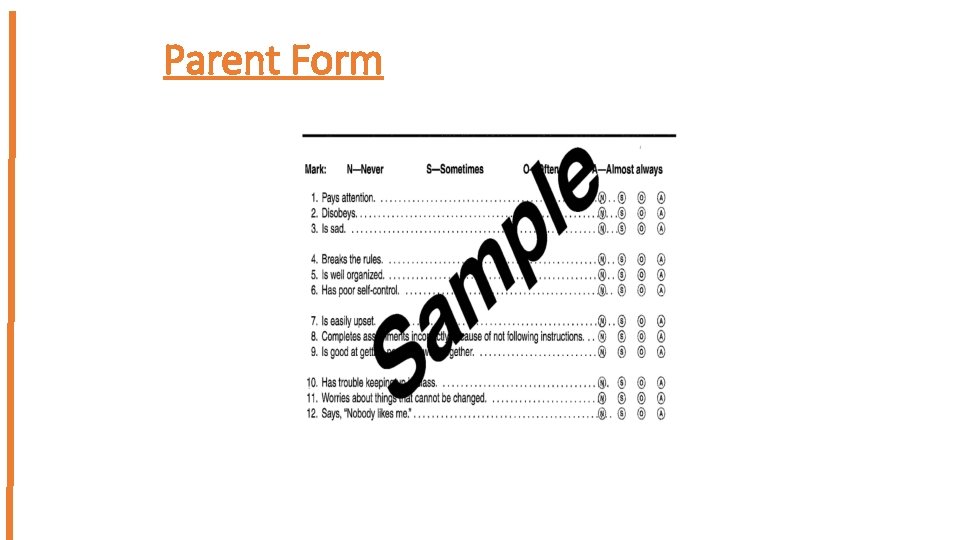
Parent Form
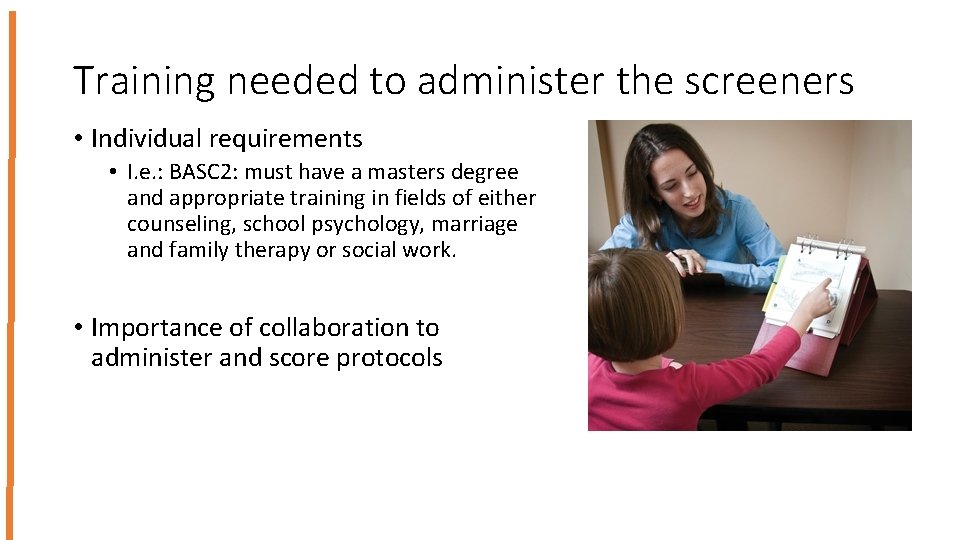
Training needed to administer the screeners • Individual requirements • I. e. : BASC 2: must have a masters degree and appropriate training in fields of either counseling, school psychology, marriage and family therapy or social work. • Importance of collaboration to administer and score protocols
Data based decision making – changing instruments • BASC 2 – original instrument • Needed a clearer picture of who was struggling with anxiety • Beck Inventory was better • Are we missing kids who have depression? • No screener is perfect
Findings from new instruments • Moved to Beck Inventory • Scored by hand • Benefits • Drawbacks • What did the data tell us?
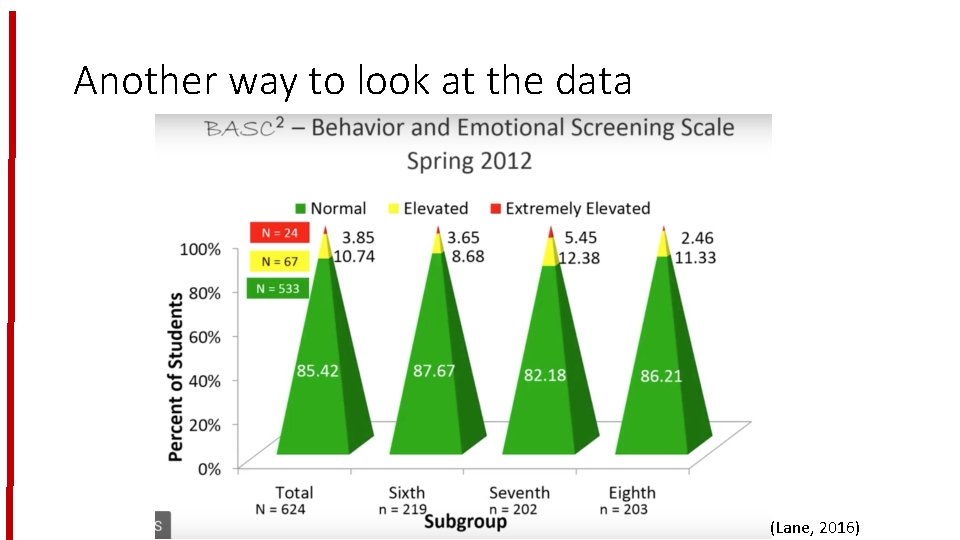
Another way to look at the data (Lane, 2016)
Looking at the data Sample BASC 2 District Data by School 100 80 60 40 20 0 A B Percent Total percent Percent Elevated C Percent Extremely Elevated Percent Normal D
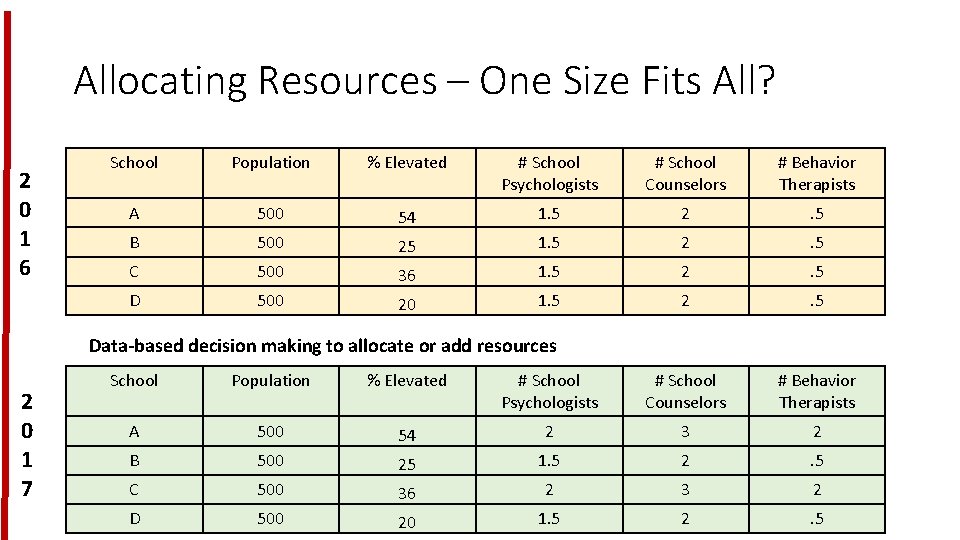
Allocating Resources – One Size Fits All? 2 0 1 6 School Population % Elevated # School Psychologists # School Counselors # Behavior Therapists A 500 54 1. 5 2 . 5 B 500 25 1. 5 2 . 5 C 500 36 1. 5 2 . 5 D 500 20 1. 5 2 . 5 Data-based decision making to allocate or add resources 2 0 1 7 School Population % Elevated # School Psychologists # School Counselors # Behavior Therapists A 500 54 2 3 2 B 500 25 1. 5 2 . 5 C 500 36 2 3 2 D 500 20 1. 5 2 . 5
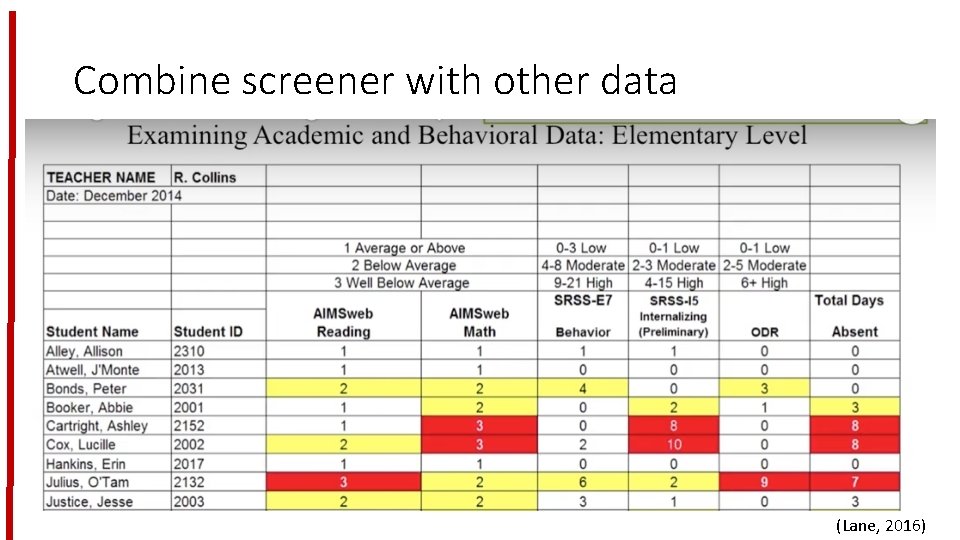
Combine screener with other data (Lane, 2016)
Cost benefit analysis of universal screening
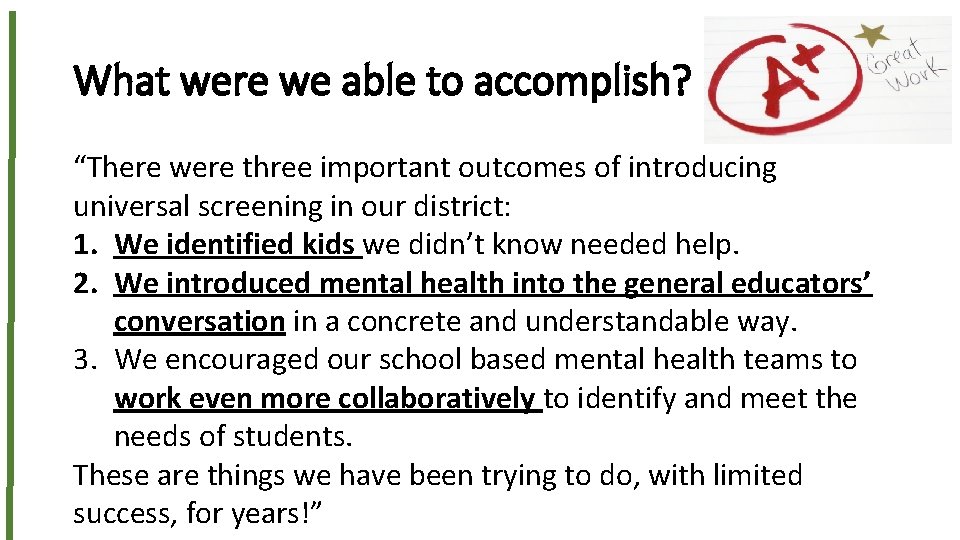
What were we able to accomplish? “There were three important outcomes of introducing universal screening in our district: 1. We identified kids we didn’t know needed help. 2. We introduced mental health into the general educators’ conversation in a concrete and understandable way. 3. We encouraged our school based mental health teams to work even more collaboratively to identify and meet the needs of students. These are things we have been trying to do, with limited success, for years!”
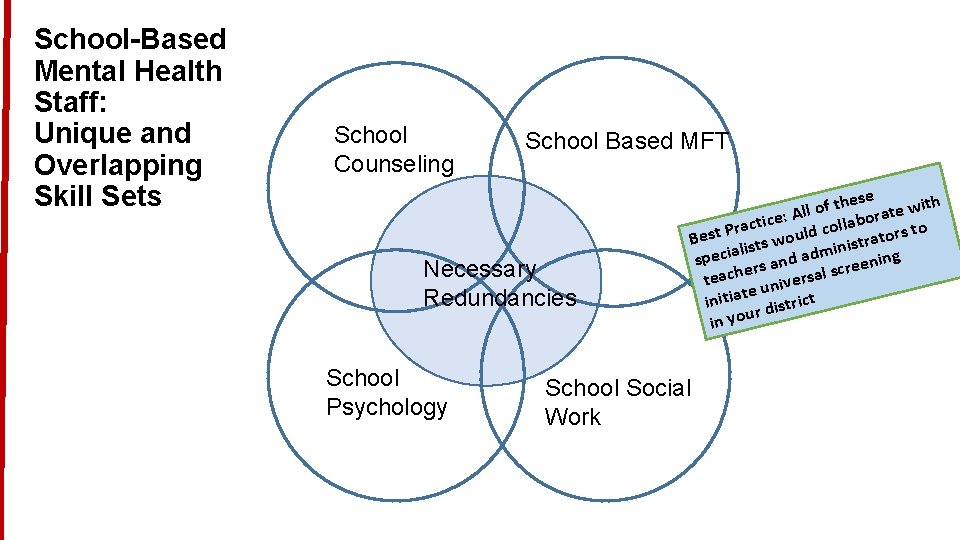
School-Based Mental Health Staff: Unique and Overlapping Skill Sets School Counseling School Based MFT Necessary Redundancies School Psychology ese h t ith f w o l e l t A bora to ice: t a l c l a o r c Best P ists would nistrators i l specia rs and adm reening c e teach universal s te initia district r in you School Social Work
Turn and talk • Who do you have on your team? • Who can you call on in a time of crisis? • Who would you like to add to your team?
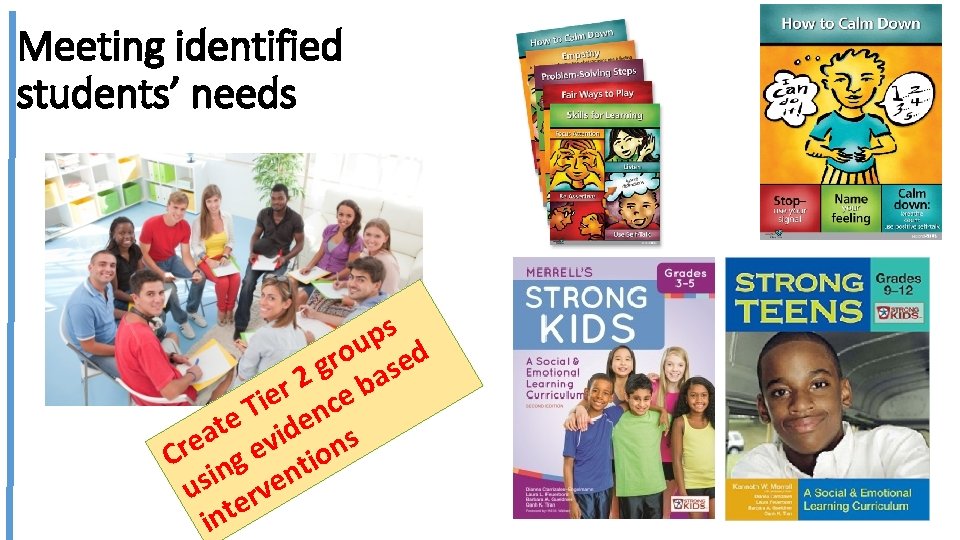
Meeting identified students’ needs s p u o d r e g s a 2 b r ie nce T e e t d a i s v e n r e o C ng i t i n s e u erv int
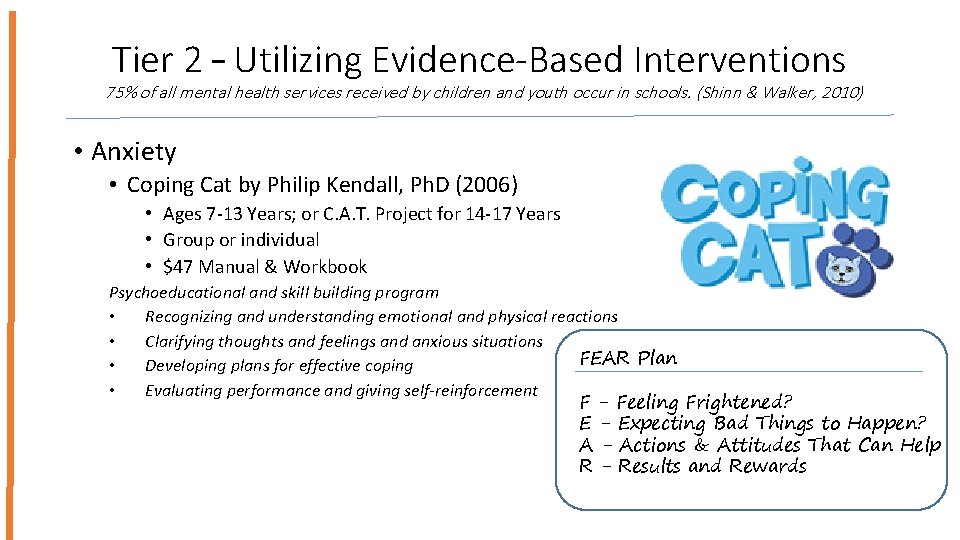
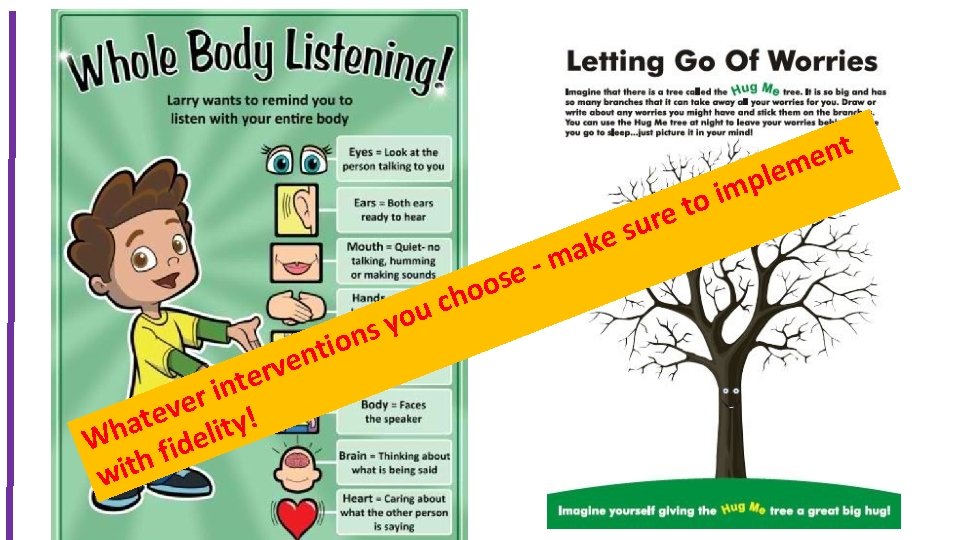
Tier 2 – Utilizing Evidence-Based Interventions 75% of all mental health services received by children and youth occur in schools. (Shinn & Walker, 2010) • Anxiety • Coping Cat by Philip Kendall, Ph. D (2006) • Ages 7 -13 Years; or C. A. T. Project for 14 -17 Years • Group or individual • $47 Manual & Workbook Psychoeducational and skill building program • Recognizing and understanding emotional and physical reactions • Clarifying thoughts and feelings and anxious situations FEAR Plan • Developing plans for effective coping • Evaluating performance and giving self-reinforcement F - Feeling Frightened? E - Expecting Bad Things to Happen? A - Actions & Attitudes That Can Help R - Results and Rewards
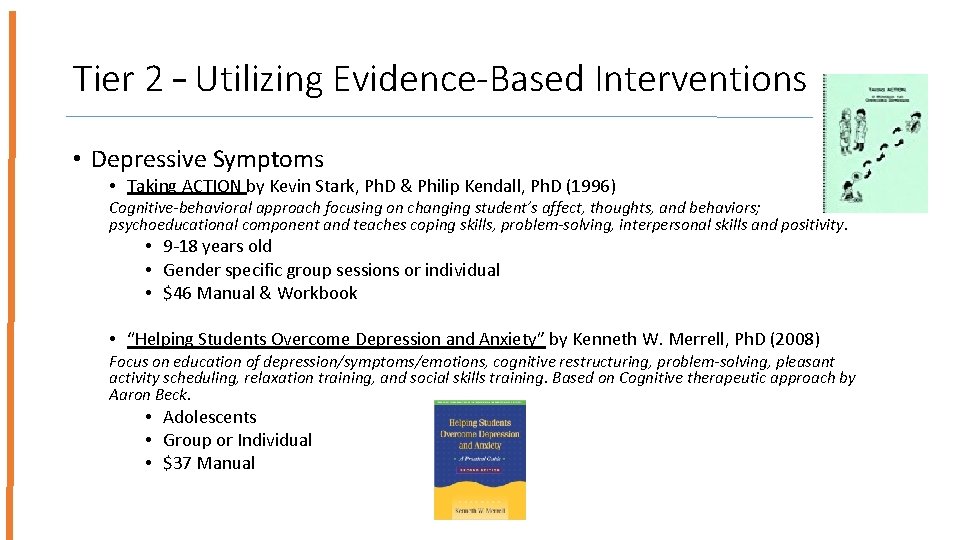
Tier 2 – Utilizing Evidence-Based Interventions • Depressive Symptoms • Taking ACTION by Kevin Stark, Ph. D & Philip Kendall, Ph. D (1996) Cognitive-behavioral approach focusing on changing student’s affect, thoughts, and behaviors; psychoeducational component and teaches coping skills, problem-solving, interpersonal skills and positivity. • 9 -18 years old • Gender specific group sessions or individual • $46 Manual & Workbook • “Helping Students Overcome Depression and Anxiety” by Kenneth W. Merrell, Ph. D (2008) Focus on education of depression/symptoms/emotions, cognitive restructuring, problem-solving, pleasant activity scheduling, relaxation training, and social skills training. Based on Cognitive therapeutic approach by Aaron Beck. • Adolescents • Group or Individual • $37 Manual
e v r e t n i r e v e ! t y a t h i l e W d i f h t wi s n o nti c u yo e s o ho e k a -m o t e sur l p im t n e em
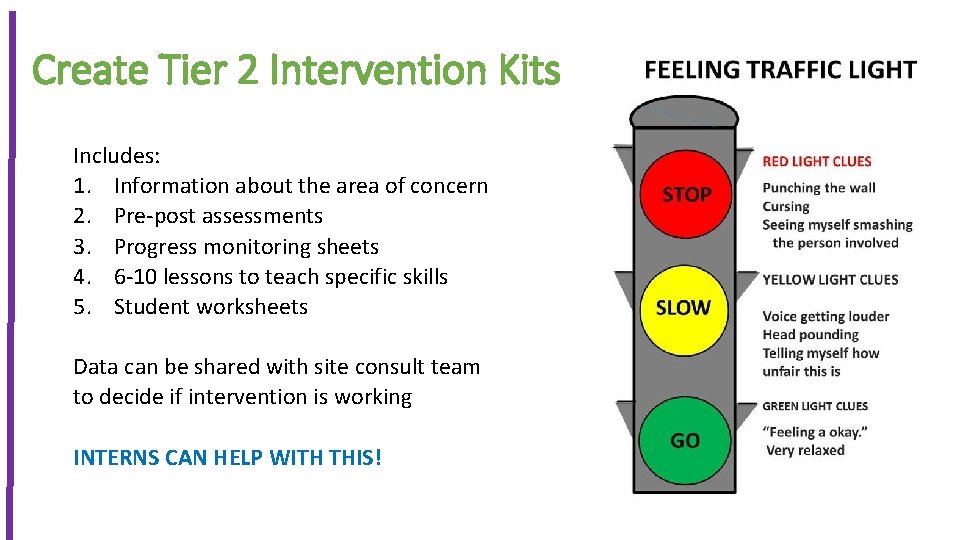
Create Tier 2 Intervention Kits Includes: 1. Information about the area of concern 2. Pre-post assessments 3. Progress monitoring sheets 4. 6 -10 lessons to teach specific skills 5. Student worksheets Data can be shared with site consult team to decide if intervention is working INTERNS CAN HELP WITH THIS!
Parent Seminar on Anxiety • Held Parent Night entitled “Anxiety in Kids and Teens: An Informational Overview and Recommendations for Parents and Guardians” • Forum to share information and resources • Followed with an article in Saybrook Events • Outcome-Increased communication between school and home • Next Steps
Brainstorm with a partner • What would be the benefits of initiating universal screening in your district? • What are the constraints or barriers you think you might encounter?
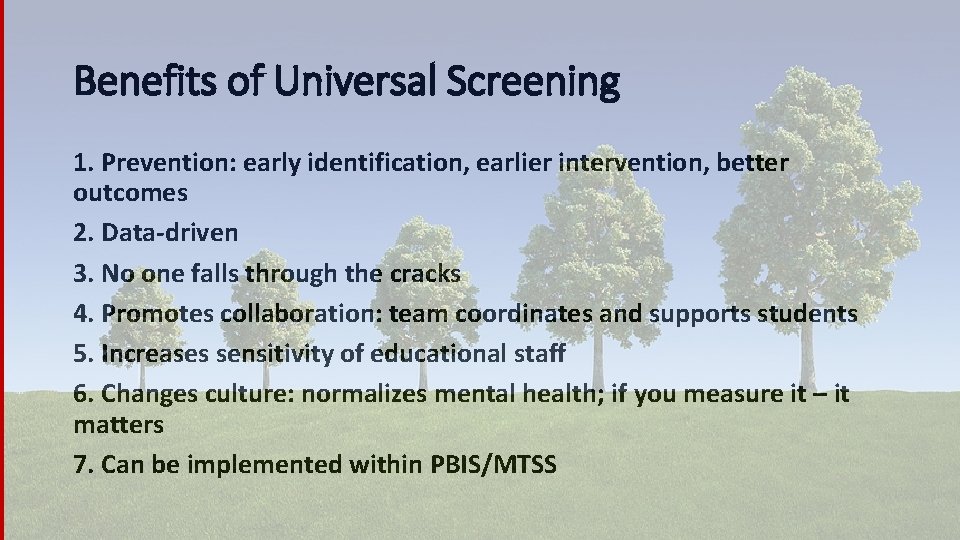
Benefits of Universal Screening 1. Prevention: early identification, earlier intervention, better outcomes 2. Data-driven 3. No one falls through the cracks 4. Promotes collaboration: team coordinates and supports students 5. Increases sensitivity of educational staff 6. Changes culture: normalizes mental health; if you measure it – it matters 7. Can be implemented within PBIS/MTSS
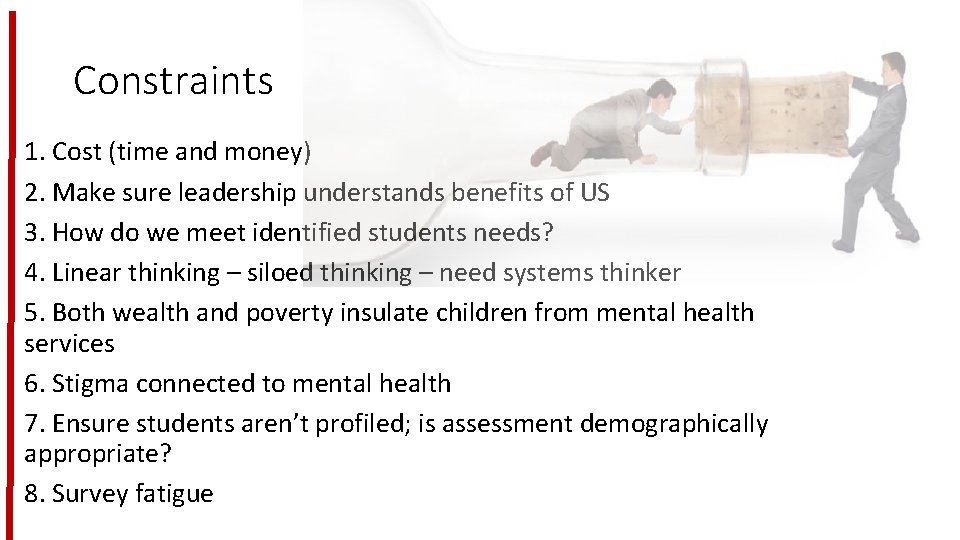
Constraints 1. Cost (time and money) 2. Make sure leadership understands benefits of US 3. How do we meet identified students needs? 4. Linear thinking – siloed thinking – need systems thinker 5. Both wealth and poverty insulate children from mental health services 6. Stigma connected to mental health 7. Ensure students aren’t profiled; is assessment demographically appropriate? 8. Survey fatigue
Mental Health = Health
Central Connecticut State University Center for Social and Emotional Learning Training – Research – Best Practices in Fostering SEL Across the Lifespan
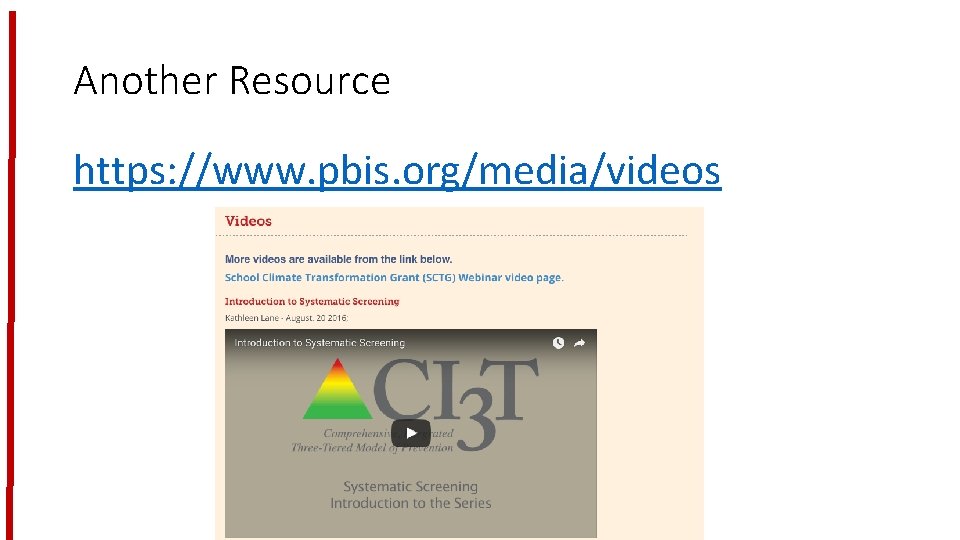
Another Resource https: //www. pbis. org/media/videos
Peg Donohue peg. donohue@ccsu. edu Kathy Bai kbai@oldsaybrookschools. org Linda Romanchok lromanchok@oldsaybrookschools. org Erica Mastronardi erica. mastronardi@my. ccsu. edu Karyn Hester hesterk 1@southerct. edu