
Using UDL to Support High Expectations Mitch Galbraith
Using UDL to Support High Expectations Mitch Galbraith Arizona Department of Education/Exceptional Student Services Assistive Technology Specialist Lisa Kunz Arizona Department of Education/Exceptional Student Services Autism & Low Incidence Disability Specialist
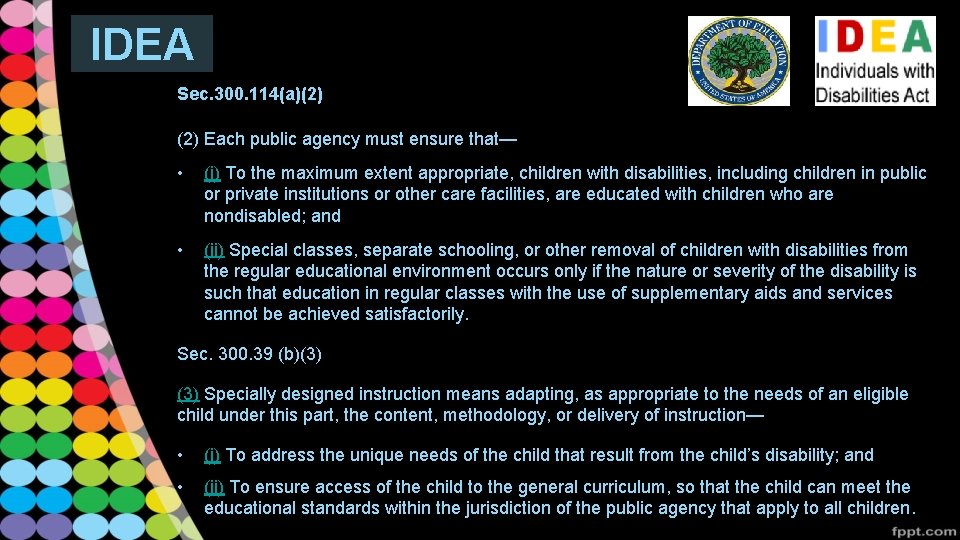
IDEA Sec. 300. 114(a)(2) Each public agency must ensure that— • (i) To the maximum extent appropriate, children with disabilities, including children in public or private institutions or other care facilities, are educated with children who are nondisabled; and • (ii) Special classes, separate schooling, or other removal of children with disabilities from the regular educational environment occurs only if the nature or severity of the disability is such that education in regular classes with the use of supplementary aids and services cannot be achieved satisfactorily. Sec. 300. 39 (b)(3) Specially designed instruction means adapting, as appropriate to the needs of an eligible child under this part, the content, methodology, or delivery of instruction— • (i) To address the unique needs of the child that result from the child’s disability; and • (ii) To ensure access of the child to the general curriculum, so that the child can meet the educational standards within the jurisdiction of the public agency that apply to all children.
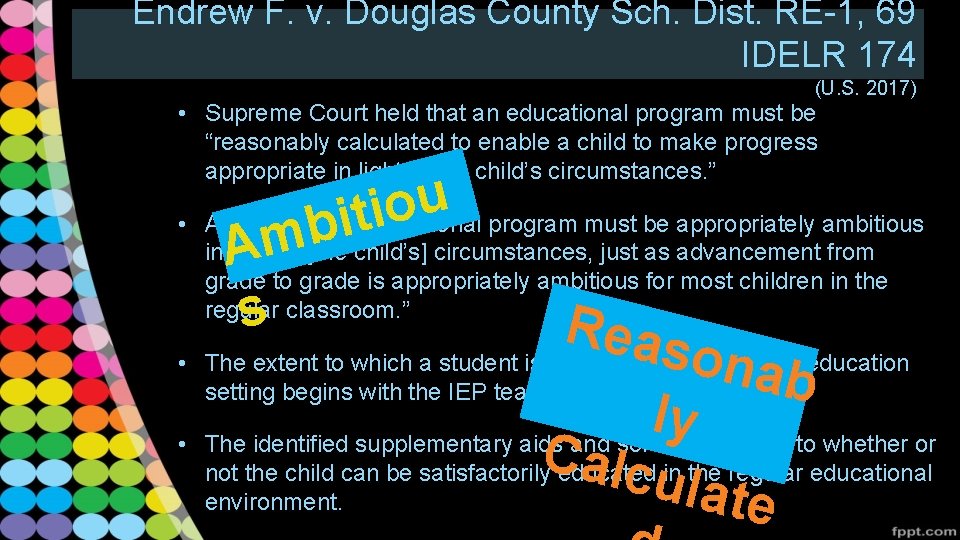
Endrew F. v. Douglas County Sch. Dist. RE-1, 69 IDELR 174 (U. S. 2017) • Supreme Court held that an educational program must be “reasonably calculated to enable a child to make progress appropriate in light of the child’s circumstances. ” u o i bit Am s • Also, that the “educational program must be appropriately ambitious in light of [the child’s] circumstances, just as advancement from grade to grade is appropriately ambitious for most children in the regular classroom. ” Reas onab l y The identified supplementary aids and services are key to whether or alcuinlthe regular educational not the child can be satisfactorily. C educated ate environment. • The extent to which a student is educated in the general education setting begins with the IEP team. •
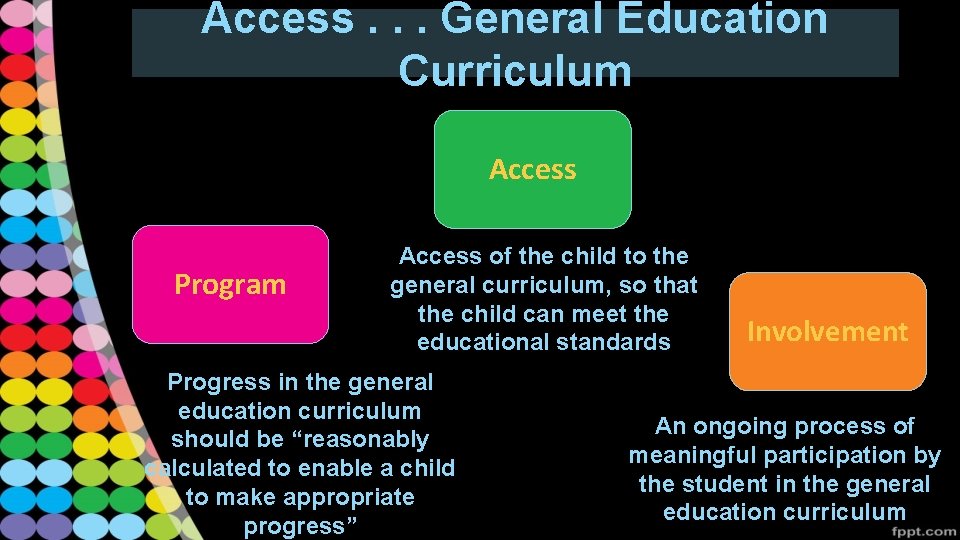
Access. . . General Education Curriculum Access Program Access of the child to the general curriculum, so that the child can meet the educational standards Progress in the general education curriculum should be “reasonably calculated to enable a child to make appropriate progress” Involvement An ongoing process of meaningful participation by the student in the general education curriculum
Poll: What is the first word that comes to mind when you hear UDL?
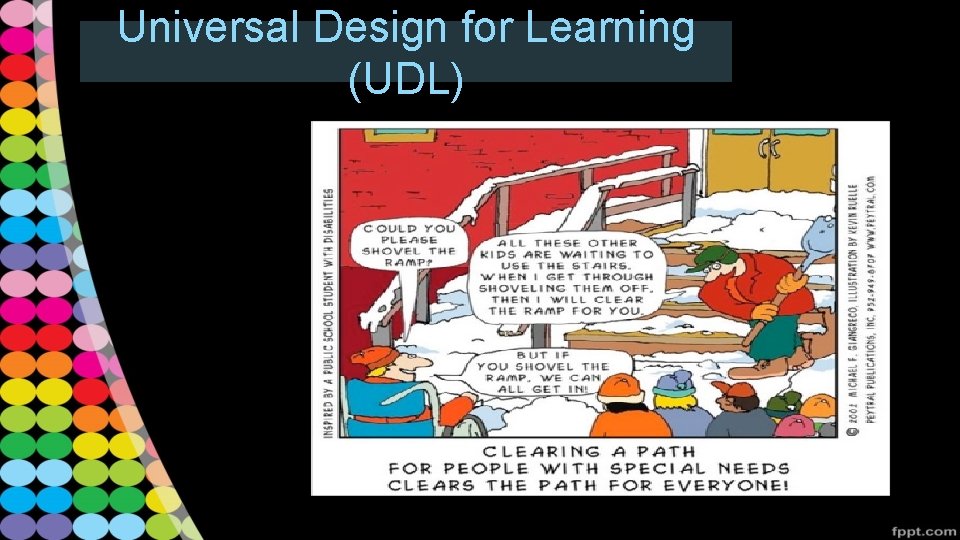
Universal Design for Learning (UDL)
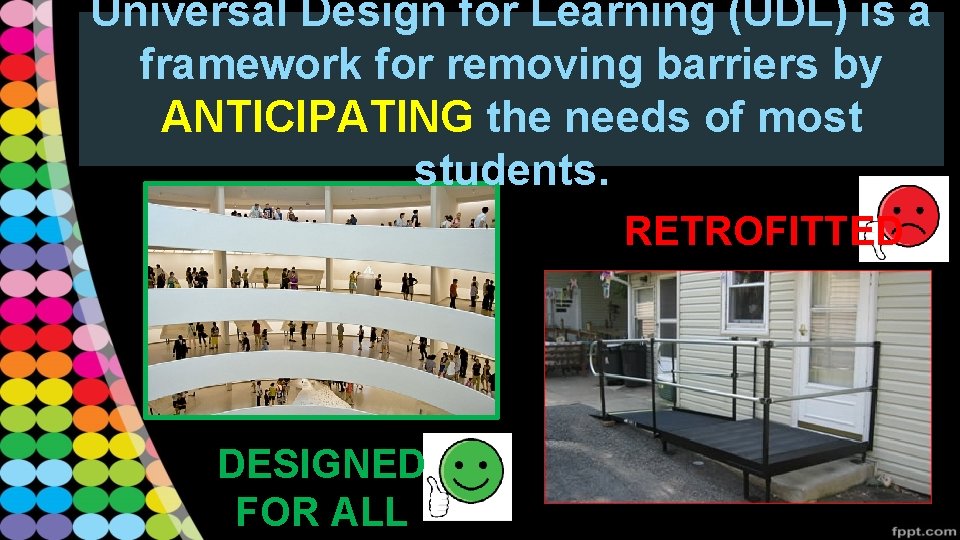
Universal Design for Learning (UDL) is a framework for removing barriers by ANTICIPATING the needs of most students. RETROFITTED DESIGNED FOR ALL
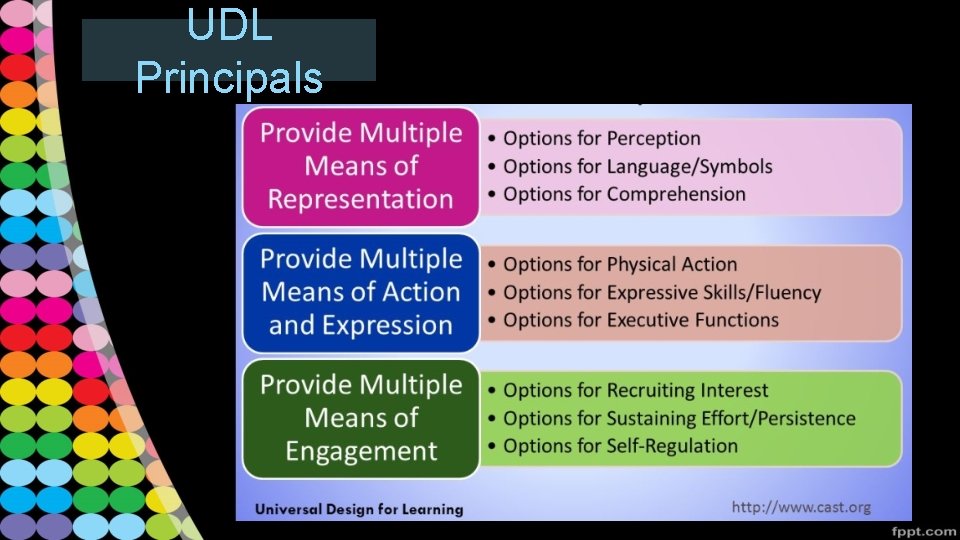
UDL Principals
Video: UDL at a Glance
UDL needs AT. . . What? . . . Why? . . . How?
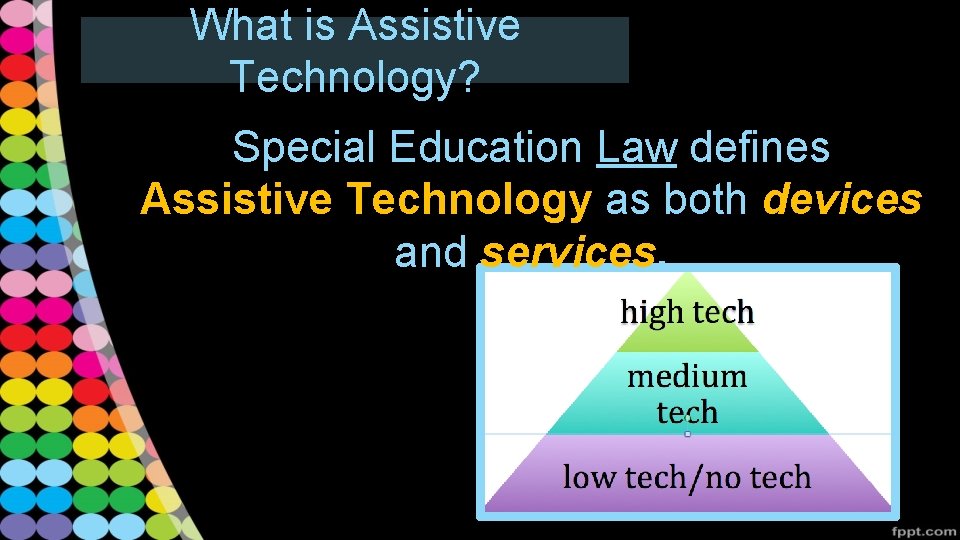
What is Assistive Technology? Special Education Law defines Assistive Technology as both devices and services.
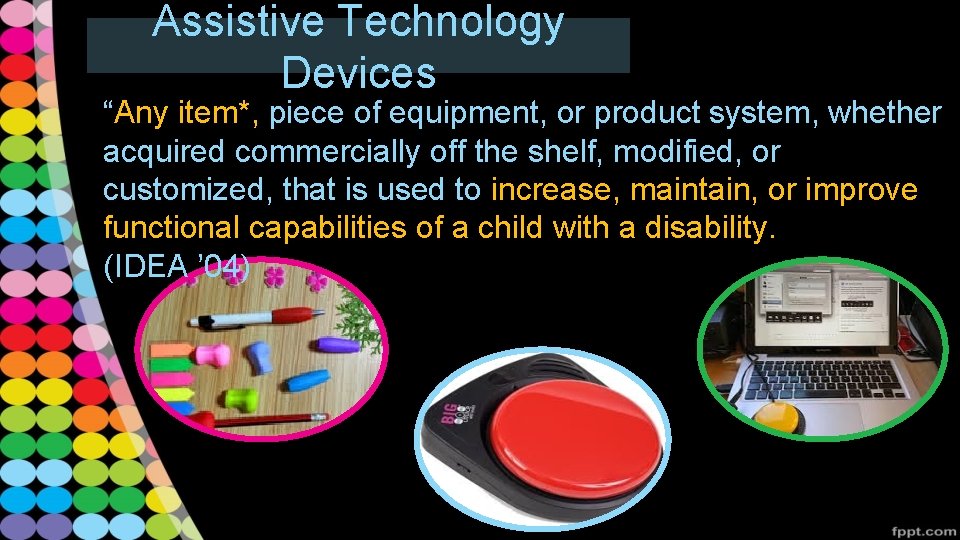
Assistive Technology Devices “Any item*, piece of equipment, or product system, whether acquired commercially off the shelf, modified, or customized, that is used to increase, maintain, or improve functional capabilities of a child with a disability. (IDEA ’ 04)
Assistive Technology Services “. . . any service that directly assists an individual with a disability in the selection, acquisition, or use of an assistive technology device. ” -Evaluation and selection of an assistive technology system -Purchasing, leasing, or acquiring devices -Training and technical assistance for the individual, family/caregiver and school staff
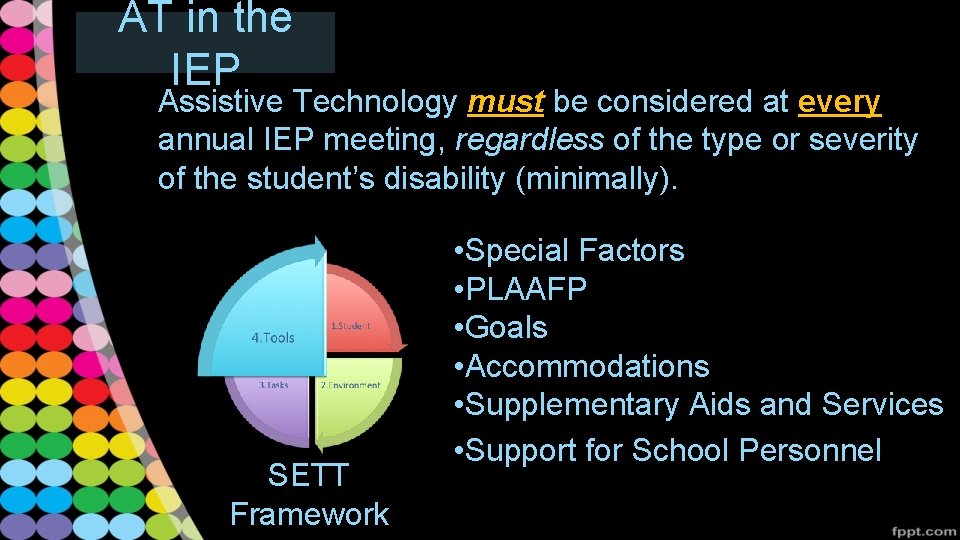
AT in the IEP Assistive Technology must be considered at every annual IEP meeting, regardless of the type or severity of the student’s disability (minimally). SETT Framework • Special Factors • PLAAFP • Goals • Accommodations • Supplementary Aids and Services • Support for School Personnel
Increases, maintains or improves functional capabilities in: • • • Reading Learning/Studying Math Writing Computer Access Communication • • • Positioning & Seating Vision Hearing Mobility Activities of Daily Living (ADL’s) • Leisure
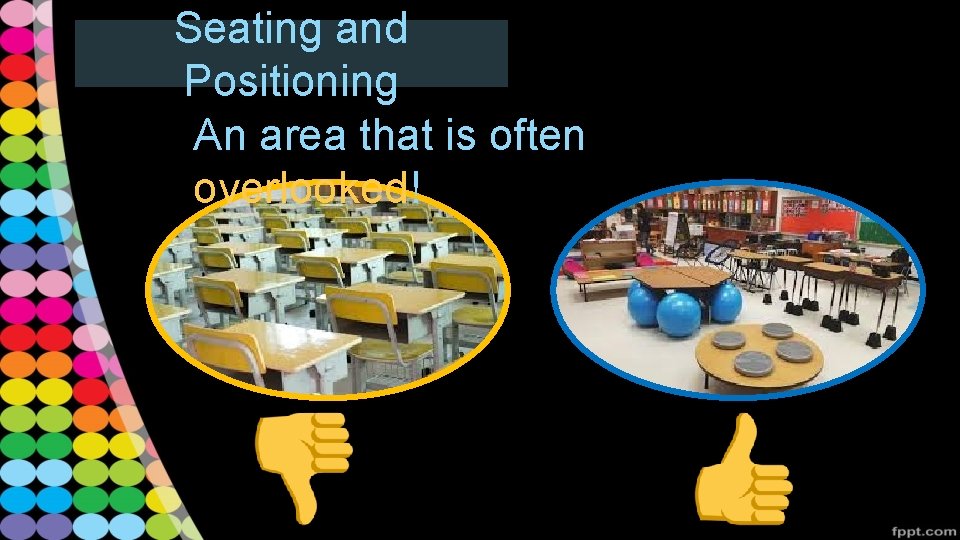
Seating and Positioning An area that is often overlooked!
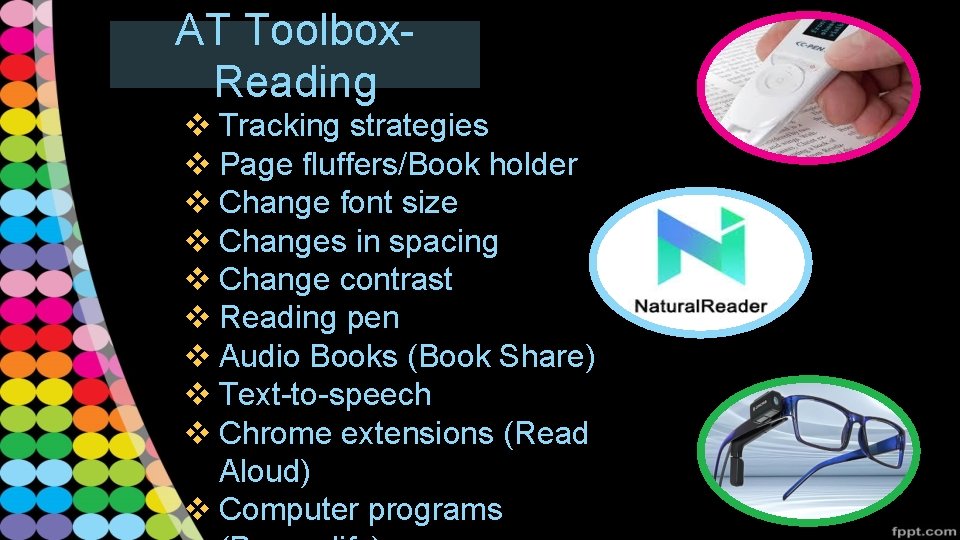
AT Toolbox. Reading v Tracking strategies v Page fluffers/Book holder v Change font size v Changes in spacing v Change contrast v Reading pen v Audio Books (Book Share) v Text-to-speech v Chrome extensions (Read Aloud) v Computer programs
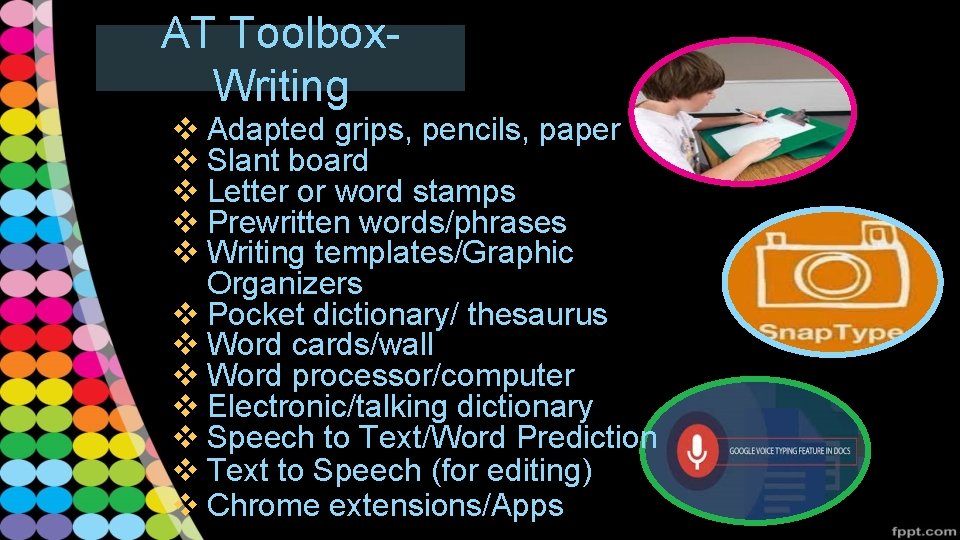
AT Toolbox. Writing v Adapted grips, pencils, paper v Slant board v Letter or word stamps v Prewritten words/phrases v Writing templates/Graphic Organizers v Pocket dictionary/ thesaurus v Word cards/wall v Word processor/computer v Electronic/talking dictionary v Speech to Text/Word Prediction v Text to Speech (for editing) v Chrome extensions/Apps
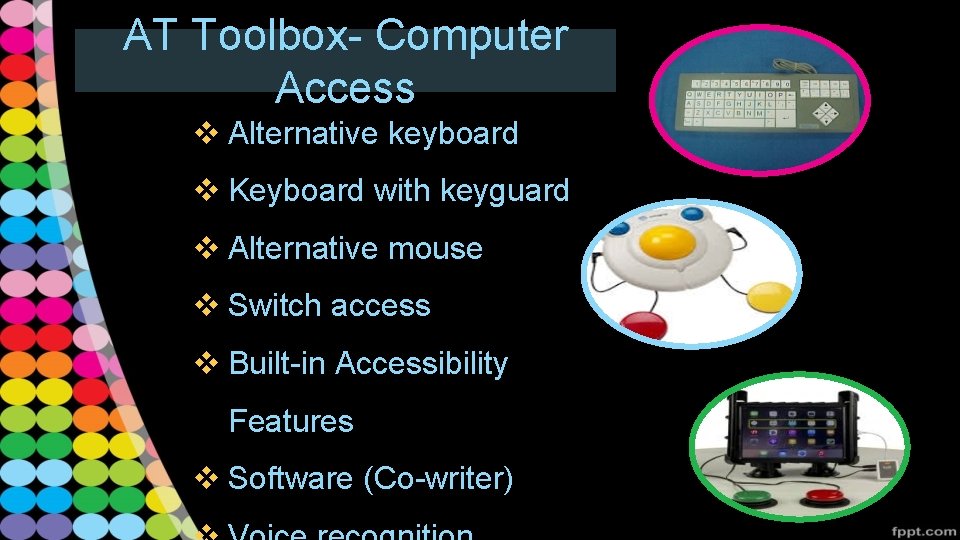
AT Toolbox- Computer Access v Alternative keyboard v Keyboard with keyguard v Alternative mouse v Switch access v Built-in Accessibility Features v Software (Co-writer)
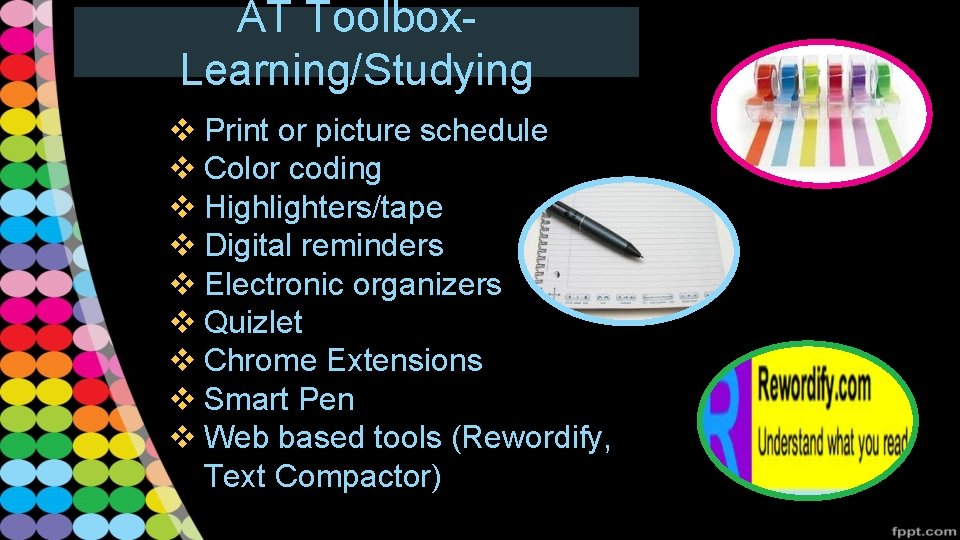
AT Toolbox. Learning/Studying v Print or picture schedule v Color coding v Highlighters/tape v Digital reminders v Electronic organizers v Quizlet v Chrome Extensions v Smart Pen v Web based tools (Rewordify, Text Compactor)
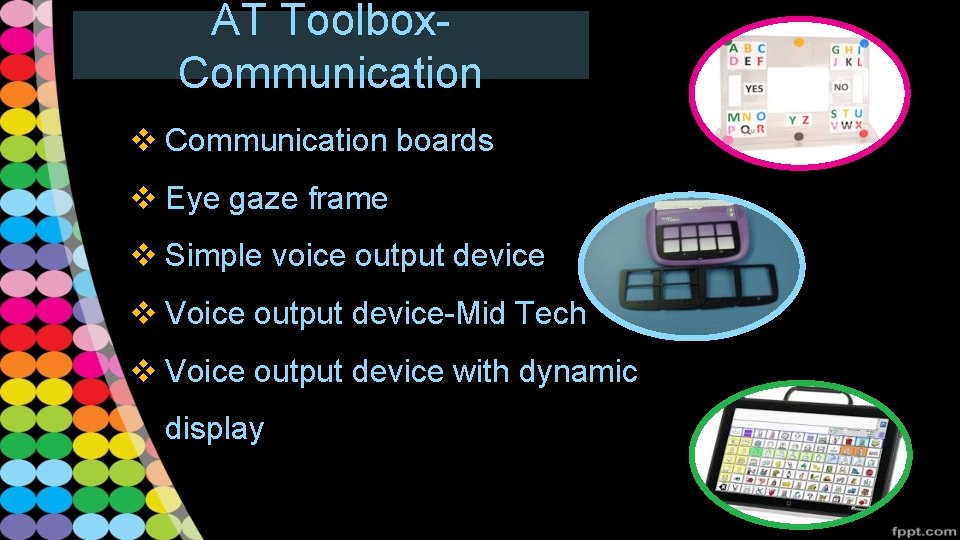
AT Toolbox. Communication v Communication boards v Eye gaze frame v Simple voice output device v Voice output device-Mid Tech v Voice output device with dynamic display
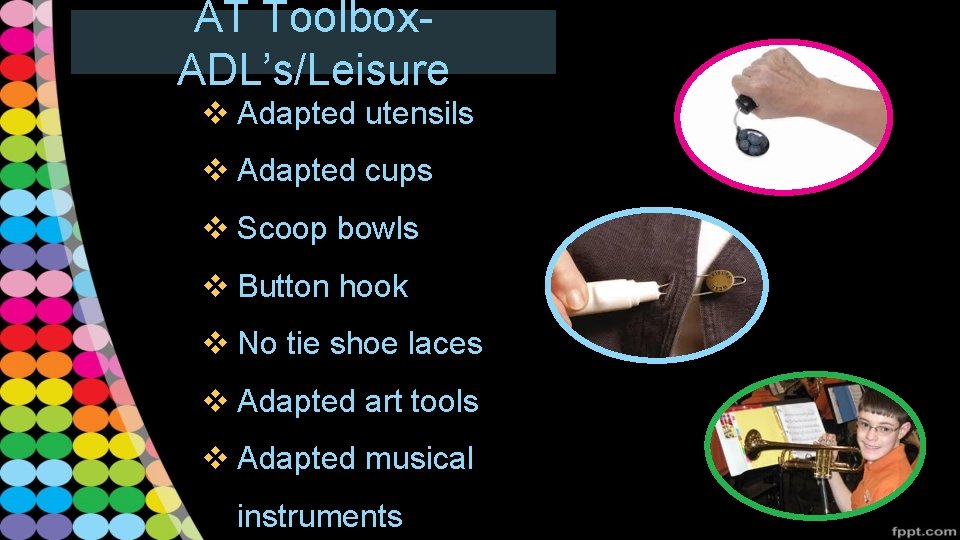
AT Toolbox. ADL’s/Leisure v Adapted utensils v Adapted cups v Scoop bowls v Button hook v No tie shoe laces v Adapted art tools v Adapted musical instruments
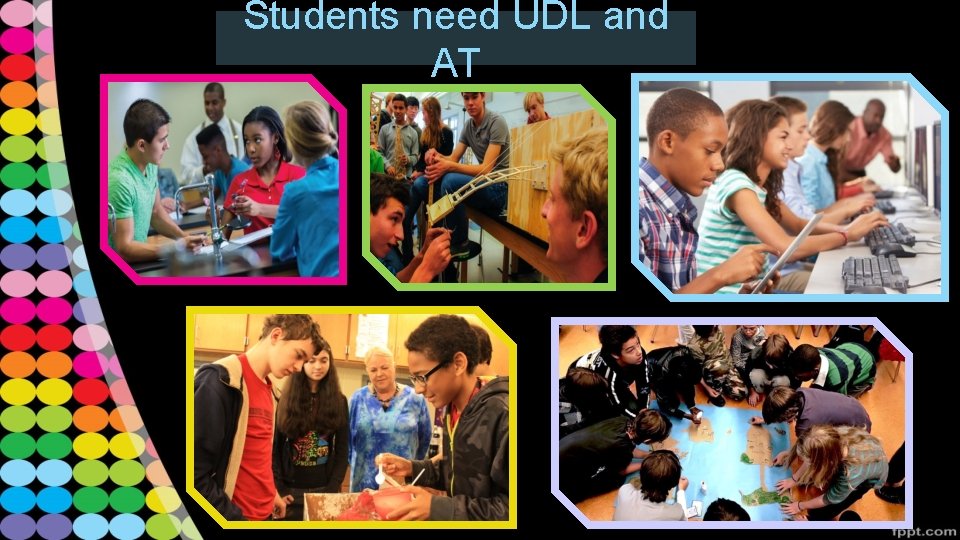
Students need UDL and AT
High School Science Standardv Concept 1: Changes in v Strand 3: Science in Personal and Social Perspectives emphasizes developing the ability to design a solution to a problem, to understand the relationship between science and technology, and the ways people are involved in both. Students understand the impact of science and technology on human activity and the environment. This strand affords students the opportunity to understand their place in the world – as living creatures, consumers, decision makers, problem solvers, managers, and planners. Environments v PO 3. Assess how human activities (e. g. , clear cutting, v Describe the interactions water management, tree between human populations, thinning) can affect the natural hazards, and the potential for hazards. environment. v PO 1. Evaluate how the processes of natural v PO 4. Evaluate the following ecosystems affect, and are factors that affect the quality of affected by, humans. the environment: v PO 2. Describe the v urban development environmental effects of the v smoke following natural and/or v volcanic dust human-caused hazards: v v v flooding drought earthquakes fires pollution extreme weather v PO 5. Evaluate the effectiveness of conservation practices and preservation techniques on environmental quality and biodiversity.
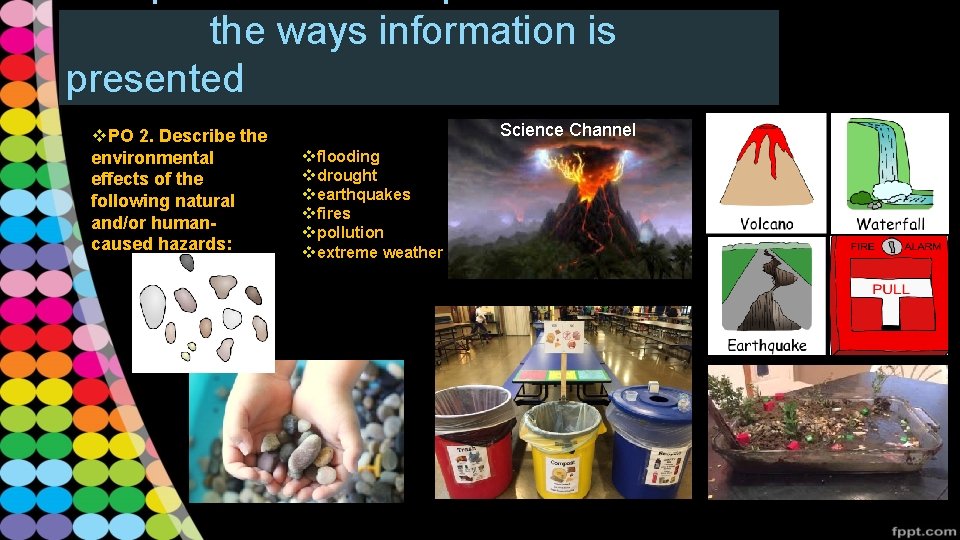
the ways information is presented v. PO 2. Describe the environmental effects of the following natural and/or humancaused hazards: Science Channel vflooding vdrought vearthquakes vfires vpollution vextreme weather
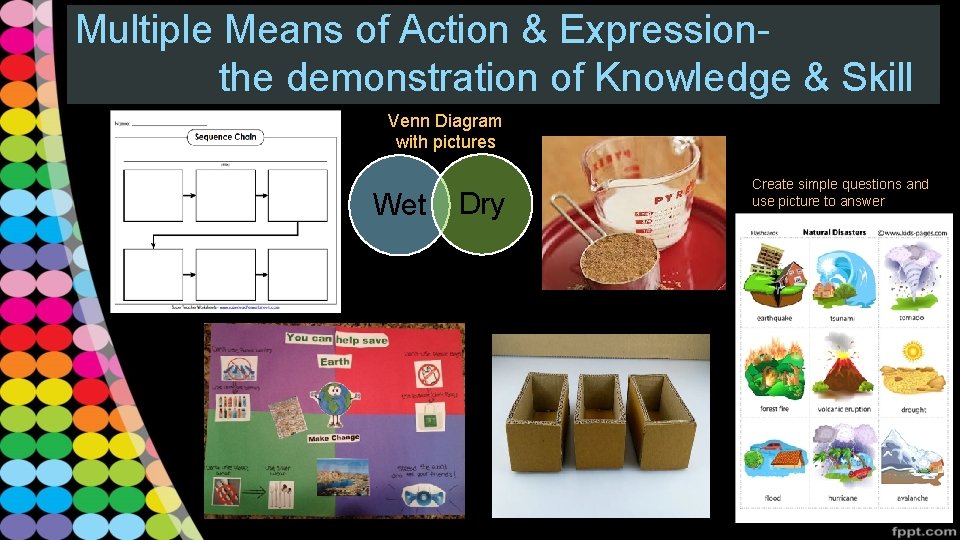
Multiple Means of Action & Expressionthe demonstration of Knowledge & Skill Venn Diagram with pictures Wet Dry Create simple questions and use picture to answer
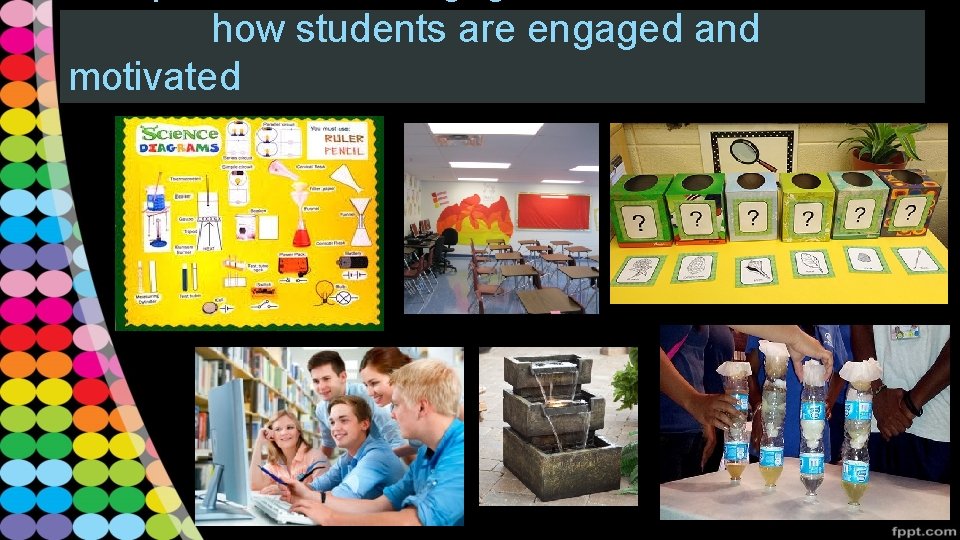
how students are engaged and motivated
Video: Accessibility
How you can use this tomorrow ?
Resources UDL v www. udlcenter. org/ v www. cast. org v www. azed. gov/standards- Assistive Technology v www. azed. gov/specialeducation/a t/ v www. adeatloan. org practice/k-12 standards/science- v www. toolkit 4 transition. com resources v www. ctdinstitute. org
Thank you Mitch Galbraith Lisa Kunz mitch. galbraith@azed. go lisa. kunz@azed. gov v
- Slides: 31