
Using Transient Elastography to identify undetected but significant
Using Transient Elastography to identify undetected but significant liver disease in patients attending community alcohol misuse services Nottingham Digestive Diseases Biomedical Research Unit David J Harman, Vasudevan Krishnan, Emilie A Wilkes, Stephen D Ryder, Martin W James, Guruprasad P Aithal, Karen Fisher, Tanzeel R Ansari, Indra Neil Guha 13/01/2022
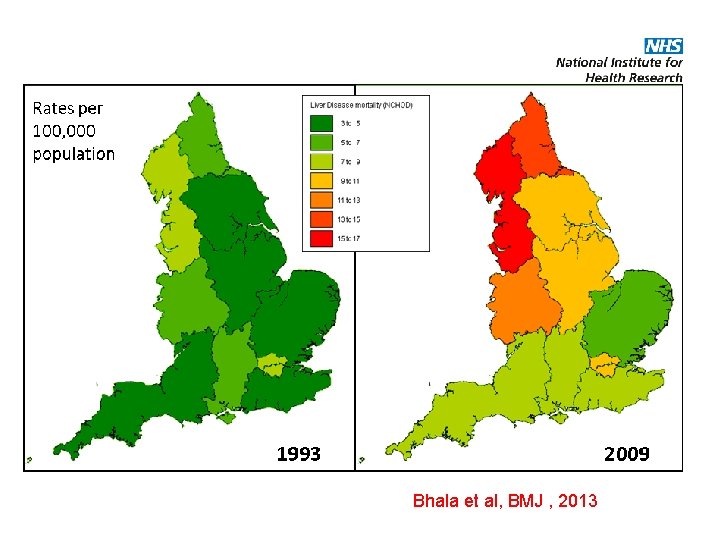
Bhala et al, BMJ , 2013
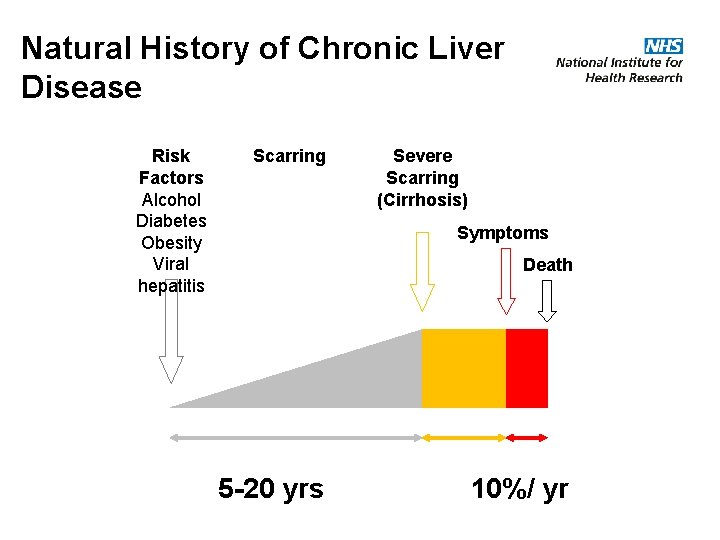
Natural History of Chronic Liver Disease Risk Factors Alcohol Diabetes Obesity Viral hepatitis Scarring Severe Scarring (Cirrhosis) Symptoms Death 5 -20 yrs 10%/ yr
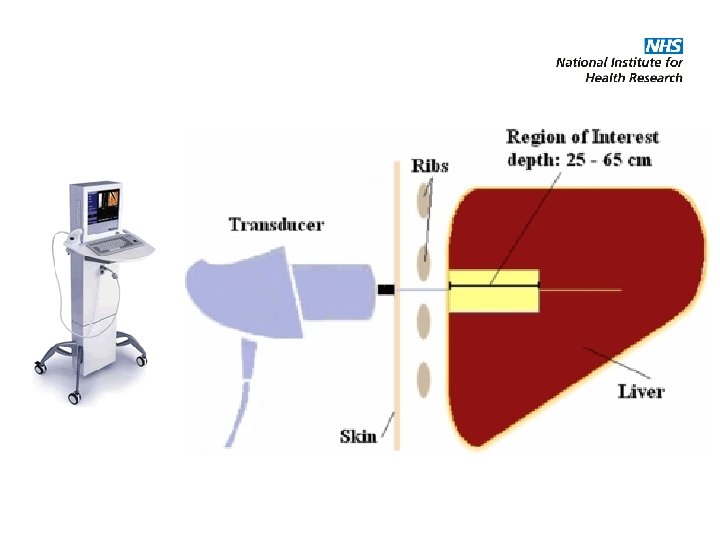
Nottingham Community Study Rationale • 1/ Are non-invasive liver fibrosis biomarkers feasible use in a non-hospital setting? • 2/ Can Transient Elastography (TE) identify silent but significant liver disease in patients with liver fibrosis risk factors?
Nottingham Community Study • Consecutive patients triaged for review by Oxford Corner Substance Misuse team in Nottingham invited for an additional liver scan appointment • Study period April 2012 to March 2014 – TE examination performed at Oxford Corner by trained nurses – Liver stiffness threshold of ≥ 8 kilopascals* prompted review in the community by visiting consultant hepatologist – Longitudinal follow-up of hospital/Oxford Corner notes – cross-sectional analysis of alcohol intake at 6 months after Fibroscan *Roulot et al, Gut, 2011
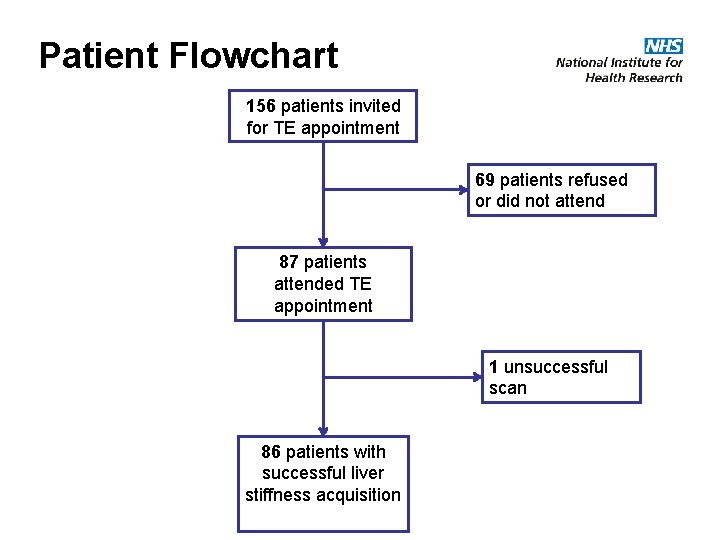
Patient Flowchart 156 patients invited for TE appointment 69 patients refused or did not attend 87 patients attended TE appointment 1 unsuccessful scan 86 patients with successful liver stiffness acquisition
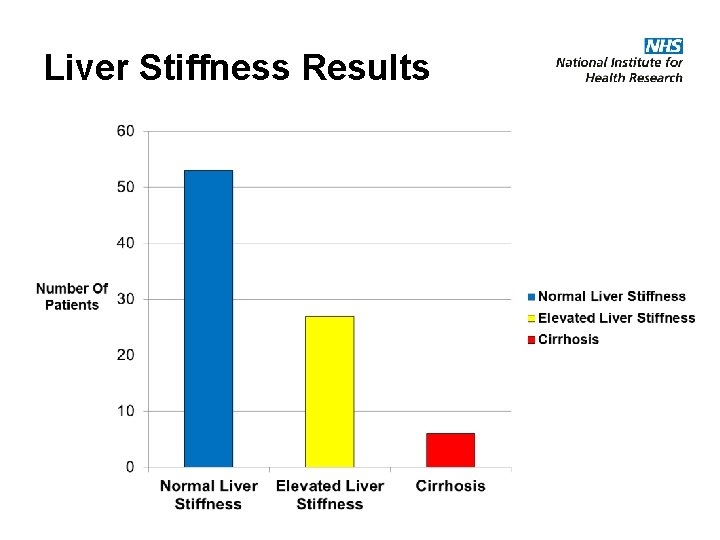
Liver Stiffness Results
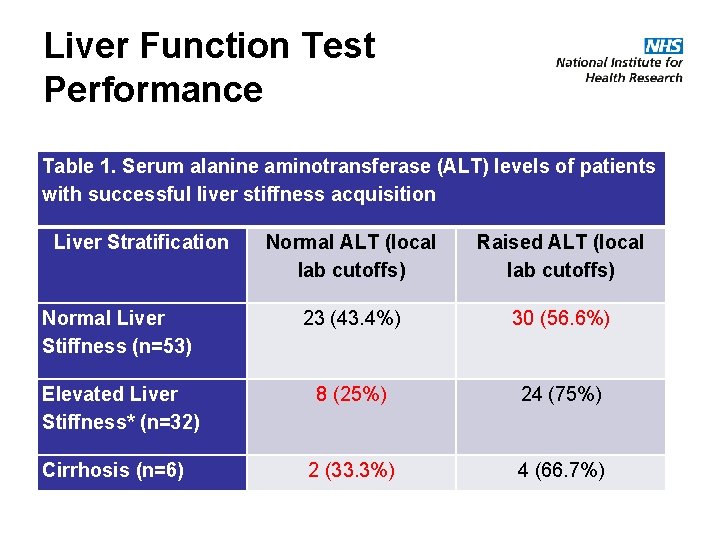
Liver Function Test Performance Table 1. Serum alanine aminotransferase (ALT) levels of patients with successful liver stiffness acquisition Liver Stratification Normal ALT (local lab cutoffs) Raised ALT (local lab cutoffs) Normal Liver Stiffness (n=53) 23 (43. 4%) 30 (56. 6%) Elevated Liver Stiffness* (n=32) 8 (25%) 24 (75%) 2 (33. 3%) 4 (66. 7%) Cirrhosis (n=6)
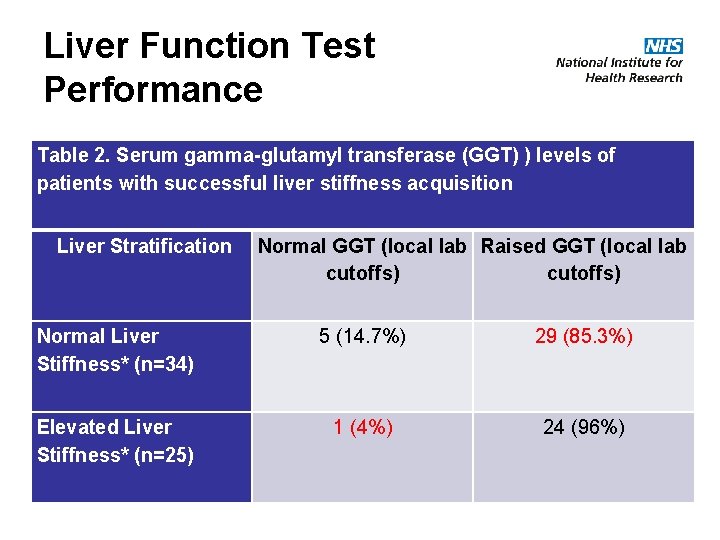
Liver Function Test Performance Table 2. Serum gamma-glutamyl transferase (GGT) ) levels of patients with successful liver stiffness acquisition Liver Stratification Normal GGT (local lab Raised GGT (local lab cutoffs) Normal Liver Stiffness* (n=34) 5 (14. 7%) 29 (85. 3%) Elevated Liver Stiffness* (n=25) 1 (4%) 24 (96%)
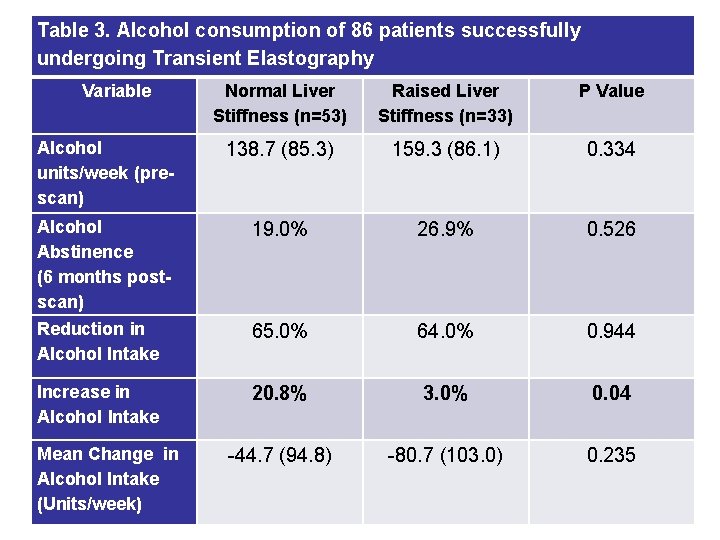
Table 3. Alcohol consumption of 86 patients successfully undergoing Transient Elastography Variable Normal Liver Stiffness (n=53) Raised Liver Stiffness (n=33) P Value Alcohol units/week (prescan) 138. 7 (85. 3) 159. 3 (86. 1) 0. 334 Alcohol Abstinence (6 months postscan) 19. 0% 26. 9% 0. 526 Reduction in Alcohol Intake 65. 0% 64. 0% 0. 944 Increase in Alcohol Intake 20. 8% 3. 0% 0. 04 -44. 7 (94. 8) -80. 7 (103. 0) 0. 235 Mean Change in Alcohol Intake (Units/week)
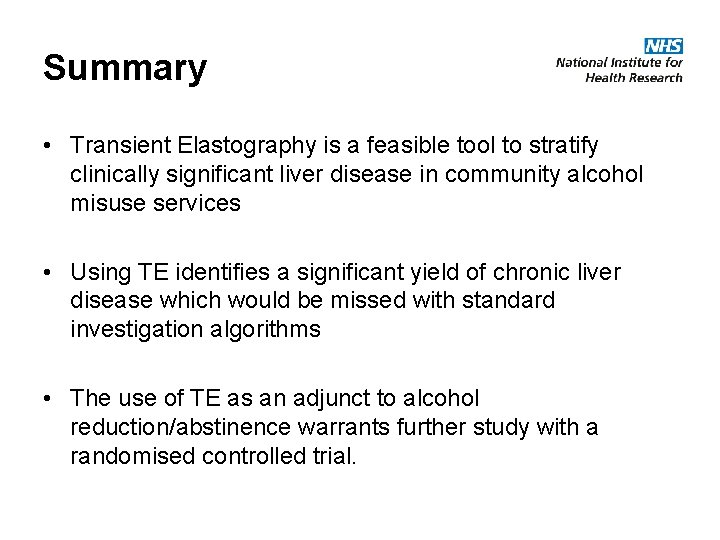
Summary • Transient Elastography is a feasible tool to stratify clinically significant liver disease in community alcohol misuse services • Using TE identifies a significant yield of chronic liver disease which would be missed with standard investigation algorithms • The use of TE as an adjunct to alcohol reduction/abstinence warrants further study with a randomised controlled trial.

ANY QUESTIONS?
- Slides: 13