
Using the Strength Based Approach in Youth Relationship
Using the Strength Based Approach in Youth Relationship Building By Rachel Seifert

The Strength Based Approach is the philosophy that focuses on the strengths, skills, talents and capabilities of each client; to help them learn to create and maintain positive change. Research shows that the Strength Based Approach can be used to enhance and facilitate the growth of positive relationships in the lives of teens and adolescents.

Relationship Building Skills Start at Home • • • Parents can use the strength based approach to empower adolescents to make positive choices; building on previous successes and the belief in their limitless ability to grow. Families can encourage teens to embrace their ethnicity, family culture, and belief system, as a resource to forge a positive selfidentity within their family context. Parents can promote their child's strengths, gifts and talent; and model strength based relationship building at home, by teaching kids how to communicate effectively in their relationships.

Applying the Strength Based Perspective with Adolescents • Although we cannot ignore dangerous situations when taking inventory of youth relationship issues, we can shift our perspective and use the strength based approach in many cases. • When there are problems or conflicts within a teen’s relationship networks, shifting focus to their strengths is the first step toward addressing them.
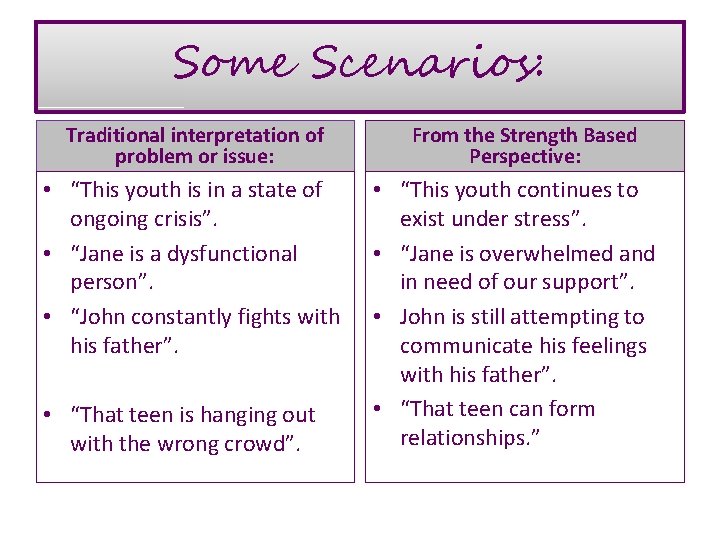
Some Scenarios: Traditional interpretation of problem or issue: • “This youth is in a state of ongoing crisis”. • “Jane is a dysfunctional person”. • “John constantly fights with his father”. • “That teen is hanging out with the wrong crowd”. From the Strength Based Perspective: • “This youth continues to exist under stress”. • “Jane is overwhelmed and in need of our support”. • John is still attempting to communicate his feelings with his father”. • “That teen can form relationships. ”
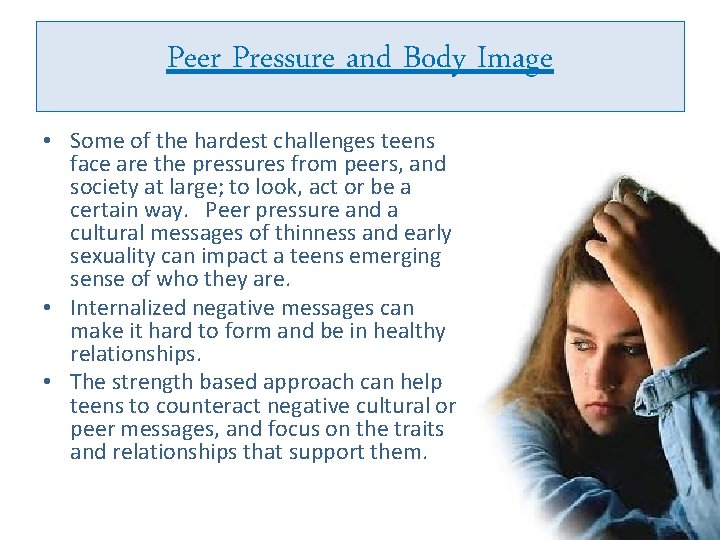
Peer Pressure and Body Image • Some of the hardest challenges teens face are the pressures from peers, and society at large; to look, act or be a certain way. Peer pressure and a cultural messages of thinness and early sexuality can impact a teens emerging sense of who they are. • Internalized negative messages can make it hard to form and be in healthy relationships. • The strength based approach can help teens to counteract negative cultural or peer messages, and focus on the traits and relationships that support them.
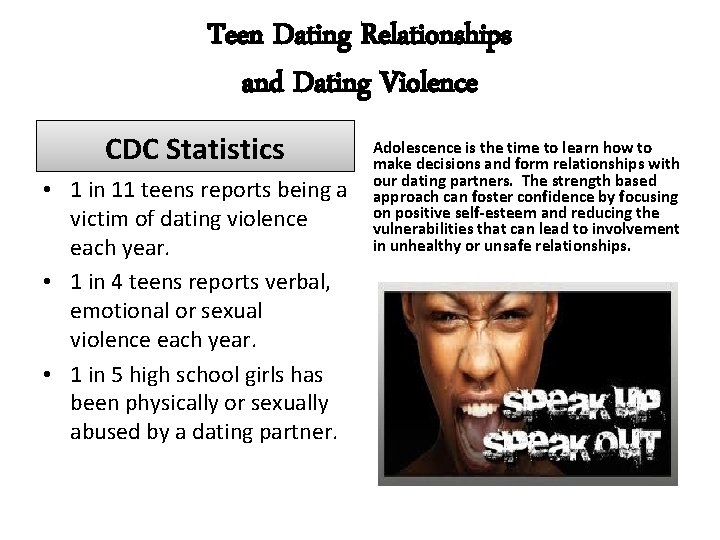
Teen Dating Relationships and Dating Violence CDC Statistics • 1 in 11 teens reports being a victim of dating violence each year. • 1 in 4 teens reports verbal, emotional or sexual violence each year. • 1 in 5 high school girls has been physically or sexually abused by a dating partner. Adolescence is the time to learn how to make decisions and form relationships with our dating partners. The strength based approach can foster confidence by focusing on positive self-esteem and reducing the vulnerabilities that can lead to involvement in unhealthy or unsafe relationships.
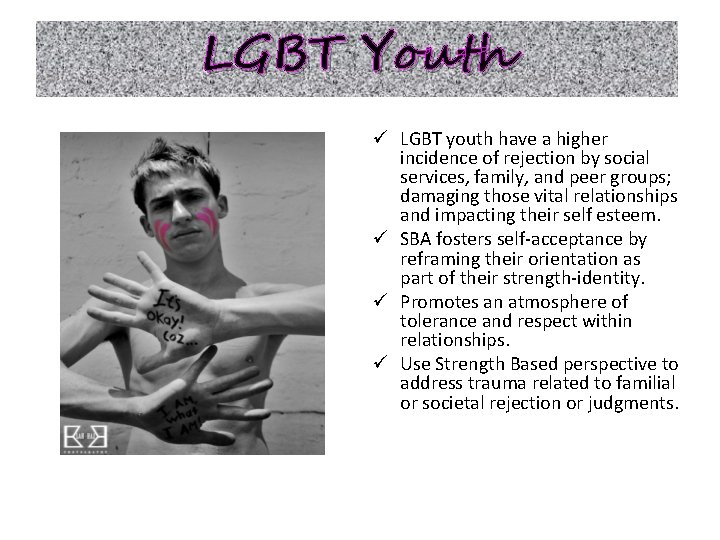
LGBT Youth ü LGBT youth have a higher incidence of rejection by social services, family, and peer groups; damaging those vital relationships and impacting their self esteem. ü SBA fosters self-acceptance by reframing their orientation as part of their strength-identity. ü Promotes an atmosphere of tolerance and respect within relationships. ü Use Strength Based perspective to address trauma related to familial or societal rejection or judgments.

Summary: ü The Strength Based Approach is a philosophy that focuses on the strengths, skills, gifts, talents, aspirations, and goals of young people to promote healing and positive change in relationships of all sorts. ü The Strength Based Approach views the family of origin, their ethnicity, and culture as a valuable resource for youth relationship building. ü The Strength Based Approach believes in building on previous successes, rather than defining teens by the relationship challenges or mistakes of the past. ü Inherent in the Strength Based Approach is the belief in the limitless ability of a young person to grow.
References: • Centers for Disease Control and Prevention. (2010). Choose Respect: Understanding dating violence. Retrieved from the centers for disease control and prevention website at: http: //www. cdc. gov/chooserespect/ • Homelessness Resource Center. (2011). Develop Trusting Relationships by Fostering a Strengths-Based Approach. Retrieved from the substance abuse and mental health services administration (SAMHSA) website at: http: //www. pathprogram. samhsa. gov/%28 S%28212 mzs 45 r 1 ja 3 t 552 ulgreny%29%29/R esource/Develop-Trusting-Relationships-by-Fostering-a-Strengths-Based-Approach 50894. aspx • Nissen, L. (2006). Bringing strength-based philosophy to life in juvenile justice. Reclaiming Children and Youth, 15(1), 40 -46. • Sharry, J. (2004). Counseling children, adolescents and families: A strength based approach. London, UK. Sage Publications Ltd.
- Slides: 10