
Using the Soil Conditioning Index to Assess Management

- Slides: 30
Using the Soil Conditioning Index to Assess Management Effects on Soil Carbon USDA Natural Resources Conservation Service Soil Quality National Technology Development Team
Lesson Objectives • Introduce the Soil Conditioning Index – Discuss the tool’s background – Explain how the model works • Convey the current and potential uses of SCI • Highlight the SCI considerations in RUSLE 2
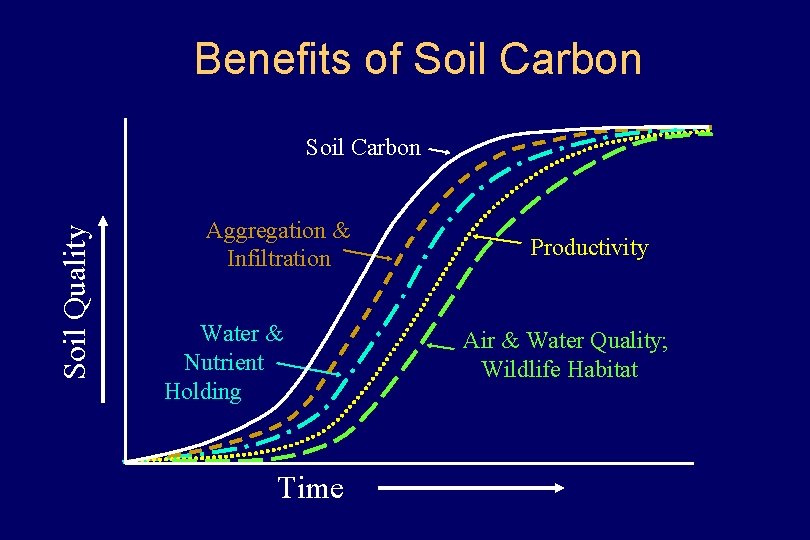
Benefits of Soil Carbon Soil Quality Soil Carbon Aggregation & Infiltration Water & Nutrient Holding Time Productivity Air & Water Quality; Wildlife Habitat
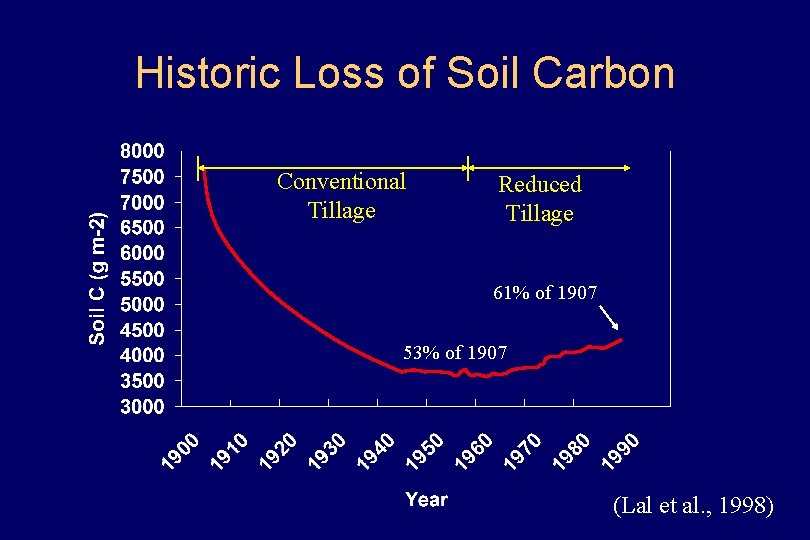
Historic Loss of Soil Carbon Conventional Tillage Reduced Tillage 61% of 1907 53% of 1907 (Lal et al. , 1998)
The Soil Conditioning Index (SCI): • Expresses the effects of the system on organic matter trends as a primary indicator of soil condition • Provides a means to evaluate and design conservation systems that maintain or improve soil condition
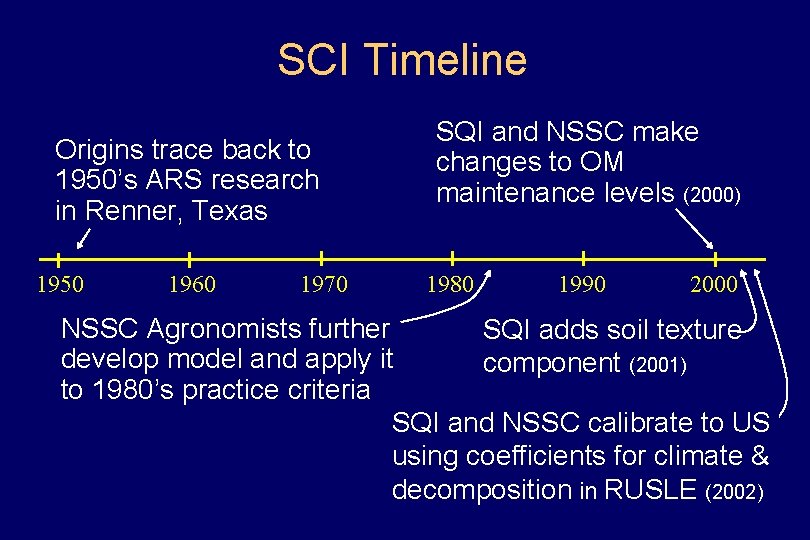
SCI Timeline • Origins trace back to 1950’s ARS research in Renner, Texas 1950 1960 1970 • SQI and NSSC make changes to OM maintenance levels (2000) 1980 1990 2000 • NSSC Agronomists further • SQI adds soil texture develop model and apply it component (2001) to 1980’s practice criteria • SQI and NSSC calibrate to US using coefficients for climate & decomposition in RUSLE (2002)
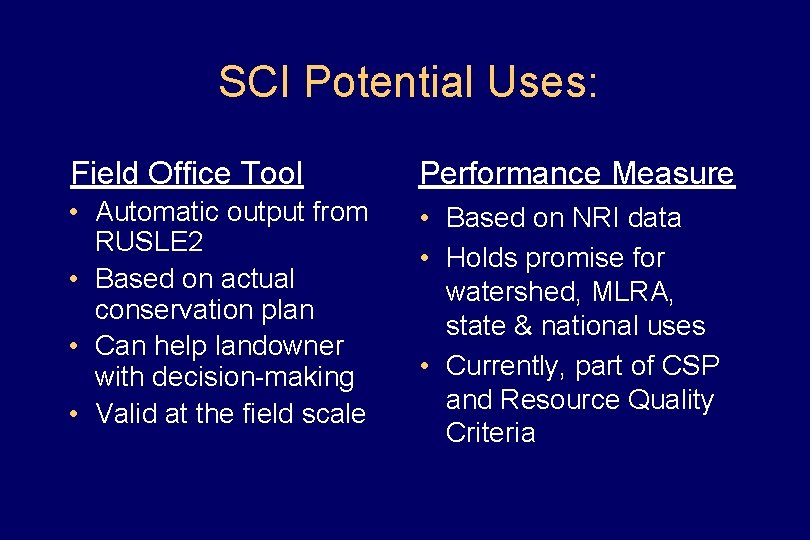
SCI Potential Uses: Field Office Tool Performance Measure • Automatic output from RUSLE 2 • Based on actual conservation plan • Can help landowner with decision-making • Valid at the field scale • Based on NRI data • Holds promise for watershed, MLRA, state & national uses • Currently, part of CSP and Resource Quality Criteria
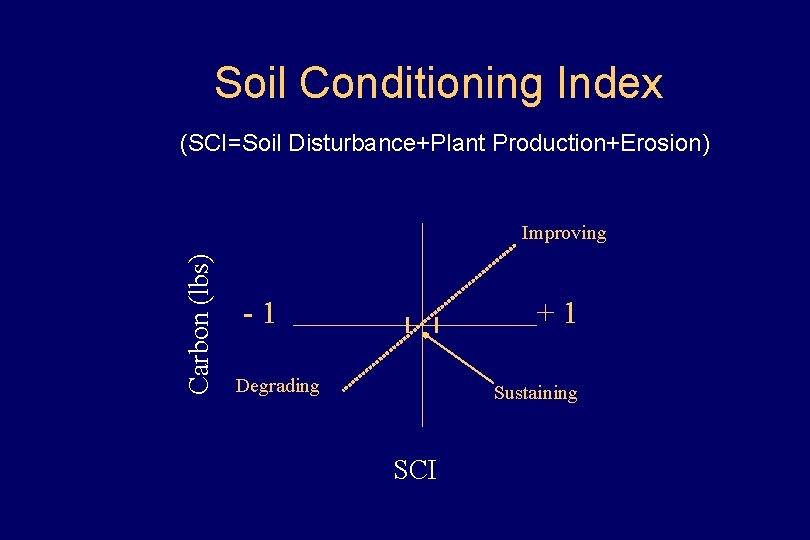
Soil Conditioning Index (SCI=Soil Disturbance+Plant Production+Erosion) Carbon (lbs) Improving -1 +1 Degrading Sustaining SCI
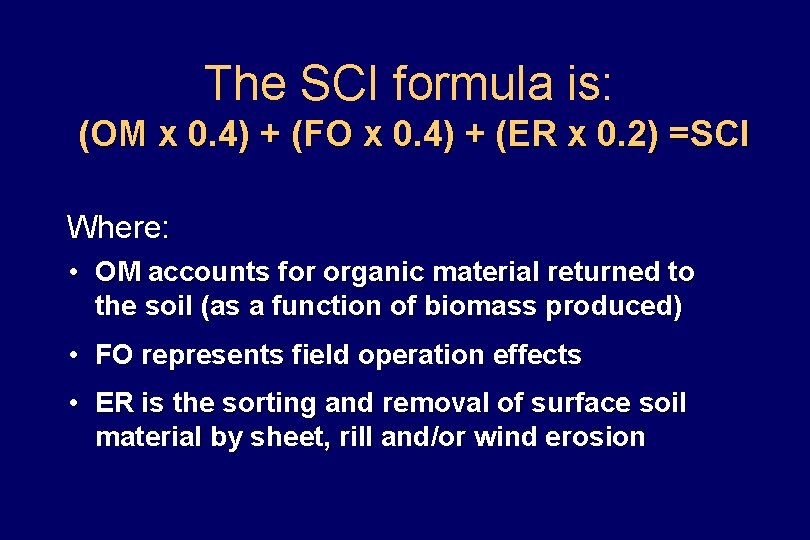
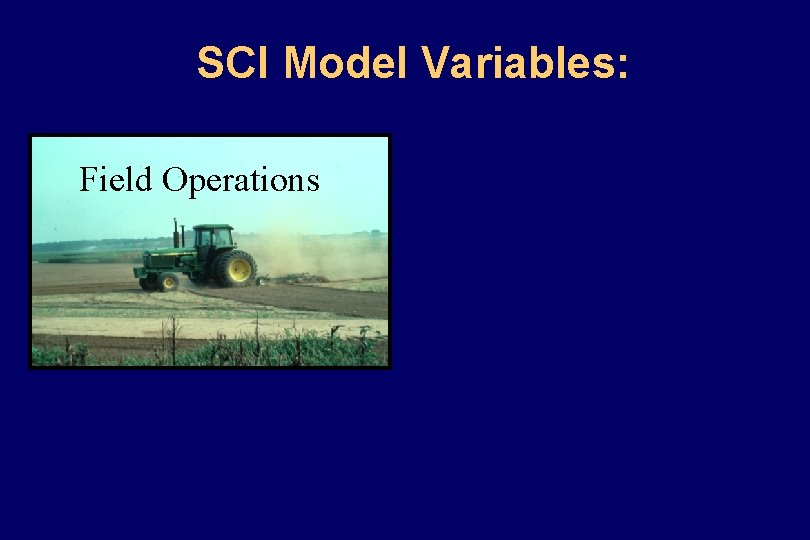
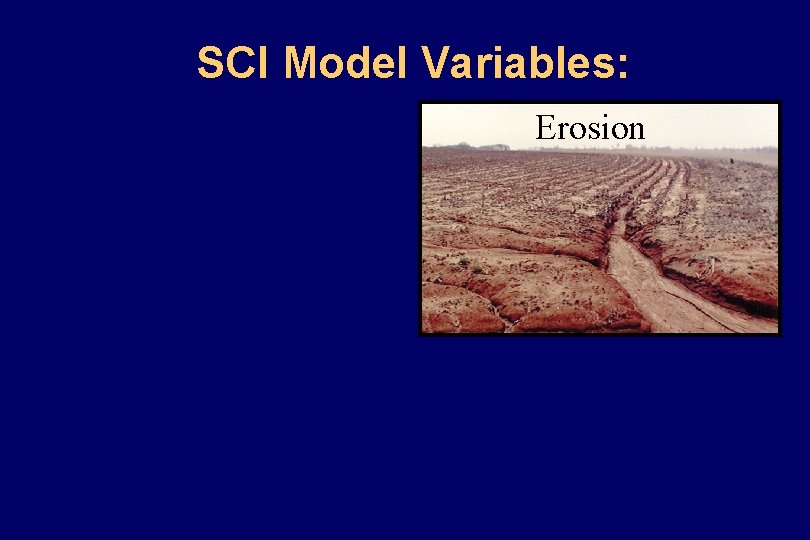
The SCI formula is: (OM x 0. 4) + (FO x 0. 4) + (ER x 0. 2) =SCI Where: • OM accounts for organic material returned to the soil (as a function of biomass produced) • FO represents field operation effects • ER is the sorting and removal of surface soil material by sheet, rill and/or wind erosion
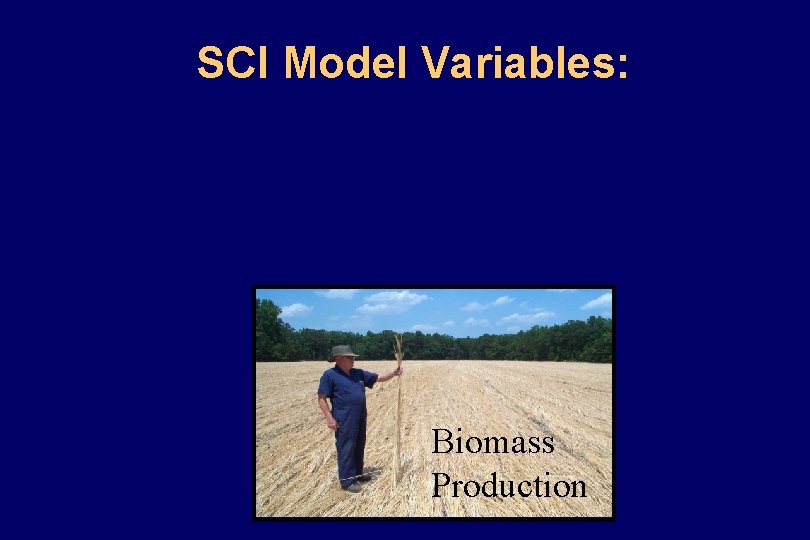
SCI Model Variables: Erosion Field Operations Biomass Production
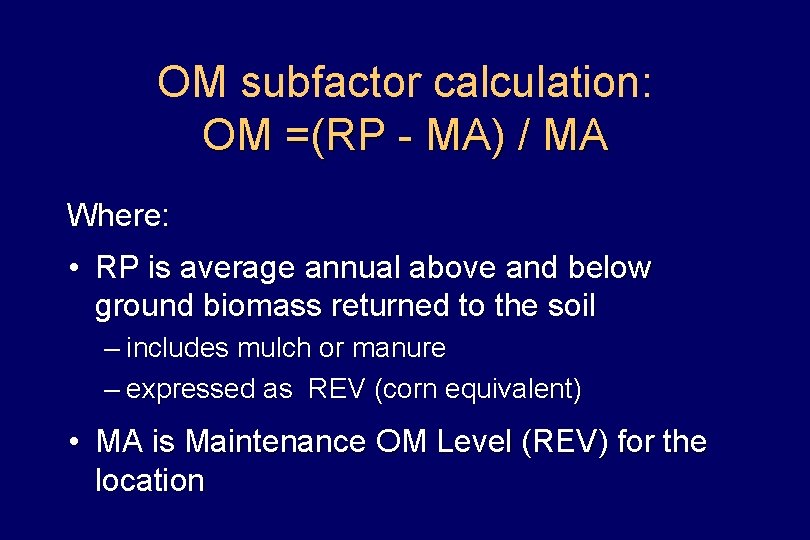
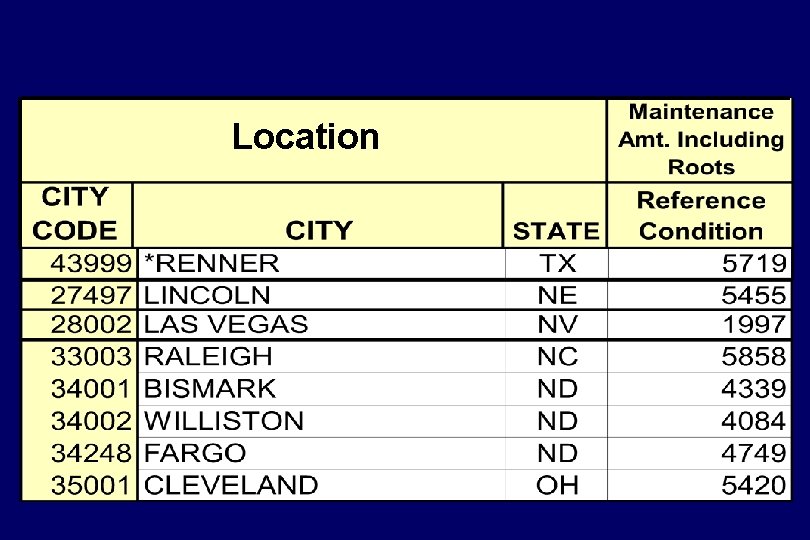
OM subfactor calculation: OM =(RP - MA) / MA Where: • RP is average annual above and below ground biomass returned to the soil – includes mulch or manure – expressed as REV (corn equivalent) • MA is Maintenance OM Level (REV) for the location
Location
SCI Model Variables: Erosion Field Operations Biomass Production
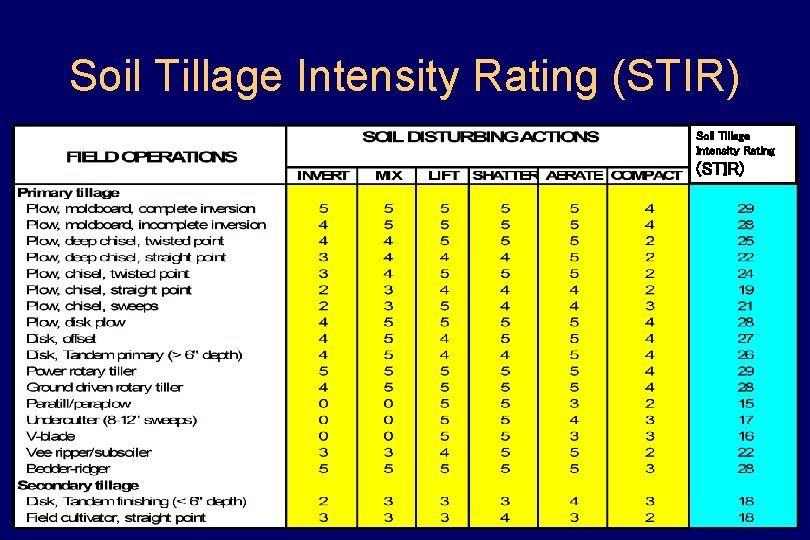
Soil Tillage Intensity Rating (STIR)
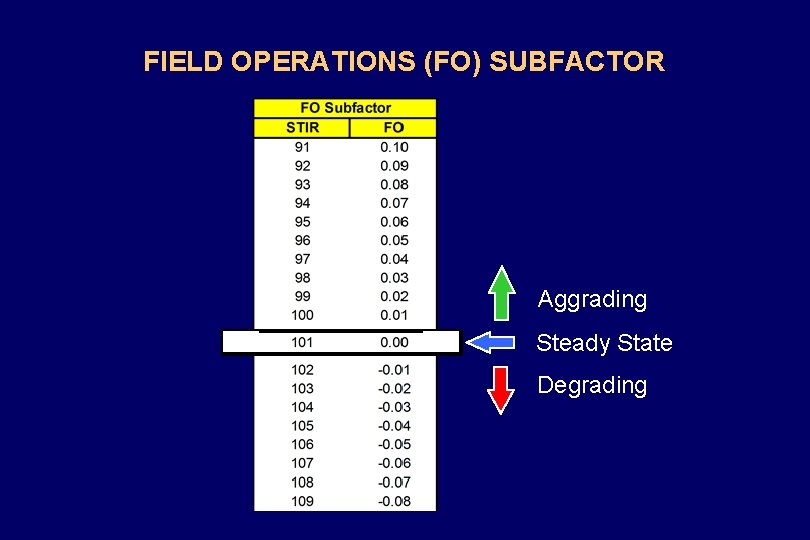
FIELD OPERATIONS (FO) SUBFACTOR Aggrading Steady State Degrading
SCI Model Variables: Erosion Field Operations Biomass Production
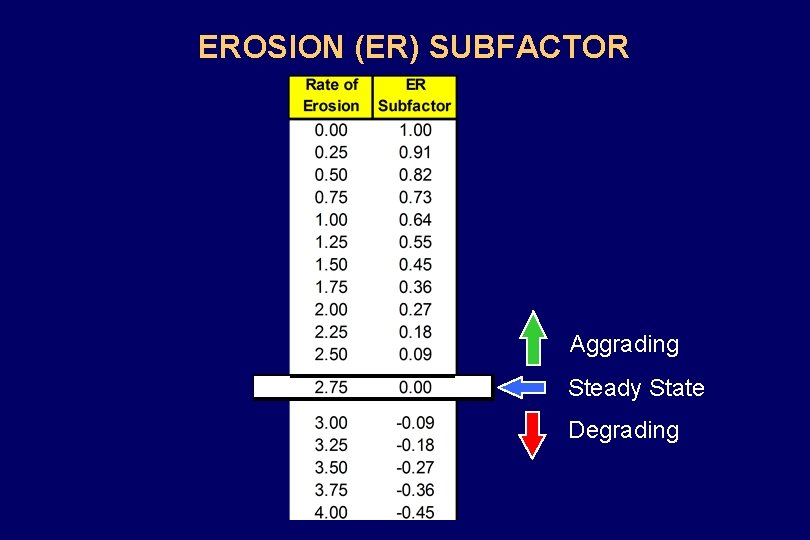
EROSION (ER) SUBFACTOR TABLE 4 EROSION (ER) SUBFACTOR Aggrading Steady State Degrading
NSSC and Long-term OM Research Sites
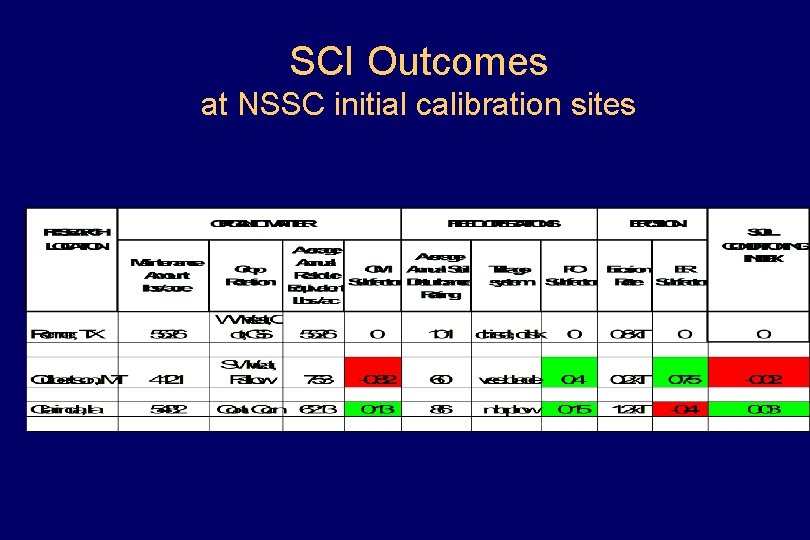
SCI Outcomes at NSSC initial calibration sites
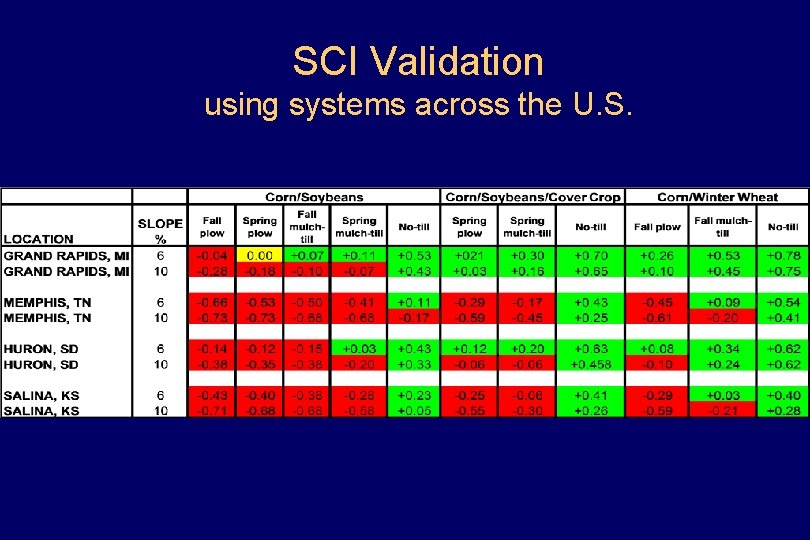
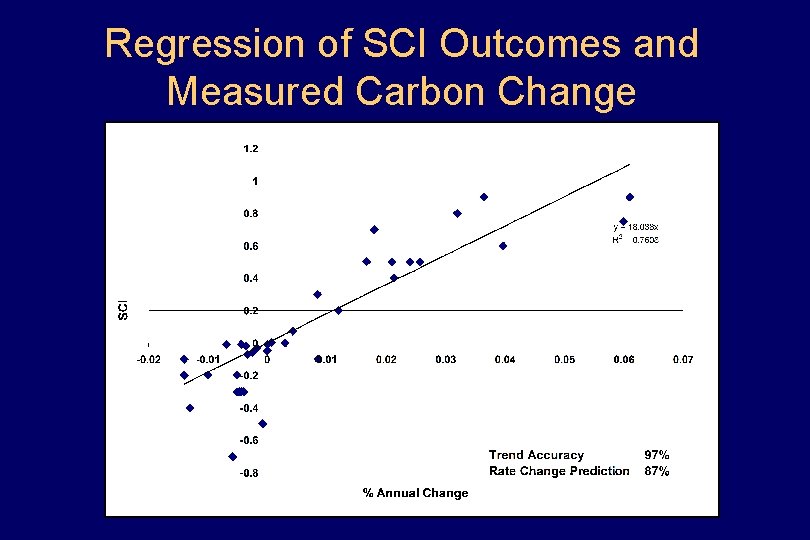
SCI Validation using systems across the U. S.
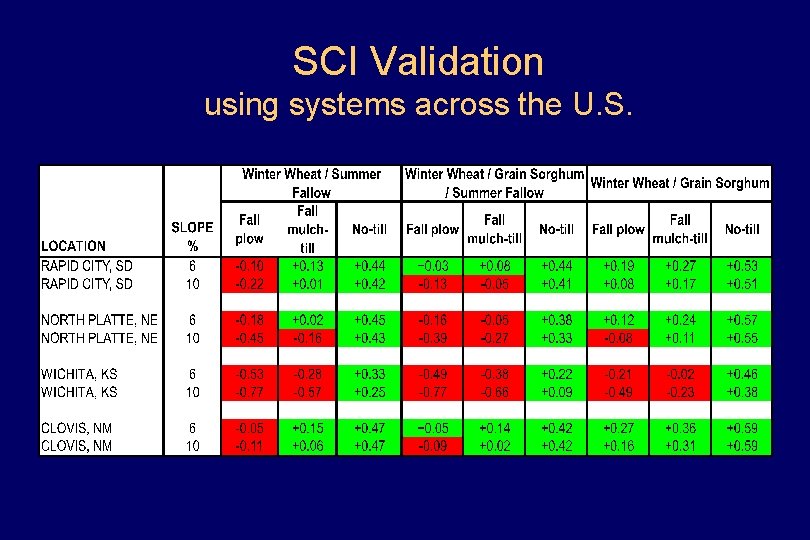
SCI Validation using systems across the U. S.
Regression of SCI Outcomes and Measured Carbon Change
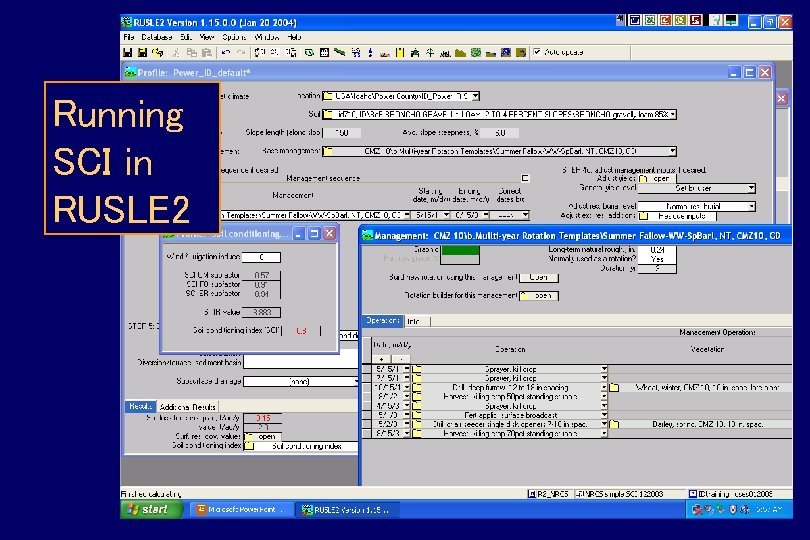
Running SCI in RUSLE 2
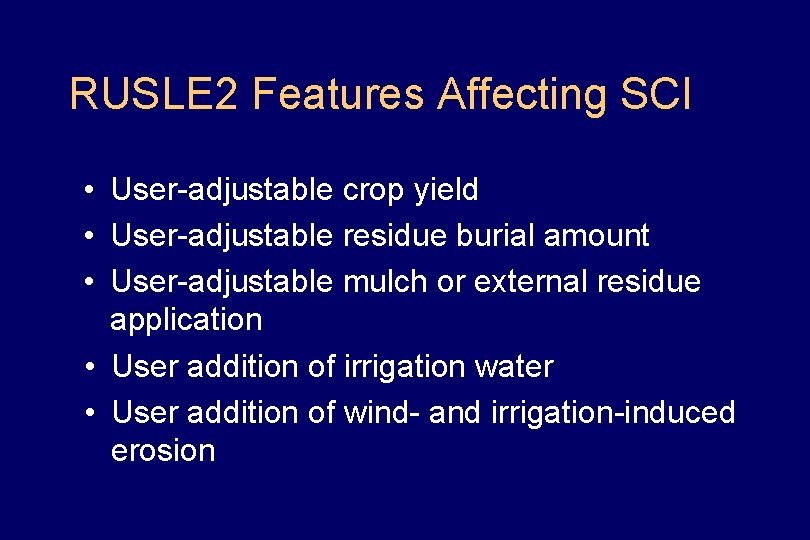
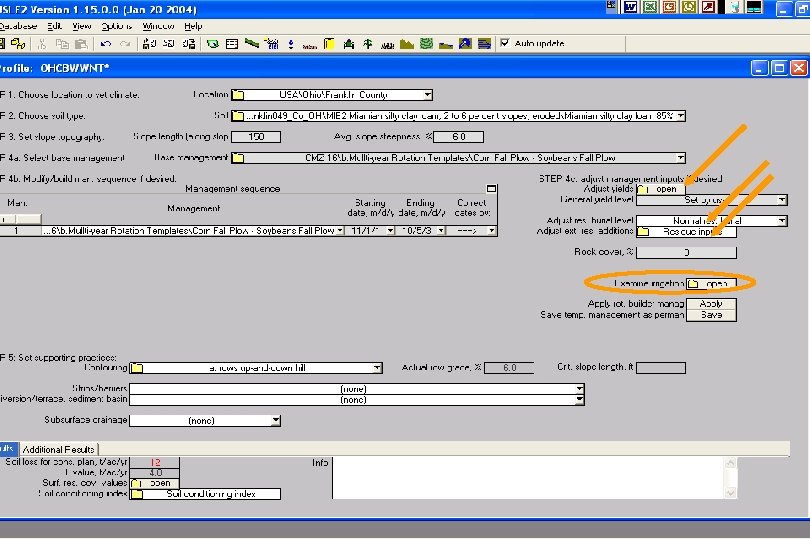
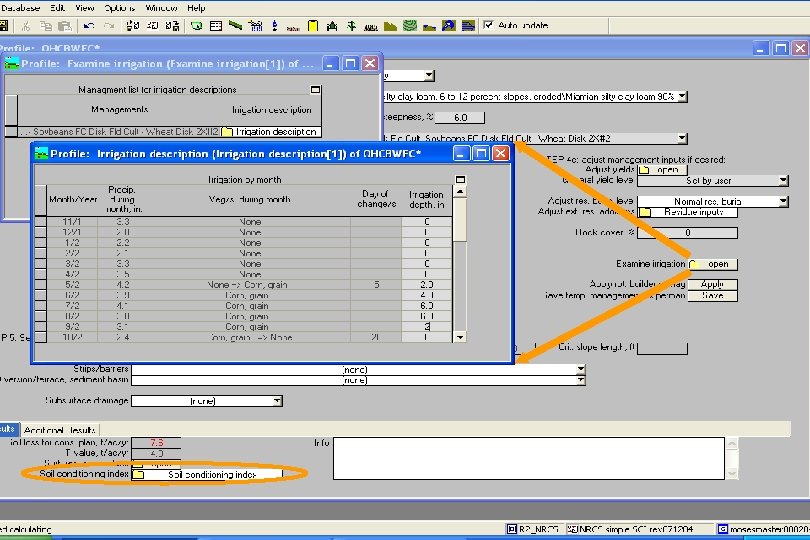
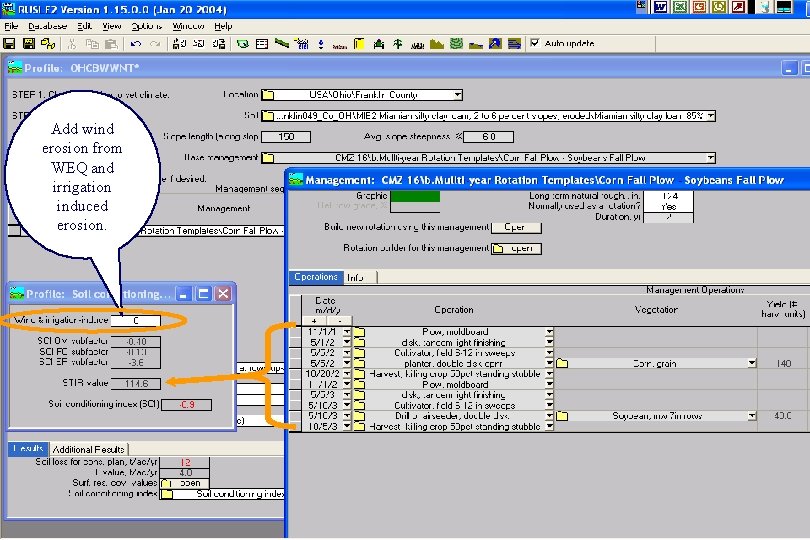
RUSLE 2 Features Affecting SCI • User-adjustable crop yield • User-adjustable residue burial amount • User-adjustable mulch or external residue application • User addition of irrigation water • User addition of wind- and irrigation-induced erosion
Add wind erosion from WEQ and irrigation induced erosion.
SCI Summary • Easy to use tool to estimate soil condition • Validated using long term research data • SCI is being used nationally for conservation assessment in CSP & CEAP • Now part of RUSLE 2 and coming to a field office near you!!
Soil Conditioning Index in RUSLE 2 http: //fargo. nserl. purdue. edu/ rusle 2_dataweb/RUSLE 2_Index. htm
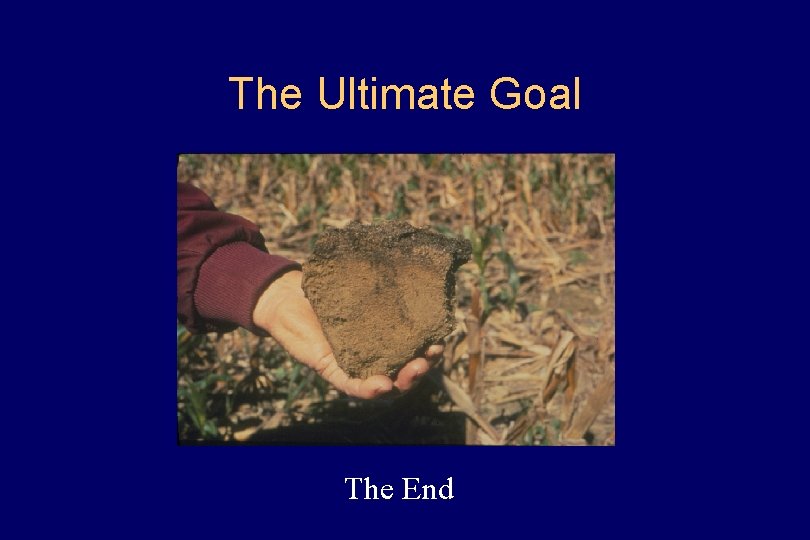
The Ultimate Goal The End