
Using the SignTracking Procedure to Study EventEvent Associative
- Slides: 16
Using the Sign-Tracking* Procedure to Study Event-Event Associative Learning * also known as Autoshaping or Conditioned Keypecking
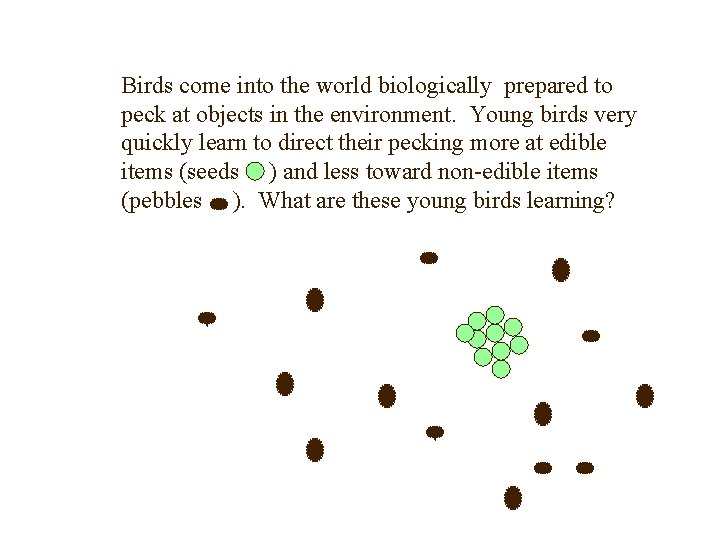
Birds come into the world biologically prepared to peck at objects in the environment. Young birds very quickly learn to direct their pecking more at edible items (seeds ) and less toward non-edible items (pebbles ). What are these young birds learning? v v
A reasonable assumption is that the birds learn what food looks like and approach and peck those items that have the appearance of food. Seeds are a typical source of food for many birds. Perhaps birds learn to associate one or more physical characteristics of seeds (e. g. , a color) with food. They then approach and peck at small items of that particular color. Is there evidence that is consistent with this assumption? Good evidence would consist of data showing that birds approach and peck at stimuli(signs or signals) that are associated with food. The sign tracking procedure provides this evidence.
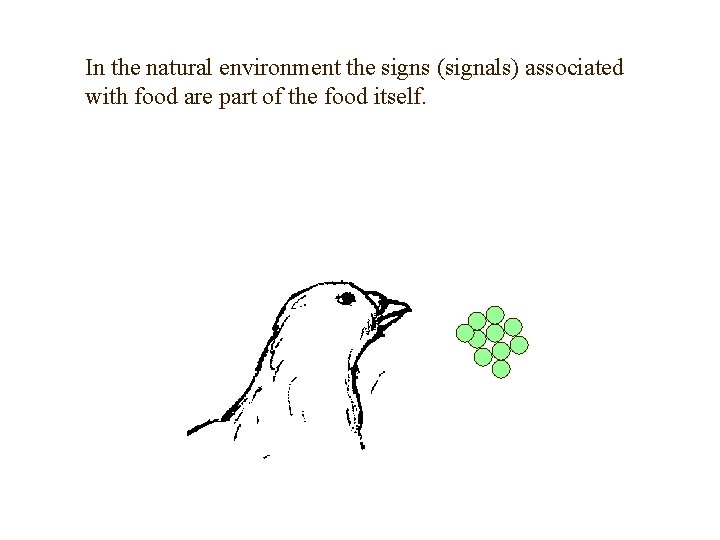
In the natural environment the signs (signals) associated with food are part of the food itself.
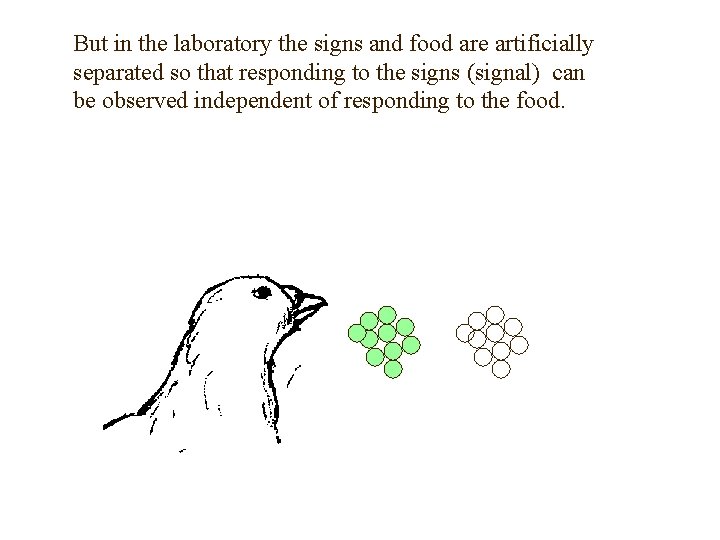
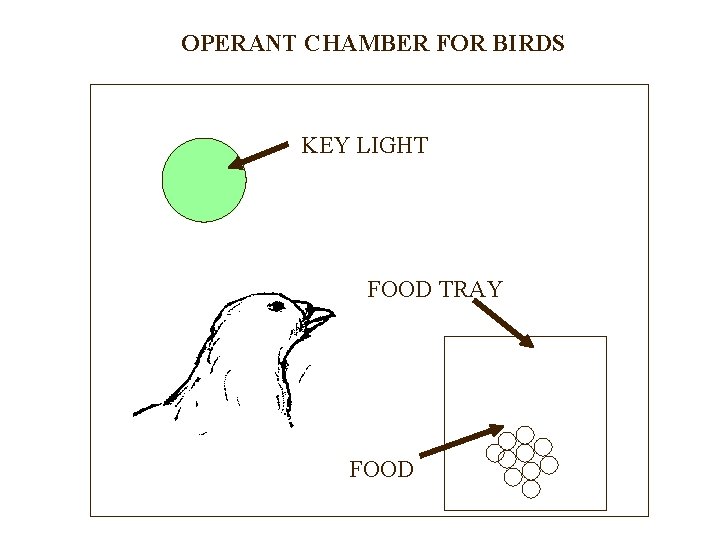
But in the laboratory the signs and food are artificially separated so that responding to the signs (signal) can be observed independent of responding to the food.
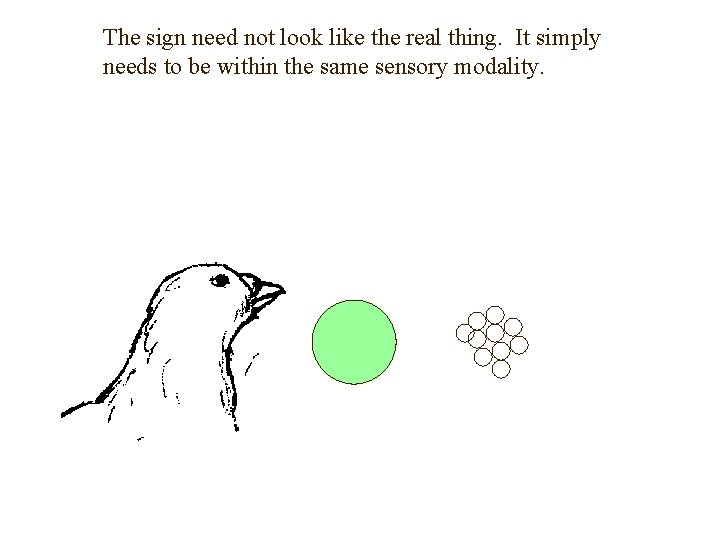
The sign need not look like the real thing. It simply needs to be within the same sensory modality.
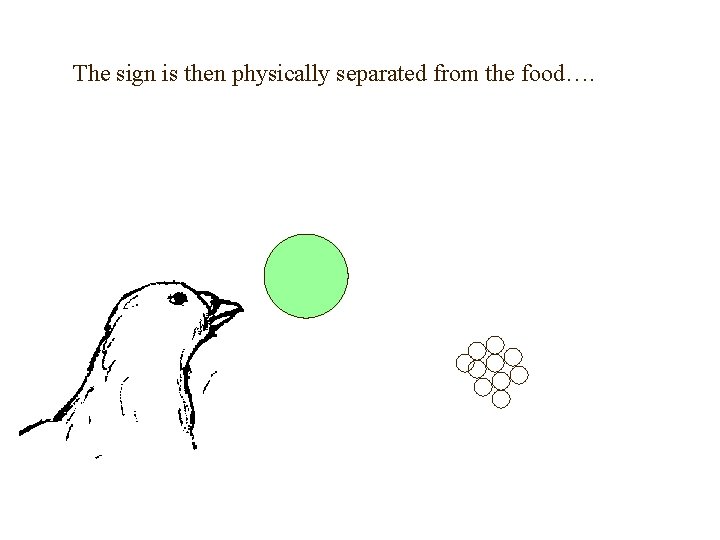
The sign is then physically separated from the food….
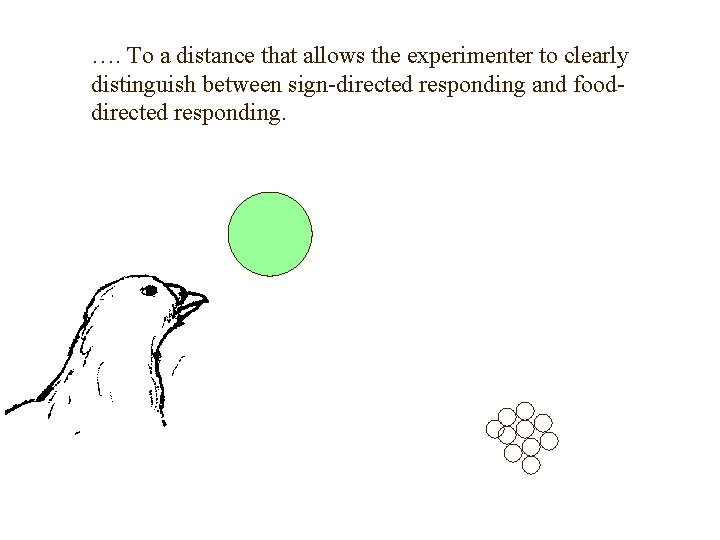
…. To a distance that allows the experimenter to clearly distinguish between sign-directed responding and fooddirected responding.
OPERANT CHAMBER FOR BIRDS KEY LIGHT FOOD TRAY FOOD
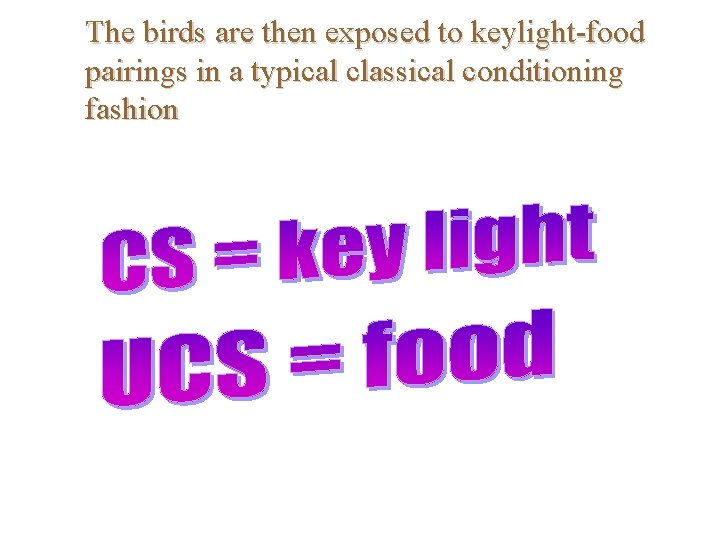
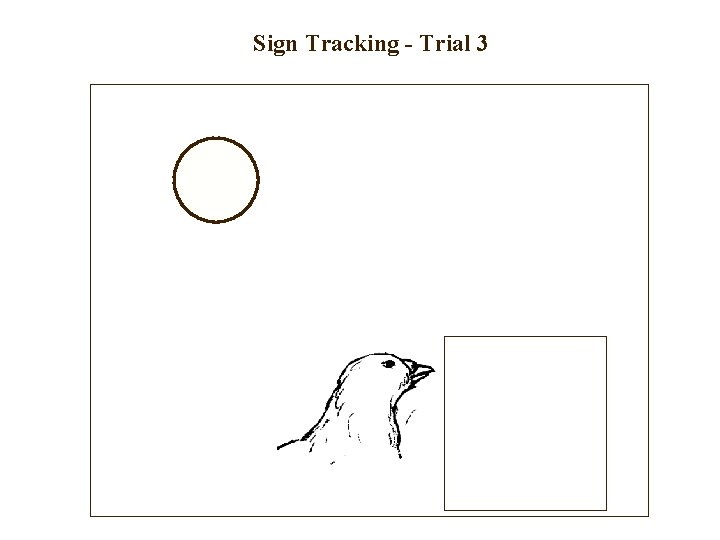
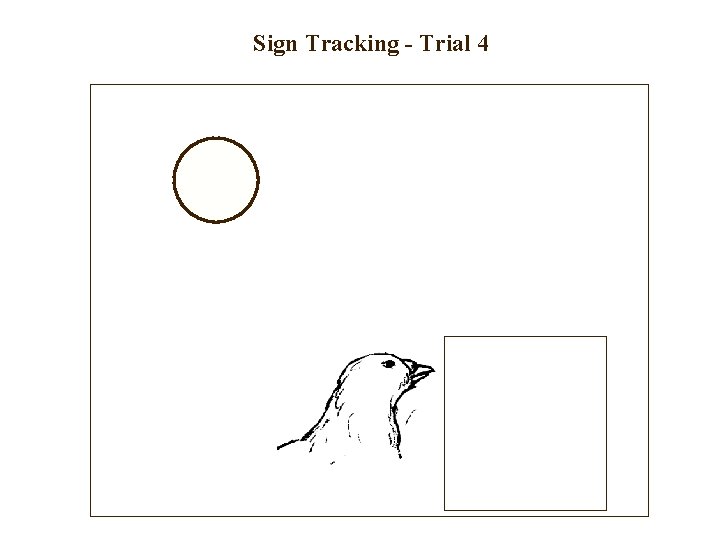
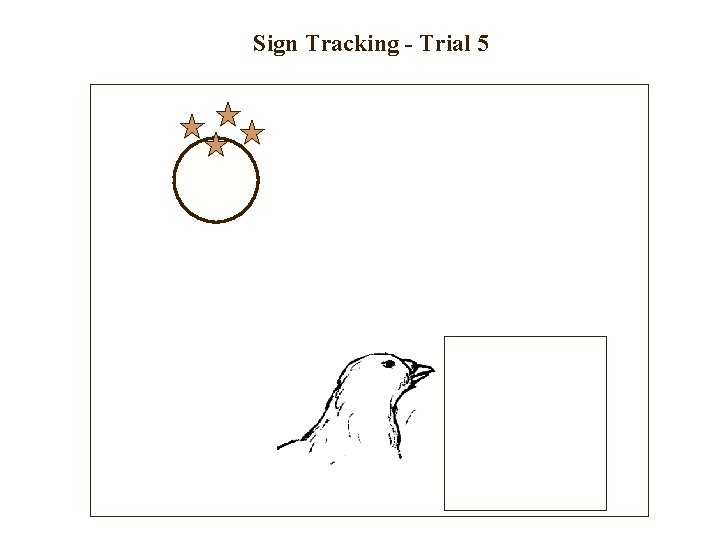
The birds are then exposed to keylight-food pairings in a typical classical conditioning fashion
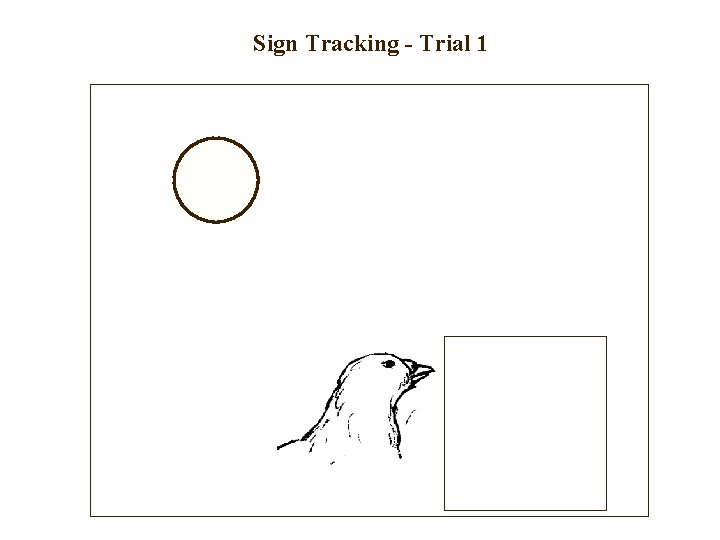
Sign Tracking - Trial 1
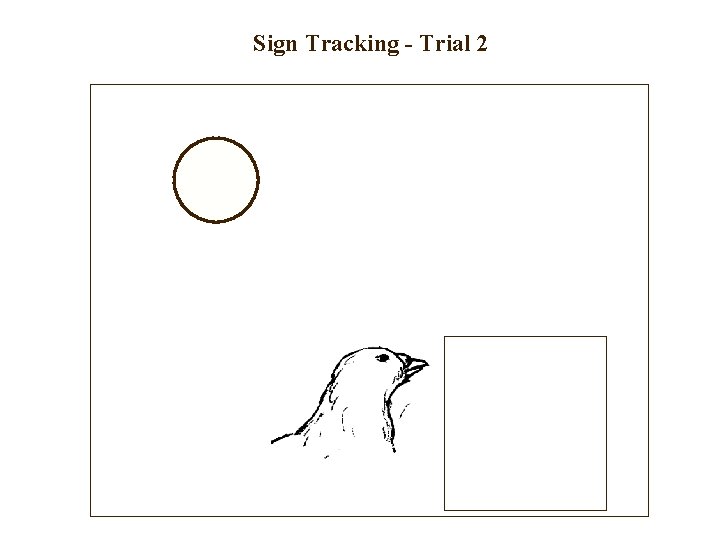
Sign Tracking - Trial 2
Sign Tracking - Trial 3
Sign Tracking - Trial 4
Sign Tracking - Trial 5
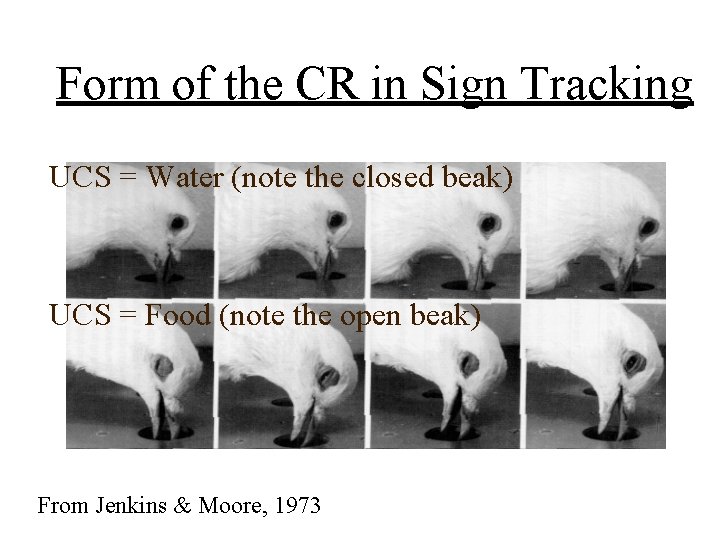
Form of the CR in Sign Tracking UCS = Water (note the closed beak) UCS = Food (note the open beak) From Jenkins & Moore, 1973