
Using The Short Fuse Composite to Forecast Severe
- Slides: 20
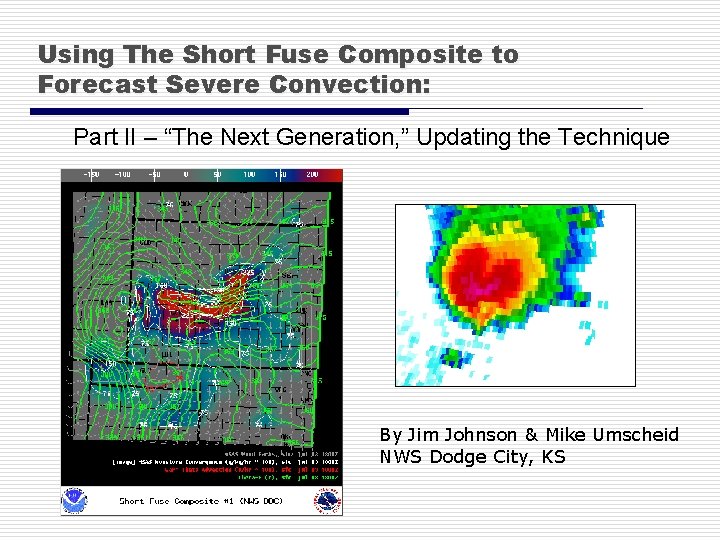
Using The Short Fuse Composite to Forecast Severe Convection: Part II – “The Next Generation, ” Updating the Technique By Jim Johnson & Mike Umscheid NWS Dodge City, KS
“Next generation” Short Fuse Composite (SFC) o Objective analysis routines n o Gridded display software n o NWS AWIPS MSAS and LAPS NWS-FSL Graphical Forecast Editor (GFE) Updated techniques n Low-level Lapse Rate replaces “Cap” parameter as convective initiation tool
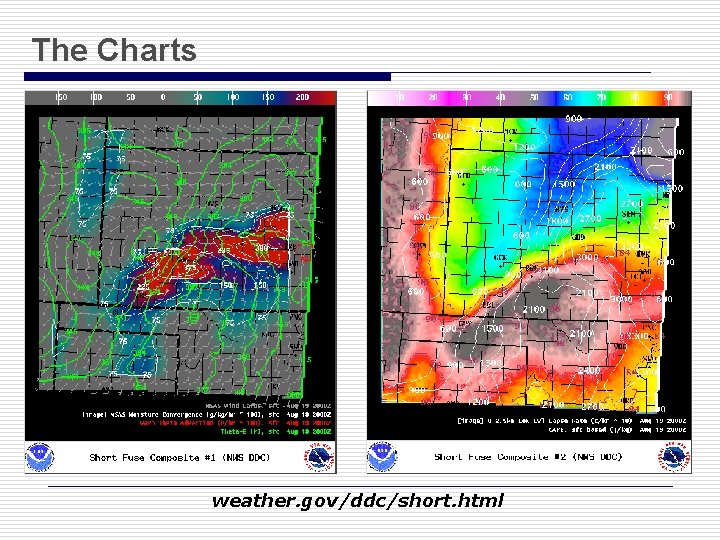
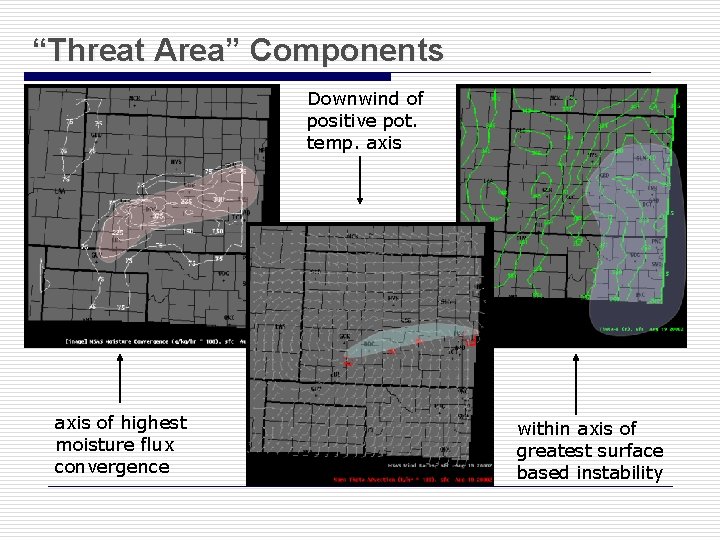
Components of the SFC o Surface Moisture Flux Convergence n o Potential Temperature Advection n o Native pot. temp. adv. grid from hourly LAPS (K/hr * 100) CAPE and Theta. E n n o Calculated from hourly MSAS grids (g/kg/hr * 100) CAPE- Native grid from hourly LAPS (J/kg) Theta. E- Native grid from hourly LAPS (K) Low Level Lapse Rate (0 to 2. 5 km AGL) n Calculated from hourly LAPS grids (C/km * 10)
The Charts weather. gov/ddc/short. html
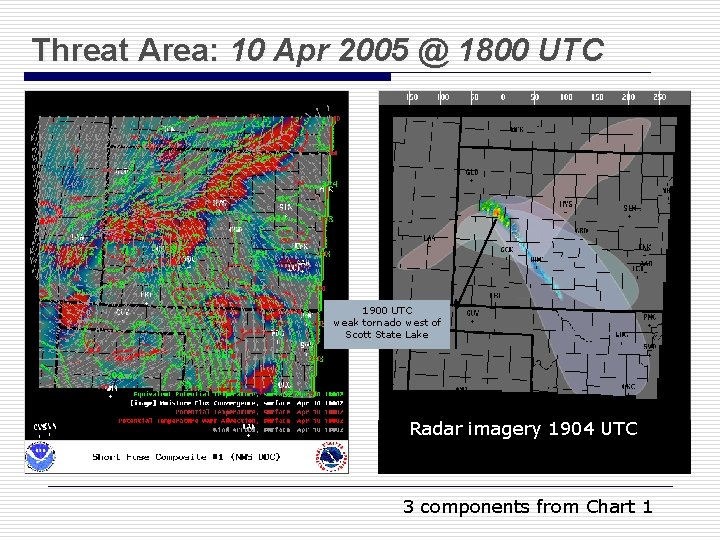
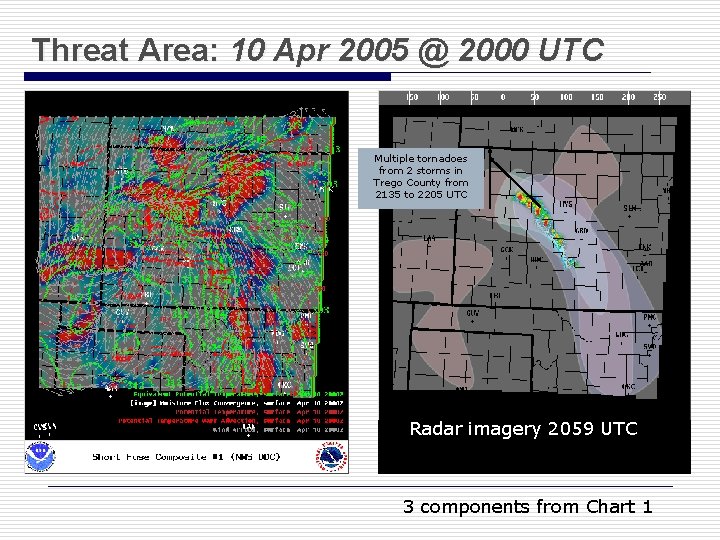
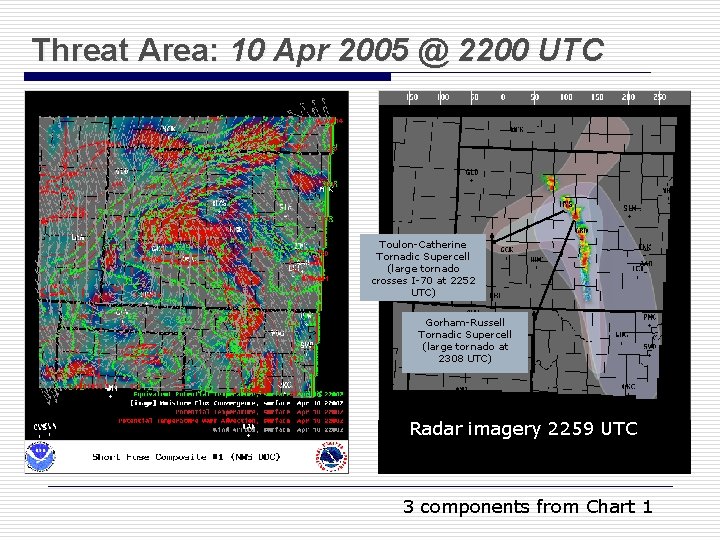
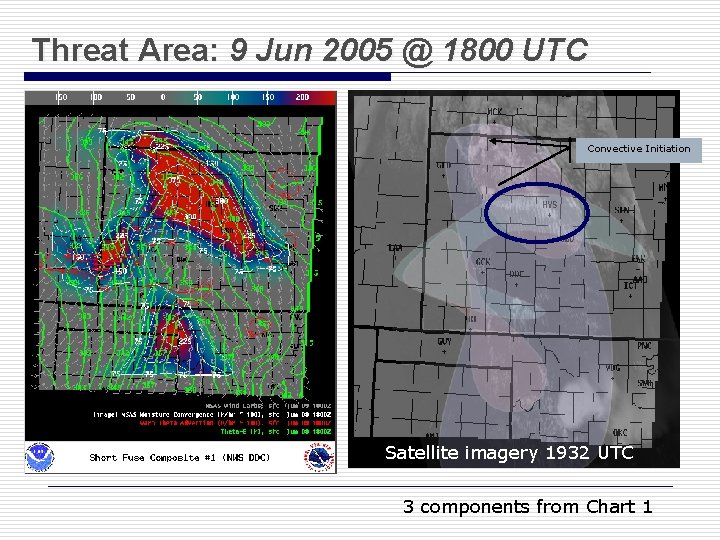
“Threat Area” Components Downwind of positive pot. temp. axis of highest moisture flux convergence within axis of greatest surface based instability
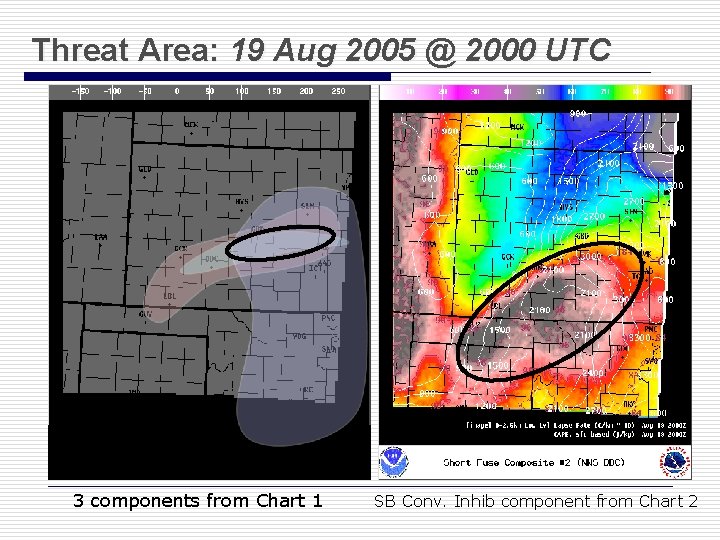
Threat Area: 19 Aug 2005 @ 2000 UTC 3 components from Chart 1 SB Conv. Inhib component from Chart 2
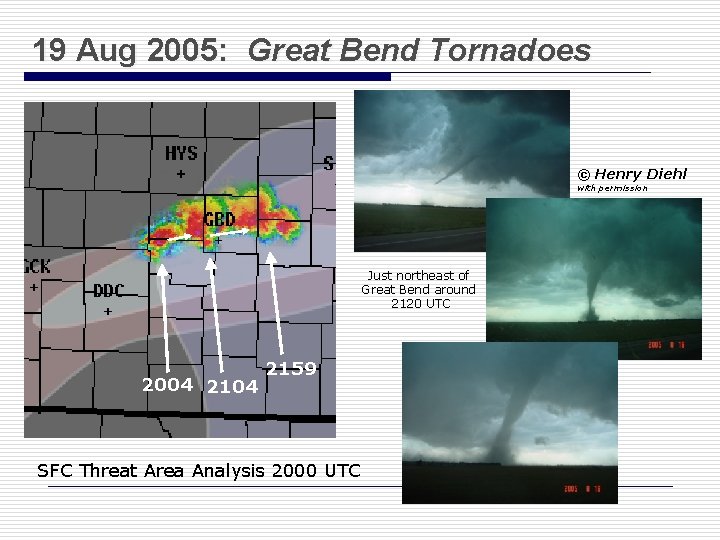
19 Aug 2005: Great Bend Tornadoes © Henry Diehl with permission Just northeast of Great Bend around 2120 UTC 2004 2159 SFC Threat Area Analysis 2000 UTC
A few more 2005 cases. . . o April 10 (local tornado outbreak) n o June 9 (local tornado outbreak) n o “cold core” upper low setup with advancing dry intrusion Traditional southwest flow setup ahead of broad upper trough July 3 (long-lived monster supercell) n Elevated supercell transitioning to surface based supercell
Threat Area: 10 Apr 2005 @ 1800 UTC 1900 UTC weak tornado west of Scott State Lake Radar imagery 1904 UTC 3 components from Chart 1
Threat Area: 10 Apr 2005 @ 2000 UTC Multiple tornadoes from 2 storms in Trego County from 2135 to 2205 UTC Radar imagery 2059 UTC 3 components from Chart 1
Threat Area: 10 Apr 2005 @ 2200 UTC Toulon-Catherine Tornadic Supercell (large tornado crosses I-70 at 2252 UTC) Gorham-Russell Tornadic Supercell (large tornado at 2308 UTC) Radar imagery 2259 UTC 3 components from Chart 1
Threat Area: 9 Jun 2005 @ 1800 UTC Convective Initiation Satellite imagery 1932 UTC 3 components from Chart 1
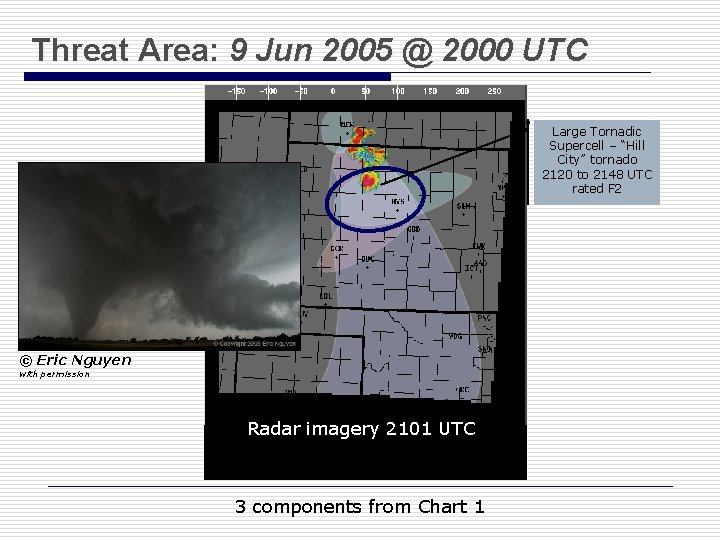
Threat Area: 9 Jun 2005 @ 2000 UTC Large Tornadic Supercell – “Hill City” tornado 2120 to 2148 UTC rated F 2 © Eric Nguyen with permission Radar imagery 2101 UTC 3 components from Chart 1
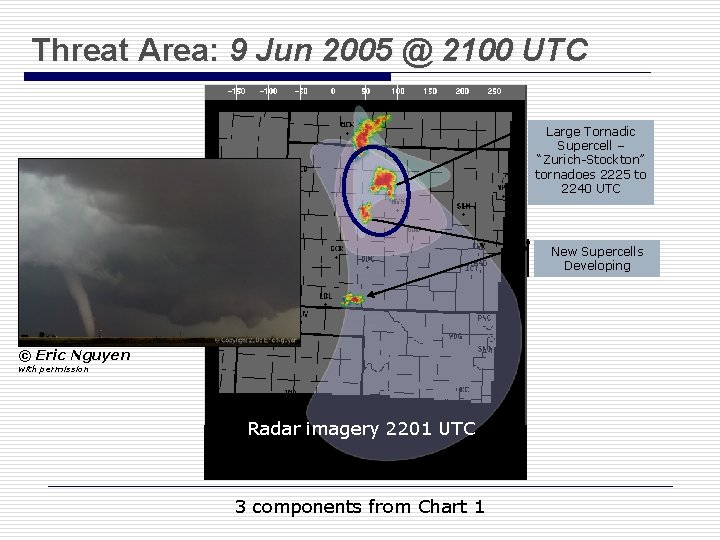
Threat Area: 9 Jun 2005 @ 2100 UTC Large Tornadic Supercell – “Zurich-Stockton” tornadoes 2225 to 2240 UTC New Supercells Developing © Eric Nguyen with permission Radar imagery 2201 UTC 3 components from Chart 1
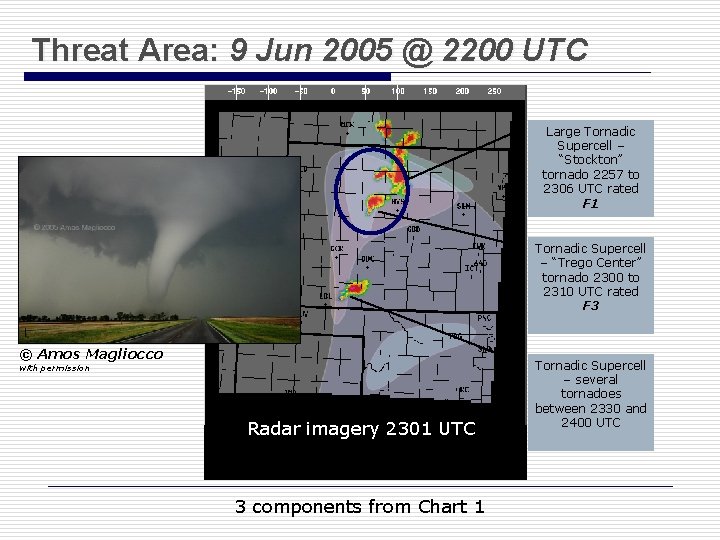
Threat Area: 9 Jun 2005 @ 2200 UTC Large Tornadic Supercell – “Stockton” tornado 2257 to 2306 UTC rated F 1 Tornadic Supercell – “Trego Center” tornado 2300 to 2310 UTC rated F 3 © Amos Magliocco with permission Radar imagery 2301 UTC 3 components from Chart 1 Tornadic Supercell – several tornadoes between 2330 and 2400 UTC
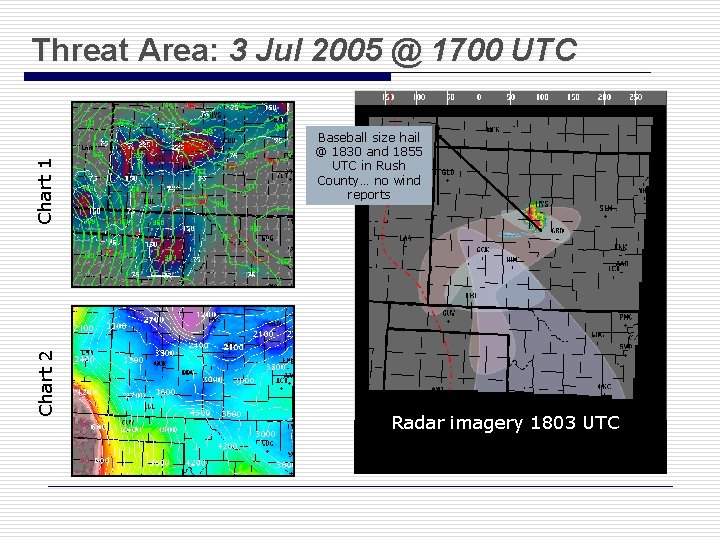
Chart 2 Chart 1 Threat Area: 3 Jul 2005 @ 1700 UTC Baseball size hail @ 1830 and 1855 UTC in Rush County… no wind reports Radar imagery 1803 UTC
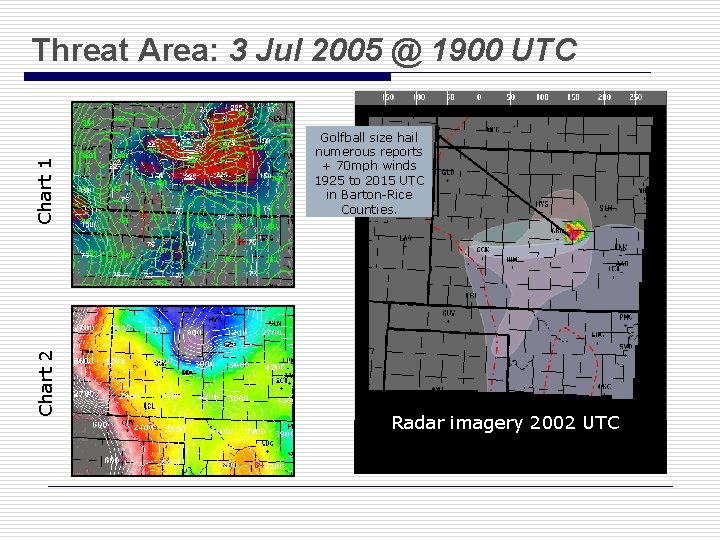
Chart 2 Chart 1 Threat Area: 3 Jul 2005 @ 1900 UTC Golfball size hail numerous reports + 70 mph winds 1925 to 2015 UTC in Barton-Rice Counties. Radar imagery 2002 UTC
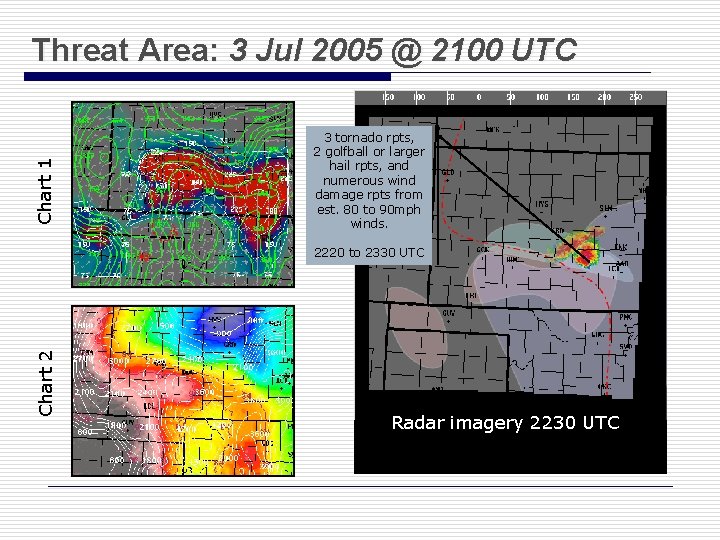
Chart 1 Threat Area: 3 Jul 2005 @ 2100 UTC 3 tornado rpts, 2 golfball or larger hail rpts, and numerous wind damage rpts from est. 80 to 90 mph winds. Chart 2 2220 to 2330 UTC Radar imagery 2230 UTC
Future Work o Network of local office SFC n n Operational version 1. 0 on AWIPS LAD NWS Goodland, KS first office outside of DDC to implement n o http: //weather. gov/gld/short Improvements n n Web-based looping feature Chart 3: Empirical “Threat Area” development? NWS DDC Short Fuse Composite website – http: //weather. gov/ddc/short. html
Questions & Comments? © Mike Umscheid Thank You!