
Using the reading progression to assess reading notebooks
Using the reading progression to assess reading notebooks and create independent reading goals 4 th Grade Literacy Night PS 11
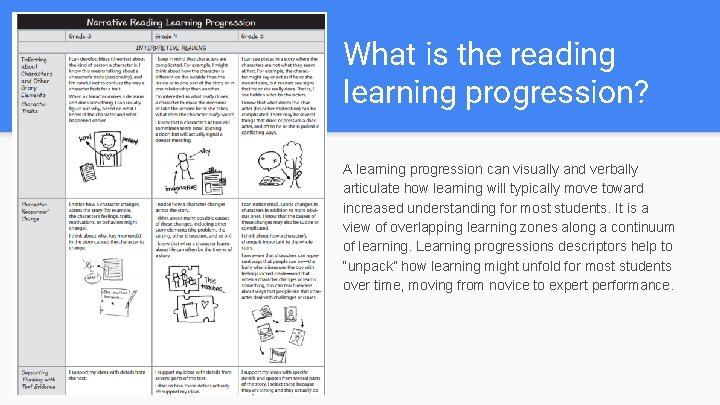
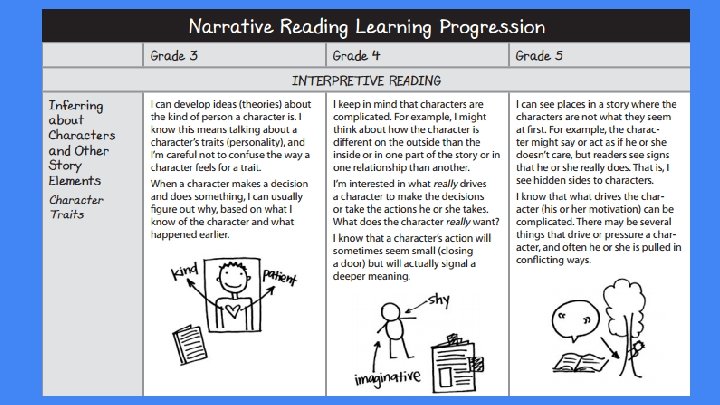
What is the reading learning progression? A learning progression can visually and verbally articulate how learning will typically move toward increased understanding for most students. It is a view of overlapping learning zones along a continuum of learning. Learning progressions descriptors help to “unpack” how learning might unfold for most students over time, moving from novice to expert performance.
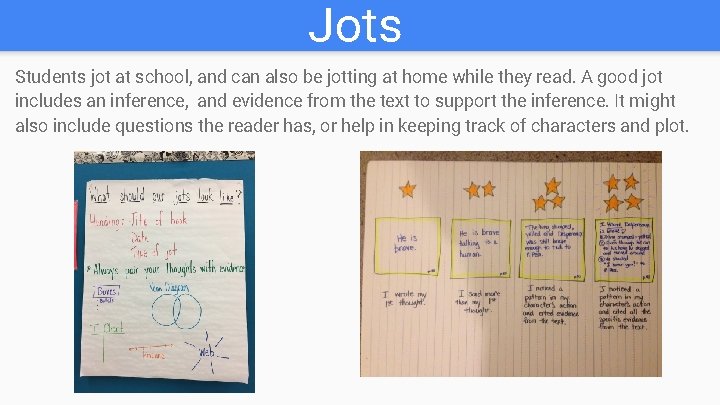
Jots Students jot at school, and can also be jotting at home while they read. A good jot includes an inference, and evidence from the text to support the inference. It might also include questions the reader has, or help in keeping track of characters and plot.
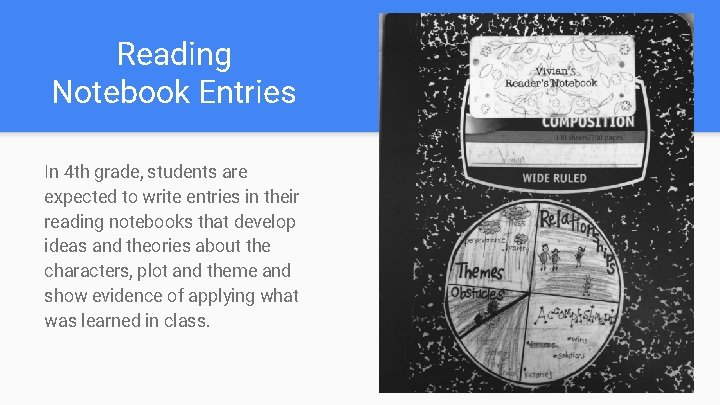
Reading Notebook Entries In 4 th grade, students are expected to write entries in their reading notebooks that develop ideas and theories about the characters, plot and theme and show evidence of applying what was learned in class.
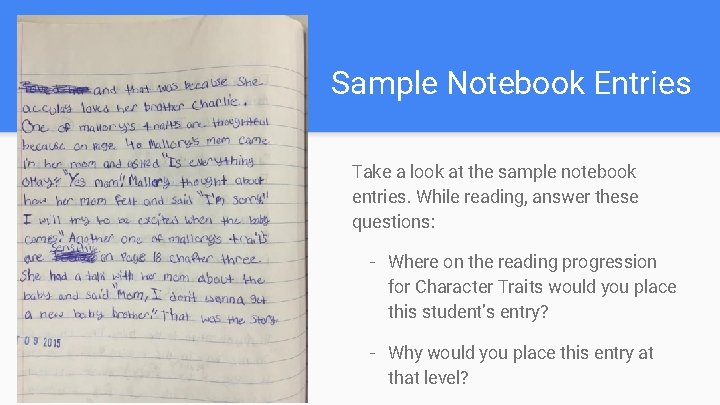
Sample Notebook Entries Take a look at the sample notebook entries. While reading, answer these questions: - Where on the reading progression for Character Traits would you place this student’s entry? - Why would you place this entry at that level?
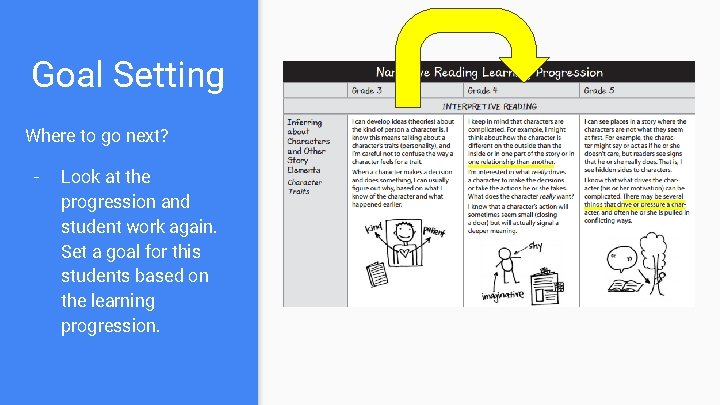
Goal Setting Where to go next? - Look at the progression and student work again. Set a goal for this students based on the learning progression.
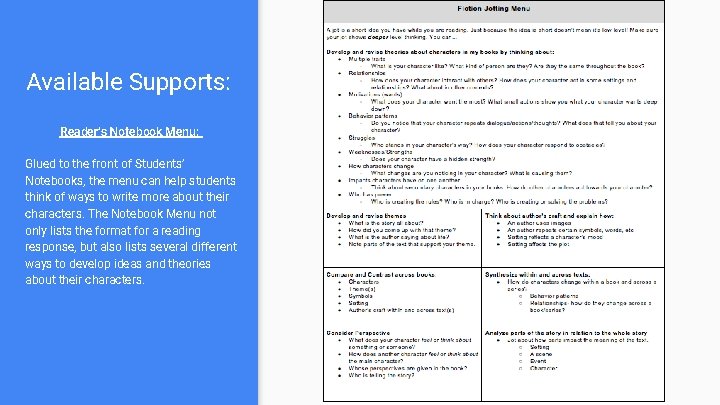
Available Supports: Reader’s Notebook Menu: Glued to the front of Students’ Notebooks, the menu can help students think of ways to write more about their characters. The Notebook Menu not only lists the format for a reading response, but also lists several different ways to develop ideas and theories about their characters.
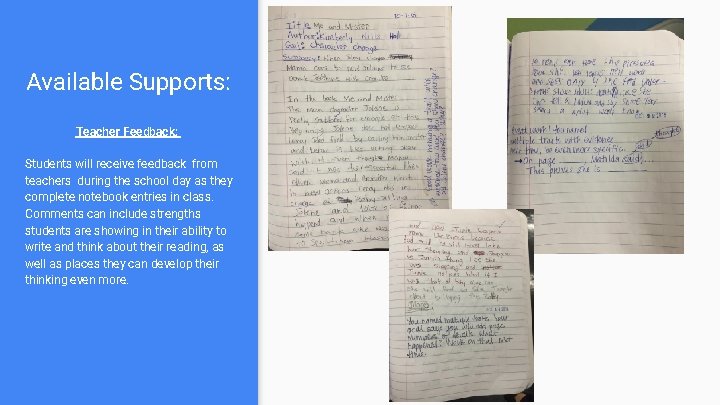
Available Supports: Teacher Feedback: Students will receive feedback from teachers during the school day as they complete notebook entries in class. Comments can include strengths students are showing in their ability to write and think about their reading, as well as places they can develop their thinking even more.
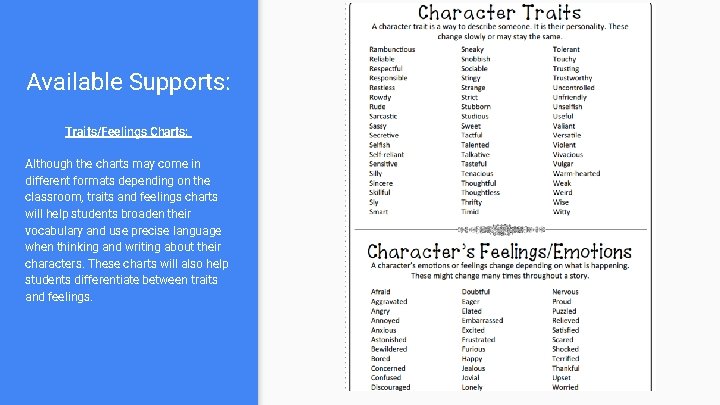
Available Supports: Traits/Feelings Charts: Although the charts may come in different formats depending on the classroom, traits and feelings charts will help students broaden their vocabulary and use precise language when thinking and writing about their characters. These charts will also help students differentiate between traits and feelings.
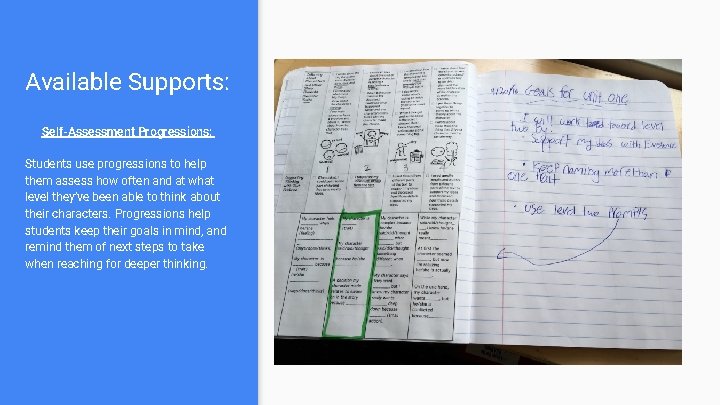
Available Supports: Self-Assessment Progressions: Students use progressions to help them assess how often and at what level they’ve been able to think about their characters. Progressions help students keep their goals in mind, and remind them of next steps to take when reaching for deeper thinking.
Check your student’s notebook for these resources and more as the year goes on!
- Slides: 12