
USING THE NEW L BAND MSS ALLOCATIONS Study
USING THE NEW L BAND MSS ALLOCATIONS Study Group 8 Seminar on Tomorrow’s Technological Innovations Geneva, 9 September 2004 Marcus Vilaça Manager, Systems Engineering Advanced Systems Division
Inmarsat Background • • • Established in 1979 as an international co-operative Privatised in April 1999 Owns and operates 9 satellites : 4 x Inmarsat 2 5 x Inmarsat 3 Contract for 3 x Inmarsat 4 satellites signed in May 2000 Firmly established in maritime, aeronautical and land markets Customer base of over 320, 000 users Current services include messaging, voice and data Global presence & network of suppliers of services and equipment GMDSS
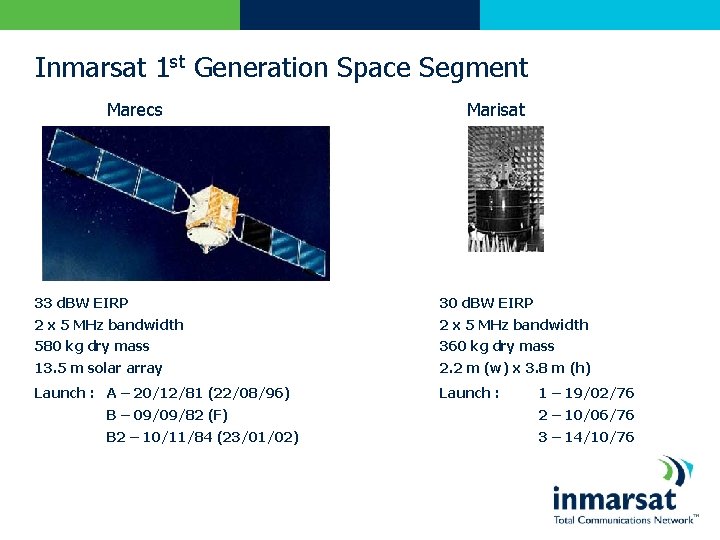
Inmarsat 1 st Generation Space Segment Marecs Marisat 33 d. BW EIRP 30 d. BW EIRP 2 x 5 MHz bandwidth 580 kg dry mass 360 kg dry mass 13. 5 m solar array 2. 2 m (w) x 3. 8 m (h) Launch : A – 20/12/81 (22/08/96) Launch : 1 – 19/02/76 B – 09/09/82 (F) 2 – 10/06/76 B 2 – 10/11/84 (23/01/02) 3 – 14/10/76
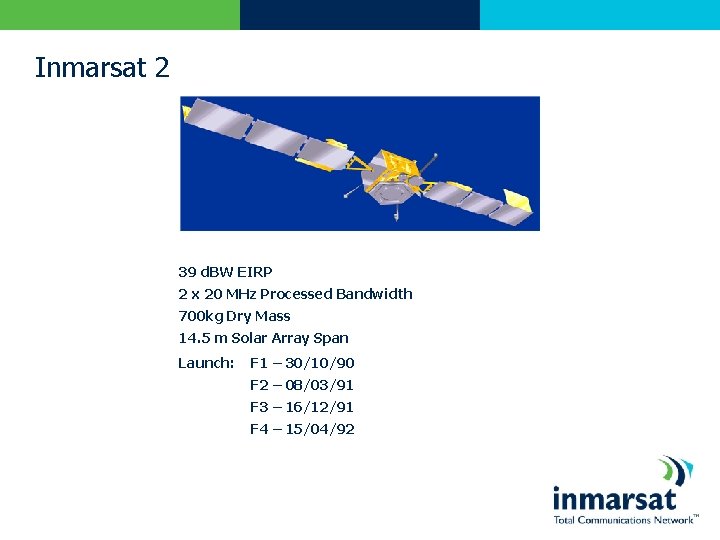
Inmarsat 2 39 d. BW EIRP 2 x 20 MHz Processed Bandwidth 700 kg Dry Mass 14. 5 m Solar Array Span Launch: F 1 – 30/10/90 F 2 – 08/03/91 F 3 – 16/12/91 F 4 – 15/04/92
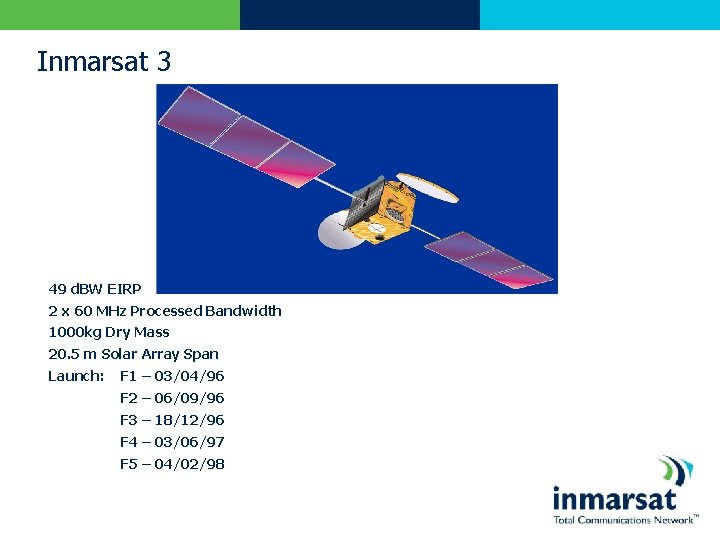
Inmarsat 3 49 d. BW EIRP 2 x 60 MHz Processed Bandwidth 1000 kg Dry Mass 20. 5 m Solar Array Span Launch: F 1 – 03/04/96 F 2 – 06/09/96 F 3 – 18/12/96 F 4 – 03/06/97 F 5 – 04/02/98
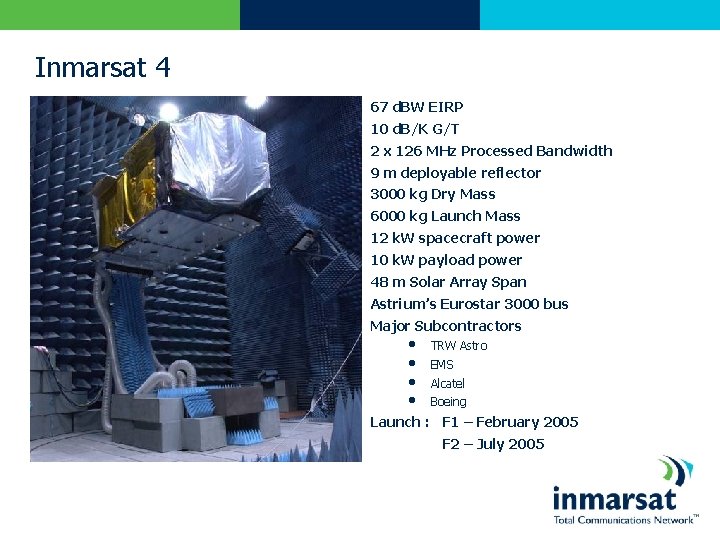
Inmarsat 4 67 d. BW EIRP 10 d. B/K G/T 2 x 126 MHz Processed Bandwidth 9 m deployable reflector 3000 kg Dry Mass 6000 kg Launch Mass 12 k. W spacecraft power 10 k. W payload power 48 m Solar Array Span Astrium’s Eurostar 3000 bus Major Subcontractors • • TRW Astro EMS Alcatel Boeing Launch : F 1 – February 2005 F 2 – July 2005
Inmarsat 4 Characteristics • • • Frequency Bands • Mobile Link @ L Band Feeder Link @ C band Transponders • Transparent bent-pipe, C/L, L/C, L/L, C/C & Navigational Digital Channeliser/Beamformer • • 630 x 200 k. Hz channels, dynamically allocated to beams 256 beams Mobile Link (RHCP, digital beam former) • • • 228 narrow spot beams for BGAN service (1. 1 degree grid) 19 wide spot beams for E&E service (4. 05 degree grid) 1 global beam Feeder Link (RHCP & LHCP) • 1 global beam, dual polarisation
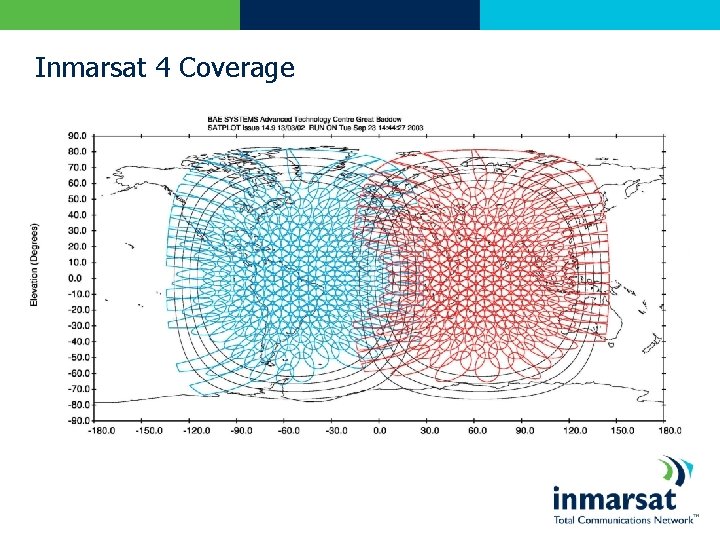
Inmarsat 4 Coverage
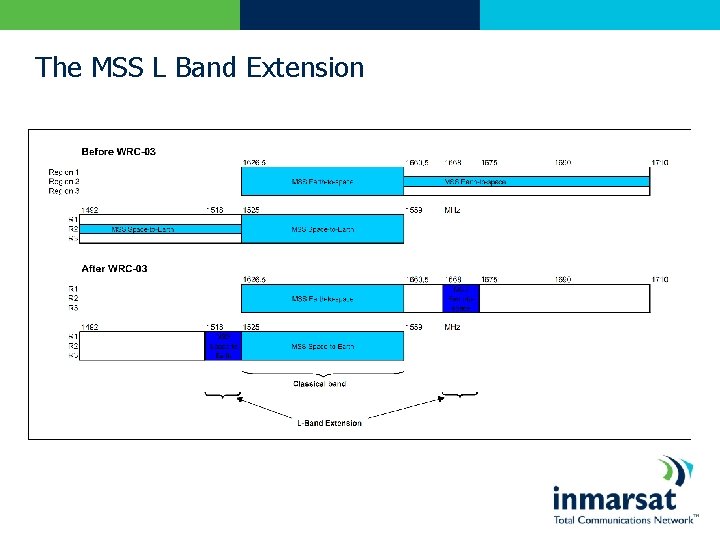
The MSS L Band Extension
Amethyst Programme • • • Part of the ESA’s Artes 3 Line 4 study programme Feasibility study focused on the changes required to the I 4 payload design, to enable utilisation of the L band extension Study lead by Astrium, supported by Inmarsat Scenario 1 : Modification of I 4 flight model 3 (“FM 3”) • • 1 A - Minimum Changes 1 B - New DSP Scenario 2 : Procurement a fourth spacecraft (“FM 4”) • • 2 A - New DSP 2 B - Enhanced SSPA’s Main Outputs: Design Solutions, ROM Cost & Development Plan
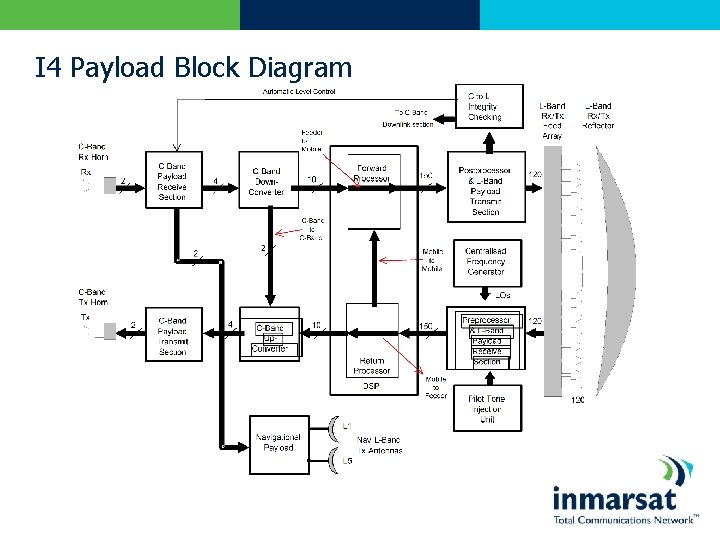
I 4 Payload Block Diagram
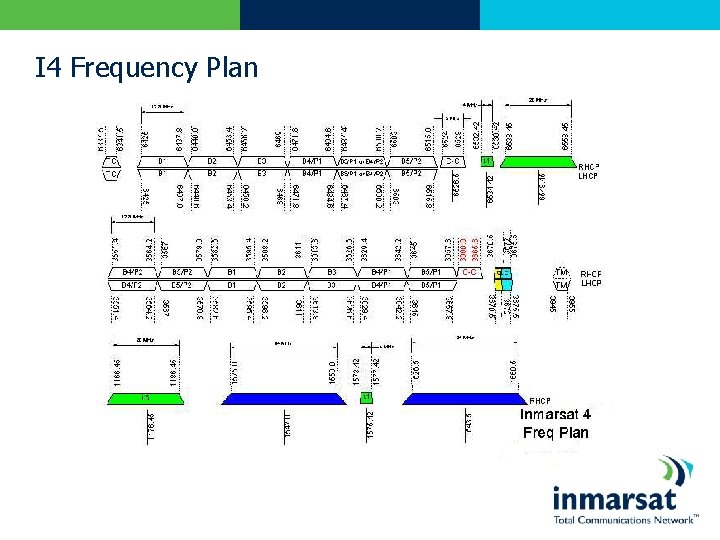
I 4 Frequency Plan
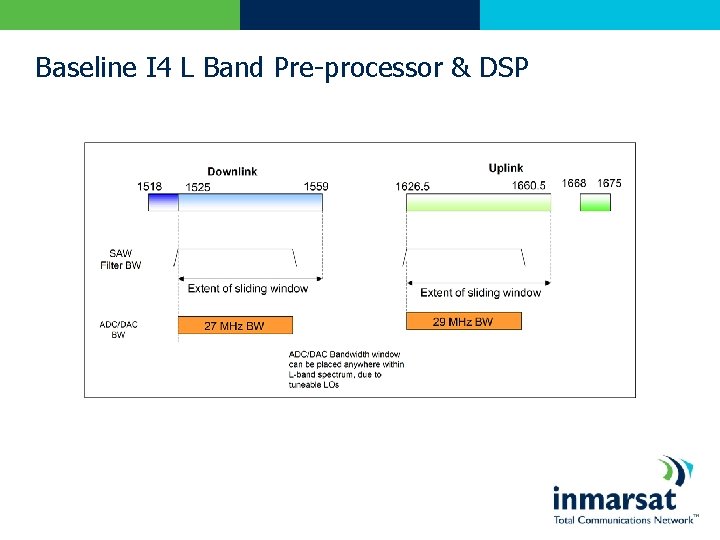
Baseline I 4 L Band Pre-processor & DSP
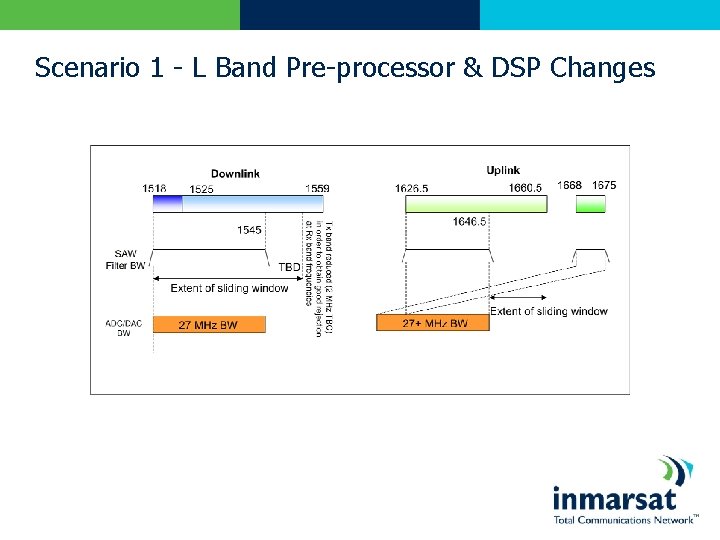
Scenario 1 - L Band Pre-processor & DSP Changes
Scenario 1 – Other Equipment Changes • L Band Feed • New diplexers • Feed element retuning • ONet’s • New output filters
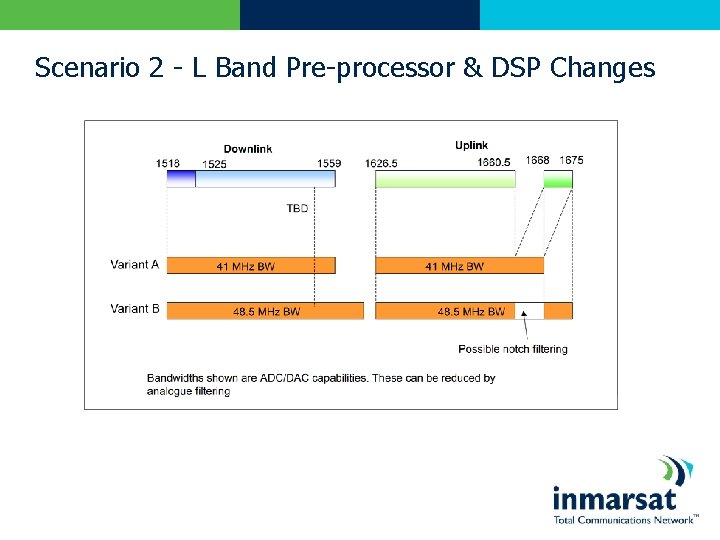
Scenario 2 - L Band Pre-processor & DSP Changes
Scenario 2 – Other Equipment Changes • L Band Feed • New diplexers • Feed element retuning • ONet’s • New output filters • New SSPA’s • Increased output power
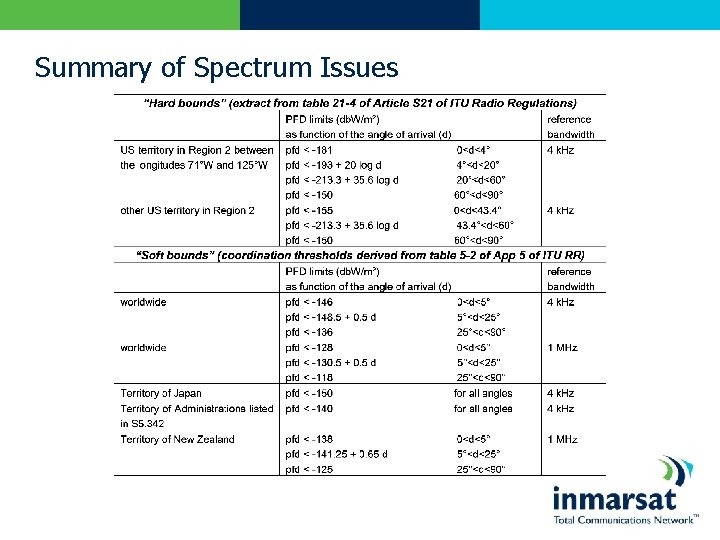
Summary of Spectrum Issues
Planned Spectrum Activities • Studies into the use of the new bands and related sharing studies • Participation in the work being carried out by WP 8 D. • Regulatory study of the new bands • Assess the use of the new bands by existing terrestrial services, and the possibility of utilization of those bands for the provision of MSS in various countries, concentrating in Region 1 and Region 3. • Satellite antenna discrimination • Analyse the impact of PFD limits on the service coverage area by taking into account satellite antenna discrimination performance.
Conclusion • The MSS L Band extensions offer a great opportunity to significantly increase the capacity of MSS satellites. • The modifications required to the baseline Inmarsat 4 satellites to allow service provision in the new bands are significant, but can be kept within limits that allow reduced risk and lower cost and schedule impact. • A comprehensive study on the utilisation of the extended L band by existing services will be carried out, to provide an accurate picture of the current situation and of any possible constraints.
- Slides: 20