
Using the GLM to perform a correlation General

- Slides: 13
Using the GLM to perform a correlation
General Linear Model The Swiss Army Knife of Statistics
The General Linear Model (GLM) GLM definition from Huettel et al. : • a class of statistical tests that assume that the experimental data are composed of the linear combination of different model factors, along with uncorrelated noise • Model – statistical model • Linear – things add up sensibly (1+1 = 2) • note that linearity refers to the predictors in the model and not necessarily the BOLD signal • General – many simpler statistical procedures such as correlations, t-tests and ANOVAs are subsumed by the GLM
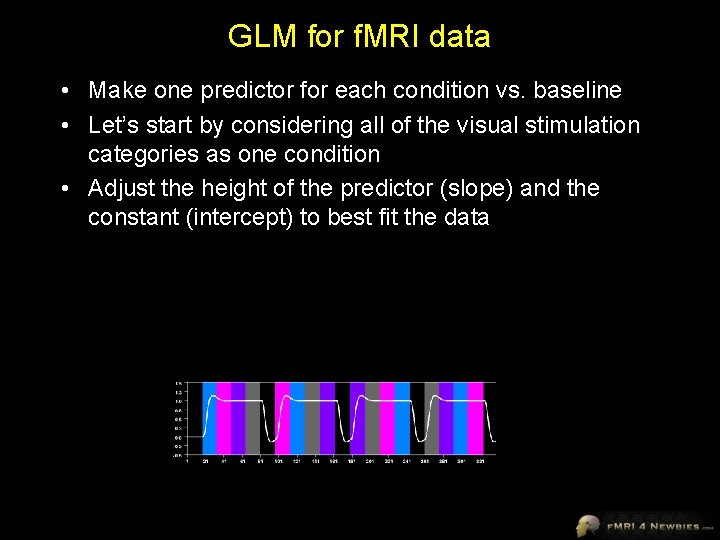
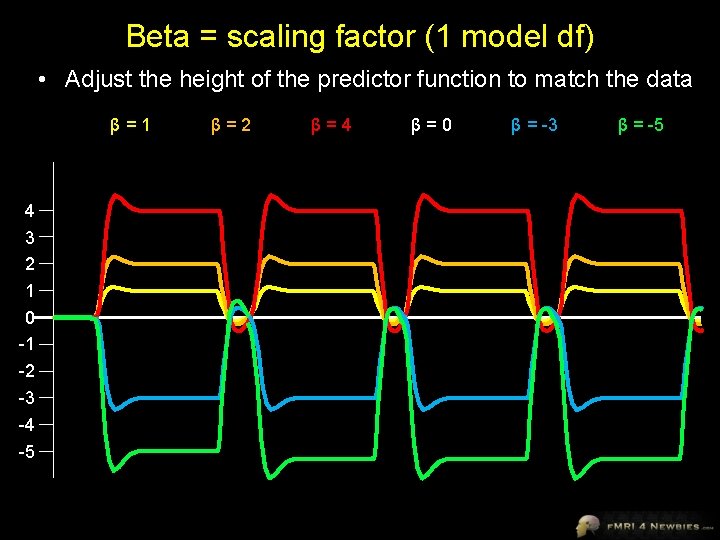
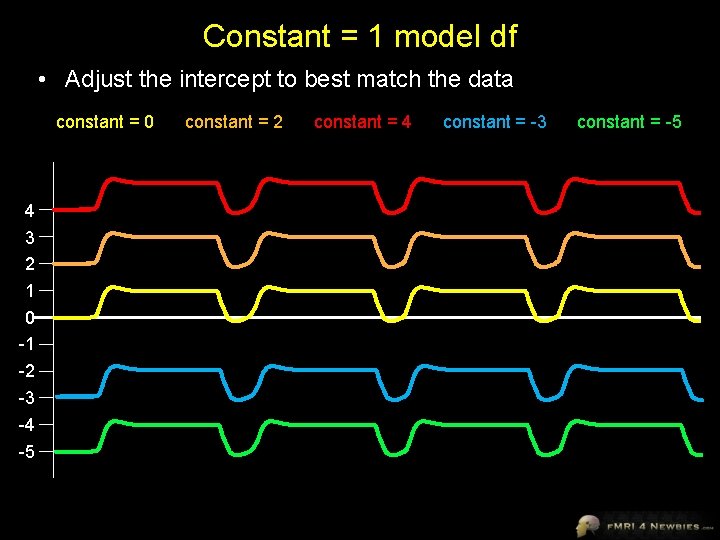
GLM for f. MRI data • Make one predictor for each condition vs. baseline • Let’s start by considering all of the visual stimulation categories as one condition • Adjust the height of the predictor (slope) and the constant (intercept) to best fit the data
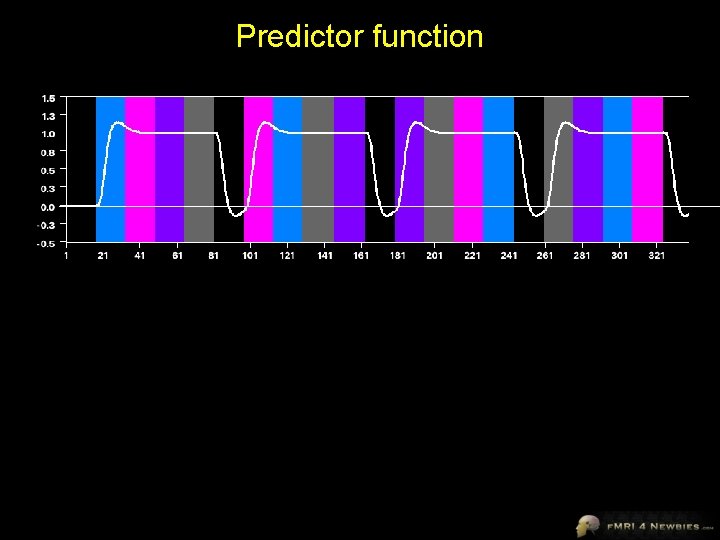
Predictor function
Beta = scaling factor (1 model df) • Adjust the height of the predictor function to match the data β=1 4 3 2 1 0 -1 -2 -3 -4 -5 β=2 β=4 β=0 β = -3 β = -5
Constant = 1 model df • Adjust the intercept to best match the data constant = 0 4 3 2 1 0 -1 -2 -3 -4 -5 constant = 2 constant = 4 constant = -3 constant = -5
Predictors of Interest (POIs) vs. Predictors of No Interest (PONIs) • predictors of interest – components of the model that are crucial to understanding the data – beta weights (slopes) • predictors of no interest – components of the model that are necessary for the model or improve the model but are not particularly important for understanding the data – constants (intercepts) – when we discuss preprocessing, we will learn about the benefits of other PONIs
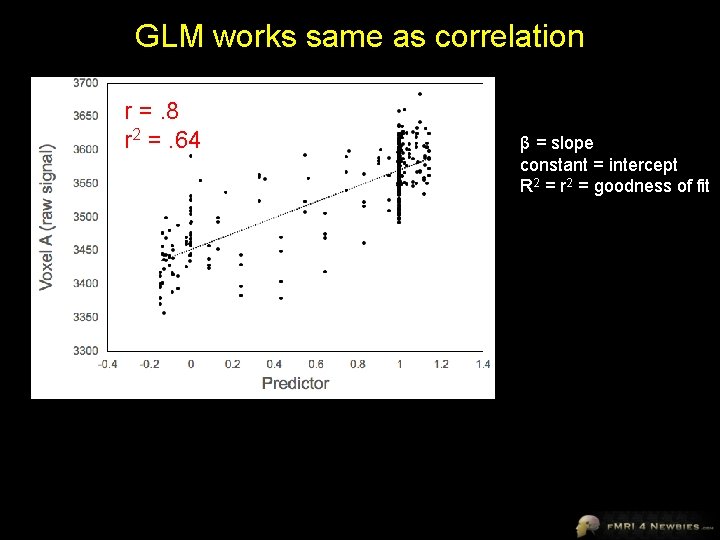
GLM works same as correlation r =. 8 r 2 =. 64 β = slope constant = intercept R 2 = r 2 = goodness of fit
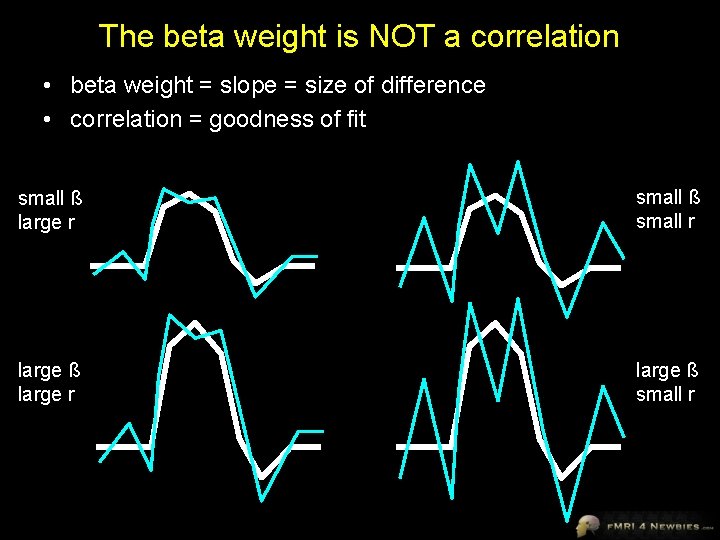
The beta weight is NOT a correlation • beta weight = slope = size of difference • correlation = goodness of fit small ß large r small ß small r large ß large r large ß small r
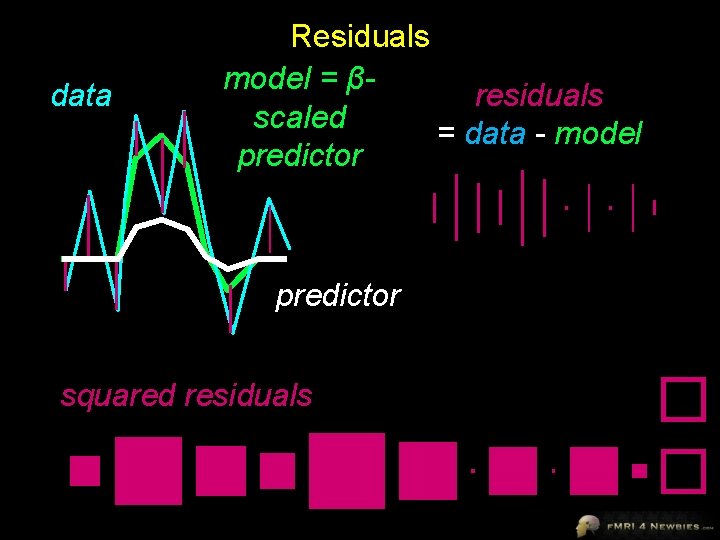
data Residuals model = βresiduals scaled = data - model predictor squared residuals � �
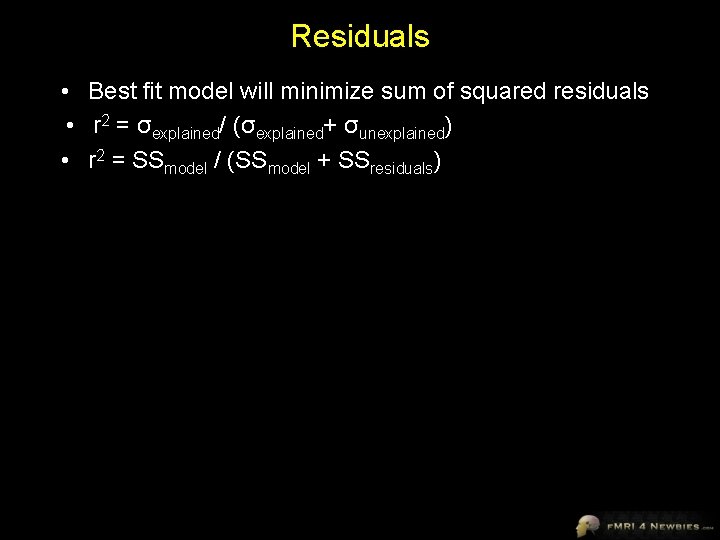
Residuals • Best fit model will minimize sum of squared residuals • r 2 = σexplained/ (σexplained+ σunexplained) • r 2 = SSmodel / (SSmodel + SSresiduals)
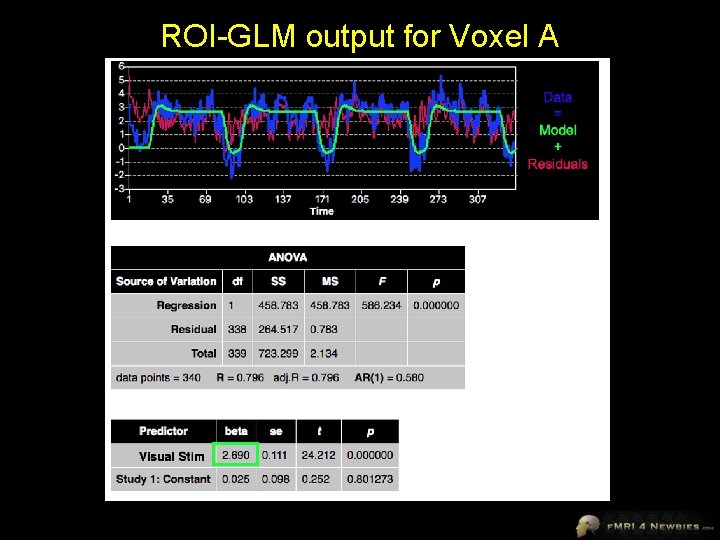
ROI-GLM output for Voxel A