
Using the DMM Voltage drop vs circuit voltage


- Slides: 24
Using the DMM Voltage drop vs. circuit voltage
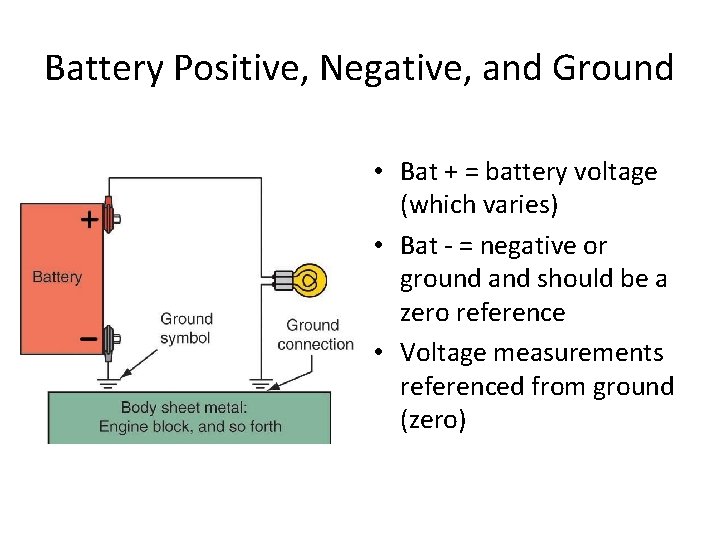
Battery Positive, Negative, and Ground • Bat + = battery voltage (which varies) • Bat - = negative or ground and should be a zero reference • Voltage measurements referenced from ground (zero)
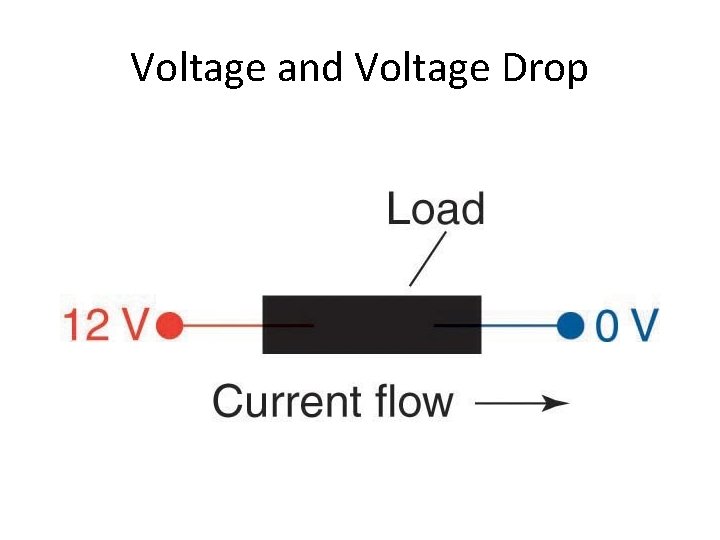
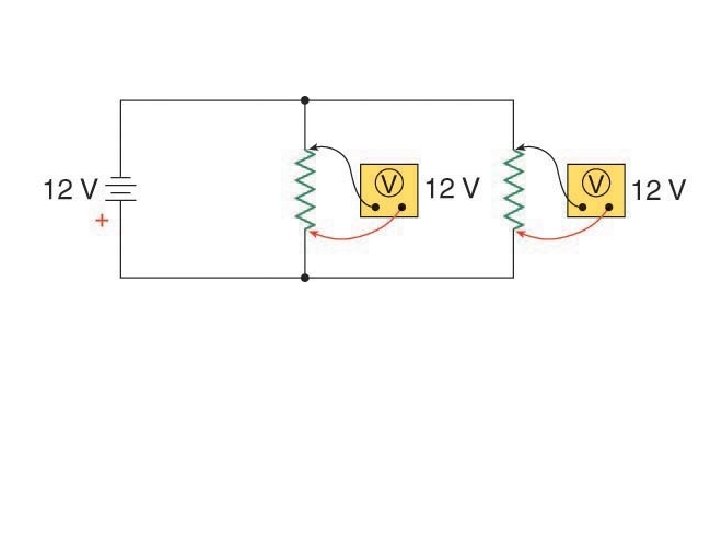
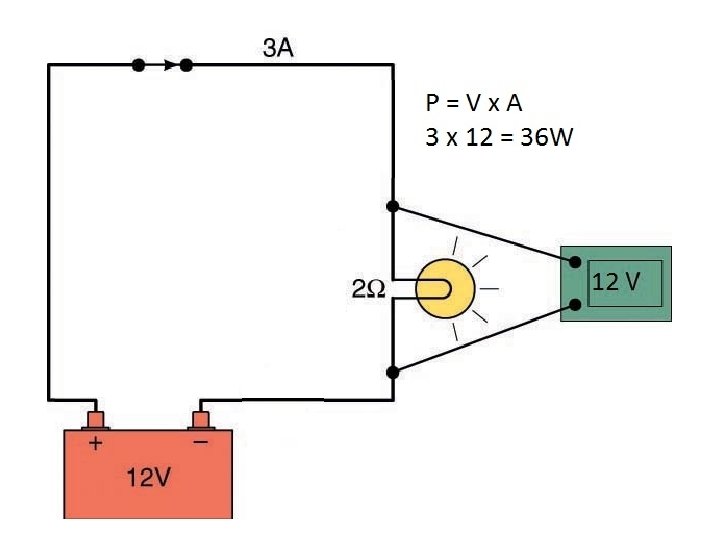
Voltage and Voltage Drop
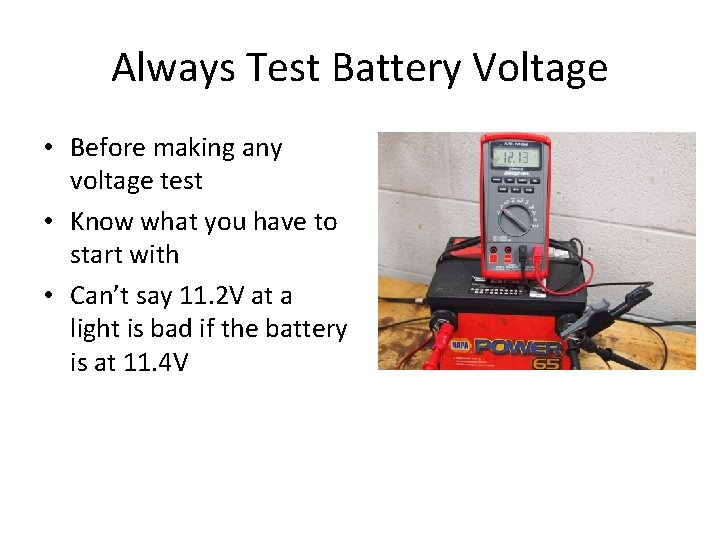
Always Test Battery Voltage • Before making any voltage test • Know what you have to start with • Can’t say 11. 2 V at a light is bad if the battery is at 11. 4 V
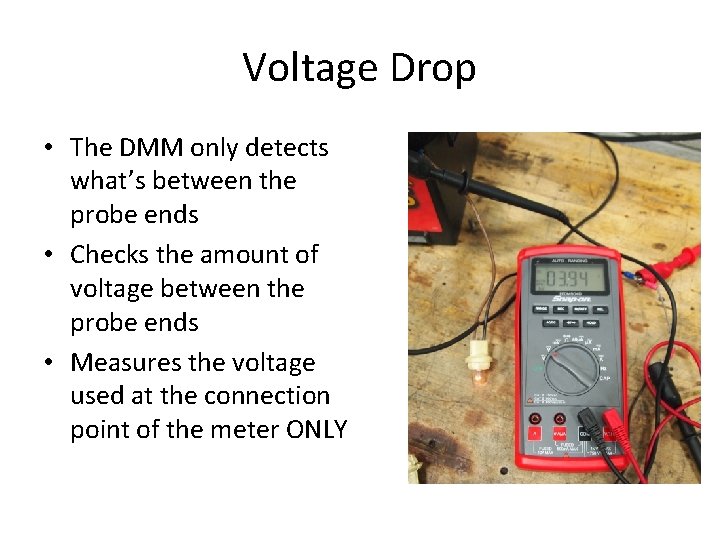
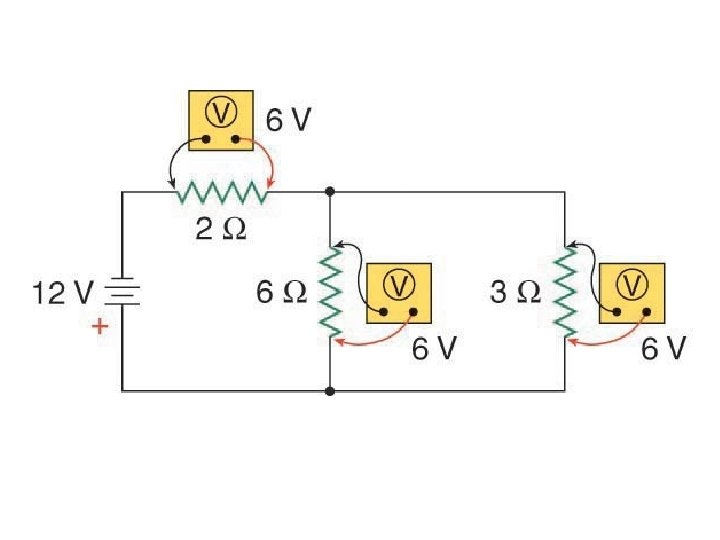
Voltage Drop • The DMM only detects what’s between the probe ends • Checks the amount of voltage between the probe ends • Measures the voltage used at the connection point of the meter ONLY
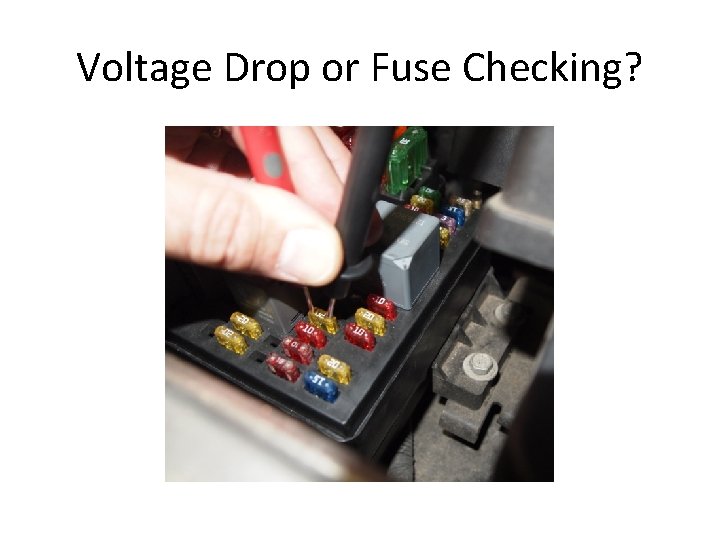
Voltage Drop or Fuse Checking?
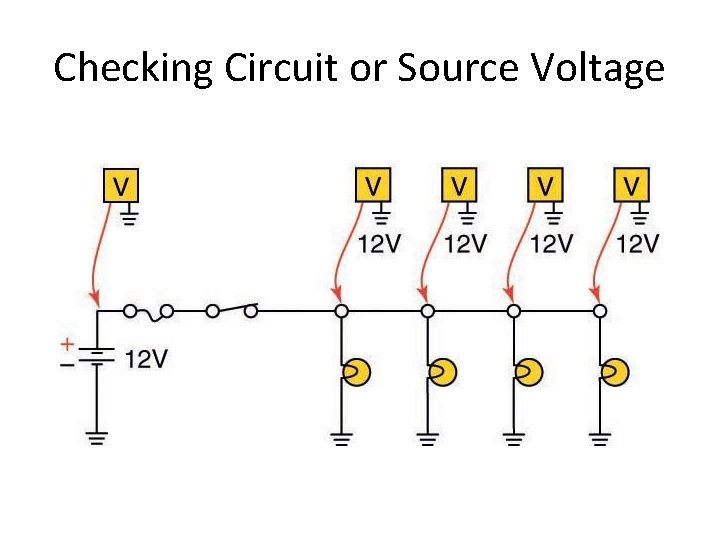
Checking Voltage Supply or Source • Connect DMM negative to a “good ground” • Use DMM positive lead to check voltage • Voltage reading will be referenced to the ground to which the DMM is connected • Where is the best “ground? ”
Checking Circuit or Source Voltage
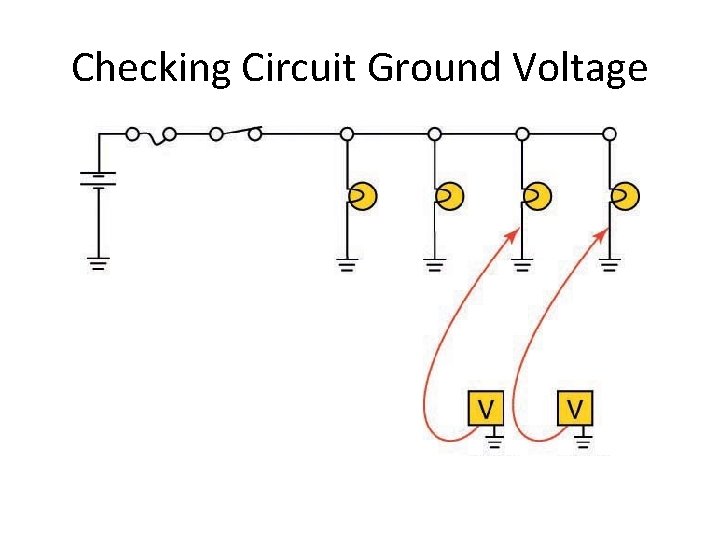
Checking Circuit Ground Voltage
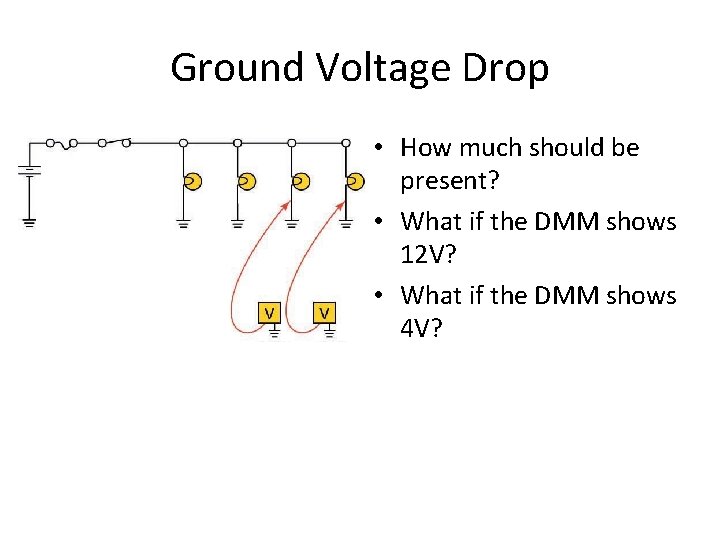
Ground Voltage Drop • How much should be present? • What if the DMM shows 12 V? • What if the DMM shows 4 V?
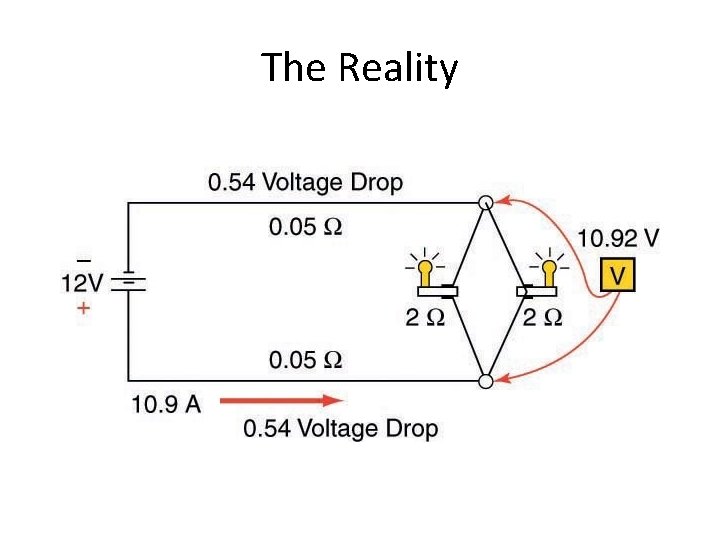
The Reality
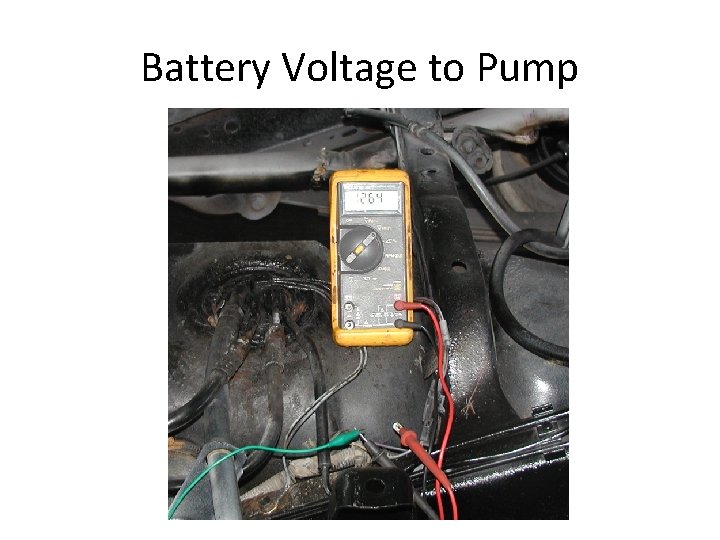
Case Study – Chevy S 10 Fuel Pump • Truck ran like poop – no power, stalling • Fuel pressure was very low, < half spec • Needs a fuel pump, right?
Case Study – Chevy S 10 Fuel Pump
Battery Voltage to Pump
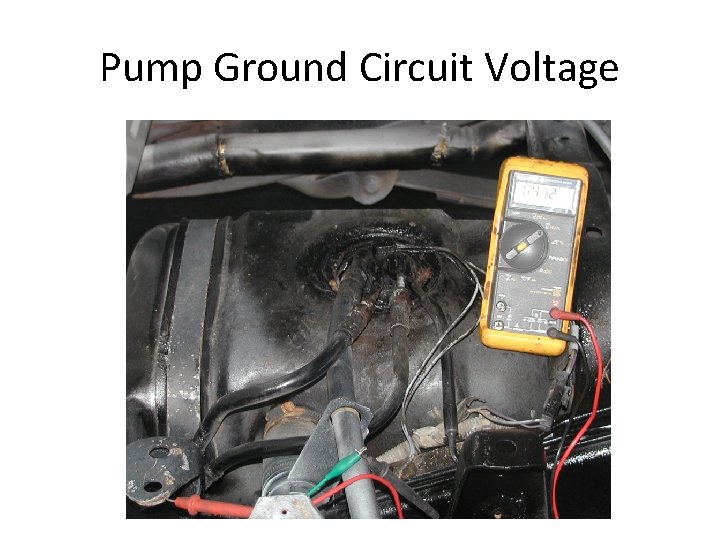
Pump Ground Circuit Voltage
S 10 Case Study • Ground strap between body and frame was off • Pump did not have a good ground path back to battery so it took the scenic route • 8 V made pump spin slowly
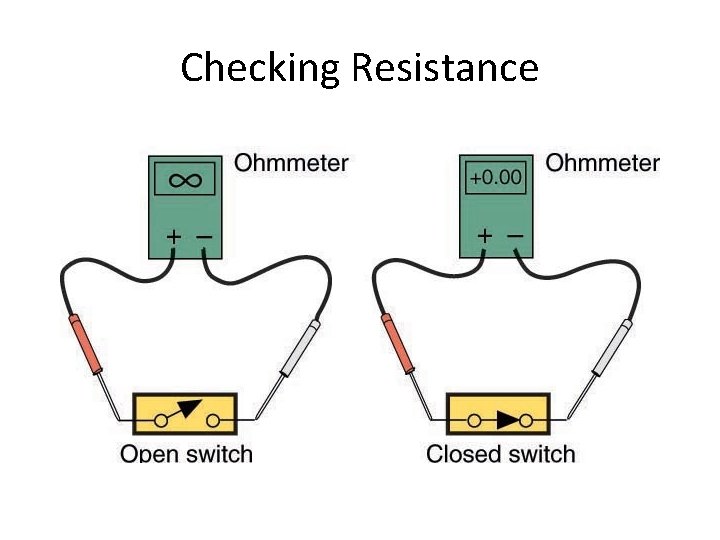
Checking Resistance
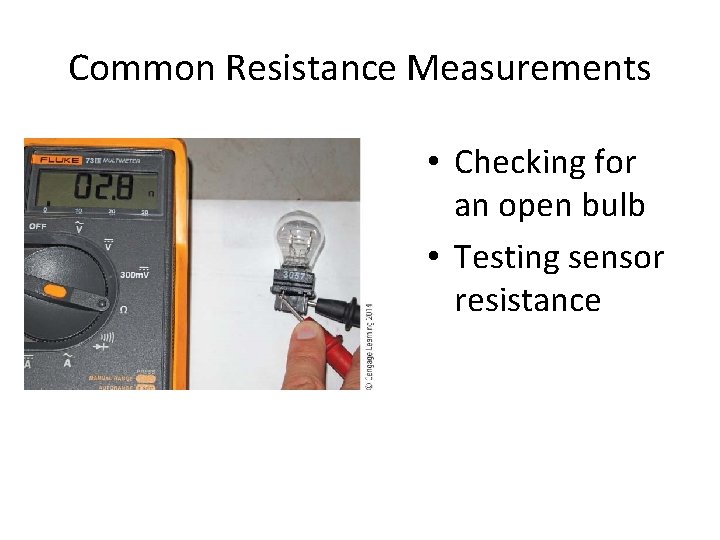
Common Resistance Measurements • Checking for an open bulb • Testing sensor resistance
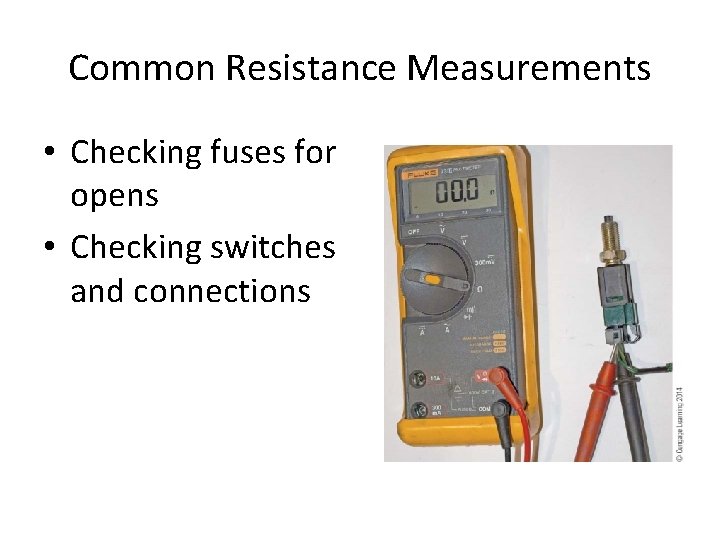
Common Resistance Measurements • Checking fuses for opens • Checking switches and connections
The Good and the Bad • Resistance test good to confirm something is “bad” • Cannot really tell you if something is “good” • Example – a wire can show “good” resistance (low) with just one or two strands complete but not be able to flow enough current when under load.