
Using the ASCRS PostRefractive Surgery IOL Calculator A
- Slides: 10
Using the ASCRS Post-Refractive Surgery IOL Calculator: A Retrospective Review Amit Patel MRCOphth, Achyut Mukherjee MRCOphth, Vinod Kumar FRCSEd(Ophth) Princess of Wales Hospital, Bridgend, UK The authors have no financial interests with regards to this poster
Purpose • Assess the value of the ASCRS post-refractive surgery IOL calculator (http: //iol. ascrs. org/) in cases where the IOL power was chosen prior to the availability of the calculator
Methods (1) • 10 eyes of 8 patients were identified from theatre records • A retrospective case note review was carried out • Pre- & post-refractive and cataract surgery data was noted
Methods (2) • Data available at the time of cataract surgery was entered into the ASCRS calculator • The average IOL power and applicable formulae generated by the calculator were noted • The chosen IOL power was compared to the average IOL power generated by the calculator • The various applicable formulae were analysed to determine which formula would have given the most accurate refractive outcome
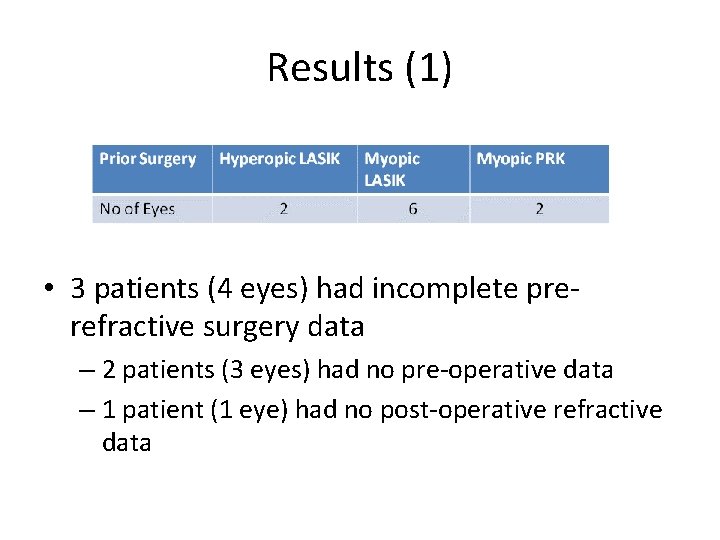
Results (1) • 3 patients (4 eyes) had incomplete prerefractive surgery data – 2 patients (3 eyes) had no pre-operative data – 1 patient (1 eye) had no post-operative refractive data
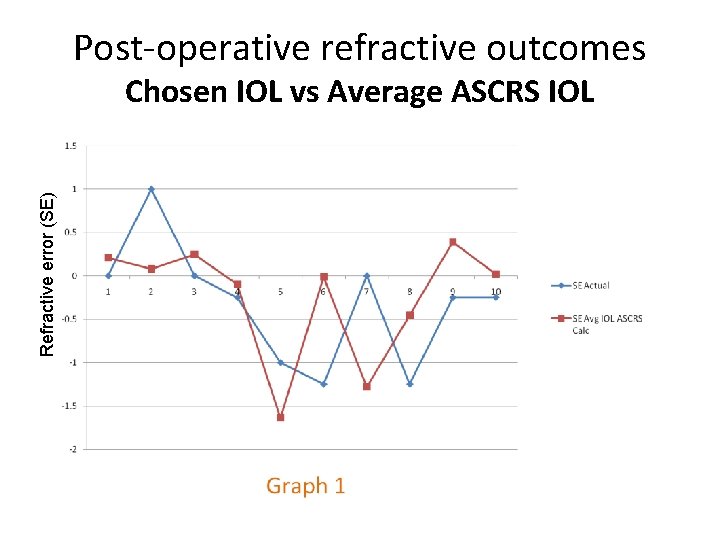
Results (2) • 9 eyes (90%) were within 1 D of the refractive aim • The predicted refractive outcome with use of the average IOL power suggested by the ASCRS calculator would have: – Improved in 5 eyes (50%) & worsened in 5 eyes (50%) – Graph 1 – Resulted in 9 eyes (90%) of eyes to be within 1 D of refractive aim
Post-operative refractive outcomes Refractive error (SE) Chosen IOL vs Average ASCRS IOL
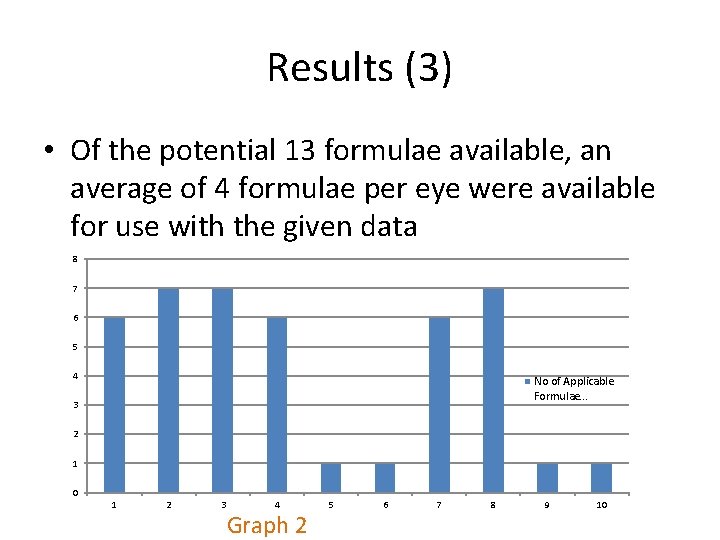
Results (3) • Of the potential 13 formulae available, an average of 4 formulae per eye were available for use with the given data 8 7 6 5 4 No of Applicable Formulae. . . 3 2 1 0 1 2 3 4 Graph 2 5 6 7 8 9 10
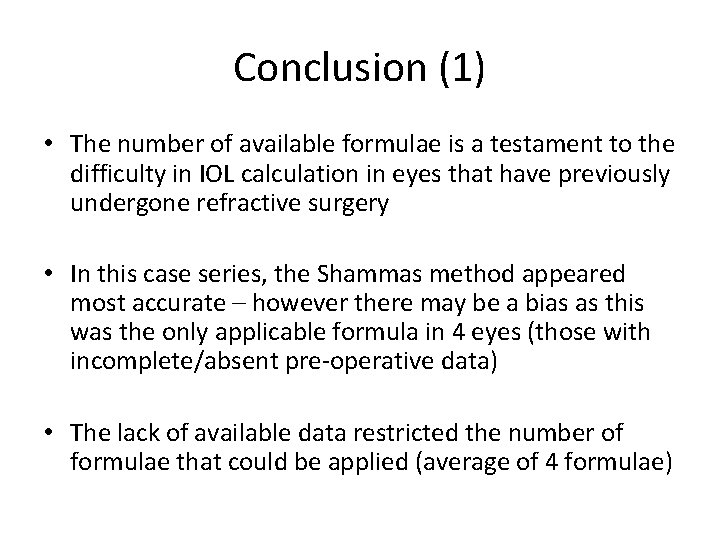
Conclusion (1) • The number of available formulae is a testament to the difficulty in IOL calculation in eyes that have previously undergone refractive surgery • In this case series, the Shammas method appeared most accurate – however there may be a bias as this was the only applicable formula in 4 eyes (those with incomplete/absent pre-operative data) • The lack of available data restricted the number of formulae that could be applied (average of 4 formulae)
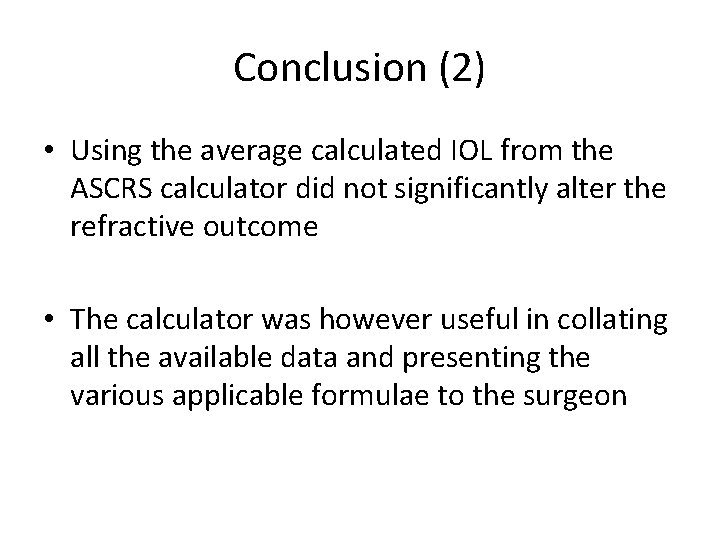
Conclusion (2) • Using the average calculated IOL from the ASCRS calculator did not significantly alter the refractive outcome • The calculator was however useful in collating all the available data and presenting the various applicable formulae to the surgeon