
Using SI Units Every type of quantity measured
![Temperature • Base units of temperature * (US) FAHRENHEIT o [ F] * (SI)](https://slidetodoc.com/presentation_image_h2/2dbcba148c961f74f093509e500422bc/image-7.jpg "Temperature • Base units of temperature * (US) FAHRENHEIT o [ F] * (SI)")
![Volume • Base units of volume * (US) GALLONS [gals] * (SI) LITERS [L]](https://slidetodoc.com/presentation_image_h2/2dbcba148c961f74f093509e500422bc/image-13.jpg "Volume • Base units of volume * (US) GALLONS [gals] * (SI) LITERS [L]")
- Slides: 21
Using SI Units
• Every type of quantity measured has a base unit and a symbol.
• Using the prefixes and the base units, you can determine the unit you will need to use to measure any object.
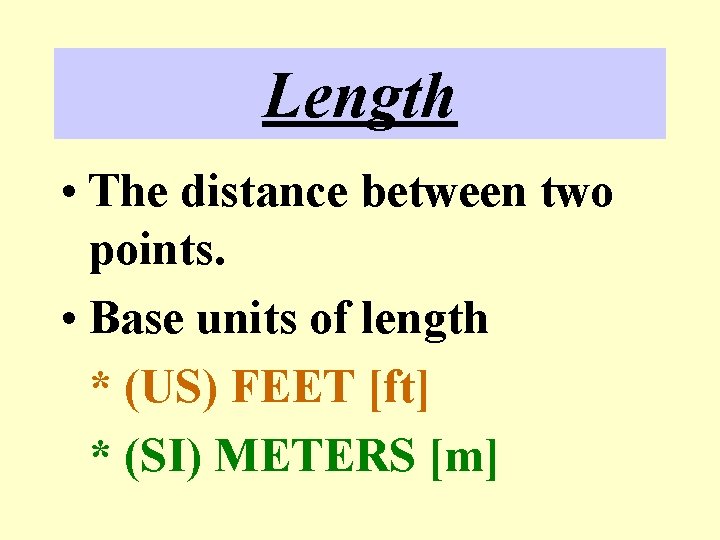
Length • The distance between two points. • Base units of length * (US) FEET [ft] * (SI) METERS [m]
Mass • “A body of coherent matter. ” * a collection of stuff joined to form an object • Base units of mass * (US) SLUGS [slugs] * (SI) KILOGRAMS [kg] sometimes grams [g]
Temperature • Measurement of how hot or cold something is.
Temperature • Base units of temperature * (US) FAHRENHEIT o [ F] * (SI) CELCIUS [o. C] > (SI) KELVIN [K] * this is an absolute scale
Absolute Zero • The coldest possible temperature. * temperature where ALL motion stops * 0 K * found by the formula: o K = C - 273. 16
Time • Interval between two events. • Base units of time * (US) SECOND [s] * (SI) SECOND [s]
Derived Units • Obtained by combining multiple SI units.
Area • The amount of surface included in a set of boundaries. • Found by the formula: * Area = length X width • Base units of area * (US) SQUARE FEET [ft 2] * (SI) SQUARE METERS [m 2]
Volume • The amount of space an object occupies. • Easy with liquids & gases, harder with solids
Volume • Base units of volume * (US) GALLONS [gals] * (SI) LITERS [L] sometimes centimeters 3 cubed [cm ]
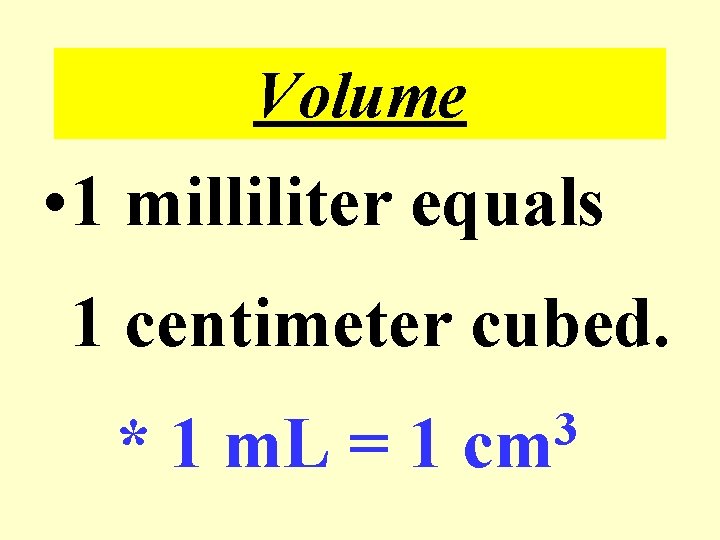
Volume • 1 milliliter equals 1 centimeter cubed. * 1 m. L = 1 3 cm
Density • Measurement of how thick, compact and solid an object is. • Relationship between the mass & volume of an object • Found by the formula: * Density = mass ÷ volume • Expressed g/L or g/cm 3
Weight • Measurement of the force of gravity pulling on the mass of an object. • Changes as gravity changes. • Base units of weight * (US) POUNDS [lbs] * (SI) NEWTONS [N]
• MASS and WEIGHT are NOT the same thing!
• Because the SI system is based on units of 10 it is easier to convert in.
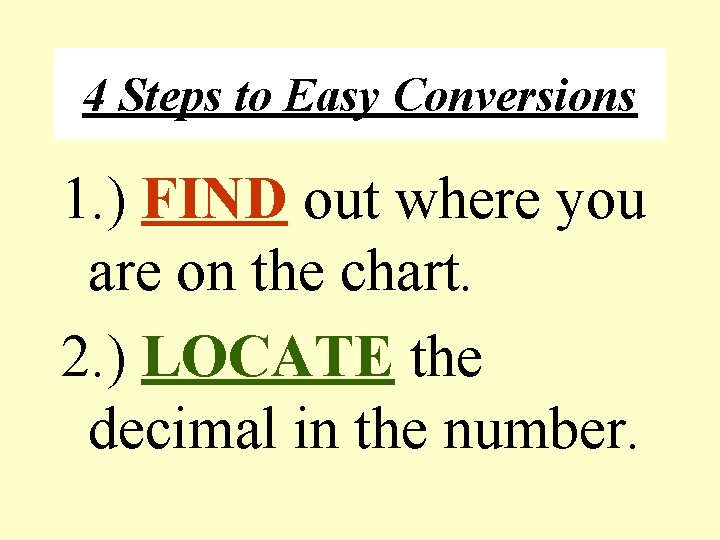
4 Steps to Easy Conversions 1. ) FIND out where you are on the chart. 2. ) LOCATE the decimal in the number.
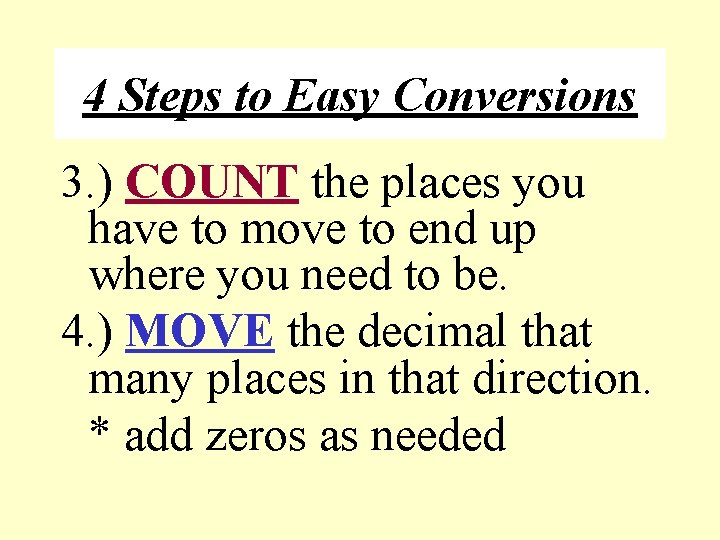
4 Steps to Easy Conversions 3. ) COUNT the places you have to move to end up where you need to be. 4. ) MOVE the decimal that many places in that direction. * add zeros as needed