
Using Sensors and Lime Reference Strips to Manage
- Slides: 26
Using Sensors and Lime Reference Strips to Manage Soil Acidity Hailin Zhang Randy Taylor Oklahoma State University
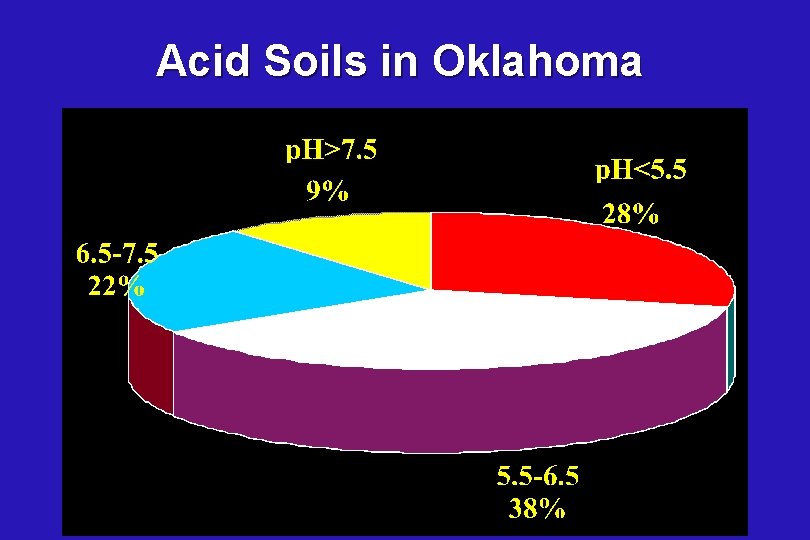
Acid Soils in Oklahoma
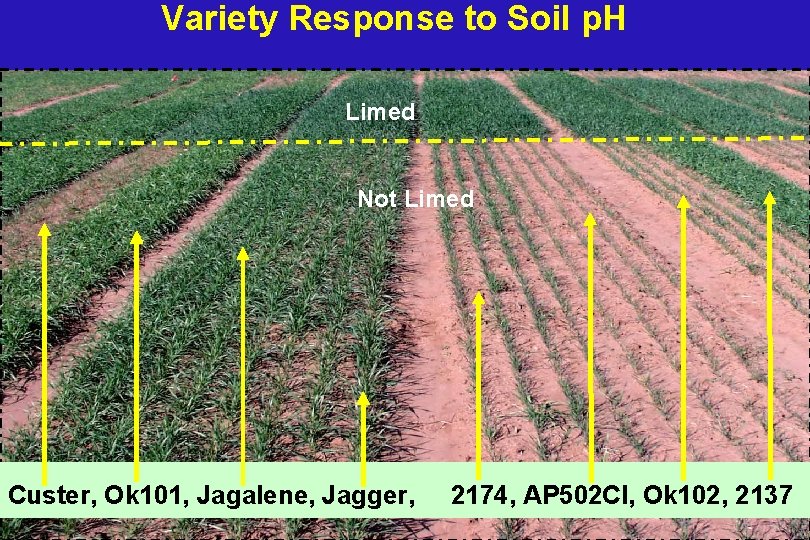
Variety Response to Soil p. H Limed Not Limed Custer, Ok 101, Jagalene, Jagger, 2174, AP 502 Cl, Ok 102, 2137
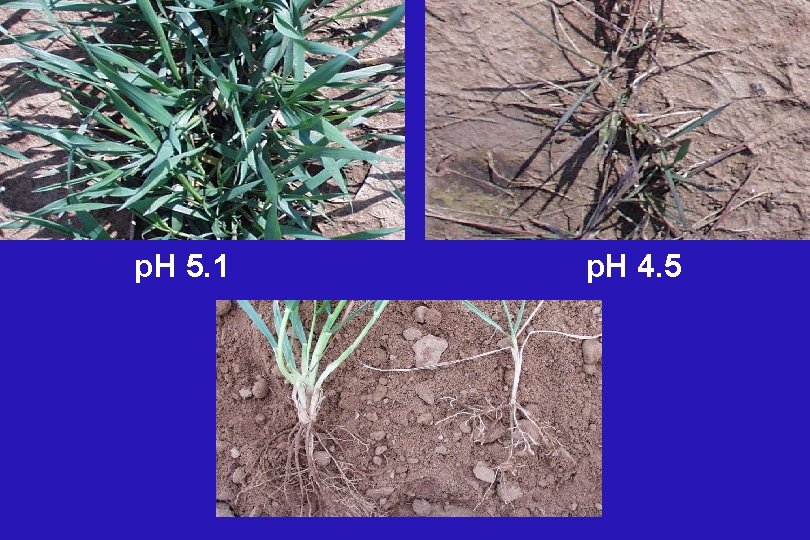
p. H 5. 1 p. H 4. 5
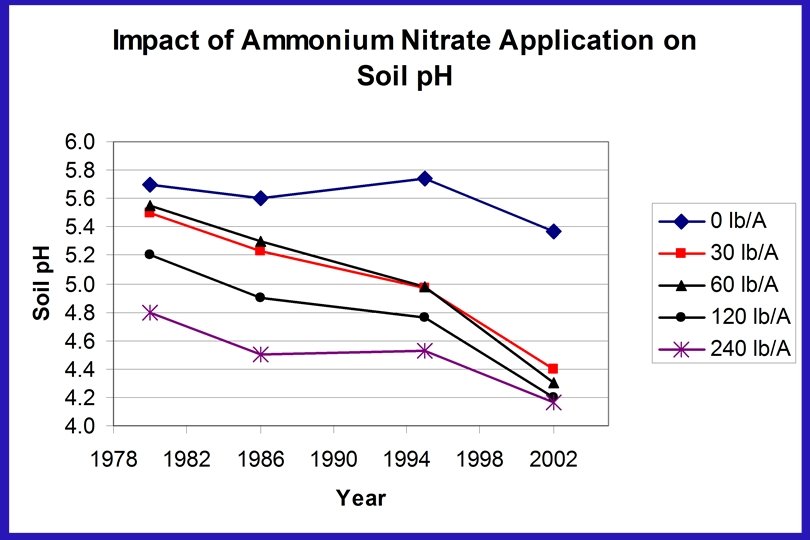
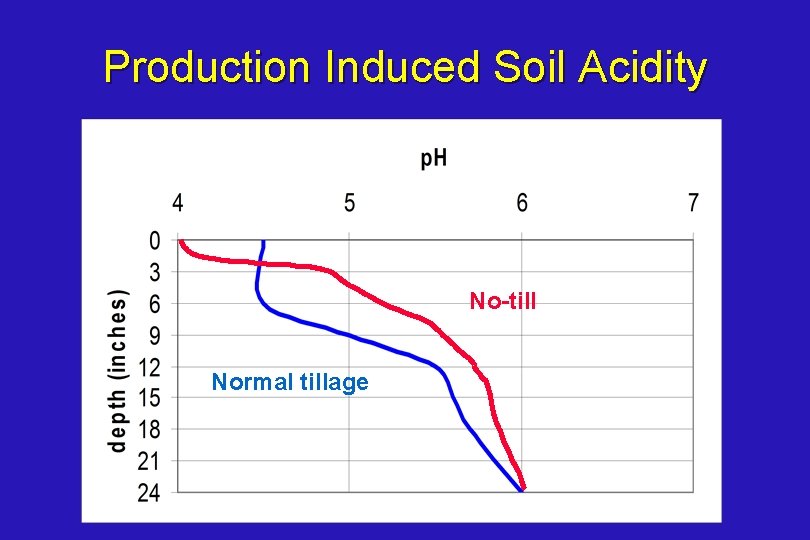
Production Induced Soil Acidity No-till Normal tillage
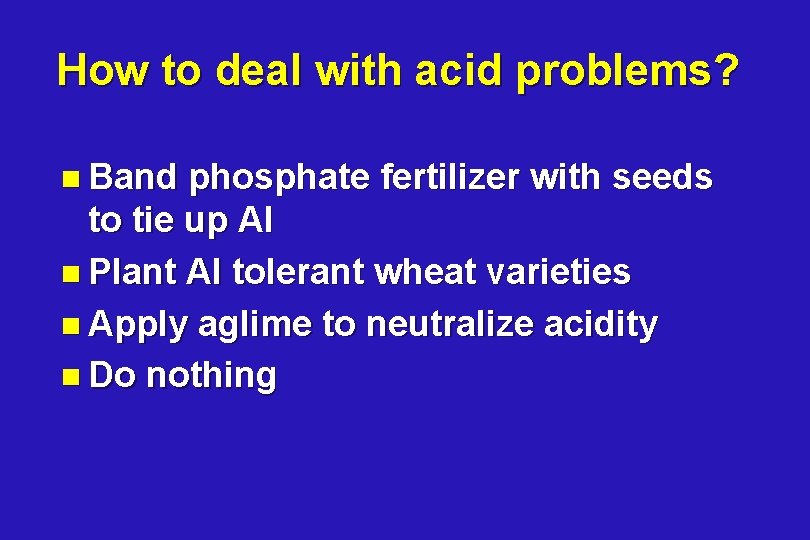
How to deal with acid problems? n Band phosphate fertilizer with seeds to tie up Al n Plant Al tolerant wheat varieties n Apply aglime to neutralize acidity n Do nothing
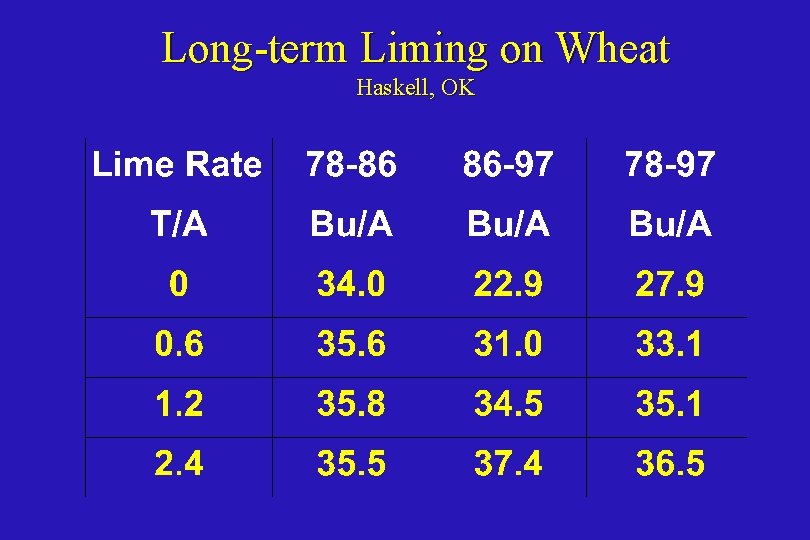
Long-term Liming on Wheat Haskell, OK
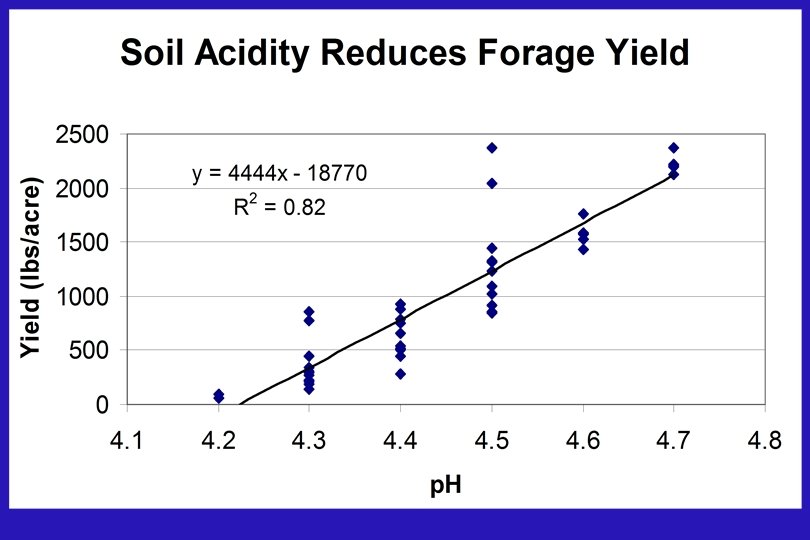
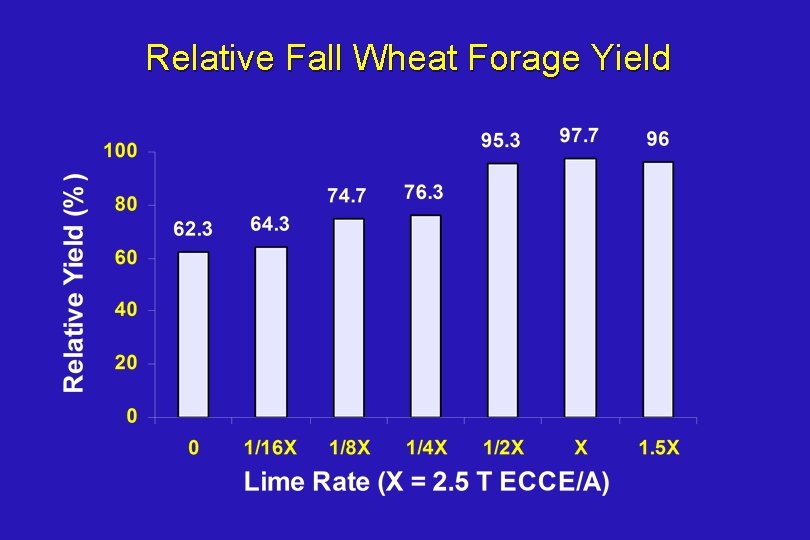
Relative Fall Wheat Forage Yield
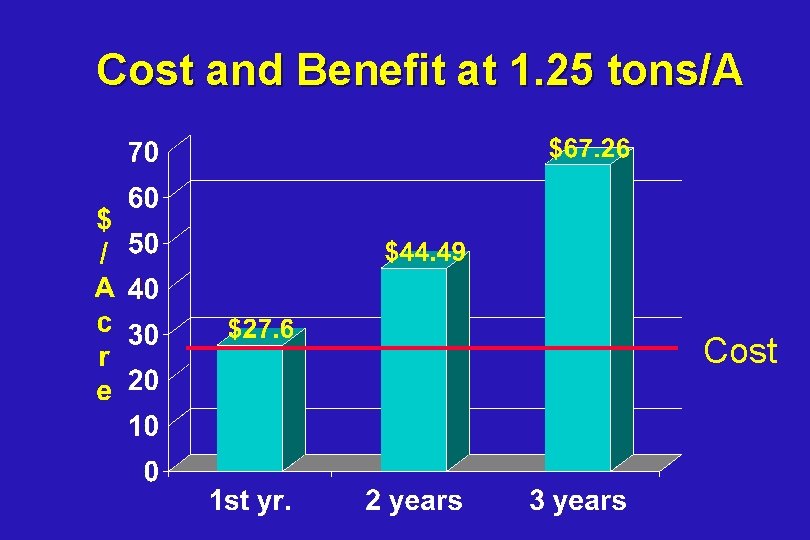
Cost and Benefit at 1. 25 tons/A Cost
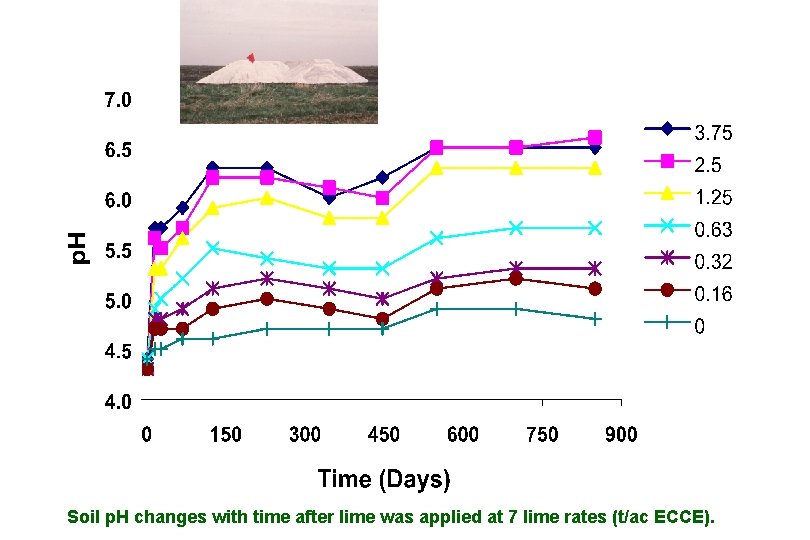
Soil p. H changes with time after lime was applied at 7 lime rates (t/ac ECCE).
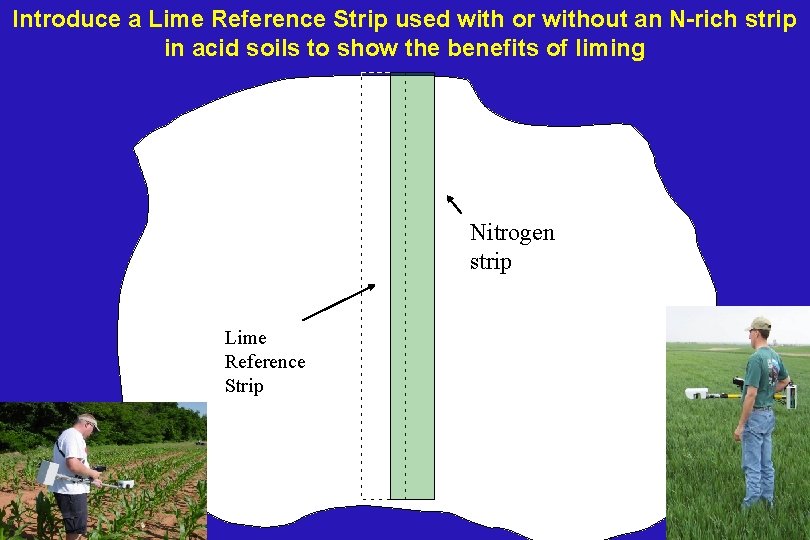
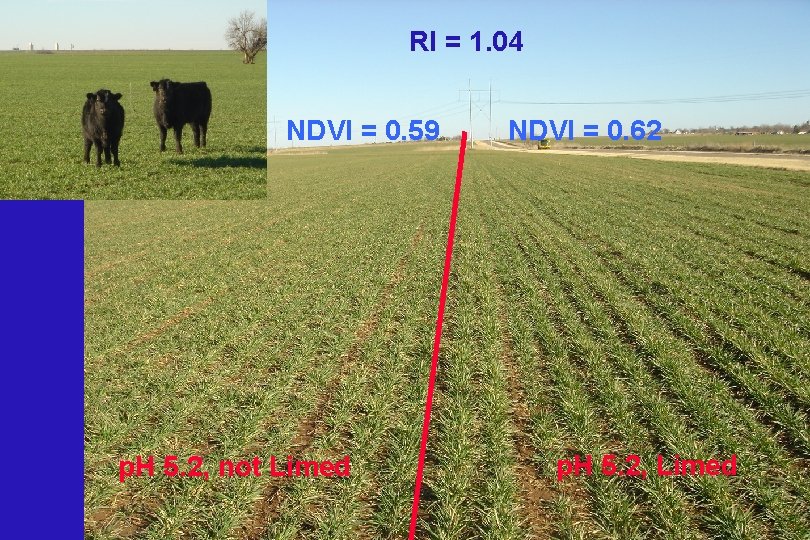
Introduce a Lime Reference Strip used with or without an N-rich strip in acid soils to show the benefits of liming Nitrogen strip Lime Reference Strip
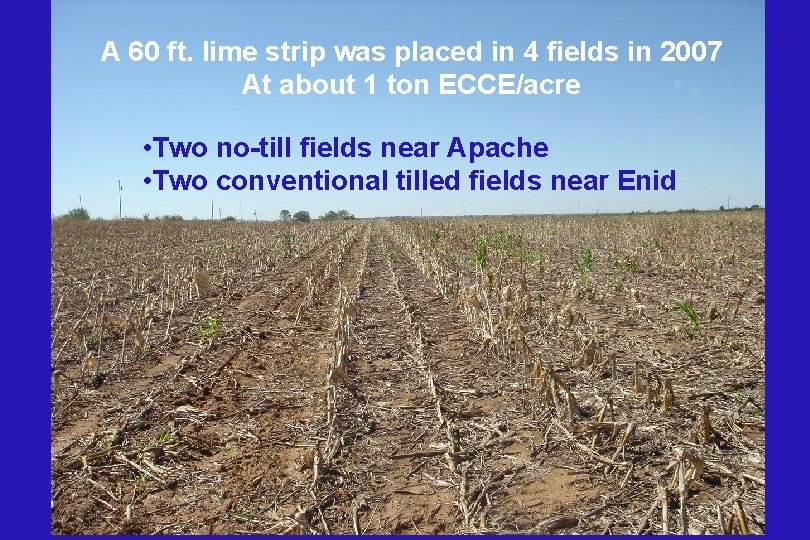
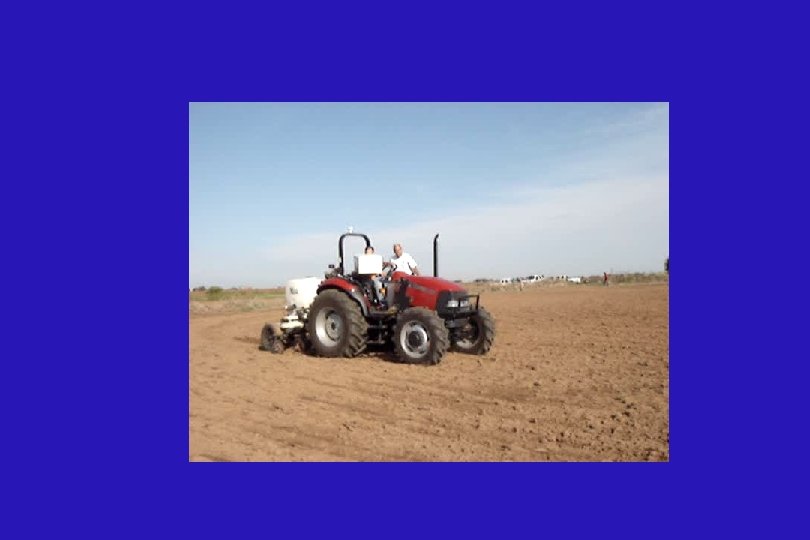
A 60 ft. lime strip was placed in 4 fields in 2007 At about 1 ton ECCE/acre • Two no-till fields near Apache • Two conventional tilled fields near Enid
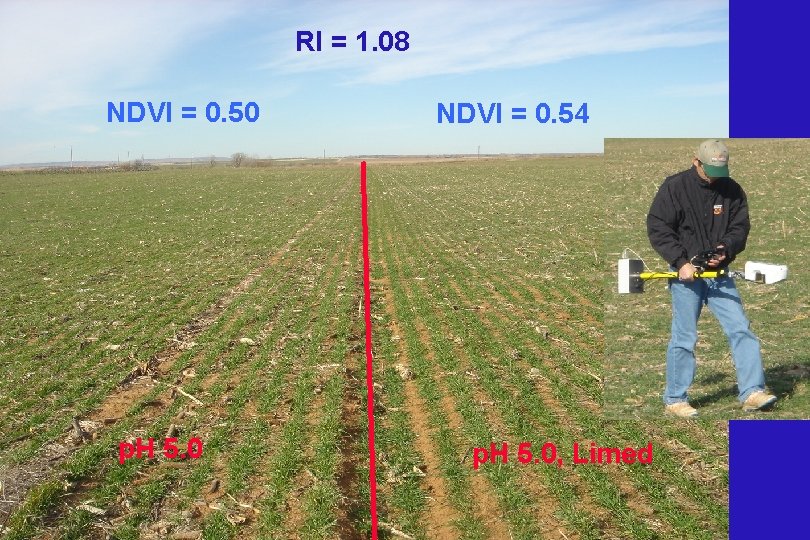
RI = 1. 08 NDVI = 0. 50 p. H 5. 0 NDVI = 0. 54 p. H 5. 0, Limed
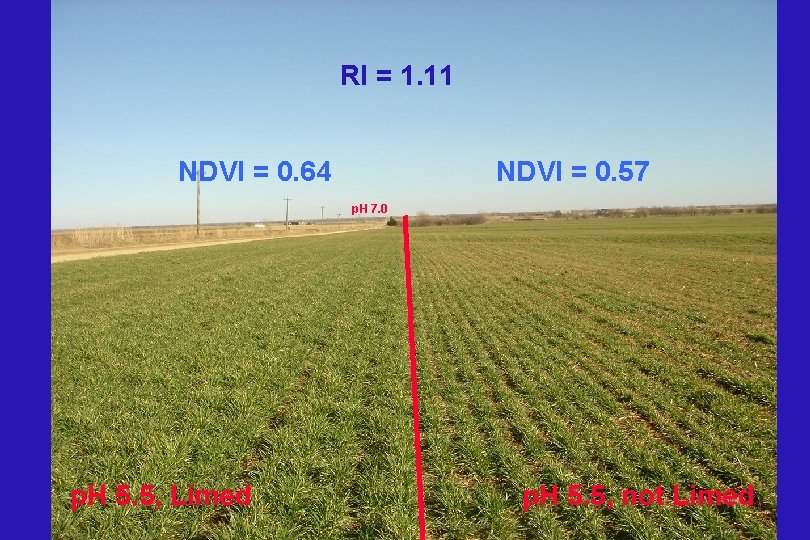
RI = 1. 11 NDVI = 0. 64 NDVI = 0. 57 p. H 7. 0 p. H 5. 5, Limed p. H 5. 5, not Limed
RI = 1. 04 NDVI = 0. 59 p. H 5. 2, not Limed NDVI = 0. 62 p. H 5. 2, Limed
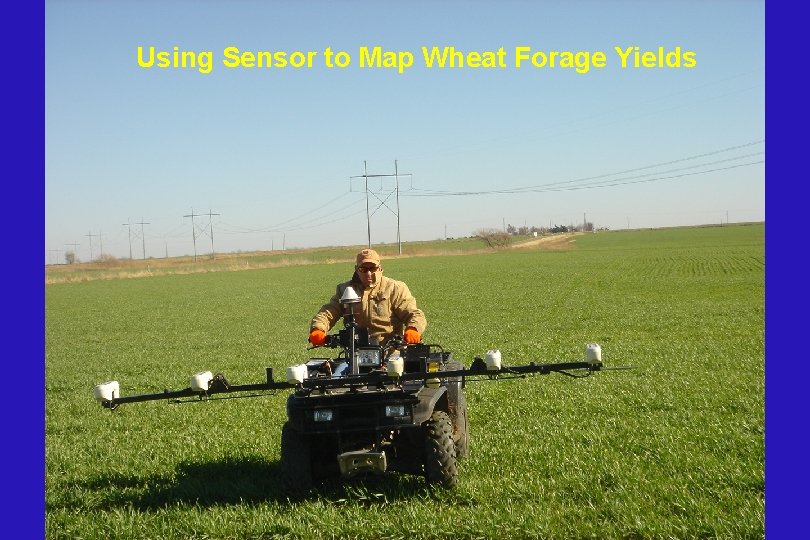
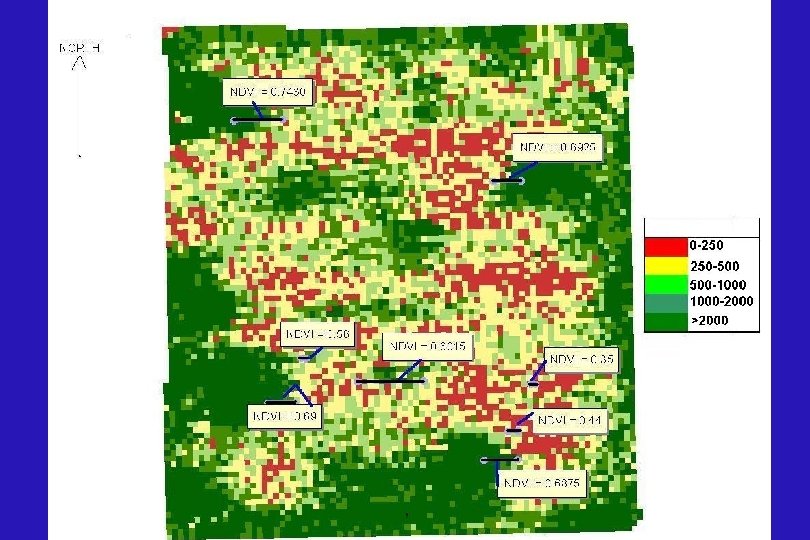
Using Sensor to Map Wheat Forage Yields
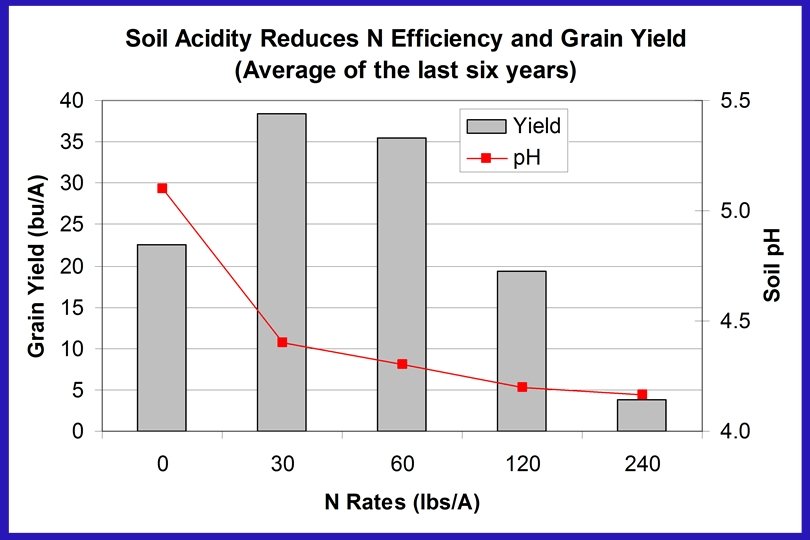
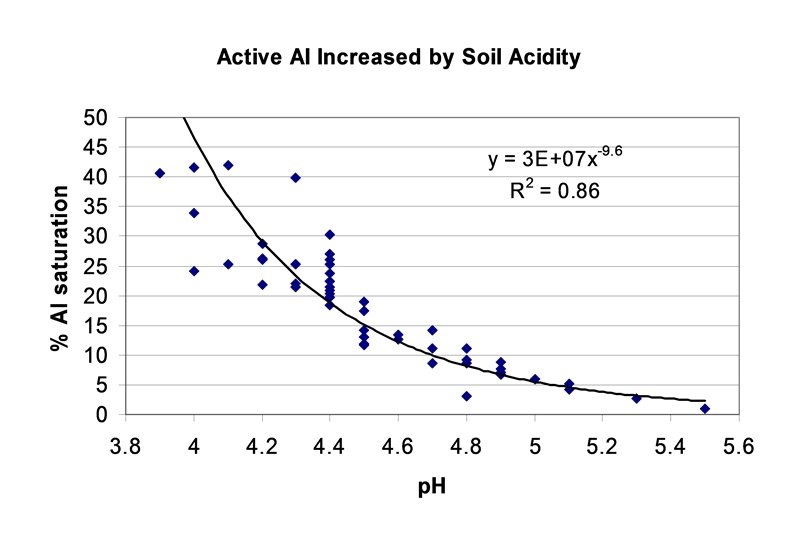
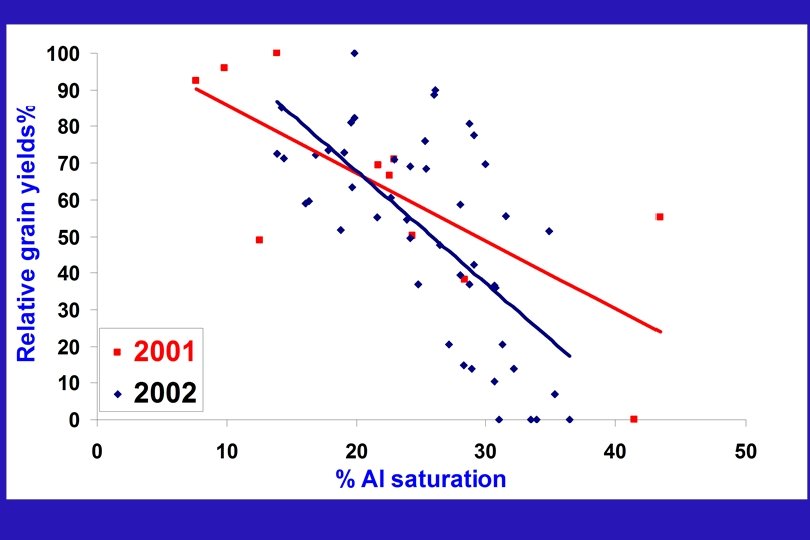
CONCLUSIONS h. Soil becomes more acidic with continuous production and N fertilizer application h. Active Al increases as soil become more acidic h. Grain and forage yields are both impacted by soil acidity h. Liming is an effective remediation h. Lime reference strip and sensor can demonstrate the benefits of liming