
Using Return on Investment ROI to Guide Programmatic
- Slides: 15
Using Return on Investment (ROI) to Guide Programmatic Health Sara Sack, Director Assistive Technology for Kansans Shaping a National Collaborative for AT Reutilization Conference, Sept. 16, 2009
Source: www. cartoonstock. com
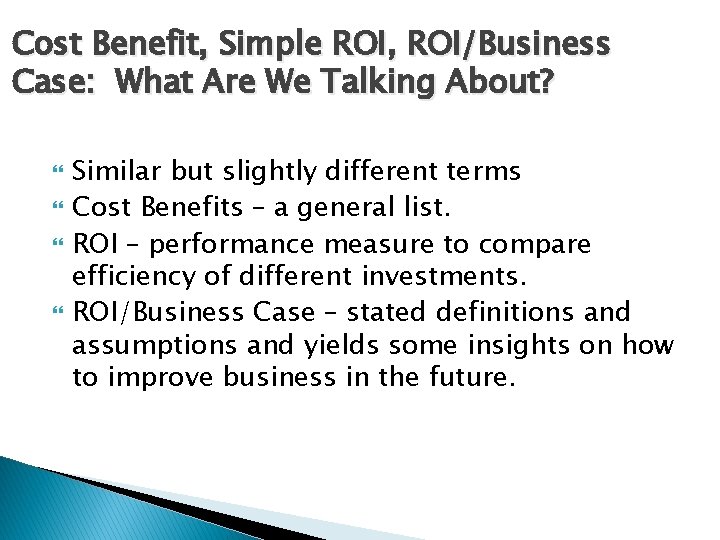
Cost Benefit, Simple ROI, ROI/Business Case: What Are We Talking About? Similar but slightly different terms Cost Benefits – a general list. ROI – performance measure to compare efficiency of different investments. ROI/Business Case – stated definitions and assumptions and yields some insights on how to improve business in the future.
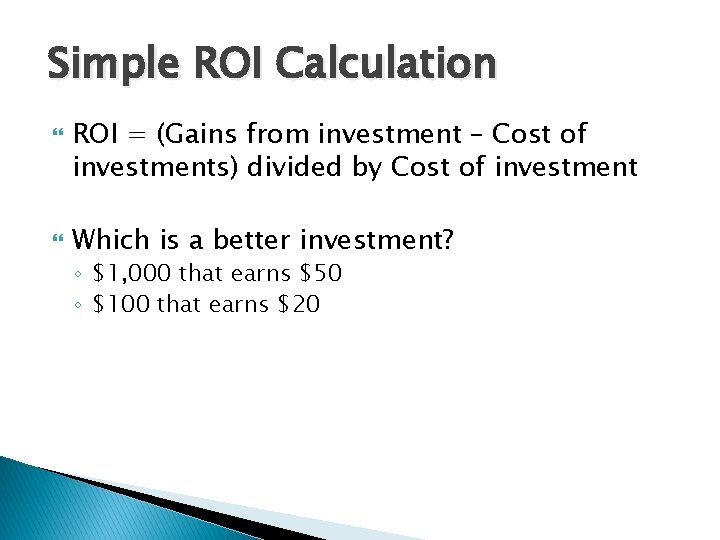
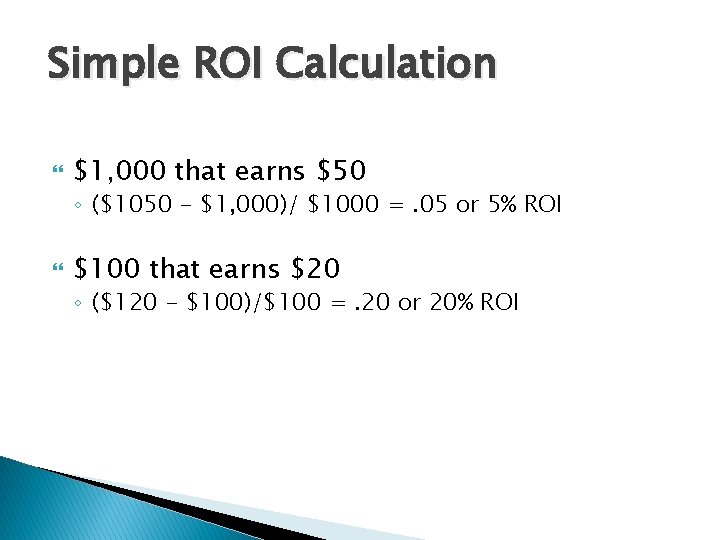
Simple ROI Calculation ROI = (Gains from investment – Cost of investments) divided by Cost of investment Which is a better investment? ◦ $1, 000 that earns $50 ◦ $100 that earns $20
Simple ROI Calculation $1, 000 that earns $50 ◦ ($1050 - $1, 000)/ $1000 =. 05 or 5% ROI $100 that earns $20 ◦ ($120 - $100)/$100 =. 20 or 20% ROI
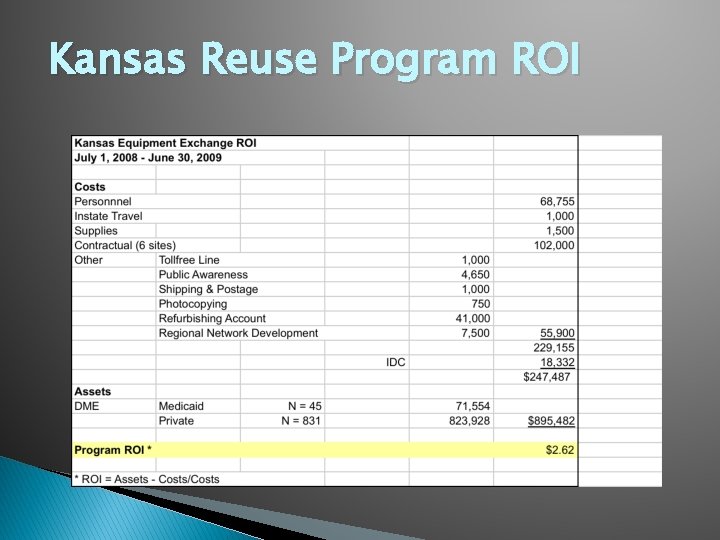
Kansas Reuse Program ROI
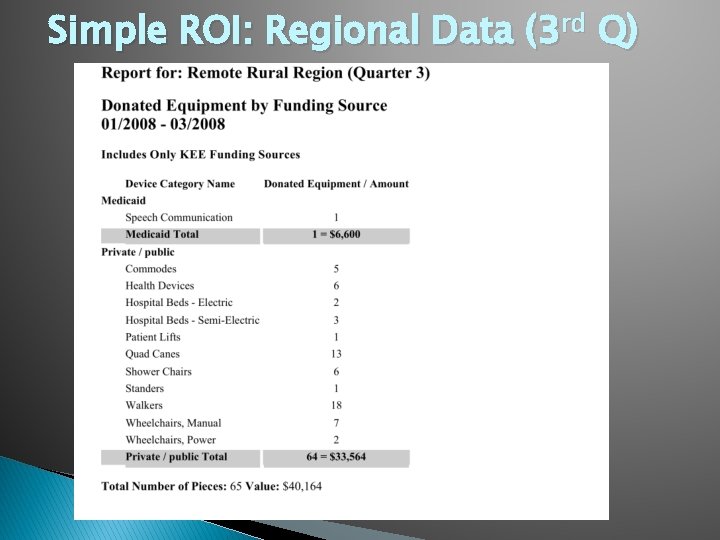
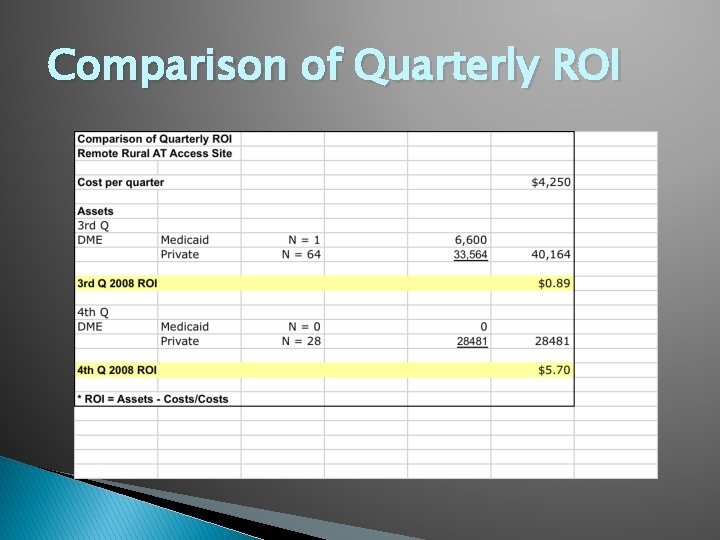
Simple ROI: Regional Data (3 rd Q)
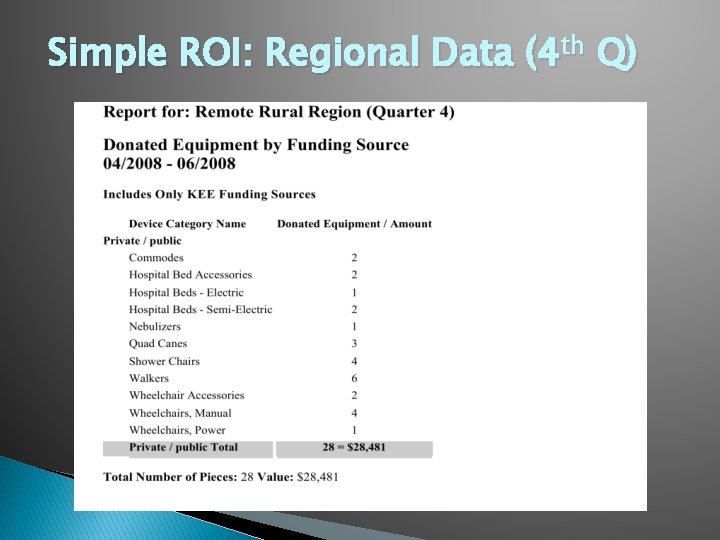
Simple ROI: Regional Data (4 th Q)
Comparison of Quarterly ROI
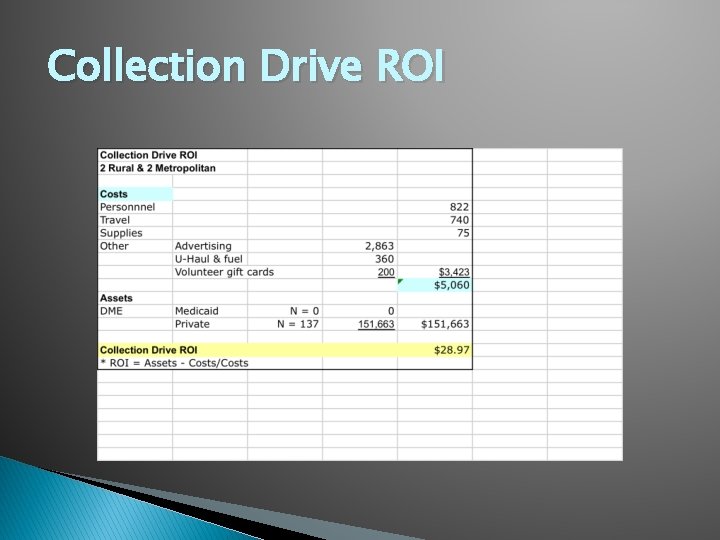
Collection Drive ROI
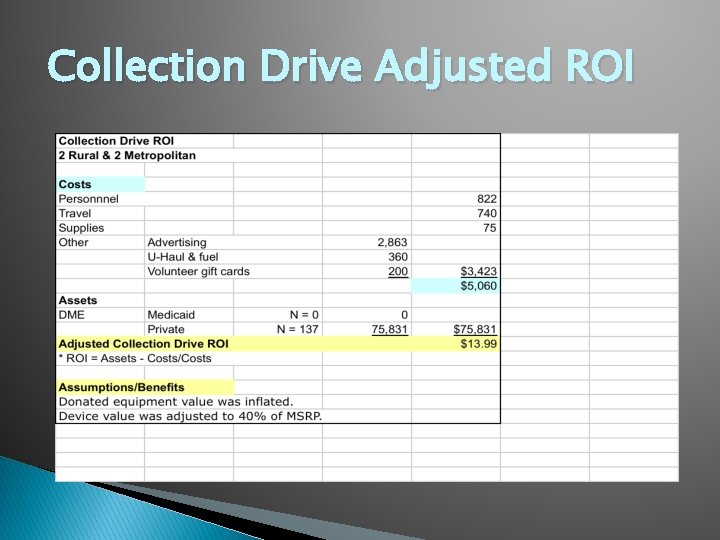
Collection Drive Adjusted ROI
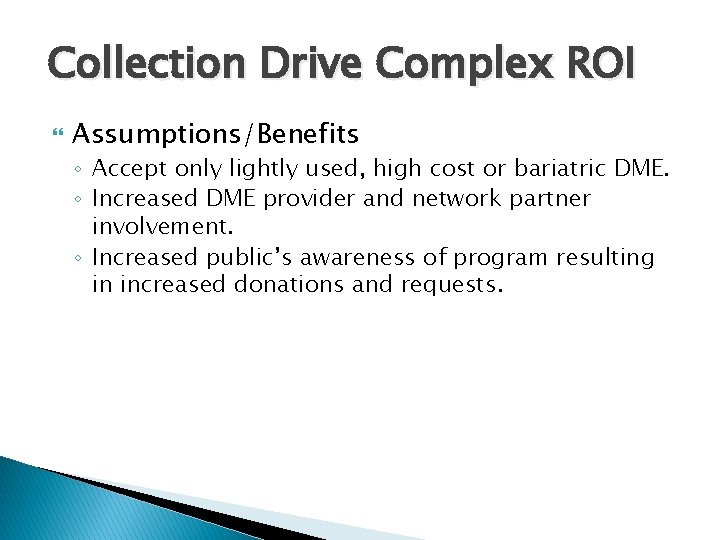
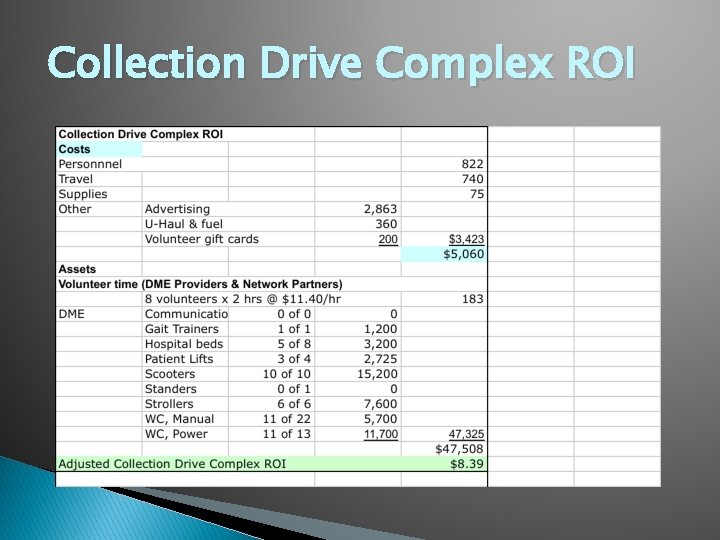
Collection Drive Complex ROI Assumptions/Benefits ◦ Accept only lightly used, high cost or bariatric DME. ◦ Increased DME provider and network partner involvement. ◦ Increased public’s awareness of program resulting in increased donations and requests.
Collection Drive Complex ROI
ROI is a Useful Tool for: ROI is a useful tool for making program decisions. Consider conducting ROI for: ◦ ◦ pickup and delivery, shipping, collection drives, methods of cleaning and sanitization (volunteers, paid staff, contractor, purchase of sanitizing equipment)
Questions? Sara Sack, 620 -421 -8367 or ssack@ku. edu