
Using resources wisely Section 6 2 Natural resources
- Slides: 18
Using resources wisely Section 6. 2
Natural resources • We need natural resources for our survival • Are we threatening our future existence with our current actions? • 3 types of resources • Soil resources • Freshwater resources • Atmospheric resources
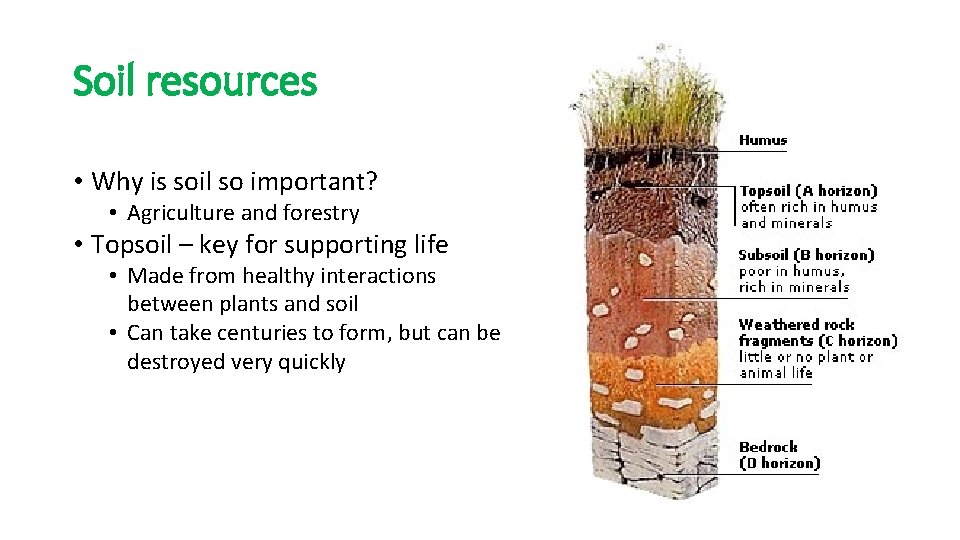
Soil resources • Why is soil so important? • Agriculture and forestry • Topsoil – key for supporting life • Made from healthy interactions between plants and soil • Can take centuries to form, but can be destroyed very quickly
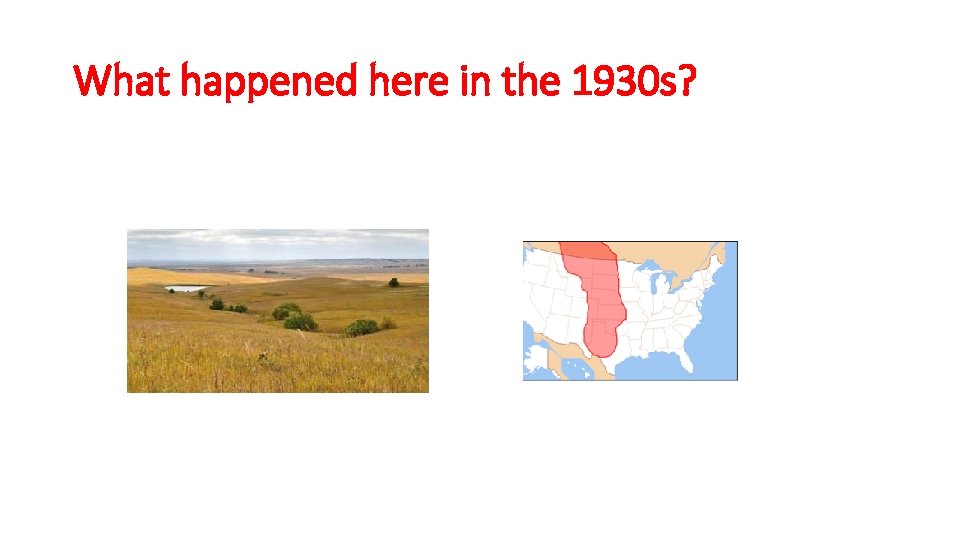
What happened here in the 1930 s?
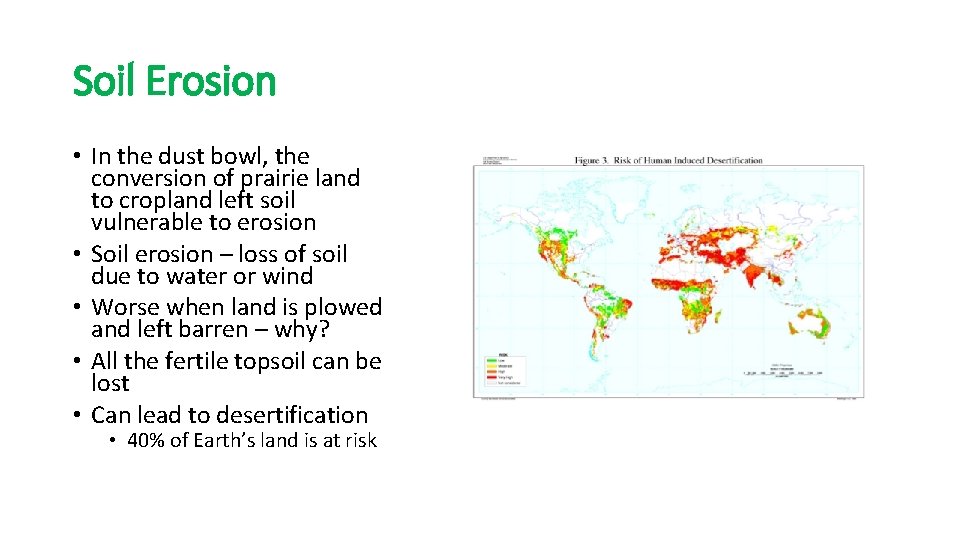
Soil Erosion • In the dust bowl, the conversion of prairie land to cropland left soil vulnerable to erosion • Soil erosion – loss of soil due to water or wind • Worse when land is plowed and left barren – why? • All the fertile topsoil can be lost • Can lead to desertification • 40% of Earth’s land is at risk
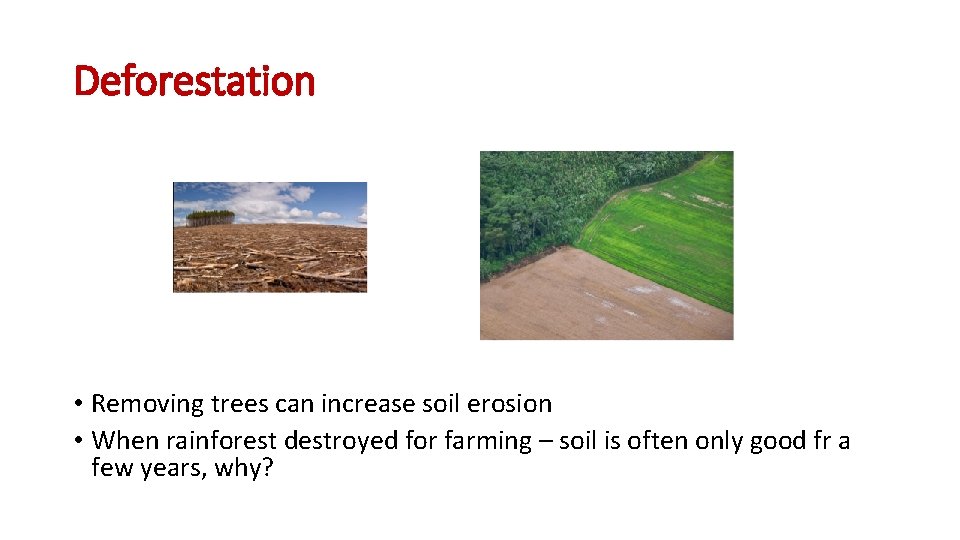
Deforestation • Removing trees can increase soil erosion • When rainforest destroyed for farming – soil is often only good fr a few years, why?
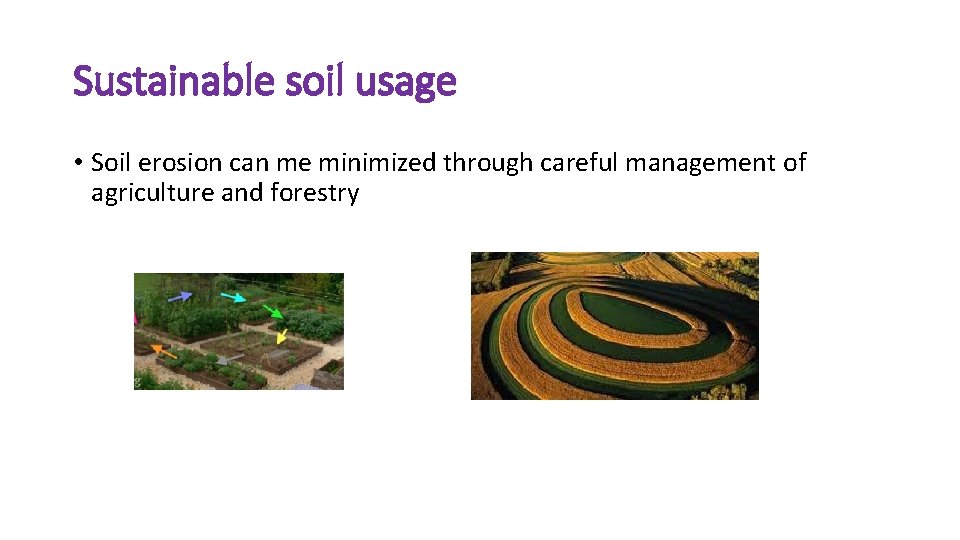
Sustainable soil usage • Soil erosion can me minimized through careful management of agriculture and forestry
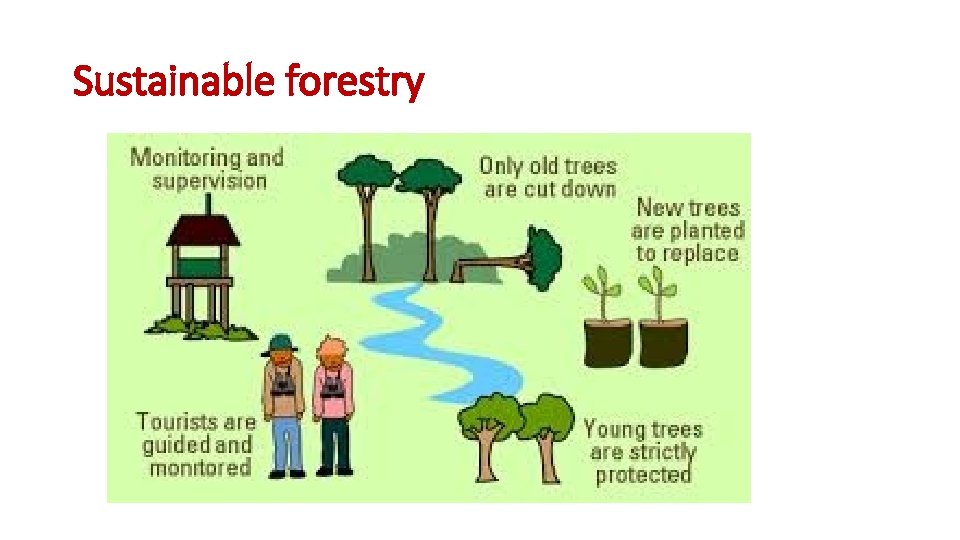
Sustainable forestry
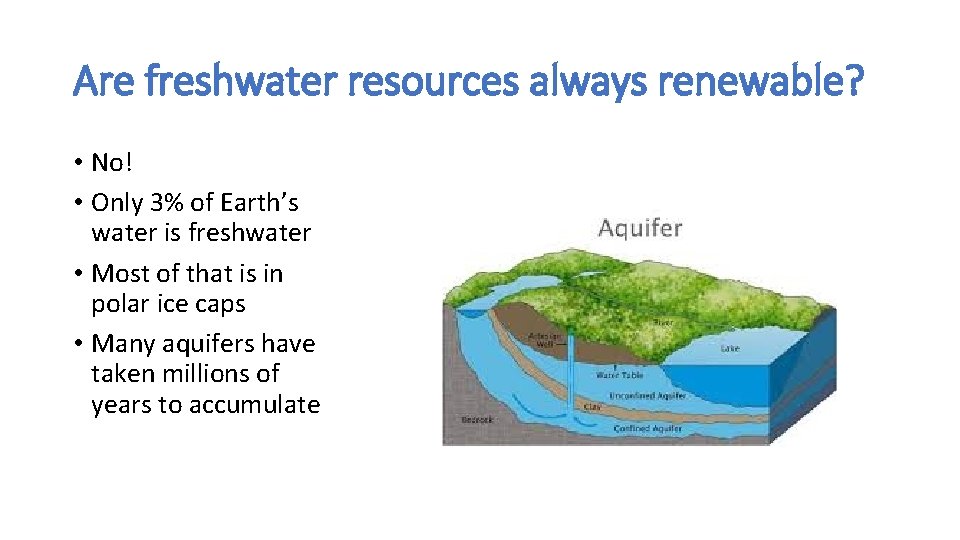
Are freshwater resources always renewable? • No! • Only 3% of Earth’s water is freshwater • Most of that is in polar ice caps • Many aquifers have taken millions of years to accumulate
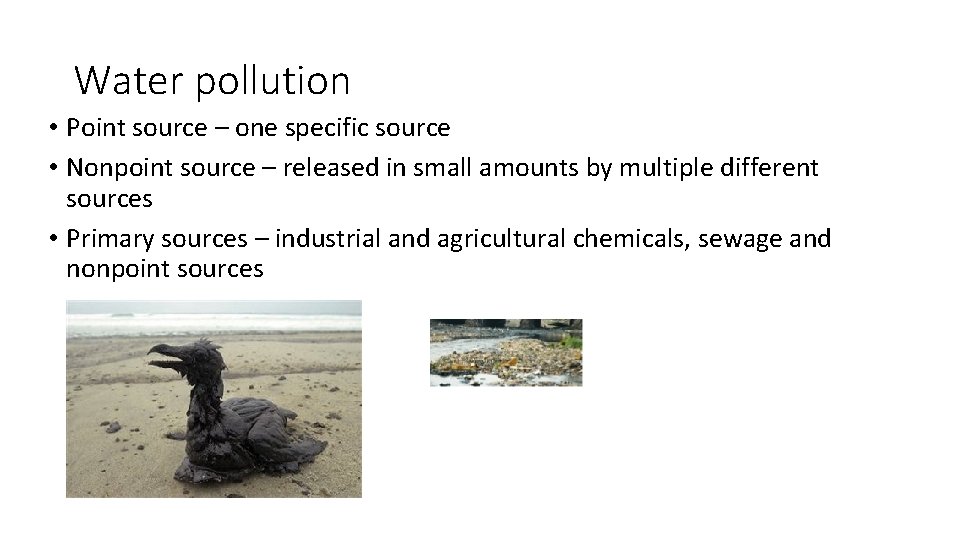
Water pollution • Point source – one specific source • Nonpoint source – released in small amounts by multiple different sources • Primary sources – industrial and agricultural chemicals, sewage and nonpoint sources
Industrial and agricultural chemicals • Heavy metals like mercury, cadmium zinc • DDT – widely used as a herbicide – cheap and effective • Monoculture has lead to reliance on herbicides and pesticides • Run off into ecosystem and have disastrous consequences • New initiatives limit pesticide usage • E. g. biological pest control
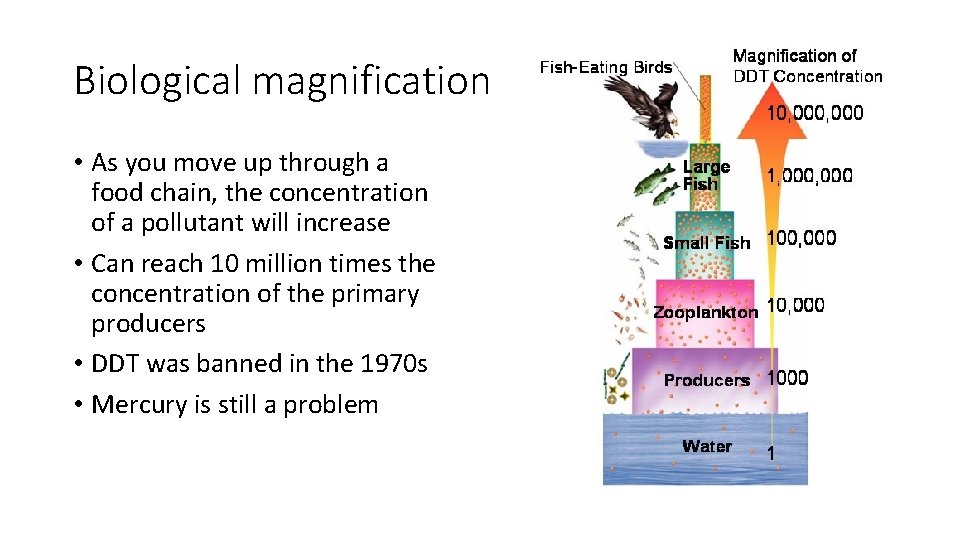
Biological magnification • As you move up through a food chain, the concentration of a pollutant will increase • Can reach 10 million times the concentration of the primary producers • DDT was banned in the 1970 s • Mercury is still a problem
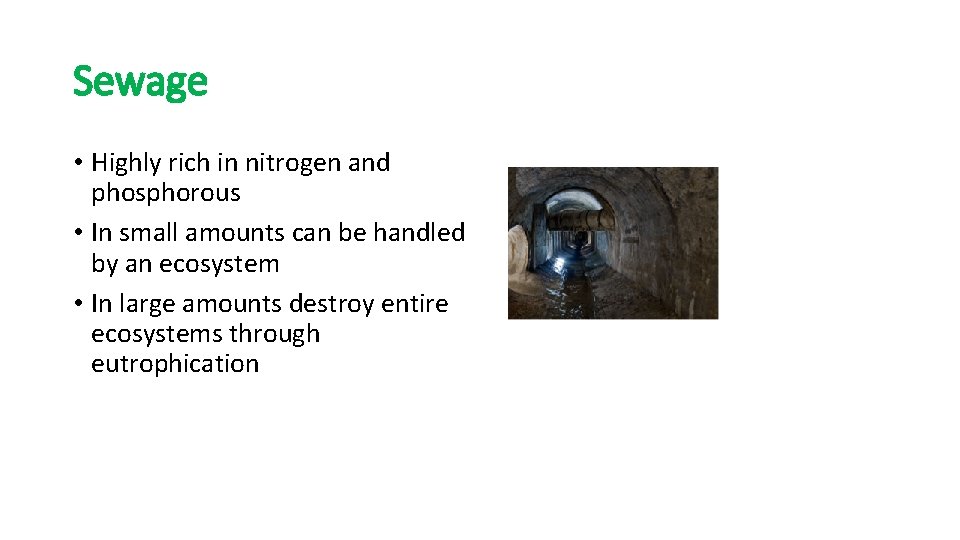
Sewage • Highly rich in nitrogen and phosphorous • In small amounts can be handled by an ecosystem • In large amounts destroy entire ecosystems through eutrophication
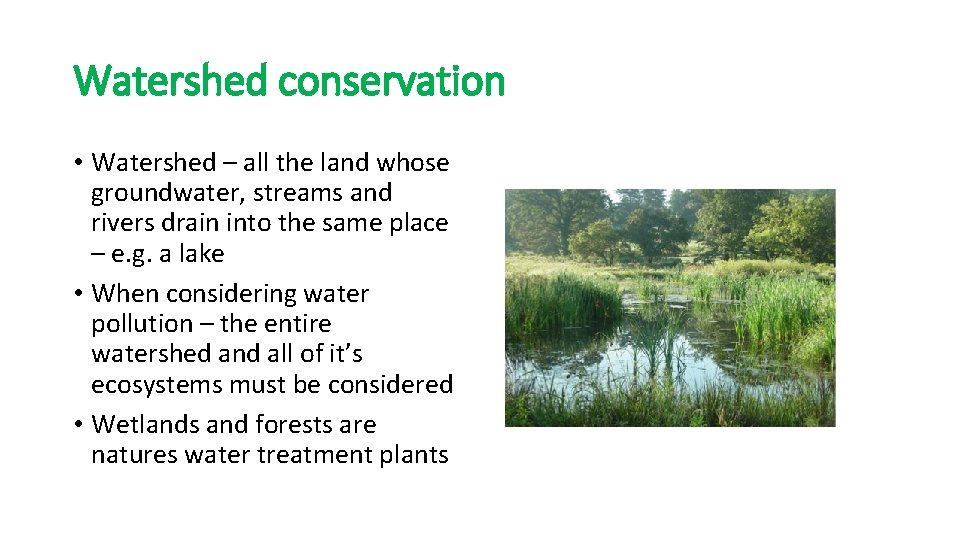
Watershed conservation • Watershed – all the land whose groundwater, streams and rivers drain into the same place – e. g. a lake • When considering water pollution – the entire watershed and all of it’s ecosystems must be considered • Wetlands and forests are natures water treatment plants
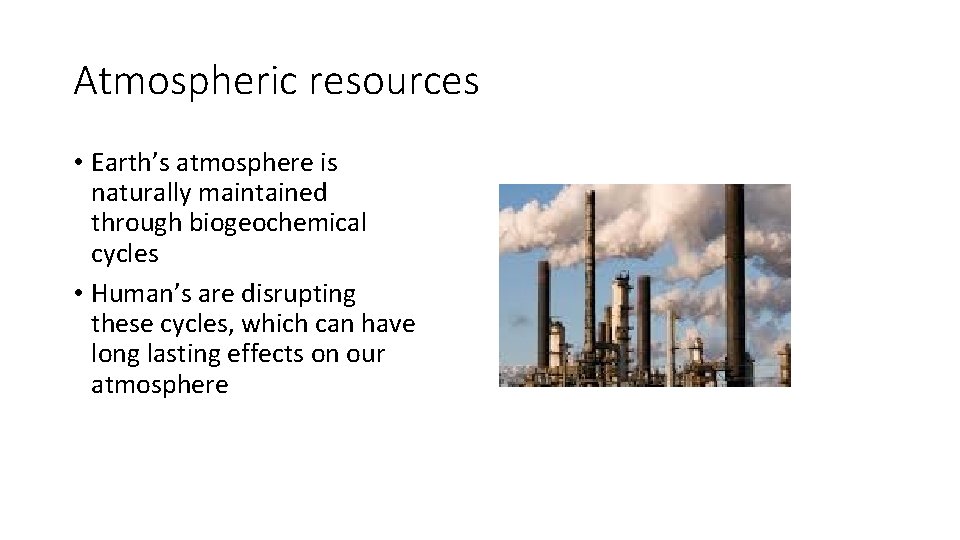
Atmospheric resources • Earth’s atmosphere is naturally maintained through biogeochemical cycles • Human’s are disrupting these cycles, which can have long lasting effects on our atmosphere
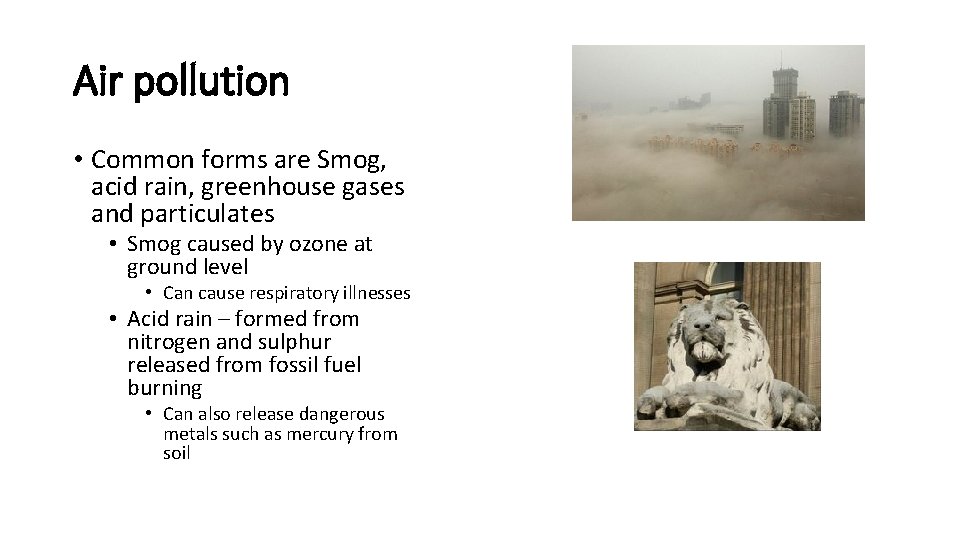
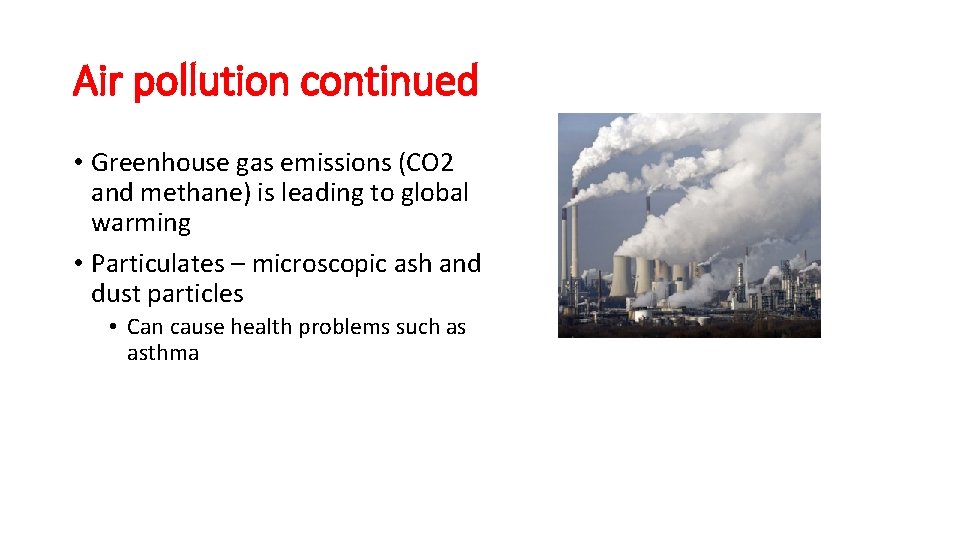
Air pollution • Common forms are Smog, acid rain, greenhouse gases and particulates • Smog caused by ozone at ground level • Can cause respiratory illnesses • Acid rain – formed from nitrogen and sulphur released from fossil fuel burning • Can also release dangerous metals such as mercury from soil
Air pollution continued • Greenhouse gas emissions (CO 2 and methane) is leading to global warming • Particulates – microscopic ash and dust particles • Can cause health problems such as asthma
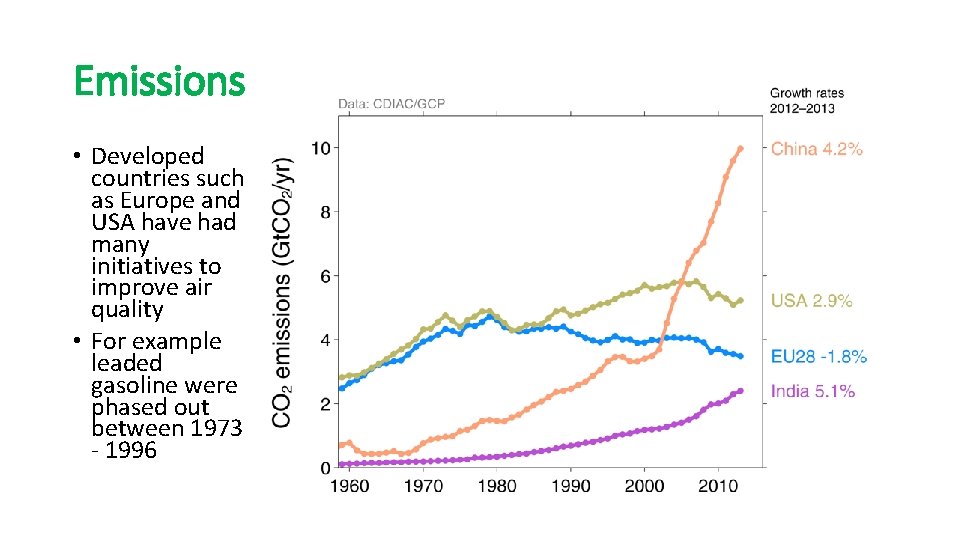
Emissions • Developed countries such as Europe and USA have had many initiatives to improve air quality • For example leaded gasoline were phased out between 1973 - 1996