
Using Red Lights and Sirens for Emergency Ambulance
Using Red Lights and Sirens for Emergency Ambulance Response: How Often Are Potentially Life Saving Interventions Performed? Jeffrey L. Jarvis, MD, EMT-P. Vaughn Hamilton, MA, EMT-P. Mike Taigman, MA. Lawrence H. Brown, Ph. D

We are all devoid of conflicts.
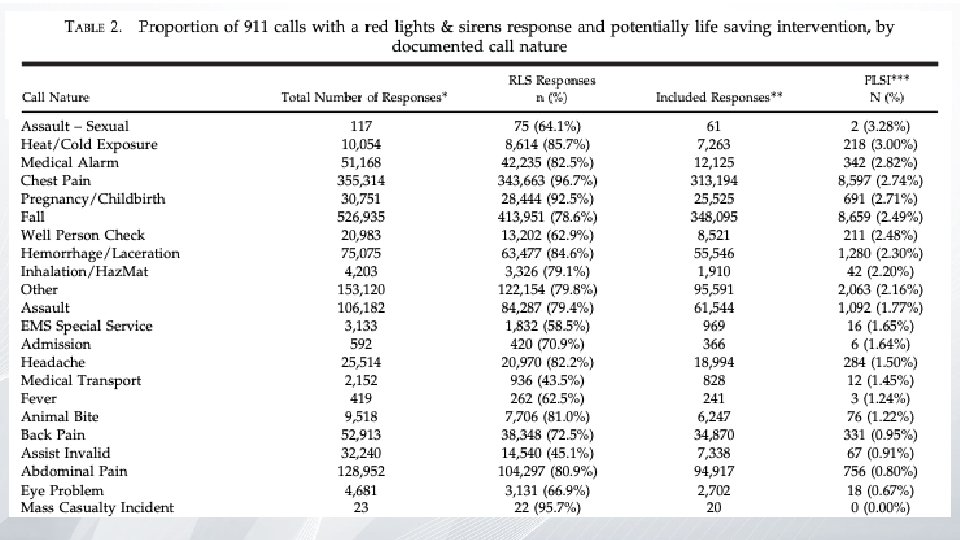
Background • EMS response with Red Lights & Sirens (RLS) is associated with increased collisions, injuries, and only marginal time savings. • Goal: Describe the proportion of RLS responses with potentially life saving (PLSI) interventions, by call nature.
Clinical Importance • RLS should be treated like any other medical intervention: • Use only with favorable risk/benefit ratio. • Benefit is unknown
Methods • • • ESO dataset, 1/1/18 – 12/31/18 Retrospective descriptive analysis Inclusion: All 911 responses to the scene Exclusion: Missing call nature, no patient contact PLSI: “any intervention which might, according to standard clinical guidelines, be considered necessary to reverse a critical condition or rapidly improve hemodynamic stability”.
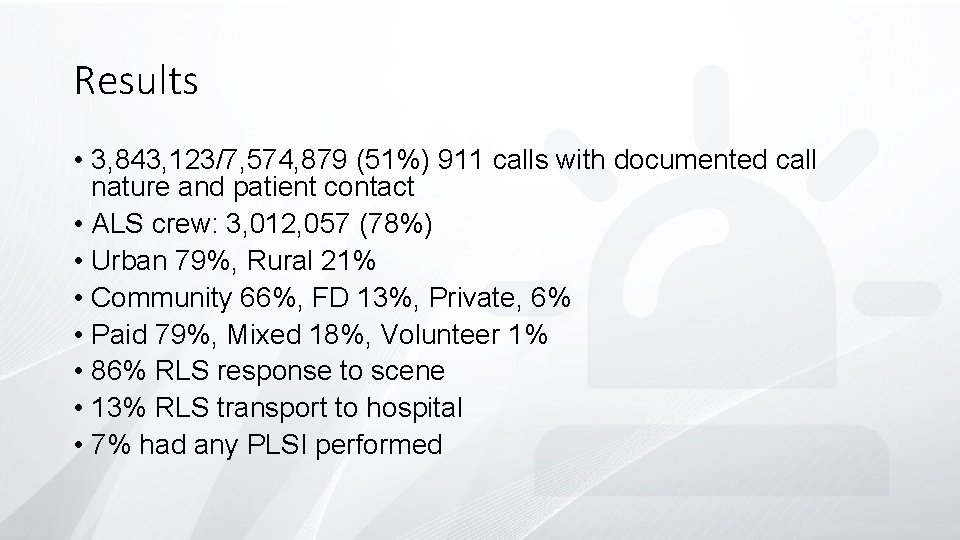
Results • 3, 843, 123/7, 574, 879 (51%) 911 calls with documented call nature and patient contact • ALS crew: 3, 012, 057 (78%) • Urban 79%, Rural 21% • Community 66%, FD 13%, Private, 6% • Paid 79%, Mixed 18%, Volunteer 1% • 86% RLS response to scene • 13% RLS transport to hospital • 7% had any PLSI performed
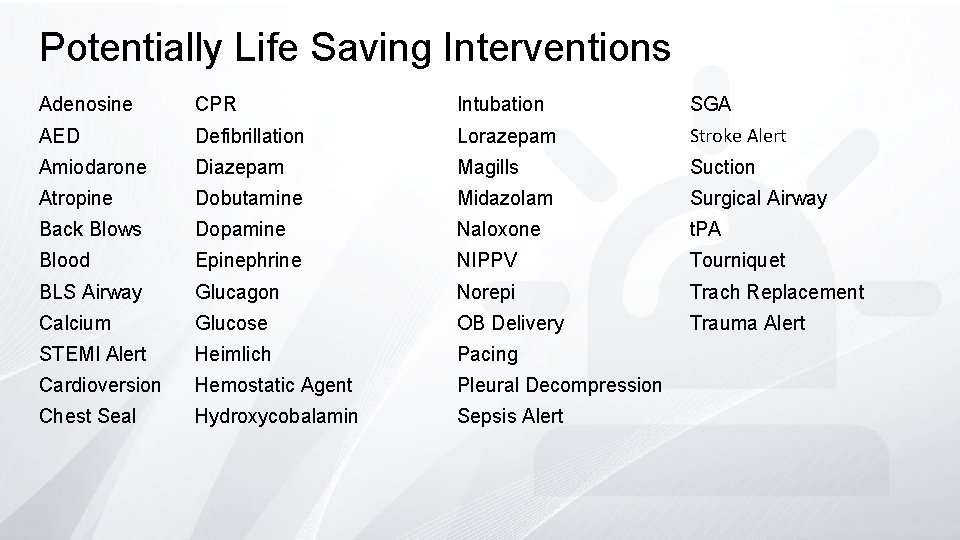
Potentially Life Saving Interventions Adenosine CPR Intubation SGA AED Defibrillation Lorazepam Stroke Alert Amiodarone Diazepam Magills Suction Atropine Dobutamine Midazolam Surgical Airway Back Blows Dopamine Naloxone t. PA Blood Epinephrine NIPPV Tourniquet BLS Airway Glucagon Norepi Trach Replacement Calcium Glucose OB Delivery Trauma Alert STEMI Alert Heimlich Pacing Cardioversion Hemostatic Agent Pleural Decompression Chest Seal Hydroxycobalamin Sepsis Alert
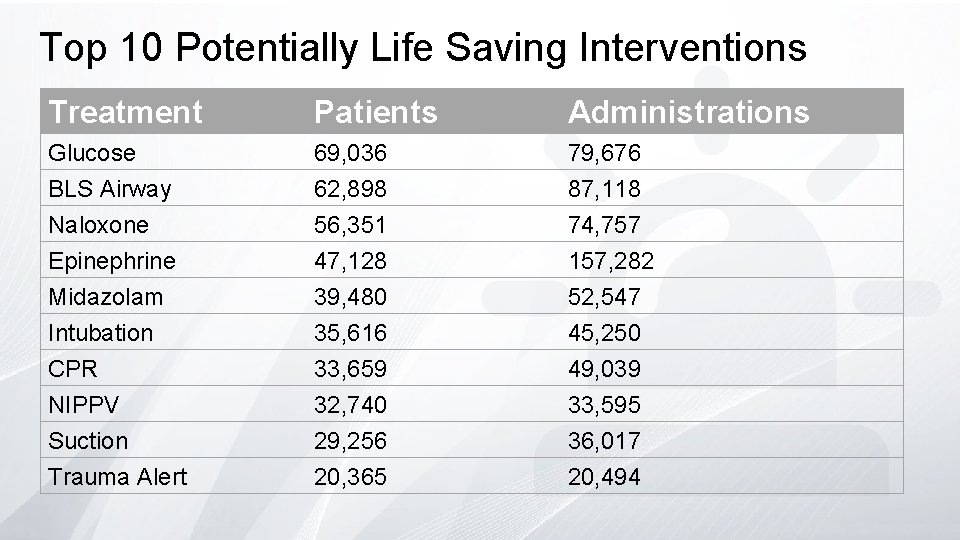
Top 10 Potentially Life Saving Interventions Treatment Patients Administrations Glucose BLS Airway Naloxone 69, 036 62, 898 56, 351 79, 676 87, 118 74, 757 Epinephrine Midazolam Intubation CPR NIPPV Suction Trauma Alert 47, 128 39, 480 35, 616 33, 659 32, 740 29, 256 20, 365 157, 282 52, 547 45, 250 49, 039 33, 595 36, 017 20, 494
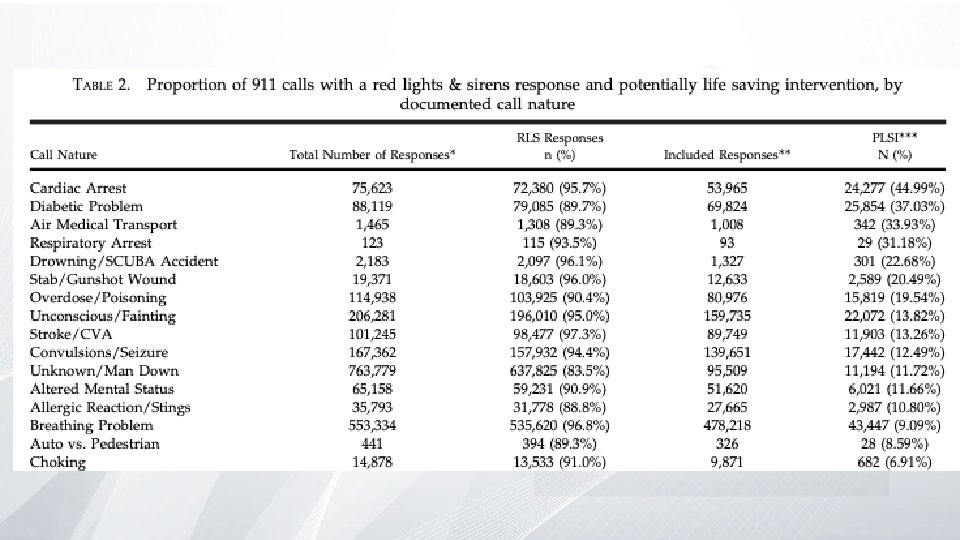
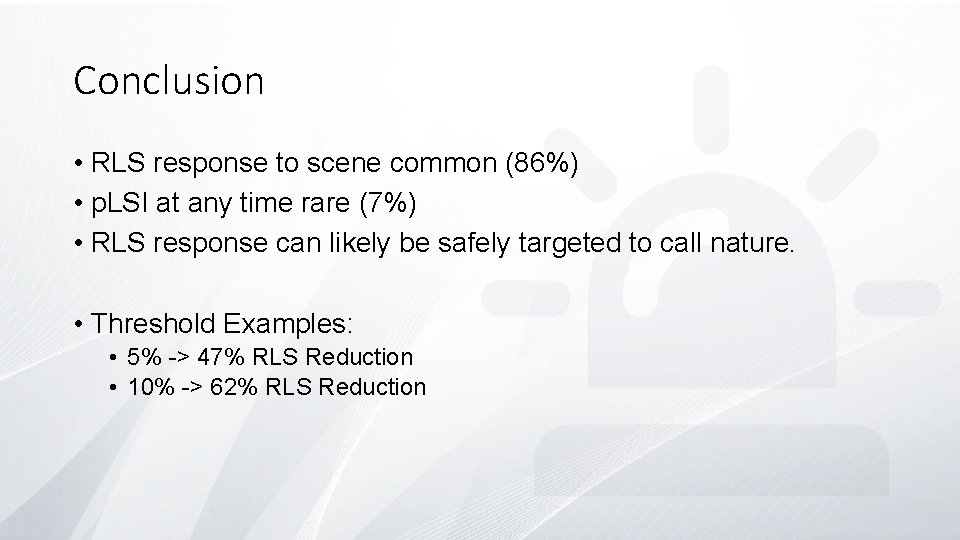
Conclusion • RLS response to scene common (86%) • p. LSI at any time rare (7%) • RLS response can likely be safely targeted to call nature. • Threshold Examples: • 5% -> 47% RLS Reduction • 10% -> 62% RLS Reduction
- Slides: 11