
Using real world media examples to teach statistical
- Slides: 20
Using real world media examples to teach statistical literacy Andrew Bell, Sheffield Methods Institute, University of Sheffield Email: Andrew. j. d. bell@Sheffield. ac. uk Tweet: @andrewjdbell
This talk • An introduction to a new book (nearly finished writing) on Making Sense of Data in the Media, to be published by Sage • With Todd Hartman, Aneta Piekut, Alasdair Rae, Mark Taylor • The approach to teaching statistics that it encompasses • Why that approach is important • How you can fit it into your statistics teaching
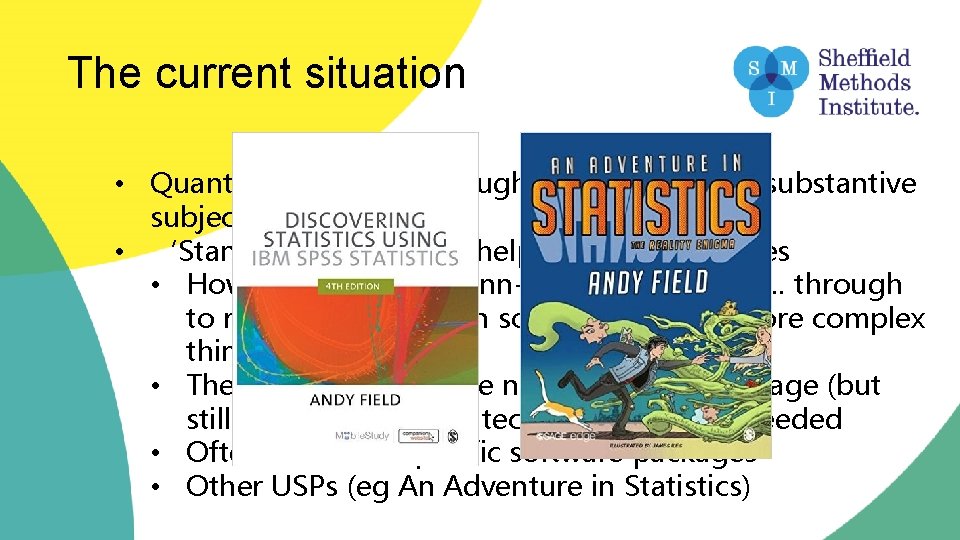
The current situation • Quantitative methods taught separately from substantive subject • ‘Standard’ textbooks help with these courses • How to do t-tests, Mann-Whitney tests, etc… through to regression and then sometimes some more complex things • The good ones will use non-technical language (but still some equations / technical language needed • Often based on specific software packages • Other USPs (eg An Adventure in Statistics)
The current situation • Quantitative methods taught separately from substantive subject • ‘Standard’ textbooks help with these courses • How to do t-tests, Mann-Whitney tests, etc… through to regression and then sometimes some more complex things • The good ones will use non-technical language (but still some equations / technical language needed • Often based on specific software packages • Other USPs (eg An Adventure in Statistics)
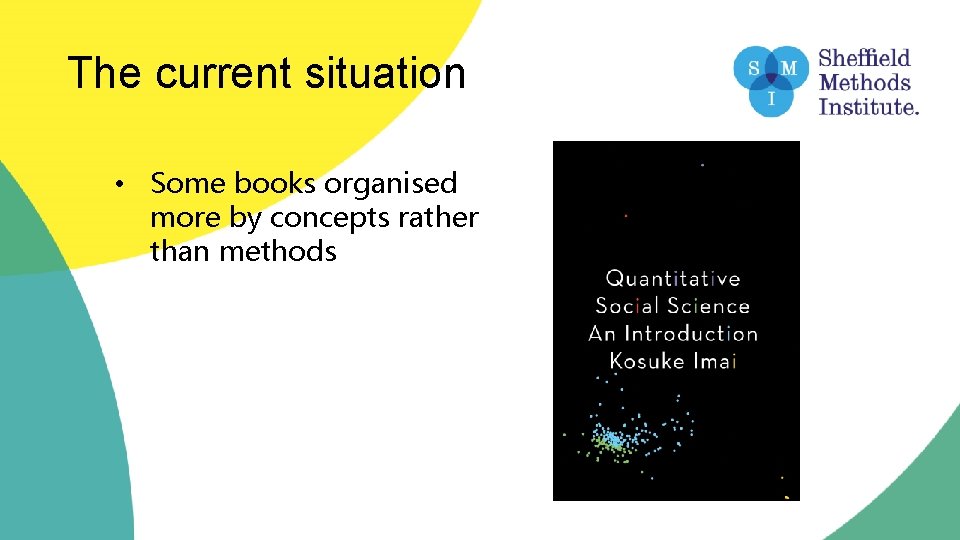
The current situation • Some books organised more by concepts rather than methods
The current situation • Attempts to make it easier for students – adapt to a fear of maths, student dissatisfaction (and subsequent module evaluations)
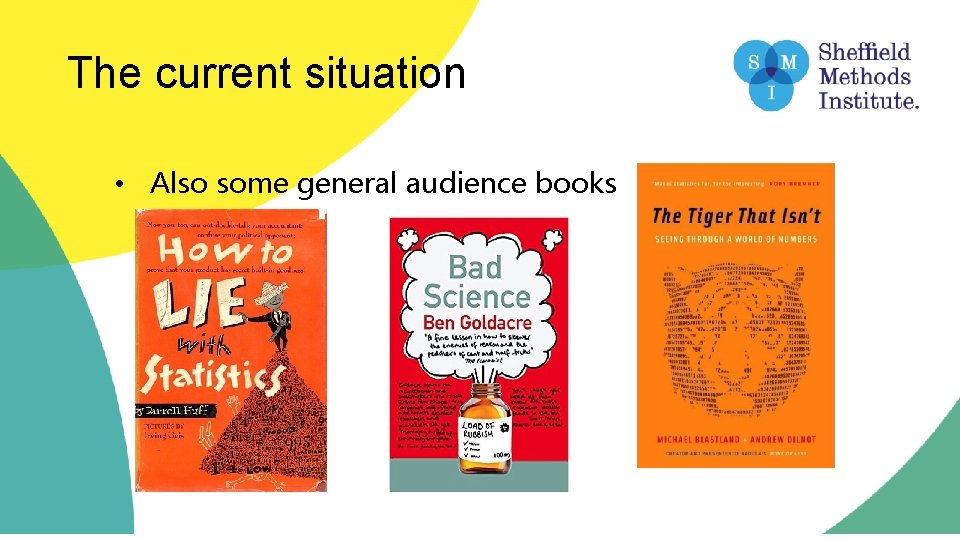
The current situation • Also some general audience books
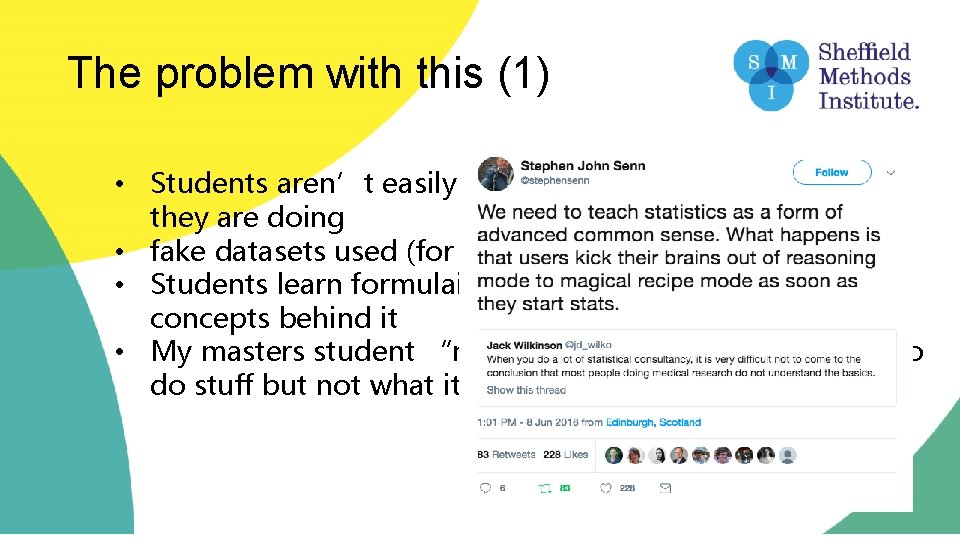
The problem with this (1) • Students aren’t easily taught why they are doing what they are doing • fake datasets used (for good reason often) • Students learn formulaic ways of doing things, not the concepts behind it • My masters student “my intro module taught me how to do stuff but not what it meant”
The problem with this (1) • Students aren’t easily taught why they are doing what they are doing • fake datasets used (for good reason often) • Students learn formulaic ways of doing things, not the concepts behind it • My masters student “my intro module taught me how to do stuff but not what it meant”
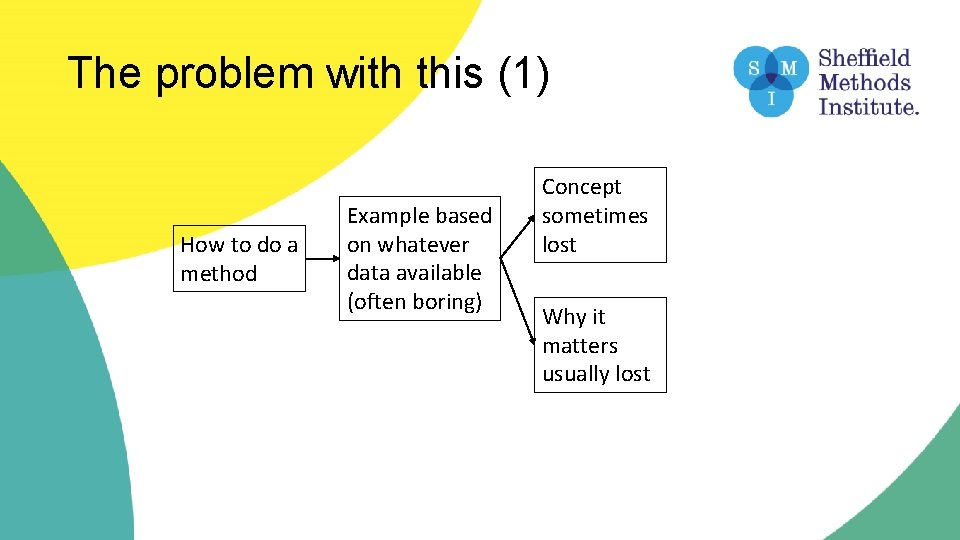
The problem with this (1) How to do a method Example based on whatever data available (often boring) Concept sometimes lost Why it matters usually lost
The problem with this (2) • Textbooks teach in a specific order – and that isn’t always the order you want to teach in • This means I rarely end up using them (I’m aware this isn’t everyone’s view)
Our view of teaching statistics • Need to turn statistics on it’s head • Start with why statistical concepts matter • Start with examples • Start with the principles of statistics without maths • Statistics as ‘Advanced Common Sense’ • Attempting to make statistics easier is usually counterproductive • Students end up not knowing why they are doing what they are doing • Students don’t enjoy it / engage because they don’t understand why they are pressing the buttons that they are
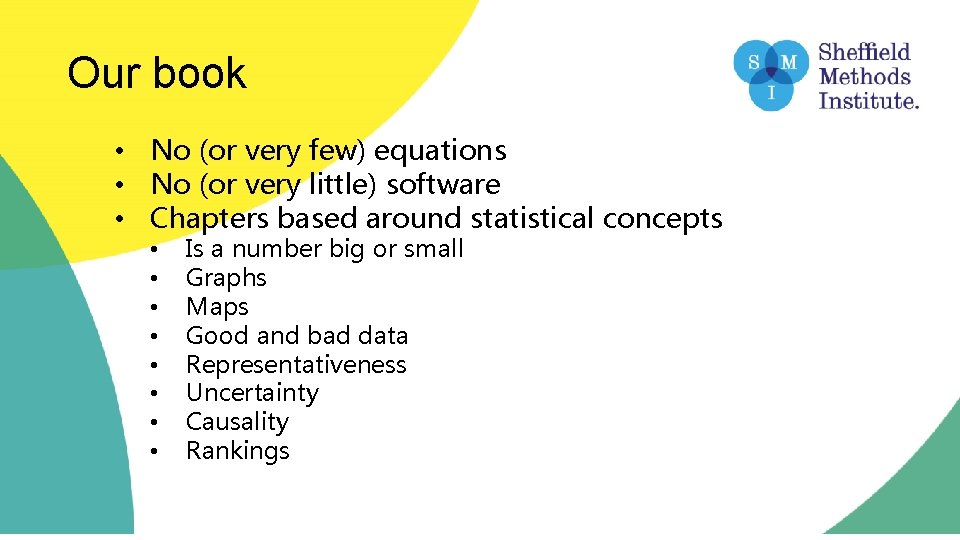
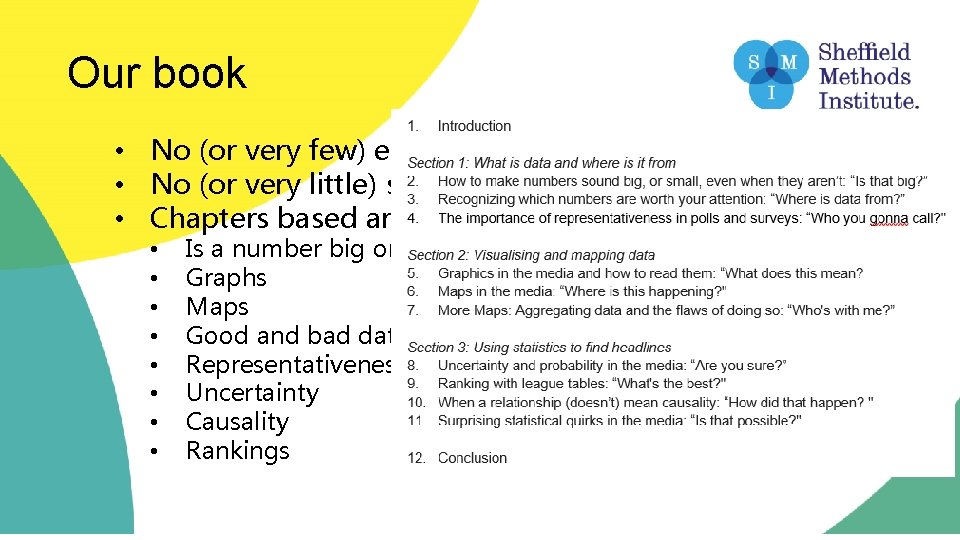
Our book • No (or very few) equations • No (or very little) software • Chapters based around statistical concepts • • Is a number big or small Graphs Maps Good and bad data Representativeness Uncertainty Causality Rankings
Our book • No (or very few) equations • No (or very little) software • Chapters based around statistical concepts • • Is a number big or small Graphs Maps Good and bad data Representativeness Uncertainty Causality Rankings
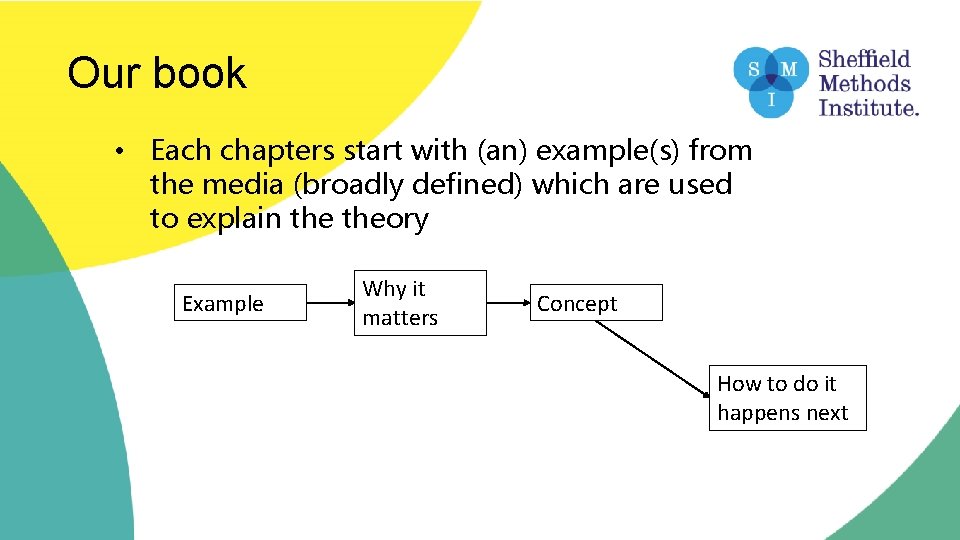
Our book • Each chapters start with (an) example(s) from the media (broadly defined) which are used to explain theory Example Why it matters Concept How to do it happens next
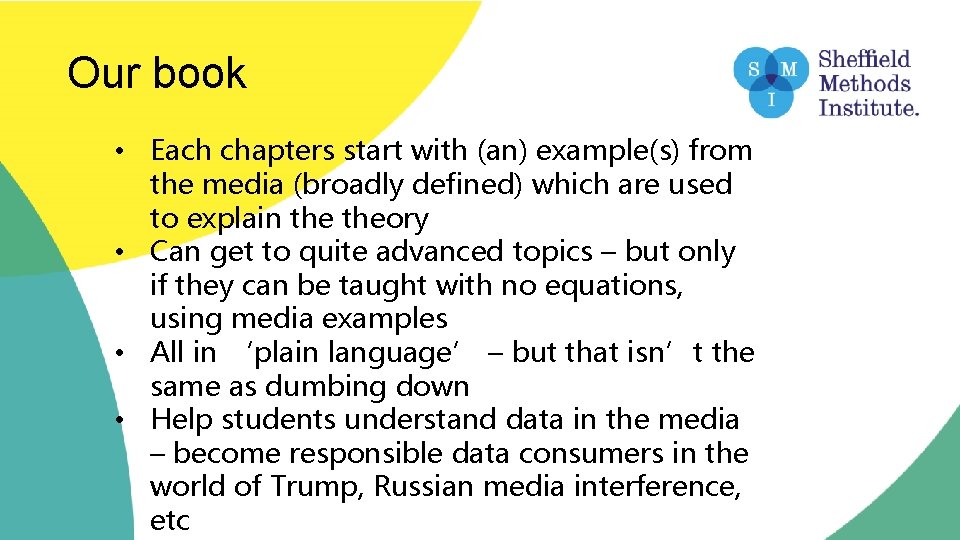
Our book • Each chapters start with (an) example(s) from the media (broadly defined) which are used to explain theory • Can get to quite advanced topics – but only if they can be taught with no equations, using media examples • All in ‘plain language’ – but that isn’t the same as dumbing down • Help students understand data in the media – become responsible data consumers in the world of Trump, Russian media interference, etc
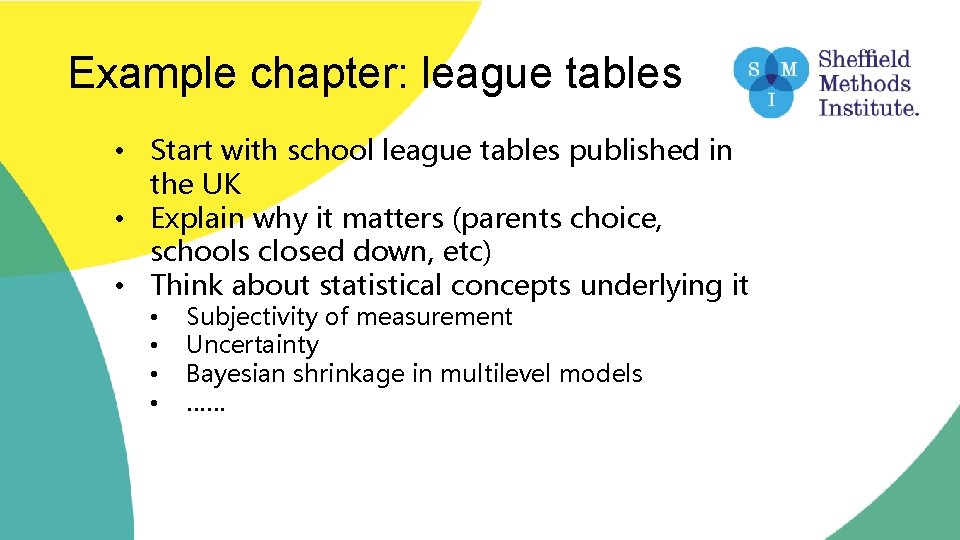
Example chapter: league tables • Start with school league tables published in the UK • Explain why it matters (parents choice, schools closed down, etc) • Think about statistical concepts underlying it • • Subjectivity of measurement Uncertainty Bayesian shrinkage in multilevel models ……
How does it fit in quants methods teaching • An enjoyable book to read • First year modules like those at Bristol / Cardiff / Sheffield – lies damned lies and statistics – this could be a course book! • Supplementary reading to keep students interested in the concepts / methods learned in a more standard quants course • Chapters as the basis of seminar/tutorial discussion
It won’t replace good stats teaching • Still need to teach the concepts and not just the buttons to press in SPSS • Dumbing down makes students like courses less • There isn’t a shortcut for this • But: the book provides a mechanism for discussion / understanding of statistics applying to real life. • Can augment the hard stuff so it’s actually learned properly
Thanks for listening! Contact me: Twitter: @andrewjdbell Email: Andrew. j. d. bell@Sheffield. ac. uk