
Using PIT tags to evaluate the postrelease survival

- Slides: 18
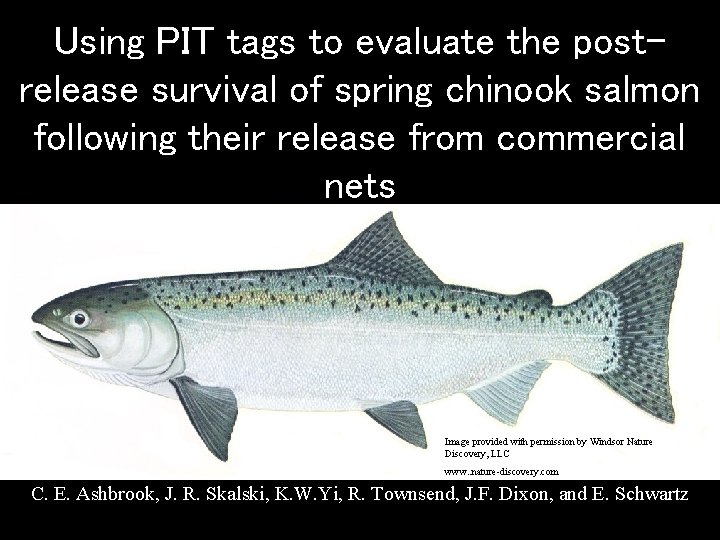
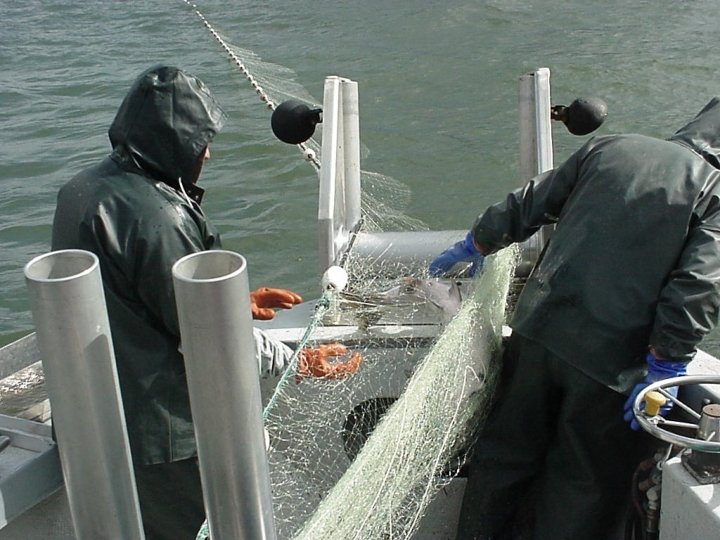
Using PIT tags to evaluate the postrelease survival of spring chinook salmon following their release from commercial nets Image provided with permission by Windsor Nature Discovery, LLC www. . nature-discovery. com C. E. Ashbrook, J. R. Skalski, K. W. Yi, R. Townsend, J. F. Dixon, and E. Schwartz
Why selective fisheries? Harvest commingled populations at different rates. 1. Increase harvest rates on hatchery production. 2. Minimize impact to depressed and endangered stocks.
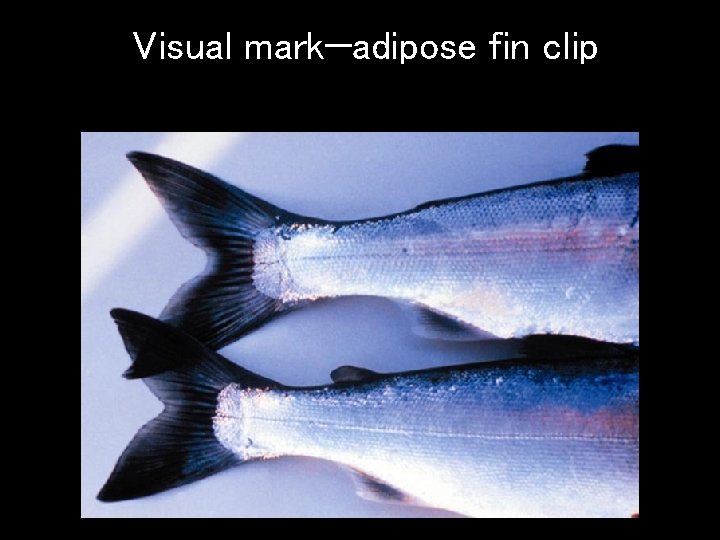
Visual mark—adipose fin clip
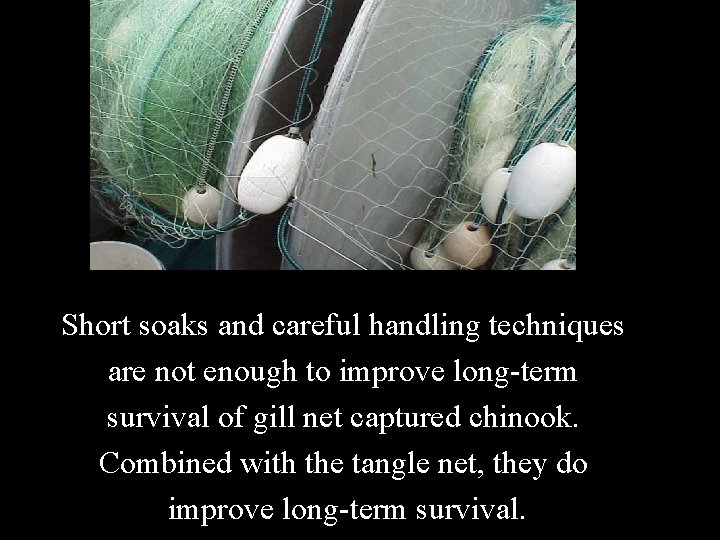
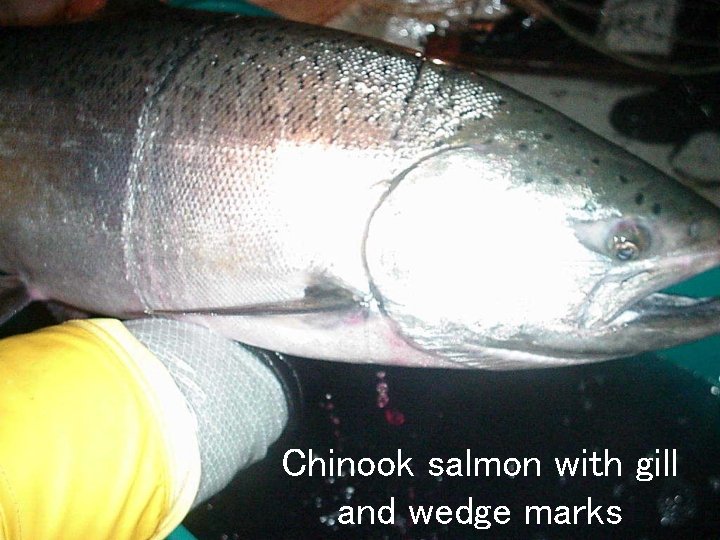
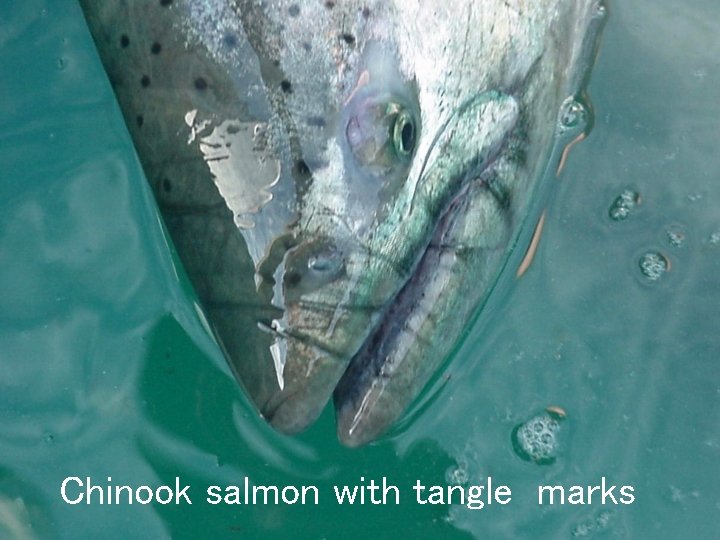
Short soaks and careful handling techniques are not enough to improve long-term survival of gill net captured chinook. Combined with the tangle net, they do improve long-term survival.
Chinook salmon with gill and wedge marks
Chinook salmon with tangle marks
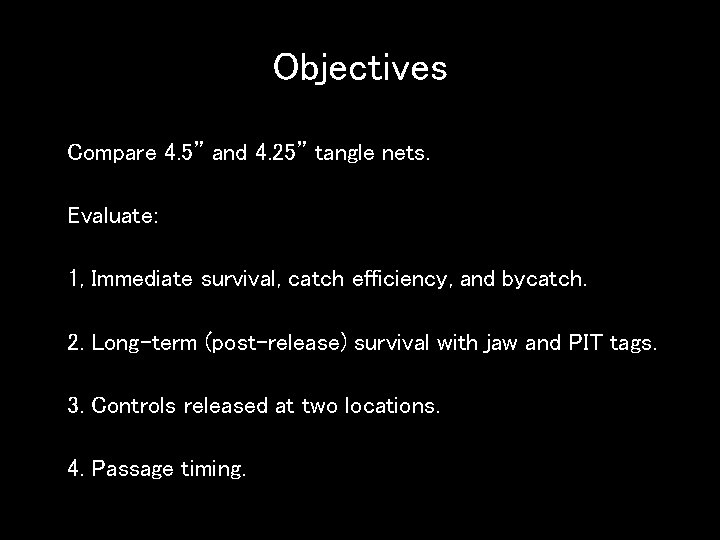
Objectives Compare 4. 5” and 4. 25” tangle nets. Evaluate: 1, Immediate survival, catch efficiency, and bycatch. 2. Long-term (post-release) survival with jaw and PIT tags. 3. Controls released at two locations. 4. Passage timing.
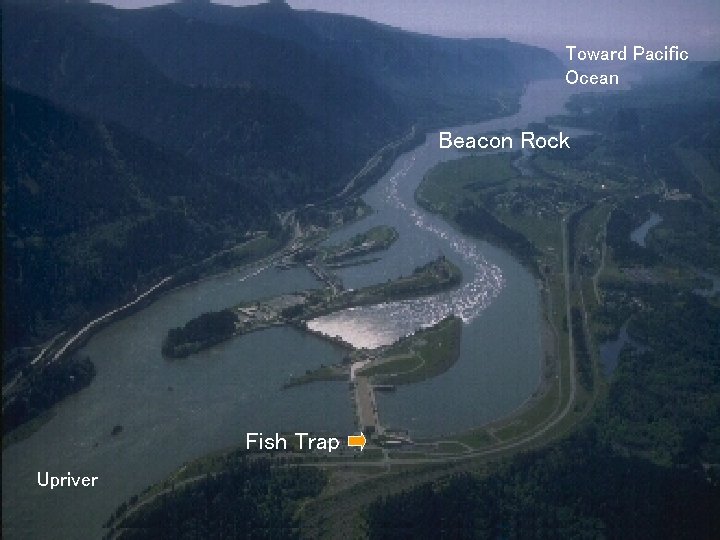
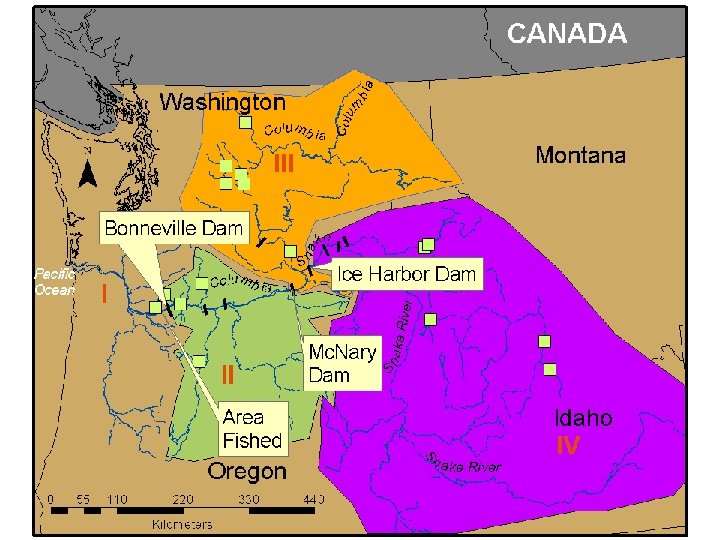
Toward Pacific Ocean Beacon Rock Fish Trap Upriver
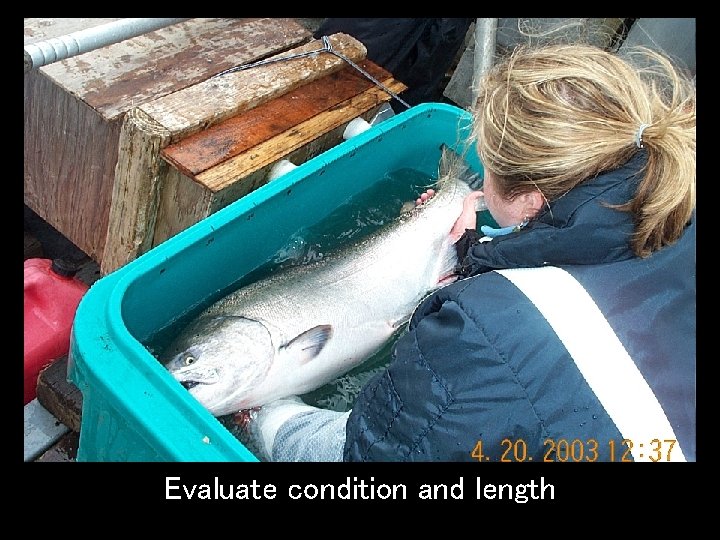
Evaluate condition and length
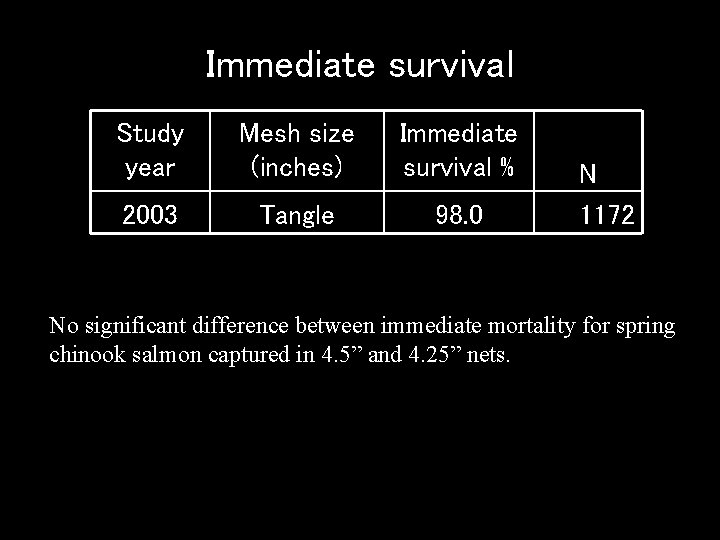
Immediate survival Study year Mesh size (inches) Immediate survival % 2003 Tangle 98. 0 N 1172 No significant difference between immediate mortality for spring chinook salmon captured in 4. 5” and 4. 25” nets.
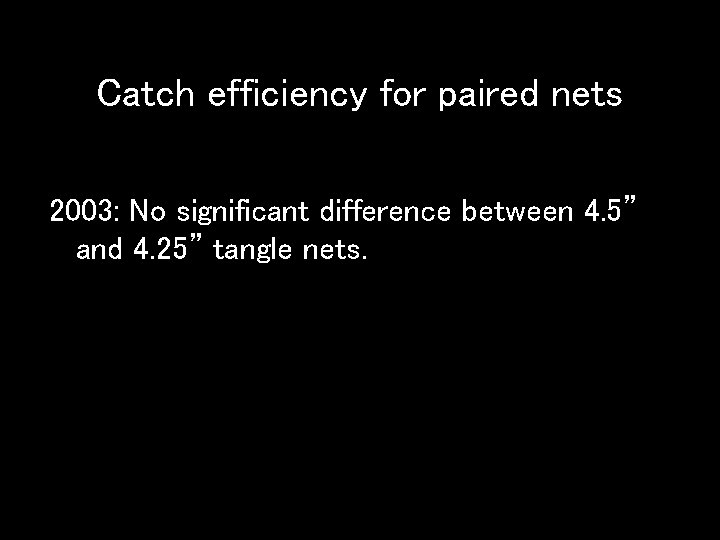
Catch efficiency for paired nets 2003: No significant difference between 4. 5” and 4. 25” tangle nets.
Bycatch Primarily sturgeon and suckers Reduced by avoiding fishing in concentration areas.
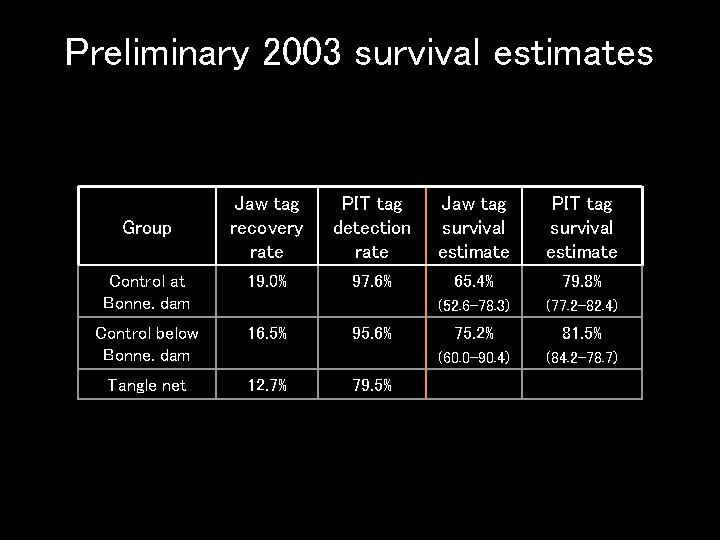
Preliminary 2003 survival estimates Jaw tag recovery rate PIT tag detection rate Jaw tag survival estimate PIT tag survival estimate Control at Bonne. dam 19. 0% 97. 6% 65. 4% 79. 8% (52. 6 -78. 3) (77. 2 -82. 4) Control below Bonne. dam 16. 5% 75. 2% 81. 5% (60. 0 -90. 4) (84. 2 -78. 7) Tangle net 12. 7% Group 95. 6% 79. 5%
Conclusions Long-term survival measured by releasing fish to swim freely is very different than immediate survival or net pen holding survival. PIT tag post-release survival estimates are similar to jaw tag post-release survival estimates.
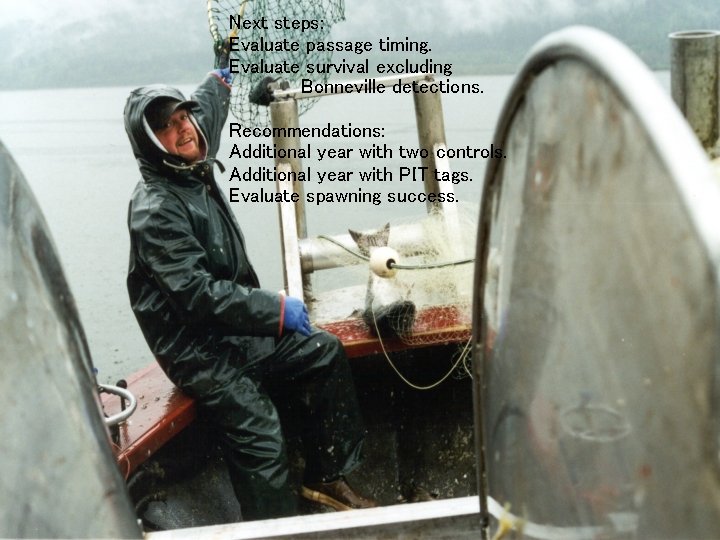
Next steps: Evaluate passage timing. Evaluate survival excluding Bonneville detections. Recommendations: Additional year with two controls. Additional year with PIT tags. Evaluate spawning success.