
Using Passive network monitors for real time visibility
Using Passive network monitors for real time visibility and security management of medical devices Stephanie Domas EVP, Med. Sec 1
Using Passive network monitors for real time visibility and security management of medical devices • US based, exclusively focused on the unique challenge of security medical devices and healthcare About Med. Sec • With Medical Device Manufacturers Cybersecurity throughout the product lifecycle: design reviews, pentesting, regulatory filings, quality system integration, FIPS, ATO, threat modeling, product incident response, training • With Hospital Delivery Organizations Medical device management frameworks, governance programs, pre-purchase risk assessments, pentesting, security contractual clauses, training Med. Scan, medical device asset and security management tool 2
The Challenge: Using Passive network monitors for real time visibility and security management of medical devices Healthcare organizations are struggling to protect medical devices
Using Passive network monitors for real time visibility and security management of medical devices The Challenge Where current solutions fall short Agenda Approaches How it helps Where to go from here
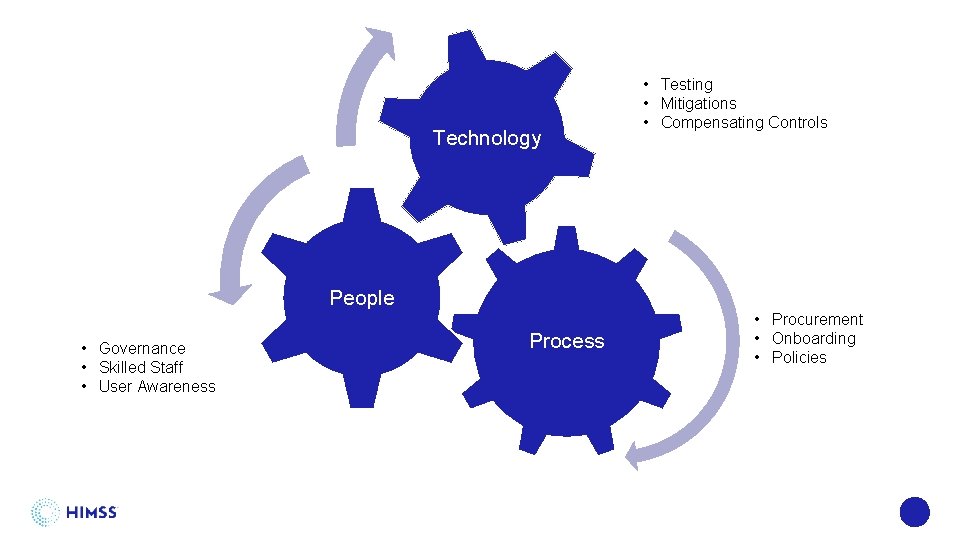
Technology • Testing • Mitigations • Compensating Controls People • Governance • Skilled Staff • User Awareness Process • Procurement • Onboarding • Policies
Using Passive network monitors for real time visibility and security management of medical devices You can’t secure it, if you don’t know you have it The foundation of a medical device cybersecurity program hinges on an accurate asset list
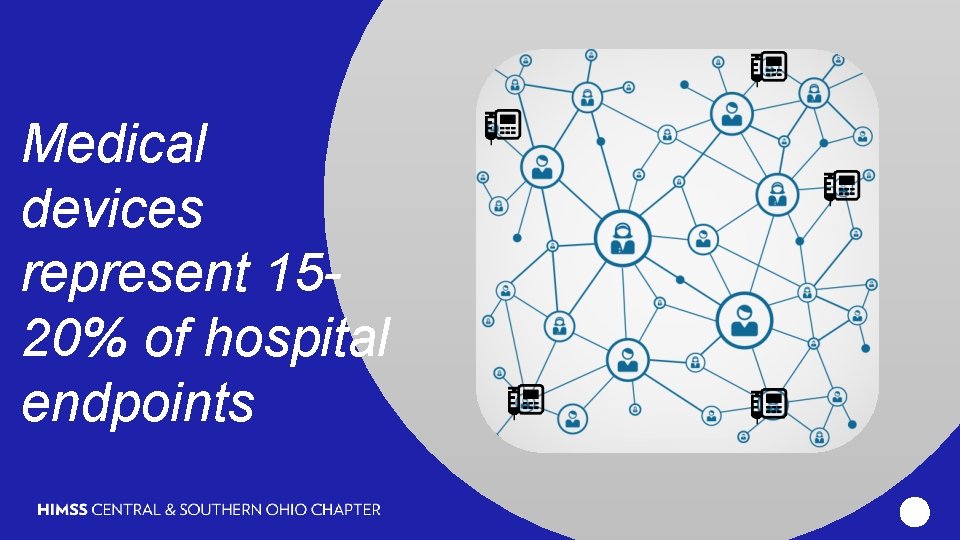
Using Passive network monitors for real time visibility and security management of medical devices Medical devices represent 1520% of hospital endpoints
Using Passive network monitors for real time visibility and security management of medical devices Asset and Inventory Management • Goal: Automation of asset discovery • Asset lists constantly change: • • • New device purchases Old devices removed or added to the network Unapproved devices added to the network • Feeds into other programs, e. g. digital transformation, network segmentation & fleet risk assessments to identify high risk devices
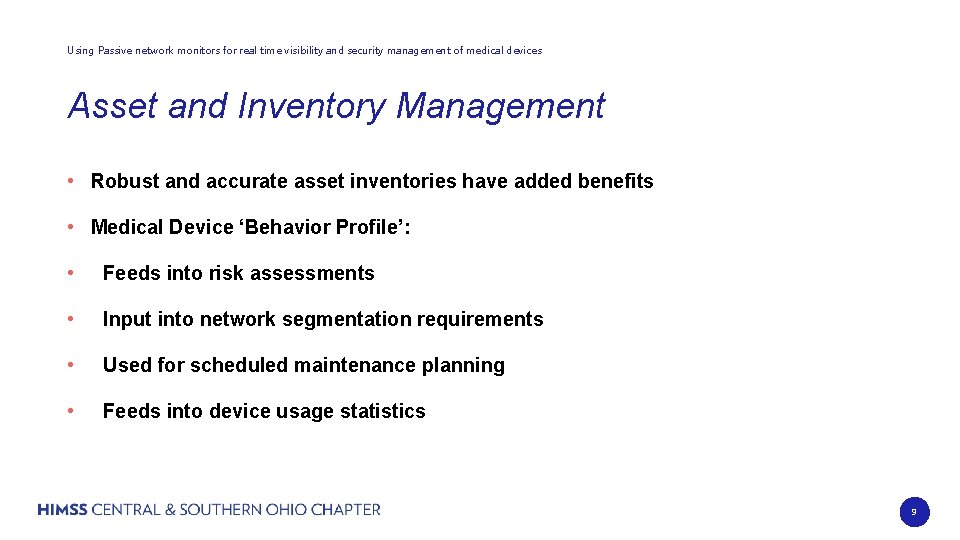
Using Passive network monitors for real time visibility and security management of medical devices Asset and Inventory Management • Robust and accurate asset inventories have added benefits • Medical Device ‘Behavior Profile’: • Feeds into risk assessments • Input into network segmentation requirements • Used for scheduled maintenance planning • Feeds into device usage statistics 9
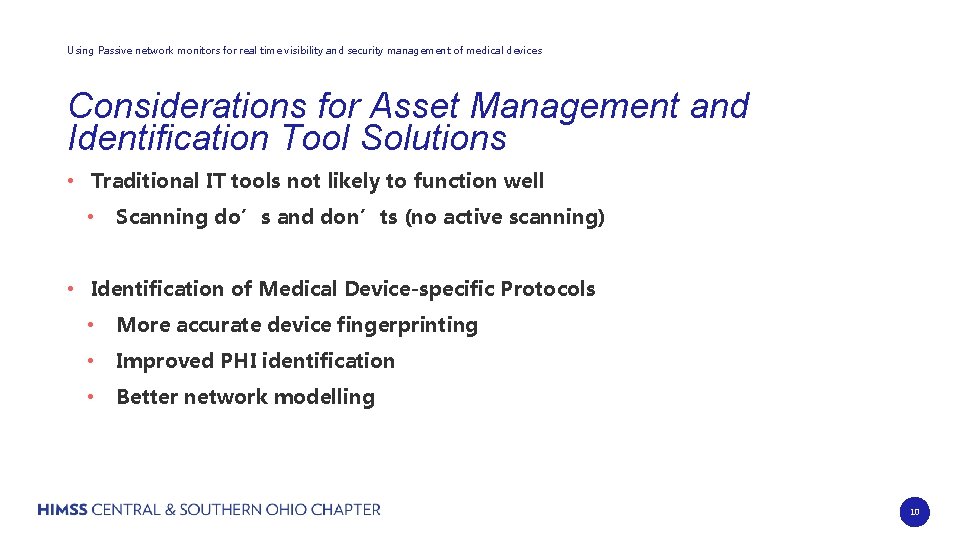
Using Passive network monitors for real time visibility and security management of medical devices Considerations for Asset Management and Identification Tool Solutions • Traditional IT tools not likely to function well • Scanning do’s and don’ts (no active scanning) • Identification of Medical Device-specific Protocols • More accurate device fingerprinting • Improved PHI identification • Better network modelling 10
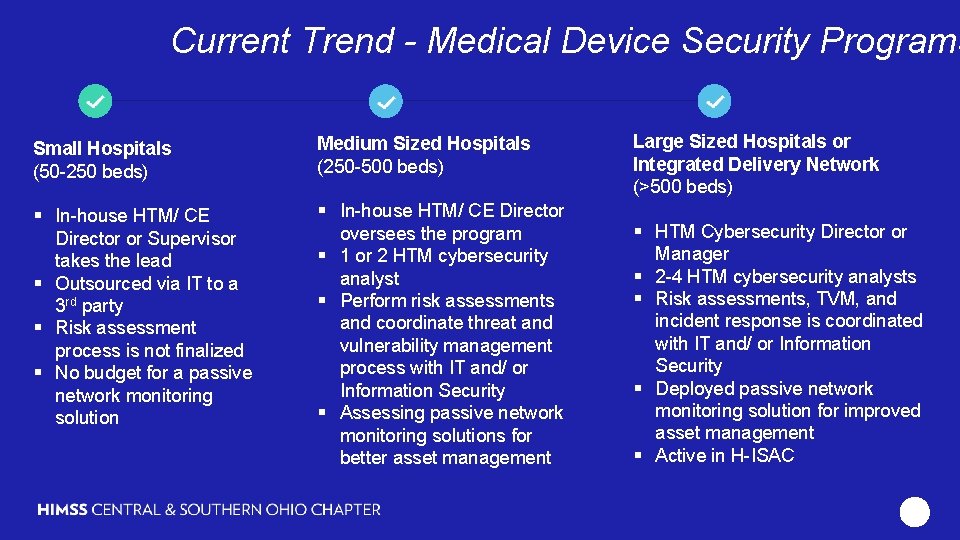
Current Trend - Medical Device Security Programs Using Passive network monitors for real time visibility and security management of medical devices Small Hospitals (50 -250 beds) Medium Sized Hospitals (250 -500 beds) Large Sized Hospitals or Integrated Delivery Network (>500 beds) § In-house HTM/ CE Director or Supervisor takes the lead § Outsourced via IT to a 3 rd party § Risk assessment process is not finalized § No budget for a passive network monitoring solution § In-house HTM/ CE Director oversees the program § 1 or 2 HTM cybersecurity analyst § Perform risk assessments and coordinate threat and vulnerability management process with IT and/ or Information Security § Assessing passive network monitoring solutions for better asset management § HTM Cybersecurity Director or Manager § 2 -4 HTM cybersecurity analysts § Risk assessments, TVM, and incident response is coordinated with IT and/ or Information Security § Deployed passive network monitoring solution for improved asset management § Active in H-ISAC 11
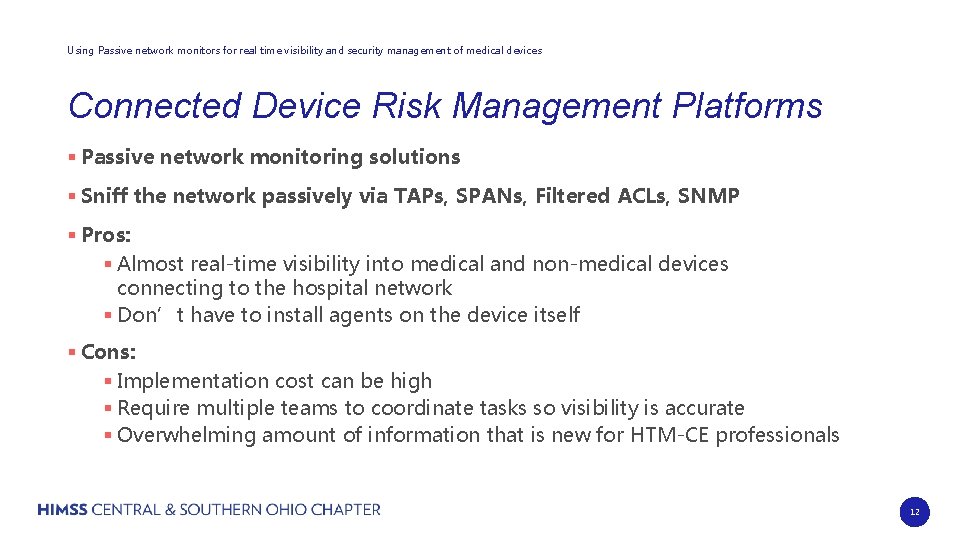
Using Passive network monitors for real time visibility and security management of medical devices Connected Device Risk Management Platforms § Passive network monitoring solutions § Sniff the network passively via TAPs, SPANs, Filtered ACLs, SNMP § Pros: § Almost real-time visibility into medical and non-medical devices connecting to the hospital network § Don’t have to install agents on the device itself § Cons: § Implementation cost can be high § Require multiple teams to coordinate tasks so visibility is accurate § Overwhelming amount of information that is new for HTM-CE professionals 12
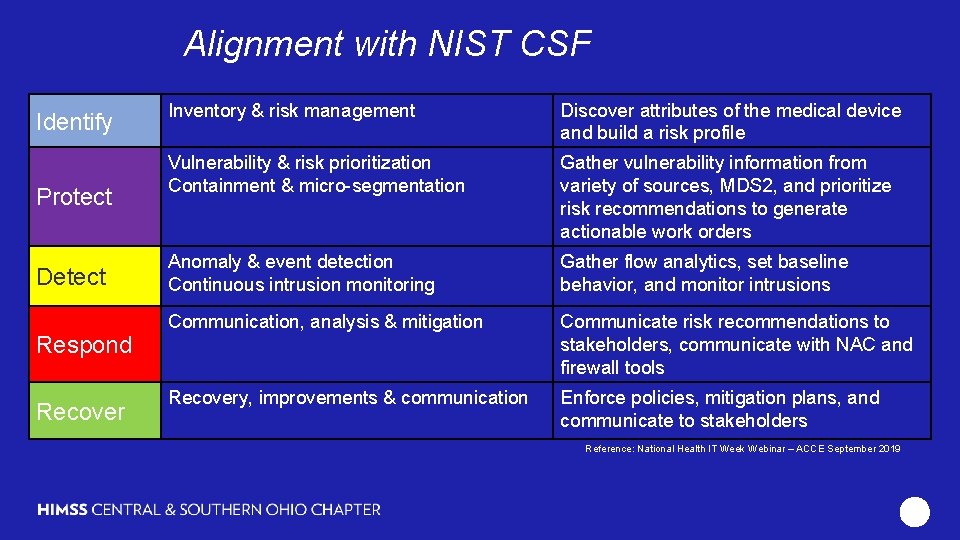
Alignment with NIST CSF Using Passive network monitors for real time visibility and security management of medical devices Identify Protect Detect Respond Recover Inventory & risk management Discover attributes of the medical device and build a risk profile Vulnerability & risk prioritization Containment & micro-segmentation Gather vulnerability information from variety of sources, MDS 2, and prioritize risk recommendations to generate actionable work orders Anomaly & event detection Continuous intrusion monitoring Gather flow analytics, set baseline behavior, and monitor intrusions Communication, analysis & mitigation Communicate risk recommendations to stakeholders, communicate with NAC and firewall tools Recovery, improvements & communication Enforce policies, mitigation plans, and communicate to stakeholders Reference: National Health IT Week Webinar – ACCE September 2019 13
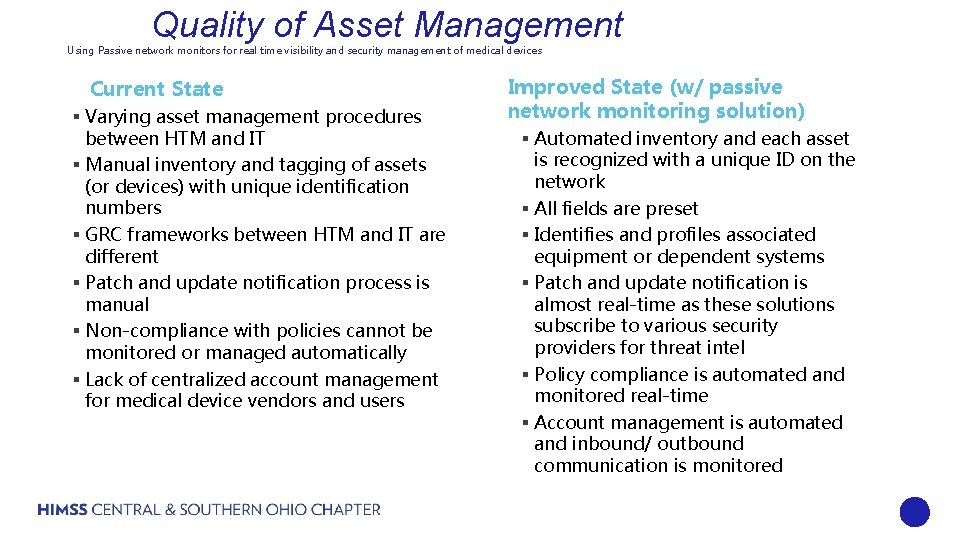
Quality of Asset Management Using Passive network monitors for real time visibility and security management of medical devices Current State § Varying asset management procedures between HTM and IT § Manual inventory and tagging of assets (or devices) with unique identification numbers § GRC frameworks between HTM and IT are different § Patch and update notification process is manual § Non-compliance with policies cannot be monitored or managed automatically § Lack of centralized account management for medical device vendors and users Improved State (w/ passive network monitoring solution) § Automated inventory and each asset is recognized with a unique ID on the network § All fields are preset § Identifies and profiles associated equipment or dependent systems § Patch and update notification is almost real-time as these solutions subscribe to various security providers for threat intel § Policy compliance is automated and monitored real-time § Account management is automated and inbound/ outbound communication is monitored
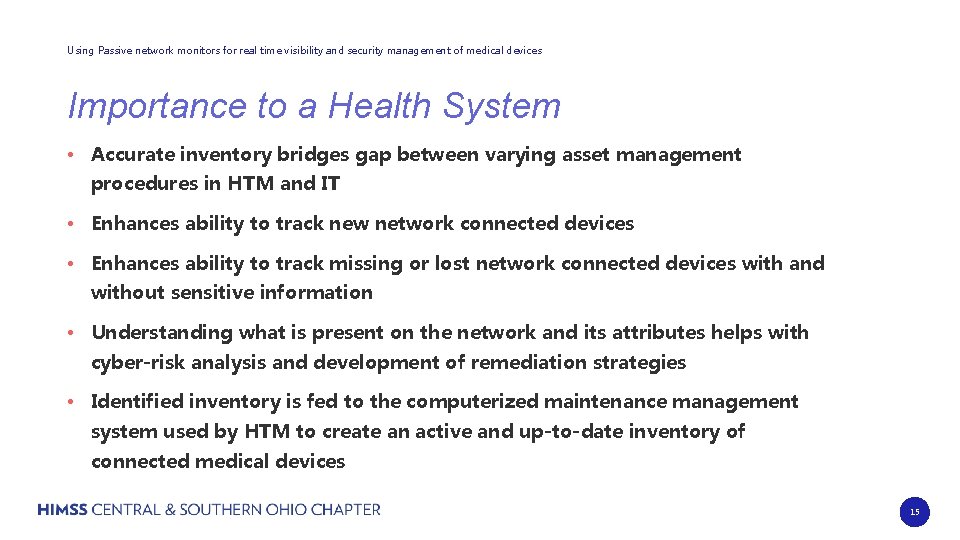
Using Passive network monitors for real time visibility and security management of medical devices Importance to a Health System • Accurate inventory bridges gap between varying asset management procedures in HTM and IT • Enhances ability to track new network connected devices • Enhances ability to track missing or lost network connected devices with and without sensitive information • Understanding what is present on the network and its attributes helps with cyber-risk analysis and development of remediation strategies • Identified inventory is fed to the computerized maintenance management system used by HTM to create an active and up-to-date inventory of connected medical devices 15
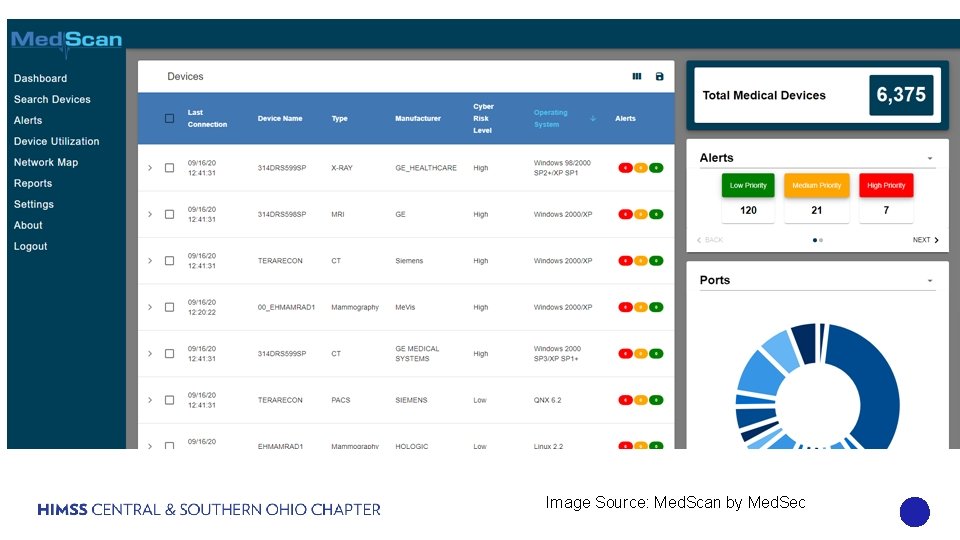
Using Passive network monitors for real time visibility and security management of medical devices Image Source: Med. Scan by Med. Sec
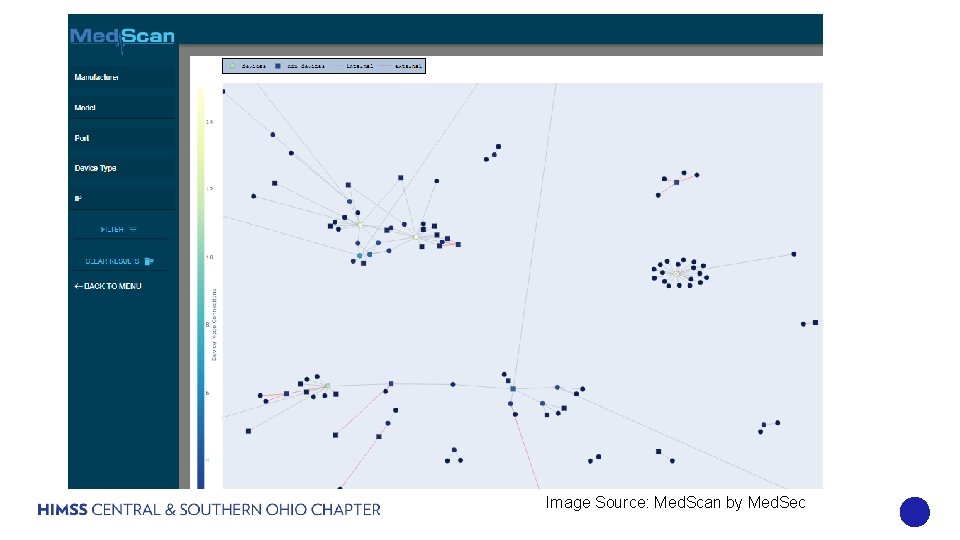
Using Passive network monitors for real time visibility and security management of medical devices Image Source: Med. Scan by Med. Sec
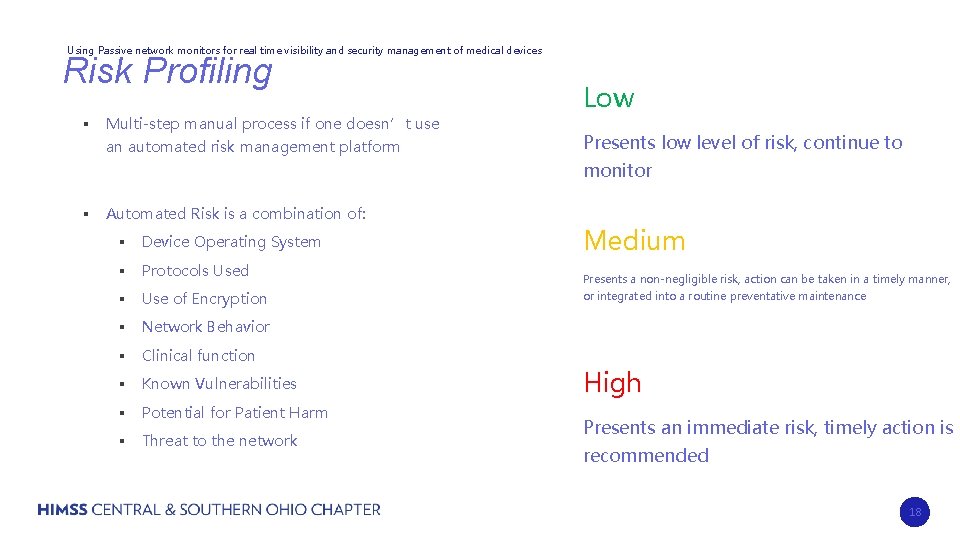
Using Passive network monitors for real time visibility and security management of medical devices Risk Profiling § Multi-step manual process if one doesn’t use an automated risk management platform Low Presents low level of risk, continue to monitor § Automated Risk is a combination of: § Device Operating System § Protocols Used § Use of Encryption Medium Presents a non-negligible risk, action can be taken in a timely manner, or integrated into a routine preventative maintenance § Network Behavior § Clinical function § Known Vulnerabilities § Potential for Patient Harm § Threat to the network High Presents an immediate risk, timely action is recommended 18
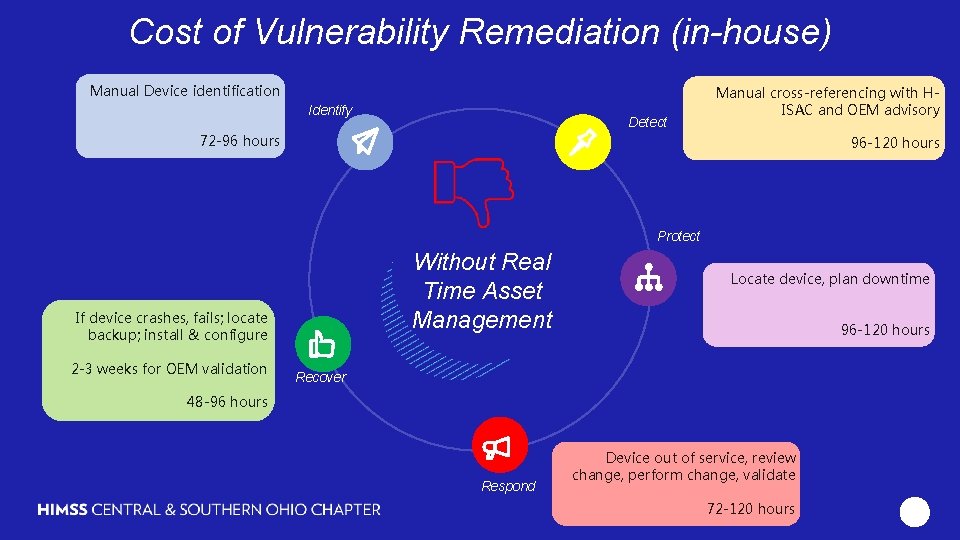
Cost of Vulnerability Remediation (in-house) Using Passive network monitors for real time visibility and security management of medical devices Manual Device identification Identify Detect Manual cross-referencing with HISAC and OEM advisory 72 -96 hours 96 -120 hours Protect Without Real Time Asset Management If device crashes, fails; locate backup; install & configure 2 -3 weeks for OEM validation Locate device, plan downtime 96 -120 hours Recover 48 -96 hours Respond Device out of service, review change, perform change, validate 72 -120 hours 19
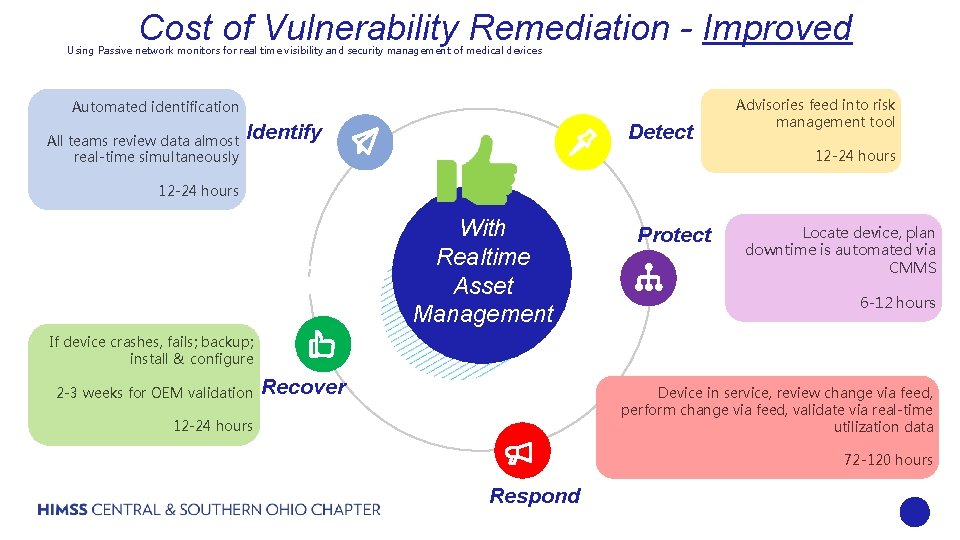
Cost of Vulnerability Remediation - Improved Using Passive network monitors for real time visibility and security management of medical devices Automated identification All teams review data almost real-time simultaneously Detect Identify Advisories feed into risk management tool 12 -24 hours With Realtime Asset Management Protect Locate device, plan downtime is automated via CMMS 6 -12 hours If device crashes, fails; backup; install & configure 2 -3 weeks for OEM validation Recover Device in service, review change via feed, perform change via feed, validate via real-time utilization data 12 -24 hours 72 -120 hours Respond
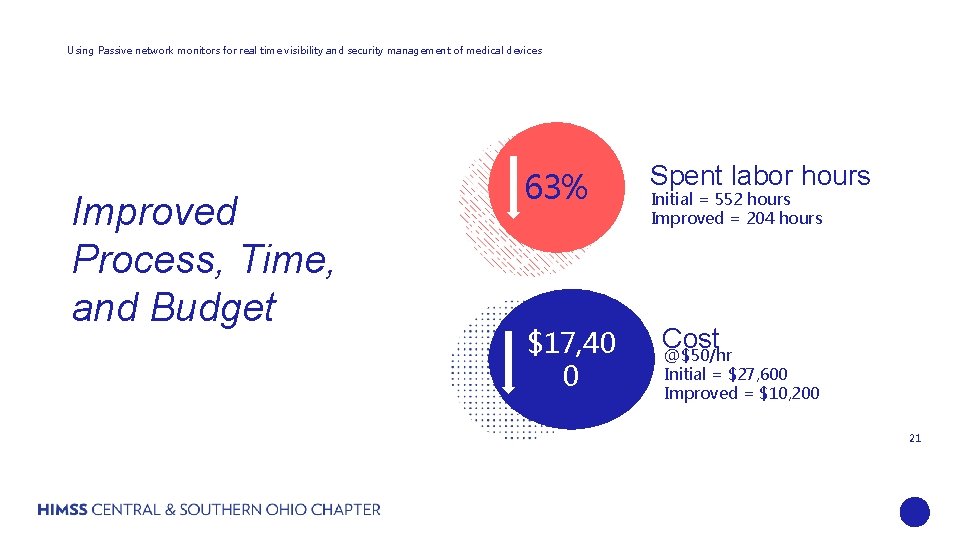
Using Passive network monitors for real time visibility and security management of medical devices Improved Process, Time, and Budget 63% $17, 40 0 Spent labor hours Initial = 552 hours Improved = 204 hours Cost @$50/hr Initial = $27, 600 Improved = $10, 200 21
Using Passive network monitors for real time visibility and security management of medical devices Conclusion - Passive network monitoring for medical devices • Lowers risk through proactive alerting • Saves money by reducing the man-hours associated with inventory, and incident response • Optimizes your defensive strategy by identifying the highest risk devices to protect first • Realtime look into device performance and activity
Using Passive network monitors for real time visibility and security management of medical devices Stephanie Domas Executive Vice President, Med. Sec stephaniedomas@medsec. com 23
- Slides: 23