
Using Neighborhood and Community Data to Promote Health
Using Neighborhood and Community Data to Promote Health Metro Denver Partnership for Health Equity & Climate Summit November 1, 2018
Outline 1. About Shift 2. A Health Equity – SDOH – Data Model 3. The Denver Regional Equity Atlas
who we are PEOPLE, PLACE, AND PURPOSE PEOPLE PLACE PURPOSE We’re focused on forging partnerships Shift’s services and products are all Our easily accessible data and analysis with socials change organizations to purpose-built to serve the seven-county helps our partners take on the most create lasting impact for low-income Denver metro region. pervasive social issues with confidence, children and families clarity and empathy. 3 

our work ISSUE AREAS 4
A Health Equity SDOH Platform WHO IT IS INTENDED TO SERVE MAKING THE CASE: SUPPORT THE USERS AND KNOW THE AUDIENCE • Funder – The Colorado Trust • Users – Public health professionals, human services agencies, and nonprofits • Audience – Anyone who is in a position of power to address an inequity in a community 5

Health Equity Framework THE APPROACH – SDOH AND STRUCTURAL FACTORS DOWNSTREAM UPSTREAM SOCIAL INEQUITIES INSTITUTIONAL INEQUITIES Class Race/Ethnicity Gender Sexual Orientation Corporations & Businesses Government Agencies Schools Laws & Regulations Not-for-Profit Organizations LIVING CONDITIONS Physical Environment Land Use Transportation Residential Segregation Exposure to Toxins Economic & Work Environment Employment Income Retail Businesses Occupational Hazards Social Environment Experience of Class, Racism, Gender, Immigration Culture – Ads – Media Violence Service Environment Health Care Education Social Services RISK BEHAVIORS Smoking Poor Nutrition Low Physical Activity Violence Alcohol & Other Drugs Sexual Behavior DISEASE & INJURY MORTALITY Infant Mortality Communicable Life Expectancy Disease Chronic Disease Injury (Intentional & Unintentional) 6 Source: American Academy of Family Physicians – Center for Diversity and Health Equity
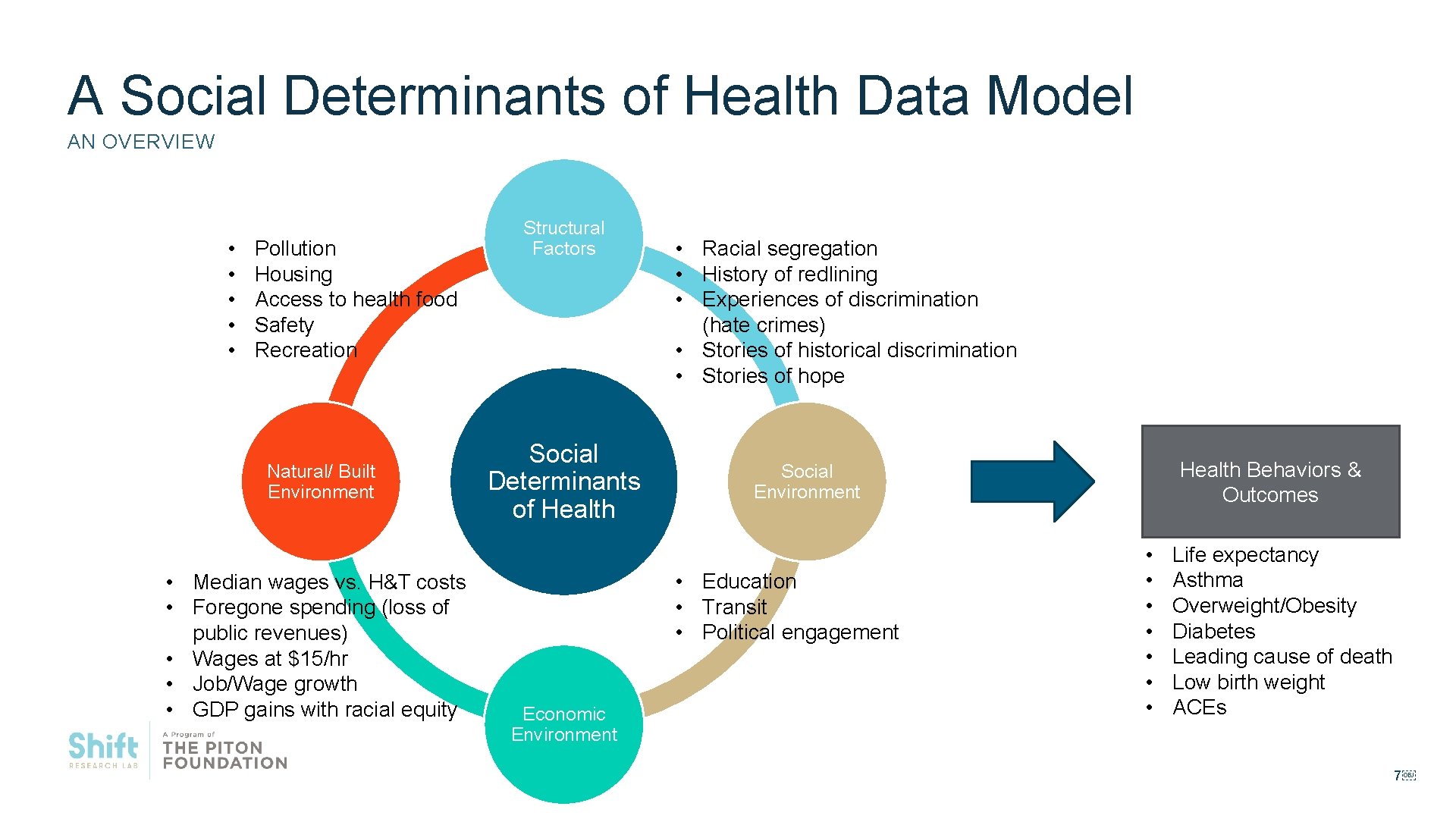
A Social Determinants of Health Data Model AN OVERVIEW • • • Pollution Housing Access to health food Safety Recreation Natural/ Built Environment • Median wages vs. H&T costs • Foregone spending (loss of public revenues) • Wages at $15/hr • Job/Wage growth • GDP gains with racial equity Structural Factors Social Determinants of Health • Racial segregation • History of redlining • Experiences of discrimination (hate crimes) • Stories of historical discrimination • Stories of hope • Education • Transit • Political engagement Economic Environment Health Behaviors & Outcomes Social Environment • • Life expectancy Asthma Overweight/Obesity Diabetes Leading cause of death Low birth weight ACEs 7
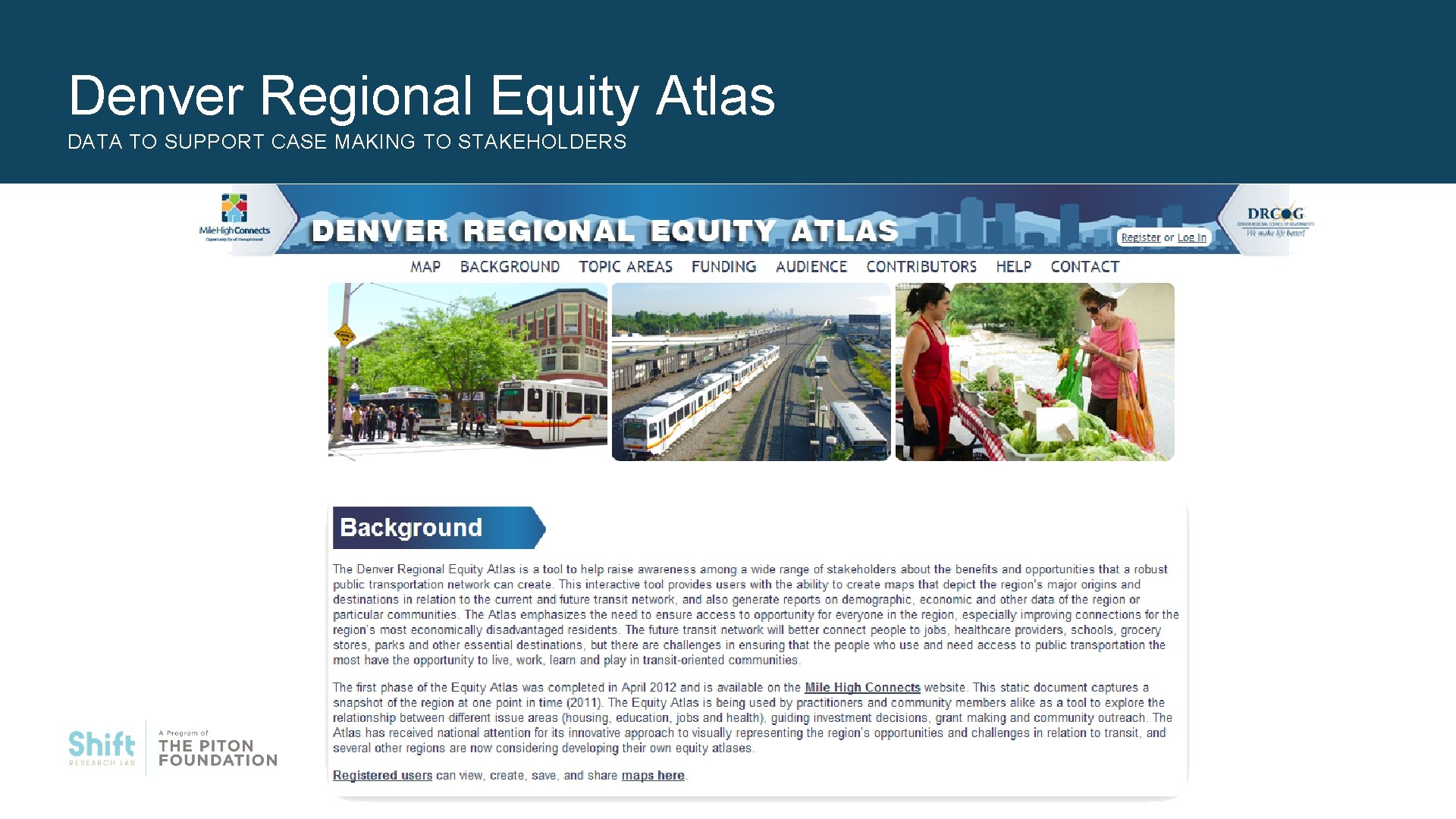
Denver Regional Equity Atlas DATA TO SUPPORT CASE MAKING TO STAKEHOLDERS 8
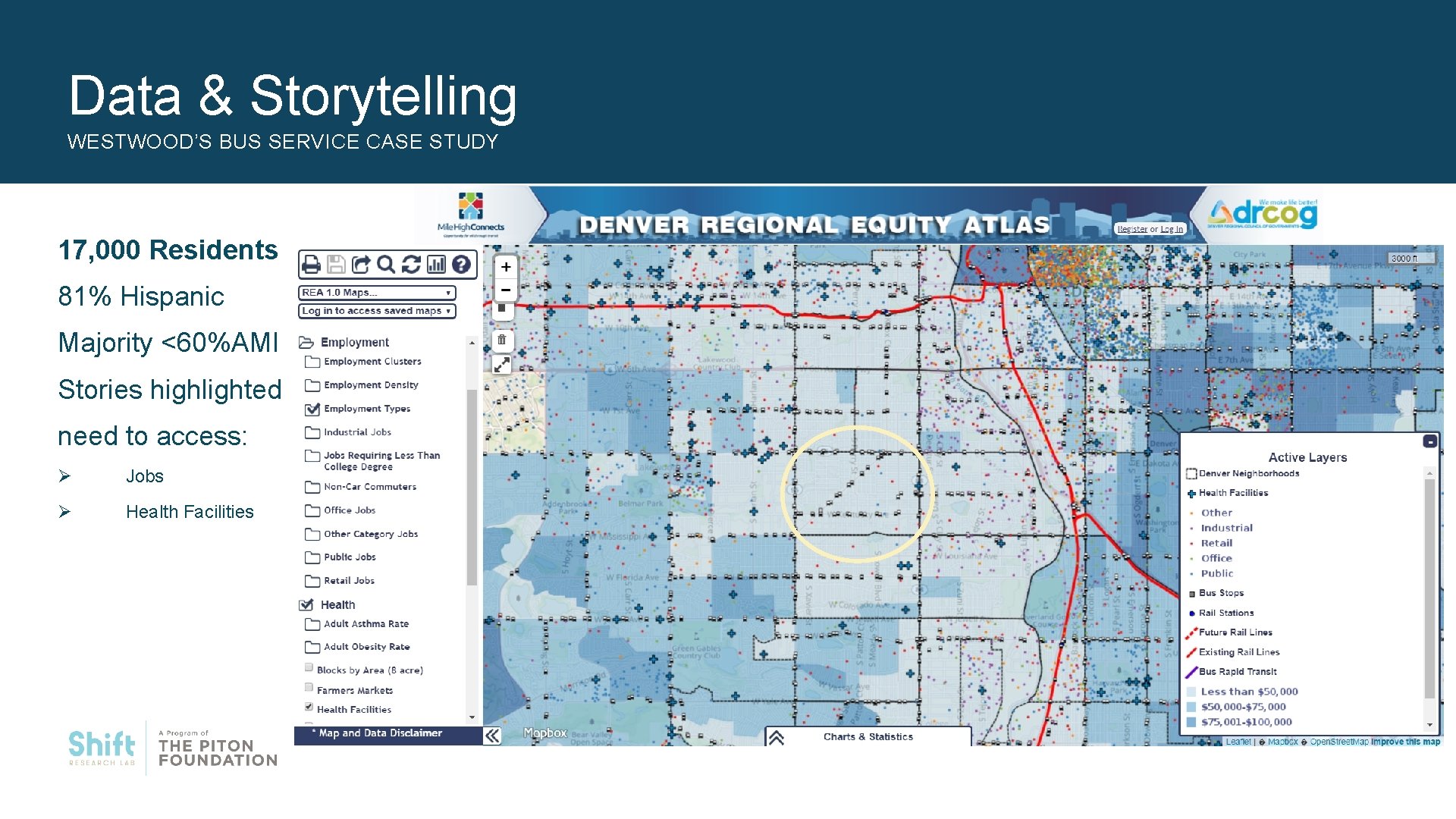
Data & Storytelling WESTWOOD’S BUS SERVICE CASE STUDY 17, 000 Residents 81% Hispanic Majority <60%AMI Stories highlighted need to access: Ø Jobs Ø Health Facilities 9
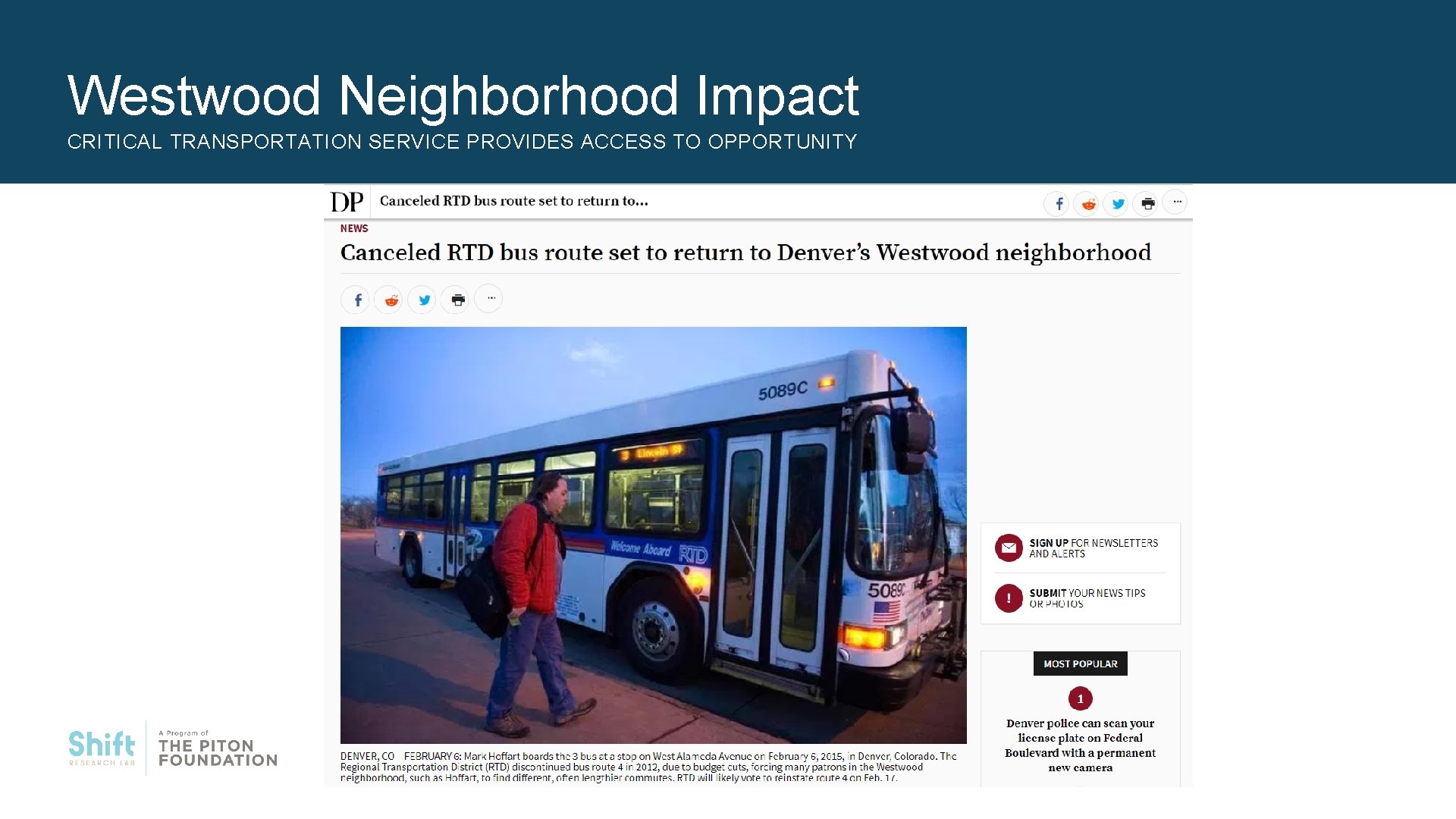
Westwood Neighborhood Impact CRITICAL TRANSPORTATION SERVICE PROVIDES ACCESS TO OPPORTUNITY 10
Upcoming Work REA 3. 0 A Health Equity SDOH Platform Ø Will support the rebuilding of the Denver Regional Equity Atlas Ø Timeline: 2019 discovery and development – 2020 launch Key Differences? Ø Integrating stories and narrative back that were lost from the 1. 0 version Ø Activating a broader base (beyond MHC) to hopefully understand other facets of impact in communities 11

stay in touch Jennifer Newcomer jnewcomer@garycommunity. org 303 -454 -3776 join our mailing list Stay up to date on the latest from Shift Research Lab follow us for more information visit SHIFTRESEARCHLAB. ORG 12

Thank You
- Slides: 13