
Using Mitigation Planning to Reduce Disaster Losses Karen
- Slides: 30
Using Mitigation Planning to Reduce Disaster Losses Karen Helbrecht and Kathleen W. Smith United States: Federal Emergency Management Agency (FEMA) May 7, 2008
Evolution of Hazard Mitigation Large Structural Projects § Traditional response to floods § Focused on levees, dams, and stream diversions § Flood victims received disaster relief § Traditional approach did not: – discourage unwise development – promote sound floodplain management
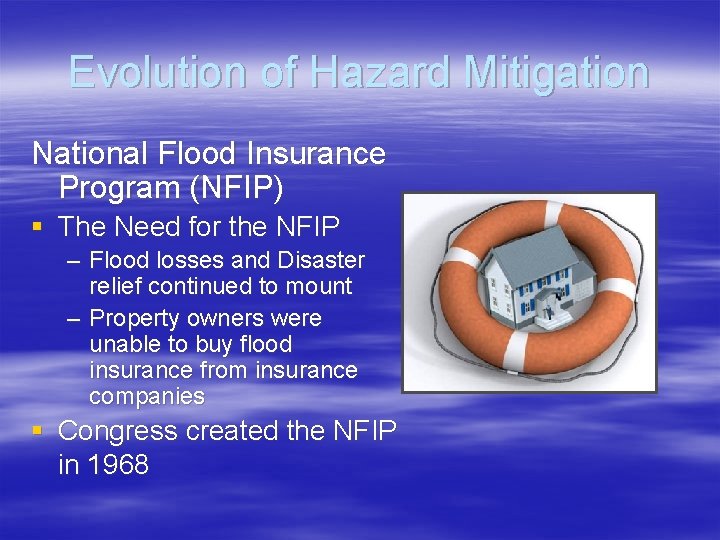
Evolution of Hazard Mitigation National Flood Insurance Program (NFIP) § The Need for the NFIP – Flood losses and Disaster relief continued to mount – Property owners were unable to buy flood insurance from insurance companies § Congress created the NFIP in 1968
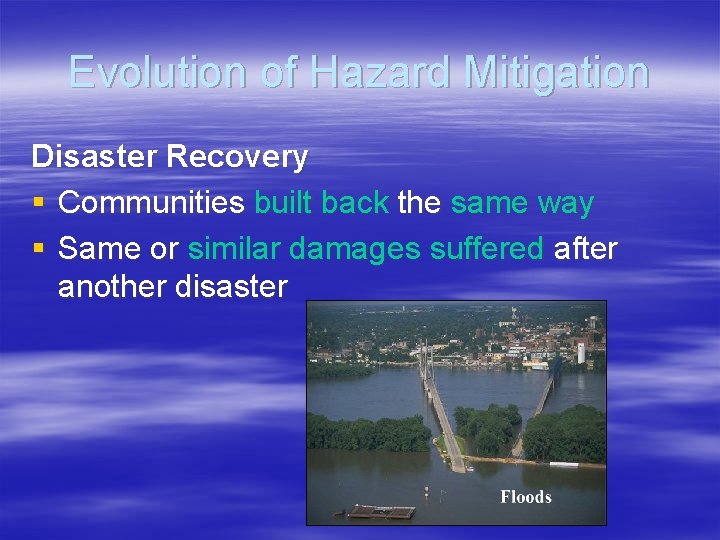
Evolution of Hazard Mitigation Disaster Recovery § Communities built back the same way § Same or similar damages suffered after another disaster
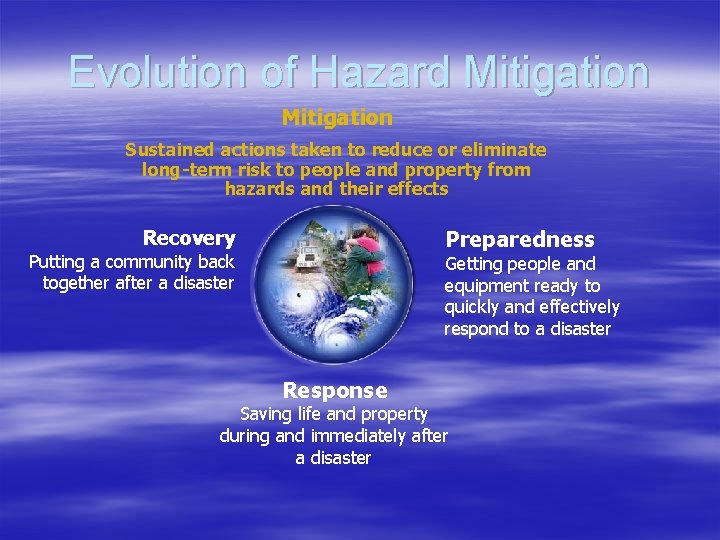
Evolution of Hazard Mitigation Sustained actions taken to reduce or eliminate long-term risk to people and property from hazards and their effects Preparedness Recovery Putting a community back together after a disaster Getting people and equipment ready to quickly and effectively respond to a disaster Response Saving life and property during and immediately after a disaster
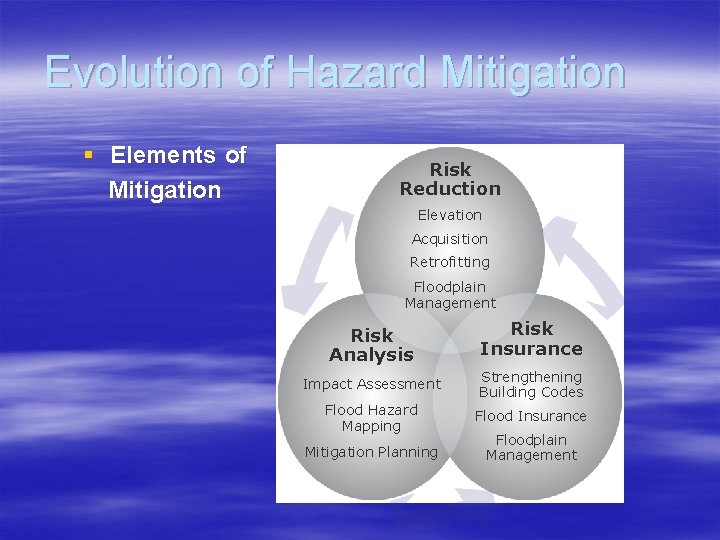
Evolution of Hazard Mitigation § Elements of Mitigation Risk Reduction Elevation Acquisition Retrofitting Floodplain Management Risk Analysis Risk Insurance Impact Assessment Strengthening Building Codes Flood Hazard Mapping Flood Insurance Mitigation Planning Floodplain Management
Hazard Mitigation Planning § Disaster Mitigation Act of 2000 – Places new importance on mitigation planning – National guidelines for planning – Promotes sustainability as a strategy for disaster resistance
Mitigation Plans § Encourage sound decision-making based on a good understanding of hazards and vulnerabilities of the community § States must have an approved mitigation plan to receive non-emergency disaster assistance § Communities must have an approved local hazard mitigation plan in place to be eligible for project grants under FEMA’s mitigation grant programs
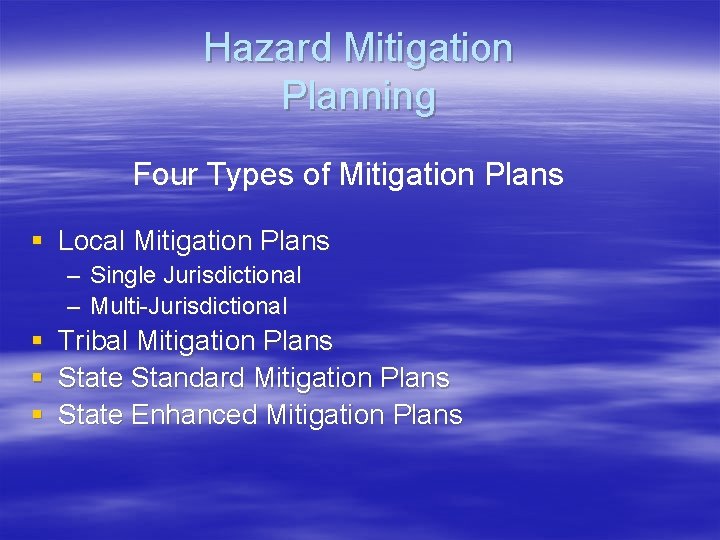
Hazard Mitigation Planning Four Types of Mitigation Plans § Local Mitigation Plans – Single Jurisdictional – Multi-Jurisdictional § § § Tribal Mitigation Plans State Standard Mitigation Plans State Enhanced Mitigation Plans
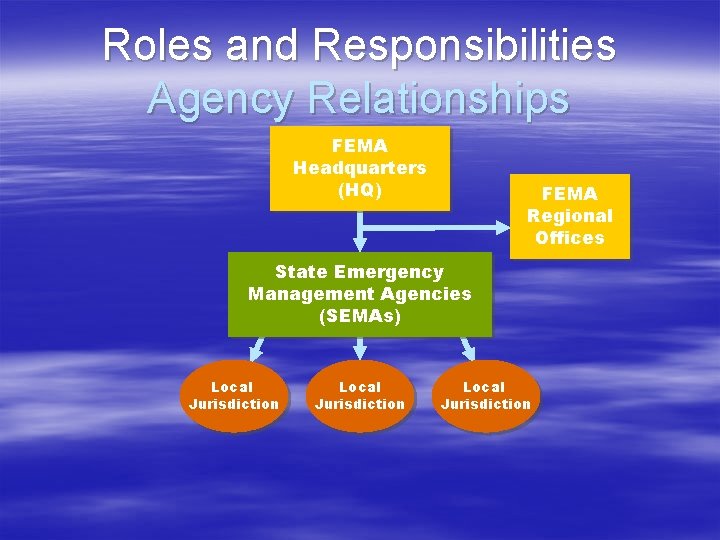
Roles and Responsibilities Agency Relationships FEMA Headquarters (HQ) FEMA Regional Offices State Emergency Management Agencies (SEMAs) Local Jurisdiction
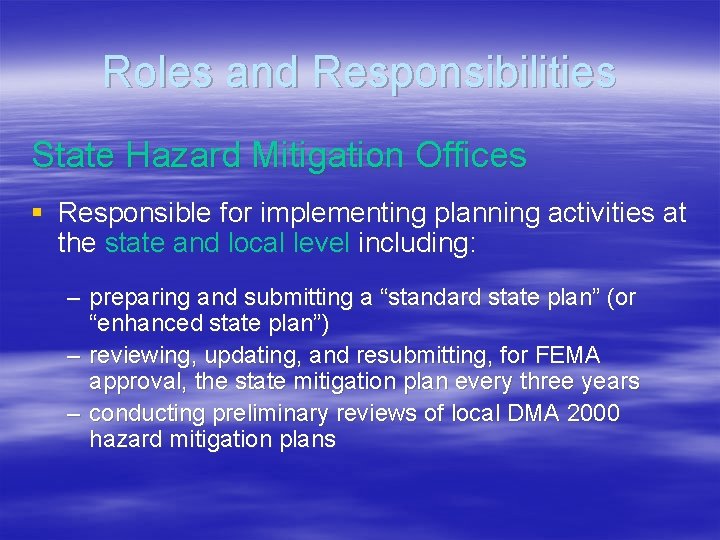
Roles and Responsibilities State Hazard Mitigation Offices § Responsible for implementing planning activities at the state and local level including: – preparing and submitting a “standard state plan” (or “enhanced state plan”) – reviewing, updating, and resubmitting, for FEMA approval, the state mitigation plan every three years – conducting preliminary reviews of local DMA 2000 hazard mitigation plans
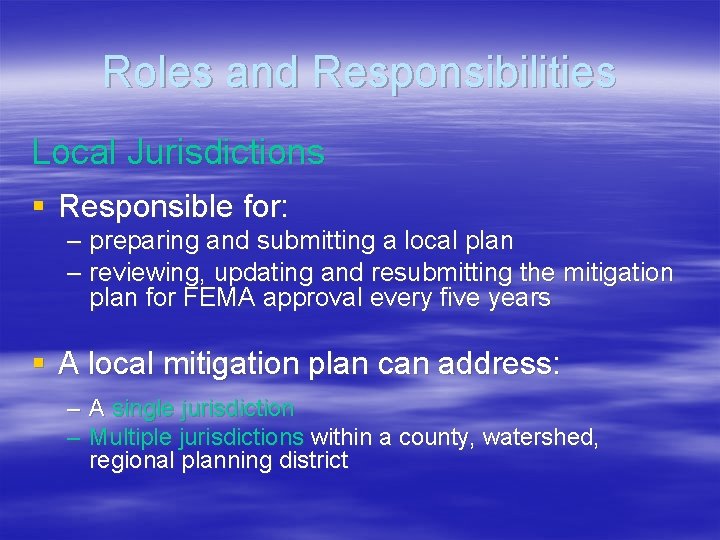
Roles and Responsibilities Local Jurisdictions § Responsible for: – preparing and submitting a local plan – reviewing, updating and resubmitting the mitigation plan for FEMA approval every five years § A local mitigation plan can address: – A single jurisdiction – Multiple jurisdictions within a county, watershed, regional planning district
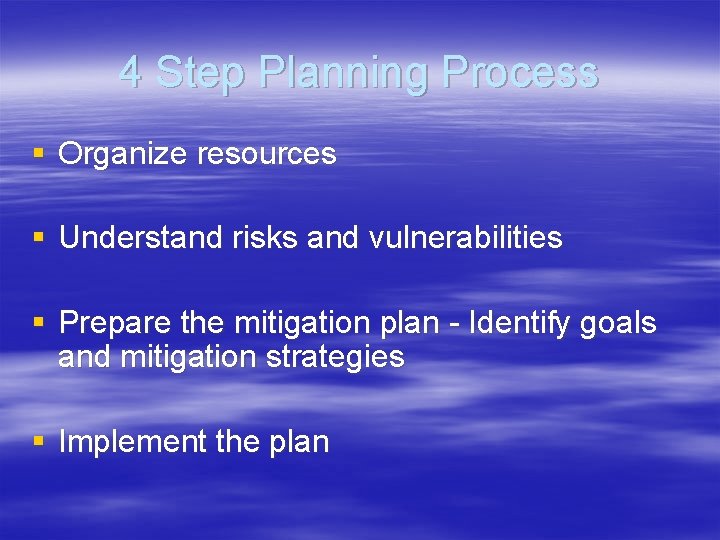
4 Step Planning Process § Organize resources § Understand risks and vulnerabilities § Prepare the mitigation plan - Identify goals and mitigation strategies § Implement the plan
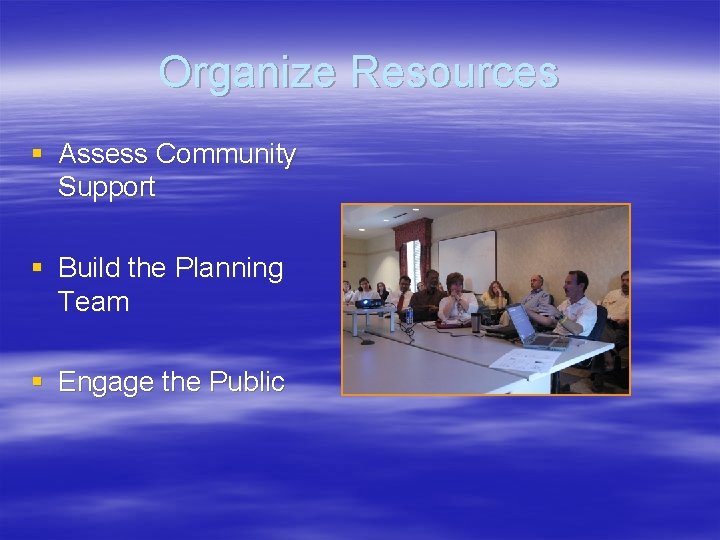
Organize Resources § Assess Community Support § Build the Planning Team § Engage the Public
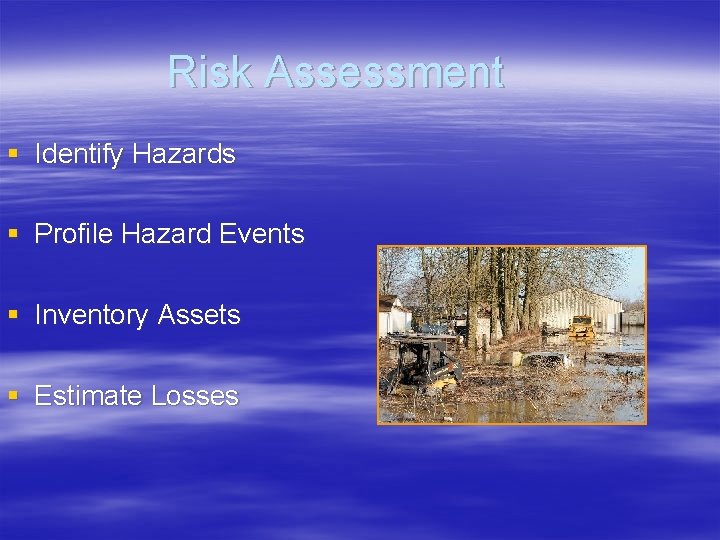
Risk Assessment § Identify Hazards § Profile Hazard Events § Inventory Assets § Estimate Losses
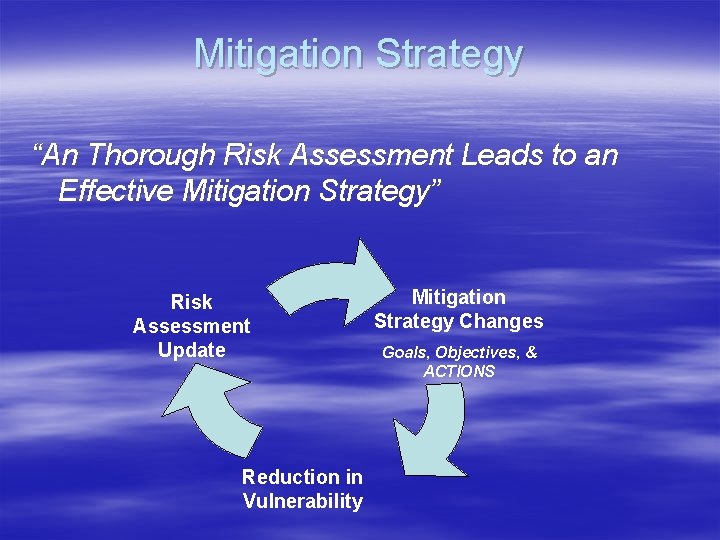
Mitigation Strategy “An Thorough Risk Assessment Leads to an Effective Mitigation Strategy” Risk Assessment Update Reduction in Vulnerability Mitigation Strategy Changes Goals, Objectives, & ACTIONS
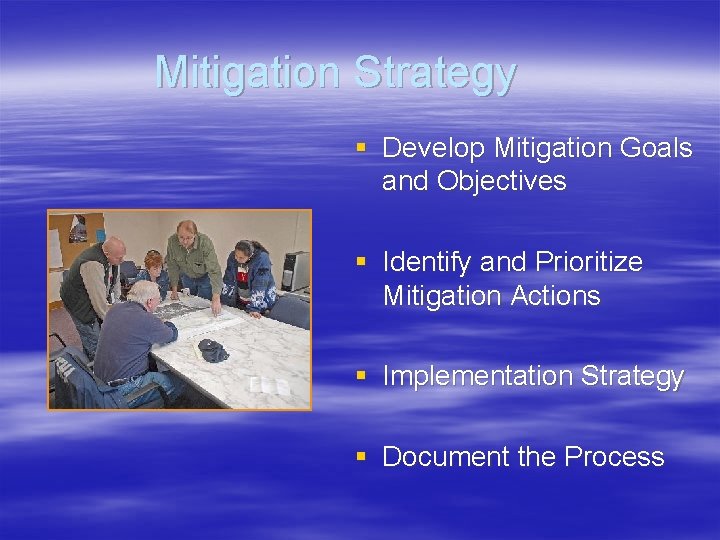
Mitigation Strategy § Develop Mitigation Goals and Objectives § Identify and Prioritize Mitigation Actions § Implementation Strategy § Document the Process
Bringing the Plan to Life § Adopt the mitigation plan § Implement the plan recommendations § Evaluate planning results § Revise and update the plan
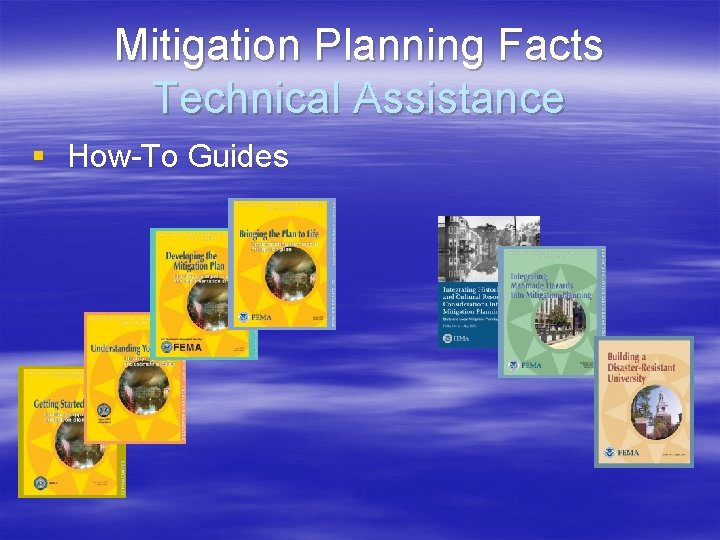
Mitigation Planning Facts Technical Assistance § How-To Guides
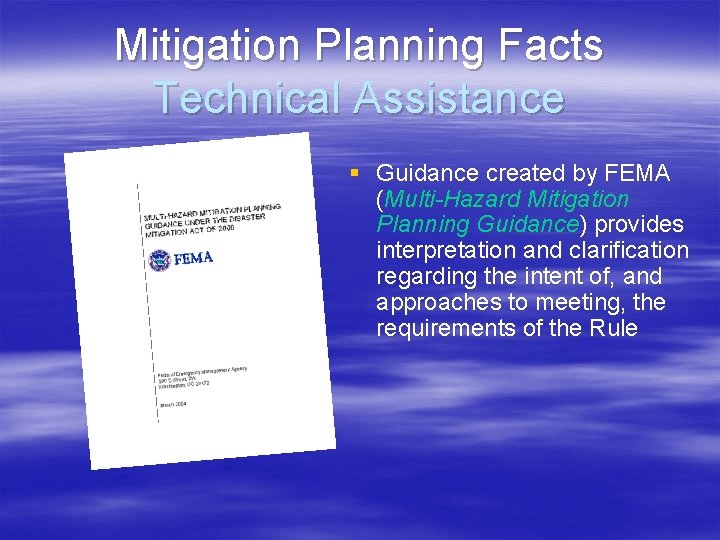
Mitigation Planning Facts Technical Assistance § Guidance created by FEMA (Multi-Hazard Mitigation Planning Guidance) provides interpretation and clarification regarding the intent of, and approaches to meeting, the requirements of the Rule
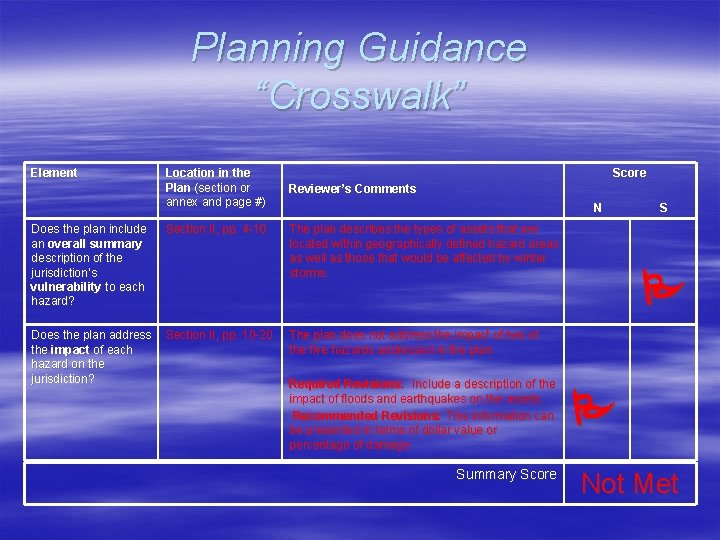
Planning Guidance “Crosswalk” Element Location in the Plan (section or annex and page #) Does the plan include an overall summary description of the jurisdiction’s vulnerability to each hazard? Section II, pp. 4 -10 Does the plan address the impact of each hazard on the jurisdiction? Section II, pp. 10 -20 Score Reviewer’s Comments N The plan describes the types of assets that are located within geographically defined hazard areas as well as those that would be affected by winter storms. S The plan does not address the impact of two of the five hazards addressed in the plan. Required Revisions: Include a description of the impact of floods and earthquakes on the assets. Recommended Revisions: This information can be presented in terms of dollar value or percentage of damage. Summary Score Not Met
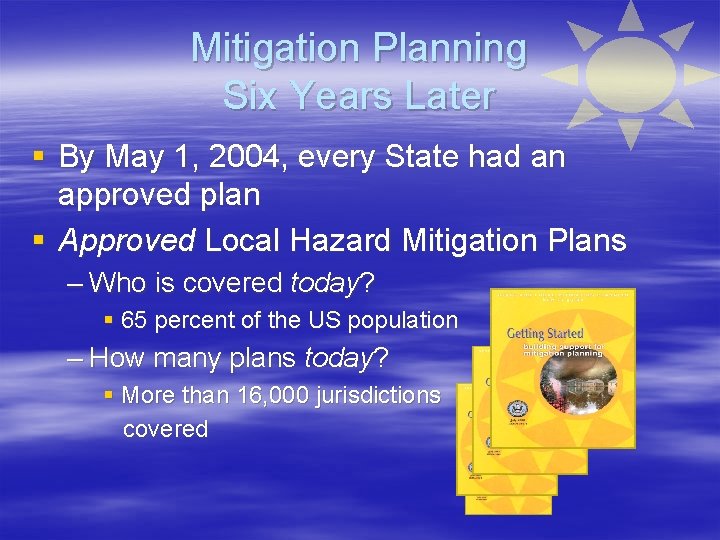
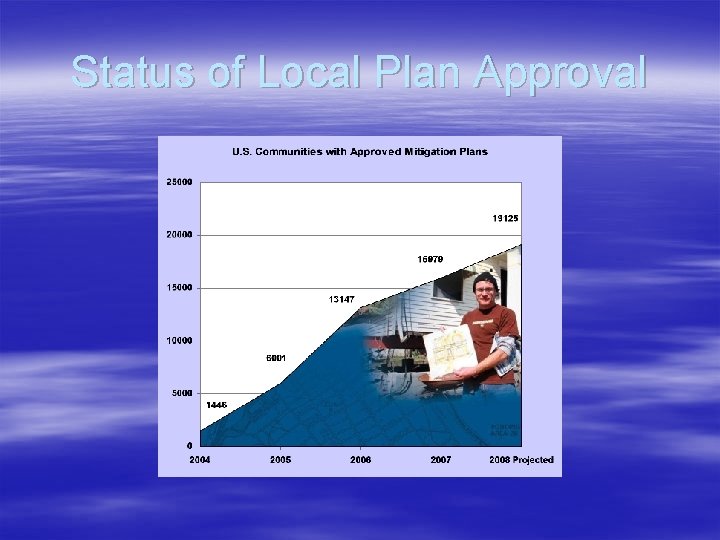
Mitigation Planning Six Years Later § By May 1, 2004, every State had an approved plan § Approved Local Hazard Mitigation Plans – Who is covered today? § 65 percent of the US population – How many plans today? § More than 16, 000 jurisdictions covered
Status of Local Plan Approval
Challenges and Opportunities § § § Stay engaged in the planning process Different cultural perspectives Range of capabilities
Challenges and Opportunities § Emergency Managers vs Community Planners § Integration and consistency of plans § Accuracy of risk assessment data
Challenges and Opportunities § Mitigation Actions vs. Response Actions § Think “Outside of the Box” § To Accomplish Other Local Goals § Other Funding Sources § Identify a comprehensive range of Actions
Challenges and Opportunities § Incorporation of Mitigation Planning into Other Planning Mechanisms § Analyzing Growth & Development Trends § Increasing involvement of city officials and the public
Challenges and Opportunities § Risk Assessment – Ensuring that best available data is used in developing the plan – Incorporate any new Scientific Data on Hazards – Incorporate updated loss estimates
What We’ve Learned § Be more specific in guidance – “What’s the Bottom Line? ” § § § Provide web resources Provide more guidance and tools And we’re still learning…
Where do we go from here? § How can we demonstrate effectiveness of plans? – Document actual reduction in damages – Demonstrate continuous improvement in the planning process