
Using Miscue Analysis to Improve Reading English Conference

- Slides: 10
Using Miscue Analysis to Improve Reading English Conference: The Reading Curriculum 9 February 2015 Facilitator: Gillian Edwards
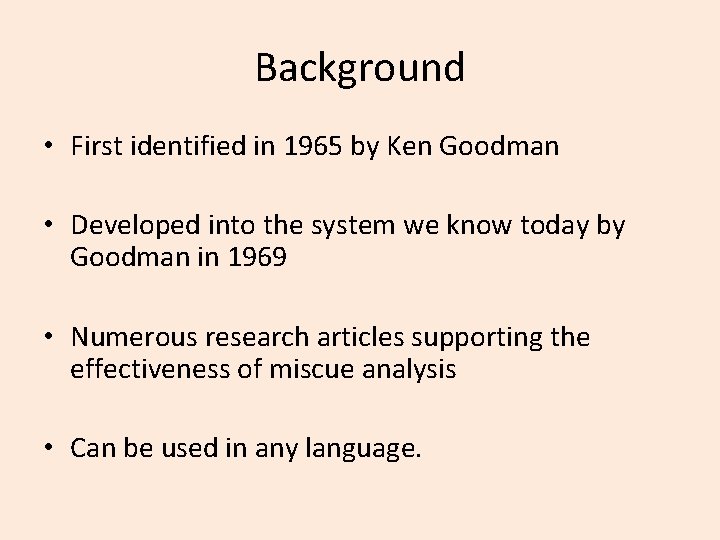
Background • First identified in 1965 by Ken Goodman • Developed into the system we know today by Goodman in 1969 • Numerous research articles supporting the effectiveness of miscue analysis • Can be used in any language.
What is Miscue Analysis? Miscue analysis is a tool for looking closely at the types of reading strategies a reader uses. The kinds of miscues (incorrect guesses) a reader makes when reading from a text will give the listener clues about how familiar or unfamiliar the reader finds the content matter, and how easy or difficult they find the text to read. Reading tests do not give this sort of information because reading is so much more than just looking closely at each letter and every word.
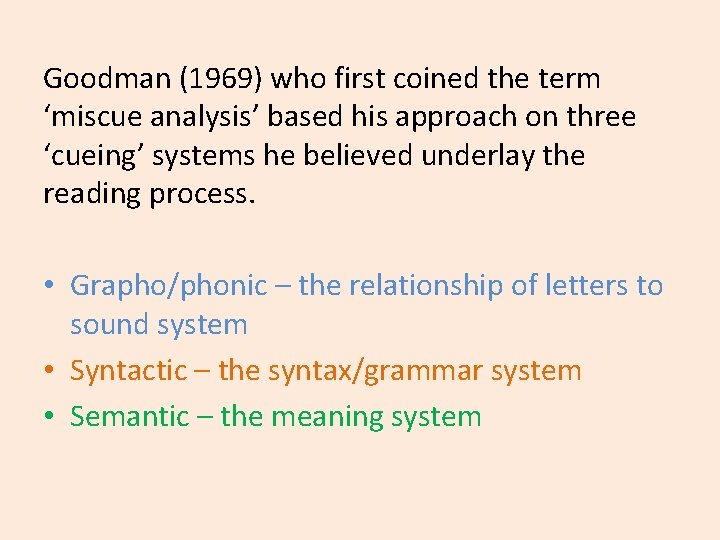
Goodman (1969) who first coined the term ‘miscue analysis’ based his approach on three ‘cueing’ systems he believed underlay the reading process. • Grapho/phonic – the relationship of letters to sound system • Syntactic – the syntax/grammar system • Semantic – the meaning system
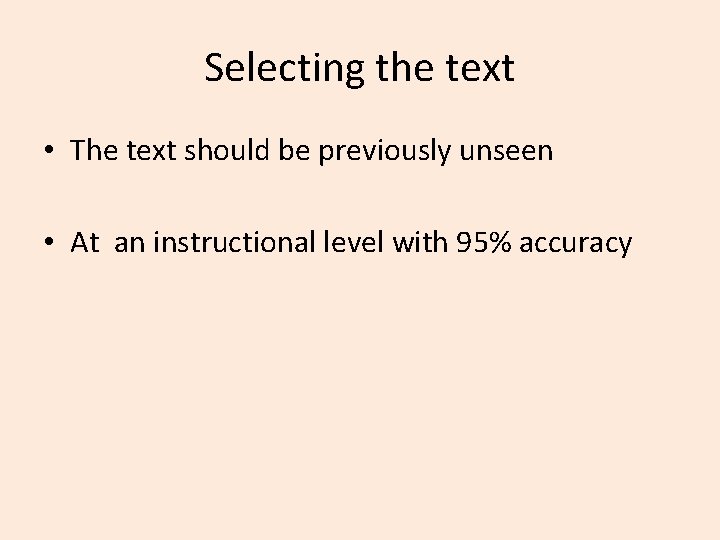
Selecting the text • The text should be previously unseen • At an instructional level with 95% accuracy
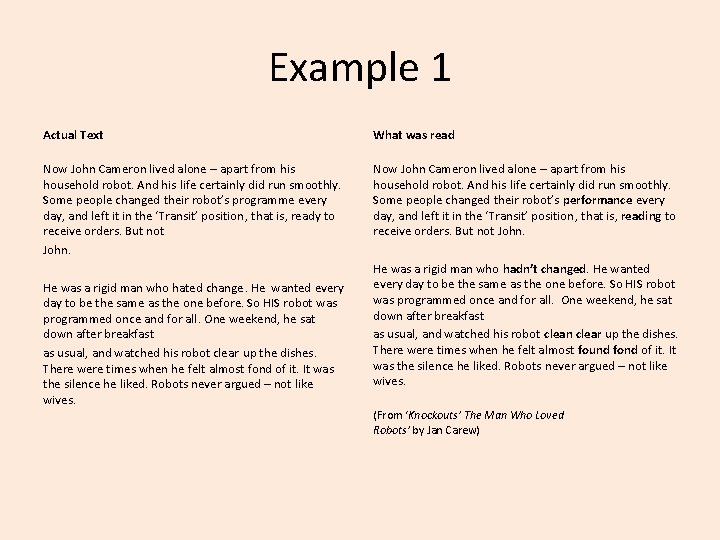
Example 1 Actual Text What was read Now John Cameron lived alone – apart from his household robot. And his life certainly did run smoothly. Some people changed their robot’s programme every day, and left it in the ‘Transit’ position , that is, ready to receive orders. But not John. Now John Cameron lived alone – apart from his household robot. And his life certainly did run smoothly. Some people changed their robot’s performance every day, and left it in the ‘Transit’ position , that is, reading to receive orders. But not John. He was a rigid man who hated change. He wanted every day to be the same as the one before. So HIS robot was programmed once and for all. One weekend, he sat down after breakfast as usual, and watched his robot clear up the dishes. There were times when he felt almost fond of it. It was the silence he liked. Robots never argued – not like wives. He was a rigid man who hadn’t changed. He wanted every day to be the same as the one before. So HIS robot was programmed once and for all. One weekend, he sat down after breakfast as usual, and watched his robot clean clear up the dishes. There were times when he felt almost found fond of it. It was the silence he liked. Robots never argued – not like wives. (From ‘Knockouts’ The Man Who Loved Robots’ by Jan Carew)
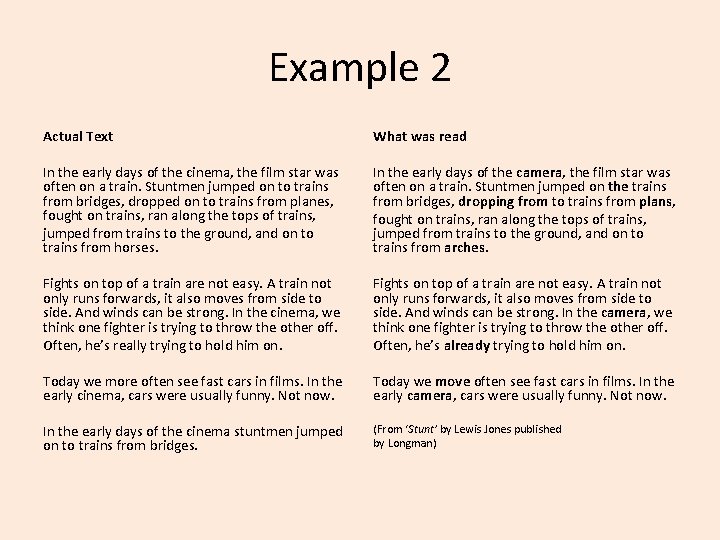
Example 2 Actual Text What was read In the early days of the cinema, the film star was often on a train. Stuntmen jumped on to trains from bridges, dropped on to trains from planes, fought on trains, ran along the tops of trains, jumped from trains to the ground, and on to trains from horses. In the early days of the camera, the film star was often on a train. Stuntmen jumped on the trains from bridges, dropping from to trains from plans, fought on trains, ran along the tops of trains, jumped from trains to the ground, and on to trains from arches. Fights on top of a train are not easy. A train not only runs forwards, it also moves from side to side. And winds can be strong. In the cinema, we think one fighter is trying to throw the other off. Often, he’s really trying to hold him on. Fights on top of a train are not easy. A train not only runs forwards, it also moves from side to side. And winds can be strong. In the camera, we think one fighter is trying to throw the other off. Often, he’s already trying to hold him on. Today we more often see fast cars in films. In the early cinema, cars were usually funny. Not now. Today we move often see fast cars in films. In the early camera, cars were usually funny. Not now. In the early days of the cinema stuntmen jumped on to trains from bridges. (From ‘Stunt’ by Lewis Jones published by Longman)
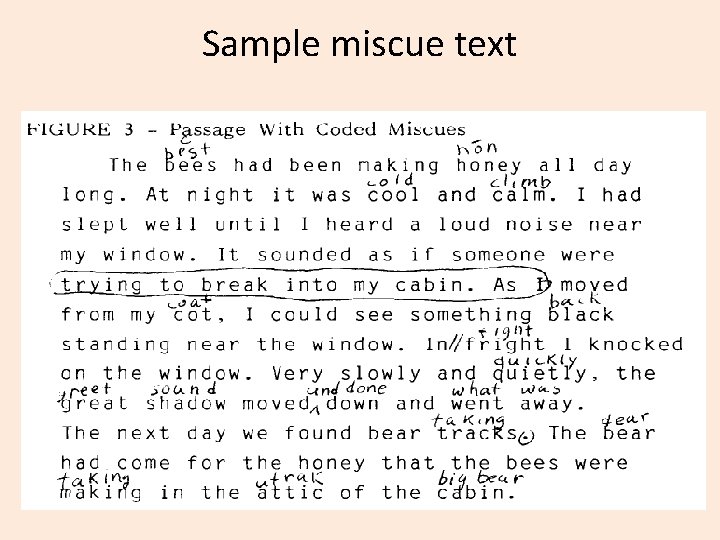
Sample miscue text
Fixing the miscues • Now you know what the miscues are how do you fix them? • Need to identify one or two key miscues to focus on initially and build on these as the learner becomes more confident.
Examples • Developing reading for meaning • Teach decoding strategies e. g. sound/letter patterns, syllables, suffixes • Identification of key parts of the text • Scanning and skimming • Develop grapho/phonic knowledge • Develop sight word knowledge