
Using MICROWAVE REACTOR Krystyna R Brzezinska Materials Research
Using MICROWAVE REACTOR Krystyna R. Brzezinska Materials Research Laboratory
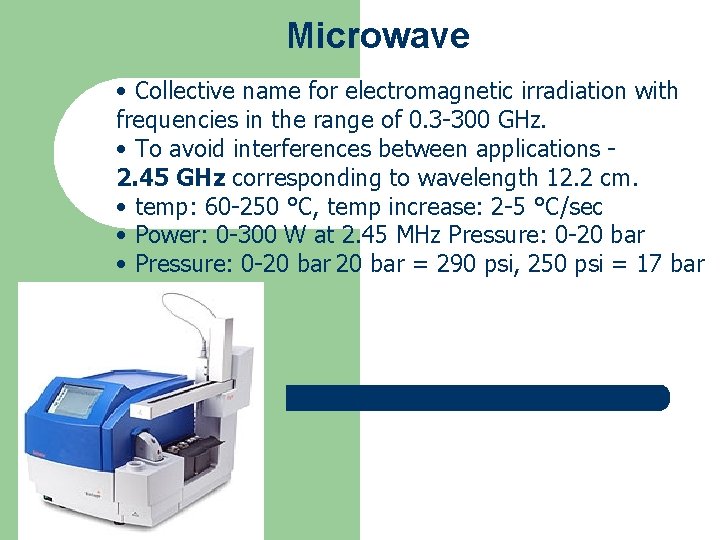
Microwave • Collective name for electromagnetic irradiation with frequencies in the range of 0. 3 -300 GHz. • To avoid interferences between applications 2. 45 GHz corresponding to wavelength 12. 2 cm. • temp: 60 -250 °C, temp increase: 2 -5 °C/sec • Power: 0 -300 W at 2. 45 MHz Pressure: 0 -20 bar • Pressure: 0 -20 bar = 290 psi, 250 psi = 17 bar
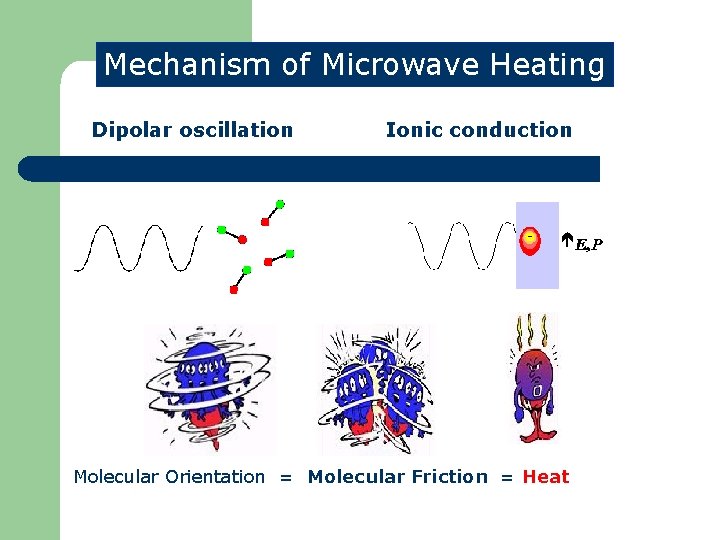
Mechanism of Microwave Heating Dipolar oscillation Ionic conduction Molecular Orientation = Molecular Friction = Heat
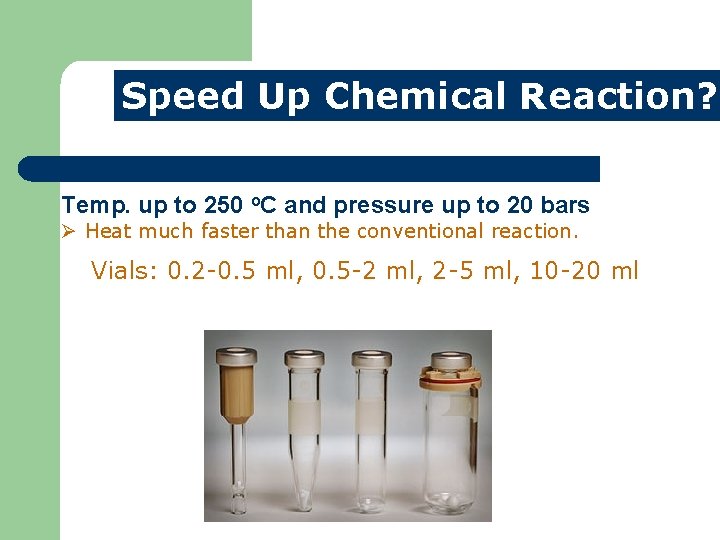
Speed Up Chemical Reaction? Temp. up to 250 o. C and pressure up to 20 bars Ø Heat much faster than the conventional reaction. Vials: 0. 2 -0. 5 ml, 0. 5 -2 ml, 2 -5 ml, 10 -20 ml
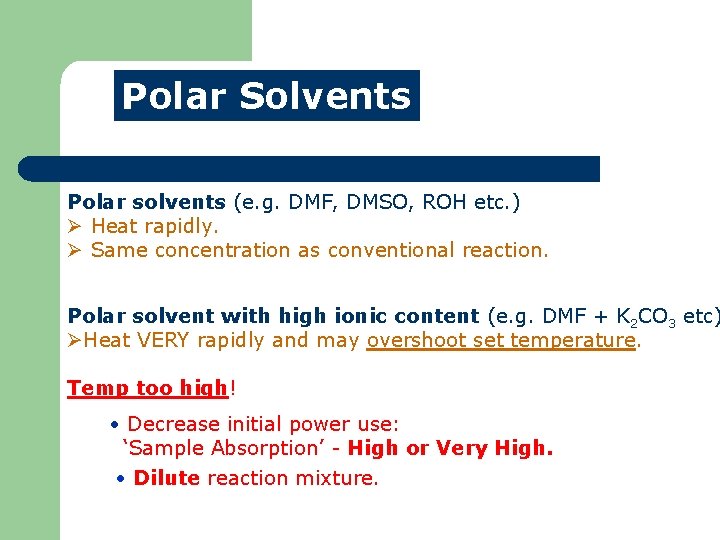
Polar Solvents Polar solvents (e. g. DMF, DMSO, ROH etc. ) Ø Heat rapidly. Ø Same concentration as conventional reaction. Polar solvent with high ionic content (e. g. DMF + K 2 CO 3 etc) ØHeat VERY rapidly and may overshoot set temperature. Temp too high! • Decrease initial power use: ‘Sample Absorption’ - High or Very High. • Dilute reaction mixture.
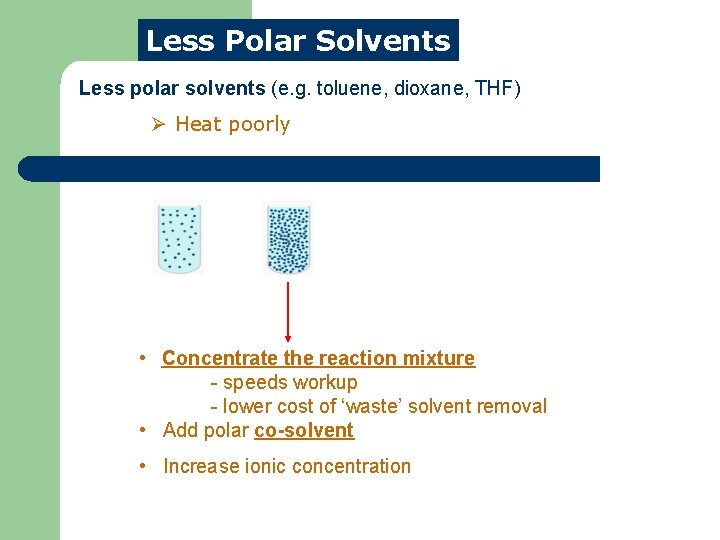
Less Polar Solvents Less polar solvents (e. g. toluene, dioxane, THF) Ø Heat poorly • Concentrate the reaction mixture - speeds workup - lower cost of ‘waste’ solvent removal • Add polar co-solvent • Increase ionic concentration
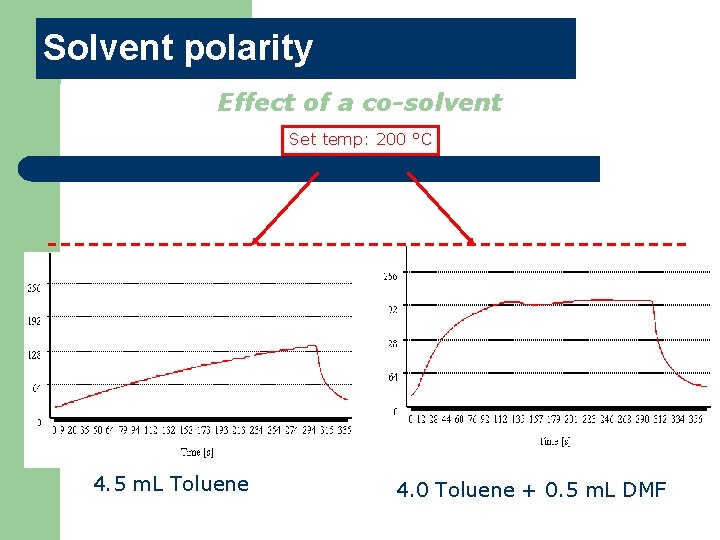
Solvent polarity Effect of a co-solvent Set temp: 200 °C 4. 5 m. L Toluene 4. 0 Toluene + 0. 5 m. L DMF
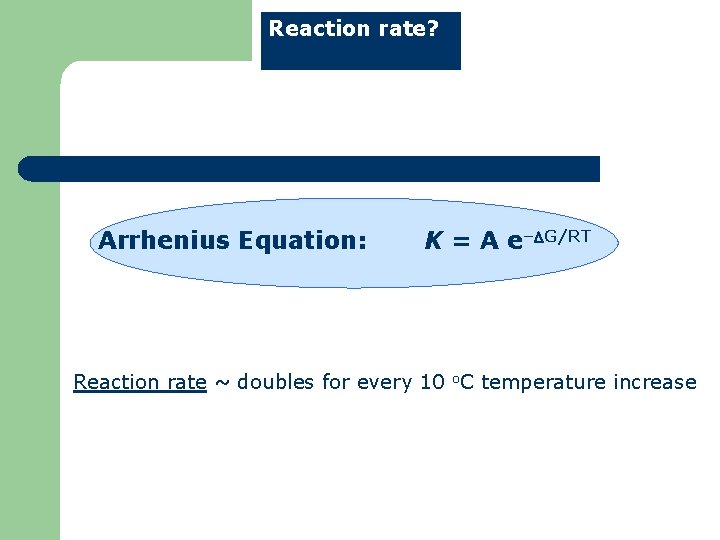
Reaction rate? Arrhenius Equation: K = A e–DG/RT Reaction rate ~ doubles for every 10 o. C temperature increase
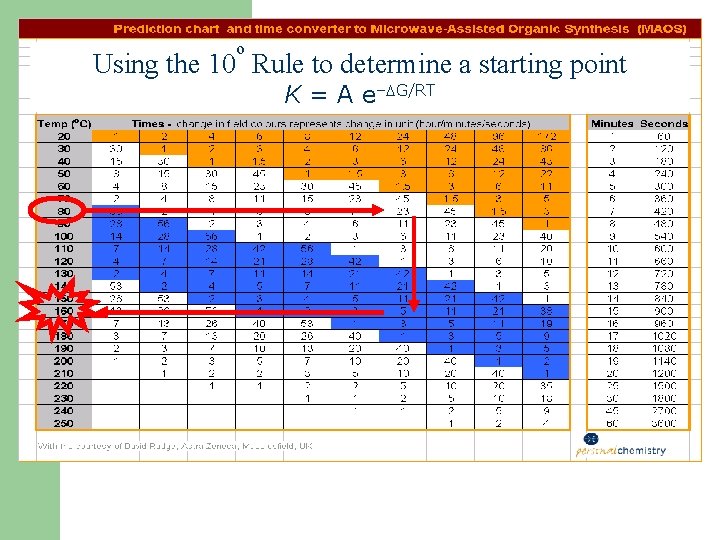
o Using the 10 Rule to determine a starting point K = A e–DG/RT
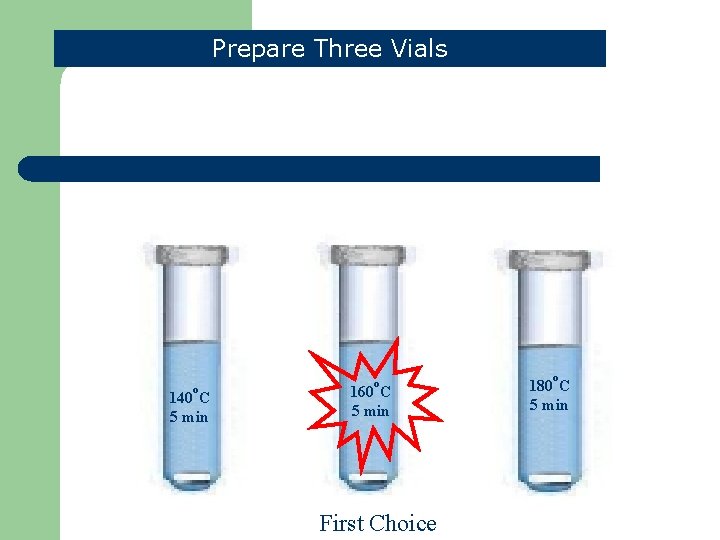
Prepare Three Vials o 140 C 5 min o 160 C 5 min First Choice o 180 C 5 min
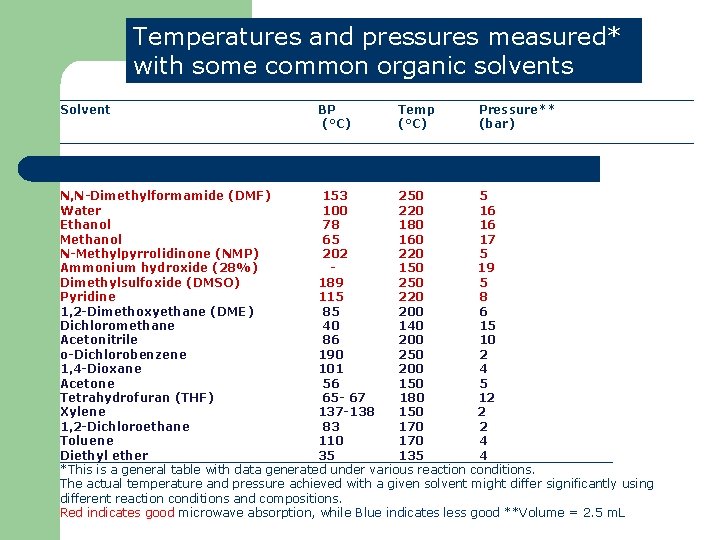
Temperatures and pressures measured* with some common organic solvents ________________________________________________ Solvent BP Temp Pressure** (°C) (bar) ________________________________________________ N, N-Dimethylformamide (DMF) 153 250 5 Water 100 220 16 Ethanol 78 180 16 Methanol 65 160 17 N-Methylpyrrolidinone (NMP) 202 220 5 Ammonium hydroxide (28%) 150 19 Dimethylsulfoxide (DMSO) 189 250 5 Pyridine 115 220 8 1, 2 -Dimethoxyethane (DME) 85 200 6 Dichloromethane 40 15 Acetonitrile 86 200 10 o-Dichlorobenzene 190 250 2 1, 4 -Dioxane 101 200 4 Acetone 56 150 5 Tetrahydrofuran (THF) 65 - 67 180 12 Xylene 137 -138 150 2 1, 2 -Dichloroethane 83 170 2 Toluene 110 170 4 Diethyl ether 35 135 4 *This is a general table with data generated under various reaction conditions. The actual temperature and pressure achieved with a given solvent might differ significantly using different reaction conditions and compositions. Red indicates good microwave absorption, while Blue indicates less good **Volume = 2. 5 m. L
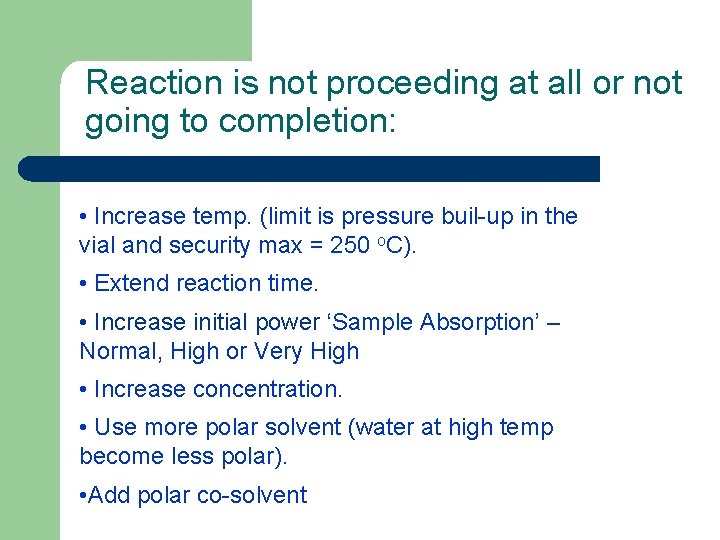
Reaction is not proceeding at all or not going to completion: • Increase temp. (limit is pressure buil-up in the vial and security max = 250 o. C). • Extend reaction time. • Increase initial power ‘Sample Absorption’ – Normal, High or Very High • Increase concentration. • Use more polar solvent (water at high temp become less polar). • Add polar co-solvent
Decomposition: • Lower temperature. • Increase initial power ‘Sample Absorption’ – Normal, High or Very High • Shorten reaction time. Product is actually formed, but then decomposes rapidly at elevated temperatures. • Decrease concentration. • Change reagents.
Questions? Please contact Krystyna (kbrzez@mrl. ucsb. edu) -------------------------------------Login: Faces Scheduling System Group: MRLPOLY User name: kkk@ Password: system will generate for you Account: please send request to Krystyna by E-MAIL --------------------------------------Go to: http: //microwave. mrl. ucsb. edu/ Instrument options: status, results, online help, print etc from your office Please clean memory of the Microwave R.
- Slides: 14