
Using metaphor as a navigation device in elearning
- Slides: 11
Using metaphor as a navigation device in elearning design Liz Falconer Yvonne Aburrow
Background Recognition that an electronic resource could assist in the teaching and learning of research methods to optimise Ø reusability, and Ø shareability Also that learning is more effective when a “pull” rather than a “push” model is used
Design issues Ø E-learning techniques are particularly effective in enabling this style of learning Ø Pull models require 1. Resources 2. A means of navigating and making sense of these resources Ø Metaphors are already widely used in education and on the Web, e. g. book and office metaphors such as pages, contents, files, folders and filing cabinets.
Searching for the metaphor The Classroom? Here, the teacher pushes information to the students, either directly or reflected off the board. Students are navigated through resources by the teacher.
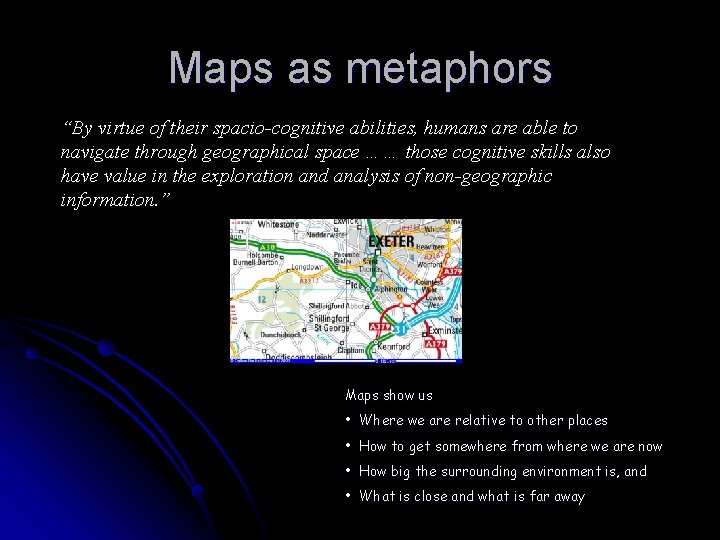
Maps as metaphors “By virtue of their spacio-cognitive abilities, humans are able to navigate through geographical space …… those cognitive skills also have value in the exploration and analysis of non-geographic information. ” Maps show us • Where we are relative to other places • How to get somewhere from where we are now • How big the surrounding environment is, and • What is close and what is far away
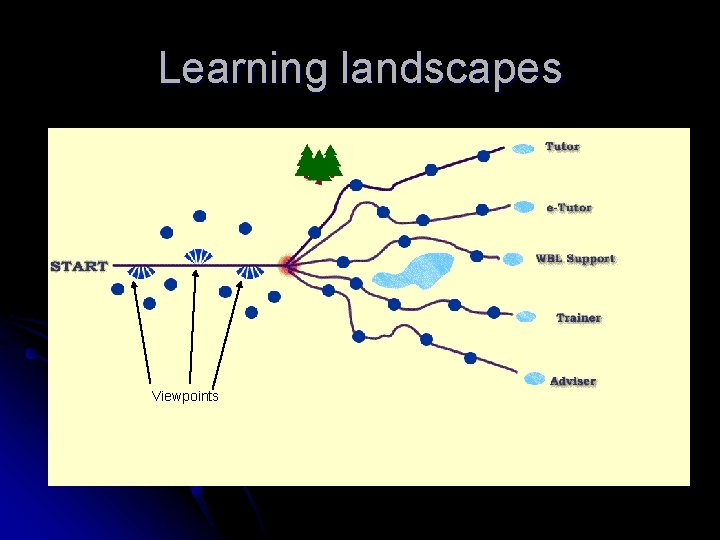
Learning landscapes Viewpoints
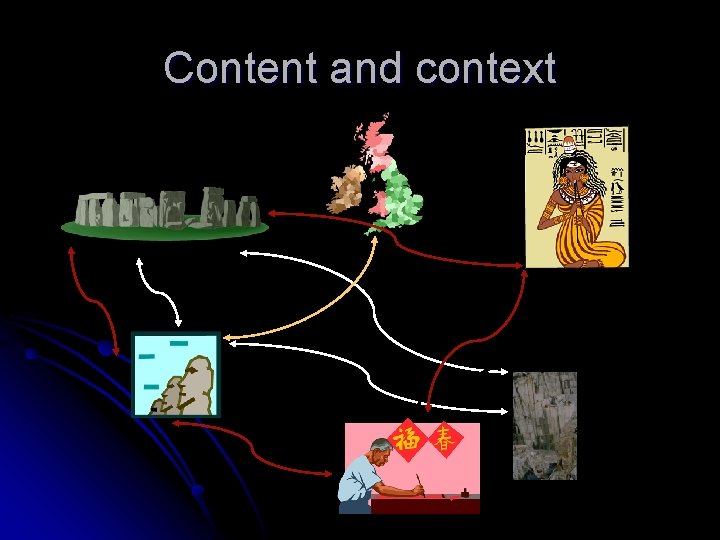
Content and context
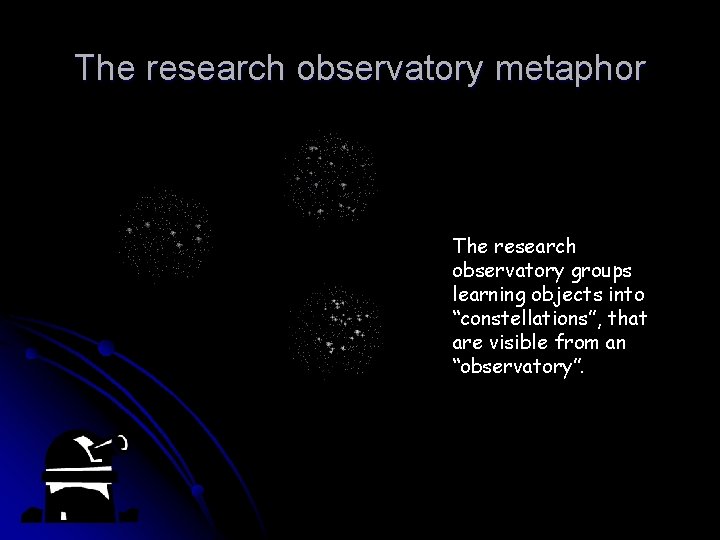
The research observatory metaphor The research observatory groups learning objects into “constellations”, that are visible from an “observatory”.
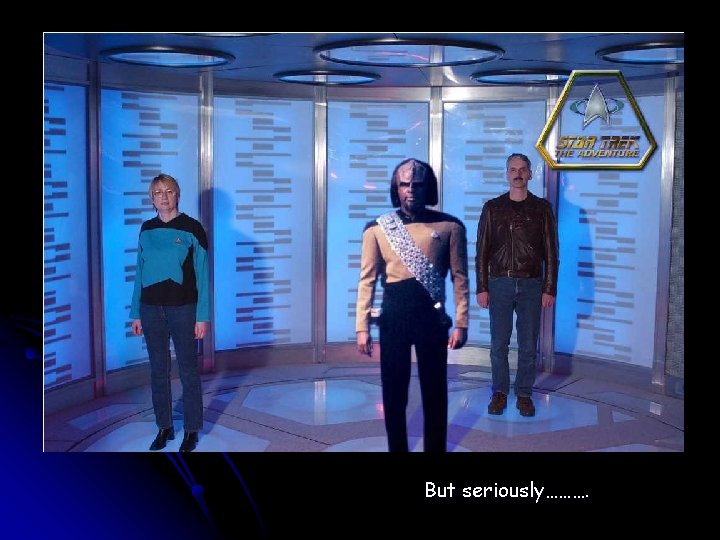
Why a star map? Ø Same material being seen from different perspectives Ø Defining constellation patterns in the data Ø I’m a trekkie!
But seriously……….
Alternative futures? Ø Choose a metaphor Ø Choose no metaphor Ø Join the discussion Liz. Falconer@uwe. ac. uk Y. Aburrow@bath. ac. uk