
Using Learning Styles in Instructional Design By Samantha
Using Learning Styles in Instructional Design By Samantha Strachan & Isha Dhital
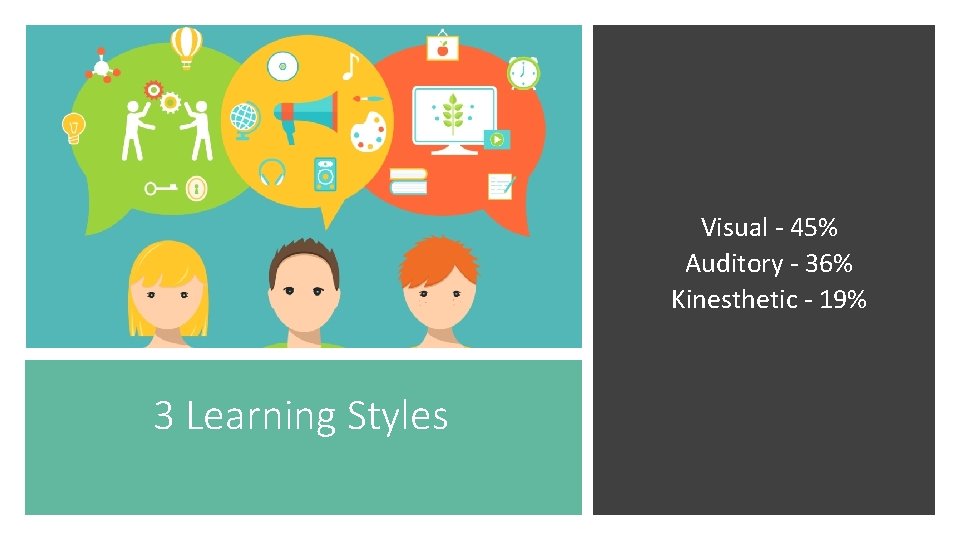
Visual - 45% Auditory - 36% Kinesthetic - 19% 3 Learning Styles
Learning Styles
Everyone is unique in how they learn, not every person has the same learning style Importance Instructors and educators should be aware of the different learning styles to provide the best experience for their learners
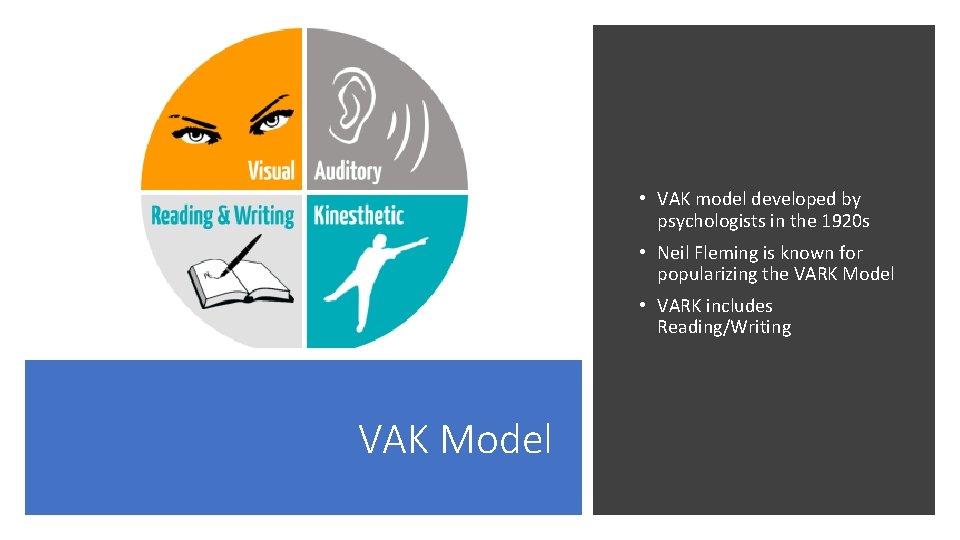
• VAK model developed by psychologists in the 1920 s • Neil Fleming is known for popularizing the VARK Model • VARK includes Reading/Writing VAK Model
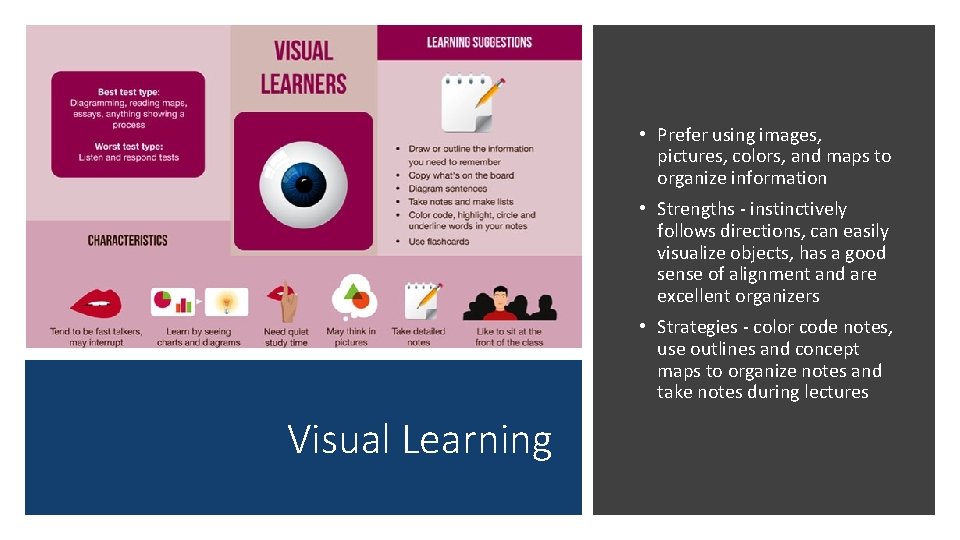
• Prefer using images, pictures, colors, and maps to organize information • Strengths - instinctively follows directions, can easily visualize objects, has a good sense of alignment and are excellent organizers • Strategies - color code notes, use outlines and concept maps to organize notes and take notes during lectures Visual Learning
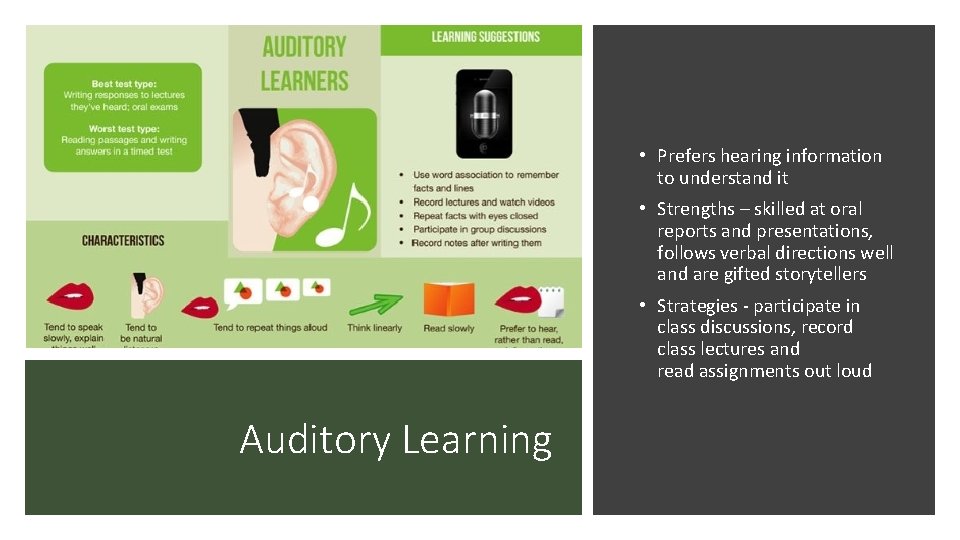
• Prefers hearing information to understand it • Strengths – skilled at oral reports and presentations, follows verbal directions well and are gifted storytellers • Strategies - participate in class discussions, record class lectures and read assignments out loud Auditory Learning
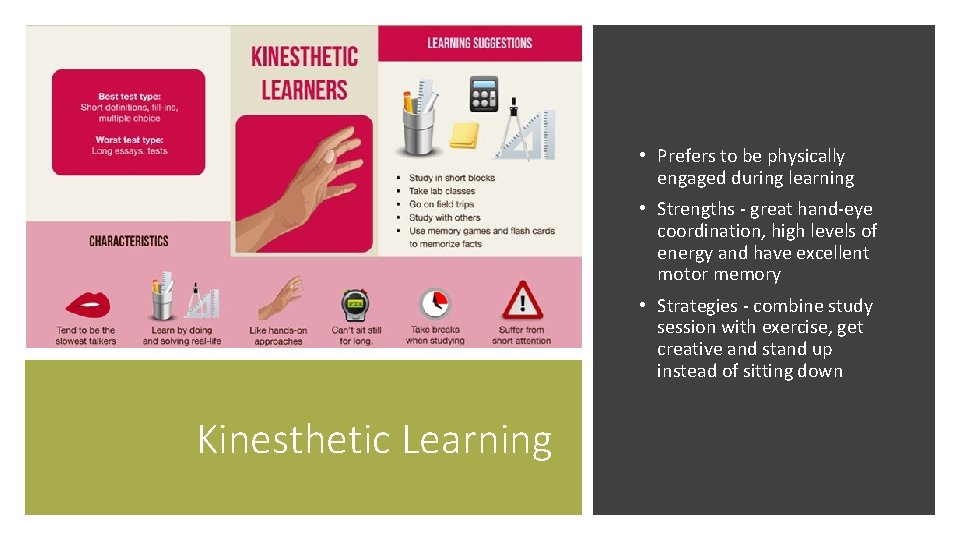
• Prefers to be physically engaged during learning • Strengths - great hand-eye coordination, high levels of energy and have excellent motor memory • Strategies - combine study session with exercise, get creative and stand up instead of sitting down Kinesthetic Learning
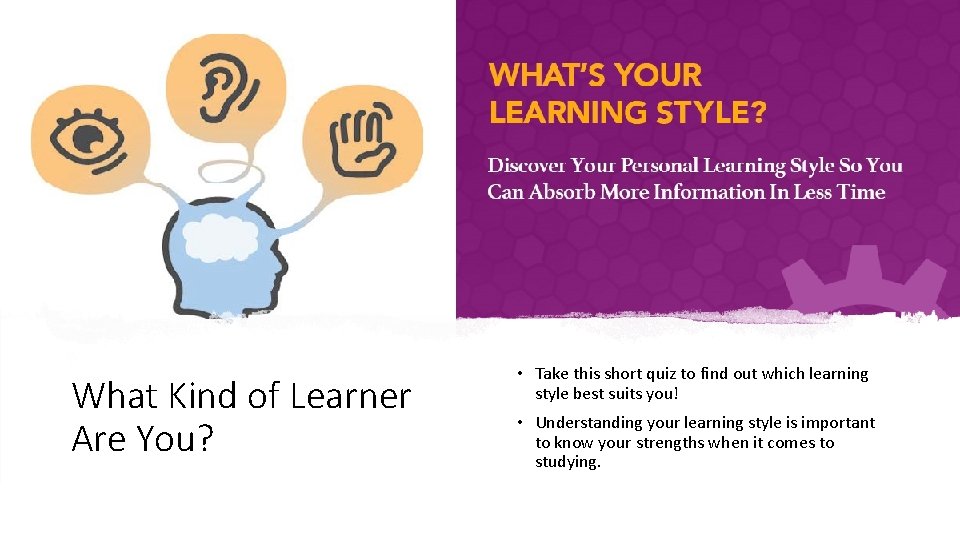
What Kind of Learner Are You? • Take this short quiz to find out which learning style best suits you! • Understanding your learning style is important to know your strengths when it comes to studying.
There are 4 Rounds: Activity • Draw what you see • Draw what you hear • Draw along with what you see • Draw what you read Work quickly because each round is timed!
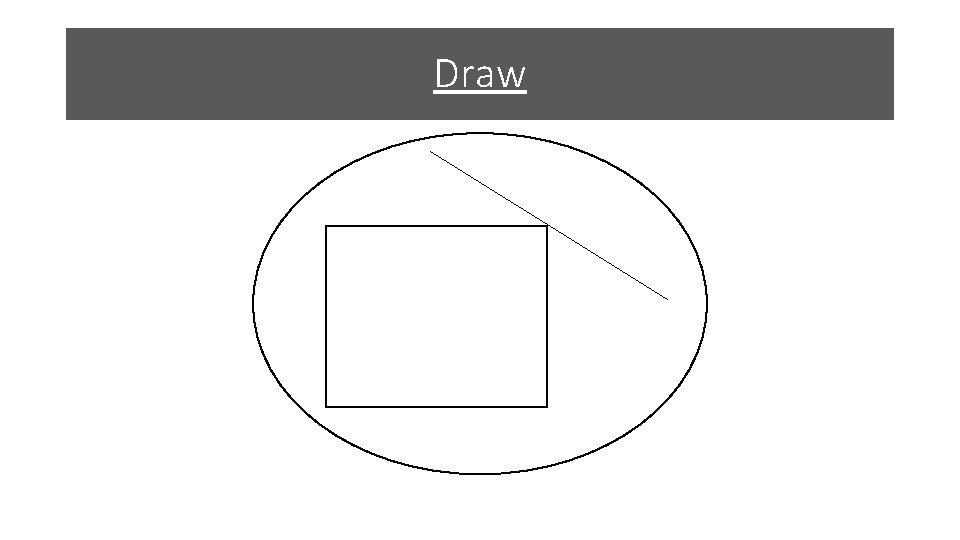
Draw

Listen
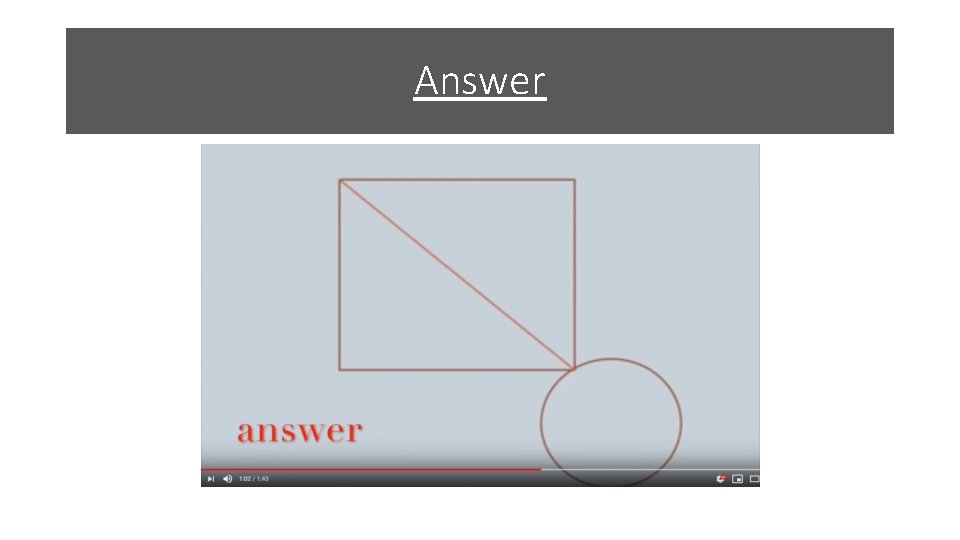
Answer

Draw Along
Read • Draw a 2 x 2 inch square • Draw a line from the top right corner to the bottom left • In the middle of the square, draw a vertical line from the top to the bottom
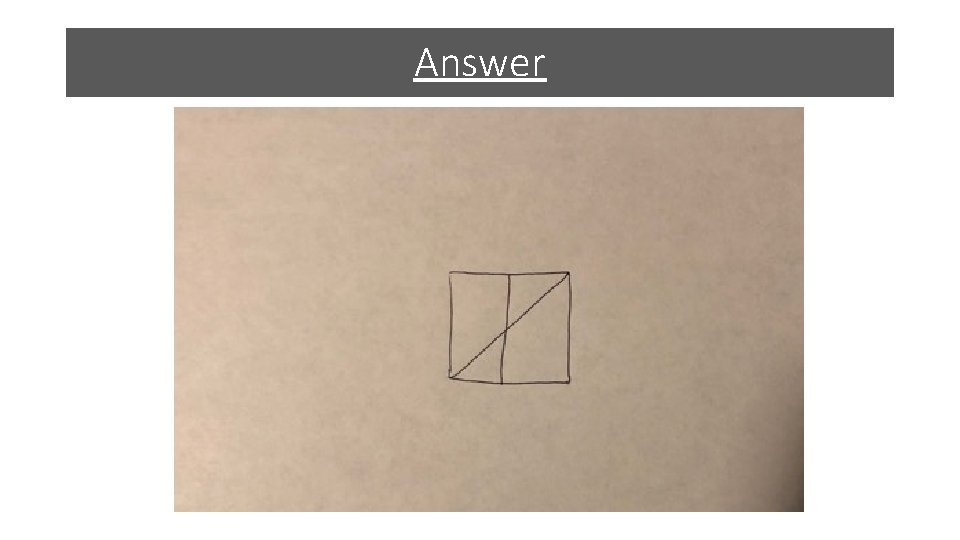
Answer
Instructional Designers • Learning Styles are essential for Instructional Designers to incorporate in their work • By including all of the learning styles, they are ensuring every learner will be able to understand the content • Focus on the subject and present the content through a variety of auditory, visual, and kinesthetic elements
• Use video and pictures to enhance presentations • Incorporate color into presentations and handouts • Supplement verbal lectures with a handout, diagram, or other visuals • Give written instructions and expectations Instructional Strategies for Visual Learners
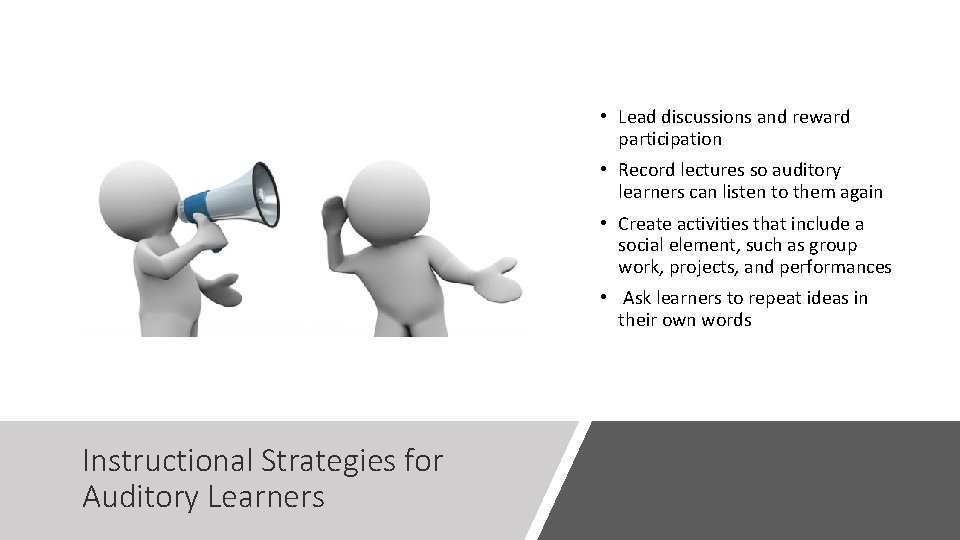
• Lead discussions and reward participation • Record lectures so auditory learners can listen to them again • Create activities that include a social element, such as group work, projects, and performances • Ask learners to repeat ideas in their own words Instructional Strategies for Auditory Learners
• Have learners complete relevant tasks during the lecture, such as filling out a worksheet or taking notes • Allow learners to stand or doodle during lectures • Plan several different activities for each course • Perform movement tasks before and after lectures, such as handing out quizzes or writing on the whiteboard Instructional Strategies for Kinesthetic Learners
Tips for Designing • People tend to be a mixture of the learning styles, incorporate all 3 • Don’t focus solely on the styles, content is key! • Be aware of how your audience learns best
Non-Adaptive Approach Attempts to cater to different learning styles Instructors create a balanced design and contrasting teaching modes

Let’s Play a Game! • Download the Kahoot! app • Enter the Game PIN - 150983 • Answer questions correctly and win a prize!
- Slides: 23