
USING INFORMATION FOR COMMUNITY ACTION National Neighborhood Indicators
USING INFORMATION FOR COMMUNITY ACTION National Neighborhood Indicators Partnership San Diego, CA March 4, 2011 Kathy Pettit, The Urban Institute
National Trends in Using Local Indicators • More neighborhood level data available than ever before – Online systems like Policy. Map, Google Data, etc. – Open Data and Gov 2. 0 movements • Increased role for local administrative data – American Community Survey 5 -year avg. tract data inadequate • New focus in federal programs on place-based initiatives – Promise and Choice Neighborhoods (comprehensive perspective) – Sustainable Communities (links regional and neighborhood issues) The Urban Institute
National Trends in Using Local Indicators • But, still often difficult to find relevant, up-to -date data at the desired geography for community action • And more than data is needed – Analysis and interpretation – Knowledge of community issues – Effective communication & advocacy The Urban Institute

National Neighborhood Indicators Partnership (NNIP) • Collaborative effort since 1995 – Urban Institute and local partners in 35 cities • Success required three innovations 1. Data and technology 2. Institutions 3. Using information for change The Urban Institute
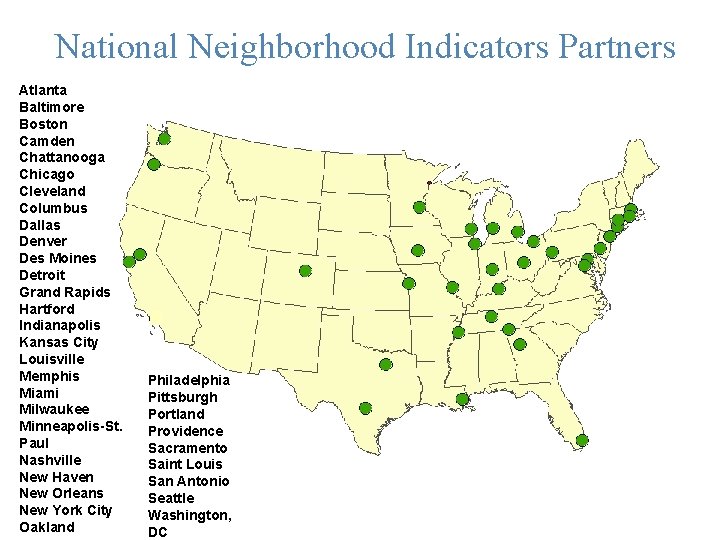
National Neighborhood Indicators Partners Atlanta Baltimore Boston Camden Chattanooga Chicago Cleveland Columbus Dallas Denver Des Moines Detroit Grand Rapids Hartford Indianapolis Kansas City Louisville Memphis Miami Milwaukee Minneapolis-St. Paul Nashville New Haven New Orleans New York City Oakland Philadelphia Pittsburgh Portland Providence Sacramento Saint Louis San Antonio Seattle Washington, DC
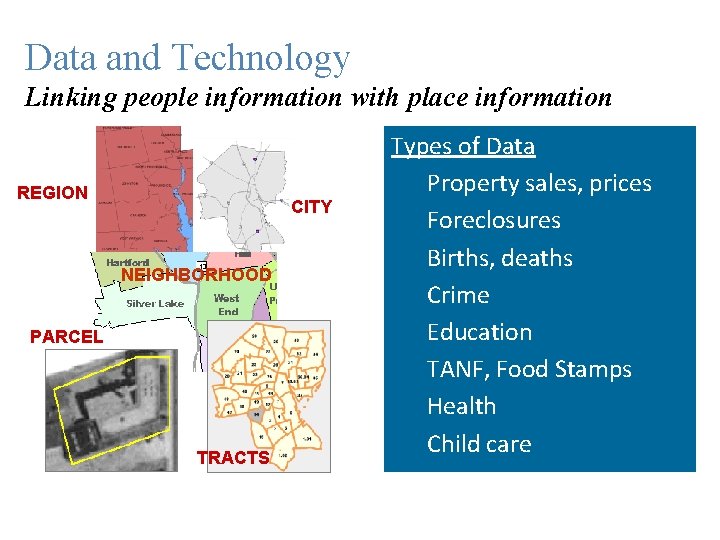
Data and Technology Linking people information with place information REGION CITY NEIGHBORHOOD PARCEL TRACTS Types of Data Property sales, prices Foreclosures Births, deaths Crime Education TANF, Food Stamps Health Child care
New Types of Institutions • All but one outside of government – Nonprofits, university centers, alliances, funders • But partner with resident groups, nonprofits, government, and other stakeholders • Long-term and multifaceted interests • Positioned to maintain trust of data providers and users The Urban Institute

Types of NNIP Partner Institutions
Shared Mission: Information for Change • Democratizing Information – Facilitate the direct use of data by stakeholders • Data serves many varied audiences and purposes • But a central focus on strengthening and empowering low-income neighborhoods • Information promotes collaboration – Acts as a bridge among public agencies, nonprofits, businesses The Urban Institute
Shared Mission: Types of Applications • Using indicators in local change initiatives – – Citywide analysis to change laws and policies Geographic targeting of resources for programs and investments Support individual neighborhood improvement initiatives Support program and policy evaluation • Comprehensive community indicator initiatives – Review of indicators across topics to collectively track community quality of life – Well-developed in ten NNIP partner sites; full list at http: //www 2. urban. org/nnip/sharedindic. html The Urban Institute
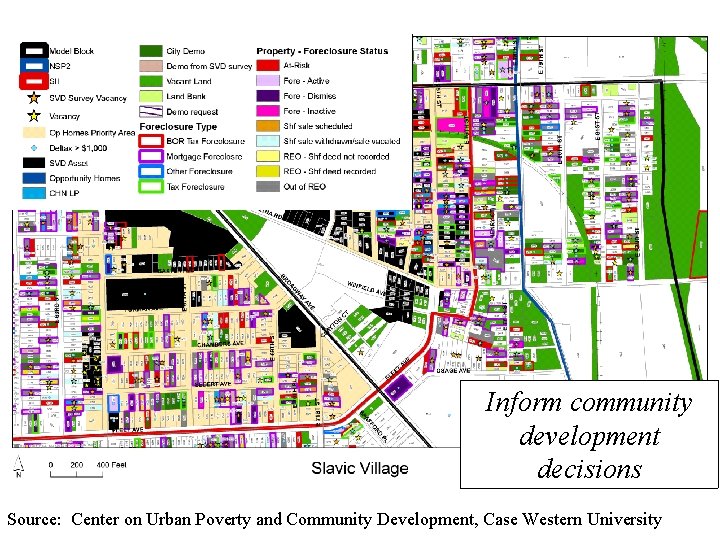
Inform community development decisions Source: Center on Urban Poverty and Community Development, Case Western University
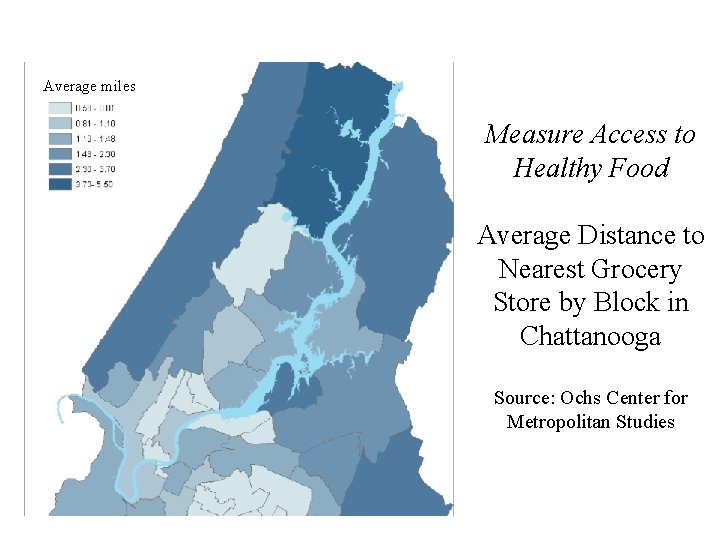
Average miles Measure Access to Healthy Food Average Distance to Nearest Grocery Store by Block in Chattanooga Source: Ochs Center for Metropolitan Studies
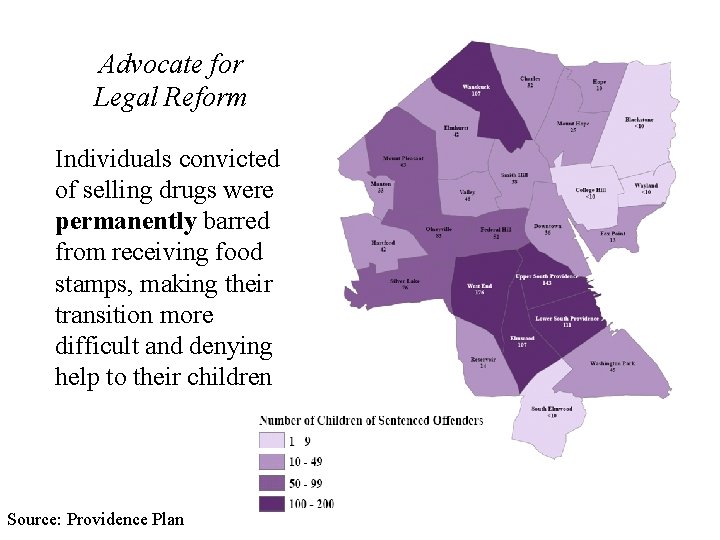
Advocate for Legal Reform Individuals convicted of selling drugs were permanently barred from receiving food stamps, making their transition more difficult and denying help to their children Source: Providence Plan
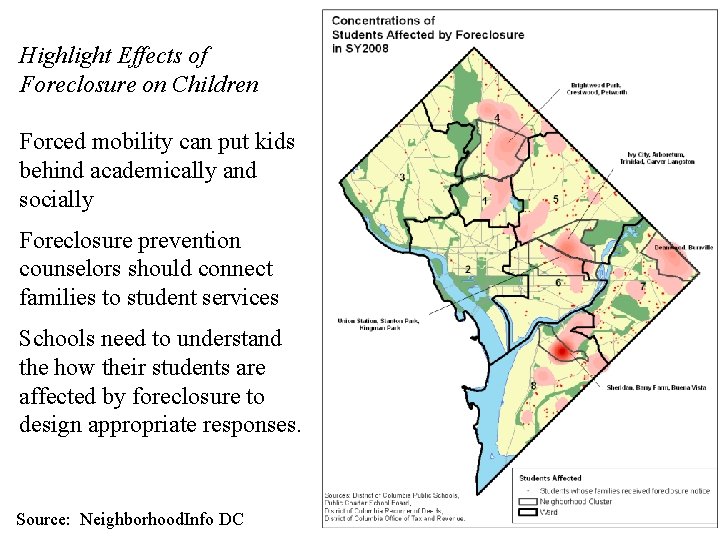
Highlight Effects of Foreclosure on Children Forced mobility can put kids behind academically and socially Foreclosure prevention counselors should connect families to student services Schools need to understand the how their students are affected by foreclosure to design appropriate responses. Source: Neighborhood. Info DC
Developing an NNIP Partner in your Community The Urban Institute
Getting Started • Identify champions – • Individuals committed to shepherding the process (not necessarily the ultimate partner home) Catalog existing neighborhood data efforts – – Government, universities, non-profits, funders Availability of source data; culture of data sharing Applications (operational, planning, evaluation) Connections to community training & engagement The Urban Institute
Getting Started, cont. • Assess community needs for information – Formal or informal process – Interview potential data providers, indicator users, and funders (government & non-government) – Learn about interests and high-priority issues, and build support for NNIP model • Keep eyes out for potential “early wins” – System not built all at once – Demonstrating the potential is key The Urban Institute
Finding a Home: Commit to Major Functions • Build and operate information systems with integrated and recurrently updated indicators on neighborhood conditions • Facilitate and promote the direct practical use of indicators by community and city leaders in community building and local policy making • Emphasize the use of information to build the capacities of institutions and residents in distressed neighborhoods The Urban Institute
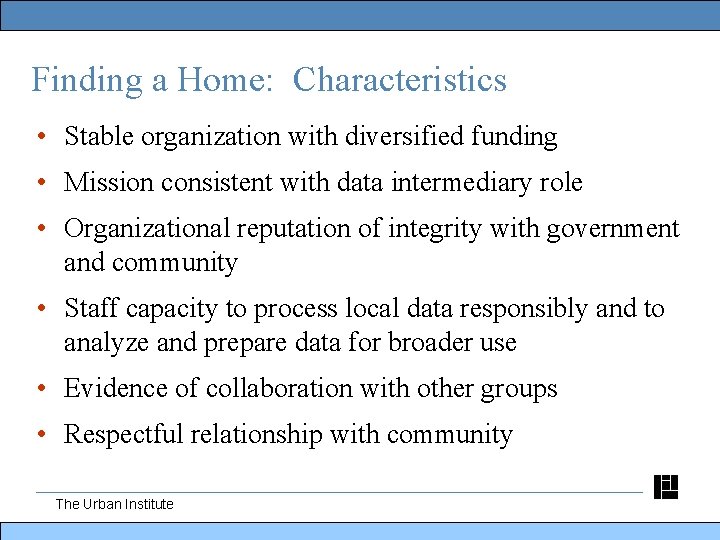
Finding a Home: Characteristics • Stable organization with diversified funding • Mission consistent with data intermediary role • Organizational reputation of integrity with government and community • Staff capacity to process local data responsibly and to analyze and prepare data for broader use • Evidence of collaboration with other groups • Respectful relationship with community The Urban Institute
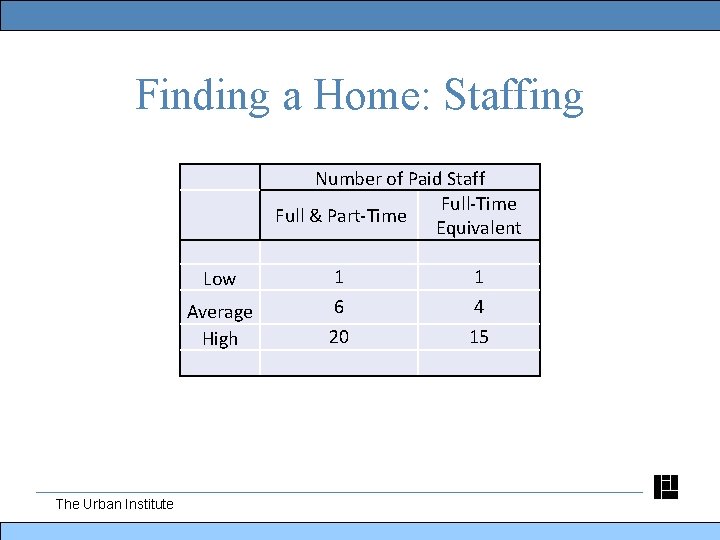
Finding a Home: Staffing Number of Paid Staff Full-Time Full & Part-Time Equivalent Low Average High The Urban Institute 1 6 20 1 4 15
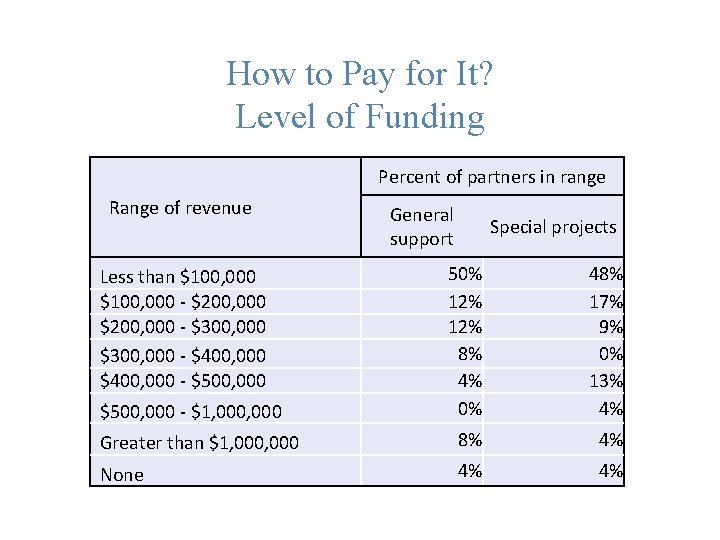
How to Pay for It? Level of Funding Percent of partners in range Range of revenue General support Special projects 50% 12% 8% 4% 0% 48% 17% 9% 0% 13% 4% Greater than $1, 000 8% 4% None 4% 4% Less than $100, 000 - $200, 000 - $300, 000 - $400, 000 - $500, 000 - $1, 000
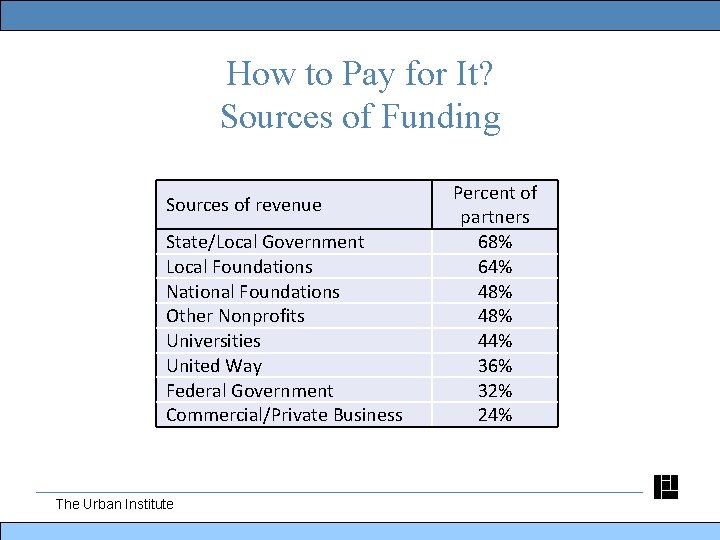
How to Pay for It? Sources of Funding Sources of revenue State/Local Government Local Foundations National Foundations Other Nonprofits Universities United Way Federal Government Commercial/Private Business The Urban Institute Percent of partners 68% 64% 48% 44% 36% 32% 24%
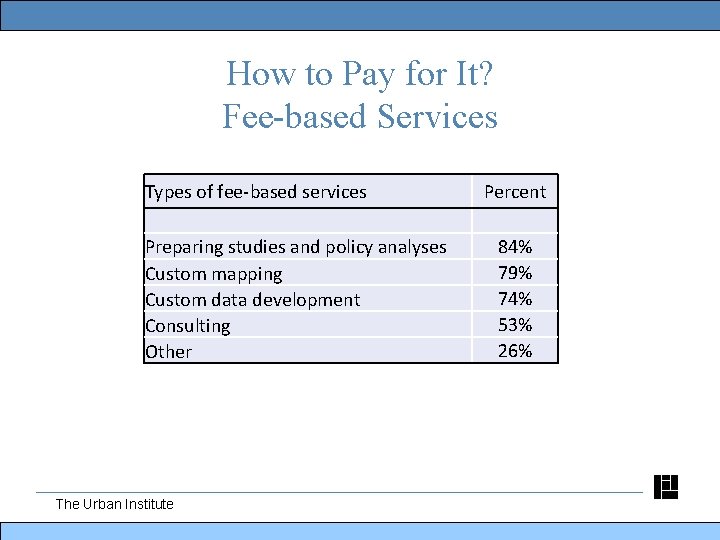
How to Pay for It? Fee-based Services Types of fee-based services Preparing studies and policy analyses Custom mapping Custom data development Consulting Other The Urban Institute Percent 84% 79% 74% 53% 26%
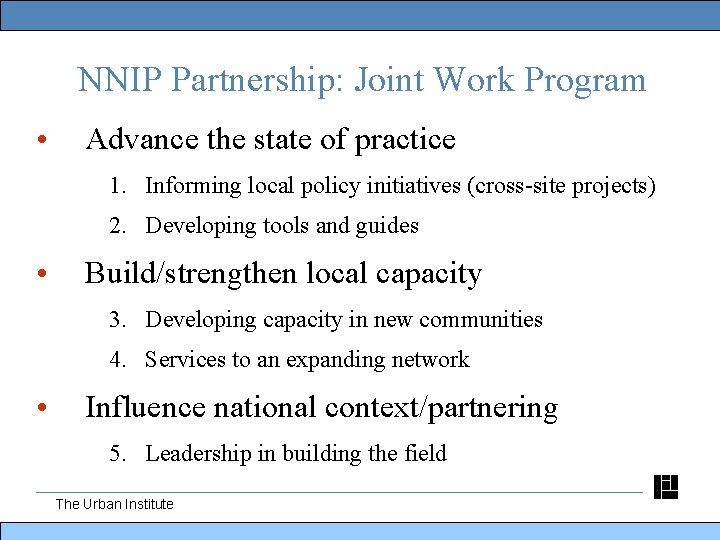
NNIP Partnership: Joint Work Program • Advance the state of practice 1. Informing local policy initiatives (cross-site projects) 2. Developing tools and guides • Build/strengthen local capacity 3. Developing capacity in new communities 4. Services to an expanding network • Influence national context/partnering 5. Leadership in building the field The Urban Institute
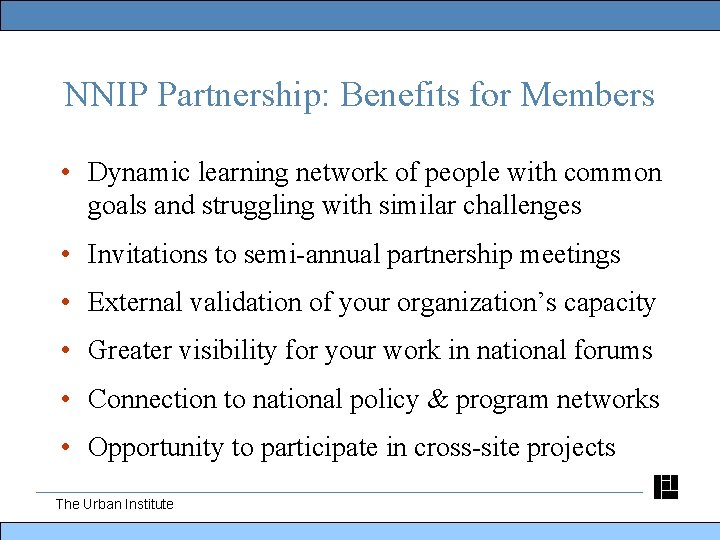
NNIP Partnership: Benefits for Members • Dynamic learning network of people with common goals and struggling with similar challenges • Invitations to semi-annual partnership meetings • External validation of your organization’s capacity • Greater visibility for your work in national forums • Connection to national policy & program networks • Opportunity to participate in cross-site projects The Urban Institute
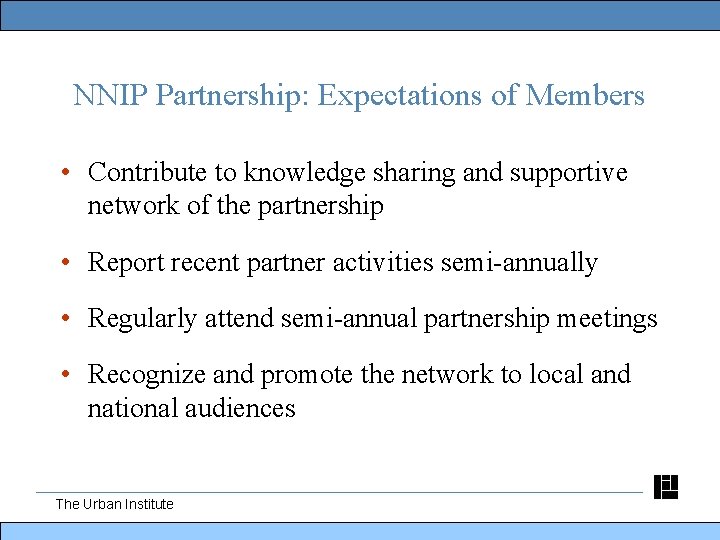
NNIP Partnership: Expectations of Members • Contribute to knowledge sharing and supportive network of the partnership • Report recent partner activities semi-annually • Regularly attend semi-annual partnership meetings • Recognize and promote the network to local and national audiences The Urban Institute
For more information NNIP Web site: www. urban. org/nnip NNIP Co-Directors Kathy Pettit: kpettit@urban. org, (202) 261 -5670 Tom Kingsley: tkingsle@urban. org, (202) 261 -5585 The Urban Institute
- Slides: 27