
Using Individual Learning Plans with Adults Co TESOL
- Slides: 11
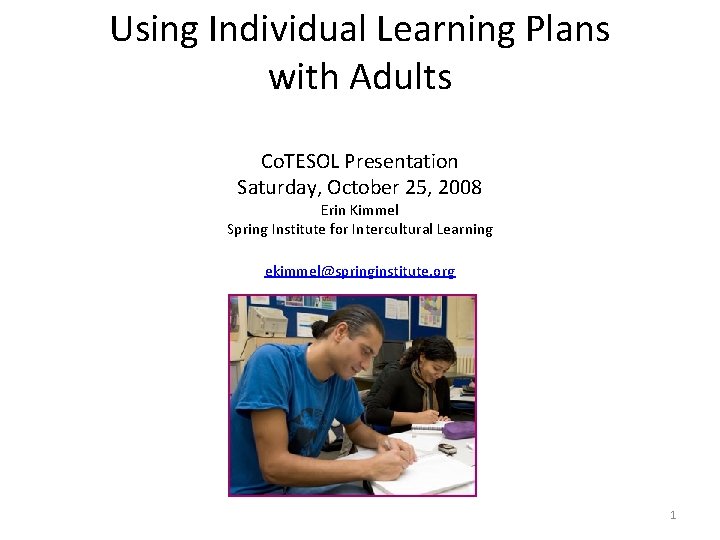
Using Individual Learning Plans with Adults Co. TESOL Presentation Saturday, October 25, 2008 Erin Kimmel Spring Institute for Intercultural Learning ekimmel@springinstitute. org 1
Session Objectives • Describe the key components of an Individual Learning Plan (ILP) • Relate the use of ILPs to characteristics of adult learners • Review ILP formats from adult learning institutions • Identify ways to incorporate the best elements into a short program 2
Skills for Life • • British government program to reduce number of adults with low levels of literacy/numeracy (math) - estimated at 5/15 million people, 16/46% of adults aged 16 -65 in the UK Goal was to virtually eliminate functional illiteracy/innumeracy – free classes in literacy, numeracy and ESOL for UK residents – development of a core curriculum for each basic skill – development of national teaching qualifications for teachers of adult basic skills • • – an inspection regime to ensure the quality of delivery Funding started at £ 167 million ($246. 7 million) in 2000 -01 up to £ 995 million ($1. 58 billion) in 2006 -07 Focus on tailoring instruction to individual needs http: //www. literacytrust. org. uk/Database/moserec. html http: //www. niace. org. uk/Organisation/advocacy/Policy_Briefings/NIACE-Policy-Briefing-Sf. L. pdf 3
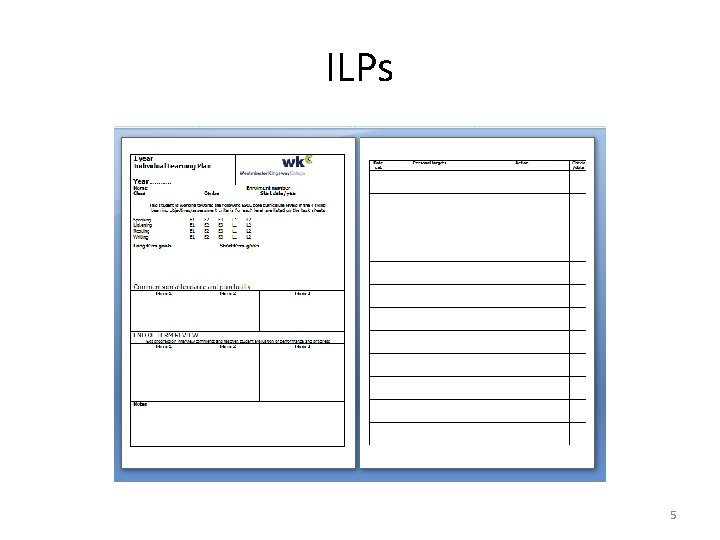
An Individual Learning Plan • • • This is based upon screening, initial and diagnostic assessment, and follows agreement with the learner on goals and targets. A completed ILP should include: Results of assessments; The learner’s long-term goals; The goals of the program to be followed, cross-referenced to the national standards or core curriculum; Any other goals that the learner wishes to achieve, both social and personal; Targets and dates for meeting them; A programme of dated progress reviews; Space to record achievement of targets and any developments in the ILP; Signatures of learner and teacher. http: //www. niace. org. uk/projects/learningfromexperience/EBS/Good-Practice/ILP. htm 4
ILPs 5
Characteristics of Adult Learners • Breakout session for participants to list characteristics 6
ILPs in Adult Education - pros • Allow for teachers to engage with individual students • Make courses more goals-oriented • Enable adults to take responsibility for their learning • Are an effective progress tracker • Are transferable records of student achievement 7
ILPs in Adult Education - cons • Create an unnecessary layer of bureaucracy • Can be incomprehensible to low level ESL students • Are time-consuming • Are an educational fad that will pass 8
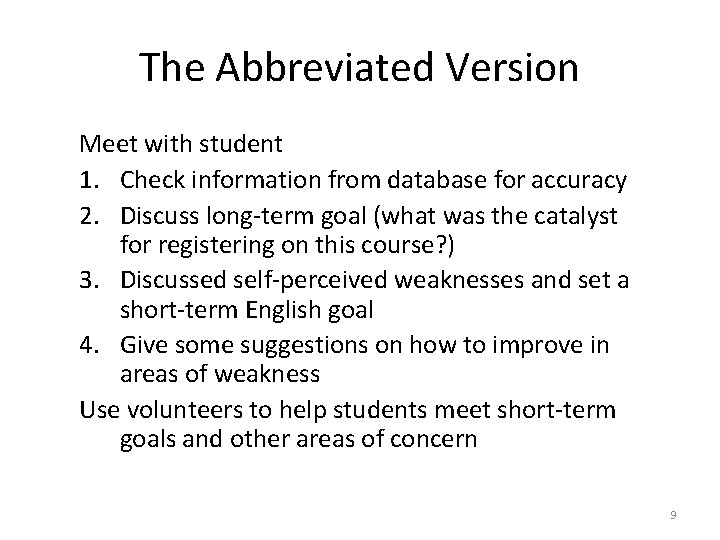
The Abbreviated Version Meet with student 1. Check information from database for accuracy 2. Discuss long-term goal (what was the catalyst for registering on this course? ) 3. Discussed self-perceived weaknesses and set a short-term English goal 4. Give some suggestions on how to improve in areas of weakness Use volunteers to help students meet short-term goals and other areas of concern 9
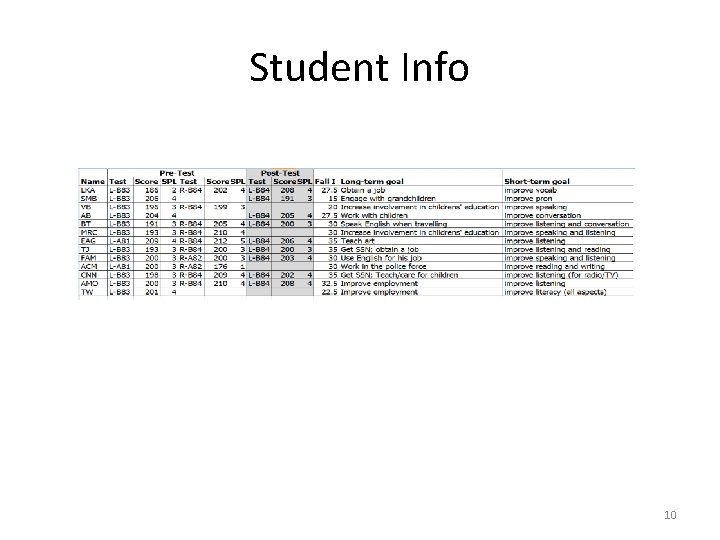
Student Info 10
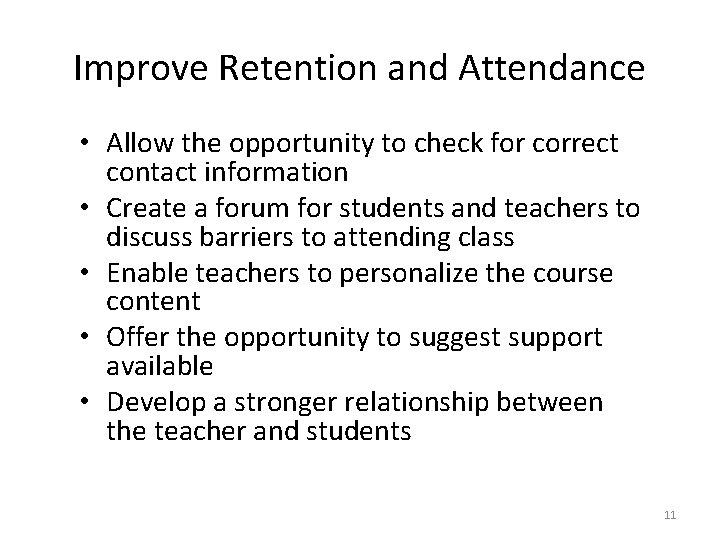
Improve Retention and Attendance • Allow the opportunity to check for correct contact information • Create a forum for students and teachers to discuss barriers to attending class • Enable teachers to personalize the course content • Offer the opportunity to suggest support available • Develop a stronger relationship between the teacher and students 11