
Using HPC to enable coastal waters observatories Marta
Using HPC to enable coastal waters observatories Marta Rodrigues, Anabela Oliveira, Ricardo Martins, João Rogeiro, Daniela Santos, André B. Fortunato, Alberto Azevedo 10 th Iberian Grid Conference, 2019 September 23 -26, 2019 PTDC/AAG-MAA/6899/2014
Content § Background § HPC in UBEST § Operational and scenarios simulations § UBEST Web Platform § Final Remarks 2
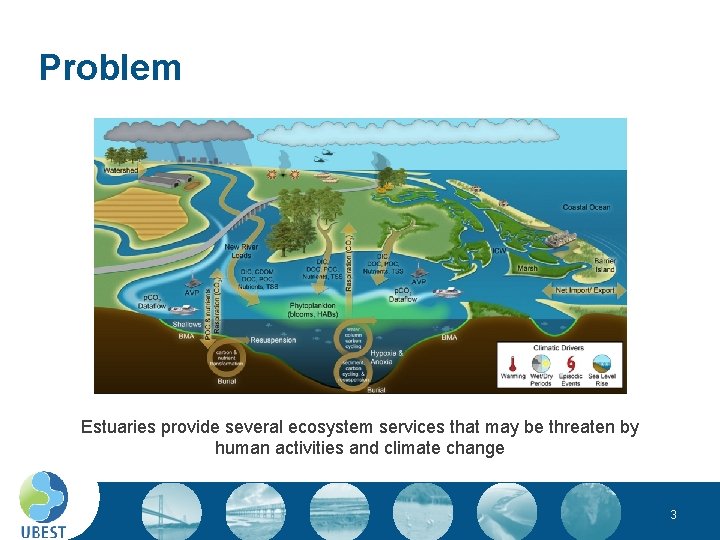
Problem Estuaries provide several ecosystem services that may be threaten by human activities and climate change 3
Challenges § How can scientists better understand the estuarine dynamics and the impacts of human pressures and climate change? § How to provide a channel to give the relevant information to scientists, decision-makers and the general public? § How to provide high resolution products faster? 4
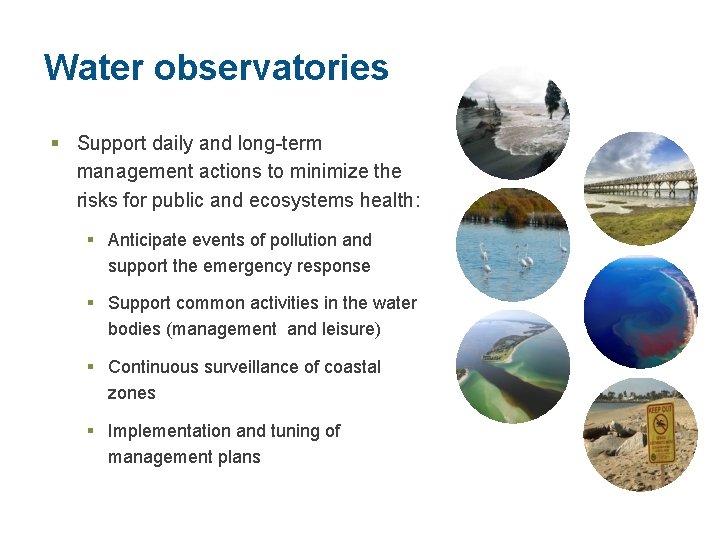
Water observatories § Support daily and long-term management actions to minimize the risks for public and ecosystems health: § Anticipate events of pollution and support the emergency response § Support common activities in the water bodies (management and leisure) § Continuous surveillance of coastal zones § Implementation and tuning of management plans 5
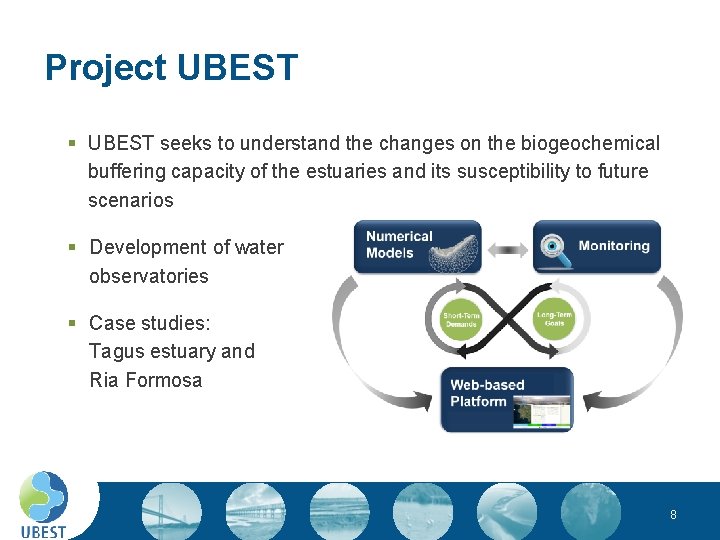
Project UBEST § UBEST seeks to understand the changes on the biogeochemical buffering capacity of the estuaries and its susceptibility to future scenarios § Development of water observatories § Case studies: Tagus estuary and Ria Formosa 8
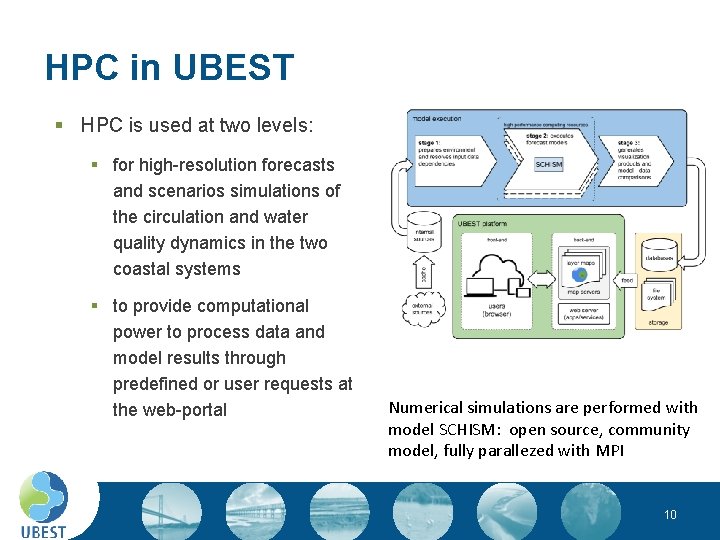
HPC in UBEST § HPC is used at two levels: § for high-resolution forecasts and scenarios simulations of the circulation and water quality dynamics in the two coastal systems § to provide computational power to process data and model results through predefined or user requests at the web-portal Numerical simulations are performed with model SCHISM: open source, community model, fully parallezed with MPI 10
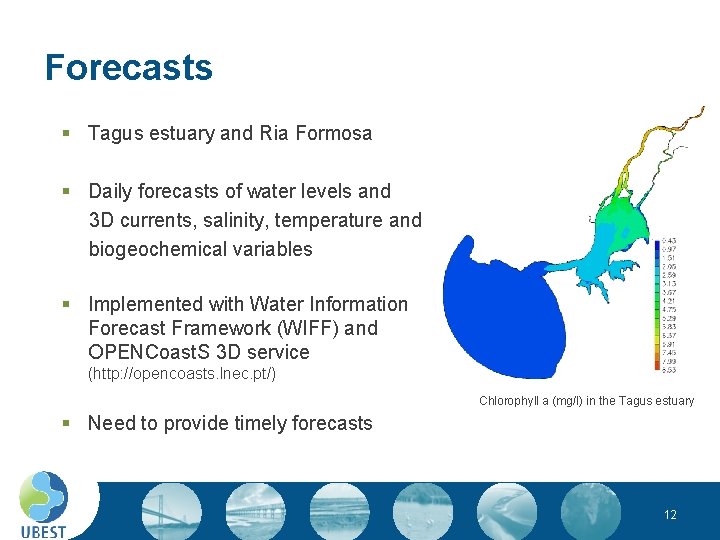
Forecasts § Tagus estuary and Ria Formosa § Daily forecasts of water levels and 3 D currents, salinity, temperature and biogeochemical variables § Implemented with Water Information Forecast Framework (WIFF) and OPENCoast. S 3 D service (http: //opencoasts. lnec. pt/) Chlorophyll a (mg/l) in the Tagus estuary § Need to provide timely forecasts 12
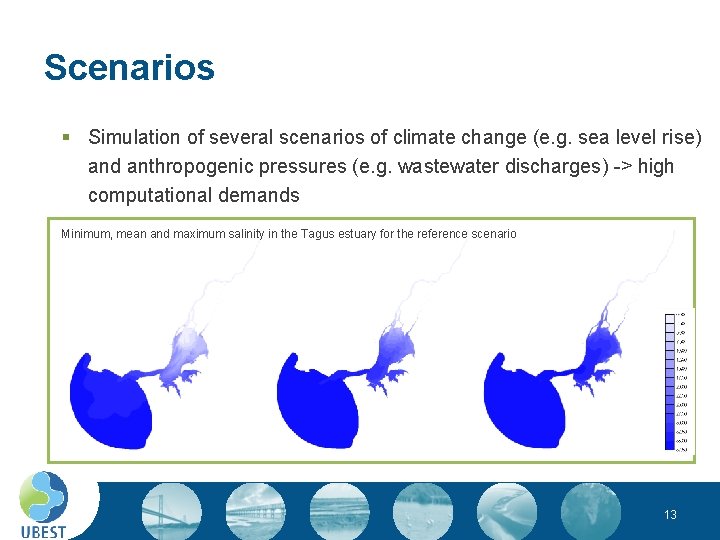
Scenarios § Simulation of several scenarios of climate change (e. g. sea level rise) and anthropogenic pressures (e. g. wastewater discharges) -> high computational demands Minimum, mean and maximum salinity in the Tagus estuary for the reference scenario 13
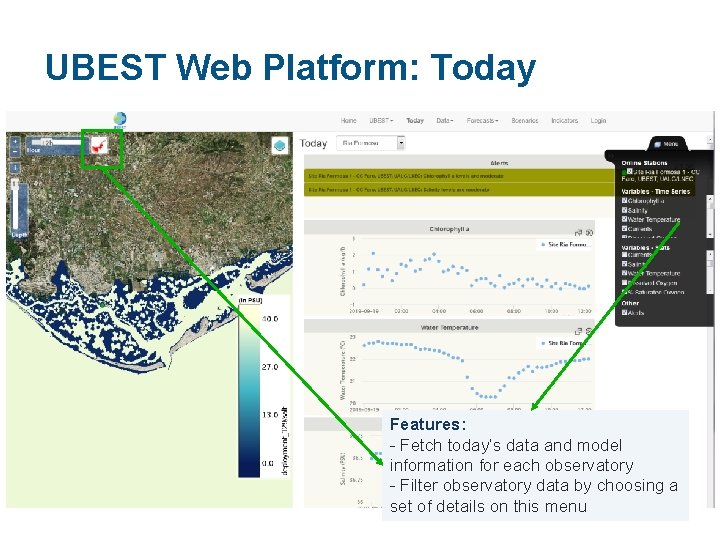
UBEST Web Platform: Today Features: - Fetch today’s data and model information for each observatory - Filter observatory data by choosing a set of details on this menu 16
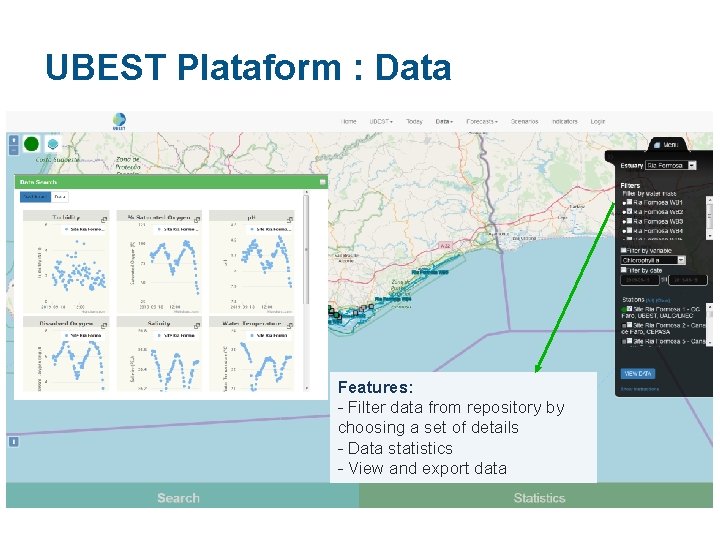
UBEST Plataform : Data Features: - Filter data from repository by choosing a set of details - Data statistics - View and export data 17
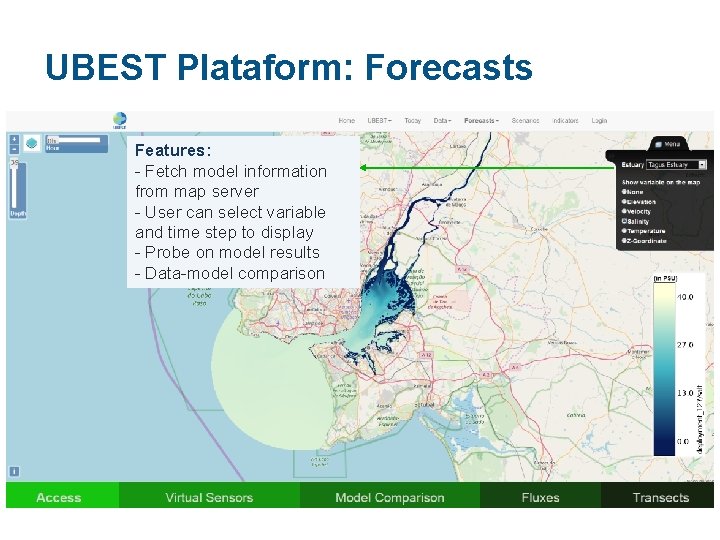
UBEST Plataform: Forecasts Features: - Fetch model information from map server - User can select variable and time step to display - Probe on model results - Data-model comparison 18
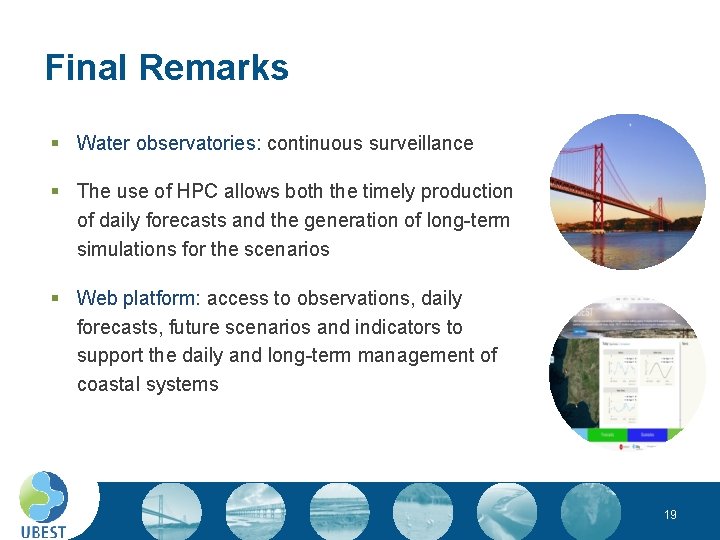
Final Remarks § Water observatories: continuous surveillance § The use of HPC allows both the timely production of daily forecasts and the generation of long-term simulations for the scenarios § Web platform: access to observations, daily forecasts, future scenarios and indicators to support the daily and long-term management of coastal systems 19
Acknowledgements Project UBEST - PTDC/AAG-MAA/6899/2014 Project INCD - LISBOA-01 -0145 -FEDER-022153 Project EOSC-hub - Grant Agreement No 777536 20
Thank you for your attention Marta Rodrigues mfrodrigues@lnec. pt http: //ubest. lnec. pt/ PTDC/AAG-MAA/6899/2014
- Slides: 15