
Using Focus Marking and Peer Assessment in Composition

- Slides: 37
Using Focus Marking and Peer Assessment in Composition Writing and Marking Mr Leung Fook Kay LST Young Ko Hsiao Lin Secondary School 1
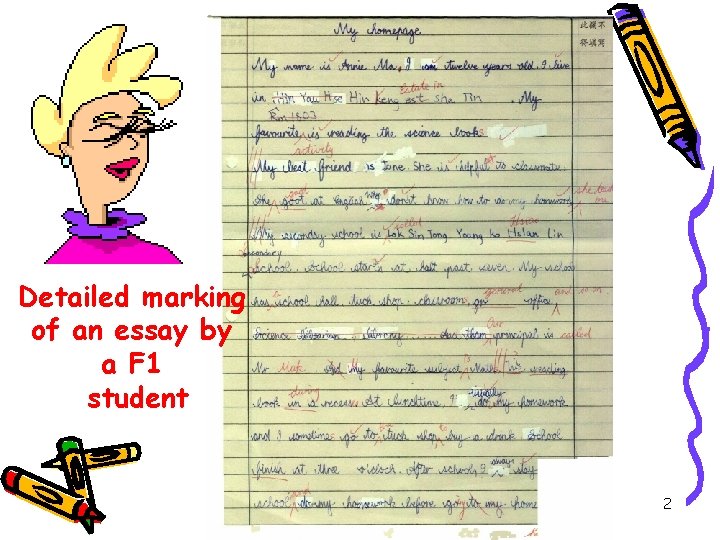
Detailed marking of an essay by a F 1 student 2
1. Problems with detailed marking Teachers: Frustrated because • Many mistakes; • Similar mistakes time and again; • Students can’t learn effectively from marking 3
1. Problems with detailed marking Students: • put off by red marks; an eyesore; • have difficult in correcting; • can’t remember so many correct forms • can’t avoid making similar mistakes, Because: - learn little from mistakes - learn little from teacher’s marking 4
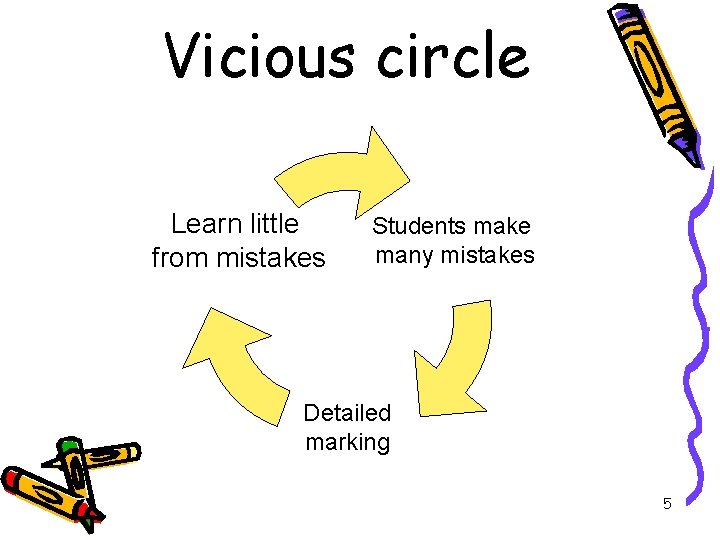
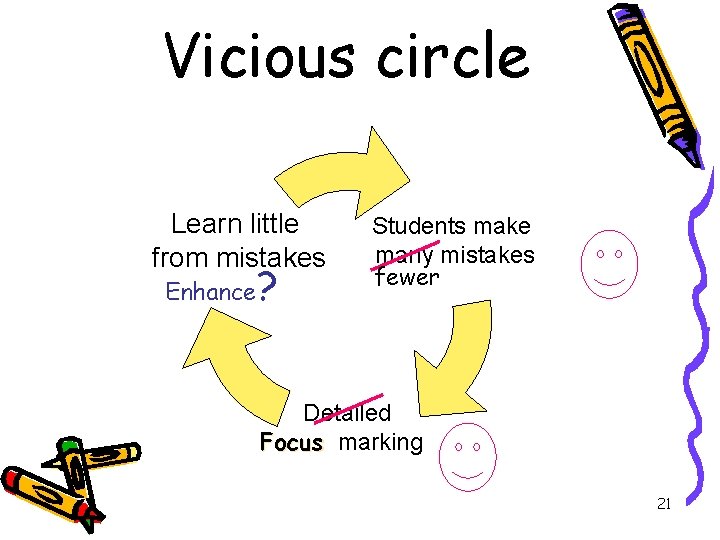
Vicious circle Learn little from mistakes Students make many mistakes Detailed marking 5
How can students learn to write with fewer mistakes? 1. Consulted: Assessment for Learning (AFL) guidelines (‘Task-based Assessment for English Language Learning at Secondary Level’, CDI 2. Other literature 3. Reflected on experience 6
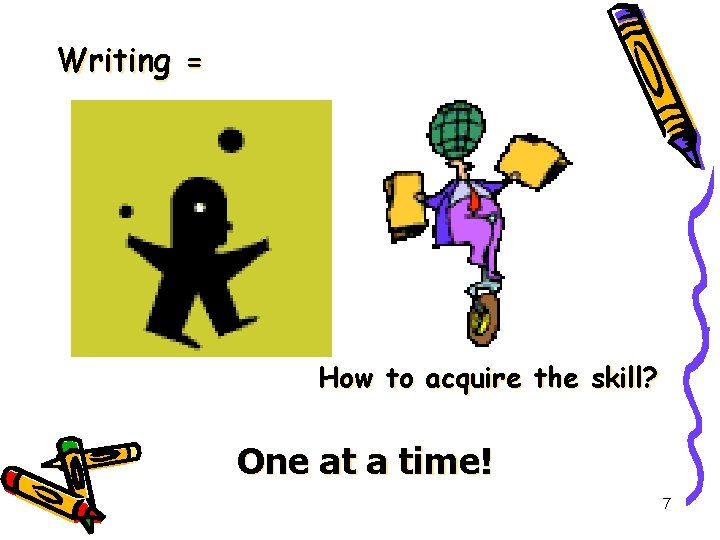
Writing = How to acquire the skill? One at a time! 7
One at a time = focus marking? Can it help students to focus on using accurately one grammar item at a time? And eventually, write with fewer mistakes? 8
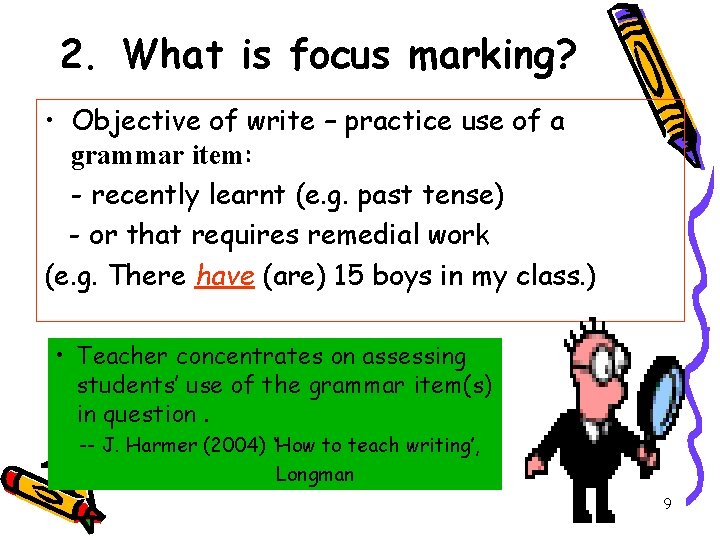
2. What is focus marking? • Objective of write – practice use of a grammar item: - recently learnt (e. g. past tense) - or that requires remedial work (e. g. There have (are) 15 boys in my class. ) • Teacher concentrates on assessing students’ use of the grammar item(s) in question. -- J. Harmer (2004) ‘How to teach writing’, Longman 9
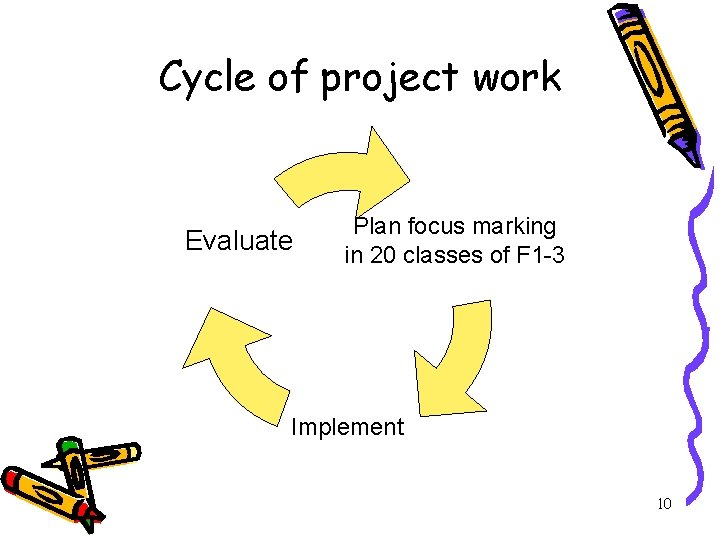
Cycle of project work Evaluate Plan focus marking in 20 classes of F 1 -3 Implement 10
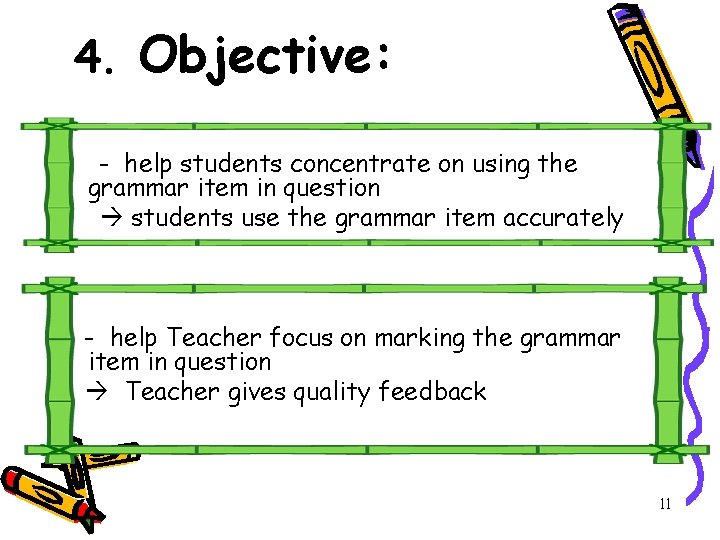
4. Objective: - help students concentrate on using the grammar item in question students use the grammar item accurately - help Teacher focus on marking the grammar item in question Teacher gives quality feedback 11
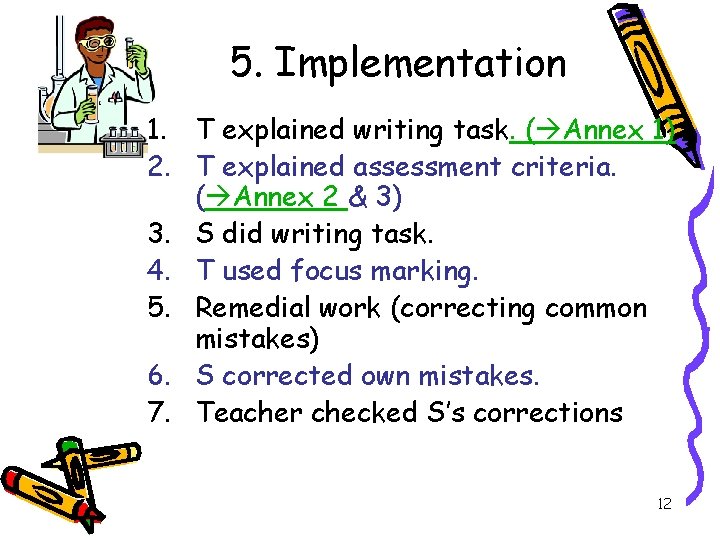
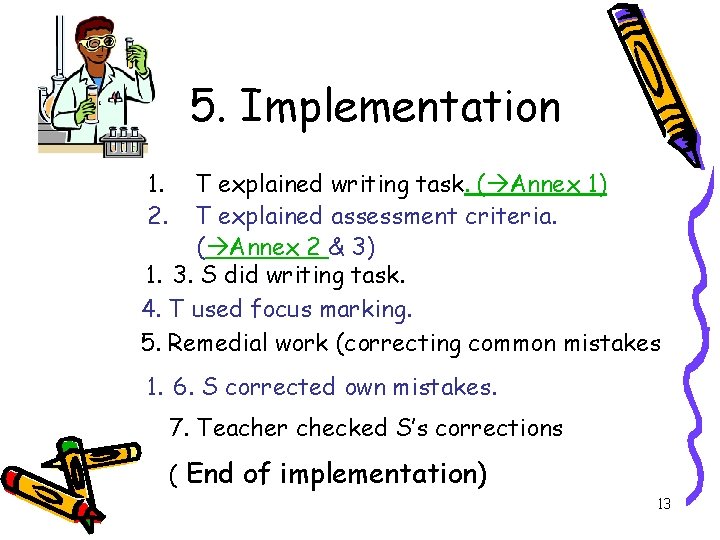
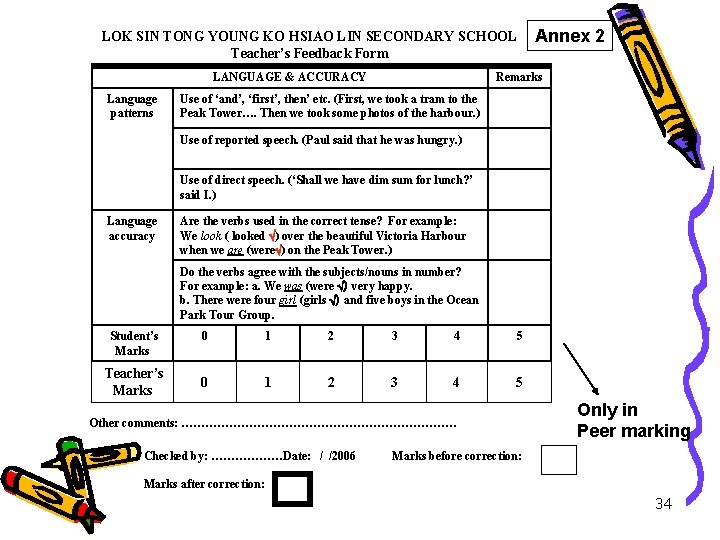
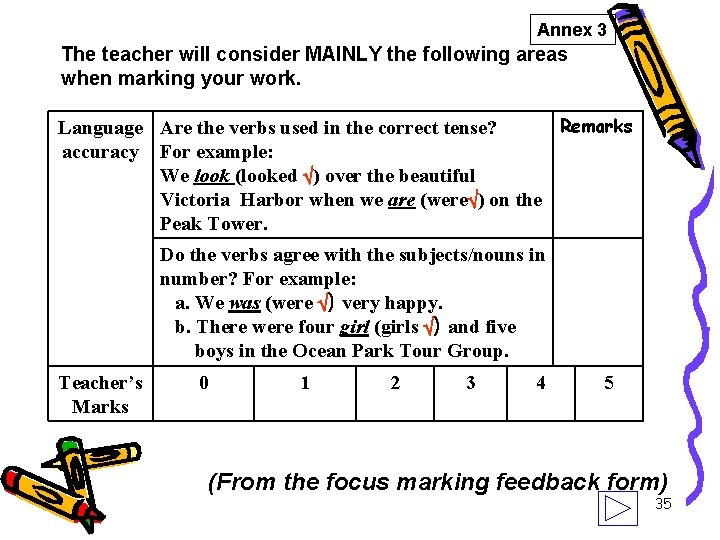
5. Implementation 1. T explained writing task. ( Annex 1) 2. T explained assessment criteria. ( Annex 2 & 3) 3. S did writing task. 4. T used focus marking. 5. Remedial work (correcting common mistakes) 6. S corrected own mistakes. 7. Teacher checked S’s corrections 12
5. Implementation 1. 2. T explained writing task. ( Annex 1) T explained assessment criteria. ( Annex 2 & 3) 1. 3. S did writing task. 4. T used focus marking. 5. Remedial work (correcting common mistakes 1. 6. S corrected own mistakes. 7. Teacher checked S’s corrections ( End of implementation) 13
6. Interim evaluation • Survey on teachers’ opinions All our 13 English teachers responded. Some did not answer all the questions. The answers are analyzed as follows. 14
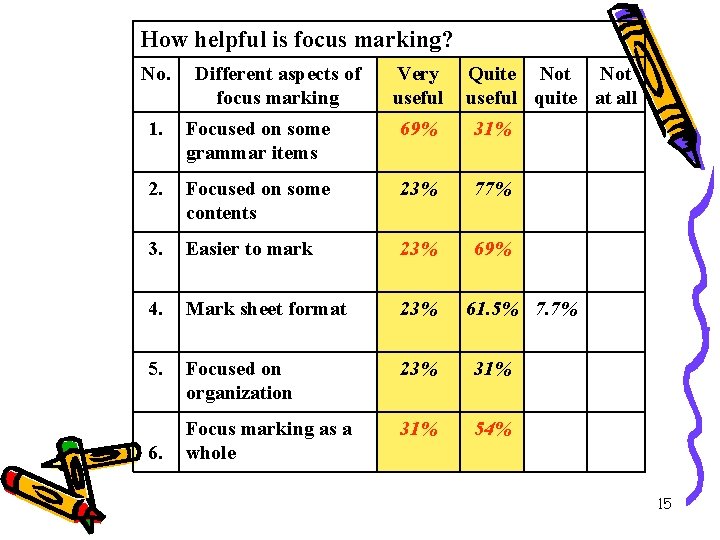
How helpful is focus marking? No. Different aspects of focus marking Very useful Quite Not useful quite at all 1. Focused on some grammar items 69% 31% 2. Focused on some contents 23% 77% 3. Easier to mark 23% 69% 4. Mark sheet format 23% 5. Focused on organization 23% 31% Focus marking as a whole 31% 54% 6. 61. 5% 7. 7% 15
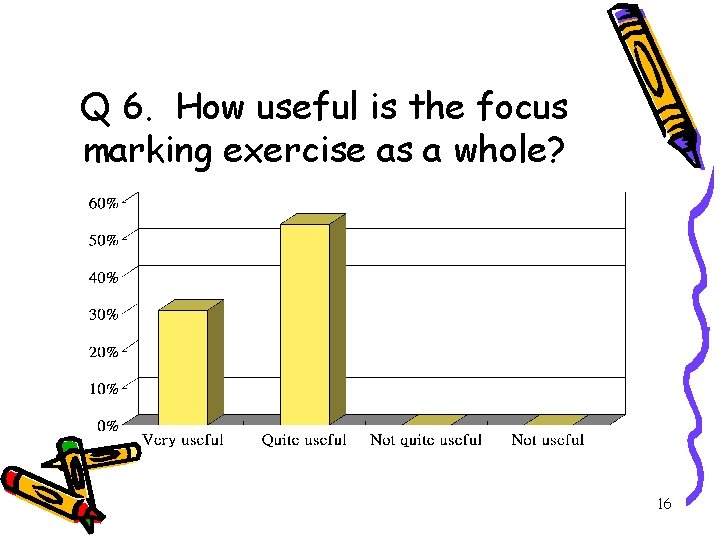
Q 6. How useful is the focus marking exercise as a whole? 16
Positive feedback: • Student performance improved i. e. fewer mistakes were made. • Clear requirements & examples Students found it easier to do the writing task. • Teachers found marking a less grueling task. 17
Other opinions: • Giving students clear instructions & requirements is crucial. • Teachers must refrain from correcting every mistake. • Do focus marking with them. 18
Other opinions: • Teachers must be relieved of guilty feelings – not doing their job. • Method: - explain rationale; - seek support of principal & parents (Content page) 19
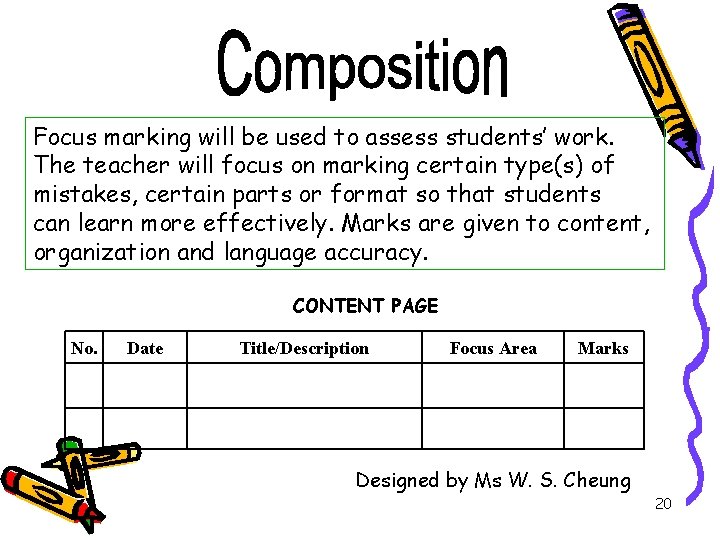
Focus marking will be used to assess students’ work. The teacher will focus on marking certain type(s) of mistakes, certain parts or format so that students can learn more effectively. Marks are given to content, organization and language accuracy. CONTENT PAGE No. Date Title/Description Focus Area Marks Designed by Ms W. S. Cheung 20
Vicious circle Learn little from mistakes Enhance ? Students make many mistakes fewer Detailed Focus marking 21
Can assessing their peer’s work help students remember the correction forms and use the grammar items accurately in future? 22
3. What is peer assessment? Students assess peer’s work with the help of some clear and specific guidelines. -- P. Weeden (2002) ‘Assessment – What’s in it for schools? ’, Routledge 23
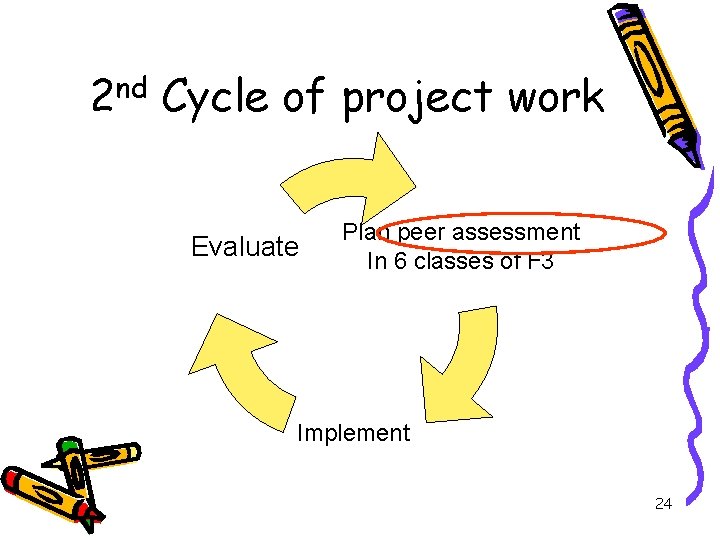
2 nd Cycle of project work Evaluate Plan peer assessment In 6 classes of F 3 Implement 24
4. Objective: - Students use focus marking to assess peer’s work Students learn through assessing peer’s work - Teachers use focus marking to assess students’ work Teacher gives quality feedback 25
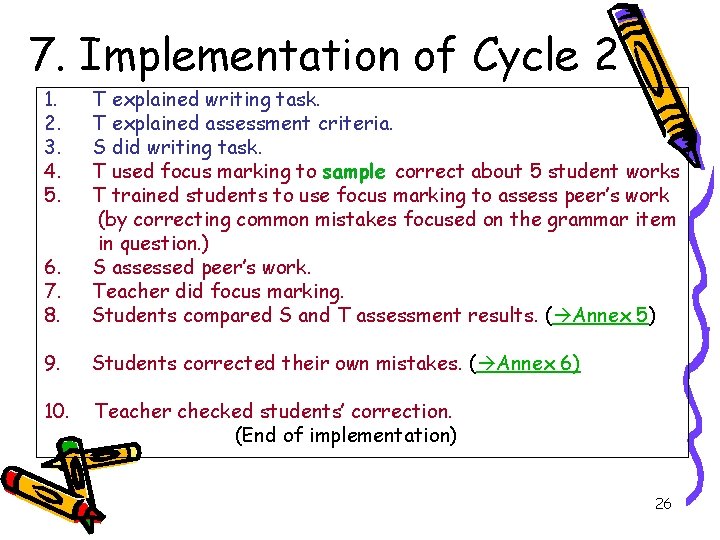
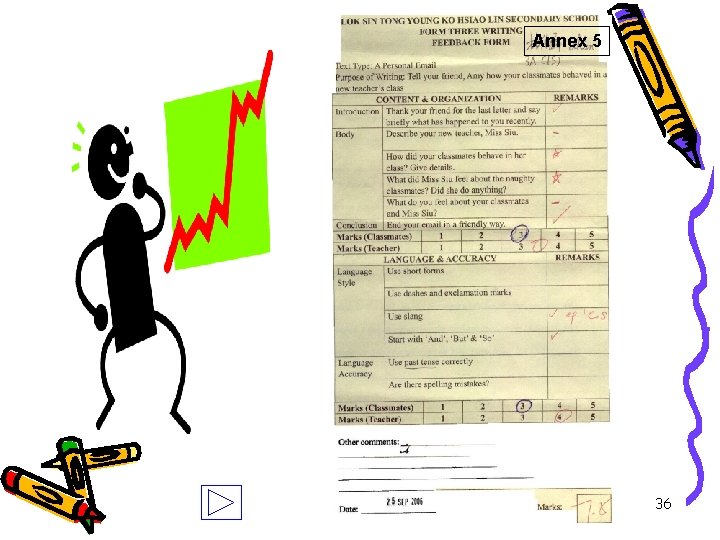
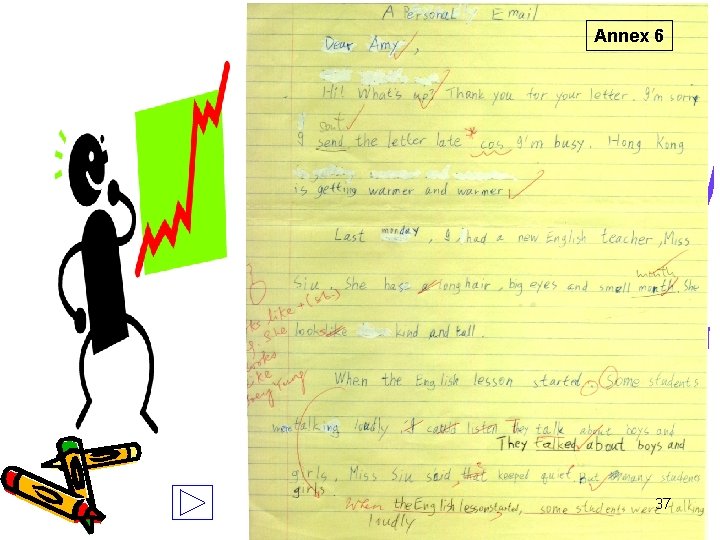
7. Implementation of Cycle 2 1. 2. 3. 4. 5. 6. 7. 8. T explained writing task. T explained assessment criteria. S did writing task. T used focus marking to sample correct about 5 student works T trained students to use focus marking to assess peer’s work (by correcting common mistakes focused on the grammar item in question. ) S assessed peer’s work. Teacher did focus marking. Students compared S and T assessment results. ( Annex 5) 9. Students corrected their own mistakes. ( Annex 6) 10. Teacher checked students’ correction. (End of implementation) 26
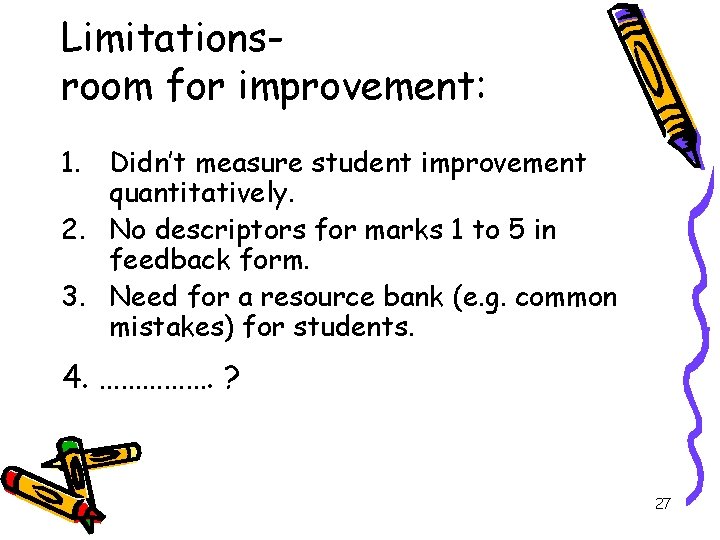
Limitationsroom for improvement: 1. Didn’t measure student improvement quantitatively. 2. No descriptors for marks 1 to 5 in feedback form. 3. Need for a resource bank (e. g. common mistakes) for students. 4. ……………. ? 27
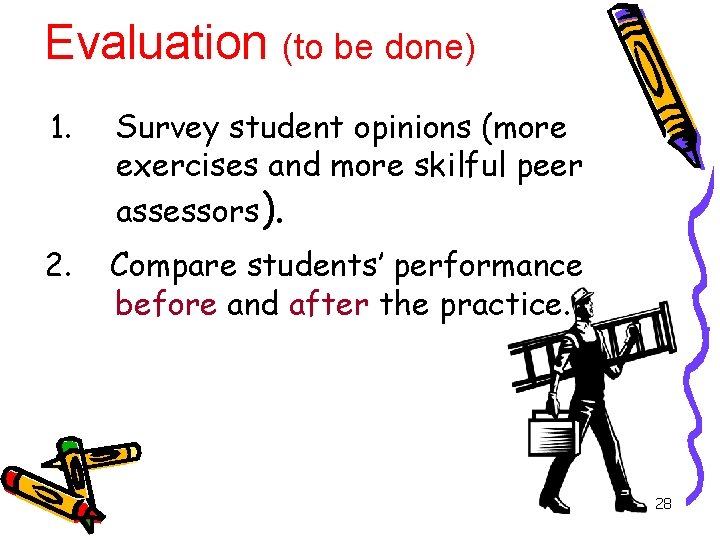
Evaluation (to be done) 1. Survey student opinions (more exercises and more skilful peer assessors). 2. Compare students’ performance before and after the practice. 28
The way ahead - sustainability of project - introduce the practice to other levels - introduce the practice to other subjects • Open up other professional development areas, e. g. peer assessment in oral presentation (trying out in F 6 & 7) 29
8. Conclusion of this sharing • Teacher’s reflection is necessary. • Give priority to effectiveness of learning. • Quality feedback holds the key to effective learning. 30
ONE AT A TIME! 31
THANK YOU! 32
• Writing: Sample Sub-paper • Your cousin Paul from Canada is visiting Hong Kong. You were on a tour of Hong Kong with him. Your teacher wants you to write a short article about the tour for the school magazine. • Describe what happened and how you felt about the tour in approximately 150 words. You can use the following pictures to help you write your article. They show what you saw and did during the tour. Annex 1 ? 33
LOK SIN TONG YOUNG KO HSIAO LIN SECONDARY SCHOOL Teacher’s Feedback Form LANGUAGE & ACCURACY Language patterns Annex 2 Remarks Use of ‘and’, ‘first’, then’ etc. (First, we took a tram to the Peak Tower…. Then we took some photos of the harbour. ) Use of reported speech. (Paul said that he was hungry. ) Use of direct speech. (‘Shall we have dim sum for lunch? ’ said I. ) Language accuracy Are the verbs used in the correct tense? For example: We look ( looked √) over the beautiful Victoria Harbour when we are (were√) on the Peak Tower. ) Do the verbs agree with the subjects/nouns in number? For example: a. We was (were √) very happy. b. There were four girl (girls √) and five boys in the Ocean Park Tour Group. Student’s Marks Teacher’s Marks 0 1 2 3 4 5 Other comments: ……………………………… Checked by: ………………Date: / /2006 Only in Peer marking Marks before correction: Marks after correction: 34
Annex 3 The teacher will consider MAINLY the following areas when marking your work. Remarks Language Are the verbs used in the correct tense? accuracy For example: We look (looked √) over the beautiful Victoria Harbor when we are (were√) on the Peak Tower. Do the verbs agree with the subjects/nouns in number? For example: a. We was (were √) very happy. b. There were four girl (girls √) and five boys in the Ocean Park Tour Group. Teacher’s Marks 0 1 2 3 4 5 (From the focus marking feedback form) 35
Annex 5 36
Annex 6 37