
Using EZNEC to Model Antennas A Hands on
- Slides: 16
Using EZNEC to Model Antennas A Hands on Demonstration Of the Basic Concepts of Using the EZNEC Application
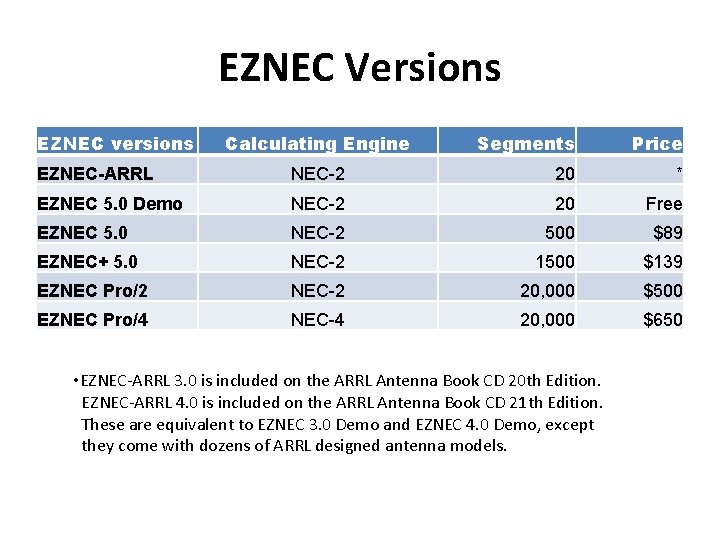
EZNEC Versions EZNEC versions Calculating Engine Segments Price EZNEC-ARRL NEC-2 20 * EZNEC 5. 0 Demo NEC-2 20 Free EZNEC 5. 0 NEC-2 500 $89 EZNEC+ 5. 0 NEC-2 1500 $139 EZNEC Pro/2 NEC-2 20, 000 $500 EZNEC Pro/4 NEC-4 20, 000 $650 • EZNEC-ARRL 3. 0 is included on the ARRL Antenna Book CD 20 th Edition. EZNEC-ARRL 4. 0 is included on the ARRL Antenna Book CD 21 th Edition. These are equivalent to EZNEC 3. 0 Demo and EZNEC 4. 0 Demo, except they come with dozens of ARRL designed antenna models.
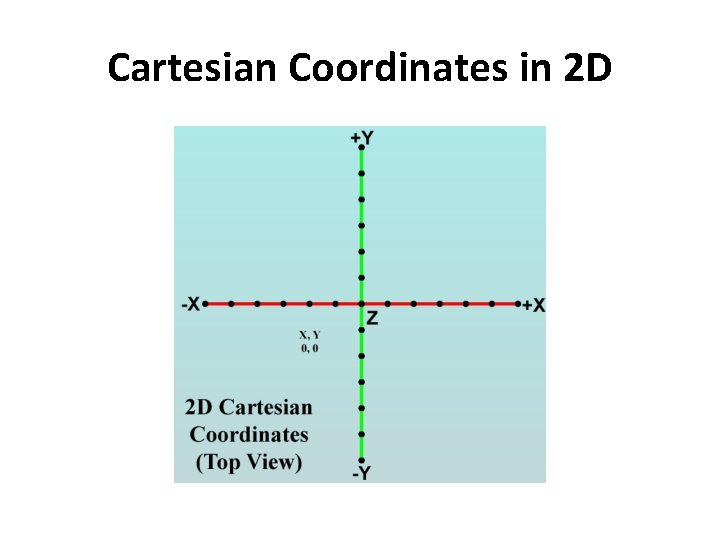
Cartesian Coordinates in 2 D
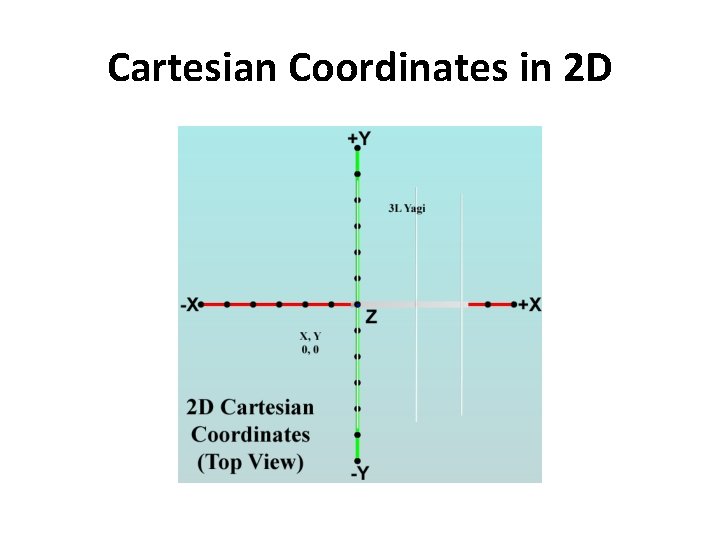
Cartesian Coordinates in 2 D
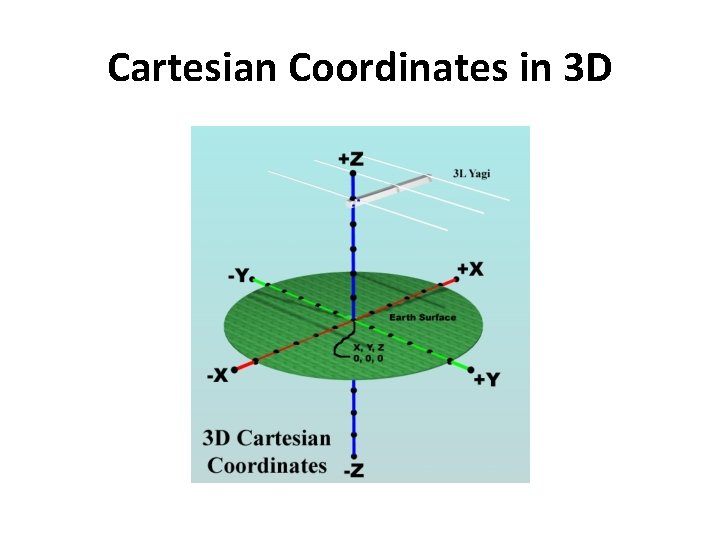
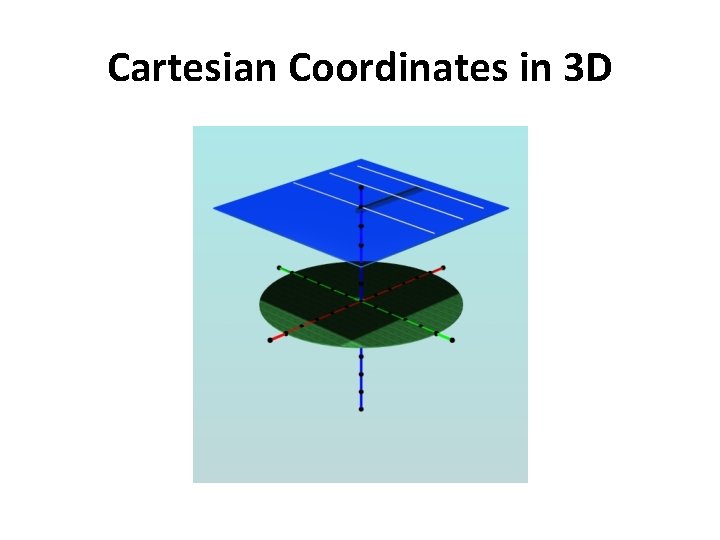
Cartesian Coordinates in 3 D
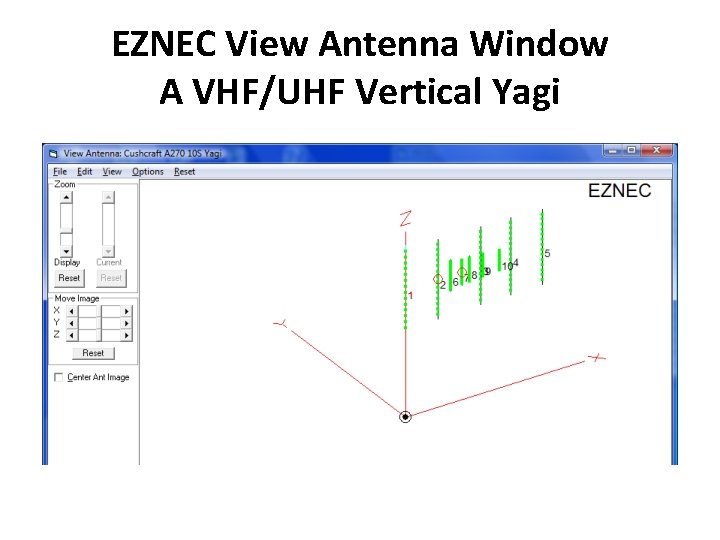
EZNEC View Antenna Window A VHF/UHF Vertical Yagi
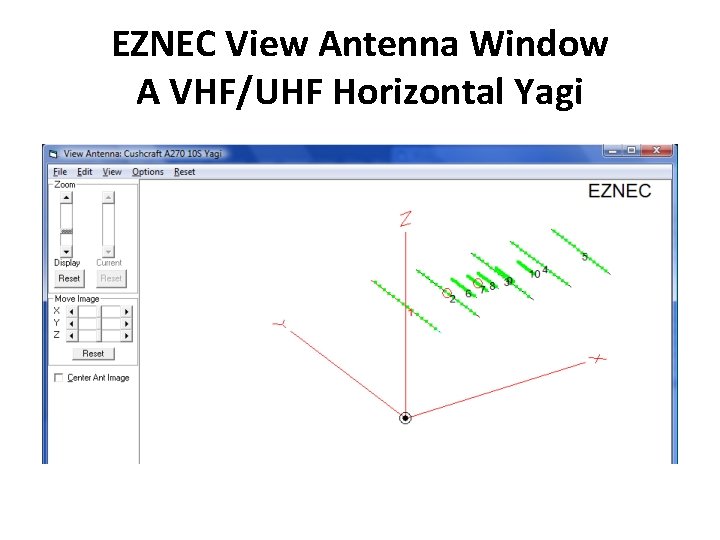
EZNEC View Antenna Window A VHF/UHF Horizontal Yagi
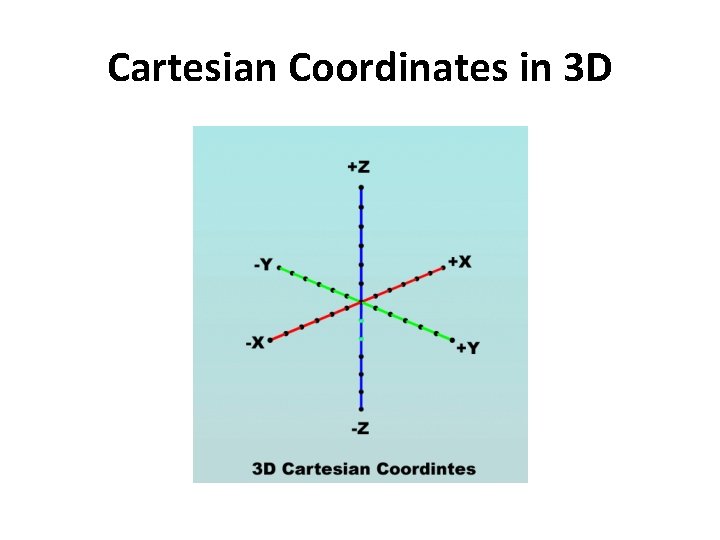
Cartesian Coordinates in 3 D
Cartesian Coordinates in 3 D
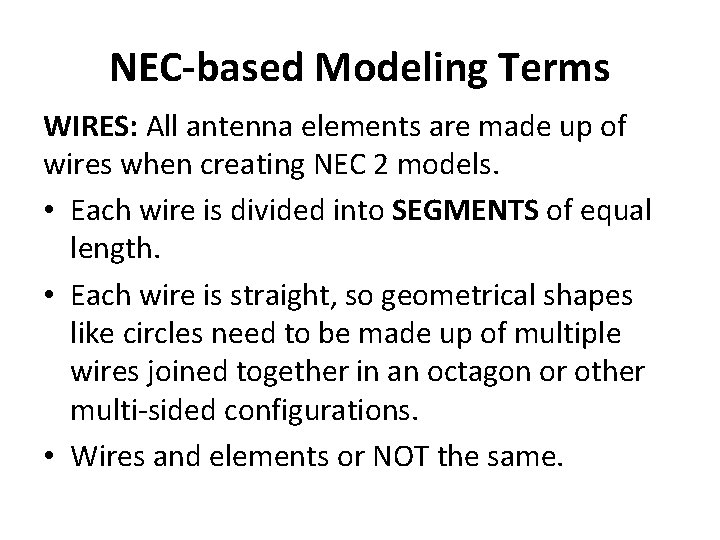
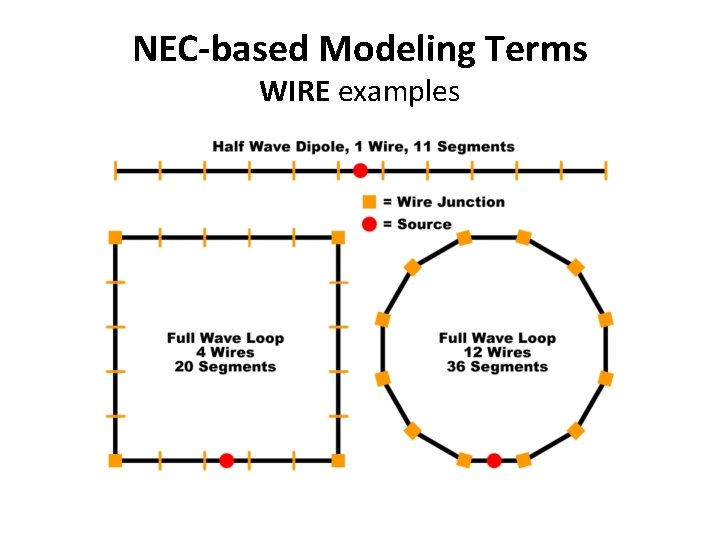
NEC-based Modeling Terms WIRES: All antenna elements are made up of wires when creating NEC 2 models. • Each wire is divided into SEGMENTS of equal length. • Each wire is straight, so geometrical shapes like circles need to be made up of multiple wires joined together in an octagon or other multi-sided configurations. • Wires and elements or NOT the same.
NEC-based Modeling Terms WIRE examples
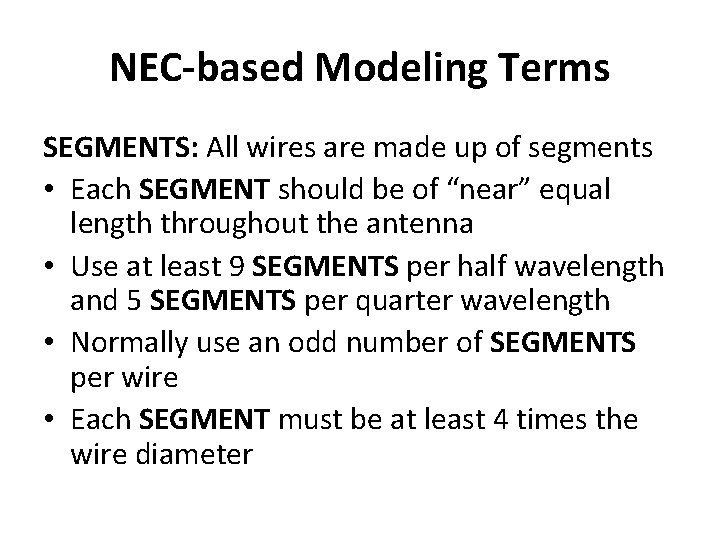
NEC-based Modeling Terms SEGMENTS: All wires are made up of segments • Each SEGMENT should be of “near” equal length throughout the antenna • Use at least 9 SEGMENTS per half wavelength and 5 SEGMENTS per quarter wavelength • Normally use an odd number of SEGMENTS per wire • Each SEGMENT must be at least 4 times the wire diameter
Wires Smires How in the heck can I model a Yagi made of aluminum tubing or a J-pole made of copper piping when I can only model using WIRES? ? Don’t confuse the EZNEC term WIRES with electrical wiring. They are NOT the same thing. Do you remember the “skin effect”?
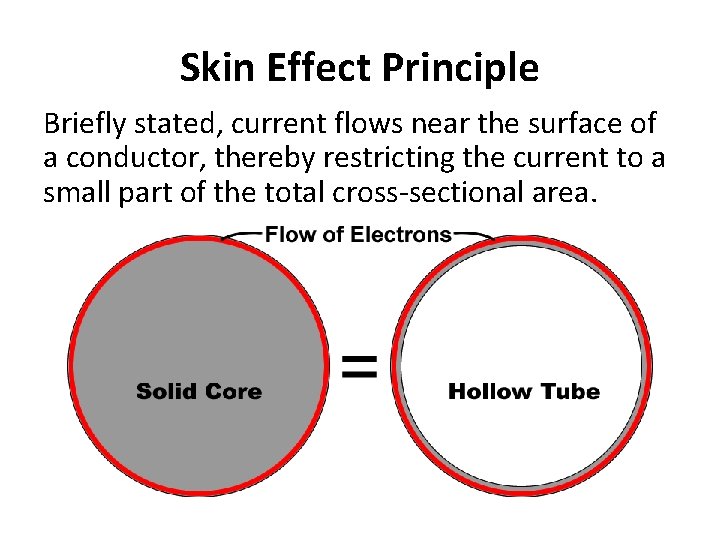
Skin Effect Principle Briefly stated, current flows near the surface of a conductor, thereby restricting the current to a small part of the total cross-sectional area.
EZNEC Demonstration • Create a half-wavelength 20 m dipole resonant at 14. 250 MHz • Manipulate dipole in EZNEC to show to tweak your design and make easy changes and/or data comparisons (a useful tool) • Add a reflector to dipole to make a 2 L yagi • Add a director to make a 3 L yagi
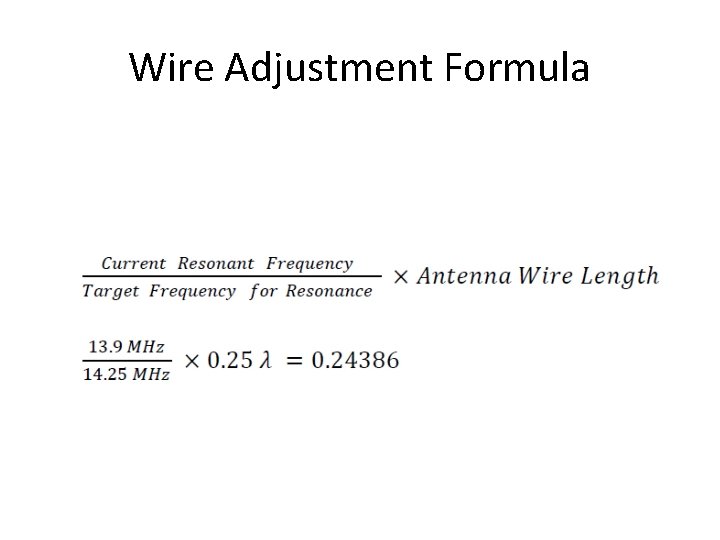
Wire Adjustment Formula