
Using expanded noun phrases for descriptive detail LEAD
- Slides: 6
Using expanded noun phrases for descriptive detail
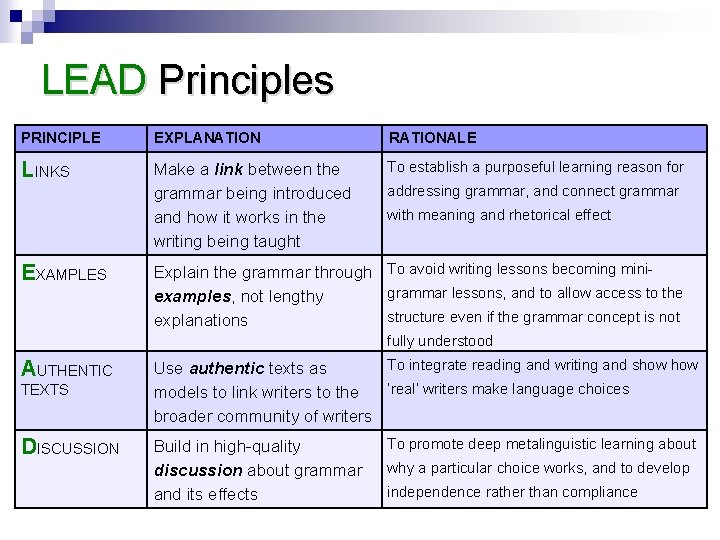
LEAD Principles PRINCIPLE EXPLANATION RATIONALE LINKS Make a link between the grammar being introduced and how it works in the writing being taught To establish a purposeful learning reason for EXAMPLES addressing grammar, and connect grammar with meaning and rhetorical effect Explain the grammar through To avoid writing lessons becoming minigrammar lessons, and to allow access to the examples, not lengthy structure even if the grammar concept is not explanations fully understood AUTHENTIC TEXTS DISCUSSION To integrate reading and writing and show Use authentic texts as ‘real’ writers make language choices models to link writers to the broader community of writers Build in high-quality discussion about grammar and its effects To promote deep metalinguistic learning about why a particular choice works, and to develop independence rather than compliance
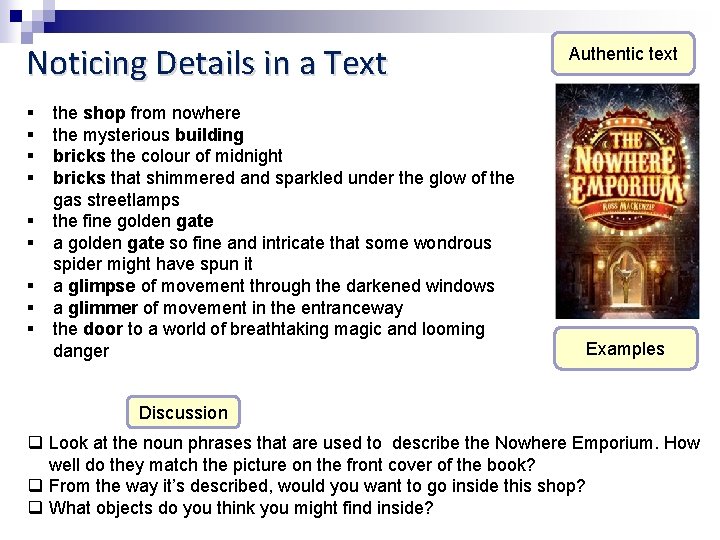
Noticing Details in a Text § § § § § the shop from nowhere the mysterious building bricks the colour of midnight bricks that shimmered and sparkled under the glow of the gas streetlamps the fine golden gate a golden gate so fine and intricate that some wondrous spider might have spun it a glimpse of movement through the darkened windows a glimmer of movement in the entranceway the door to a world of breathtaking magic and looming danger Authentic text Examples Discussion q Look at the noun phrases that are used to describe the Nowhere Emporium. How well do they match the picture on the front cover of the book? q From the way it’s described, would you want to go inside this shop? q What objects do you think you might find inside?
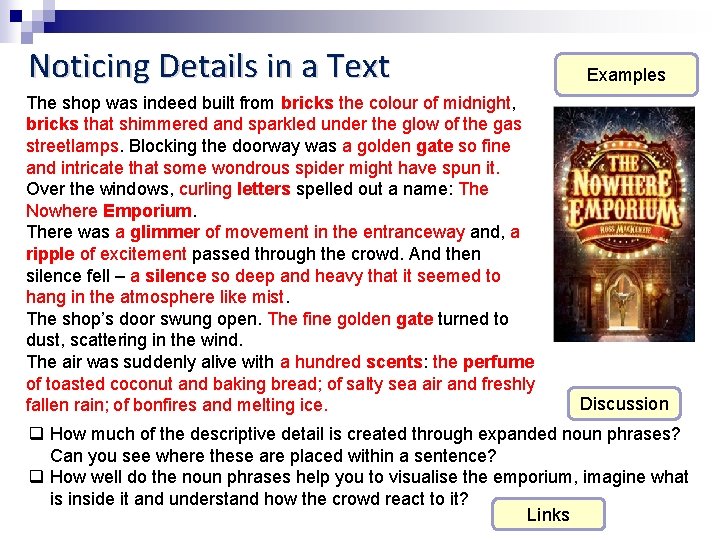
Noticing Details in a Text The shop was indeed built from bricks the colour of midnight, bricks that shimmered and sparkled under the glow of the gas streetlamps. Blocking the doorway was a golden gate so fine and intricate that some wondrous spider might have spun it. Over the windows, curling letters spelled out a name: The Nowhere Emporium. There was a glimmer of movement in the entranceway and, a ripple of excitement passed through the crowd. And then silence fell – a silence so deep and heavy that it seemed to hang in the atmosphere like mist. The shop’s door swung open. The fine golden gate turned to dust, scattering in the wind. The air was suddenly alive with a hundred scents: the perfume of toasted coconut and baking bread; of salty sea air and freshly fallen rain; of bonfires and melting ice. Examples Discussion q How much of the descriptive detail is created through expanded noun phrases? Can you see where these are placed within a sentence? q How well do the noun phrases help you to visualise the emporium, imagine what is inside it and understand how the crowd react to it? Links
Verbalising the Grammar-Writing Link A crucial element of the LEAD principles is helping writers to think explicitly (metalinguistically) about the choices they make. As a teacher, you need to support this by being crystal clear yourself about how you verbalise the link between a grammar choice and its effect in a particular text/context. Then express this in student-friendly language, as below. Verbalisation to share with students: When you are describing a scene in narrative, you can help your reader visualise it by describing it in detail. You might choose to use expanded noun phrases that provide a detailed description. Choose your noun phrases carefully!
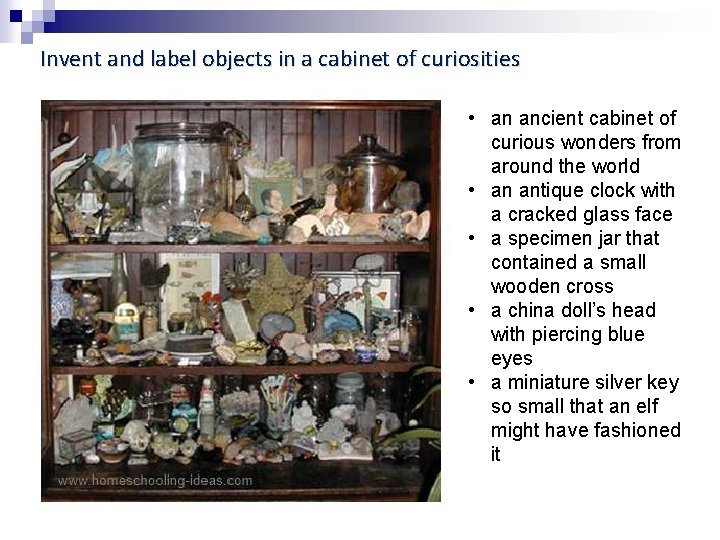
Invent and label objects in a cabinet of curiosities • an ancient cabinet of curious wonders from around the world • an antique clock with a cracked glass face • a specimen jar that contained a small wooden cross • a china doll’s head with piercing blue eyes • a miniature silver key so small that an elf might have fashioned it