
Using Essential Questions to Develop a Biblical Perspective
Using Essential Questions to Develop a Biblical Perspective 2 nd International Faith Integration Institute, Babcock University, 2017 Presented by Glynis Bradfield, Ph. D, Andrews University
Why do we ask questions?
Thumb Vote: Yes-Maybe-No To increase their understanding and use of a biblical perspective of course or subject content, my students need: 1. time to think about what they’re learning 2. to think about a biblical perspective for themselves 3. to connect the Bible with their lives, not just with what they study in class 4. more opportunities to practice using a biblical perspective
Thumb Vote: Yes-Maybe-No 6. I would like to teach from a biblical perspective, but I first need to figure it out myself. 7. I teach from a biblical perspective but my students don’t get how that works.
Workshop Tasks • Sign in – name and email • Establish context for faith integration in educator’s life and work. • Learn how to use the Visual Valet as a faith integration tool, focusing on questions that increase critical thinking and biblical perspective development. • Learn how to create units that build on essential questions.
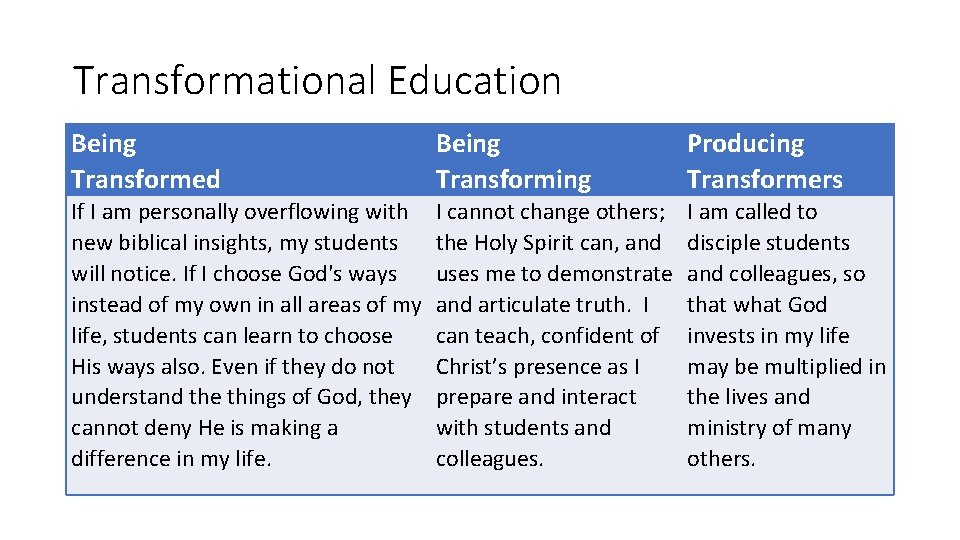
Transformational Education Being Transformed Being Transforming Producing Transformers If I am personally overflowing with new biblical insights, my students will notice. If I choose God's ways instead of my own in all areas of my life, students can learn to choose His ways also. Even if they do not understand the things of God, they cannot deny He is making a difference in my life. I cannot change others; the Holy Spirit can, and uses me to demonstrate and articulate truth. I can teach, confident of Christ’s presence as I prepare and interact with students and colleagues. I am called to disciple students and colleagues, so that what God invests in my life may be multiplied in the lives and ministry of many others.

Being Transformed • Start with personal Bible study. Pray before, during and after – continually. • Use the Visual Valet framework to identify and grapple with essential questions. Look for answers in God’s Word and world. • Connect the big picture to course content/discipline details. • Cultivate an eternal perspective. • Identify biblical principles that underpin course themes. Consider how biblical principles relate across disciplines.
Being Transforming. Producing Transformers. • Be intentional in planning faith-learning integration, in disciplineappropriate ways. Assess biblical integration. • Create a climate for student transformation. • Ask essential questions that lead students to consider biblical principles. Discuss answers, over time, encouraging connections to learning in home, church, and community • Encourage students to ask the questions of themselves and apply the principles in their personal lives.
Being Transforming. Producing Transformers. • Deal with common distortions to remove obstacles to growth and development. • Share what God has been teaching you and how He has been changing you. • As spiritual things are spiritually discerned, non-Christians may not understand God’s perspective. Pray for the Holy Spirit’s work in your preparation & discerning their real questions. Learn more: transformingteachers. org

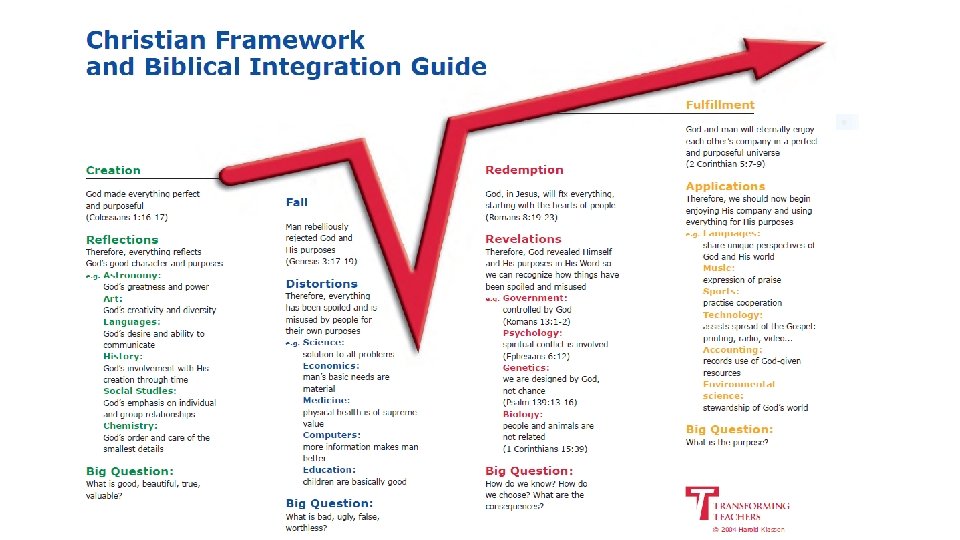
The BIG Picture • Our understanding and practice of God’s truth is very limited compared to the knowledge we have accumulated. At least part of the problem is a perceived detachment of biblical truth from almost everything that is not biblical…. • Biblical integration is not about finding the "right verse" or "the only“ Christian way to deal with every class and every subject. It is about fitting everything we know and teach into the very BIG picture of what God is doing. (p. 22) • Without an eternal perspective, life and all its component parts do not make sense. (p. 38) Klassen (2008), Visual Valet Guide

Teach tools for biblical perspective thinking • We model Christ-like behavior. We talk with students about our faith. We do devotions, Bible class, and chapel. Students get this part of a Biblical perspective—they encourage each other, help lead devotions and chapel, and participate in Bible class discussions. • But they don’t really seem to understand that they can use a Biblical perspective in all their subjects. How can we get them to understand this?

Big/Essential Questions • Open-ended – are meant to be explored, argued, and continually revisited and reflected upon • Have various plausible answers – often raise new questions • Thought provoking – stimulate students to engage in sustained inquiry and extended thinking • Genuine– reflect what real people ask in their work & daily lives
Question Purpose • Purpose is more important than format or phrasing • How the question is pursued determines if it is essential • Often begins with “Why? . . . In what ways…? How might…? ” • Can have yes/no-explain answers, with explanation/clarification.
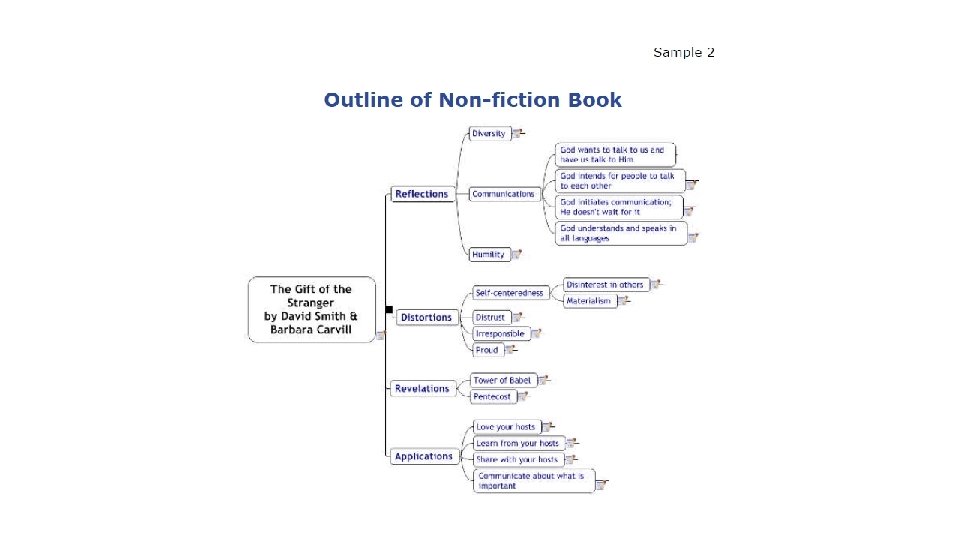
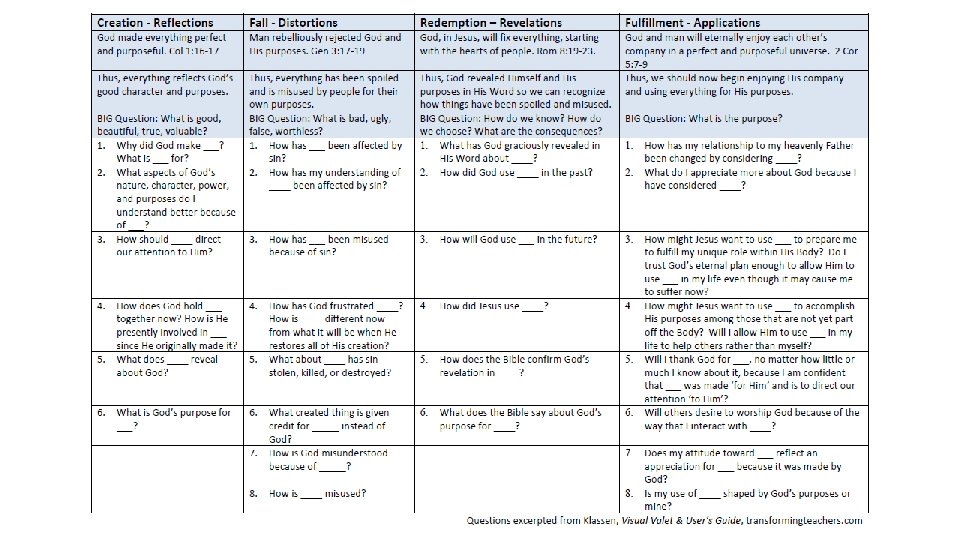
Activities 1. Pick a theme in your discipline 2. With this theme in mind, peruse the 99 Biblical Perspective questions 3. Mark questions that might work with this theme – at least 3 for each of the 4 Visual Valet sections 4. Narrow your choice to one questions for each of the 4 sections. Edit the question if needed for theme and discipline considered. 5. Share your 4 edited questions with your group
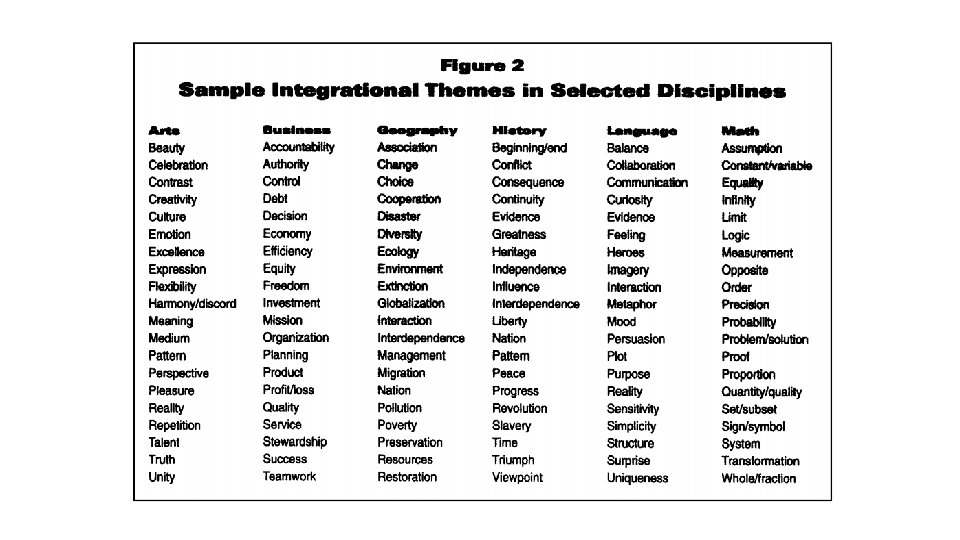
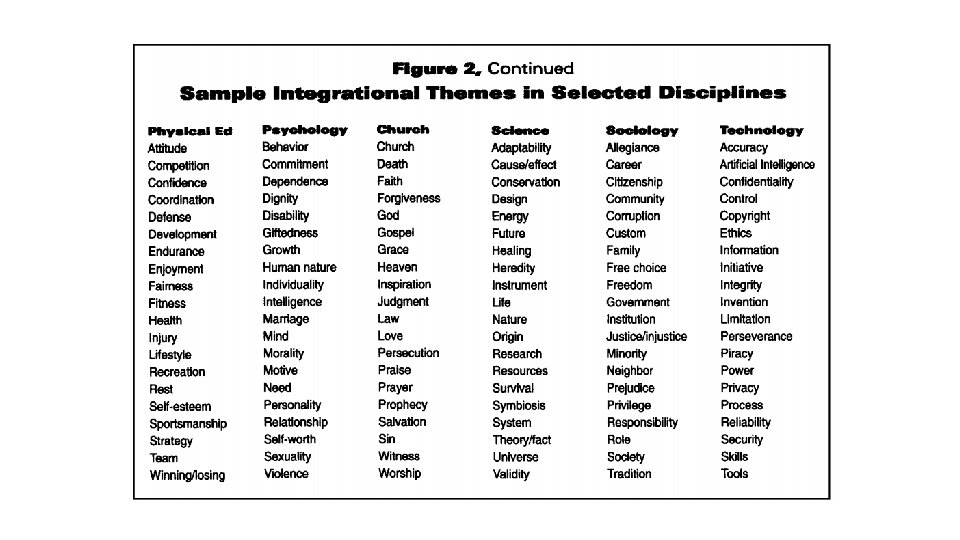
Activities 1. Pick a theme in your discipline 2. With this theme in mind, peruse the 99 Biblical Perspective questions and the Visual Valet table of fill-in-blank questions 3. Mark questions that might work with this theme – at least 3 for each of the 4 Visual Valet sections 4. Narrow your choice to one questions for each of the 4 sections. Edit the question if needed for theme and discipline considered. 5. Share your 4 edited questions with your group
Activities 1. Pick a theme in your discipline 2. With this theme in mind, peruse the 99 Biblical Perspective questions 3. Mark questions that might work with this theme – at least 3 for each of the 4 Visual Valet sections 4. Narrow your choice to one questions for each of the 4 sections. Edit the question if needed for theme and discipline considered. 5. Share your 4 edited questions with your group
Activities 1. Pick a theme in your discipline 2. With this theme in mind, peruse the 99 Biblical Perspective questions 3. Mark questions that might work with this theme – at least 3 for each of the 4 Visual Valet sections 4. Narrow your choice to one questions for each of the 4 sections. Edit the question if needed for theme and discipline considered. 5. Share your 4 edited questions with your group. • Ask clarifying questions • Consider pros and cons of this tool for your work
Visual Valet PROS • Big idea/theme tool for full chapters or units • Simple enough to be remembered • Use at any level, any discipline • Critical thinking activity which can be effective used in pauses, once trained CONS • Requires training and use to build habitual use
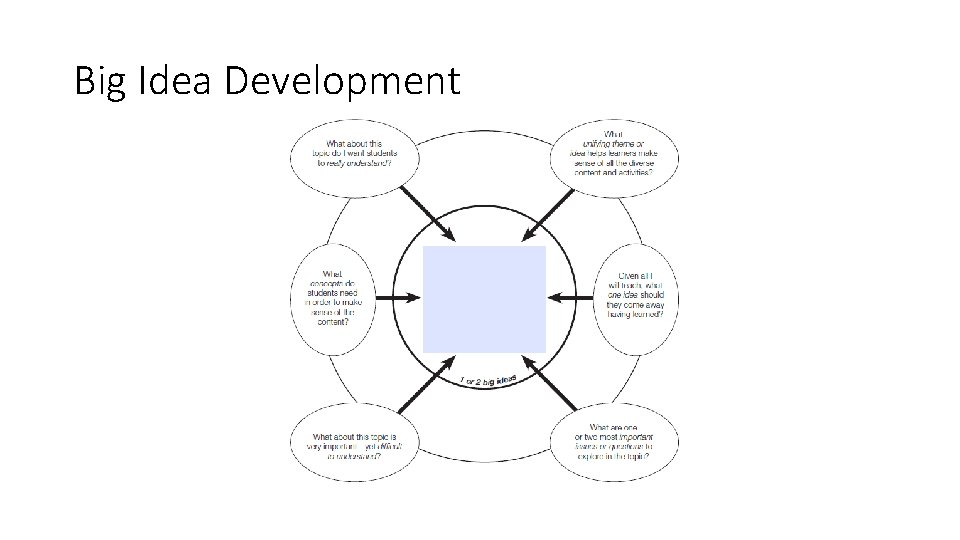
Big Idea Development
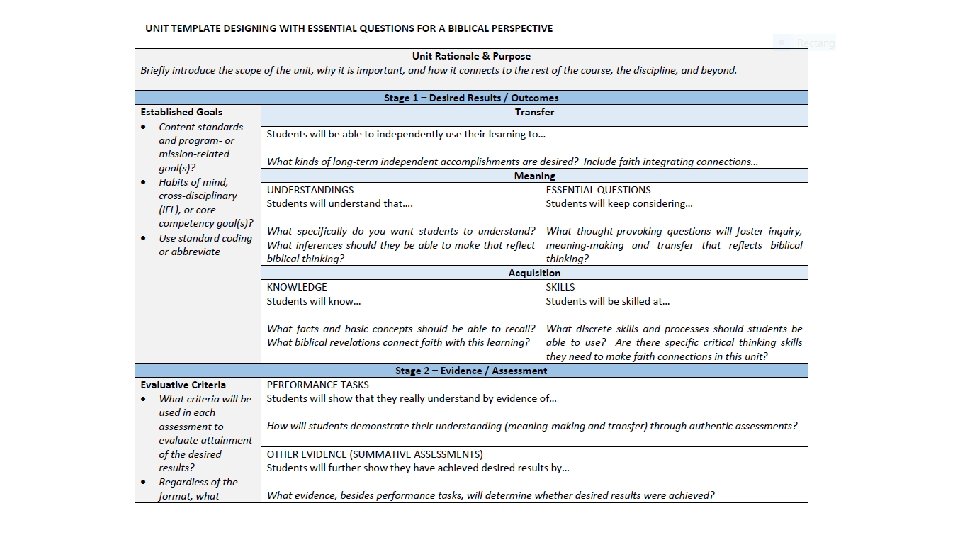
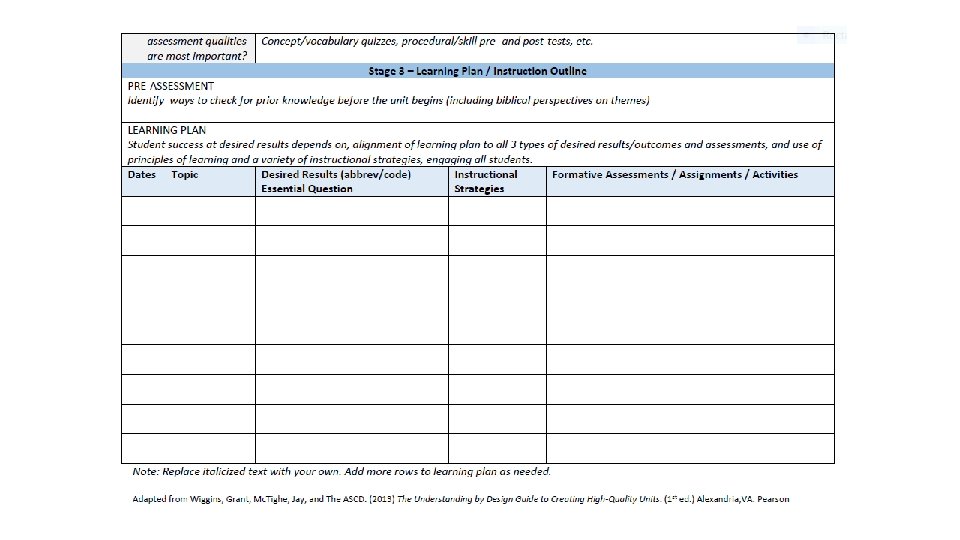
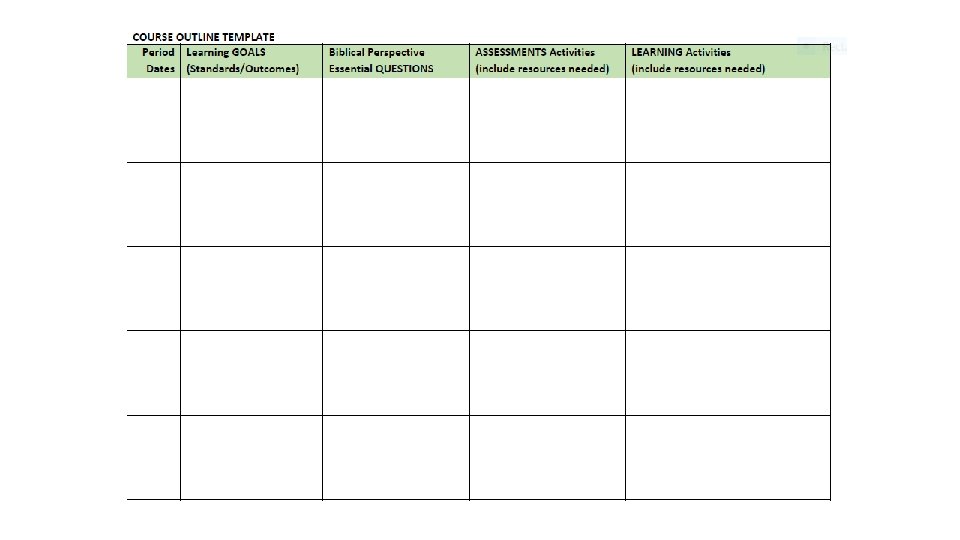
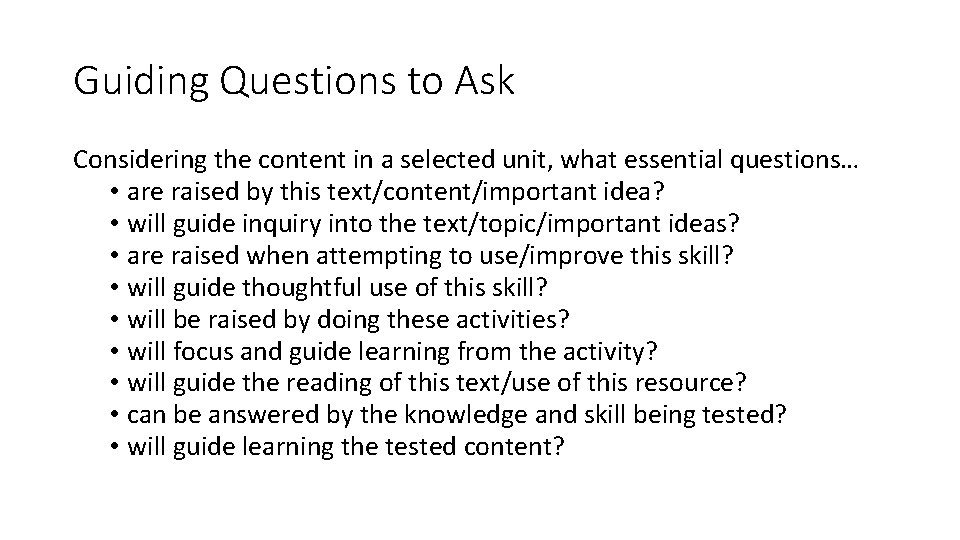
Guiding Questions to Ask Considering the content in a selected unit, what essential questions… • are raised by this text/content/important idea? • will guide inquiry into the text/topic/important ideas? • are raised when attempting to use/improve this skill? • will guide thoughtful use of this skill? • will be raised by doing these activities? • will focus and guide learning from the activity? • will guide the reading of this text/use of this resource? • can be answered by the knowledge and skill being tested? • will guide learning the tested content?
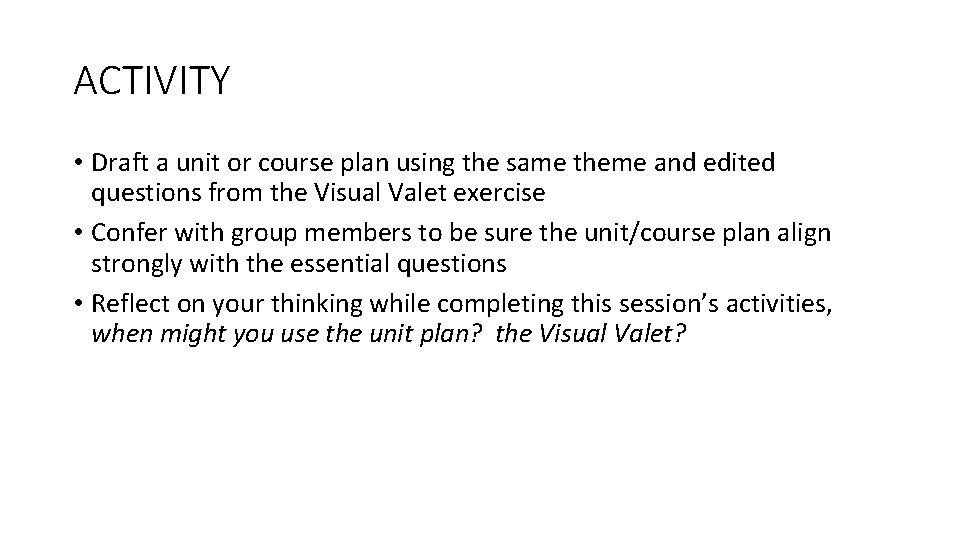
ACTIVITY • Draft a unit or course plan using the same theme and edited questions from the Visual Valet exercise • Confer with group members to be sure the unit/course plan align strongly with the essential questions • Reflect on your thinking while completing this session’s activities, when might you use the unit plan? the Visual Valet?
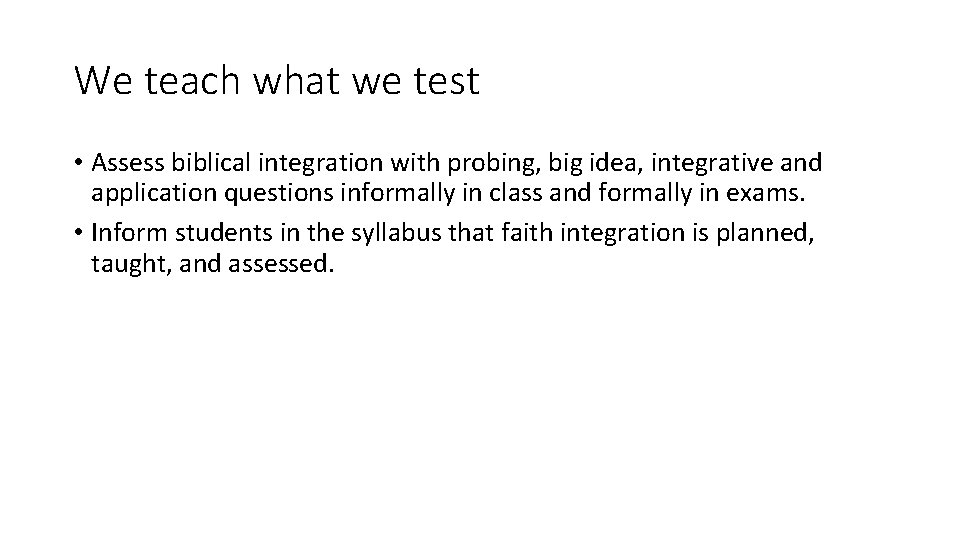
We teach what we test • Assess biblical integration with probing, big idea, integrative and application questions informally in class and formally in exams. • Inform students in the syllabus that faith integration is planned, taught, and assessed.
Why do we ask questions? How might a question be a redemptive tool?
Resources • Zip drive: CIRCLE curation of continuing education resources • circle. adventist. org • jae. adventist. org • educators. adventist. org • Glynis Bradfield, glynisb@andrews. edu
- Slides: 33