
Using Emotional Intelligence to Achieve Peak Performance davidalba
Using Emotional Intelligence to Achieve Peak Performance davidalba 007@gmail. com
Be Prepared Please check your pockets, purse, briefcase, cell phone, wallet for an item that “speaks” about who you are. It could be a photo, jewelry, membership card, screen photo, memento, stub, souvenir, etc.
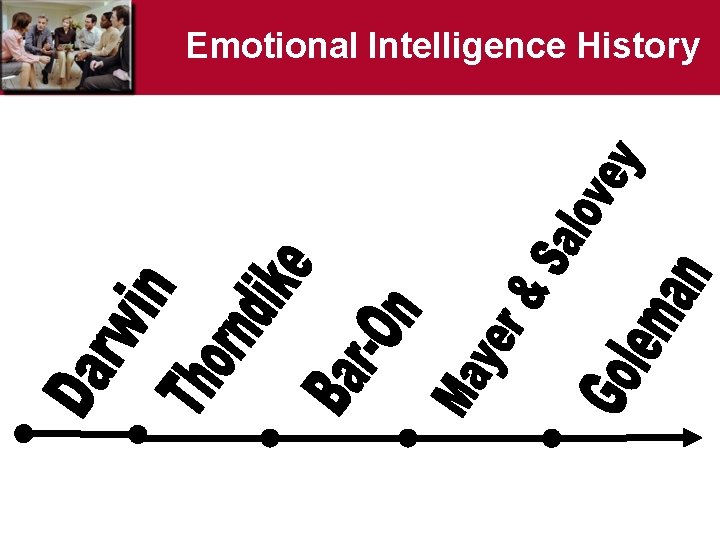
Emotional Intelligence History
EQ Definitions Formal Definition: the ability to use your emotions to form an optimal relationship with yourself and others. Daniel Goleman Definition: the capacity for recognizing our own feelings and those of others, for motivating ourselves and for managing emotions well in ourselves and others.
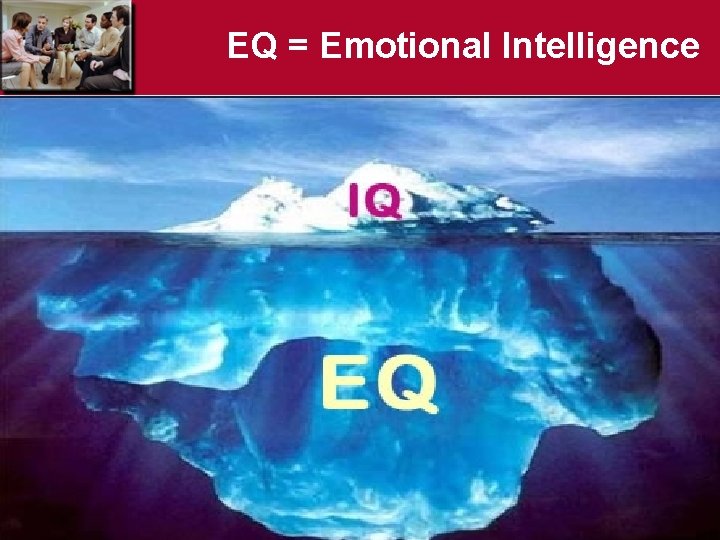
EQ = Emotional Intelligence

Goleman’s EQ Model
EQ Findings • High EQ people are happier, healthier and more successful in relationships. • High EQ people exhibit: – – Balance between emotion and reason Awareness of their own feelings Empathy and compassion for others Signs of high self-esteem • We aren’t all created emotionally equal - we have different emotional temperaments. • The way we act out, express ourselves, and use our emotions can be changed!
EQ at Work • 70% of the reasons for losing a customer are EQ related. • 59% of workers report they do not receive recognition for a job well done. • 75% of workers say they do not find management’s leadership inspiring. • 50% of time wasted in the workplace is due to the lack of trust. • Everyday 50, 000 people quit their jobs. • 85% of workers report they could work more effectively. • 80% of Americans do not look forward to going to work.

EQ at Work (cont) • EQ is greater than 85% of what enables “star performers” to develop into great leaders. • EQ allows people to think more clearly under pressure, eliminating time wasted by anger, anxiety and fear. • As a determinant of high performance, EQ is twice as important as technical and cognitive skills combined. • Workers with high EQ get along better and solve problems more efficiently. • Workers with high EQ positively impact people they interact with – they are good role models of excellent performance.
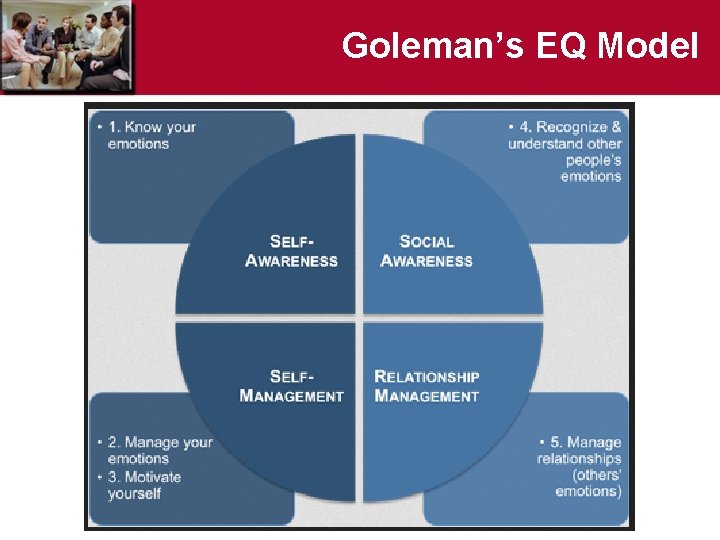
Goleman’s EQ Model
Self-Awareness Self-awareness means having a deep understanding of one’s emotions…how their feelings affect them, other people and their job performance… Daniel Goleman
Self-Awareness People with high skill levels of self-awareness: • Interact easily with team members and clients who are demanding. • Make decisions in a calm state of mind. • Accurately assess themselves and exhibit openness. • Are quietly self-confident. • Accurately assess people and situations.
Components of Self-Awareness • Emotional Awareness - recognizes one’s emotions and their effects. • Accurate Self-Assessment - knowing one’s strengths and limits. • Self-Confidence - a strong sense of one’s self-worth and capabilities.
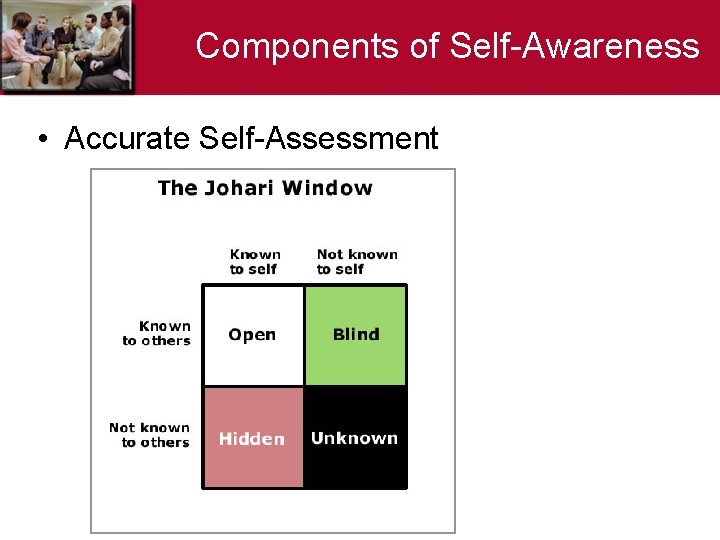
Components of Self-Awareness • Accurate Self-Assessment
Components of Self-Awareness • Self-Confidence – Understand your talent – Suspend self-doubt and push through feelings of self-doubt to boost confidence
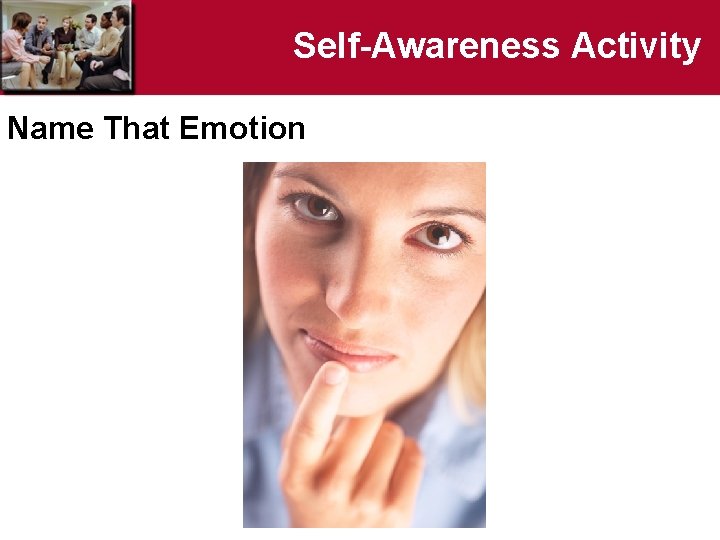
Self-Awareness Activity Name That Emotion
Actions to Build Self-Awareness • • Develop habit of self-observation Spend time daily on self-reflection Keep a journal Ask for feedback
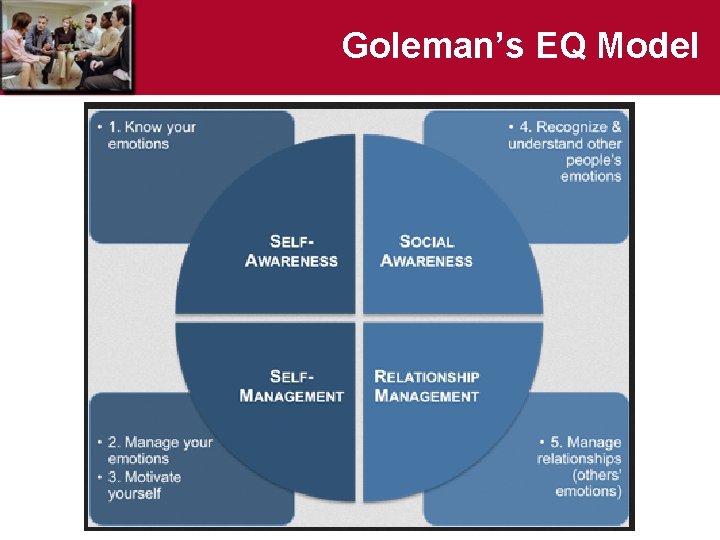
Goleman’s EQ Model
Self-Management Self-management, which is like an on-going inner conversation, is the component of EQ that frees us from being prisoners of our feelings. People engaged in such a conversation…find ways to control (emotional impulses) and even to channel (emotions ) in useful ways… Daniel Goleman
Components of Self-Management • • • Self-Control Trustworthiness Conscientiousness Adaptability Innovation
Self-Management The ultimate act of personal responsibility at work may be taking control of our own state of mind. Daniel Goleman
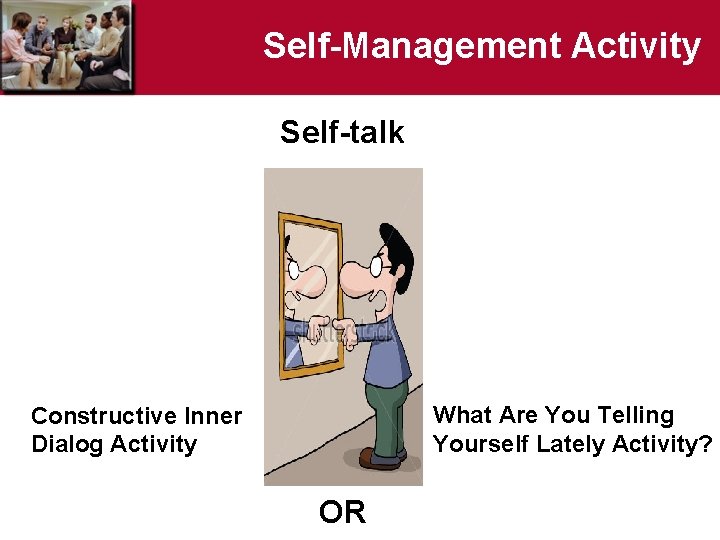
Self-Management Activity Self-talk What Are You Telling Yourself Lately Activity? Constructive Inner Dialog Activity OR
Actions to Build Self-Management • Develop constructive inner dialogs • Avoid distorted thinking – Overgeneralizations – Destructive labeling • Derail counterproductive behavior – Sarcasm – Avoidance – Boastfulness • • Use humor Redirect your emotional energy Take time out to relax Behavior rehearsal
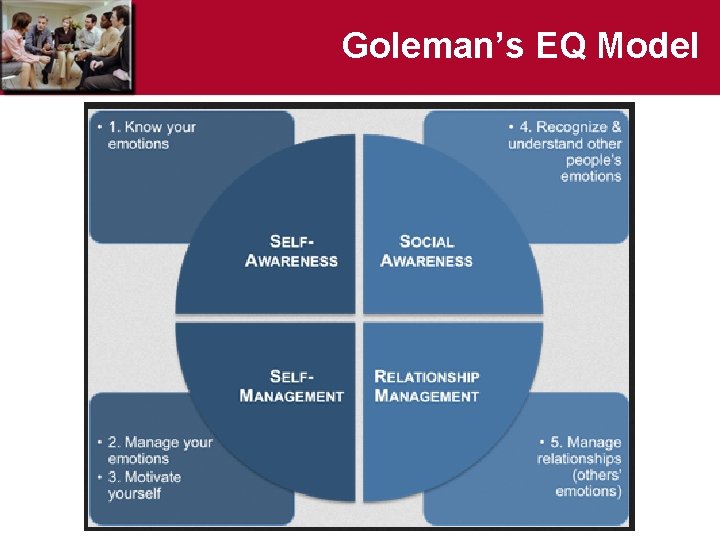
Goleman’s EQ Model
Self-Motivation (People who possess self-motivation skills) are driven to achieve beyond expectations…The key word here is achieve…They are motivated by a deeply embedded desire to achieve for the sake of achievement (alone)… Daniel Goleman
Self-Motivation People with high skill levels of self-motivation: • Initiate improvements in their jobs, departments and division • Succeed at difficult assignments more often than those with low self-motivation • Are less likely to quit their job or leave the organization • Motivate their staff and others they interact with • Magnetize a cadre of people around them with the same traits
Components of Self-Motivation • • Achievement drive Commitment Initiative Optimism
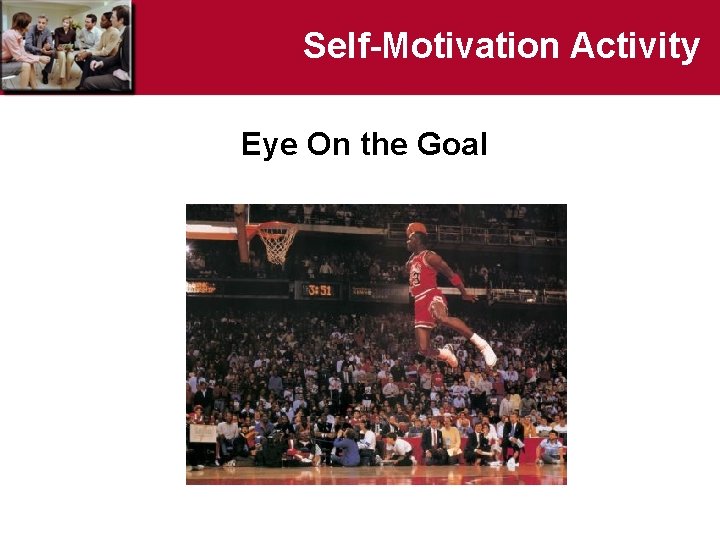
Self-Motivation Activity Eye On the Goal
Actions to Build Self-Motivation • Use motivational self-statements (affirmations) • Use positive mental imagery • Find an emotional mentor • Create a healthy work environment

Goleman’s EQ Model Empathy
Empathy …empathy means thoughtfully considering employee’s (other’s) feelings - along with other factors - in the process of making intelligent decisions… Daniel Goleman
Empathy People with high skill levels of empathy: • Frequently inform people during times of change and uncertainty • Promote collaboration • Develop all staff to their potential • Develop and retain the intellectual capital of the organization • Achieve consistently high performance of direct reports • Enjoy increased job motivation and satisfaction of staff
Components of Empathy • • • Understanding others Developing others Serving others Leveraging diversity Political awareness
Empathy Notes • Understanding is not the same as agreement • Research suggests a negative correlation between being in positions of power and empathetic abilities • In a team oriented, customer focused organization, empathy is critical
Empathy Quiz – Thank you
Actions to Build Empathy • Look for the good and similar • Assume people have the best of intentions • Practice a “walk in their shoes” • Listen better • Try to identify with what the other person is saying and feeling (perhaps by reflecting on an experience you’ve had that produced a similar emotion in you)
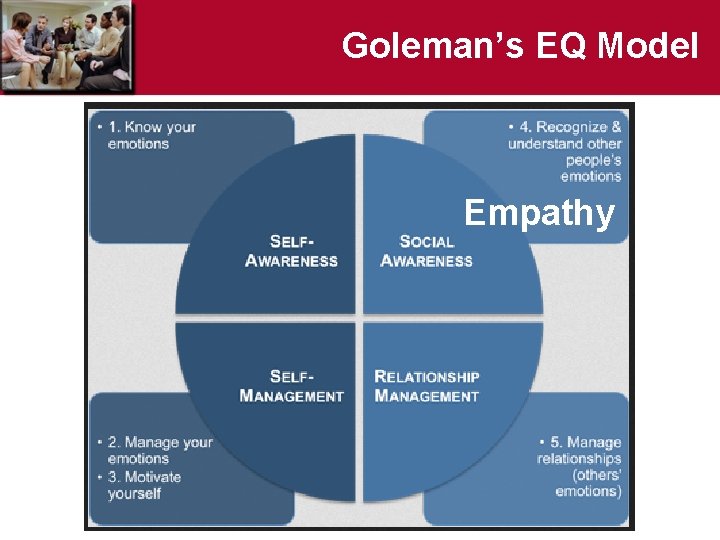
Goleman’s EQ Model Empathy
Managing Relationships Adeptness at inducing desirable responses in others. Daniel Goleman
Managing Relationships People with high skill levels of managing relationships: • Can count on a wide circle of colleagues during difficult times • Find the “common ground” among differing views • Effectively leads teams • Achieve change initiative objectives
Components of Managing Relationships • • Influence Communication Conflict management Leadership Change catalyst Building bonds Collaboration and cooperation
Actions to Build Managing Relationships • Know the relationship boundaries and expectations • Use appropriate self-disclosure • Keep confidences • Be enthusiastic • Listen more and talk less
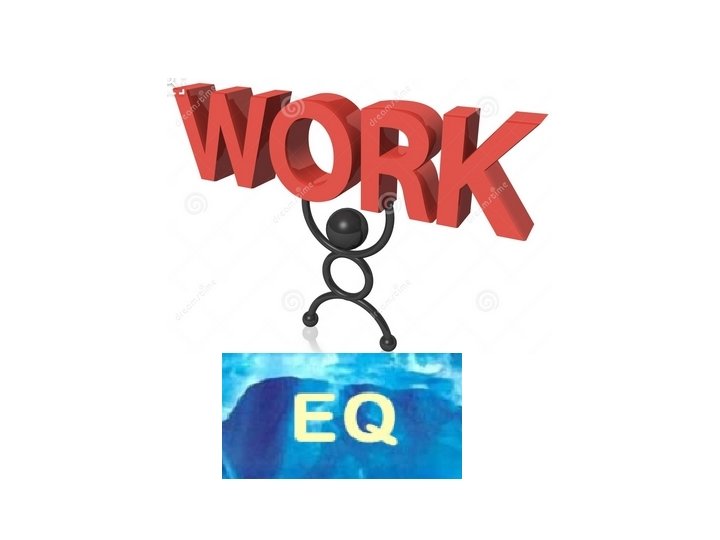
Personal EI Development Plan
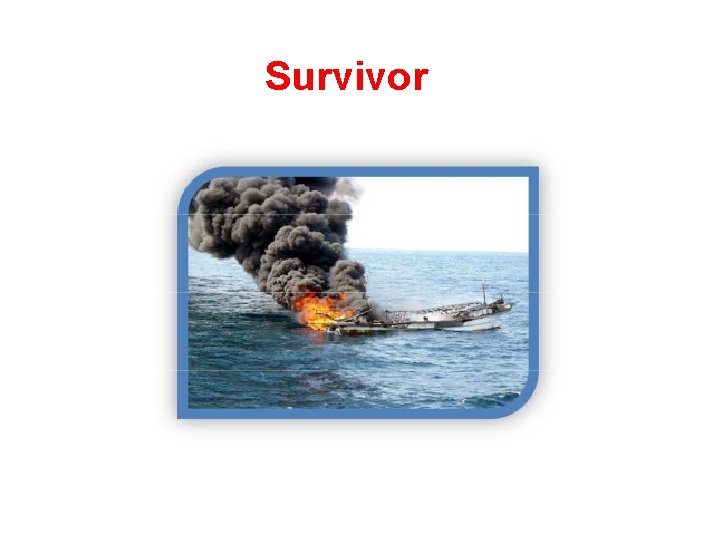
Survivor
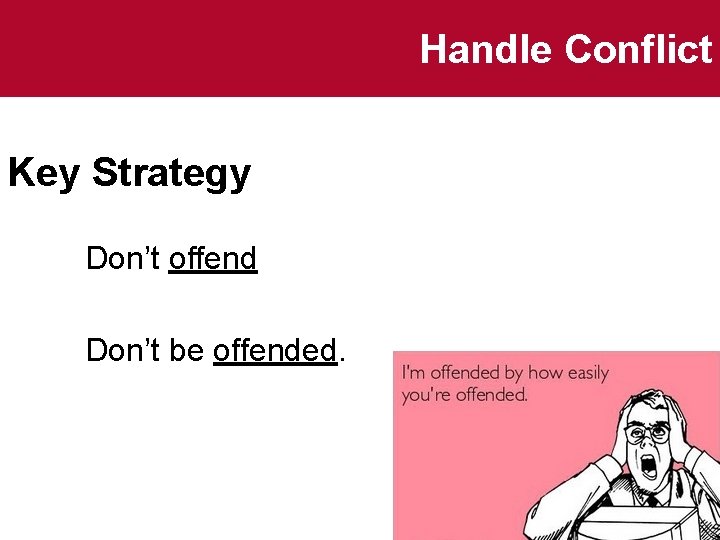
Handle Conflict Key Strategy Don’t offend Don’t be offended.
Handle Conflict Key Strategy There are some things, I just don’t have to have an opinion on!
Handle Conflict Key Strategy Don’t assume motive.
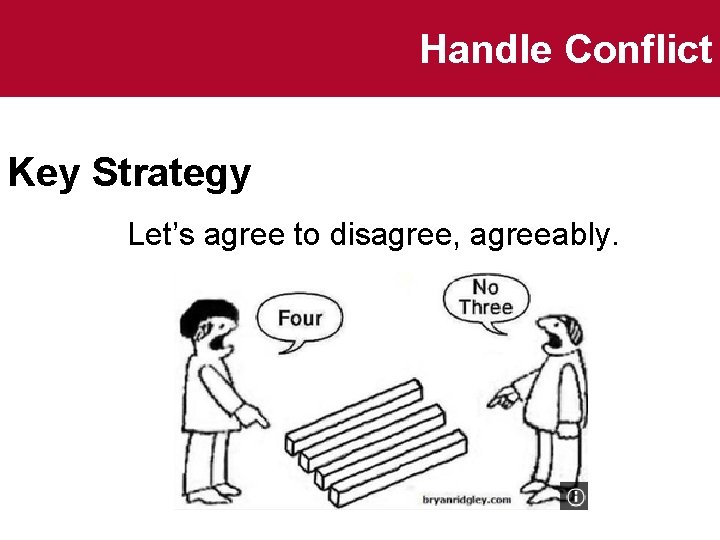
Handle Conflict Key Strategy Let’s agree to disagree, agreeably.
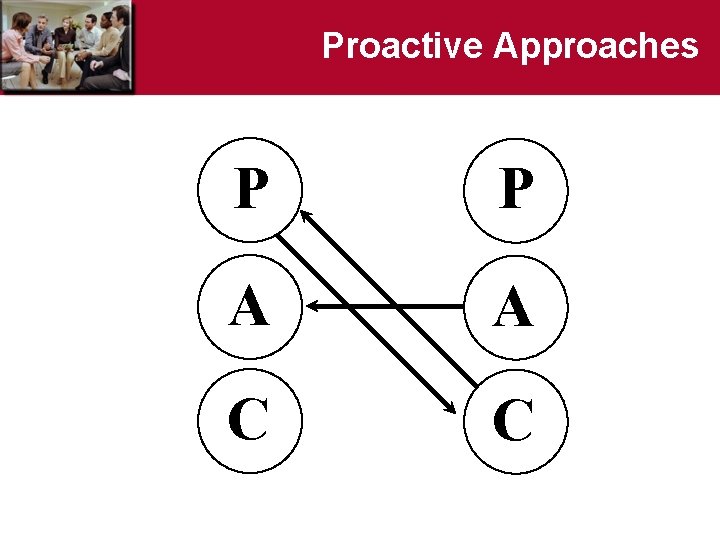
Proactive Approaches P P A A C C
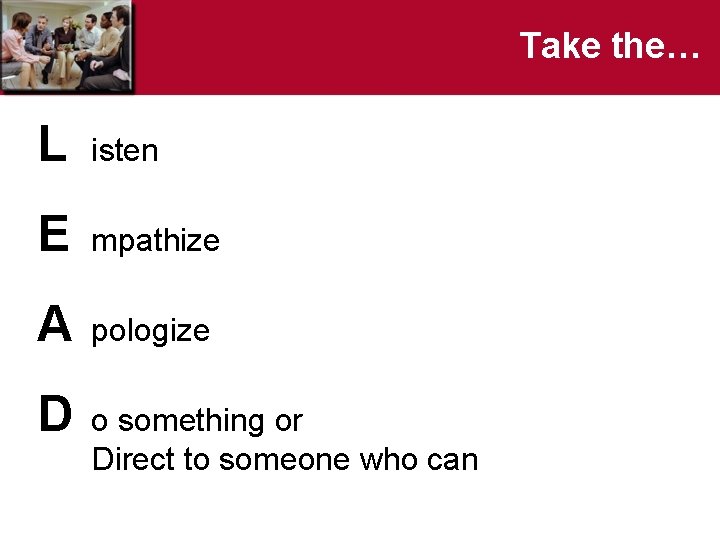
Take the… L isten E mpathize A pologize D o something or Direct to someone who can
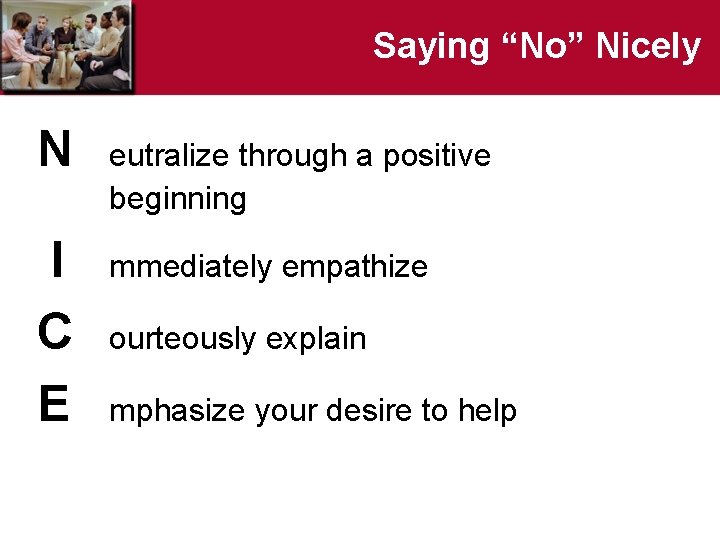
Saying “No” Nicely N I C E eutralize through a positive beginning mmediately empathize ourteously explain mphasize your desire to help
Thank you • My name is David Alba – davidalba 007@gmail. com • If any of my stories aren’t true - they should’ve been. Three books that I recommend:
- Slides: 51