
Using diving waves for timelapse seismic studies and
- Slides: 16
Using diving waves for time-lapse seismic studies and overburden characterization Bjarte Foseide, NTNU Izzie Yi Liu, NTNU Martin Landrø, NTNU
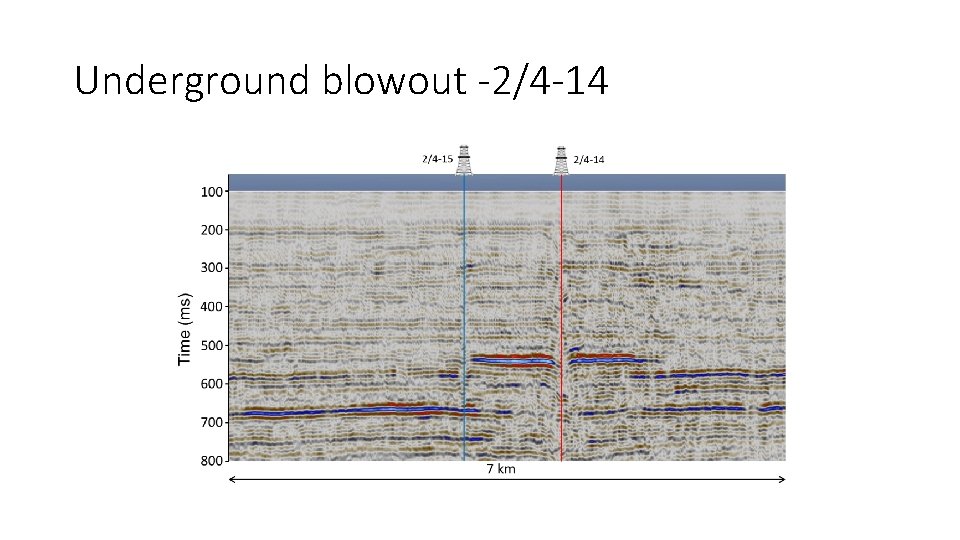
Underground blowout -2/4 -14
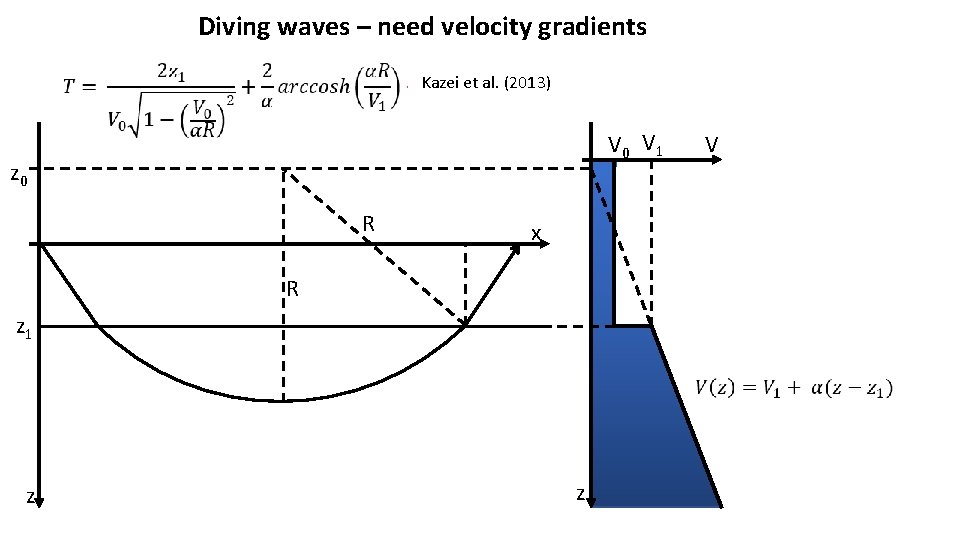
Diving waves – need velocity gradients Kazei et al. (2013) V 0 V 1 z 0 R x R z 1 z z V
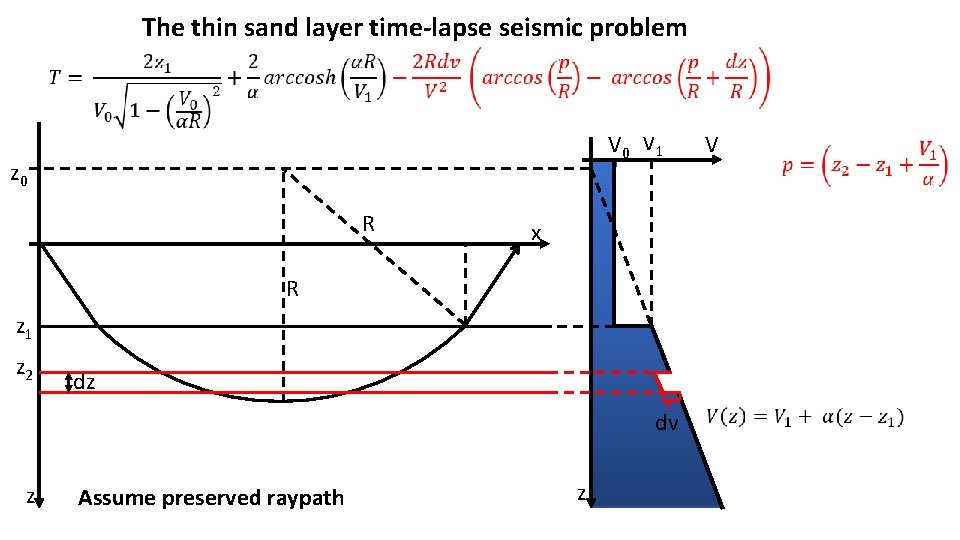
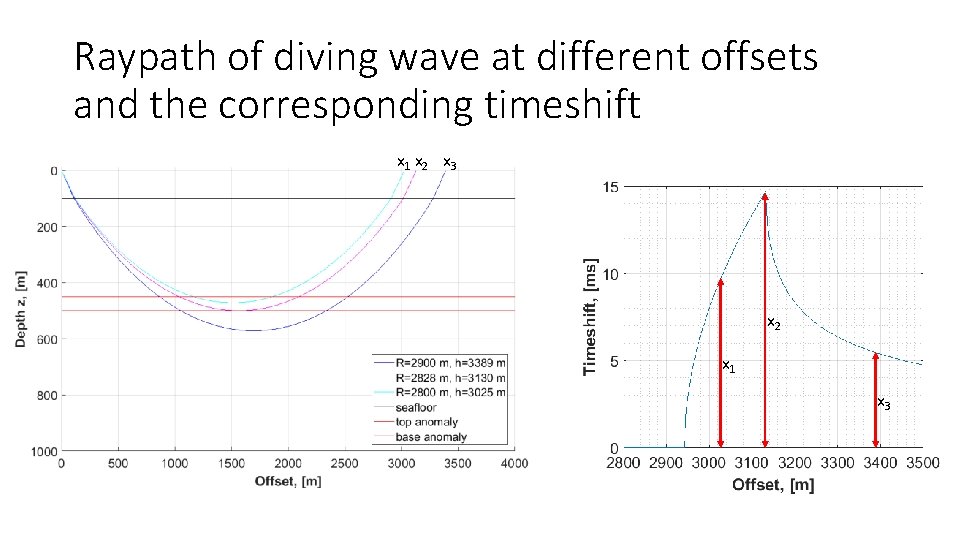
The thin sand layer time-lapse seismic problem V 0 V 1 z 0 R x R z 1 z 2 dz dv z Assume preserved raypath z V
Raypath of diving wave at different offsets and the corresponding timeshift x 1 x 2 x 3 x 2 x 1 x 3
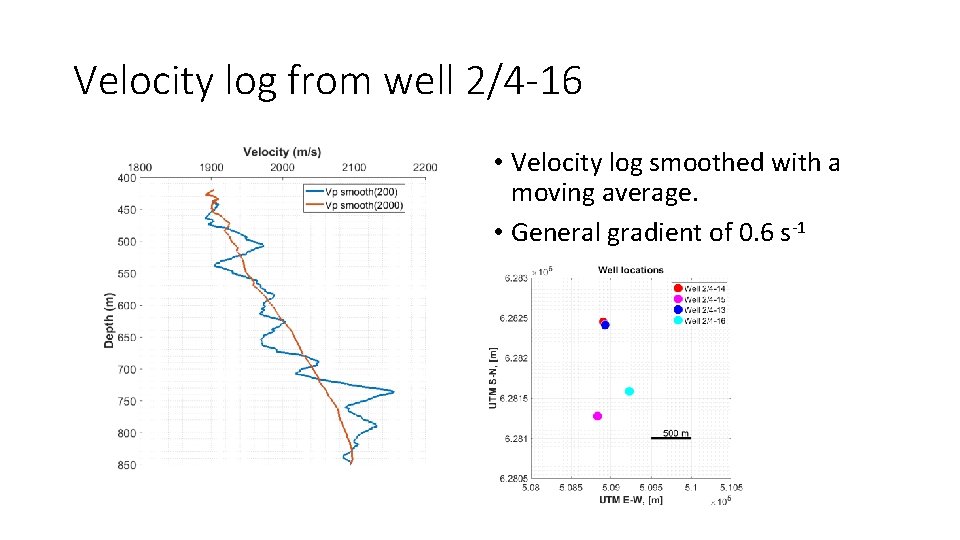
Velocity log from well 2/4 -16 • Velocity log smoothed with a moving average. • General gradient of 0. 6 s-1
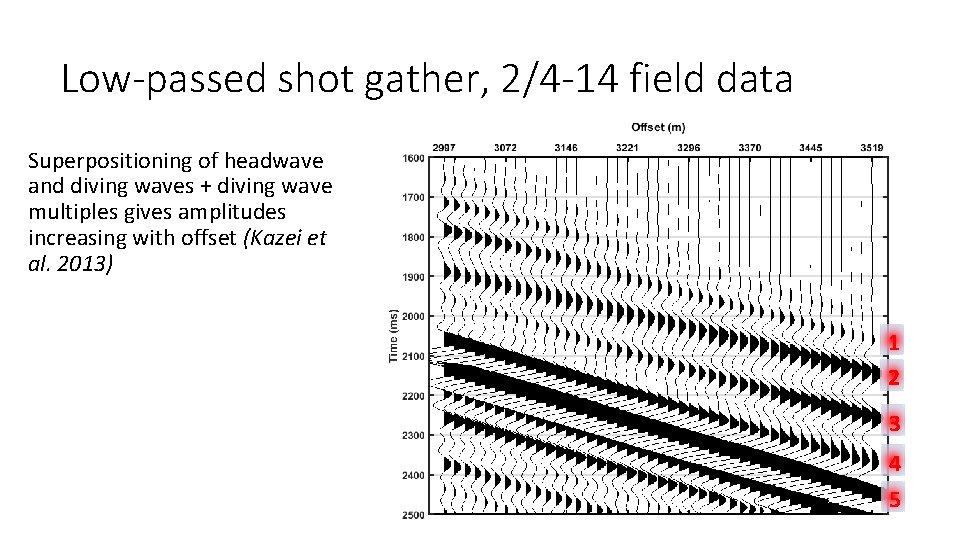
Low-passed shot gather, 2/4 -14 field data Superpositioning of headwave and diving waves + diving wave multiples gives amplitudes increasing with offset (Kazei et al. 2013) 1 2 3 4 5
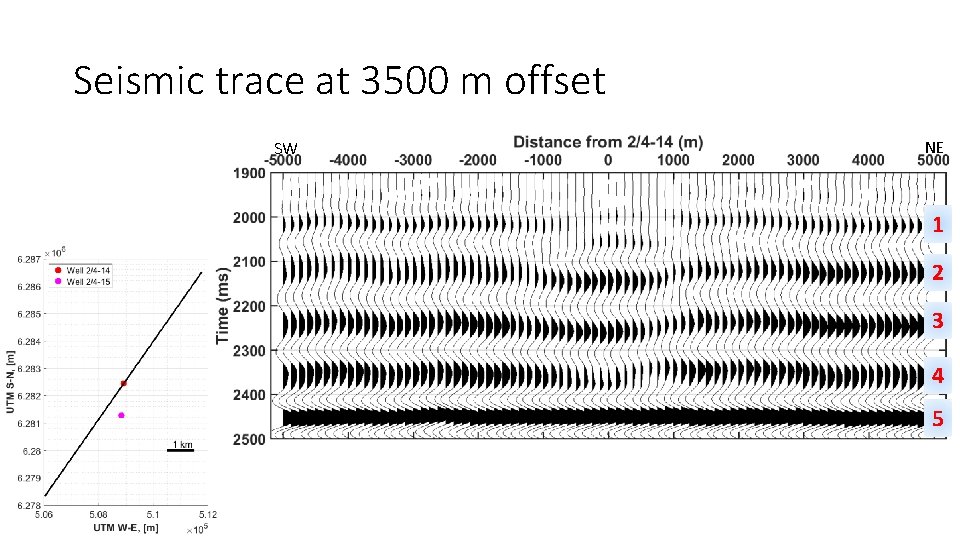
Seismic trace at 3500 m offset SW NE 1 2 3 4 5
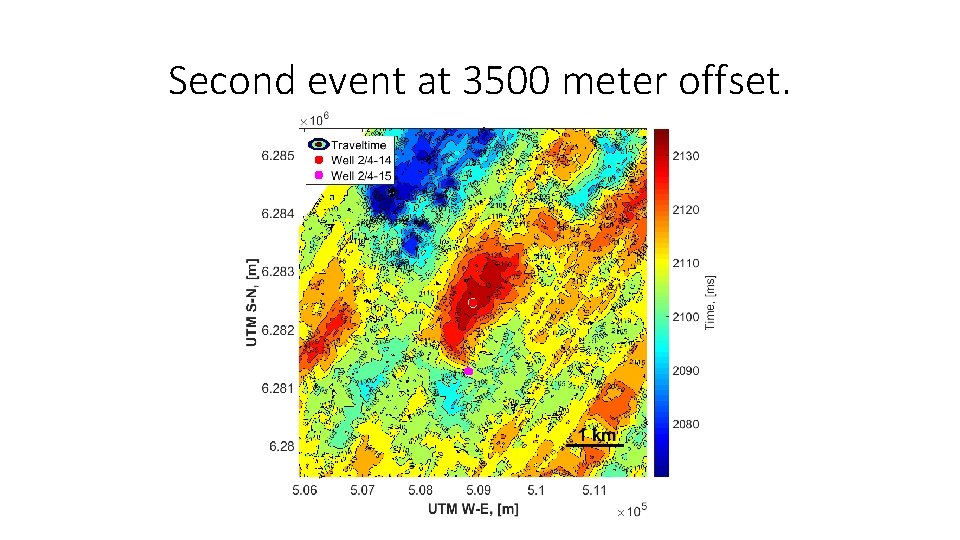
Second event at 3500 meter offset.
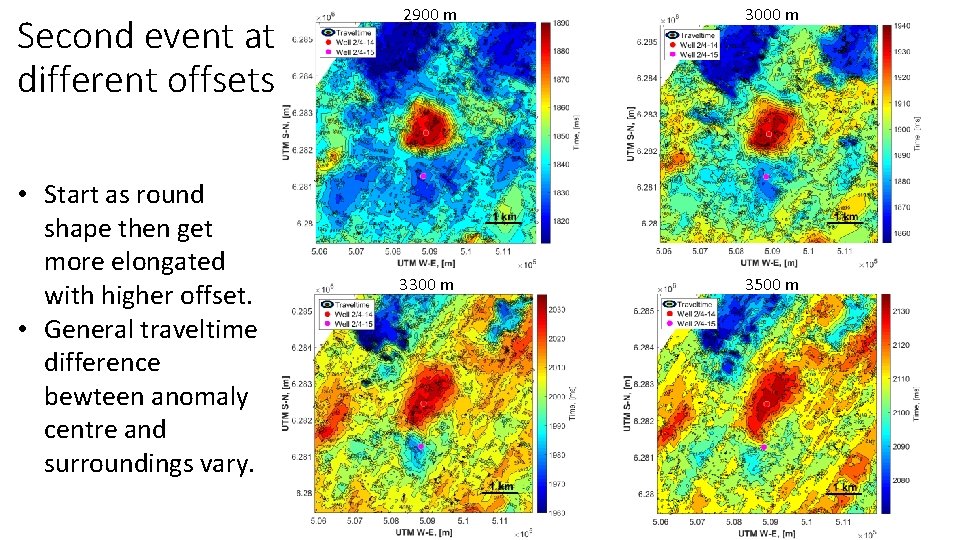
Second event at different offsets. • Start as round shape then get more elongated with higher offset. • General traveltime difference bewteen anomaly centre and surroundings vary. 2900 m 3000 m 3300 m 3500 m
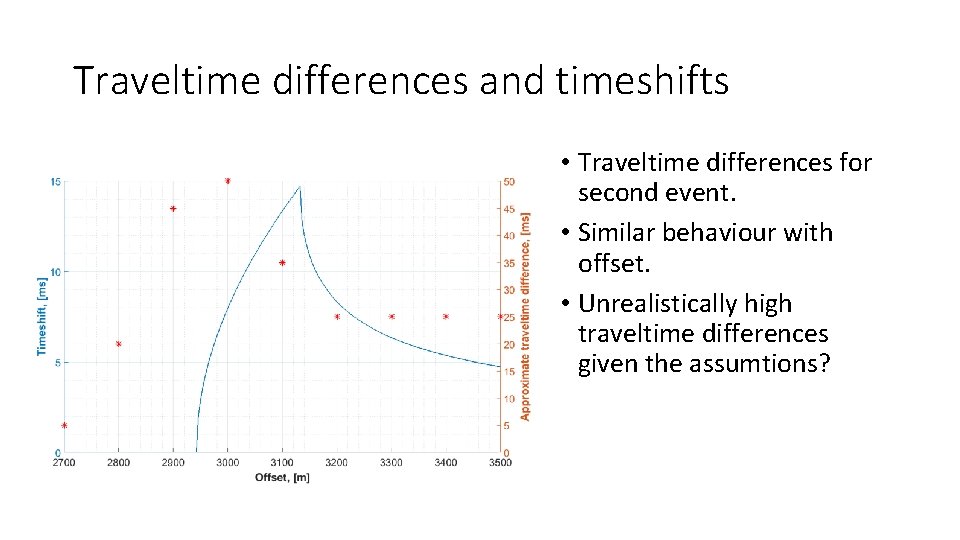
Traveltime differences and timeshifts • Traveltime differences for second event. • Similar behaviour with offset. • Unrealistically high traveltime differences given the assumtions?
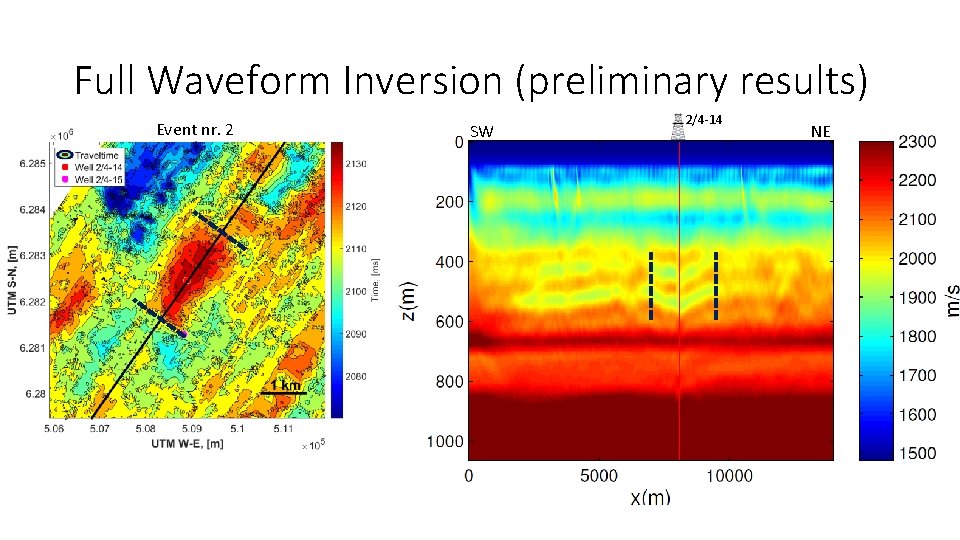
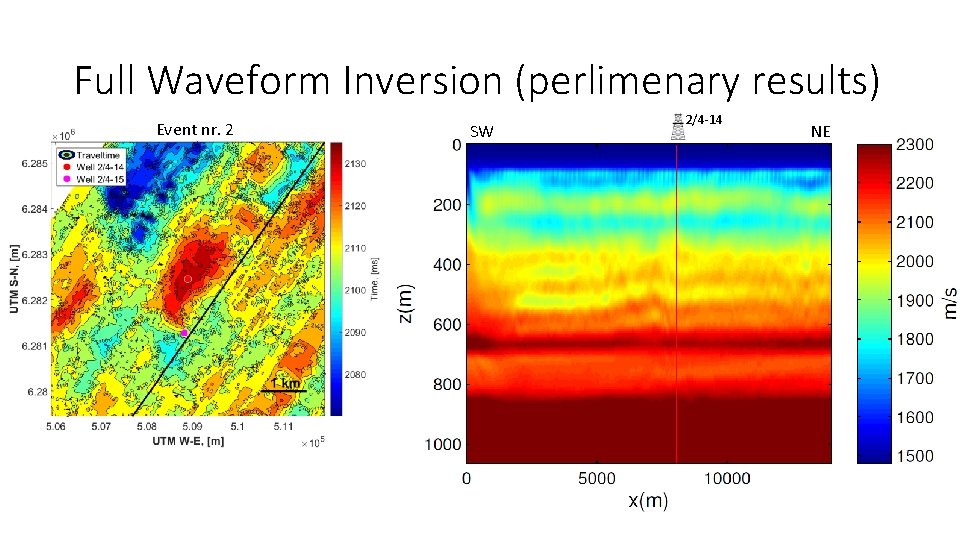
Full Waveform Inversion (preliminary results) Event nr. 2 SW 2/4 -14 NE
Full Waveform Inversion (perlimenary results) Event nr. 2 SW 2/4 -14 NE
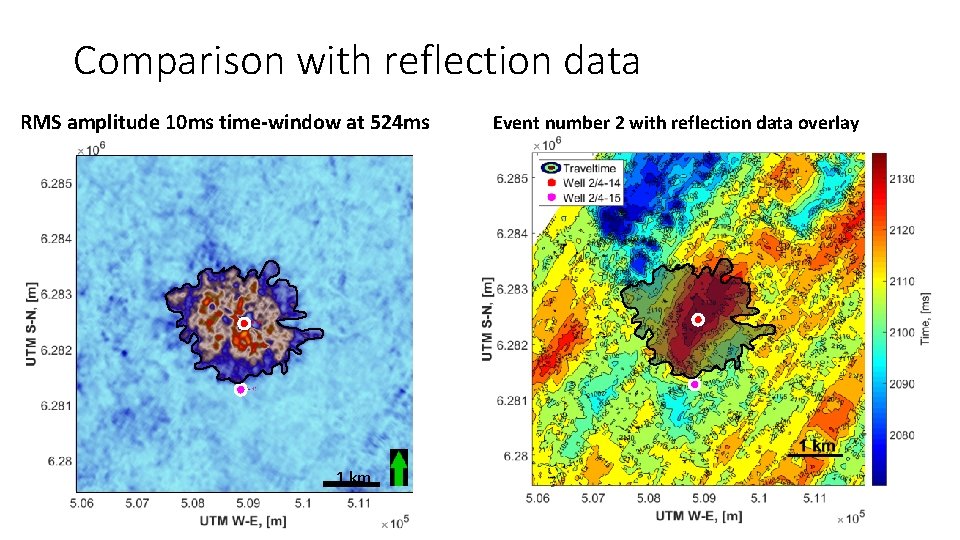
Comparison with reflection data RMS amplitude 10 ms time-window at 524 ms 1 km Event number 2 with reflection data overlay
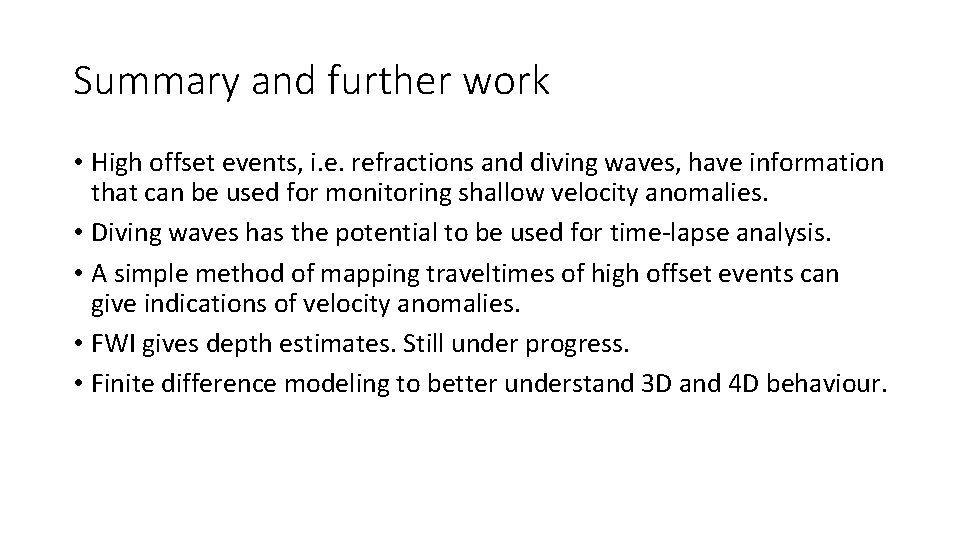
Summary and further work • High offset events, i. e. refractions and diving waves, have information that can be used for monitoring shallow velocity anomalies. • Diving waves has the potential to be used for time-lapse analysis. • A simple method of mapping traveltimes of high offset events can give indications of velocity anomalies. • FWI gives depth estimates. Still under progress. • Finite difference modeling to better understand 3 D and 4 D behaviour.
Acknowledgements • Thanks to Statoil for permission to use the 3 D data, and CGG for preparing the 3 D data • ROSE project for financial support