
Using Diagrams to Represent Program Structure OMT and
- Slides: 15
Using Diagrams to Represent Program Structure OMT and UML Some pictures and material are from “Design Patterns” by Gamma et al
Outline l l l l why diagrams diagram types class diagram elements n class n aggregation n inheritance n instantiation class diagram examples object diagram use case diagram state diagram 2
Why Diagrams l l diagrams is a way to capture the essential aspects of the program n have an overview of the whole program n see the important relationships between elements of program n get the picture of the program before it is coded standardized as part of n object modeling technique (OMT) – Rumbaugh, Blaha, et al 1991 n universal modeling language (UML) – Rational Rose Inc. and other companies used in program planning, development and documentation language independent (not necessarily C++) 3
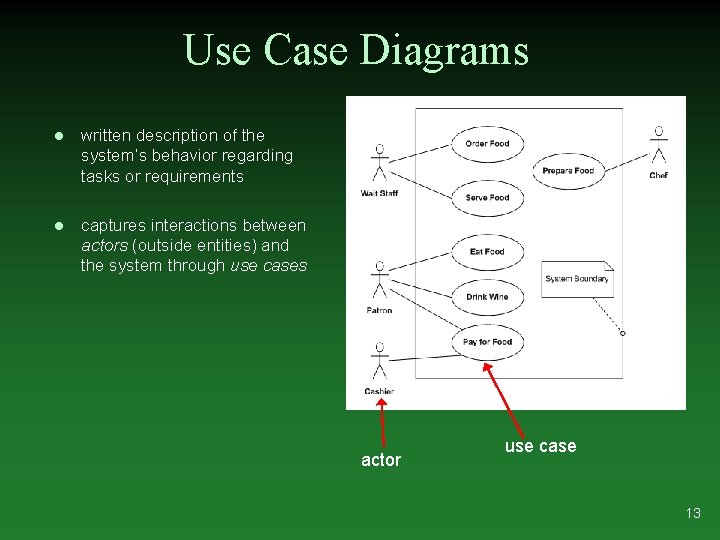
Diagram Types l structure diagram – emphasizes what constructs must be present in the modeled system n class diagram – the system classes, attributes, their relationships n object diagram – a view of the modeled system at a specific execution instance l behavior diagram – emphasizes what actions must happen in the system n use-case diagram – system functionality in terms of interaction with outside actors n state diagram – program state transitions 4
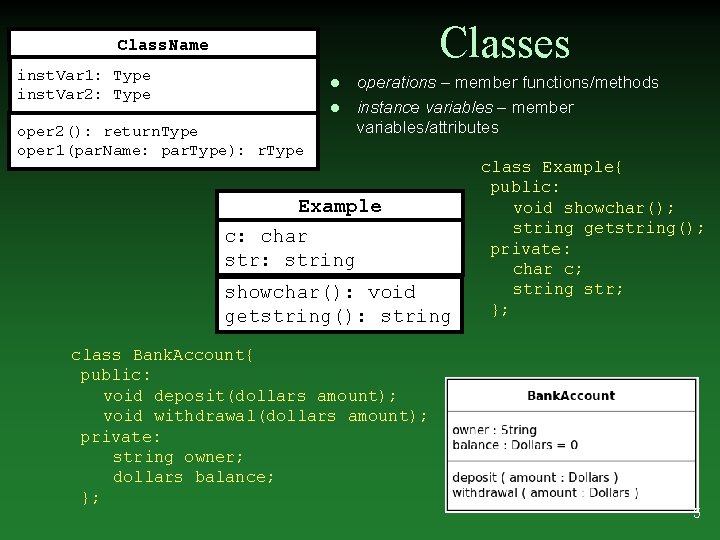
Classes Class. Name inst. Var 1: Type inst. Var 2: Type l l oper 2(): return. Type oper 1(par. Name: par. Type): r. Type operations – member functions/methods instance variables – member variables/attributes Example c: char str: string showchar(): void getstring(): string class Bank. Account{ public: void deposit(dollars amount); void withdrawal(dollars amount); private: string owner; dollars balance; }; class Example{ public: void showchar(); string getstring(); private: char c; string str; }; 5
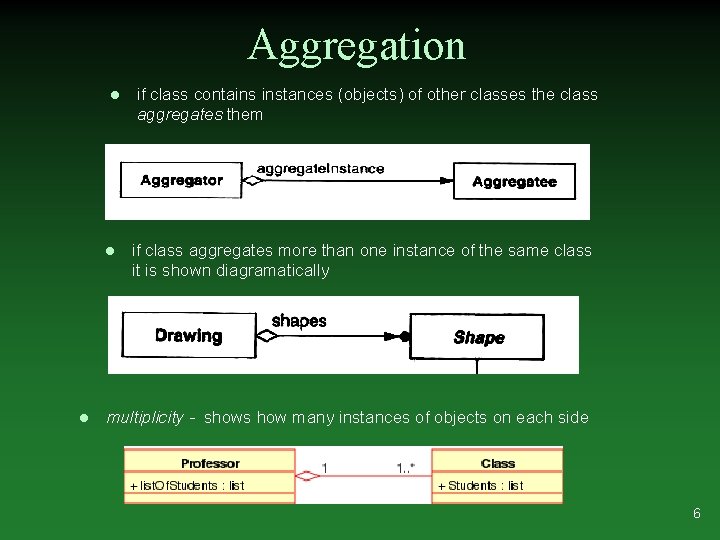
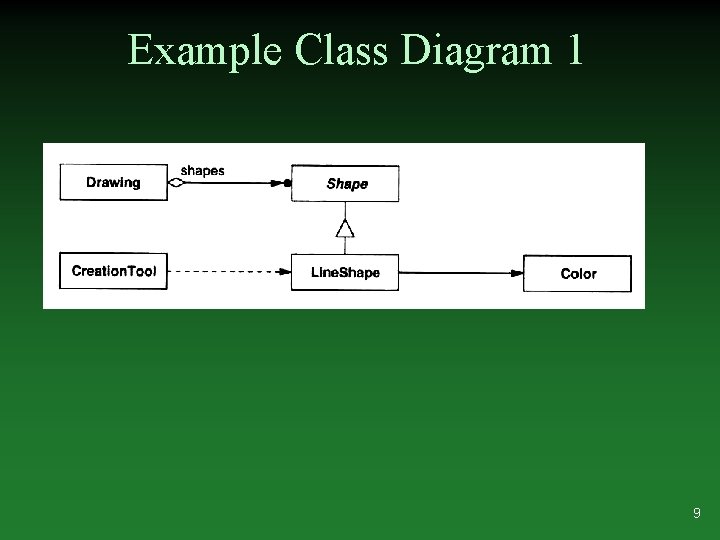
Aggregation l l l if class contains instances (objects) of other classes the class aggregates them if class aggregates more than one instance of the same class it is shown diagramatically multiplicity - shows how many instances of objects on each side 6
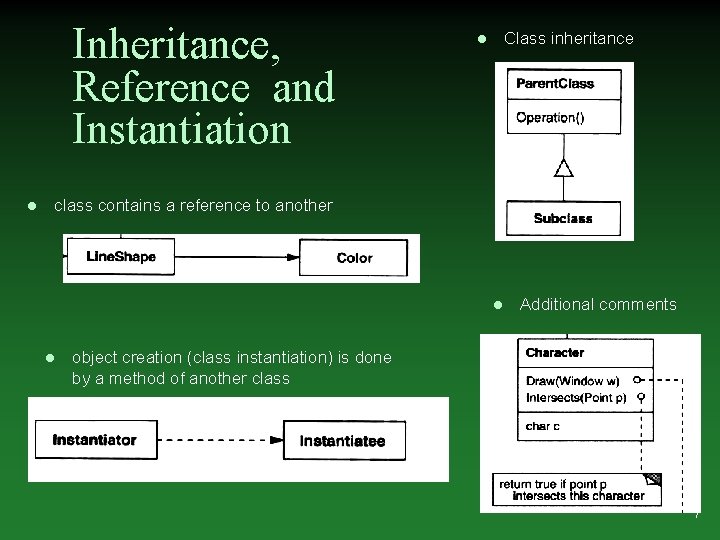
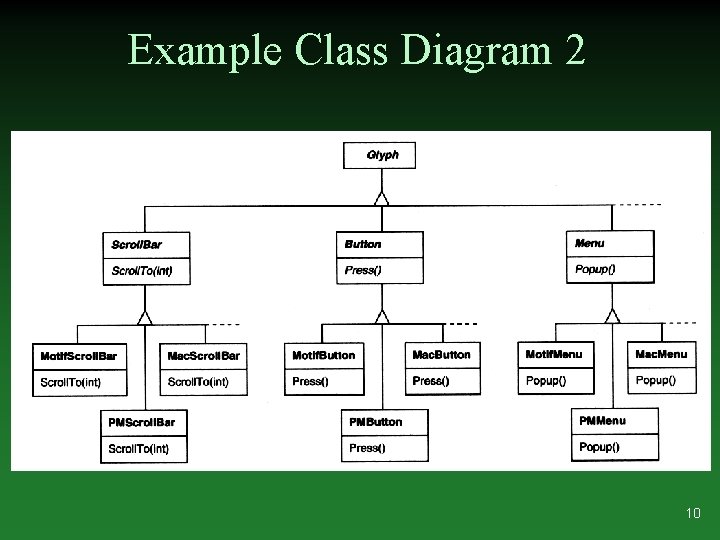
Inheritance, Reference and Instantiation l Class inheritance l class contains a reference to another l l Additional comments object creation (class instantiation) is done by a method of another class 7
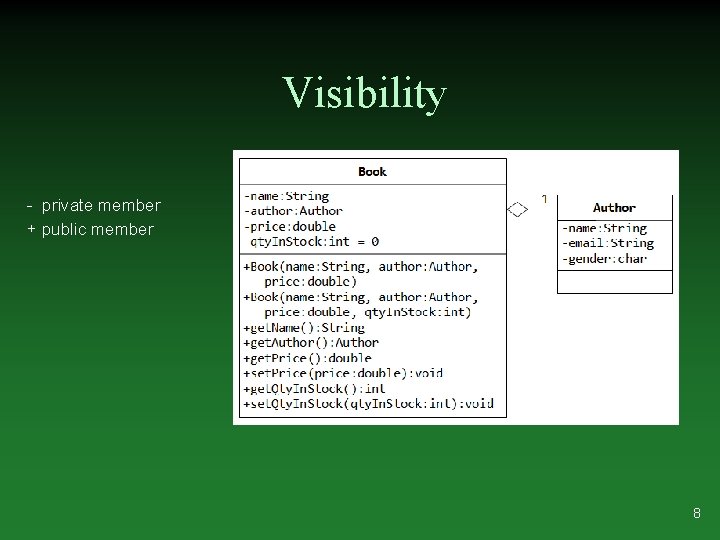
Visibility - private member + public member 8
Example Class Diagram 1 9
Example Class Diagram 2 10
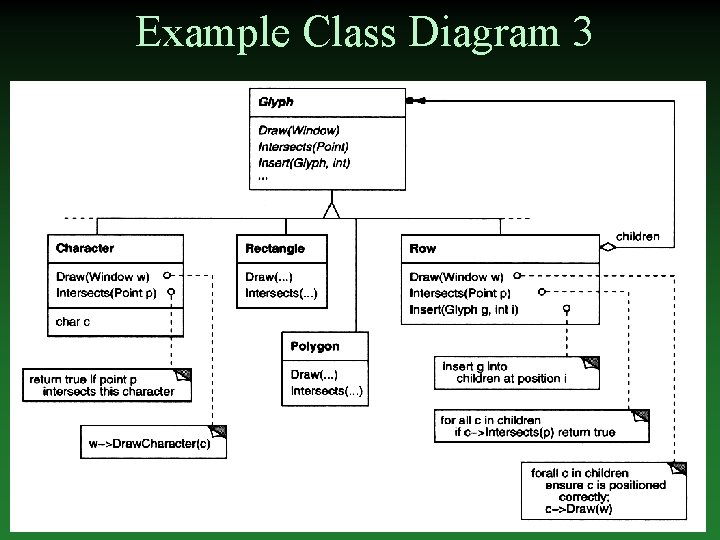
Example Class Diagram 3 l blah 11
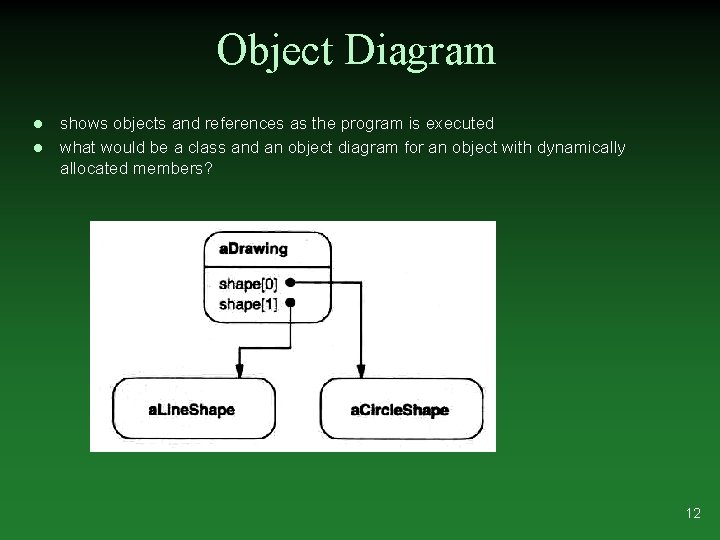
Object Diagram l l shows objects and references as the program is executed what would be a class and an object diagram for an object with dynamically allocated members? 12
Use Case Diagrams l written description of the system’s behavior regarding tasks or requirements l captures interactions between actors (outside entities) and the system through use cases actor use case 13
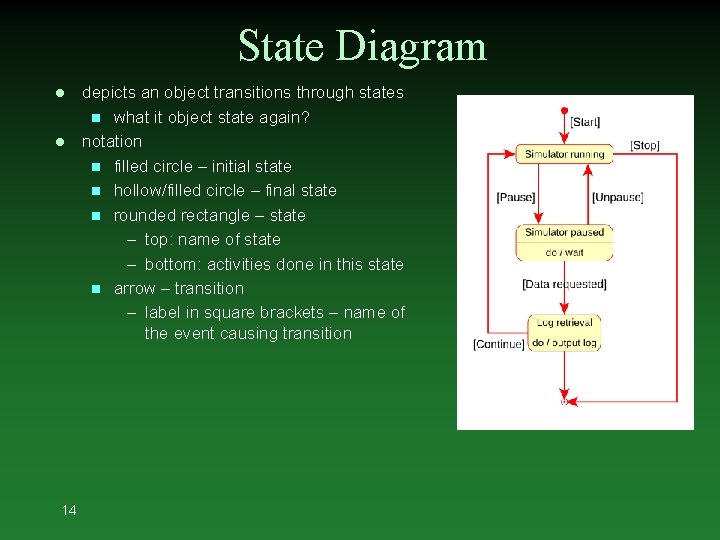
State Diagram l l 14 depicts an object transitions through states n what it object state again? notation n filled circle – initial state n hollow/filled circle – final state n rounded rectangle – state – top: name of state – bottom: activities done in this state n arrow – transition – label in square brackets – name of the event causing transition
Questions on Diagrams l l l l l What is the purpose for the use of diagrams What is the difference between structure and behavior diagrams? What types of structure diagrams we have studied? Behavior diagrams? How is class denoted on a structure diagram? What is aggregator/agregatee? How is their relationship denoted? What is multiplicity and how is it denoted? What is visibility and hwo is it denoted? How are objects denoted on an a structure diagram? What diagram uses use cases, actors? What is system boundary? What does filled, hollow/filled circle, rectangle, arrows represent in a state diagram? 15