
Using Development History Sticky Notes to Understand Software

- Slides: 15
Using Development History Sticky. Notes to Understand Software Architecture Ahmed E. Hassan and Richard C. Holt University Of Waterloo
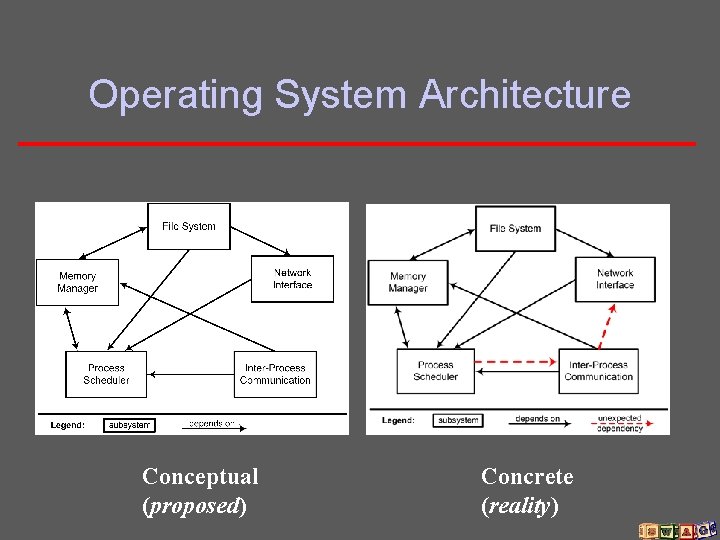
Operating System Architecture Conceptual (proposed) Concrete (reality)
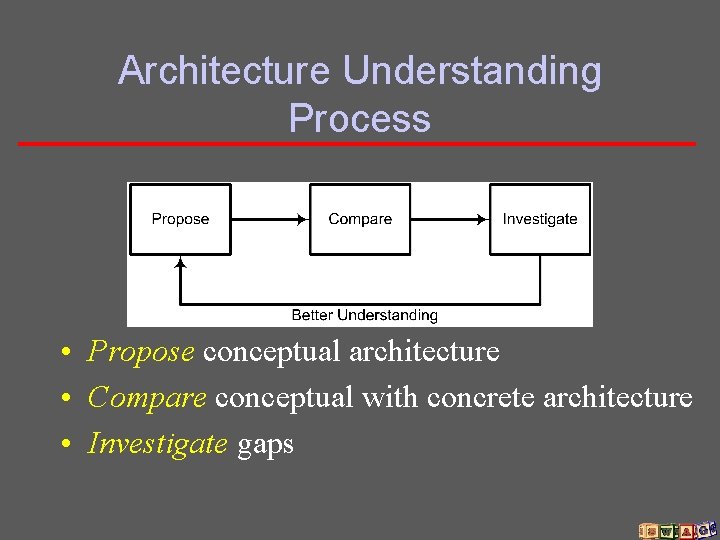
Architecture Understanding Process • Propose conceptual architecture • Compare conceptual with concrete architecture • Investigate gaps
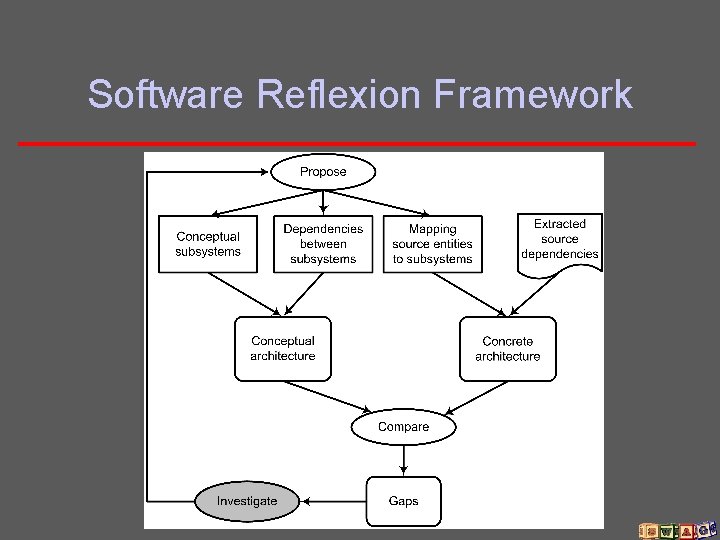
Software Reflexion Framework
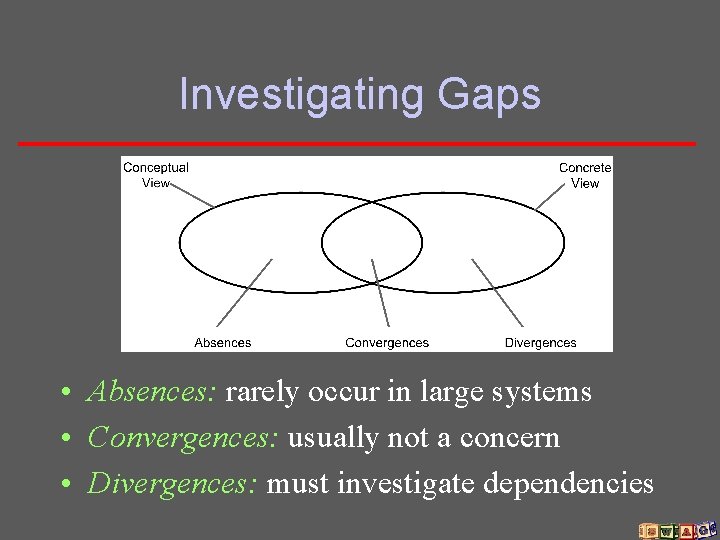
Investigating Gaps • Absences: rarely occur in large systems • Convergences: usually not a concern • Divergences: must investigate dependencies
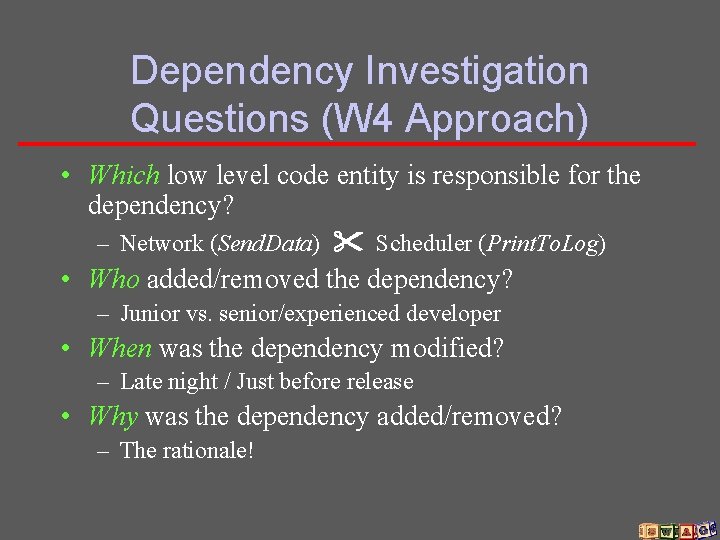
Dependency Investigation Questions (W 4 Approach) • Which low level code entity is responsible for the dependency? – Network (Send. Data) Scheduler (Print. To. Log) • Who added/removed the dependency? – Junior vs. senior/experienced developer • When was the dependency modified? – Late night / Just before release • Why was the dependency added/removed? – The rationale!
History as a guide “History is a guide to navigation in perilous times. History is who we are and why we are the way we are”, David C. Mc. Cullough • Can we use the development history of a project to assist in understanding its current state? • How can we get the development history of a project?
Source Sticky. Notes • Static dependency give only a current static view of the system – not enough detail! • Need to extend static dependencies, but how? – Ask developers to fill Sticky. Notes for each change – Use software repositories to build these notes automatically
Sticky. Notes Recovery • Map code changes to entities and dependencies instead of lines • Two pass analysis of the source control repository data, to recover: – All entities defined throughout the lifetime of a project – Historical Symbol Table – All dependencies between these entities and attach source control meta-data such as: • Name of developer performing the change • Text entered by developer describing the change –the rationale • Time of the change
Case Study – Net. BSD • Large long lived system with hundreds of developers • Case study used to demonstrate usefulness of the reflexion model: – Reuse prior results! – Focus on investigating gaps to show the strength of our approach
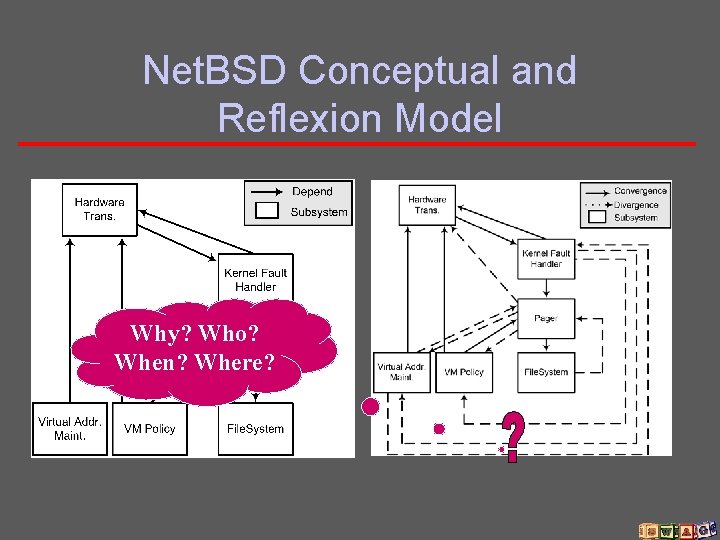
Net. BSD Conceptual and Reflexion Model Why? Who? When? Where?
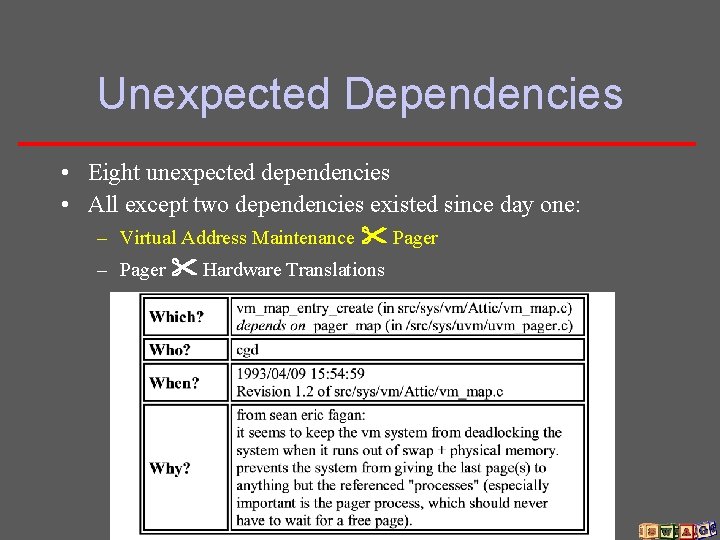
Unexpected Dependencies • Eight unexpected dependencies • All except two dependencies existed since day one: – Virtual Address Maintenance Pager – Pager Hardware Translations
Sticky. Notes Usage Patterns • First note to understand the reason for unexpected dependencies • Last note to understand missing dependencies • All notes when first and last notes do not have enough information to assist in understanding
Limitations • Quality of comments and text entered by developers in the past • In most open source projects, CVS comments are used for: – Communicating new features – Narrating the progress of a project
Conclusions • Development history can help understand the current structure of a software system • Traditional dependency graphs and program understanding models usually do not use historical information • Proposed Sticky. Notes and presented a case study to show the strength of the approach