
Using Deep Learning to Predict Long Range Regulatory


- Slides: 12
Using Deep Learning to Predict Long. Range Regulatory Networks Based On Protein-Protein Interactions Albert Xue, Binbin Huang, Jianrong Wang
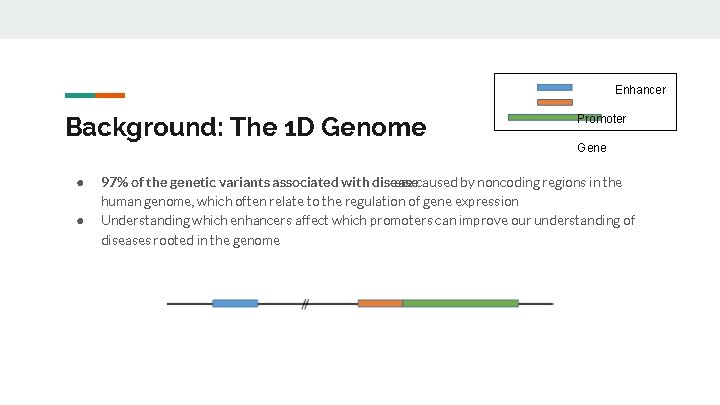
Enhancer Background: The 1 D Genome ● ● Promoter Gene 97% of the genetic variants associated with disease are caused by noncoding regions in the human genome, which often relate to the regulation of gene expression Understanding which enhancers affect which promoters can improve our understanding of diseases rooted in the genome
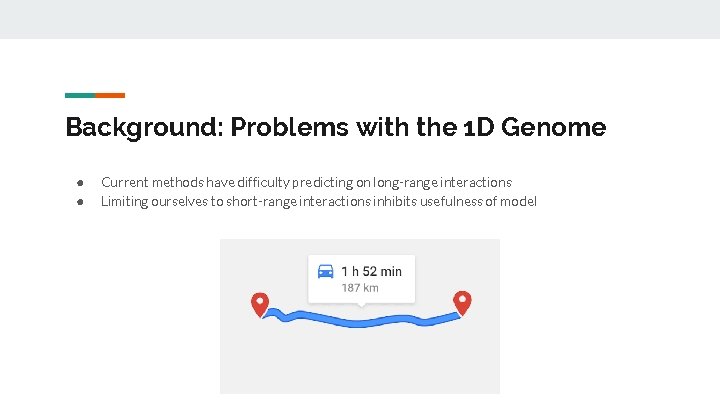
Background: Problems with the 1 D Genome ● ● Current methods have difficulty predicting on long-range interactions Limiting ourselves to short-range interactions inhibits usefulness of model
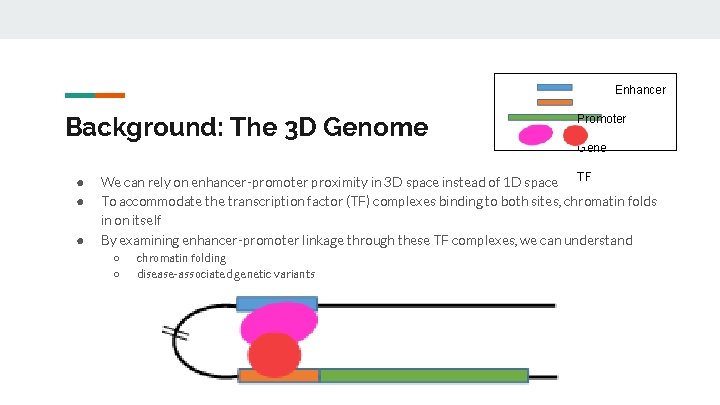
Enhancer Background: The 3 D Genome ● ● ● Promoter Gene We can rely on enhancer-promoter proximity in 3 D space instead of 1 D space TF To accommodate the transcription factor (TF) complexes binding to both sites, chromatin folds in on itself By examining enhancer-promoter linkage through these TF complexes, we can understand ○ ○ chromatin folding disease-associated genetic variants
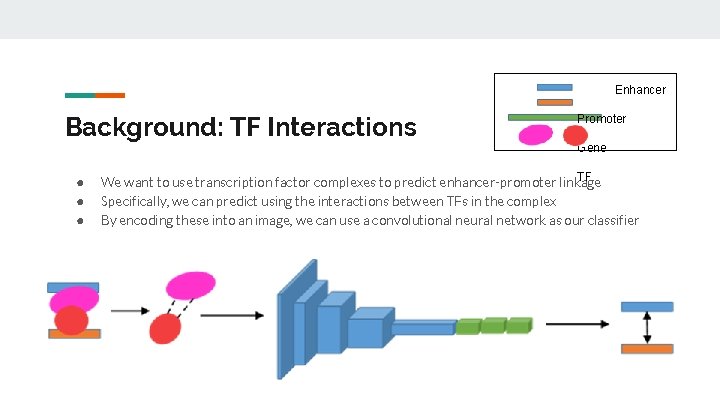
Enhancer Background: TF Interactions ● ● ● Promoter Gene TF We want to use transcription factor complexes to predict enhancer-promoter linkage Specifically, we can predict using the interactions between TFs in the complex By encoding these into an image, we can use a convolutional neural network as our classifier
Data: Distance-Controlled Negative Links ● ● We begin with a set of enhancer-promoter links from T-cells To create a negative set, we generate an equal-sized number of unlinked enhancer-promoter pairs which follow the same distance distribution as the original positive set ○ ○ ● A shorter distance between pairs is linked to higher probability of linkage simply because of an increased chance of collision Want to remove confounding factors We still need to encode these as images
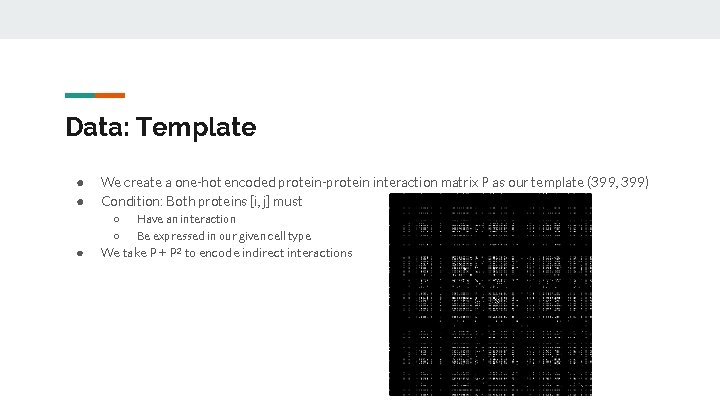
Data: Template ● ● We create a one-hot encoded protein-protein interaction matrix P as our template (399, 399) Condition: Both proteins [i, j] must ○ ○ ● Have an interaction Be expressed in our given cell type We take P + P 2 to encode indirect interactions
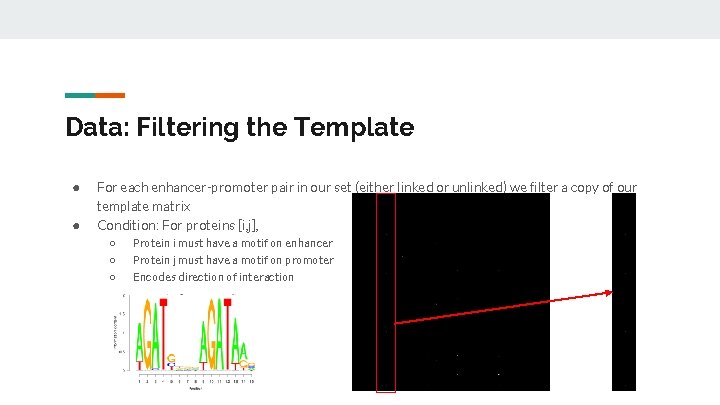
Data: Filtering the Template ● ● For each enhancer-promoter pair in our set (either linked or unlinked) we filter a copy of our template matrix Condition: For proteins [i, j], ○ ○ ○ Protein i must have a motif on enhancer Protein j must have a motif on promoter Encodes direction of interaction
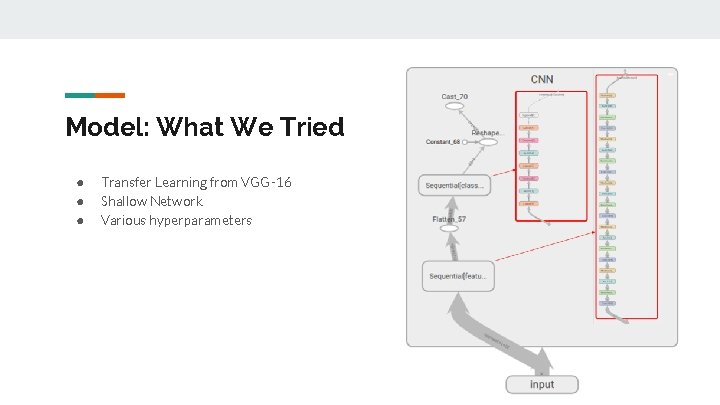
Model: What We Tried ● ● ● Transfer Learning from VGG-16 Shallow Network Various hyperparameters
Results: Overfitting ● Training reduced loss to 0. 1767 and raised prediction accuracy to 91. 80%, but validation prediction accuracy remained constant at 54%
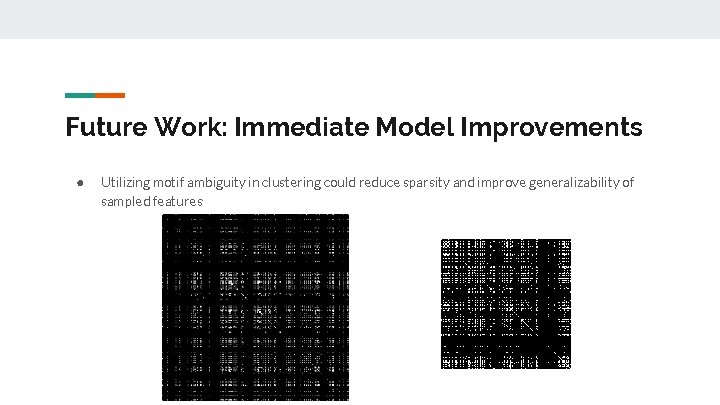
Future Work: Immediate Model Improvements ● Utilizing motif ambiguity in clustering could reduce sparsity and improve generalizability of sampled features
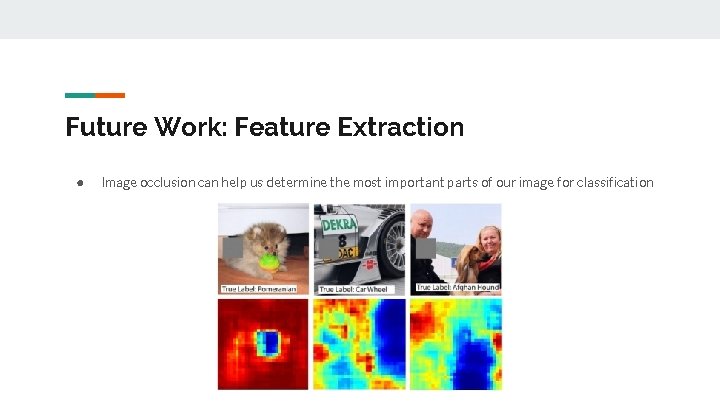
Future Work: Feature Extraction ● Image occlusion can help us determine the most important parts of our image for classification