
Using Debriefing as a More Beneficial Approach to
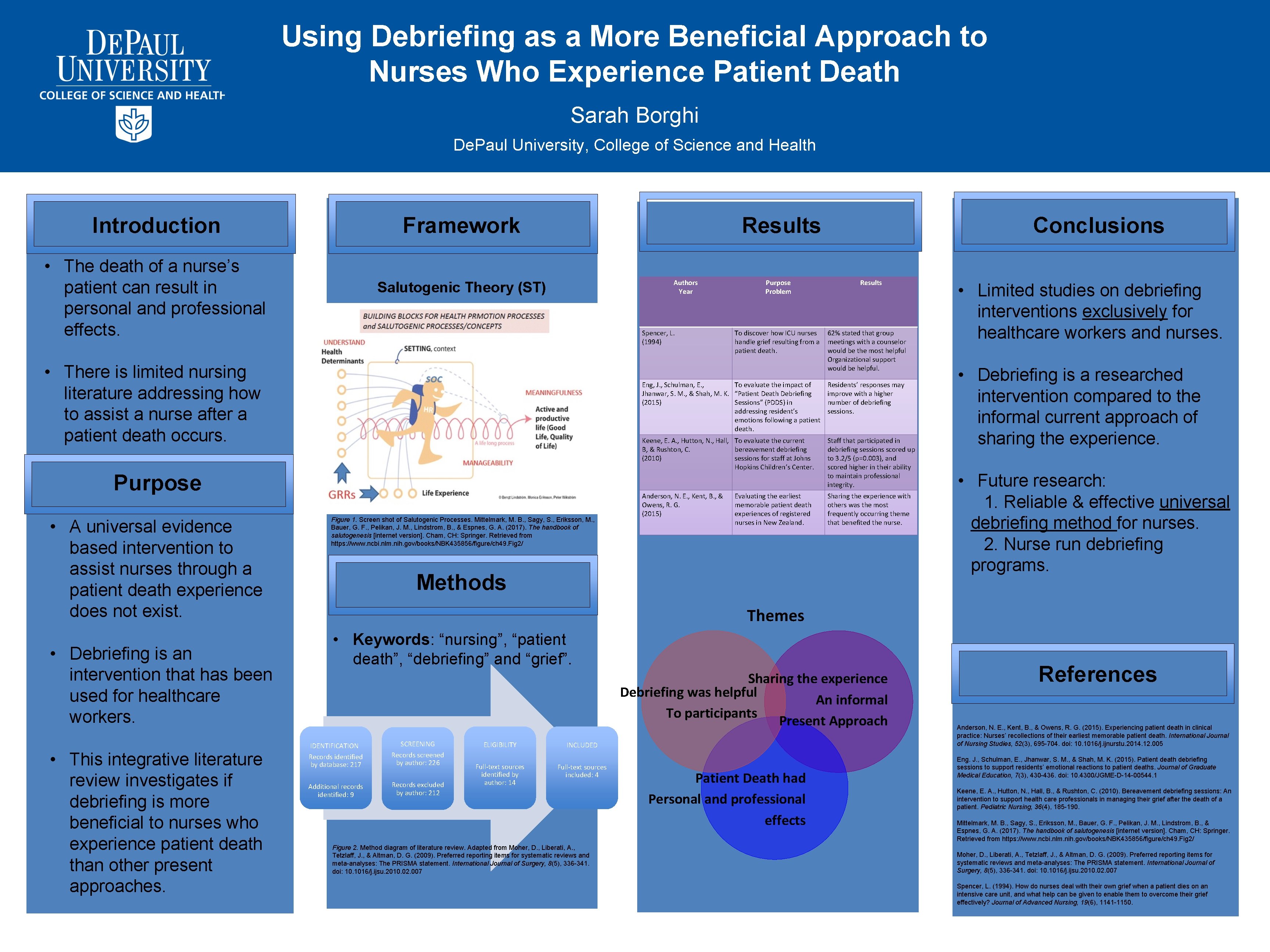
Using Debriefing as a More Beneficial Approach to Nurses Who Experience Patient Death Sarah Borghi De. Paul University, College of Science and Health , Introduction Framework • The death of a nurse’s patient can result in personal and professional effects. Results Authors Year Salutogenic Theory (ST) Spencer, L. (1994) • There is limited nursing literature addressing how to assist a nurse after a patient death occurs. Purpose • A universal evidence based intervention to assist nurses through a patient death experience does not exist. • Debriefing is an intervention that has been used for healthcare workers. • This integrative literature review investigates if debriefing is more beneficial to nurses who experience patient death than other present approaches. Figure 1. Screen shot of Salutogenic Processes. Mittelmark, M. B. , Sagy, S. , Eriksson, M. , Bauer, G. F. , Pelikan, J. M. , Lindstrom, B. , & Espnes, G. A. (2017). The handbook of salutogenesis [internet version]. Cham, CH: Springer. Retrieved from https: //www. ncbi. nlm. nih. gov/books/NBK 435856/figure/ch 49. Fig 2/ Purpose Problem To discover how ICU nurses handle grief resulting from a patient death. Conclusions Results 62% stated that group meetings with a counselor would be the most helpful Organizational support would be helpful. Eng, J. , Schulman, E. , To evaluate the impact of Jhanwar, S. M. , & Shah, M. K. “Patient Death Debriefing (2015) Sessions” (PDDS) in addressing resident’s emotions following a patient death. Residents’ responses may improve with a higher number of debriefing sessions. Keene, E. A. , Hutton, N. , Hall, To evaluate the current B, & Rushton, C. bereavement debriefing (2010) sessions for staff at Johns Hopkins Children’s Center. Staff that participated in debriefing sessions scored up to 3. 2/5 (p=0. 003), and scored higher in their ability to maintain professional integrity. Anderson, N. E. , Kent, B. , & Owens, R. G. (2015) Sharing the experience with others was the most frequently occurring theme that benefited the nurse. Evaluating the earliest memorable patient death experiences of registered nurses in New Zealand. Methods • Limited studies on debriefing interventions exclusively for healthcare workers and nurses. • Debriefing is a researched intervention compared to the informal current approach of sharing the experience. • Future research: 1. Reliable & effective universal debriefing method for nurses. 2. Nurse run debriefing programs. Themes • Keywords: “nursing”, “patient death”, “debriefing” and “grief”. Sharing the experience Debriefing was helpful An informal To participants Present Approach Records identified by database: 217 SCREENING Records screened by author: 226 Additional records identified: 9 Records excluded by author: 212 IDENTIFICATION ELIGIBILITY Full-text sources identified by author: 14 INCLUDED Full-text sources included: 4 Figure 2. Method diagram of literature review. Adapted from Moher, D. , Liberati, A. , Tetzlaff, J. , & Altman, D. G. (2009). Preferred reporting items for systematic reviews and meta-analyses: The PRISMA statement. International Journal of Surgery, 8(5), 336 -341. doi: 10. 1016/j. ijsu. 2010. 02. 007 Patient Death had Personal and professional effects References Anderson, N. E. , Kent, B. , & Owens, R. G. (2015). Experiencing patient death in clinical practice: Nurses’ recollections of their earliest memorable patient death. International Journal of Nursing Studies, 52(3), 695 -704. doi: 10. 1016/j. ijnurstu. 2014. 12. 005 Eng. J. , Schulman, E. , Jhanwar, S. M. , & Shah, M. K. (2015). Patient death debriefing sessions to support residents’ emotional reactions to patient deaths. Journal of Graduate Medical Education, 7(3), 430 -436. doi: 10. 4300/JGME-D-14 -00544. 1 Keene, E. A. , Hutton, N. , Hall, B. , & Rushton, C. (2010). Bereavement debriefing sessions: An intervention to support health care professionals in managing their grief after the death of a patient. Pediatric Nursing, 36(4), 185 -190. Mittelmark, M. B. , Sagy, S. , Eriksson, M. , Bauer, G. F. , Pelikan, J. M. , Lindstrom, B. , & Espnes, G. A. (2017). The handbook of salutogenesis [internet version]. Cham, CH: Springer. Retrieved from https: //www. ncbi. nlm. nih. gov/books/NBK 435856/figure/ch 49. Fig 2/ Moher, D. , Liberati, A. , Tetzlaff, J. , & Altman, D. G. (2009). Preferred reporting items for systematic reviews and meta-analyses: The PRISMA statement. International Journal of Surgery, 8(5), 336 -341. doi: 10. 1016/j. ijsu. 2010. 02. 007 Spencer, L. (1994). How do nurses deal with their own grief when a patient dies on an intensive care unit, and what help can be given to enable them to overcome their grief effectively? Journal of Advanced Nursing, 19(6), 1141 -1150.
- Slides: 1