
Using data to drive performance management Presentation to



- Slides: 34
Using data to drive performance management Presentation to seminar at University of Exeter Tim Shepherd-Walwyn Adrian Theed Jan 2012
Agenda Data, performance and SPC – why it matters How sfn presents performance data Making performance management real – some lessons we have learned Q&A 2 Confidential Briefing ©Lightfoot Solutions 2012
1. Data, performance and SPC – Why does it matter? Confidential Briefing ©Lightfoot Solutions 2007
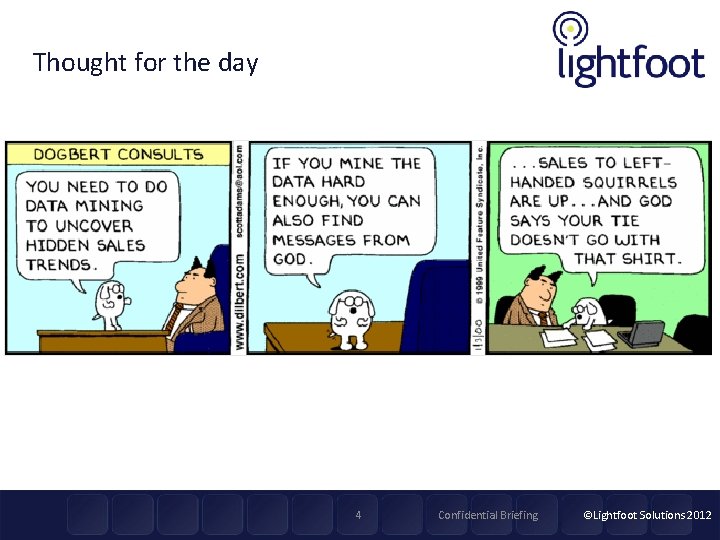
Thought for the day 4 Confidential Briefing ©Lightfoot Solutions 2012
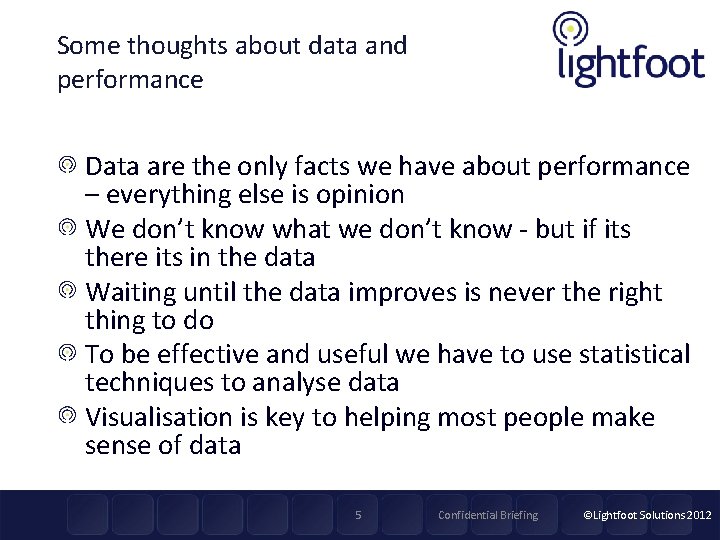
Some thoughts about data and performance Data are the only facts we have about performance – everything else is opinion We don’t know what we don’t know - but if its there its in the data Waiting until the data improves is never the right thing to do To be effective and useful we have to use statistical techniques to analyse data Visualisation is key to helping most people make sense of data 5 Confidential Briefing ©Lightfoot Solutions 2012
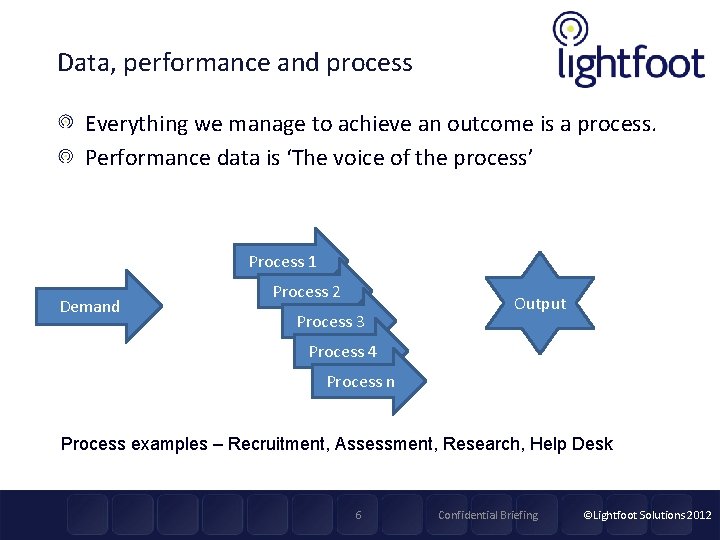
Data, performance and process Everything we manage to achieve an outcome is a process. Performance data is ‘The voice of the process’ Process 1 Demand Process 2 Process 3 Output Process 4 Process n Process examples – Recruitment, Assessment, Research, Help Desk 6 Confidential Briefing ©Lightfoot Solutions 2012
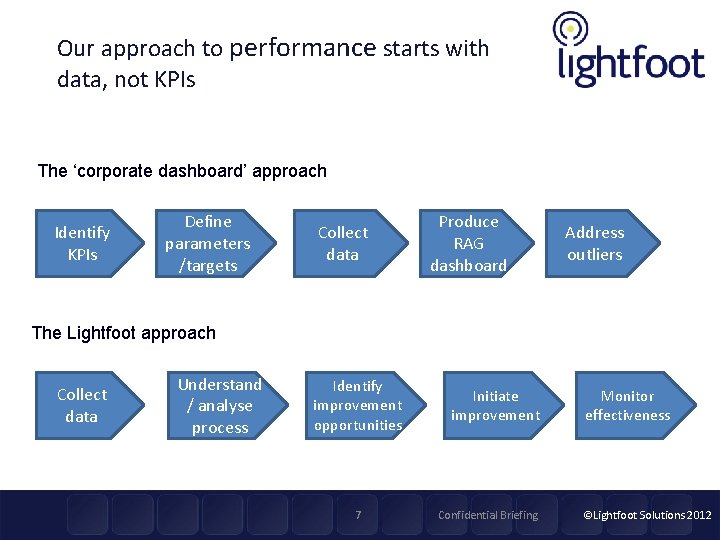
Our approach to performance starts with data, not KPIs The ‘corporate dashboard’ approach Identify KPIs Define parameters /targets Collect data Produce RAG dashboard Address outliers The Lightfoot approach Collect data Understand / analyse process Identify improvement opportunities 7 Initiate improvement Confidential Briefing Monitor effectiveness ©Lightfoot Solutions 2012
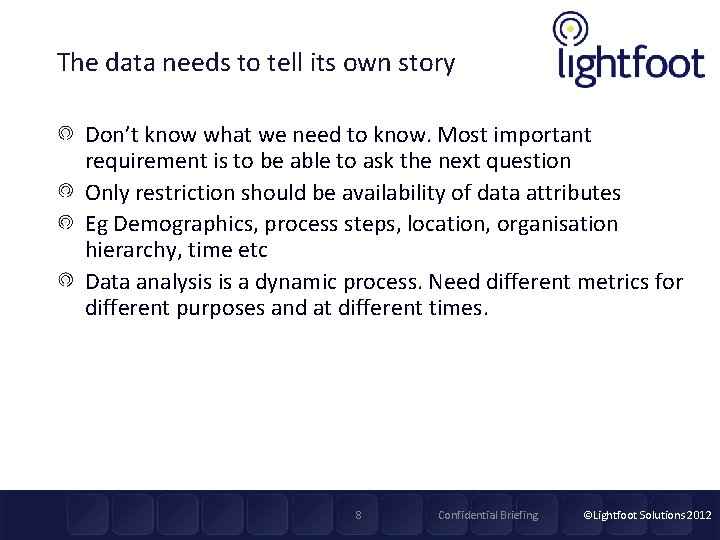
The data needs to tell its own story Don’t know what we need to know. Most important requirement is to be able to ask the next question Only restriction should be availability of data attributes Eg Demographics, process steps, location, organisation hierarchy, time etc Data analysis is a dynamic process. Need different metrics for different purposes and at different times. 8 Confidential Briefing ©Lightfoot Solutions 2012
Why is SPC important Underpins all successful performance improvement methodologies Based on the recognition that Every process generates information that can be used to measure, control and improve its performance Experience has shown that variability is the single most important obstacle to consistent and efficient service delivery. Identifying and driving out the root causes of unwanted variability is the single most effective element of any successful service improvement programme 9 Confidential Briefing ©Lightfoot Solutions 2012
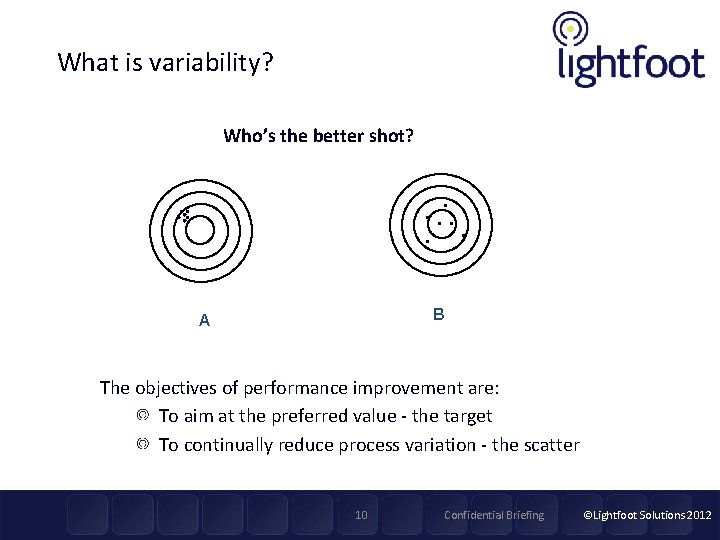
What is variability? Who’s the better shot? B A The objectives of performance improvement are: To aim at the preferred value - the target To continually reduce process variation - the scatter 10 Confidential Briefing ©Lightfoot Solutions 2012
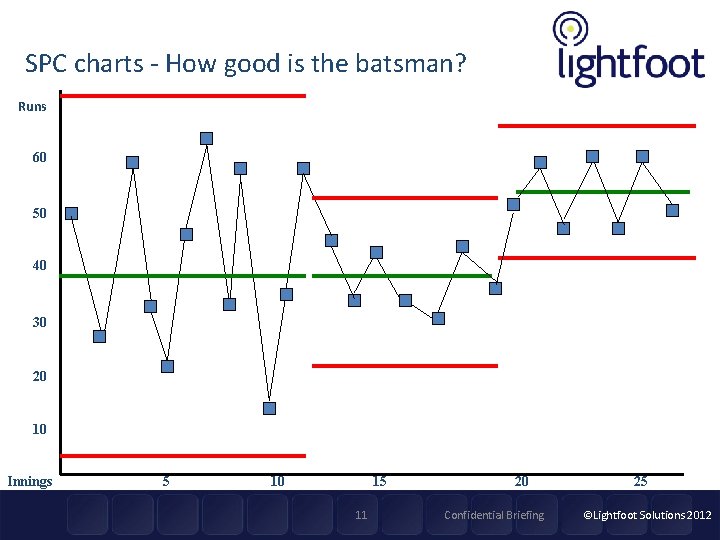
SPC charts - How good is the batsman? Runs 60 50 40 30 20 10 Innings 5 10 15 11 20 Confidential Briefing 25 ©Lightfoot Solutions 2012
3. How sfn presents performance data 12 Confidential Briefing ©Lightfoot Solutions 2012
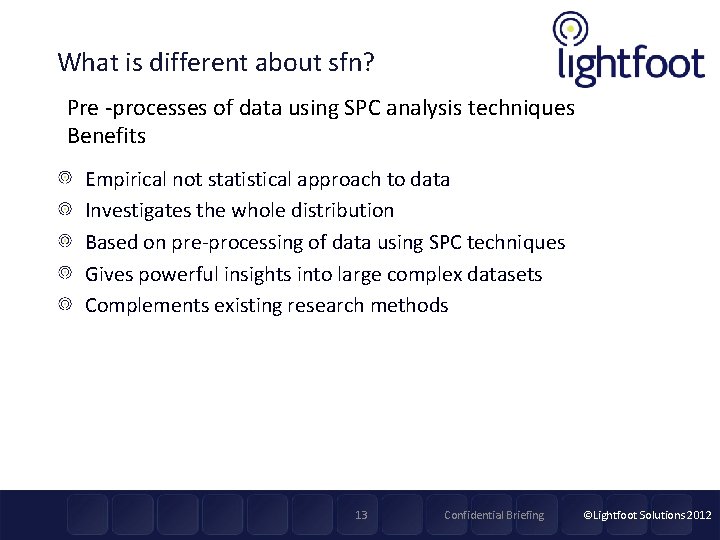
What is different about sfn? Pre -processes of data using SPC analysis techniques Benefits Empirical not statistical approach to data Investigates the whole distribution Based on pre-processing of data using SPC techniques Gives powerful insights into large complex datasets Complements existing research methods 13 Confidential Briefing ©Lightfoot Solutions 2012
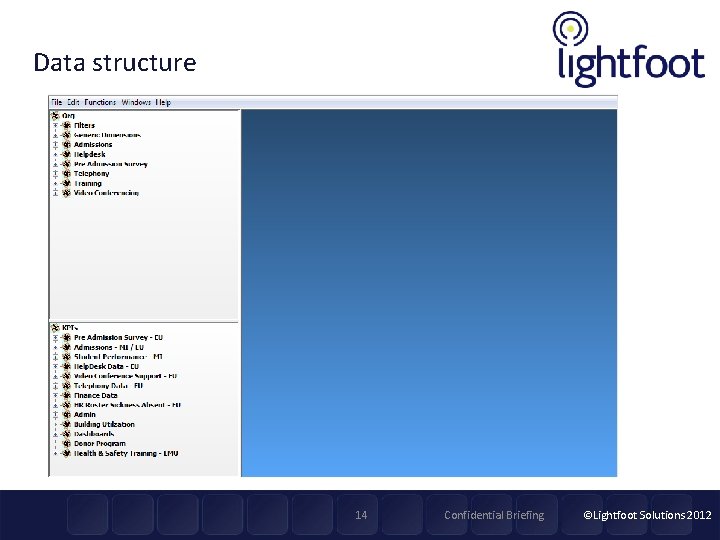
Data structure 14 Confidential Briefing ©Lightfoot Solutions 2012
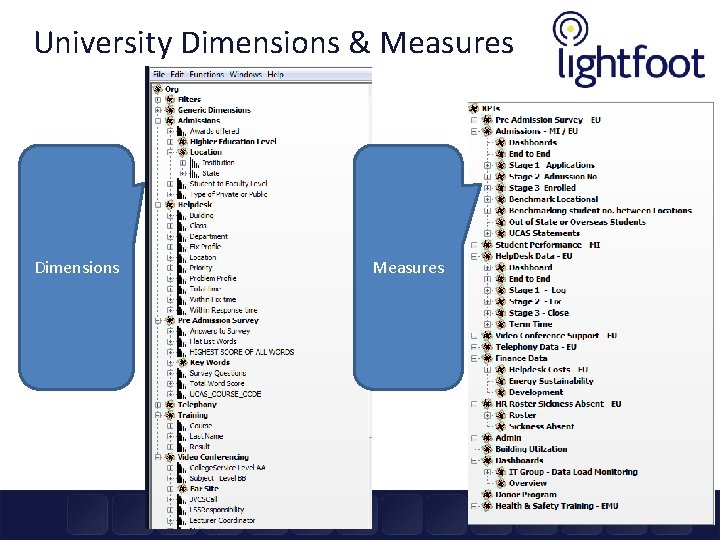
University Dimensions & Measures Dimensions Measures
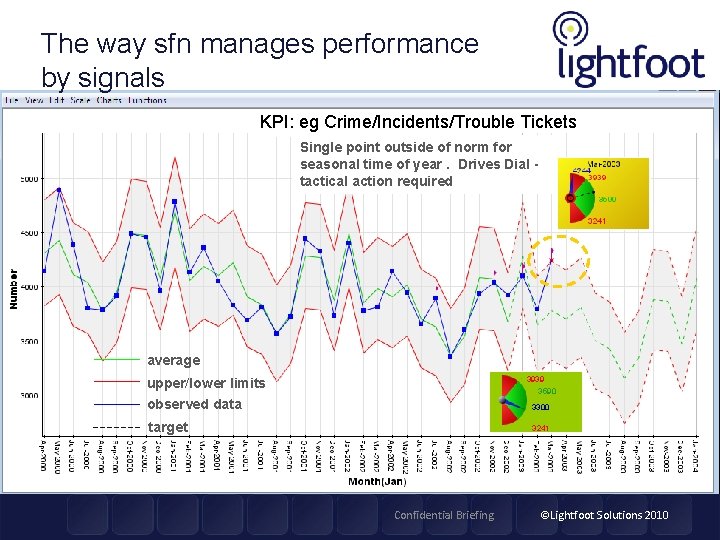
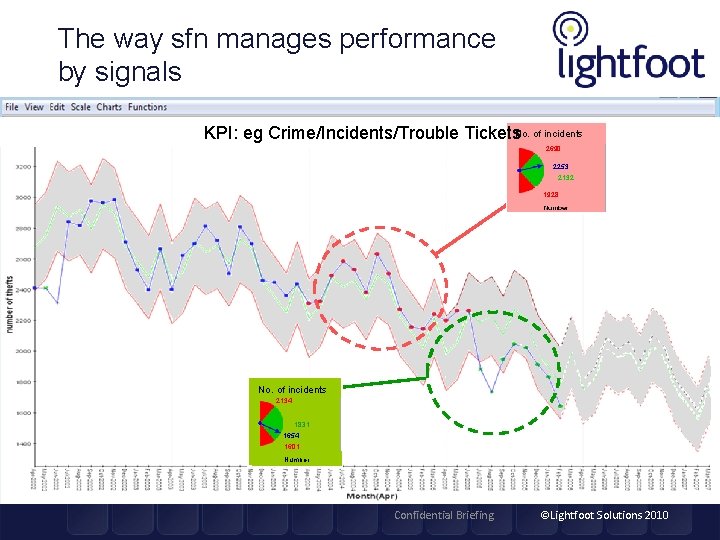
The way sfn manages performance by signals KPI: eg Crime/Incidents/Trouble Tickets Single point outside of norm for seasonal time of year. Drives Dial tactical action required average 3939 upper/lower limits 3590 observed data 3300 target 3241 Confidential Briefing ©Lightfoot Solutions 2010
The way sfn manages performance by signals KPI: eg Crime/Incidents/Trouble Tickets. No. of incidents 2690 2253 2132 1928 No. of incidents 2134 1831 1654 1601 Number Confidential Briefing ©Lightfoot Solutions 2010
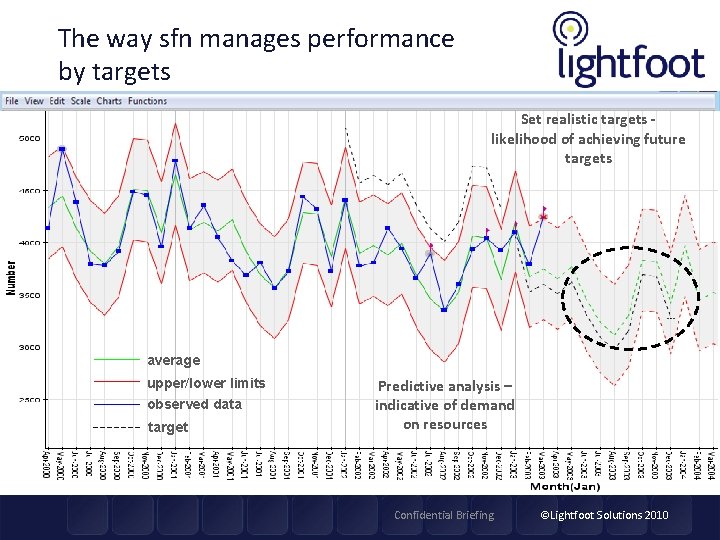
The way sfn manages performance by targets Set realistic targets likelihood of achieving future targets average upper/lower limits observed data target Predictive analysis – indicative of demand on resources Confidential Briefing ©Lightfoot Solutions 2010
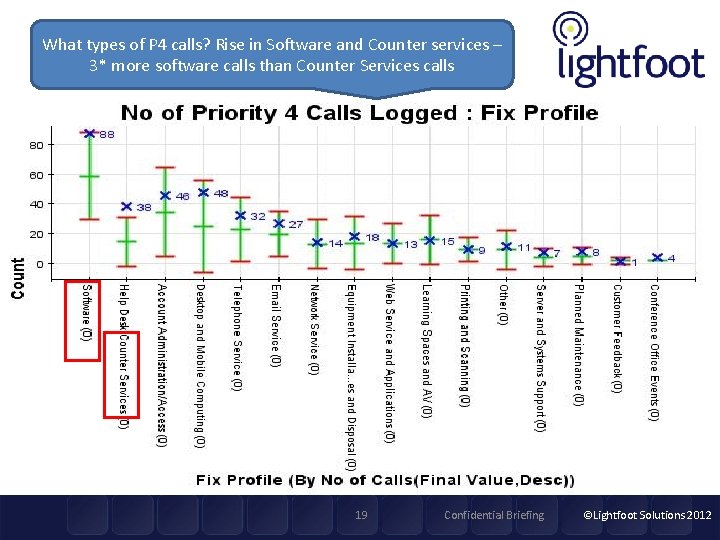
What types of P 4 calls? Rise in Software and Counter services – 3* more software calls than Counter Services calls 19 Confidential Briefing ©Lightfoot Solutions 2012
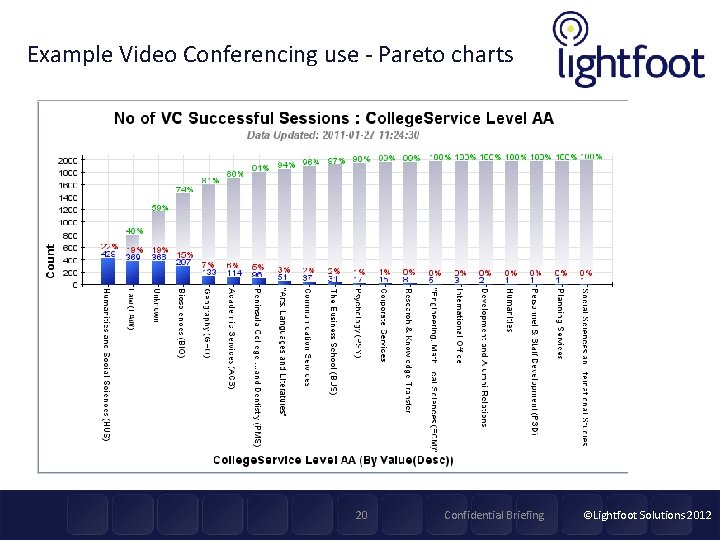
Example Video Conferencing use - Pareto charts 20 Confidential Briefing ©Lightfoot Solutions 2012
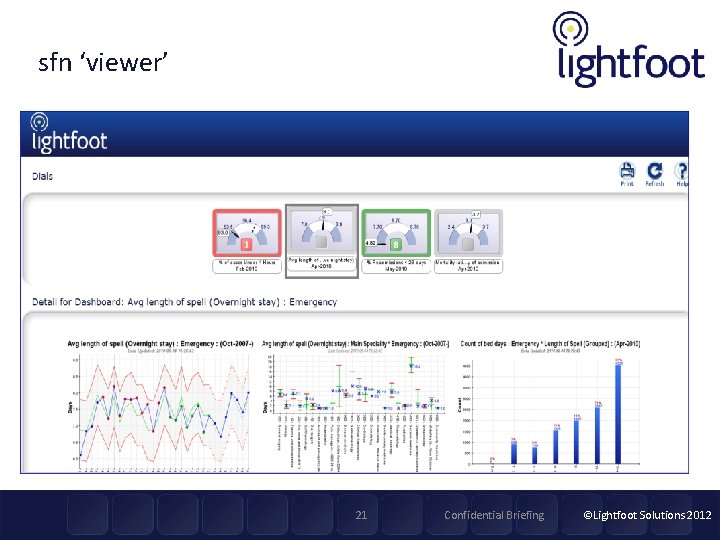
sfn ‘viewer’ 21 Confidential Briefing ©Lightfoot Solutions 2012
Areas to Performance Manage Through one world of data integration: Number of graduates in employment Improving pastoral care to reducing drop out rates Manage Finance and Expenditure Targeting particular groups or sectors Diversity of intake Strengthening particular courses & Improve pass rates Increasing the size of endowments Better student feedback Number of returning post-graduates Quality of research work & Flexibility of teaching HR – Staff moral and performance Improved sporting excellence 22 Confidential Briefing ©Lightfoot Solutions 2012
Understanding the Process & control points In order to measure the process you need to understand the process
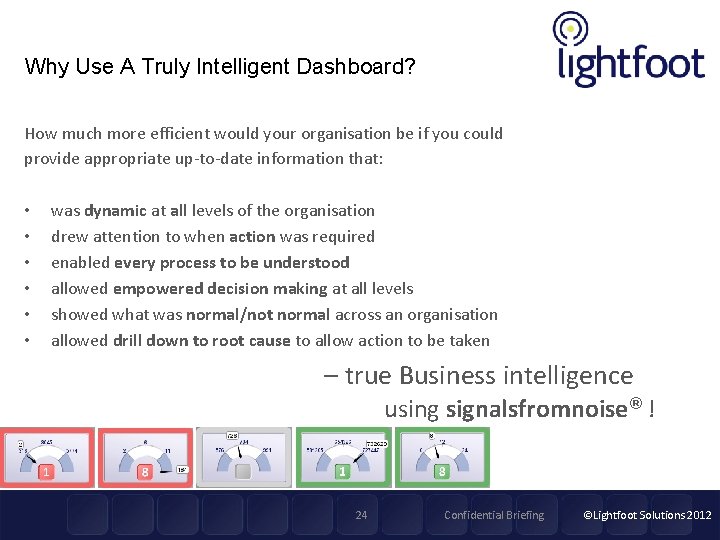
Why Use A Truly Intelligent Dashboard? How much more efficient would your organisation be if you could provide appropriate up-to-date information that: • • • was dynamic at all levels of the organisation drew attention to when action was required enabled every process to be understood allowed empowered decision making at all levels showed what was normal/not normal across an organisation allowed drill down to root cause to allow action to be taken – true Business intelligence using signalsfromnoise® ! 24 Confidential Briefing ©Lightfoot Solutions 2012
5. Making performance management real 25 Confidential Briefing ©Lightfoot Solutions 2012
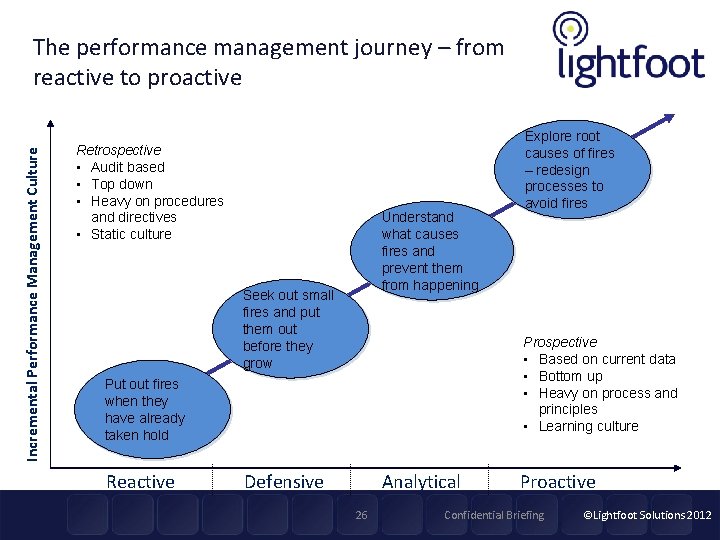
Incremental Performance Management Culture The performance management journey – from reactive to proactive Retrospective • Audit based • Top down • Heavy on procedures and directives • Static culture Understand what causes fires and prevent them from happening Seek out small fires and put them out before they grow Prospective • Based on current data • Bottom up • Heavy on process and principles • Learning culture Put out fires when they have already taken hold Reactive Explore root causes of fires – redesign processes to avoid fires Defensive Analytical 26 Proactive Confidential Briefing ©Lightfoot Solutions 2012
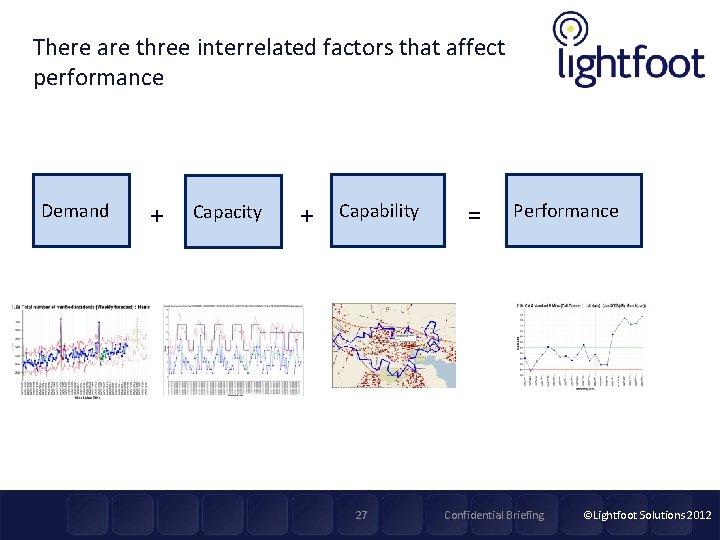
There are three interrelated factors that affect performance Demand + Capacity + Capability 27 = Performance Confidential Briefing ©Lightfoot Solutions 2012
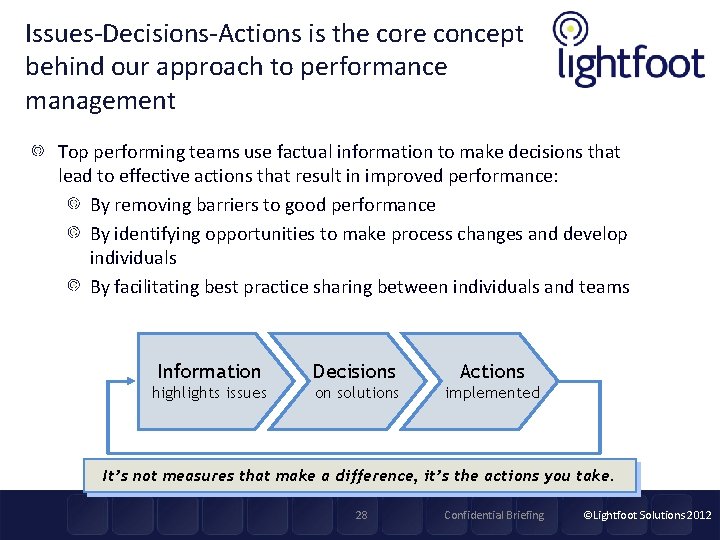
Issues-Decisions-Actions is the core concept behind our approach to performance management Top performing teams use factual information to make decisions that lead to effective actions that result in improved performance: By removing barriers to good performance By identifying opportunities to make process changes and develop individuals By facilitating best practice sharing between individuals and teams Information Decisions Actions highlights issues on solutions implemented It’s not measures that make a difference, it’s the actions you take. 28 Confidential Briefing ©Lightfoot Solutions 2012
Getting the Performance Management Structure right is critical to success Three integrated tiers of Performance Management meetings Links top level objectives with issues ‘on the ground’ and vice versa Focus is on Issues, Decisions and Actions at all levels, rather than mere reporting and information sharing Takes place on a regular cycle Every management meeting is a performance management meeting. 29 Confidential Briefing ©Lightfoot Solutions 2012
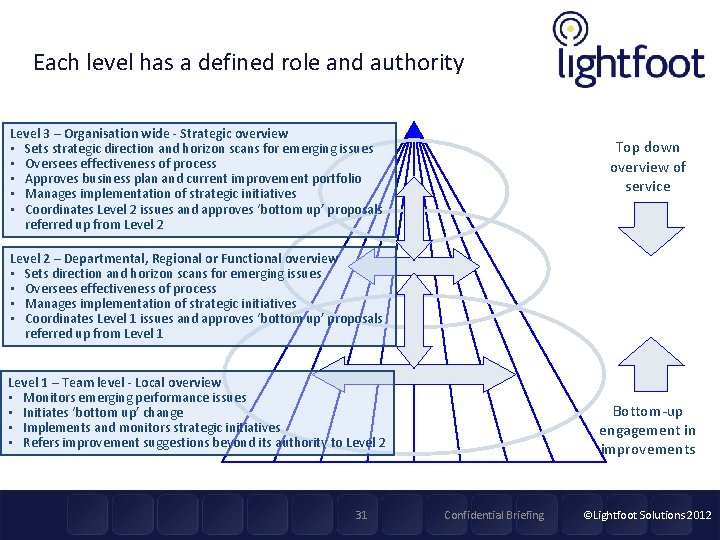
For most organisations a three level structure is most effective Report to Executive Team and Board Level 3 – Organisation wide Director of Operations, Heads of Department, Head of performance Top down overview of service Level 2 Department manager, Section heads, Performance analyst Level 1 Front line team Section head, Team managers Bottom-up engagement in improvements 30 Confidential Briefing ©Lightfoot Solutions 2012
Each level has a defined role and authority Level 3 – Organisation wide - Strategic overview • Sets strategic direction and horizon scans for emerging issues • Oversees effectiveness of process • Approves business plan and current improvement portfolio • Manages implementation of strategic initiatives • Coordinates Level 2 issues and approves ‘bottom up’ proposals referred up from Level 2 Top down overview of service Level 2 – Departmental, Regional or Functional overview • Sets direction and horizon scans for emerging issues • Oversees effectiveness of process • Manages implementation of strategic initiatives • Coordinates Level 1 issues and approves ‘bottom up’ proposals referred up from Level 1 – Team level - Local overview • Monitors emerging performance issues • Initiates ‘bottom up’ change • Implements and monitors strategic initiatives • Refers improvement suggestions beyond its authority to Level 2 31 Bottom-up engagement in improvements Confidential Briefing ©Lightfoot Solutions 2012
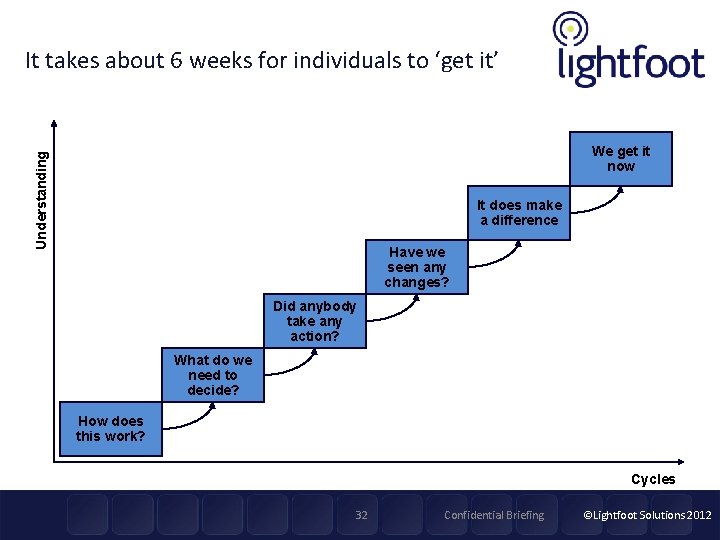
It takes about 6 weeks for individuals to ‘get it’ Understanding We get it now It does make a difference Have we seen any changes? Did anybody take any action? What do we need to decide? How does this work? Cycles 32 Confidential Briefing ©Lightfoot Solutions 2012
Introducing performance management is a big cultural issue The regular cycle of Performance Meetings is the ‘way we do things around here’ for all teams Senior managers ensure their teams are working to the same Performance management process as they do Job descriptions and personal objectives reflect this role Improvement goals are set Team culture of problem solving needs to be fostered 33 Confidential Briefing ©Lightfoot Solutions 2012
6. Questions? 34 Confidential Briefing ©Lightfoot Solutions 2012