
Using Data Identifying Gaps for Continuous Improvement Kristin









- Slides: 22
Using Data & Identifying Gaps for Continuous Improvement Kristin Myers, University of Northern Colorado Paula Gumina, Colorado Department of Education November 5, 2014
2
3
Cycle of Data Analyze the Data Evaluate the Intervention Implement the intervention 4 Define the Problem Develop the Intervention
Goals College and Career Ready Demonstrate outcomes, monitor impacts, revise and improve programs, policies and practices Providing grantees withdata strategies for gaps for continuous Using to identify using data for continuous improvement 5
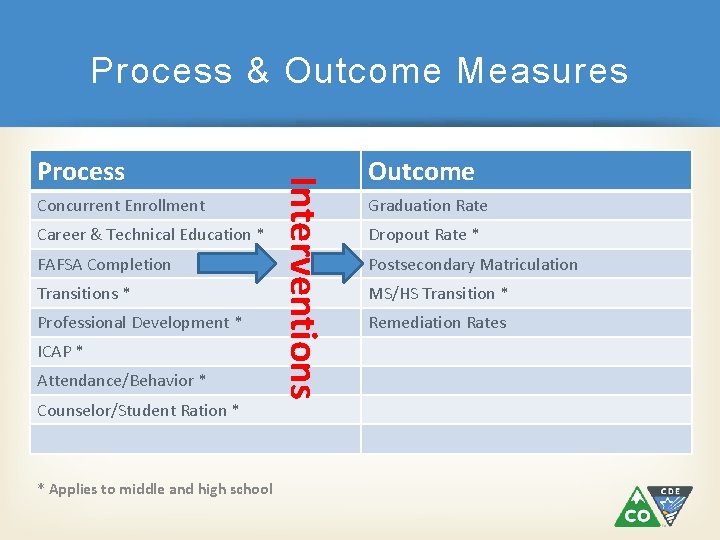
Process & Outcome Measures Concurrent Enrollment Career & Technical Education * FAFSA Completion Transitions * Professional Development * ICAP * Attendance/Behavior * Counselor/Student Ration * * Applies to middle and high school Interventions Process Outcome Graduation Rate Dropout Rate * Postsecondary Matriculation MS/HS Transition * Remediation Rates
The Connections CE CTE Grad Rate x x Dropout x x Higher Ed Matriculation x Remediation x MS/HS Transition 7 FAFSA ICAP x x Counselor/ Student Ratio Attendance /Behavior x X x x x x Professional Development
Data 8
2014 -2015 SCCGP Reporting CDE Data - Graduation/Matriculation Rate - Grades - Dropout Rate - ACT & TCAP - Credential Attainment - Postsecondary Enrollment - Career - Remedial Needs - Concurrent Enrollment & CTE Participation - FAFSA Completion - 9 th Grade matriculation ‹#› District & School Data - Disaggregated Grad/Matriculation /Dropout College Career Ready - Admissions Applications - Scholarship $$ - Attendance - Counselor/Student Ratio - College Visits - Postsecondary Goal - Parent Engagement - EXPLORE/Plan - ASCA Standards Adoption - ICAP Development/Implementation
ASCA Implementation Standards § The use of data in school counseling programs are noted in accountability, and program management. “Use of data to measure the results of the overall program as well as to promote systemic change within the school system so every student graduates college and career ready. ” (ASCA, 2013) § For more ASCA specific information on data: Making DATA Work (3 rd edition) 10
Working with Data Sources 11
Dropout Analysis Display § What does the DODAD tell us? § What stands out about your school?
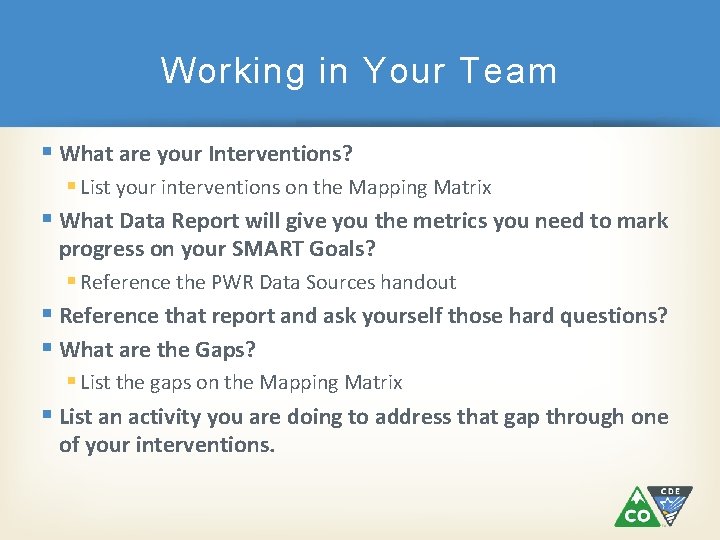
Working in Your Team § What are your Interventions? § List your interventions on the Mapping Matrix § What Data Report will give you the metrics you need to mark progress on your SMART Goals? § Reference the PWR Data Sources handout § Reference that report and ask yourself those hard questions? § What are the Gaps? § List the gaps on the Mapping Matrix § List an activity you are doing to address that gap through one of your interventions.
Idea Sharing 14
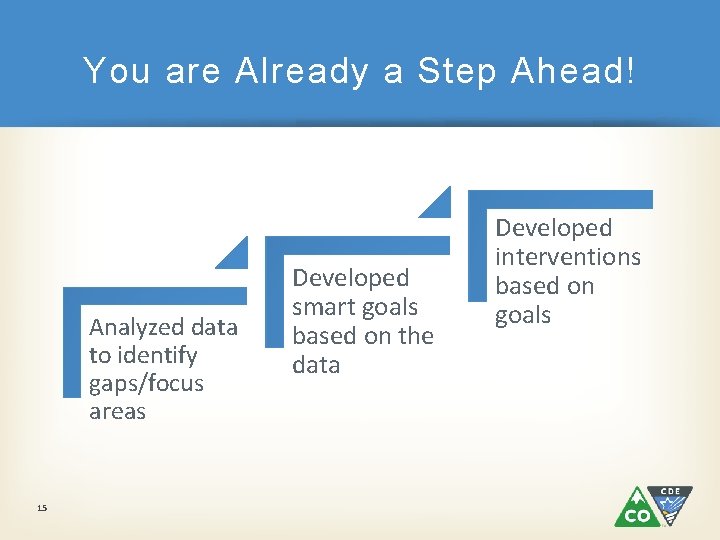
You are Already a Step Ahead! Analyzed data to identify gaps/focus areas 15 Developed smart goals based on the data Developed interventions based on goals
Cycle of Data Analyze the Data Evaluate the Intervention Implement the intervention 16 Define the Problem Develop the Intervention
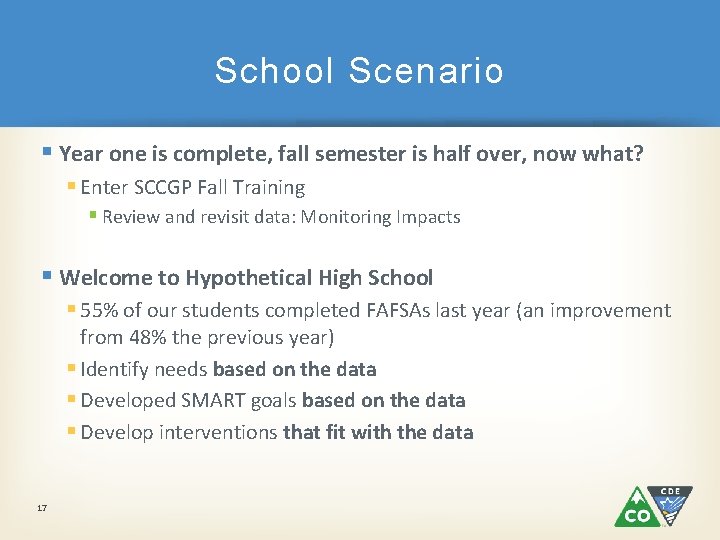
School Scenario § Year one is complete, fall semester is half over, now what? § Enter SCCGP Fall Training § Review and revisit data: Monitoring Impacts § Welcome to Hypothetical High School § 55% of our students completed FAFSAs last year (an improvement from 48% the previous year) § Identify needs based on the data § Developed SMART goals based on the data § Develop interventions that fit with the data 17
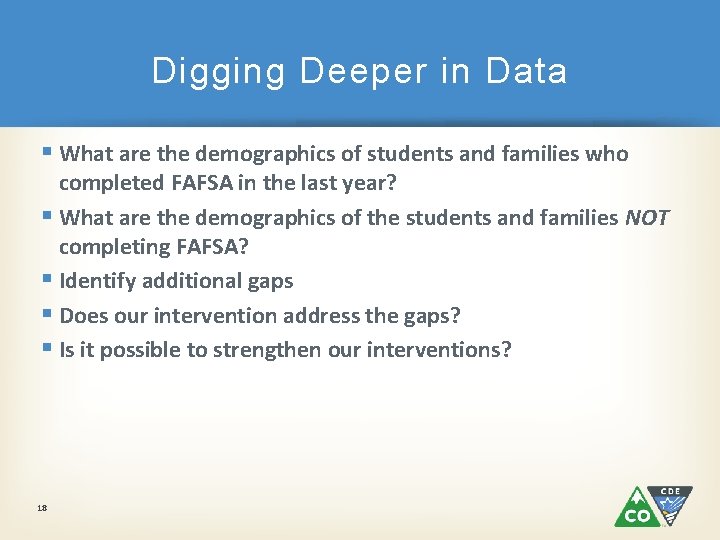
Digging Deeper in Data § What are the demographics of students and families who completed FAFSA in the last year? § What are the demographics of the students and families NOT completing FAFSA? § Identify additional gaps § Does our intervention address the gaps? § Is it possible to strengthen our interventions? 18
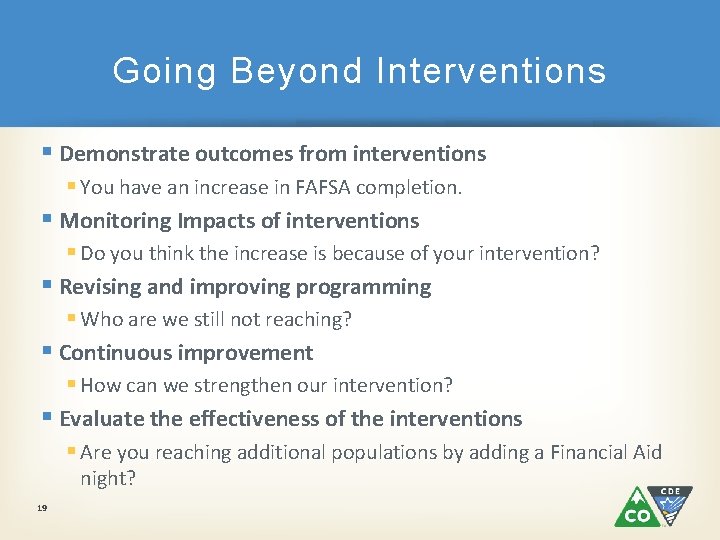
Going Beyond Interventions § Demonstrate outcomes from interventions § You have an increase in FAFSA completion. § Monitoring Impacts of interventions § Do you think the increase is because of your intervention? § Revising and improving programming § Who are we still not reaching? § Continuous improvement § How can we strengthen our intervention? § Evaluate the effectiveness of the interventions § Are you reaching additional populations by adding a Financial Aid night? 19
Revisiting Goals and Interventions § Hypothetical High had 55% of students with completed FAFSA § What about the other 65%? § Was the increase last year directly after the financial aid night? § Who attended the financial aid night? § Who did not attend? § What additional stakeholders could be involved? § Is adding an additional Financial Aid night enough? 20
Choosing Data-Driven Interventions § Effective interventions target the right population § Make sure the intervention the right intervention for the intended population § Deliver your intervention effectively § Enhance interventions by revisiting data and addressing gaps 21
Celebrating Success 22