
Using Collaborative Inquiry Process for Providing Feedback Margie
Using Collaborative Inquiry Process for Providing Feedback Margie Johnson, Ed. D.
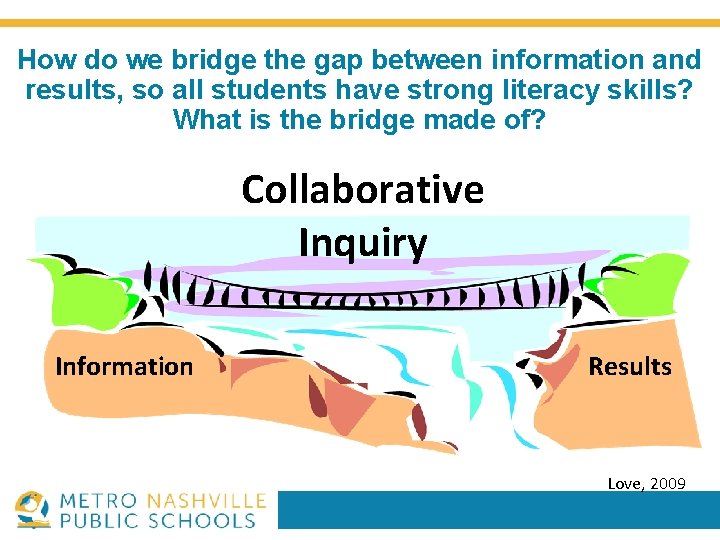
How do we bridge the gap between information and results, so all students have strong literacy skills? What is the bridge made of? Collaborative Inquiry Information Results Love, 2009
MNPS Collaborative Inquiry is a data-based team process that consciously uses the collaborative learning cycle (activating and engaging, exploring and discovering, and organizing and integrating) and the qualities of effective groups (fostering a culture of trust, maintaining a clear focus, taking collective responsibility and data-informed decision-making). MNPS Collaborative Inquiry Community of Practice
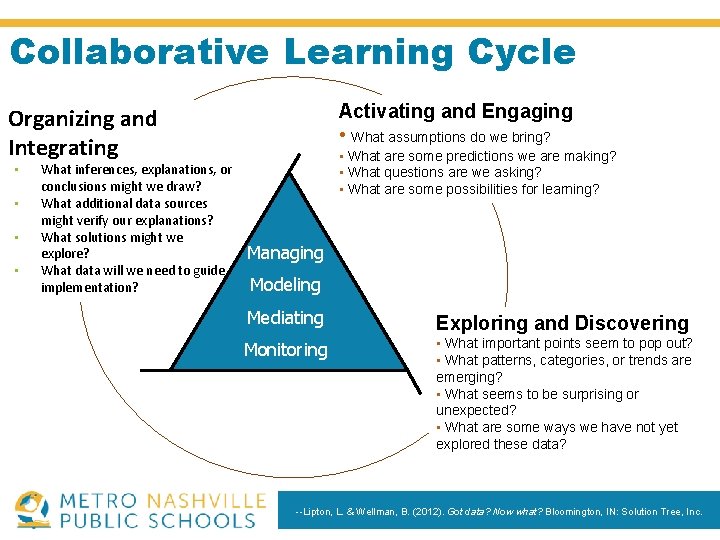
Collaborative Learning Cycle Activating and Engaging • What assumptions do we bring? Organizing and Integrating • • What inferences, explanations, or conclusions might we draw? What additional data sources might verify our explanations? What solutions might we explore? What data will we need to guide implementation? • What are some predictions we are making? • What questions are we asking? • What are some possibilities for learning? Managing Modeling Mediating Exploring and Discovering Monitoring • What important points seem to pop out? • What patterns, categories, or trends are emerging? • What seems to be surprising or unexpected? • What are some ways we have not yet explored these data? --Lipton, L. & Wellman, B. (2012). Got data? Now what? Bloomington, IN: Solution Tree, Inc.
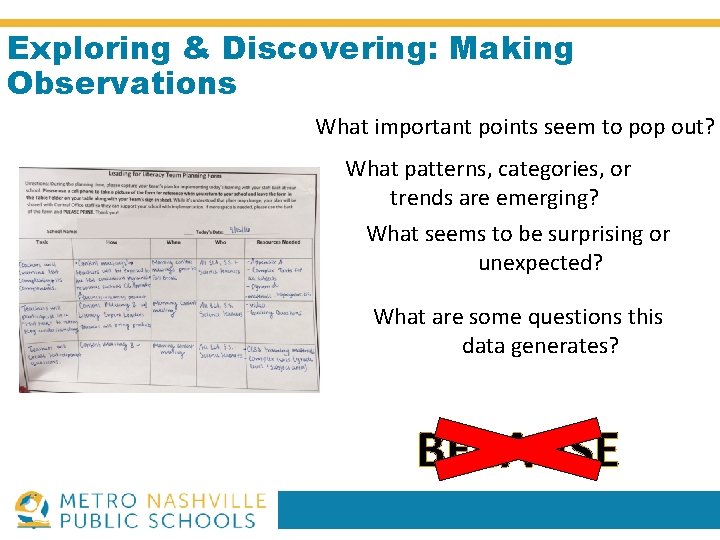
Exploring & Discovering: Making Observations What important points seem to pop out? What patterns, categories, or trends are emerging? What seems to be surprising or unexpected? What are some questions this data generates? BECAUSE
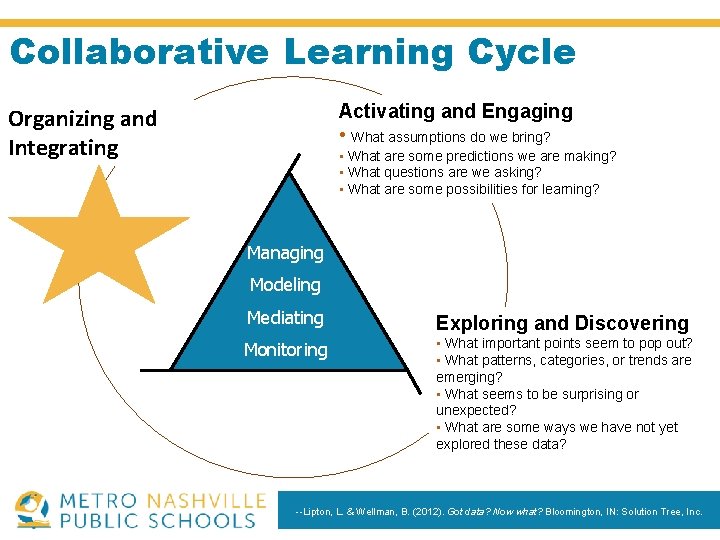
Collaborative Learning Cycle Activating and Engaging • What assumptions do we bring? Organizing and Integrating • What are some predictions we are making? • What questions are we asking? • What are some possibilities for learning? Managing Modeling Mediating Exploring and Discovering Monitoring • What important points seem to pop out? • What patterns, categories, or trends are emerging? • What seems to be surprising or unexpected? • What are some ways we have not yet explored these data? --Lipton, L. & Wellman, B. (2012). Got data? Now what? Bloomington, IN: Solution Tree, Inc.
Feedback Given what we have discussed and learned today, what are some feedback you might give to the school?
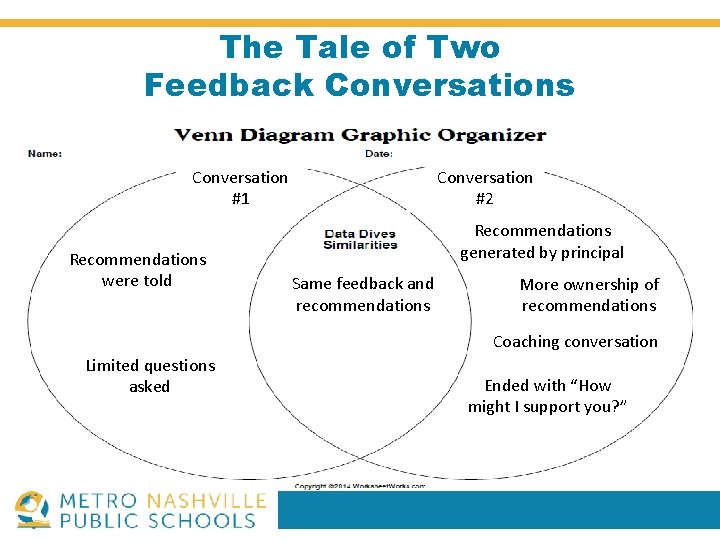
The Tale of Two Feedback Conversations Conversation #1 Recommendations were told Conversation #2 Recommendations generated by principal Same feedback and recommendations More ownership of recommendations Coaching conversation Limited questions asked Ended with “How might I support you? ”
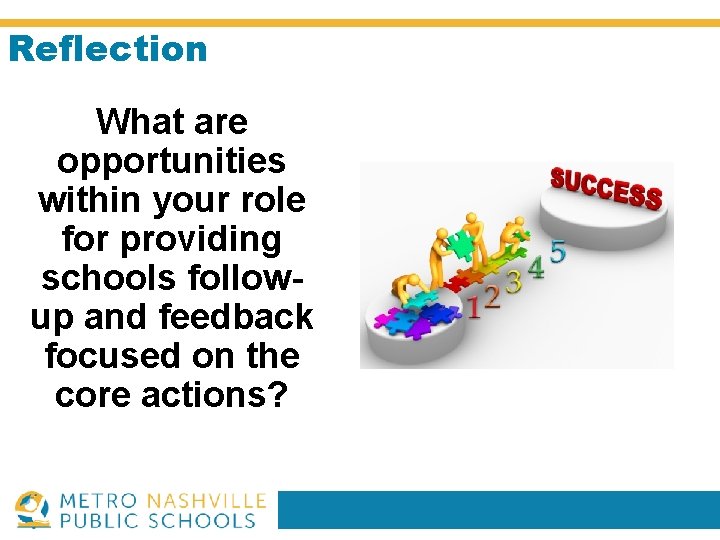
Reflection What are opportunities within your role for providing schools followup and feedback focused on the core actions?
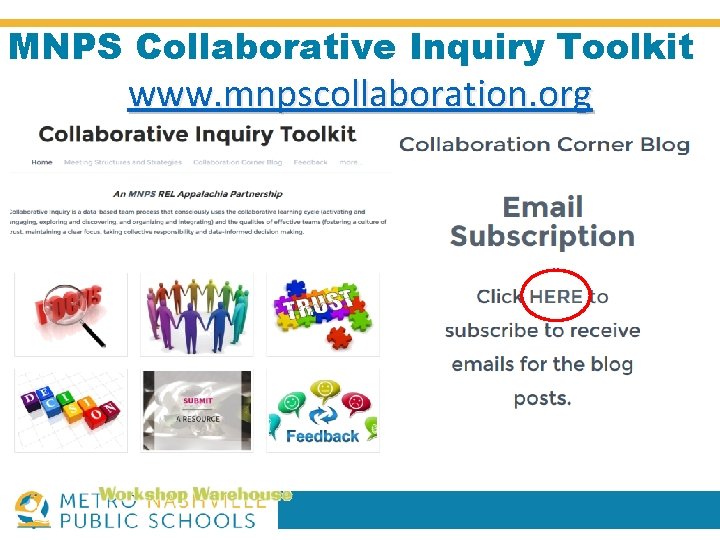
MNPS Collaborative Inquiry Toolkit www. mnpscollaboration. org
References Lipton, L. & Wellman, B. (2012). Got data? Now what? Bloomington, IN: Solution Tree. Lipton, L. & Wellman, B. (2011). Groups at work: Strategies and structures for professional learning. Sherman, CT: Mira. Via, LLC. Love, N. (2009). Using data to improve learning for all: A collaborative inquiry approach. Thousand Oaks, CA: Corwin.
- Slides: 11