
Using coaching techniques in typical client interactions Introductions



- Slides: 27
Using coaching techniques in typical client interactions
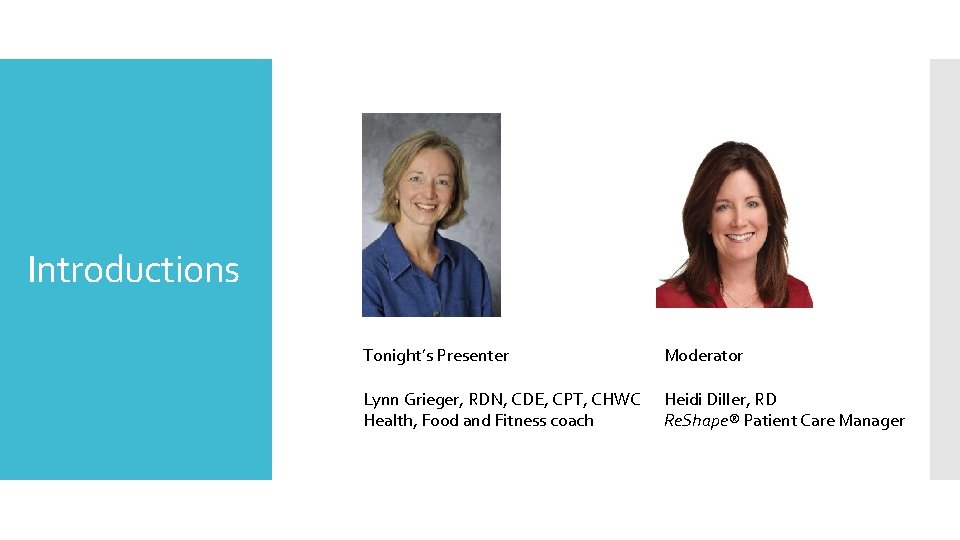
Introductions Tonight’s Presenter Moderator Lynn Grieger, RDN, CDE, CPT, CHWC Health, Food and Fitness coach Heidi Diller, RD Re. Shape® Patient Care Manager
Using a coach approach in: Today’s topics Short interactions Motivation and non-compliance Hunger and fullness Setting and reaching goals
Put on your coaching hat Mindfulness – set your intention Develop empathy Open-ended questions Active listening Client-driven
Short interactions
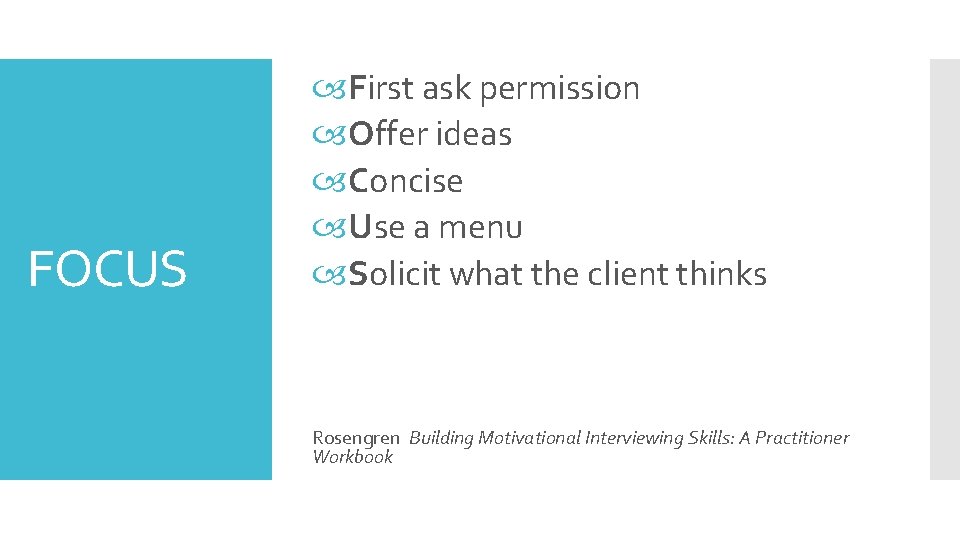
FOCUS First ask permission Offer ideas Concise Use a menu Solicit what the client thinks Rosengren Building Motivational Interviewing Skills: A Practitioner Workbook
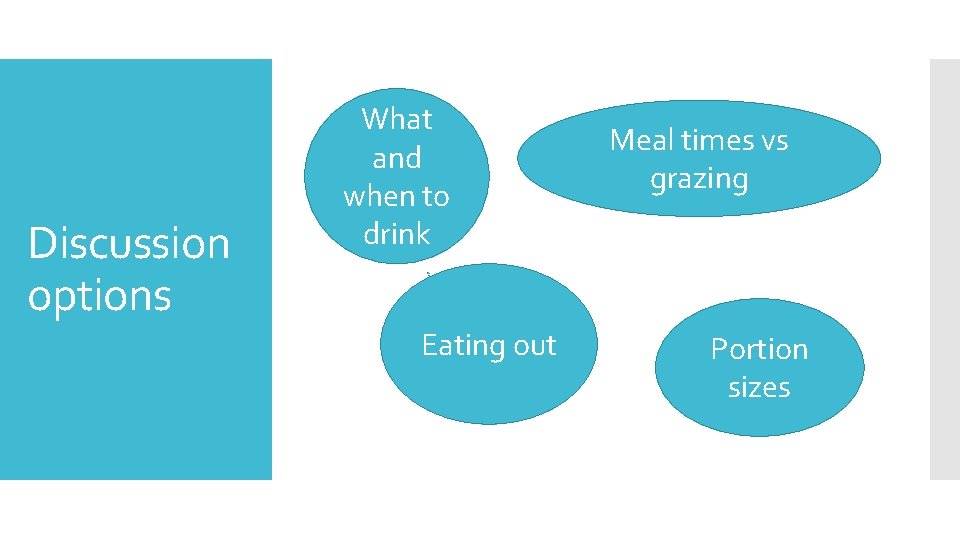
Discussion options What and h when to y drinkdr a t i o n Eating out Meal times vs grazing Portion sizes
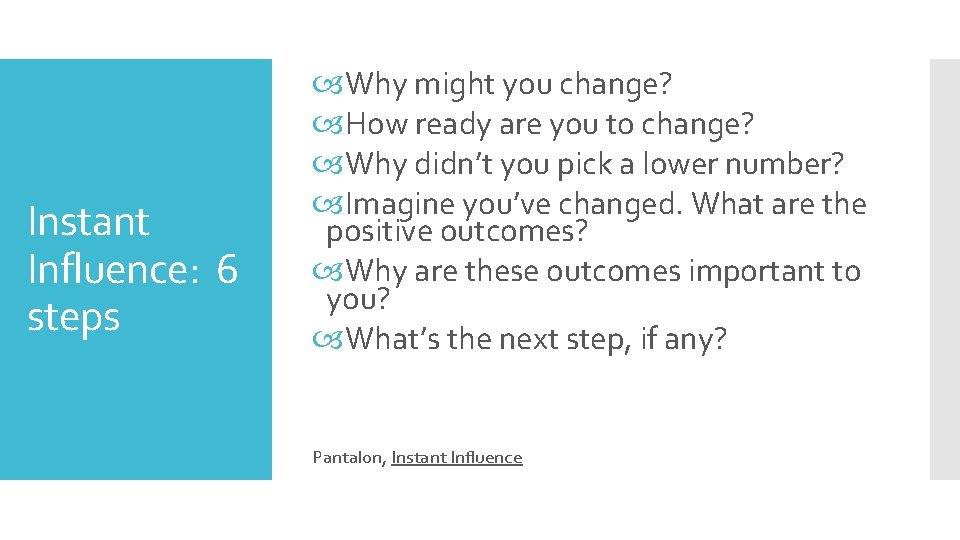
Instant Influence: 6 steps Why might you change? How ready are you to change? Why didn’t you pick a lower number? Imagine you’ve changed. What are the positive outcomes? Why are these outcomes important to you? What’s the next step, if any? Pantalon, Instant Influence
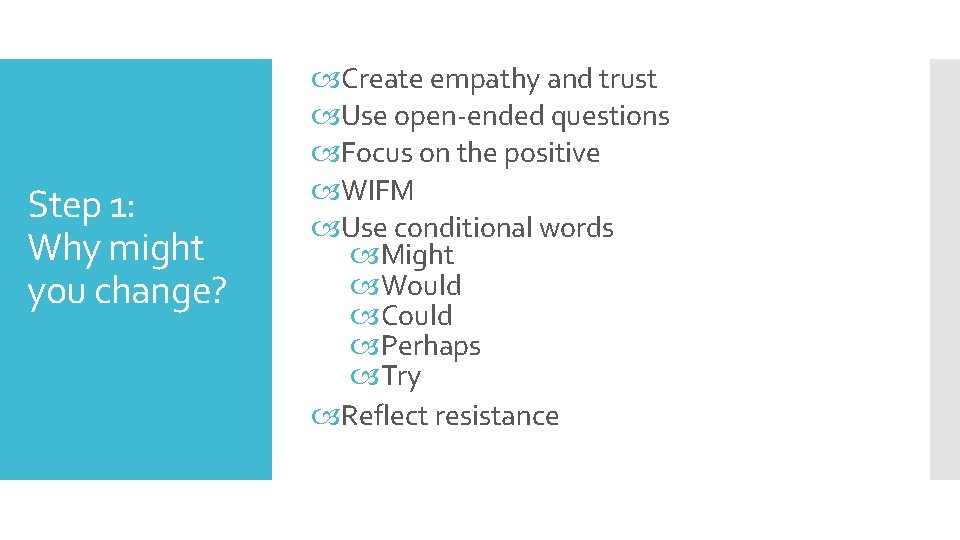
Step 1: Why might you change? Create empathy and trust Use open-ended questions Focus on the positive WIFM Use conditional words Might Would Could Perhaps Try Reflect resistance
Step 2: How ready are you to change? Use a ruler to gauge readiness to change Focus on one specific step within a set timeframe
Step 3: Why didn’t you pick a lower number? Part of you wants to make this change The number itself isn’t important The importance is the reasons for making a change
Step 4: Focus on the positive outcomes Imagine you’ve made the change. What benefits will you see? Suppose you can wave a magic wand suddenly the change occurred. How would you benefit?
Step 5: Why are these outcomes important to you?
Step 6: What’s the next step, if any?
Motivation or Noncompliance? “Noncompliance: Failure or refusal to comply. In medicine, the term noncompliance is commonly used in regard to a patient who does not take a prescribed medication or follow a prescribed course of treatment. ” http: //www. medicinenet. com
Health care approach Give them insight Give them knowledge Give them skills Give them a hard time
Your turn! Client: I just don’t like the taste of plain water. RDN approach: Have you tried flavoring water with cut-up fruit or vegetables? Many of my patients really like making infused water. Your turn: type into the question box a coach approach reflection you might use instead of the RDN approach.
Your turn! Client: I’m just so busy in the morning, I don’t have time for breakfast. RDN approach: I have a list of breakfasts that you can make in less than 5 minutes that you can use this week. Your turn: type into the question box a coach approach reflection you might use instead of the RDN approach
Coach approach Meet with compassion and empathy Non-judgmental Active listening Use your OARS Focus on the positives Build self-esteem and self-efficacy
Am I Hungry? Body-Mind-Heart Scan from Michelle May, MD Pause Body scan Mind scan Heart scan http: //amihungry. com/the-power-of-the-pause-body-mind-heart-scan/
Pause
Body scan Look for tension, discomfort, pain Is my stomach rumbling, empty, growling? Do I feel light-headed? Low energy?
Mind
Heart
7 types of hunger Eye hunger Nose hunger Mouth hunger Stomach hunger Cellular hunger Mind hunger Heart hunger Jan Chozen Bays MD Mindful Eating
Develop empathy Approach each client with deep curiosity Be mindful and present Listen actively and without judgement See the world the way your client views it “it sounds like you’re in a difficult place right now” Communicates the message that we understand you’re not alone
Resources Motivational Interviewing in Health Care by Stephen Rollnick, William R. Miller and Christopher C. Butler Motivational Interviewing in Nutrition and Fitness by Dawn Clifford and Laura Curtis Instant Influence by Michael V. Pantalon Mindful Eating by Jan Chozen Bays