
Using Catastrophe Models for Pricing The Florida Hurricane

- Slides: 19
Using Catastrophe Models for Pricing: The Florida Hurricane Catastrophe Fund CAS Special Interest Seminar on Catastrophe Risk Management October 8, 2002 Paul Budde, Ph. D. , ACAS, MAAA Senior Vice President
Florida Hurricane Catastrophe Fund
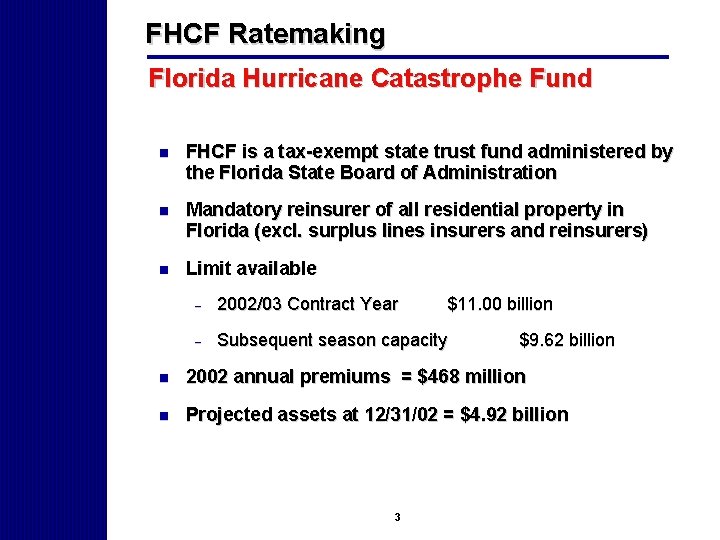
FHCF Ratemaking Florida Hurricane Catastrophe Fund n FHCF is a tax-exempt state trust fund administered by the Florida State Board of Administration n Mandatory reinsurer of all residential property in Florida (excl. surplus lines insurers and reinsurers) n Limit available - 2002/03 Contract Year $11. 00 billion - Subsequent season capacity $9. 62 billion n 2002 annual premiums = $468 million n Projected assets at 12/31/02 = $4. 92 billion 3
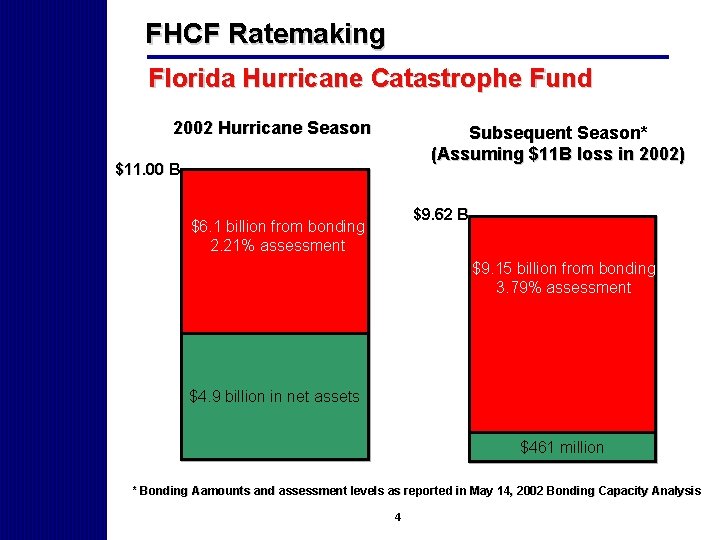
FHCF Ratemaking Florida Hurricane Catastrophe Fund 2002 Hurricane Season Subsequent Season* (Assuming $11 B loss in 2002) $11. 00 B $9. 62 B $6. 1 billion from bonding 2. 21% assessment $9. 15 billion from bonding 3. 79% assessment $4. 9 billion in net assets $461 million * Bonding Aamounts and assessment levels as reported in May 14, 2002 Bonding Capacity Analysis 4
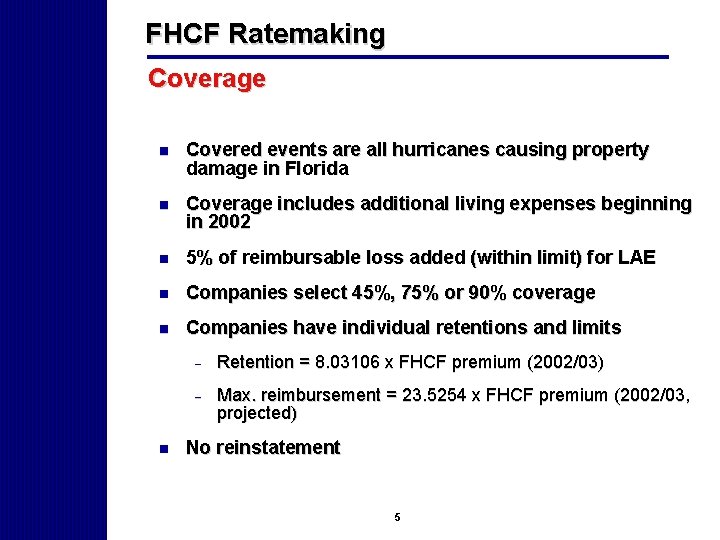
FHCF Ratemaking Coverage n Covered events are all hurricanes causing property damage in Florida n Coverage includes additional living expenses beginning in 2002 n 5% of reimbursable loss added (within limit) for LAE n Companies select 45%, 75% or 90% coverage n Companies have individual retentions and limits n - Retention = 8. 03106 x FHCF premium (2002/03) - Max. reimbursement = 23. 5254 x FHCF premium (2002/03, projected) No reinstatement 5
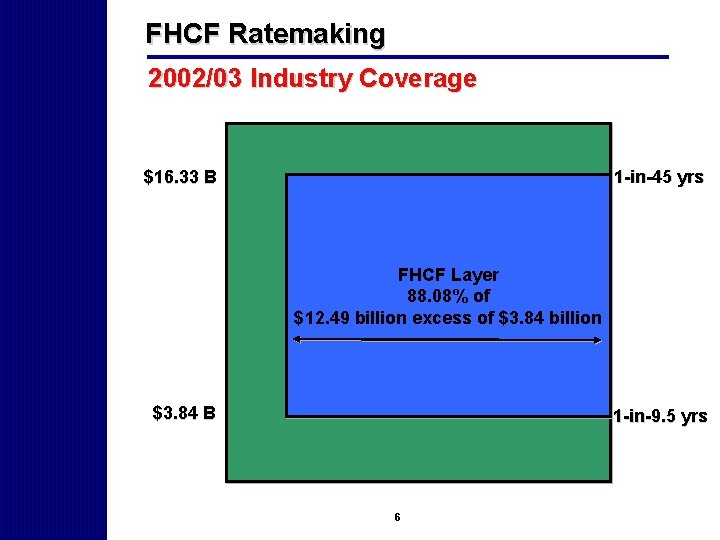
FHCF Ratemaking 2002/03 Industry Coverage 1 -in-45 yrs $16. 33 B FHCF Layer 88. 08% of $12. 49 billion excess of $3. 84 billion $3. 84 B 1 -in-9. 5 yrs 6
From Modeling to Pricing
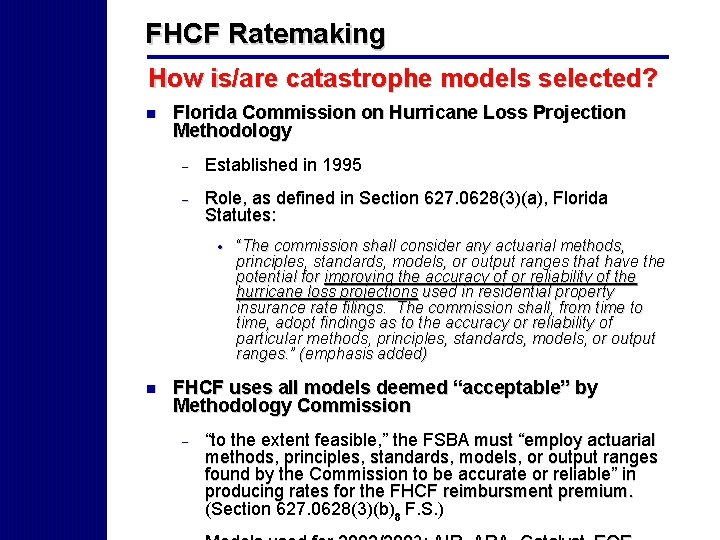
FHCF Ratemaking How is/are catastrophe models selected? n Florida Commission on Hurricane Loss Projection Methodology - Established in 1995 - Role, as defined in Section 627. 0628(3)(a), Florida Statutes: · n “The commission shall consider any actuarial methods, principles, standards, models, or output ranges that have the potential for improving the accuracy of or reliability of the hurricane loss projections used in residential property insurance rate filings. The commission shall, from time to time, adopt findings as to the accuracy or reliability of particular methods, principles, standards, models, or output ranges. ” (emphasis added) FHCF uses all models deemed “acceptable” by Methodology Commission - “to the extent feasible, ” the FSBA must “employ actuarial methods, principles, standards, models, or output ranges found by the Commission to be accurate or reliable” in producing rates for the FHCF reimbursment premium. (Section 627. 0628(3)(b), 8 F. S. )
FHCF Ratemaking What Data to be Modeled? FHCF Goal: Provide all modelers with same data in a format that minimizes assumptions needed n Start with data from prior year data call n Cleansed n Adjusted, as necessary n Trended forward one year n Aggregated 9
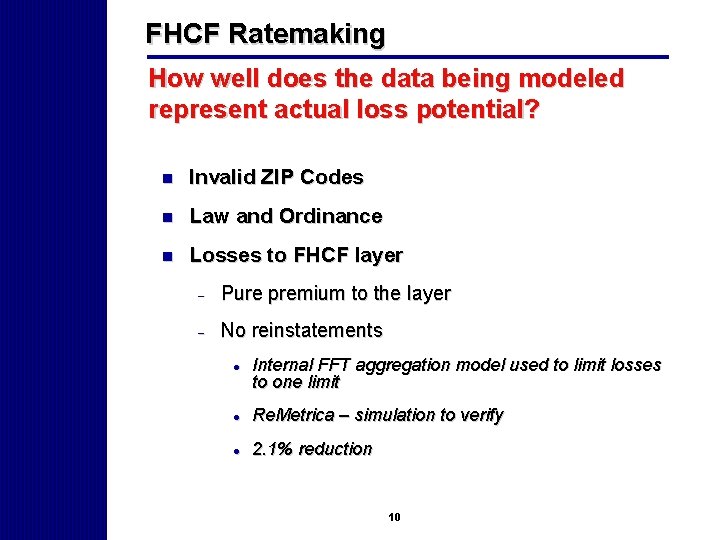
FHCF Ratemaking How well does the data being modeled represent actual loss potential? n Invalid ZIP Codes n Law and Ordinance n Losses to FHCF layer - Pure premium to the layer - No reinstatements · Internal FFT aggregation model used to limit losses to one limit · Re. Metrica – simulation to verify · 2. 1% reduction 10
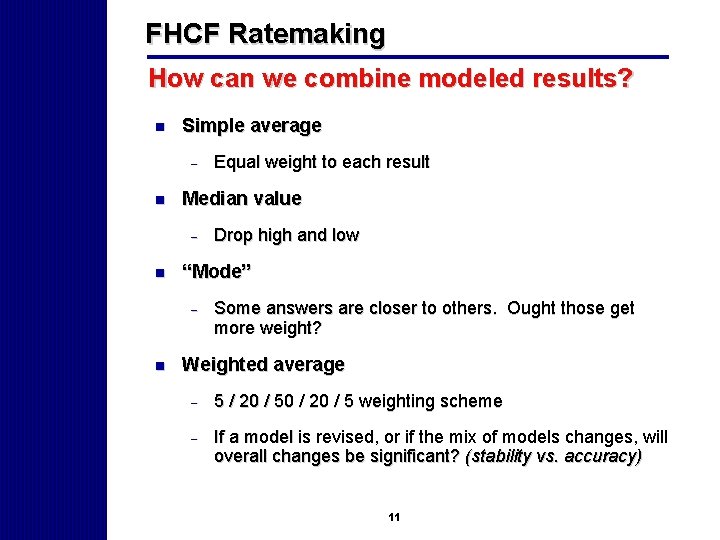
FHCF Ratemaking How can we combine modeled results? n Simple average - n Median value - n Drop high and low “Mode” - n Equal weight to each result Some answers are closer to others. Ought those get more weight? Weighted average - 5 / 20 / 50 / 20 / 5 weighting scheme - If a model is revised, or if the mix of models changes, will overall changes be significant? (stability vs. accuracy) 11
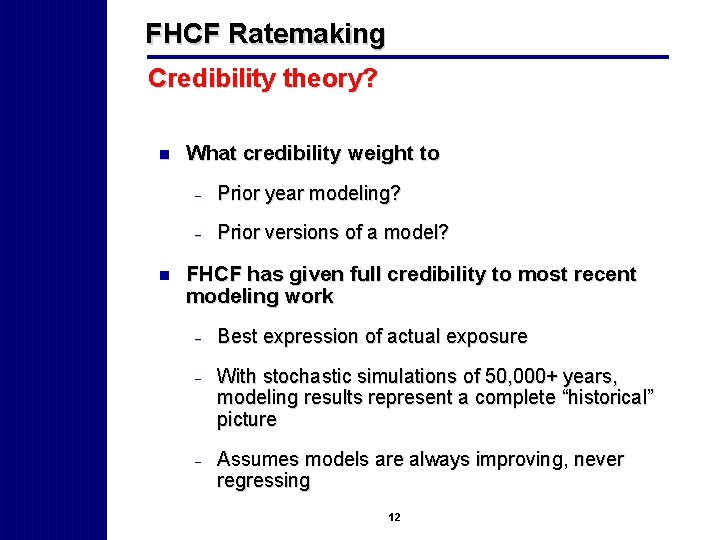
FHCF Ratemaking Credibility theory? n n What credibility weight to - Prior year modeling? - Prior versions of a model? FHCF has given full credibility to most recent modeling work - Best expression of actual exposure - With stochastic simulations of 50, 000+ years, modeling results represent a complete “historical” picture - Assumes models are always improving, never regressing 12
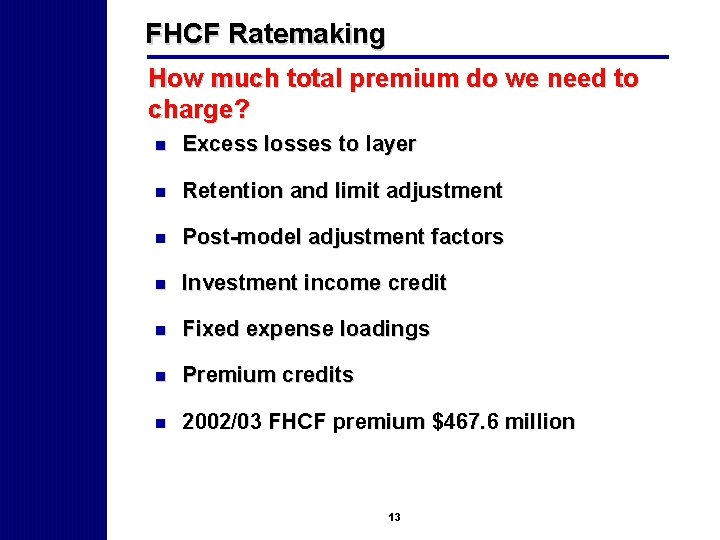
FHCF Ratemaking How much total premium do we need to charge? n Excess losses to layer n Retention and limit adjustment n Post-model adjustment factors n Investment income credit n Fixed expense loadings n Premium credits n 2002/03 FHCF premium $467. 6 million 13
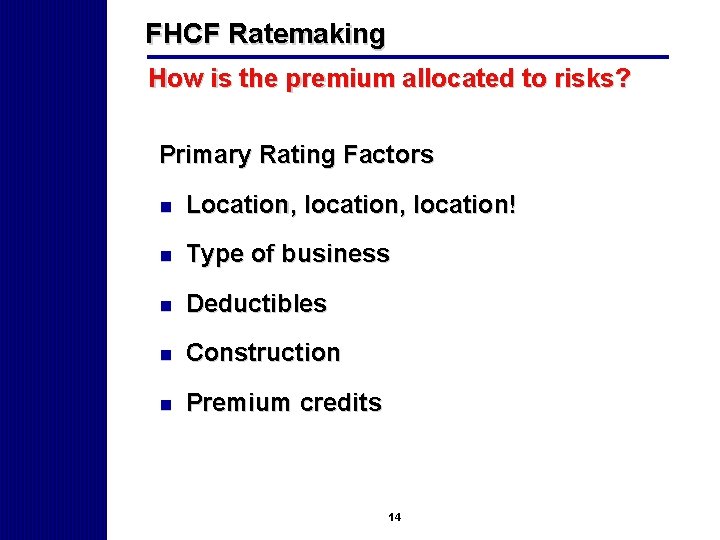
FHCF Ratemaking How is the premium allocated to risks? Primary Rating Factors n Location, location! n Type of business n Deductibles n Construction n Premium credits 14
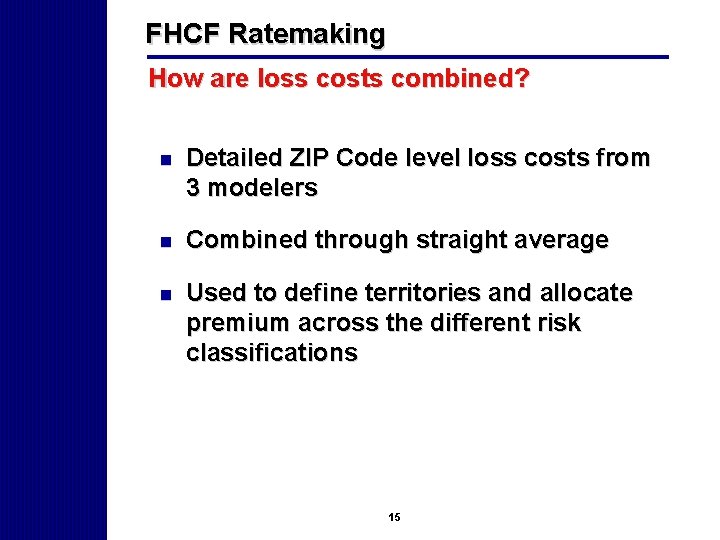
FHCF Ratemaking How are loss costs combined? n Detailed ZIP Code level loss costs from 3 modelers n Combined through straight average n Used to define territories and allocate premium across the different risk classifications 15
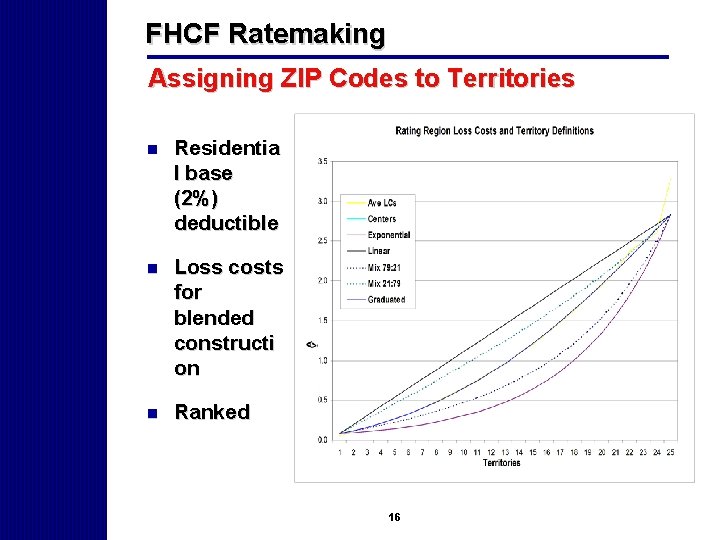
FHCF Ratemaking Assigning ZIP Codes to Territories n Residentia l base (2%) deductible n Loss costs for blended constructi on n Ranked 16
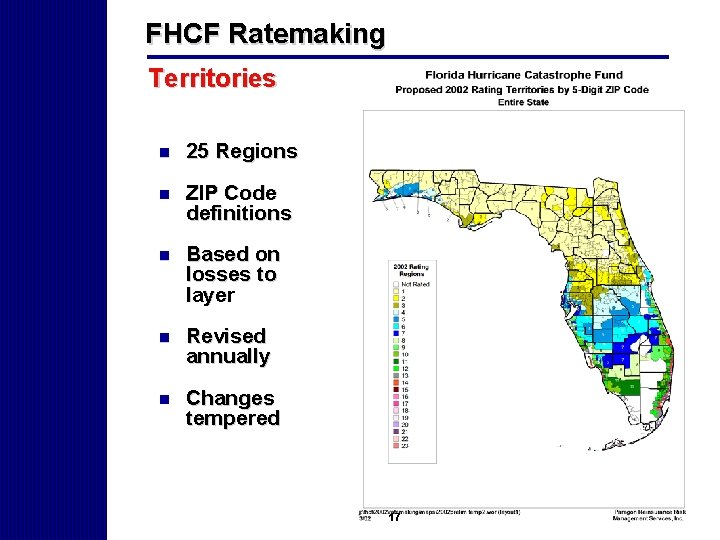
FHCF Ratemaking Territories n 25 Regions n ZIP Code definitions n Based on losses to layer n Revised annually n Changes tempered 17
FHCF Ratemaking References Florida Hurricane Catastrophe Fund 2002 Ratemaking Formula Report to the Florida State Board of Administration March 28, 2002 Available through the FHCF website: http: //www. fsba. state. fl. us/fhcf/ (Look for meeting materials from the 28 March 2002 Advisory Council meeting, amended to final mitigation levels) 18
FHCF Ratemaking Speaker Notes Paul E. Budde, Ph. D. , ACAS, MAAA Senior Vice President Benfield Blanch 3600 W 80 th St Minneapolis, MN 55431 Paul. budde@benfieldgroup. com 19