
Using CANS Data to Inform Practice Guide Implementation





- Slides: 33
Using CANS Data to Inform Practice, Guide Implementation and Promote Innovation
INTEGRA MINDFULNESS MARTIAL ARTS (MMA)
The Workshop • Overview • Introduction • In the Beginning • About Integra MMA • Using Implementation Science • Program Evaluation • The Road Ahead
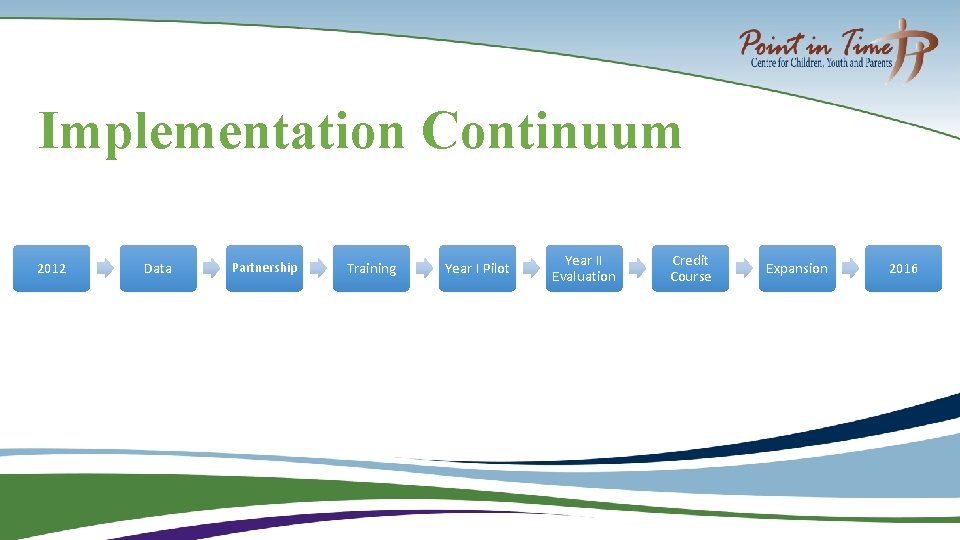
Implementation Continuum 2012 Data Partnership Training Year I Pilot Year II Evaluation Credit Course Expansion 2016
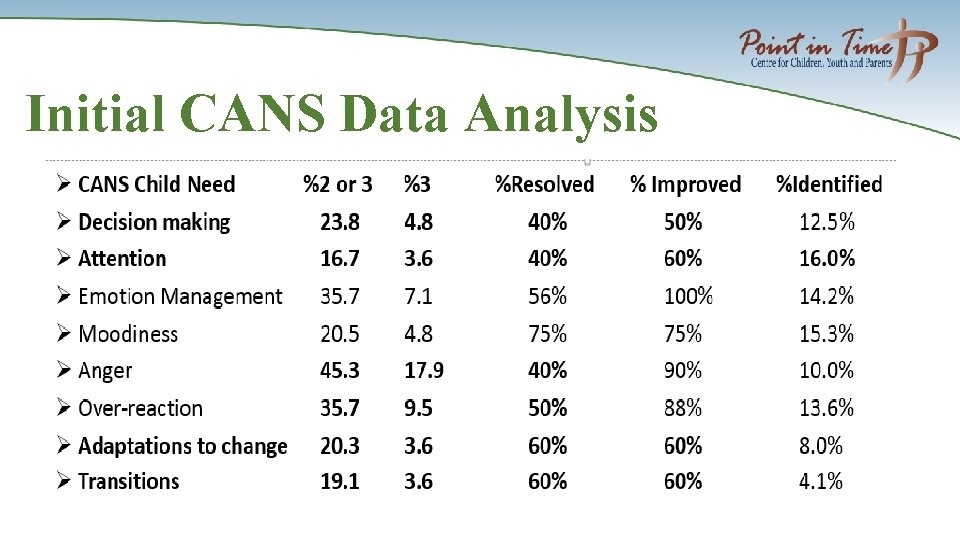
Initial CANS Data Analysis
Executive Functioning 2 Choices: • Collaborative Problem Solving (Collaborative and Proactive Solutions) (CPS) • Integra Mindfulness Martial Arts (MMA)
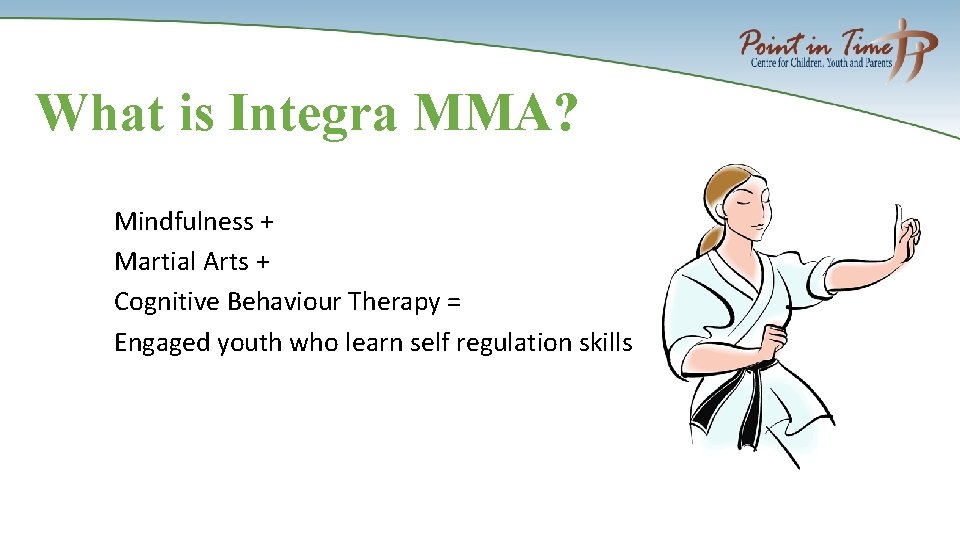
What is Integra MMA? Mindfulness + Martial Arts + Cognitive Behaviour Therapy = Engaged youth who learn self regulation skills
Cross Sectoral Partnership • History of working together • Strengthened by being a Working Together for Kids Mental Health Community • Negotiated roles and formal agreements for providing mental health services in schools pre-dating funding allocation for this • Strong relationships and forums to talk through challenges, create solutions and work towards increased cross system improvements
Partnership with Integra Foundation • Trainings delivered by Integra Foundation on working with students with Learning Disabilities and Mental Health challenges • Opportunity to meet and talk at CMHO Conference • Building our relationship led to being able to partner to roll out Integra MMA • A formal written agreement was established • Joint training of Mental Health Staff and Teacher
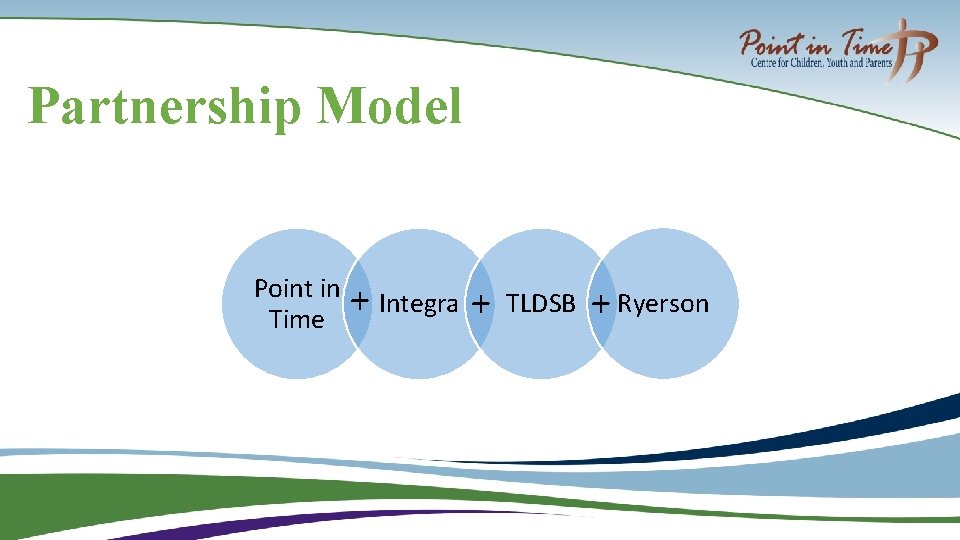
Partnership Model Point in Time + Integra + TLDSB + Ryerson
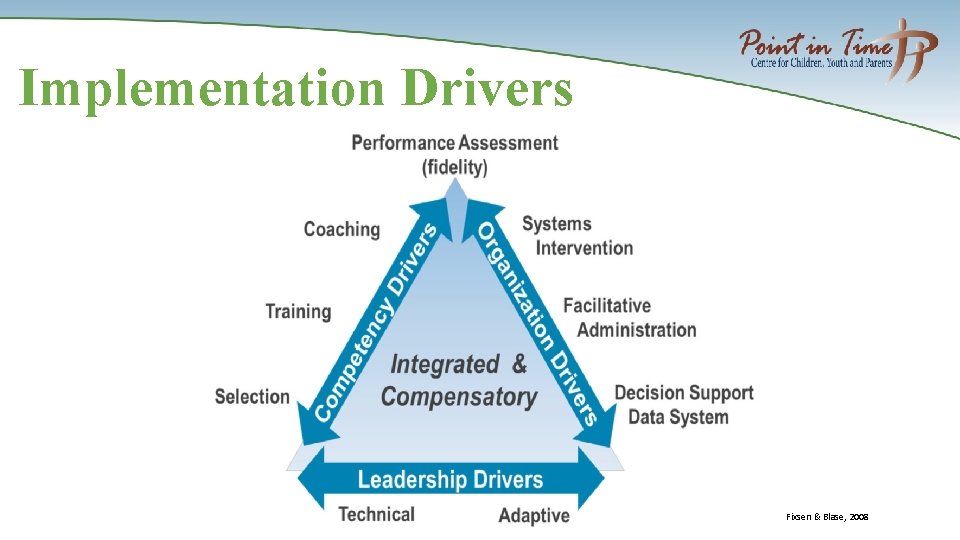
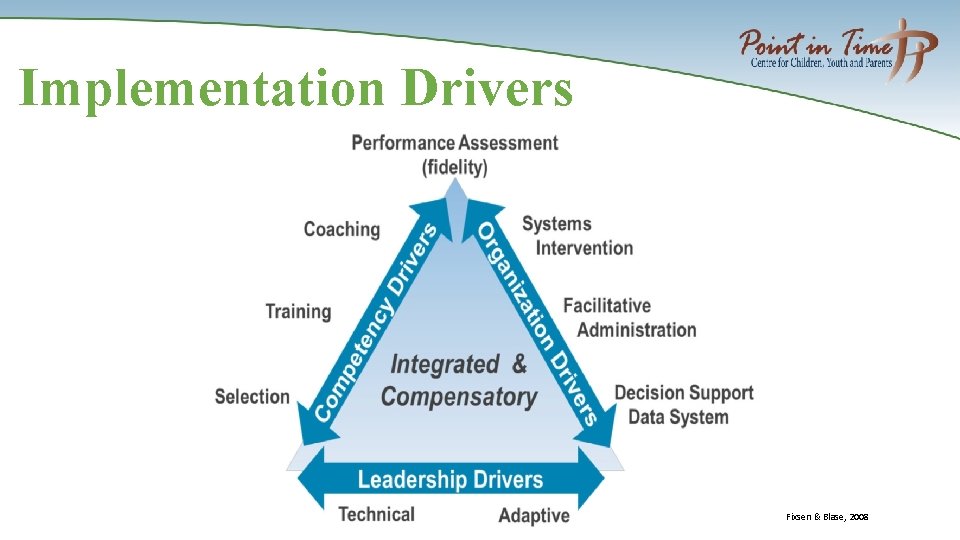
Implementation Drivers Fixsen & Blase, 2008
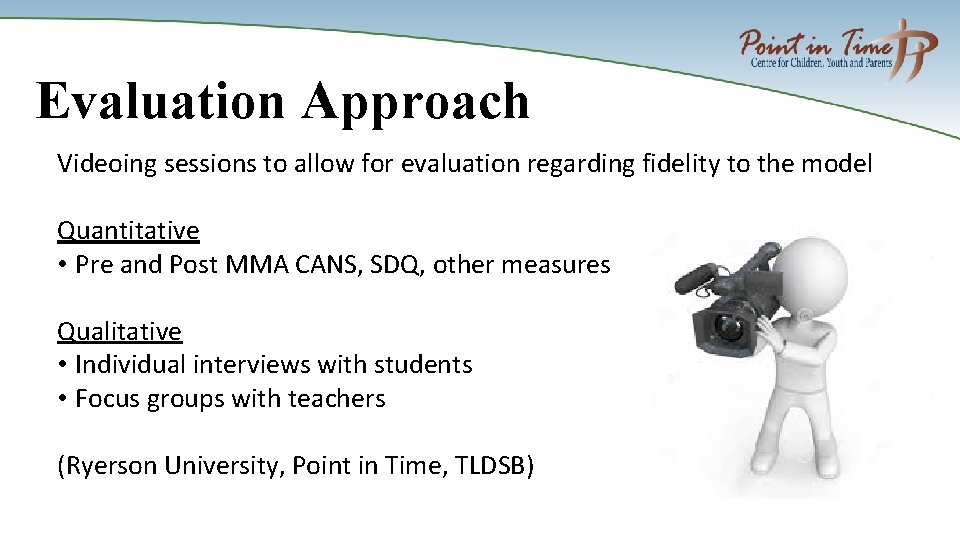
Evaluation Approach Videoing sessions to allow for evaluation regarding fidelity to the model Quantitative • Pre and Post MMA CANS, SDQ, other measures Qualitative • Individual interviews with students • Focus groups with teachers (Ryerson University, Point in Time, TLDSB)
First Year Implementation 2012 -2013 • Students withdrawn from class one day per week to participate in Integra MMA • Pilot Evaluation using pre-post design • Intake CANS (4 sections, 50 questions) • Other standardized measures • Qualitative Interviews
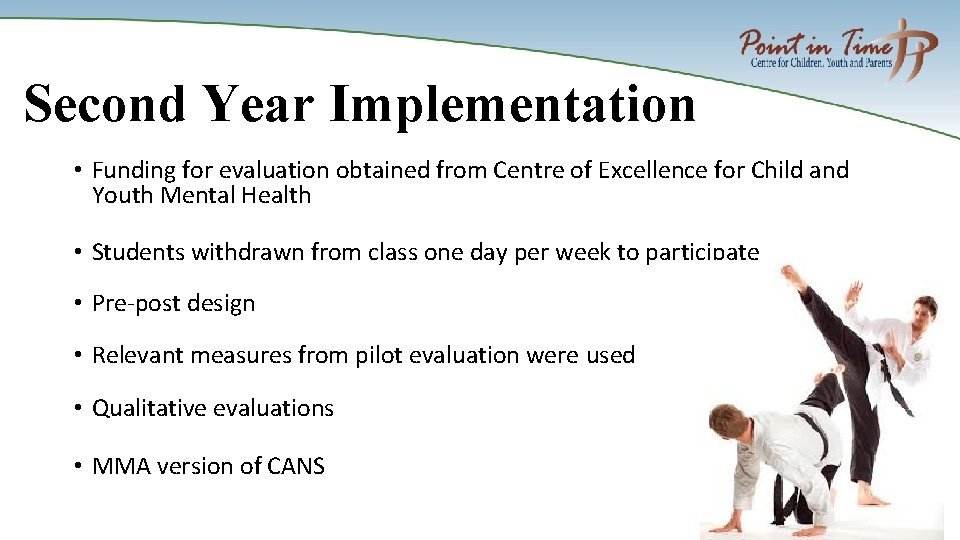
Second Year Implementation • Funding for evaluation obtained from Centre of Excellence for Child and Youth Mental Health • Students withdrawn from class one day per week to participate • Pre-post design • Relevant measures from pilot evaluation were used • Qualitative evaluations • MMA version of CANS
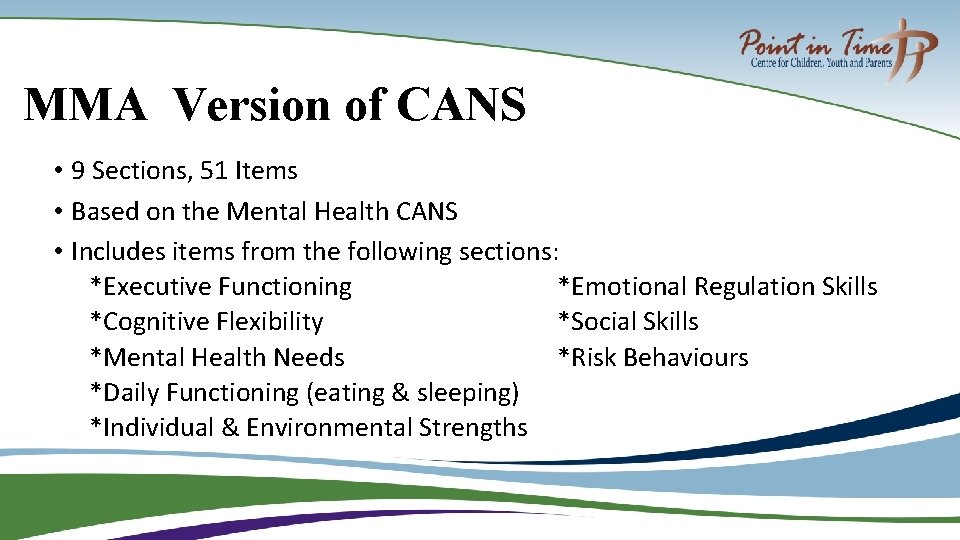
MMA Version of CANS • 9 Sections, 51 Items • Based on the Mental Health CANS • Includes items from the following sections: *Executive Functioning *Emotional Regulation Skills *Cognitive Flexibility *Social Skills *Mental Health Needs *Risk Behaviours *Daily Functioning (eating & sleeping) *Individual & Environmental Strengths
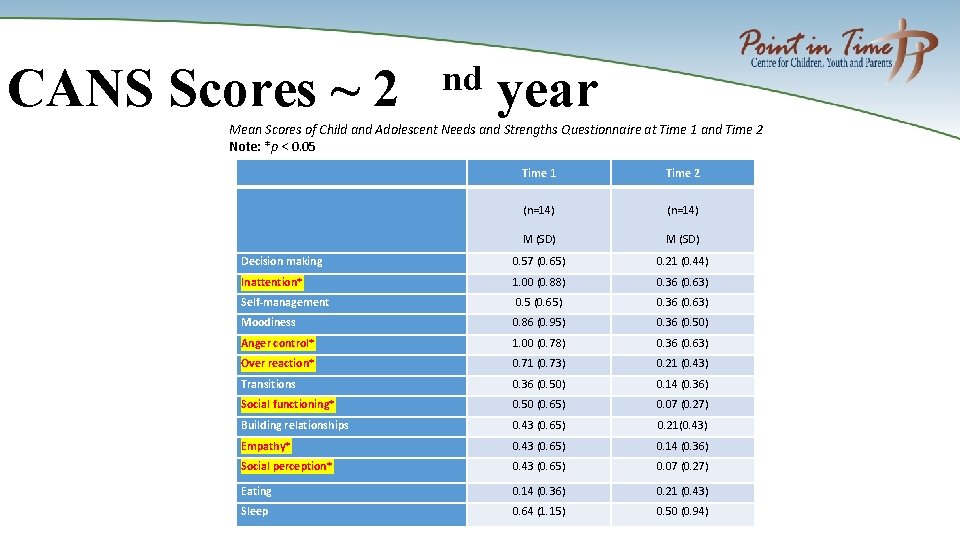
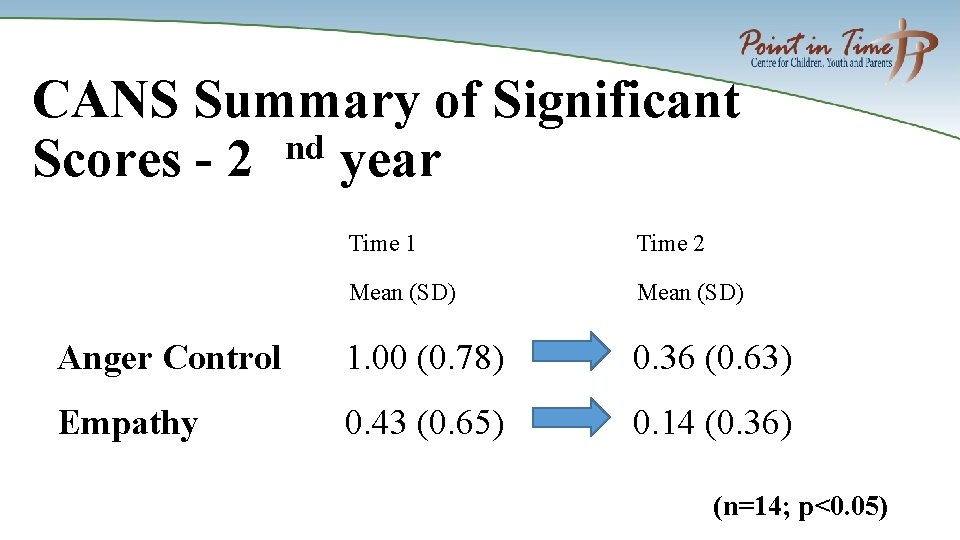
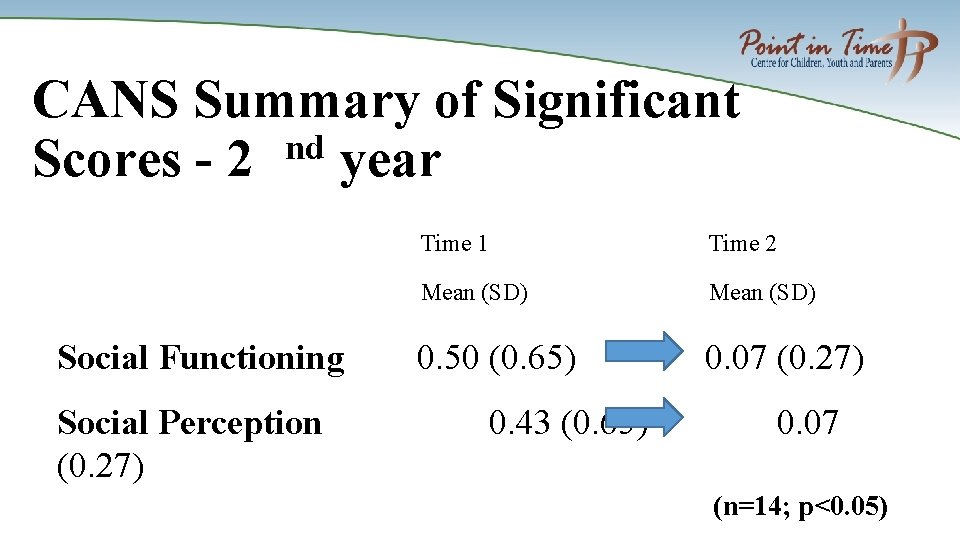
CANS Scores ~ 2 nd year Mean Scores of Child and Adolescent Needs and Strengths Questionnaire at Time 1 and Time 2 Note: *p < 0. 05 Time 1 Time 2 (n=14) M (SD) Decision making 0. 57 (0. 65) 0. 21 (0. 44) Inattention* 1. 00 (0. 88) 0. 36 (0. 63) Self-management 0. 5 (0. 65) 0. 36 (0. 63) Moodiness 0. 86 (0. 95) 0. 36 (0. 50) Anger control* 1. 00 (0. 78) 0. 36 (0. 63) Over reaction* 0. 71 (0. 73) 0. 21 (0. 43) Transitions 0. 36 (0. 50) 0. 14 (0. 36) Social functioning* 0. 50 (0. 65) 0. 07 (0. 27) Building relationships 0. 43 (0. 65) 0. 21(0. 43) Empathy* 0. 43 (0. 65) 0. 14 (0. 36) Social perception* 0. 43 (0. 65) 0. 07 (0. 27) Eating 0. 14 (0. 36) 0. 21 (0. 43) Sleep 0. 64 (1. 15) 0. 50 (0. 94)
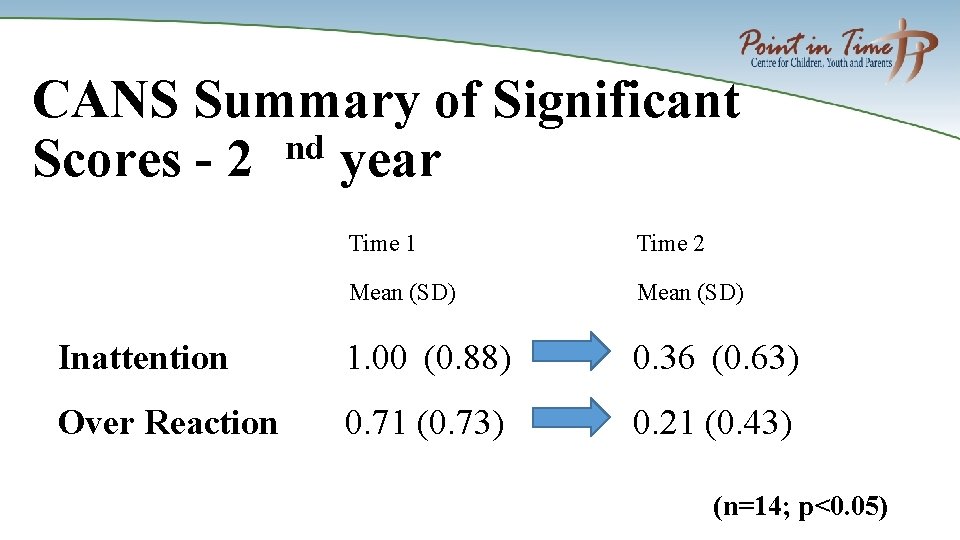
CANS Summary of Significant nd Scores - 2 year Time 1 Time 2 Mean (SD) Inattention 1. 00 (0. 88) 0. 36 (0. 63) Over Reaction 0. 71 (0. 73) 0. 21 (0. 43) (n=14; p<0. 05)
CANS Summary of Significant nd Scores - 2 year Time 1 Time 2 Mean (SD) Anger Control 1. 00 (0. 78) 0. 36 (0. 63) Empathy 0. 43 (0. 65) 0. 14 (0. 36) (n=14; p<0. 05)
CANS Summary of Significant nd Scores - 2 year Social Functioning Social Perception (0. 27) Time 1 Time 2 Mean (SD) 0. 50 (0. 65) 0. 07 (0. 27) 0. 43 (0. 65) 0. 07 (n=14; p<0. 05)
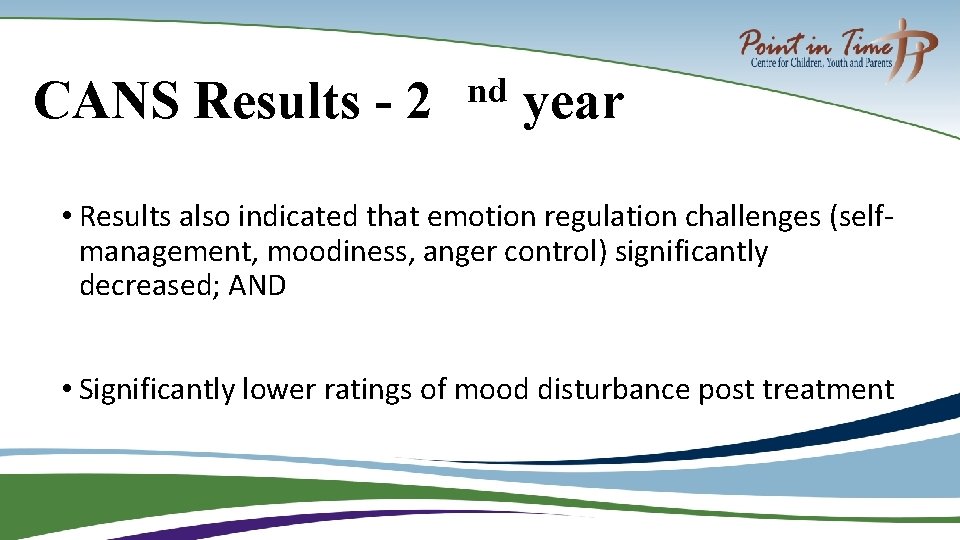
CANS Results - 2 nd year • Results also indicated that emotion regulation challenges (selfmanagement, moodiness, anger control) significantly decreased; AND • Significantly lower ratings of mood disturbance post treatment
Video
rd 3 Year Implementation • Offered as an Integrated Learning Strategies Credit Course at the high school • Decision based in part on CANS data
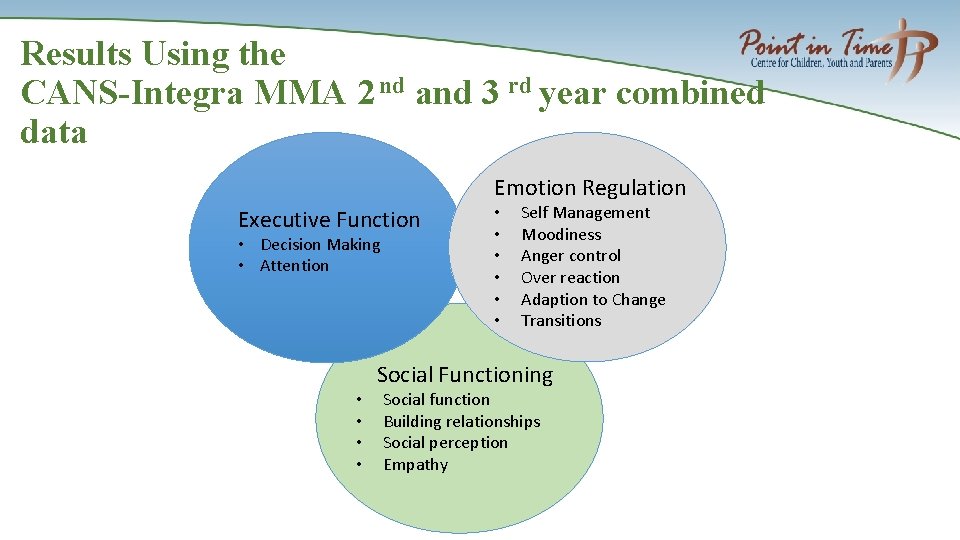
Results Using the CANS-Integra MMA 2 nd and 3 rd year combined data Emotion Regulation Executive Function • Decision Making • Attention • • • Self Management Moodiness Anger control Over reaction Adaption to Change Transitions Social Functioning • • Social function Building relationships Social perception Empathy
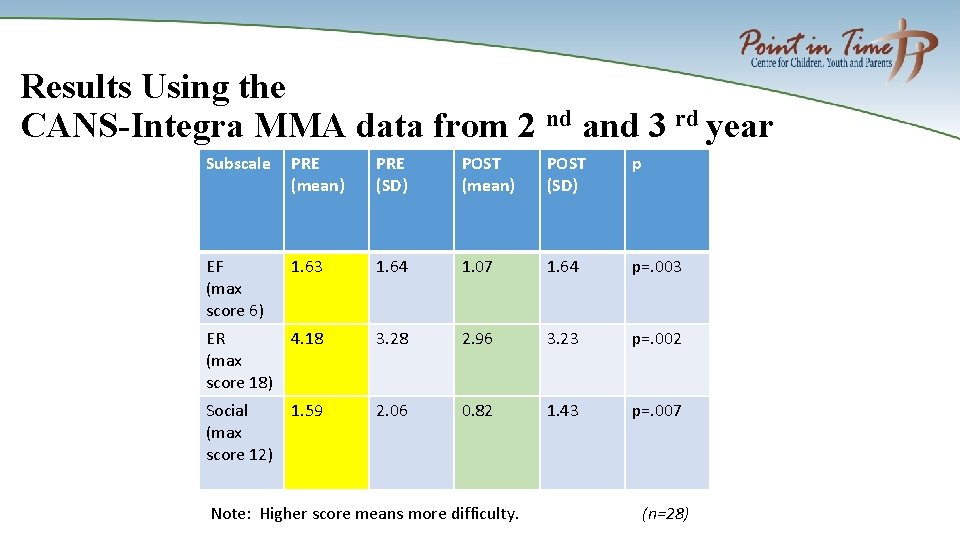
Results Using the CANS-Integra MMA data from 2 nd and 3 rd year Subscale PRE (mean) PRE (SD) POST (mean) POST (SD) p EF (max score 6) 1. 63 1. 64 1. 07 1. 64 p=. 003 ER (max score 18) 4. 18 3. 28 2. 96 3. 23 p=. 002 Social (max score 12) 1. 59 2. 06 0. 82 1. 43 p=. 007 Note: Higher score means more difficulty. (n=28)
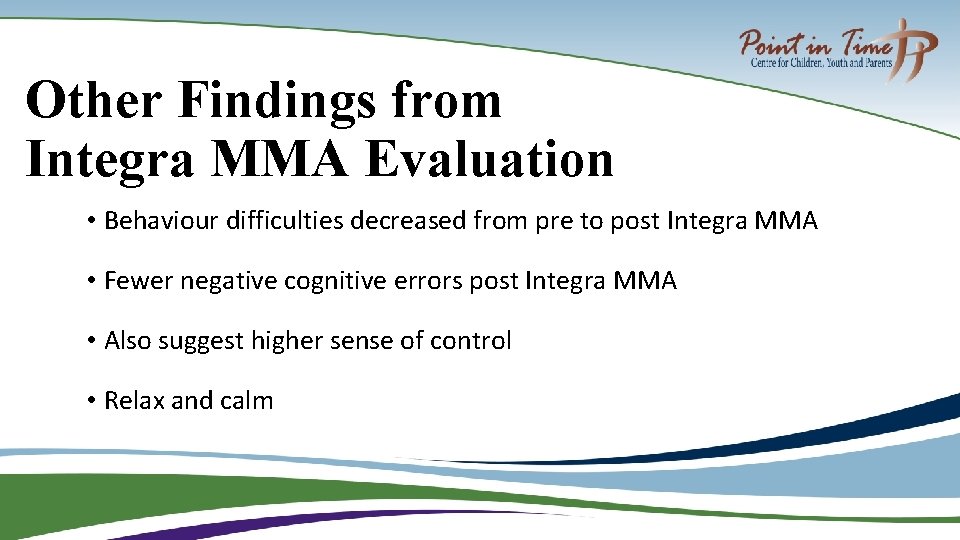
Other Findings from Integra MMA Evaluation • Behaviour difficulties decreased from pre to post Integra MMA • Fewer negative cognitive errors post Integra MMA • Also suggest higher sense of control • Relax and calm
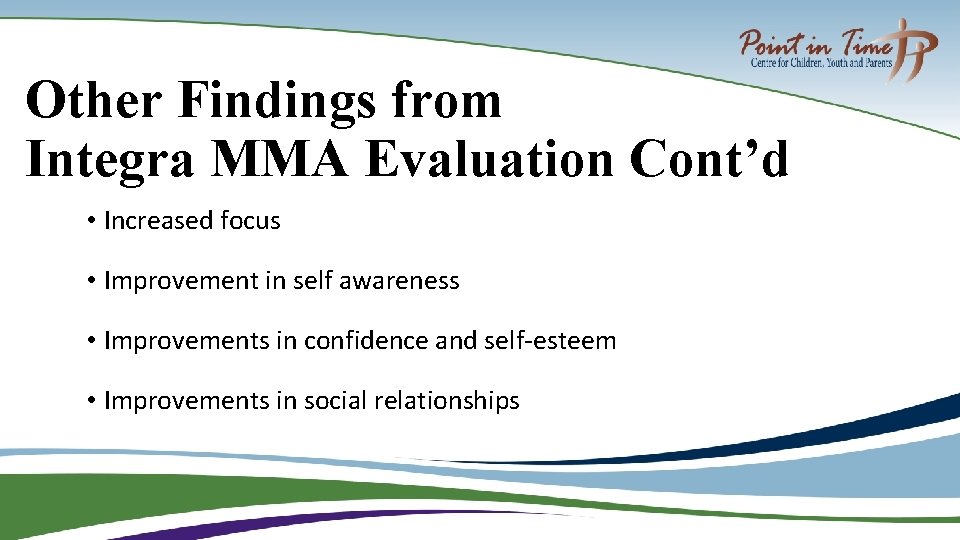
Other Findings from Integra MMA Evaluation Cont’d • Increased focus • Improvement in self awareness • Improvements in confidence and self-esteem • Improvements in social relationships
th 4 Year Implementation • Continuing as a Learning Strategies Credit Course at the same high school • Branching out to other schools in this school board
Implementation Drivers Fixsen & Blase, 2008
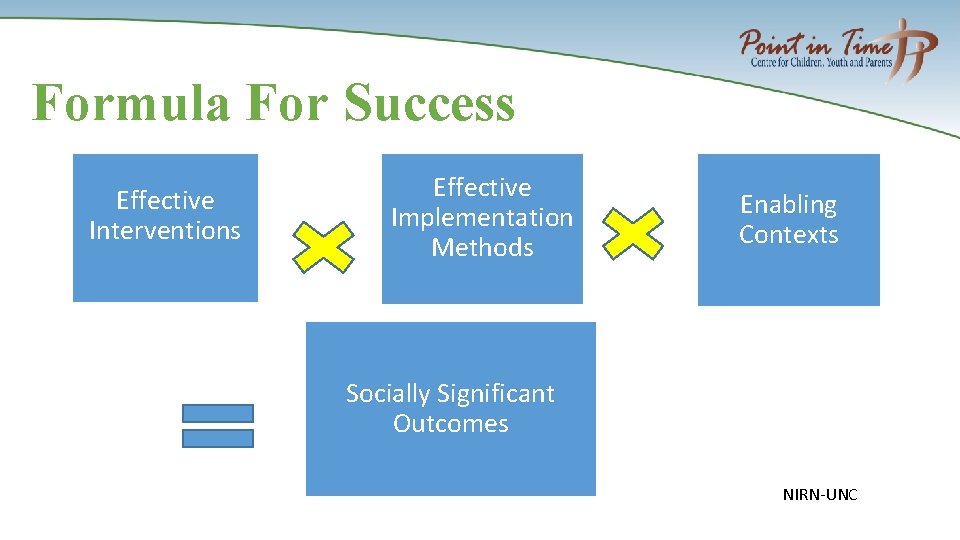
Formula for Success Formula For Success Effective Interventions Effective Implementation Methods Enabling Contexts Socially Significant Outcomes NIRN-UNC
Staging Transformation • Pilot in a vertical slice of the organization or system as a transformation zone • Operationalize an innovation – check for fidelity, outcomes • Establish implementation supports (drivers) • Engage leadership in quality improvement cycle to assist in system alignments • Develop momentum and capacity to scale up
Video
Contact Information for Integra MMA Trish Mc. Keough, M. S. W. , RSW. Mindfulness Martial Arts Coordinator Integra Program at Child Development Institute 25 Imperial Street Toronto, ON M 5 P 1 B 9 Tel: (416) 603 -1827 ext. 5241 Fax: (416) 486 -1282 tmckeough@childdevelop. ca
Marg Cox, RSW Executive Director Michelle Wolfe Miscio, RSW Child and Family Therapist Point in Time Centre for Children, Youth and Parents P. O. Box 1306 69 Eastern Avenue Haliburton, ON K 0 M 1 S 0 705 -457 -5345 margc@pointintime. ca michellewm@pointintime. ca